14 Unusual Santa Claus Facts from Different Countries
Santa Claus looks different depending on where you are in the world. The jolly man in red that American kids expect on Christmas Eve barely scratches the surface of how diverse winter gift-bringers can be.
Some countries have Santas who arrive with demons. Others have witches on broomsticks. A few places don’t even wait until December.
The traditions that surround these figures reveal as much about local culture as they do about the holiday season.
Iceland Has 13 Santa Clauses Who Show Up One at a Time

Forget one Santa. Iceland has 13 mischievous characters called the Yule Lads, and they take turns visiting during the 13 nights leading up to Christmas.
Each one has a different personality and prank. Spoon-Licker steals wooden spoons to lick.
Door-Slammer wakes people up by slamming doors at night. Sausage-Swiper hides in the rafters to steal smoked sausages.
Kids leave shoes on windowsills, and the Yule Lad of the night either leaves candy for good children or rotten potatoes for bad ones. The tradition dates back centuries, though these characters used to be much scarier before they got a family-friendly makeover in the 20th century.
The Krampus Punishes Naughty Kids in Austria and Germany

While Santa rewards good behavior, Krampus handles the other end of the spectrum. This horned, demonic creature appears in Alpine regions on December 5th, the night before St. Nicholas Day. Krampus has shaggy fur, cloven hooves, and a long tongue.
He carries chains and birch branches to swat misbehaving children. In some versions of the tradition, Krampus stuffs particularly bad kids into his basket and drags them away.
Krampusnacht celebrations still happen today, with people dressing as the creature and running through streets. The contrast between St. Nicholas’s kindness and Krampus’s terror was meant to teach children about consequences.
Russia’s Ded Moroz Wears Blue and Travels with His Granddaughter
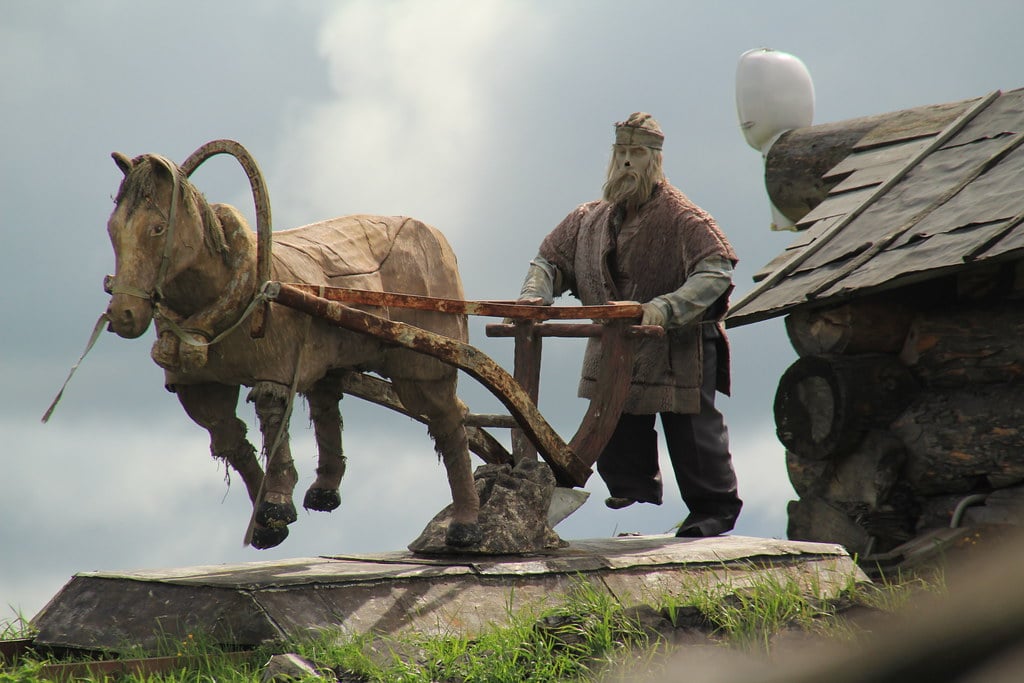
Russia’s winter gift-bringer wears blue instead of red. Ded Moroz, which translates to Grandfather Frost, has a long white beard and carries a magic staff.
He doesn’t arrive on December 25th—he comes for New Year’s instead, since the Orthodox Christmas falls on January 7th. Ded Moroz never travels alone.
His granddaughter Snegurochka, the Snow Maiden, accompanies him everywhere. She wears a silver-blue dress and helps him deliver presents to children.
Unlike Santa’s solo operation, this grandfather-granddaughter team makes Russian winter celebrations distinctly familial.
Italy’s La Befana Is a Witch Who Brings Gifts on January 6th

Italian children don’t receive all their gifts from Santa. An old woman named La Befana flies on a broomstick the night before Epiphany, filling stockings with candy and toys.
According to legend, the Three Wise Men invited her to visit baby Jesus, but she was too busy cleaning her house. When she changed her mind and tried to find them, they had already left.
La Befana still searches for the Christ child, leaving gifts for children along the way. Good kids get sweets and presents.
Bad kids get coal—though nowadays, it’s usually sugar candy made to look like coal. She’s often depicted as a kind witch with a crooked nose, wearing a black shawl and covered in soot from climbing down chimneys.
The Netherlands’ Sinterklaas Arrives by Steamboat from Spain

Dutch Sinterklaas doesn’t live at the North Pole. He supposedly resides in Spain and arrives by steamboat in mid-November, beginning a weeks-long celebration. He rides a white horse and wears red bishop’s robes with a tall mitre.
Children leave their shoes by the fireplace with carrots for his horse, and he fills them with small gifts and treats. The tradition inspired the American Santa Claus—Dutch settlers brought Sinterklaas to New Amsterdam, which later became New York.
Over time, the name morphed into Santa Claus, and the character changed to fit American culture.
Japan’s Santa Brings KFC for Christmas Dinner

Christmas isn’t a national holiday in Japan, but the celebration has taken root with a unique local flavor. Many Japanese families order Kentucky Fried Chicken for Christmas dinner, a tradition that started in the 1970s after a successful marketing campaign.
The company’s “Kurisumasu ni wa Kentakkii” (Kentucky for Christmas) slogan stuck. People order their Christmas KFC buckets weeks in advance, and the restaurants get so busy that some locations take reservations.
This pairing of an American fast-food chain with a Christian holiday, in a country where less than 2% of the population is Christian, shows how traditions adapt and transform across cultures.
Switzerland’s Christkind Is an Angel, Not Santa

In parts of Switzerland and Germany, an angel-like figure called Christkind delivers presents. The name means “Christ child,” but the character appears as a young woman dressed in white robes with golden hair, sometimes wearing a crown.
She represents the spirit of Christmas and brings gifts on Christmas Eve. Protestant reformer Martin Luther helped popularize this figure as an alternative to St. Nicholas celebrations.
Unlike Santa’s cheerful commercialism, Christkind maintains a more religious, ethereal quality. Children write letters to Christkind and place them on the windowsill, hoping the angel will collect them.
Venezuela’s Roller-Skating Christmas Morning Tradition

In Caracas, Venezuela, people roller-skate to early morning Christmas mass. The streets close to traffic so families can glide to church together.
This quirky tradition has become so popular that some neighborhoods organize it as an annual event. After mass, families return home for Christmas breakfast and gift-opening.
The warm weather in Venezuela during December makes winter imagery feel out of place, so locals adapted their celebrations. Roller-skating under tropical skies represents how Christmas traditions bend to fit local climate and culture.
Finland Says Santa Lives in Lapland, Not the North Pole

Finland claims to be Santa’s official home. The Finnish version, Joulupukka, lives on Korvatunturi mountain in Lapland, near the Arctic Circle.
You can even visit his “official” workshop and post office there. The Finnish name originally meant “Yule Goat,” connecting to older pagan traditions where a goat-like figure distributed gifts.
Over time, Joulupukka transformed from a potentially scary figure into the familiar red-suited gift-bringer. Finland’s tourism industry heavily promotes this Santa connection, attracting visitors who want to experience Christmas in a snowy, magical setting.
Czech Republic’s Ježíšek Is Baby Jesus Himself

Czech children believe Baby Jesus brings their presents. Ježíšek, the diminutive form of Jesus in Czech, arrives on Christmas Eve while families are eating dinner. When parents distract the kids after the meal, someone rings a bell to signal that Ježíšek has come and gone, leaving presents under the tree.
This tradition emphasizes the religious aspect of Christmas. Rather than a jolly secular figure, the gift-bringer is the holiday’s central religious figure.
The anticipation of hearing that bell ring creates a distinct magic that differs from watching for Santa’s sleigh.
Greece’s Kallikantzaroi Are Goblins That Emerge at Christmas
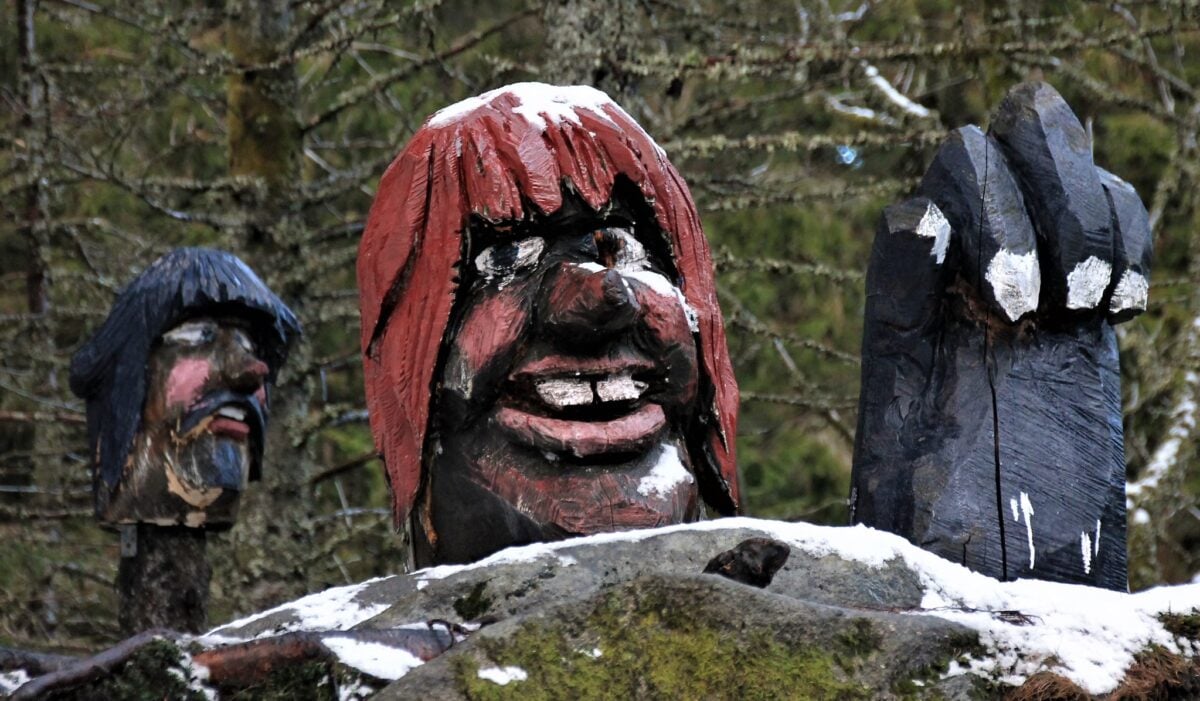
Greek Christmas folklore features goblins called Kallikantzaroi that surface during the 12 days of Christmas. These creatures spend the rest of the year underground, sawing at the World Tree that holds up the earth.
But during the Christmas season, they emerge to cause mischief—souring milk, riding people like horses, and generally creating chaos. To keep them away, Greek families burn old shoes or leave a colander on the doorstep.
The goblins get distracted counting the pits and forget to enter the house. When the season ends, the Kallikantzaroi return underground only to discover the World Tree has healed, and they must start sawing again.
Sweden’s Tomte Is a Small Gnome Who Lives in Barns

Swedish Christmas traditions feature a tomte, a small gnome-like creature with a long white beard and a red cap. Historically, the tomte was a protective farm spirit who lived in barns and looked after animals.
Families left out a bowl of porridge for him on Christmas Eve as thanks for his help throughout the year. If you forgot the tomridge or treated the tomte disrespectfully, he caused problems—animals got sick, milk went sour, or tools went missing.
Modern Swedish Christmas celebrations still reference the tomte, though he’s become more of a gift-bringer and less of a temperamental farm guardian.
Spain’s Tió de Nadal Is a Pooping Log
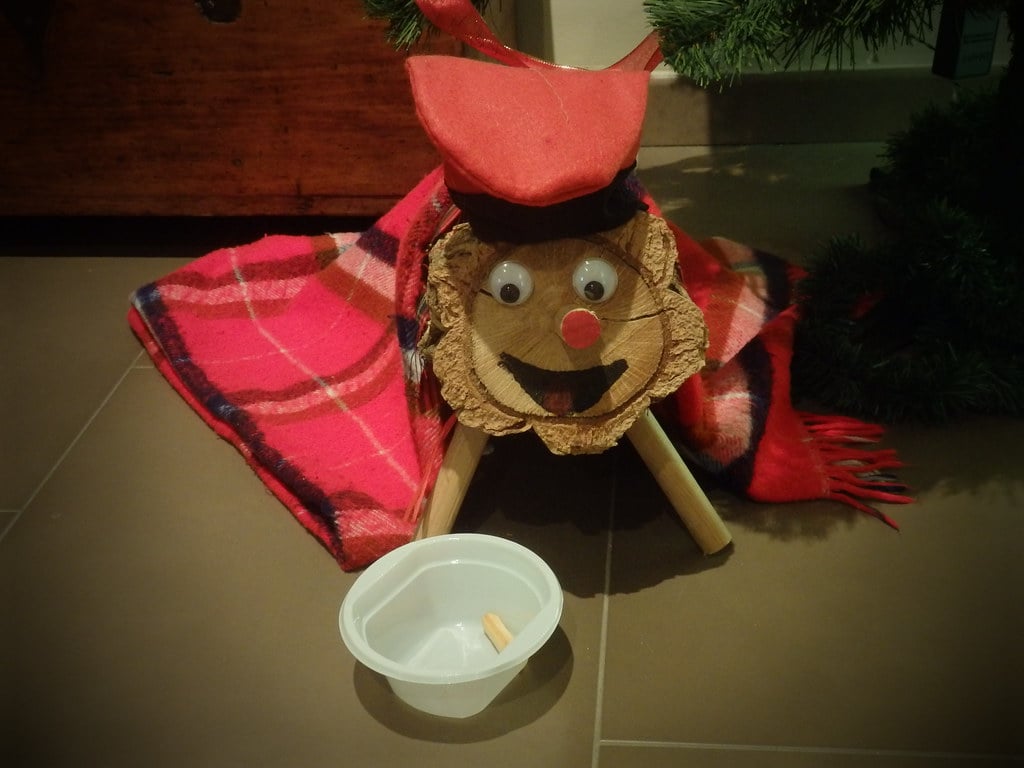
Catalonia has one of the strangest Christmas traditions. Families adopt a small log called Tió de Nadal, or the “Christmas Log,” in early December.
They prop it up on two front legs, draw a face on it, and cover it with a blanket. Every day, children “feed” the log scraps of food.
On Christmas Eve, they beat the log with sticks while singing traditional songs that tell it to poop out presents. When they lift the blanket, they find candy and small toys.
The log “poops” gifts for the family. Yes, really.
This scatological tradition has ancient roots in Catalan culture and remains popular today.
Mexico’s Posadas Reenact Mary and Joseph’s Journey
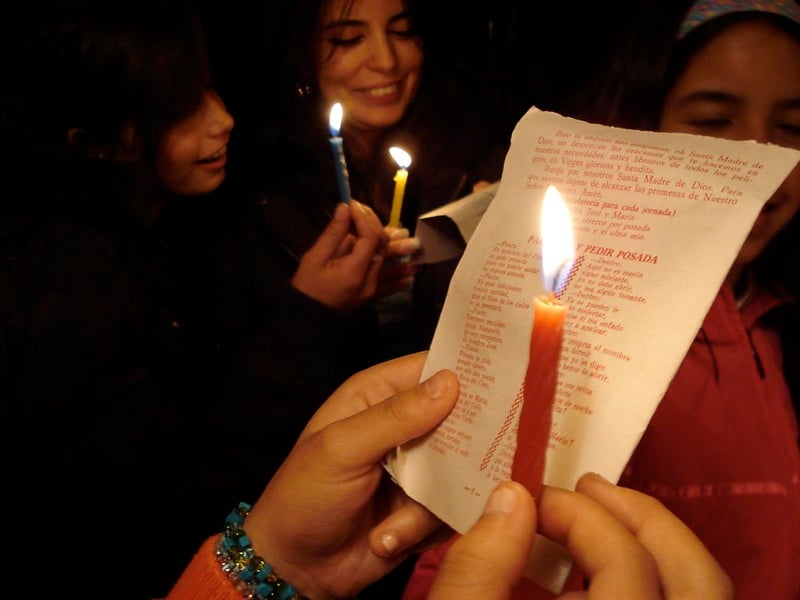
Pounding drums echo through neighborhoods where families gather each evening. One after another, voices rise in song while neighbors follow behind candles held high.
At first, every door stays shut despite the pleading lyrics carried on cold night air. Then laughter spills out when someone swings open a gate near midnight.
Warm rooms fill fast with sweet tamales and steaming cups passed hand to hand. A piñata hangs waiting, though no one mentions it just yet.
Christmas here leans less on Santa, more on shared moments and stories from the Bible instead of buying things. On January sixth, kids get gifts brought by the Three Wise Men.
Yet what sticks is opening doors to others, recalling old traditions, keeping the noise of shopping far away
The Real Shape of Christmas

Christmas took strange turns through time. From a kind bishop in Greece came stories of hidden gifts for struggling homes. This quiet helper grew into many forms around the world.
Faith stayed close in certain places. In different lands, ancient customs blended with church celebrations.
Elsewhere, fresh figures appeared, shaped by local weather and ways. Christmas looks different depending on who is taking part.
A wooden figure leaving presents might seem odd, yet it matters deeply to those involved. Sometimes folks skate on wheels just to reach their service.
Thirteen prank-loving brothers show up one by one before the big day in some towns. What feels normal here could sound strange there.
Still, sharing time and kindness runs through every version. Meaning grows where customs live.
More from Go2Tutors!

- The Romanov Crown Jewels and Their Tragic Fate
- 13 Historical Mysteries That Science Still Can’t Solve
- Famous Hoaxes That Fooled the World for Years
- 15 Child Stars with Tragic Adult Lives
- 16 Famous Jewelry Pieces in History
Like Go2Tutors’s content? Follow us on MSN.