14 Vintage School Desks With Original Storage Compartments
Before lockers and backpacks took over, a student’s books, slate, and lunch lived inside the desk. Makers built storage into the frame, tucking shelves under seats and compartments beneath lids so that everything a child needed stayed within reach.
Old desks with their compartments intact are especially appealing to collectors, since a missing rack or lid changes the entire character of the piece. The designs below span roughly the 1880s to the mid-twentieth century, and each solves the same problem in a different way.
The Cast-Iron Row Desk With Book Rack

In a classic American design, each student’s seat attached to the desk of the pupil sitting behind, so a row of children formed a single connected unit. An American Seating Company model of this type, with a cast-iron frame, has been described as built so that the child in the seat works at the desk in the row ahead.
A rack under the writing surface held books beneath the desktop.
The Lift-Lid Desk With Interior Compartment
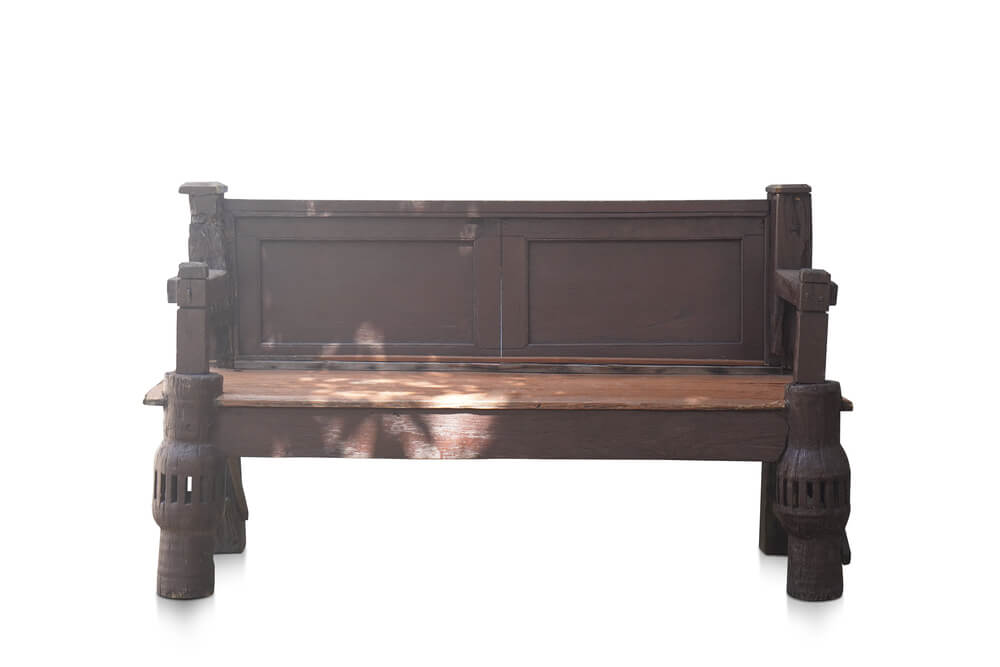
Some American Seating Company desks from roughly the 1910s to 1930s were built with a lift-top lid over an interior book compartment. The student raised the lid to reach books and supplies underneath.
It sheltered materials from sight and kept the desktop clear.
The Flip-Up Seat With Lower Shelf
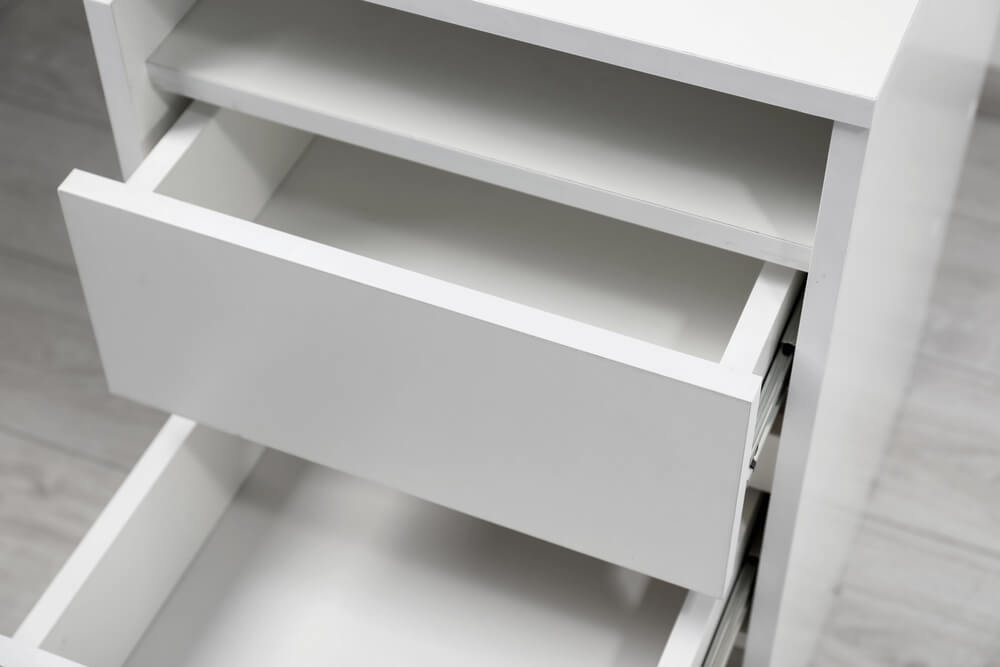
An 1885 desk from Grand Rapids, Michigan, combines a folding flip-up seat with a lower storage shelf below the desktop. The seat flipped upward when the pupil stood, to give room in tight aisles.
The shelf held books out of the way of a student’s feet.
The Rear-Facing Cubby Desk

A Victorian child’s desk with cast-iron supports and a folding bench seat puts a cubby behind the seat that is entered from the back. The compartment held a child’s belongings in a place that was reachable only when seated.
Such desks often show wear on the cubby floor from years of heavy books.
The Single-Pedestal Desk With Integral Shelf
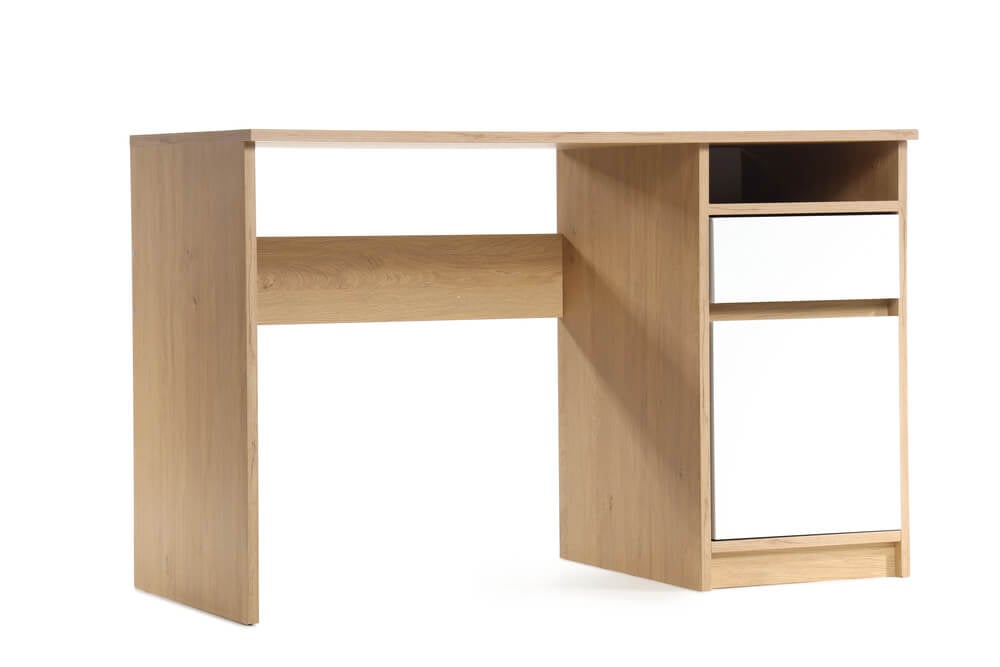
Freestanding student desks with an attached book shelf were common from the 1890s to the 1920s. They stood on a single pedestal and did not connect to other desks.
The built-in shelf was often supplemented by an inkwell cutout and a pencil groove.
The Desk With Pencil Tray and Inkwell Opening
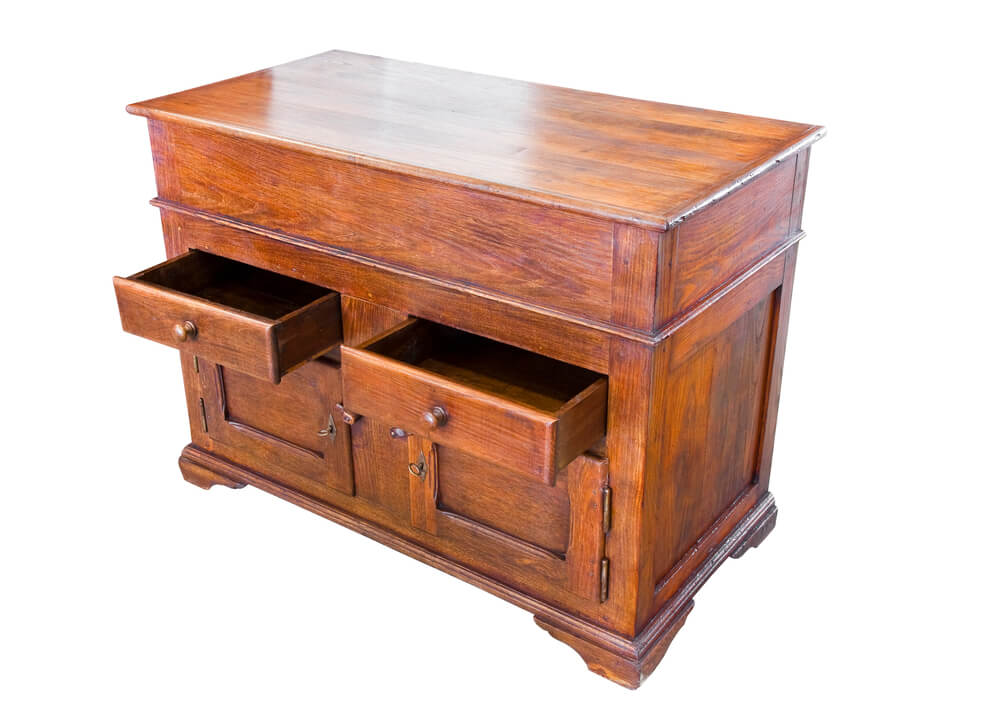
One American Seating Company child’s desk has a writing surface with a pencil holder and an inkwell holder to one side. The compartments kept the tools close without cluttering the writing area.
Inkwells themselves were often lost, so a desk that retains its original porcelain insert is more desirable.
The Pencil Groove and Folding Front Bench
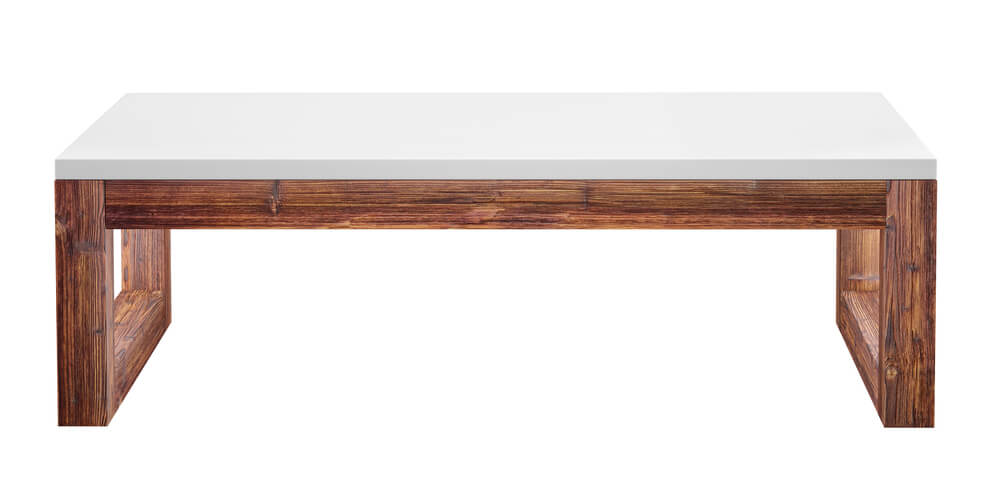
An early American Seating example stamped “A.S.Co 1” on its cast-iron frame has a wooden top with a pencil groove and an inkwell slot, and a wooden folding bench seat in front. The groove prevented pencils from rolling off.
The stamp makes the desk easy to identify and date.
The Buffalo Metal Company Desk
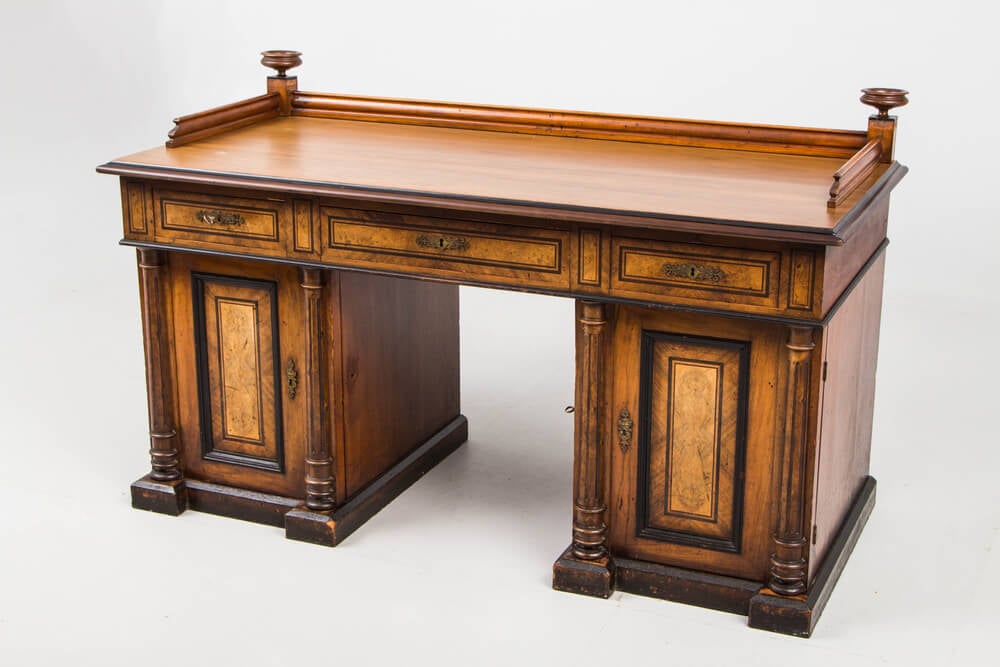
The Buffalo Metal Company produced cast-iron and hardwood desks around the 1890s to 1910s. A surviving example combines a sturdy base with a hardwood desktop.
The maker’s name cast into the iron is a prized detail.
The Kenney Bros. and Wolkins Desk
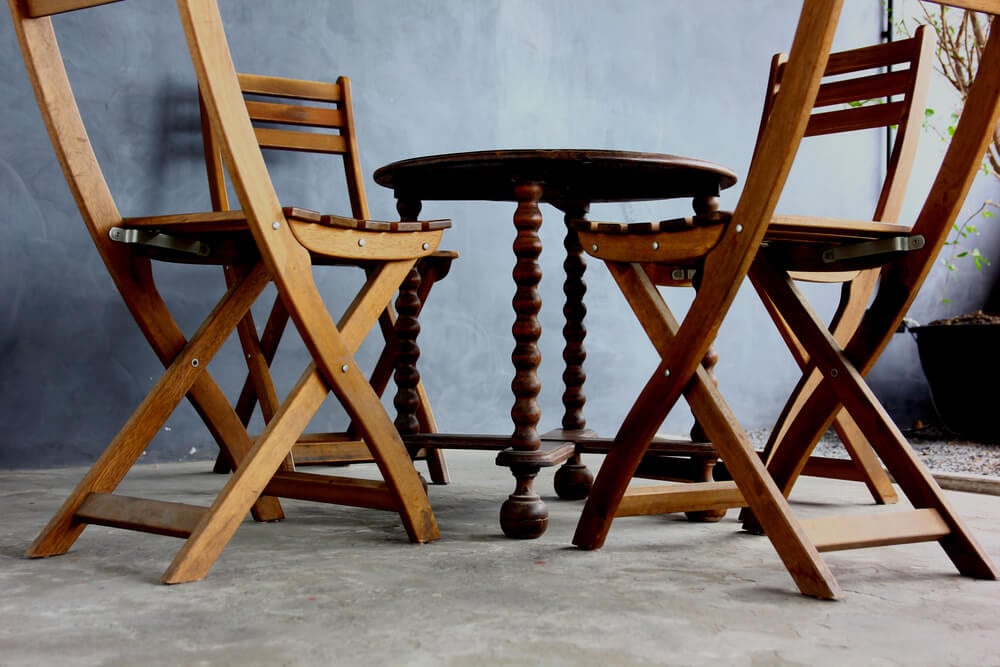
This Boston firm supplied New England schools with desks marked on the iron and plate tags. It was one of several regional makers that competed with the Grand Rapids giant.
A tag or stamp is the best evidence of origin.
The Heywood-Wakefield School Desk
Heywood-Wakefield, better known for wicker and household furniture, also made school seating, and its desks were often stamped or tagged. A stamp or paper label on the desk is the best way to confirm the maker.
The Ornate Victorian Fashion Desk
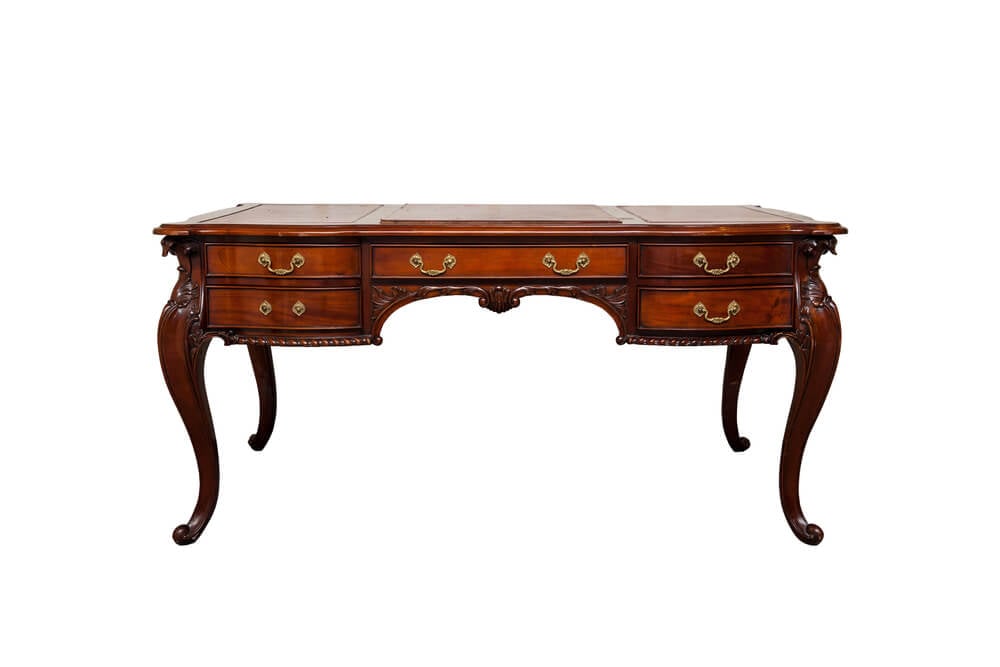
Some Victorian school desks were marked with names such as Columbia or Fashion Desk cast into the metal, and they featured decorative iron frames with scrolls and patterns. The frames were far more ornamental than later utilitarian models.
A well-preserved example with an intact storage shelf is a conversation piece.
The Bent-Steel Base Desk
Early twentieth-century American Seating Company desks with a bent steel base, a wood seat, and a wood writing surface were lighter and easier to clean. The design moved away from decorative castings.
Storage sat on a shelf beneath the seat.
The Mid-Century Swivel Desk
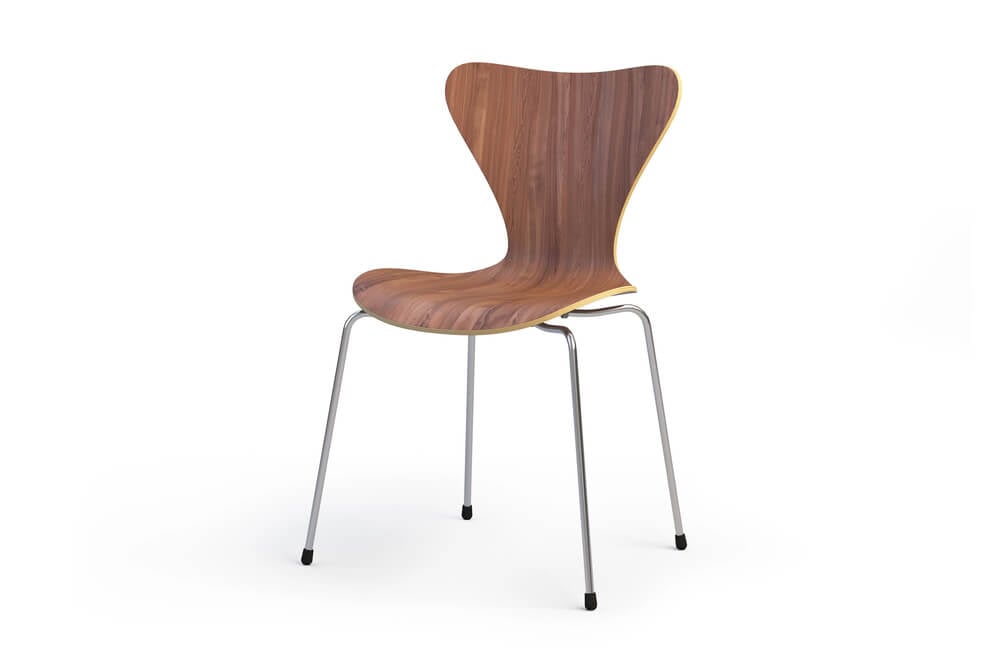
A mid-century cast-iron and oak swivel desk by American Seating let the seat turn to ease entry and exit. The writing surface was attached to the seat frame.
A book box under the seat was standard.
The Under-Seat Book Box
Late desks featured a metal or wooden book box beneath the seat, reachable from the front or side. It was the last evolution of storage before desks shrank into simple tables.
A box with its original paint and hardware is the sign of a well-preserved piece.
Why Storage Defined the Desk

The compartment was the point of the design. A desk that held a child’s books and tools turned a classroom into an orderly place, and a pupil who lost control of those belongings quickly lost control of the day.
Makers competed on cleverness, and the surviving variety of racks, shelves, and lids shows how many solutions were tried.
For collectors, the value of a desk depends heavily on condition, completeness, and the survival of its original compartments. A piece with a missing shelf or a replaced lid loses much of its appeal, while one that retains its original storage can look as if a student has just stepped away.
More from Go2Tutors!

- 27 Silver Dollars and Half Dollars Worth Keeping
- 28 Restaurant Menu Items Nobody Orders Anymore
- 17 Places Built in Seemingly Impossible Spots
- 27 Vintage Rings Worth More Than They Look
- 25 Restricted Sites Tourists Can’t Enter
Like Go2Tutors’s content? Follow us on MSN.