15 Bizarre Rock Formations Found On Island Beaches
There’s something unsettling about rocks that don’t look like they should exist. You walk along a perfectly normal beach, waves lapping at your feet, and then you round a corner to find stone arches defying gravity or pillars that seem too geometric for nature.
Island beaches around the world serve up these geological curiosities with particular flair — isolated environments where wind, water, and time have had millions of years to experiment without interruption.
The Giant’s Causeway
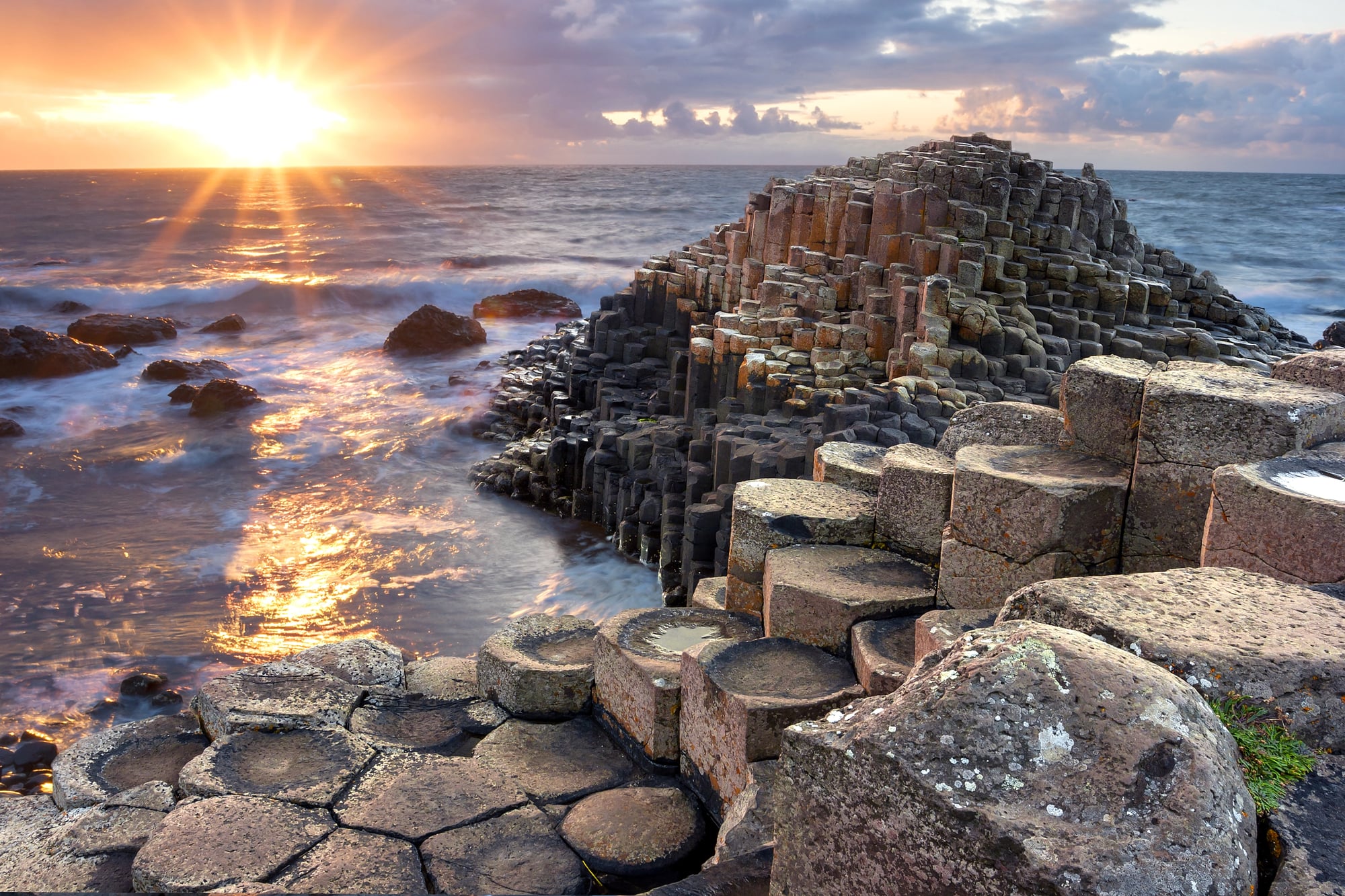
Forty thousand hexagonal columns rise from the sea like nature’s own cathedral organ. Each pillar fits perfectly against its neighbors.
No gaps, no irregularities worth mentioning.
The story goes that an Irish giant built this causeway to reach Scotland for a fight. The geology tells a different tale — volcanic activity 50 million years ago created these basalt columns through slow cooling.
Either way, Northern Ireland got one of the planet’s most orderly rock formations.
Fingal’s Cave
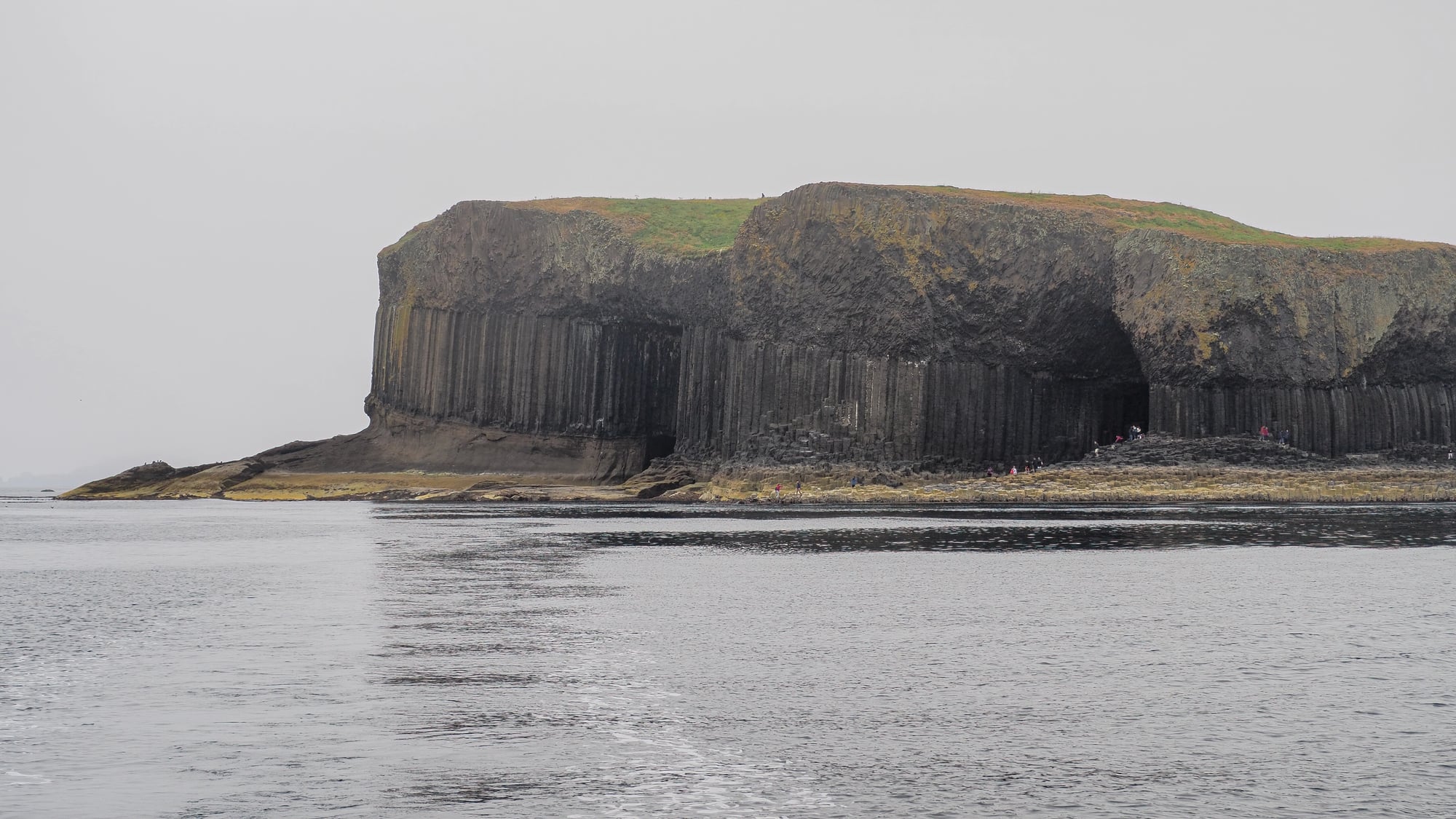
The same volcanic event that created the Giant’s Causeway gave Scotland this sea cave that resembles a Gothic cathedral — and this isn’t just poetic license, because the hexagonal columns here actually form what looks like ribbed vaulting overhead, while the cave opening frames the sea in a perfect arch that would make any medieval architect envious (assuming medieval architects had to work with cooling lava instead of limestone). The acoustics are so precise that Mendelssohn wrote his Hebrides Overture after visiting.
Which makes sense.
But here’s what the travel guides don’t mention: the cave changes size depending on the tide, so what feels like a vast hall at low tide becomes an intimate chamber when the water rises, and you realize you’re not just looking at architecture — you’re watching it breathe.
Moeraki Boulders
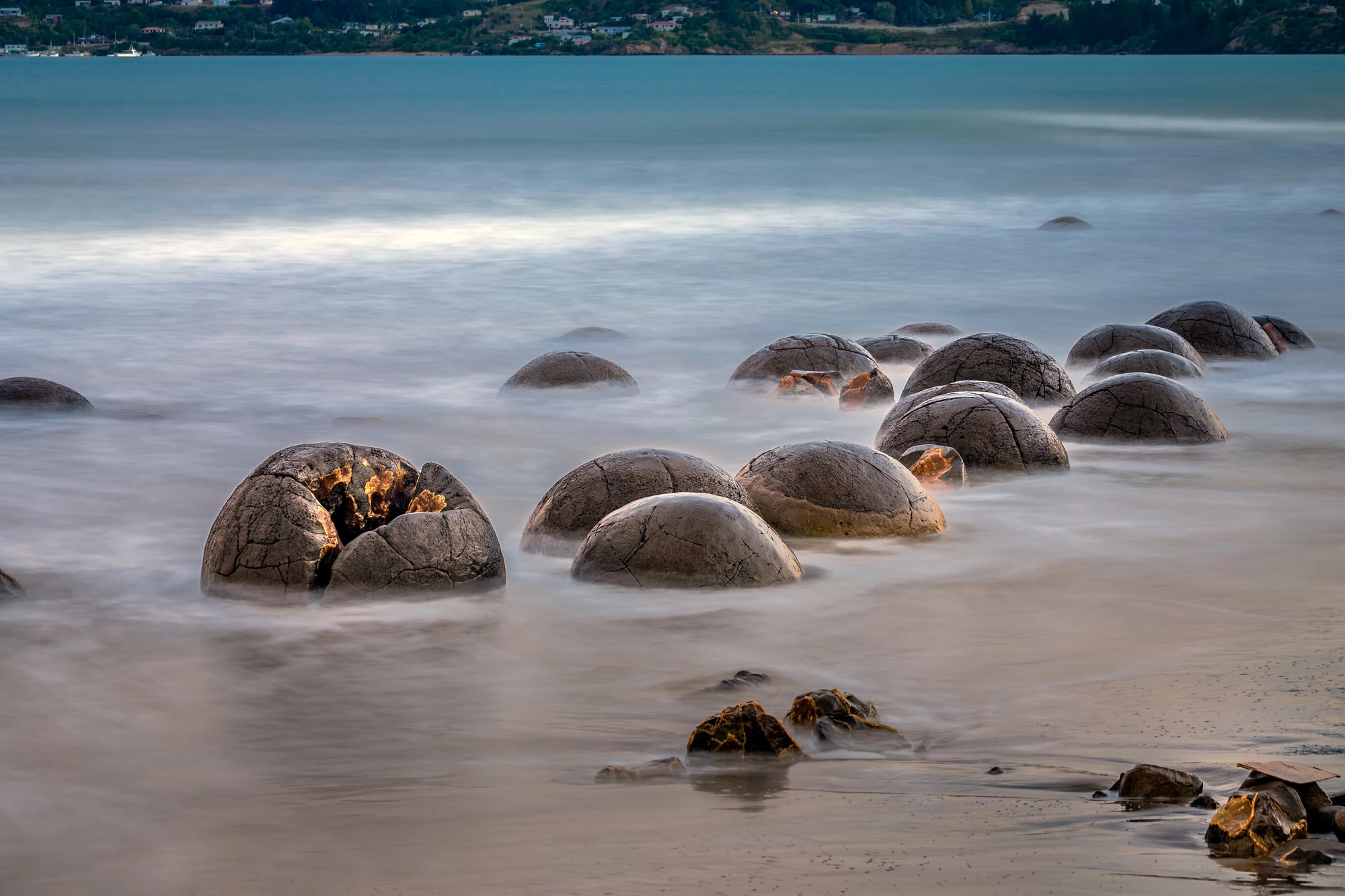
Picture a giant’s marble collection scattered across a New Zealand beach. These spherical stones sit perfectly spaced along Koekohe Beach, some cracked open to reveal honeycomb interiors.
They’re too round, too evenly distributed to feel accidental.
The Maori knew these as eel baskets washed ashore from an ancestral canoe. Science calls them concretions — minerals that accumulated around a core over millions of years on the ocean floor.
The beach eroded around them, leaving these stone spheres behind like forgotten eggs from something unimaginably large.
The Twelve Apostles
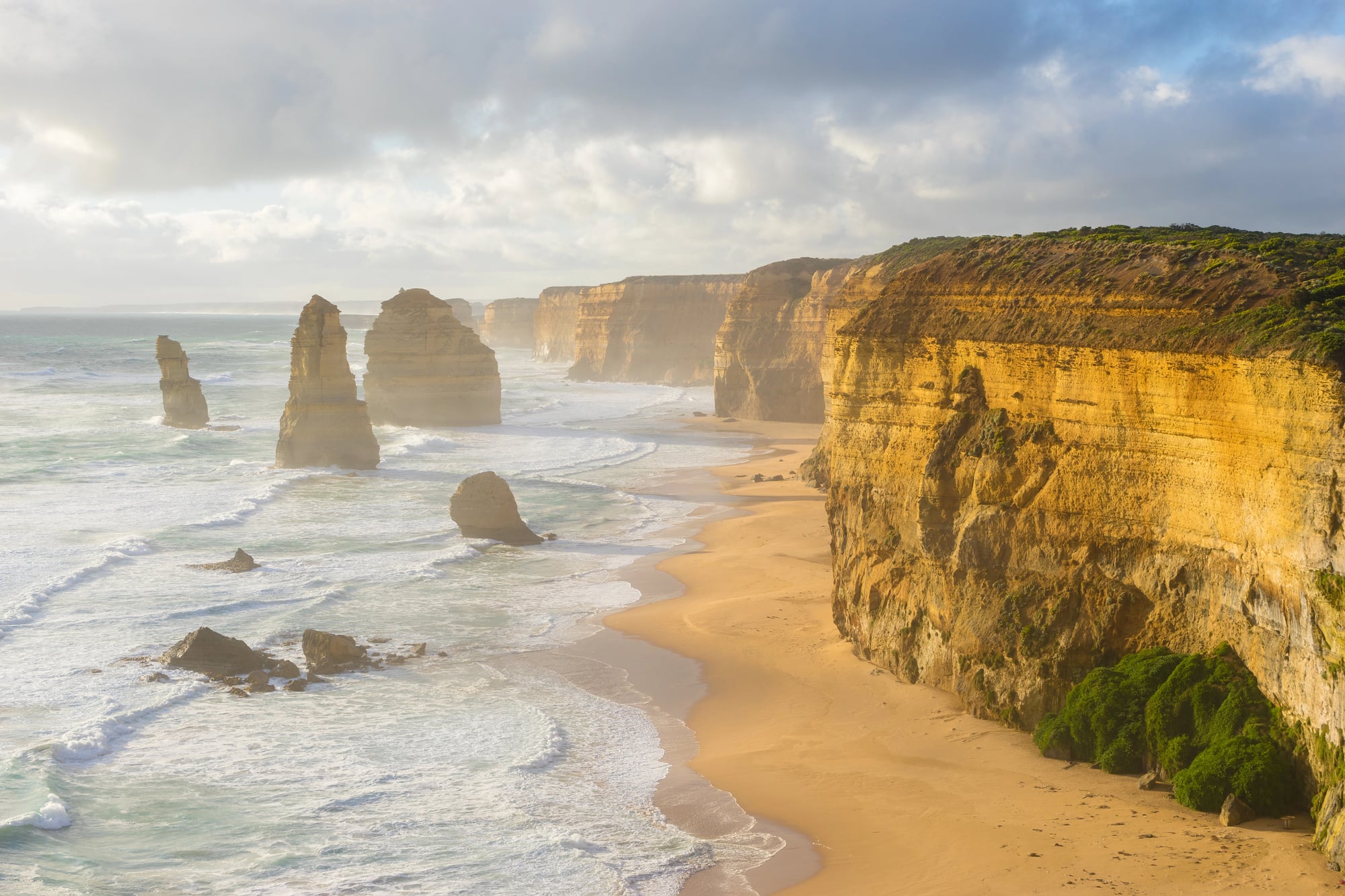
Australia delivered another geological masterpiece along the Great Ocean Road, though the marketing department took some creative liberties with the count (there were originally nine limestone stacks, and erosion has whittled that down to eight). These pillars stand in the surf like ancient sentinels, each one a monument to the slow violence of waves against soft rock — and watching them, you understand that you’re seeing both the result of destruction and something accidentally beautiful, the way a forest fire can reveal a landscape you never knew was there.
The Southern Ocean carved these formations from the mainland cliffs over 20 million years, first creating caves, then arches, then isolated pillars. The process continues — one of the apostles collapsed in 2005, reminding visitors that geological time doesn’t stop for tourism.
Old Harry Rocks
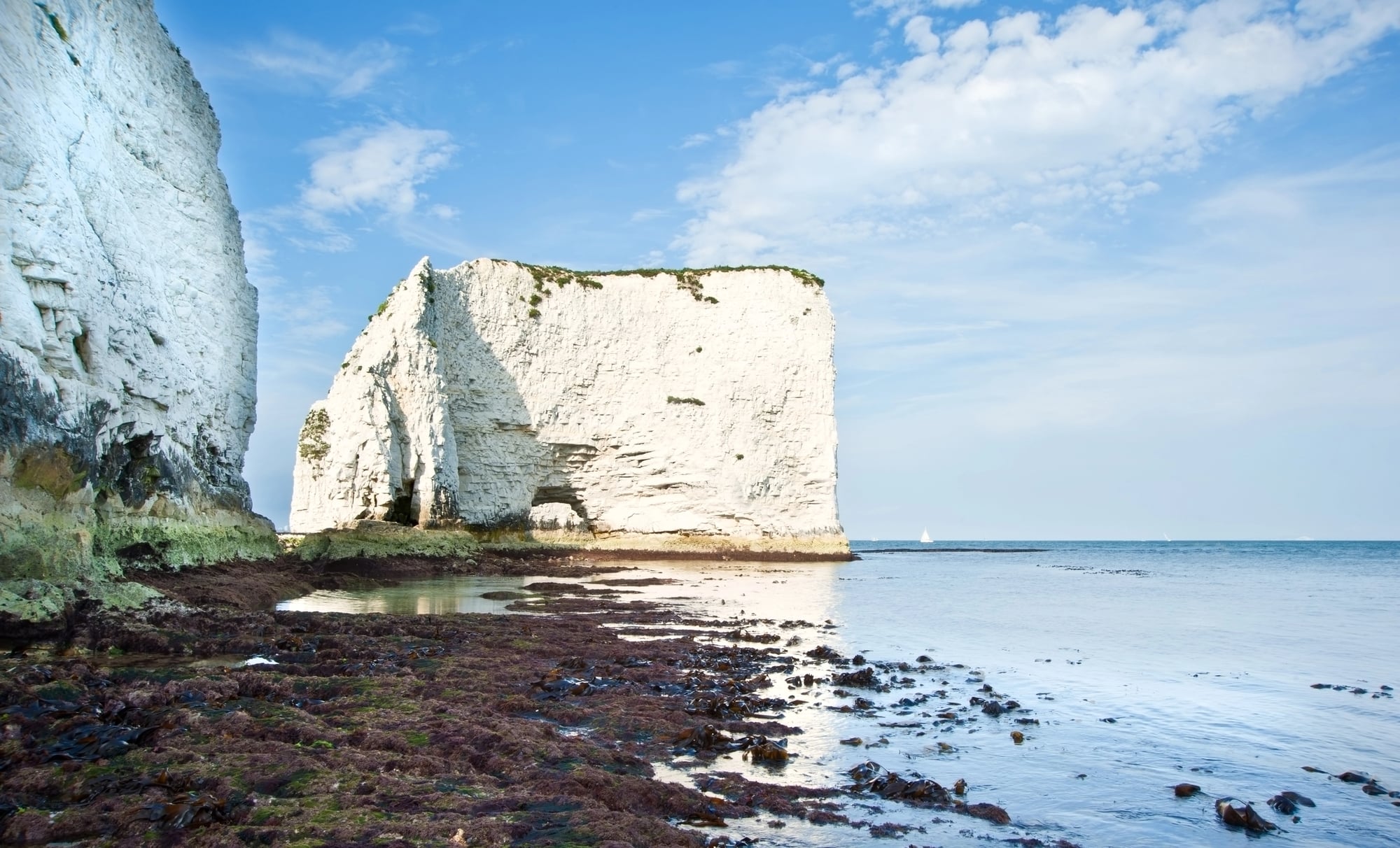
These chalk stacks off England’s Dorset coast stand like weathered teeth. Old Harry, the main formation, once had a wife — another stack that crumbled in 1896.
Now he stands alone, a 30-foot pillar of white chalk against the blue-green sea.
The Jurassic Coast produces drama on a schedule. Every winter storm takes another bite from the cliffs.
Every spring reveals new arches, caves, and eventually more isolated stacks. Old Harry won’t last forever, but his replacement is already being carved from the mainland behind him.
Ko Tapu
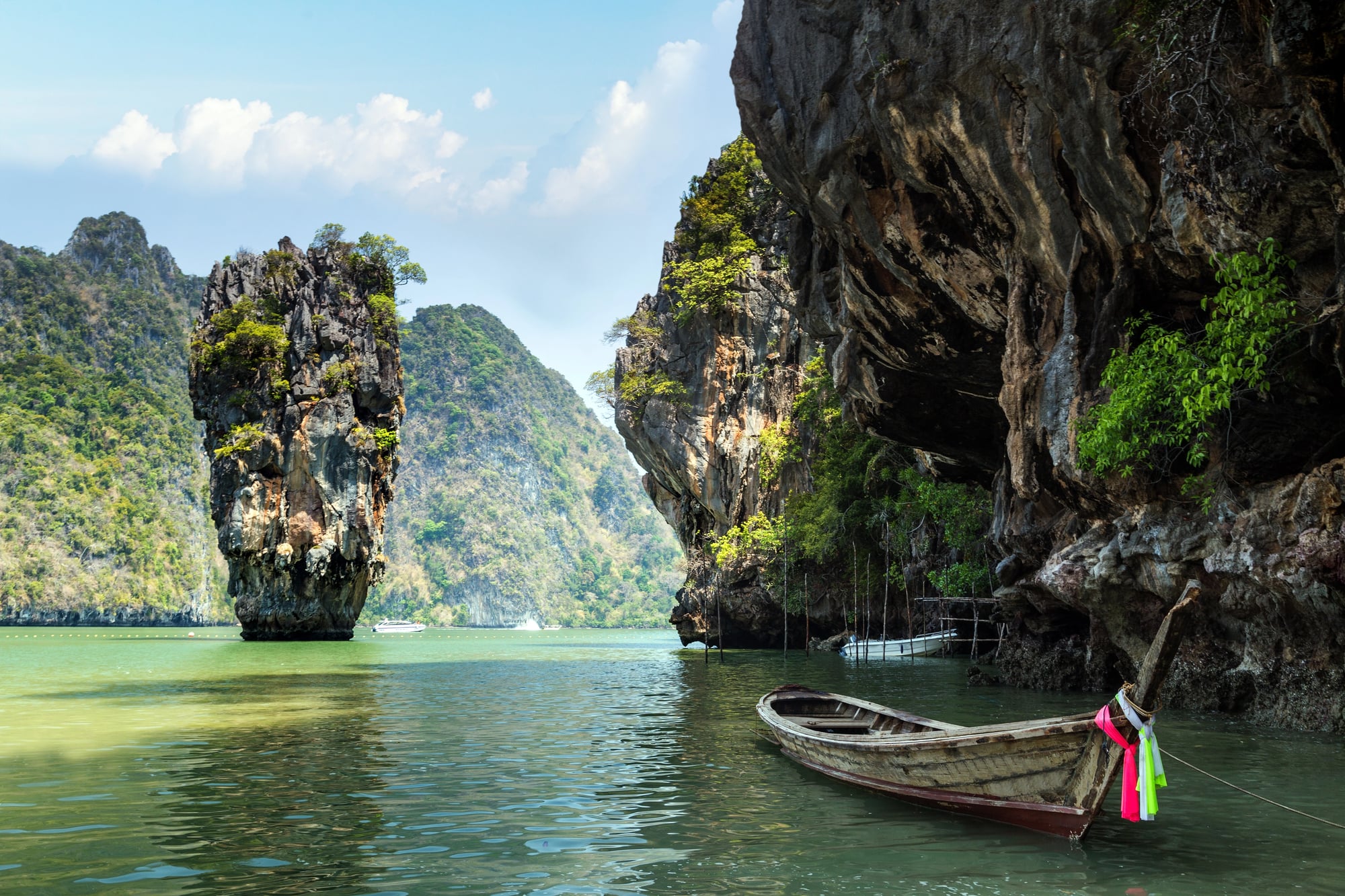
James Bond made this limestone tower famous, but Ko Tapu earned its reputation long before “The Man with the Golden Gun” needed a villain’s lair. The formation rises 131 feet from Phang Nga Bay in Thailand like a stone exclamation point.
Limestone karst topography created this landscape — acidic water dissolving rock over millennia, leaving behind the most resistant formations.
Ko Tapu translates to “nail island,” which captures its improbable proportions perfectly. The base is narrower than the top, suggesting that erosion works by different rules here.
Haystack Rock
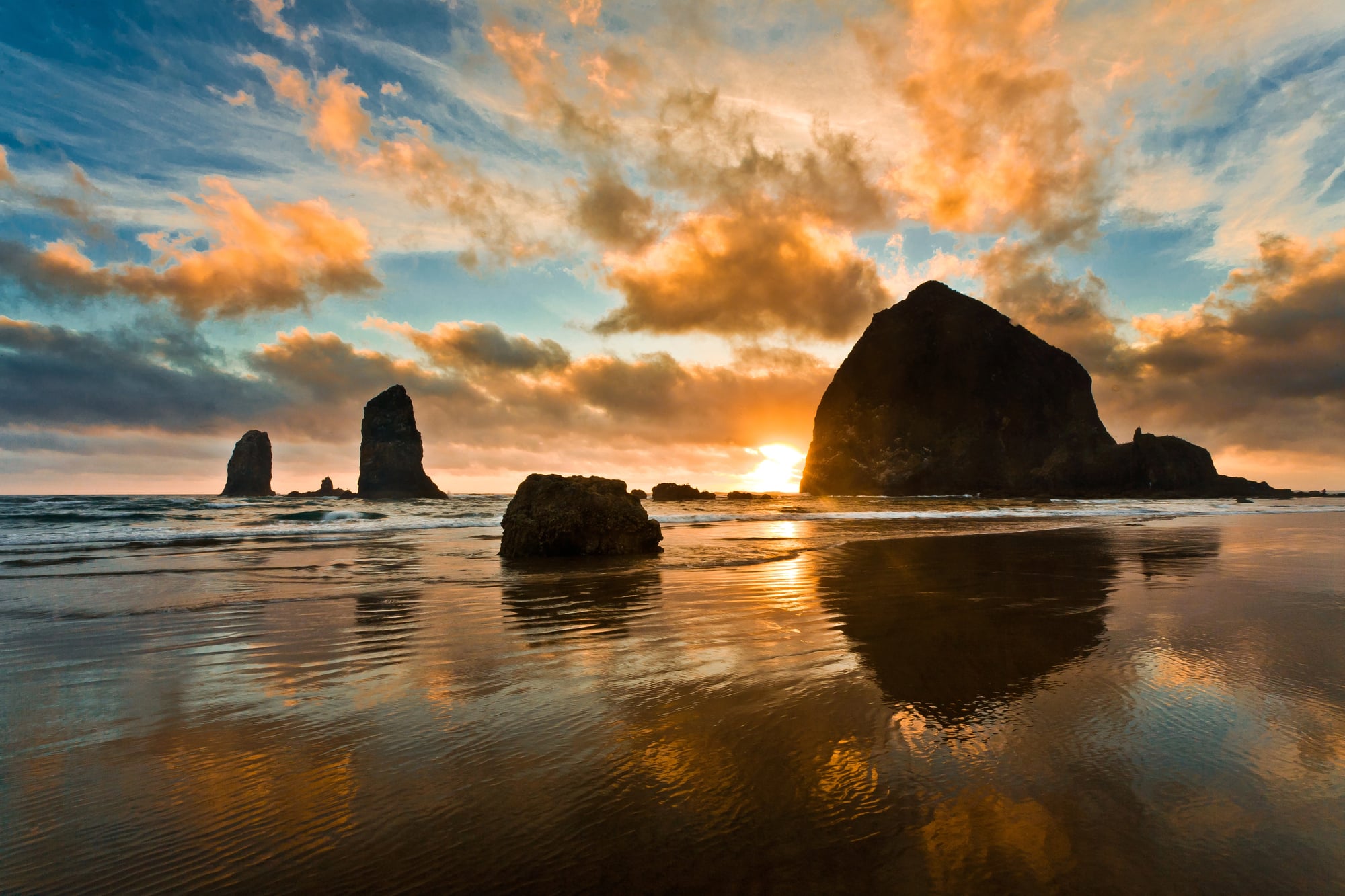
Oregon’s most photographed rock formation squats in the surf like a 235-foot-tall monument to stubbornness. Haystack Rock at Cannon Beach formed from Columbia River basalt flows 15 million years ago — and what makes it particularly striking is not just its size, but the way it sits alone on an otherwise smooth beach, as if someone dropped it there on purpose, though the purpose remains unclear.
At low tide, the formation reveals tide pools teeming with sea anemones, starfish, and hermit crabs. The rock serves as both geological curiosity and marine sanctuary.
Puffins nest on its summit during breeding season, adding a biological dimension to the geological spectacle.
But the formation’s real achievement is its timing. It appears in photographs at exactly the right moment — when the tide is out enough to walk close, but not so far out that the dramatic waves disappear.
The Twelve Apostles Of Tasmania
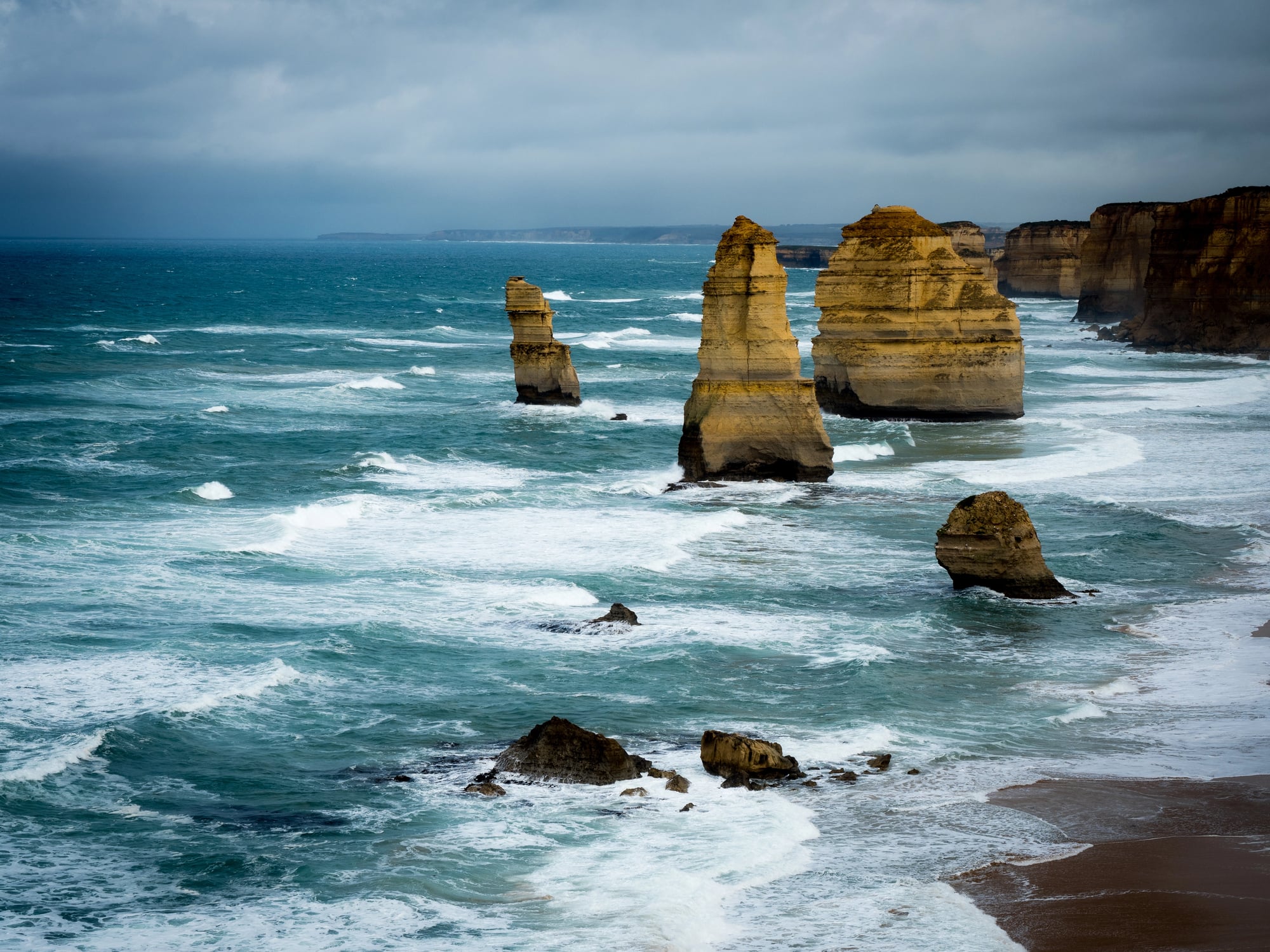
Victoria offers its own apostle collection along the Great Ocean Road, though these limestone formations at Port Campbell tell a different story than other coastal formations elsewhere. Smaller, more weathered, carved from different stone — they’re like distant cousins who grew up in a harsher neighborhood.
The Southern Ocean hits Tasmania with particular force. These stacks show the results — more jagged, less symmetrical than the famous dozen on the mainland.
But there’s something honest about their irregular shapes, as if they’ve given up pretending to be monuments and settled for being survivors.
Haystack Rock (Bandon Beach)
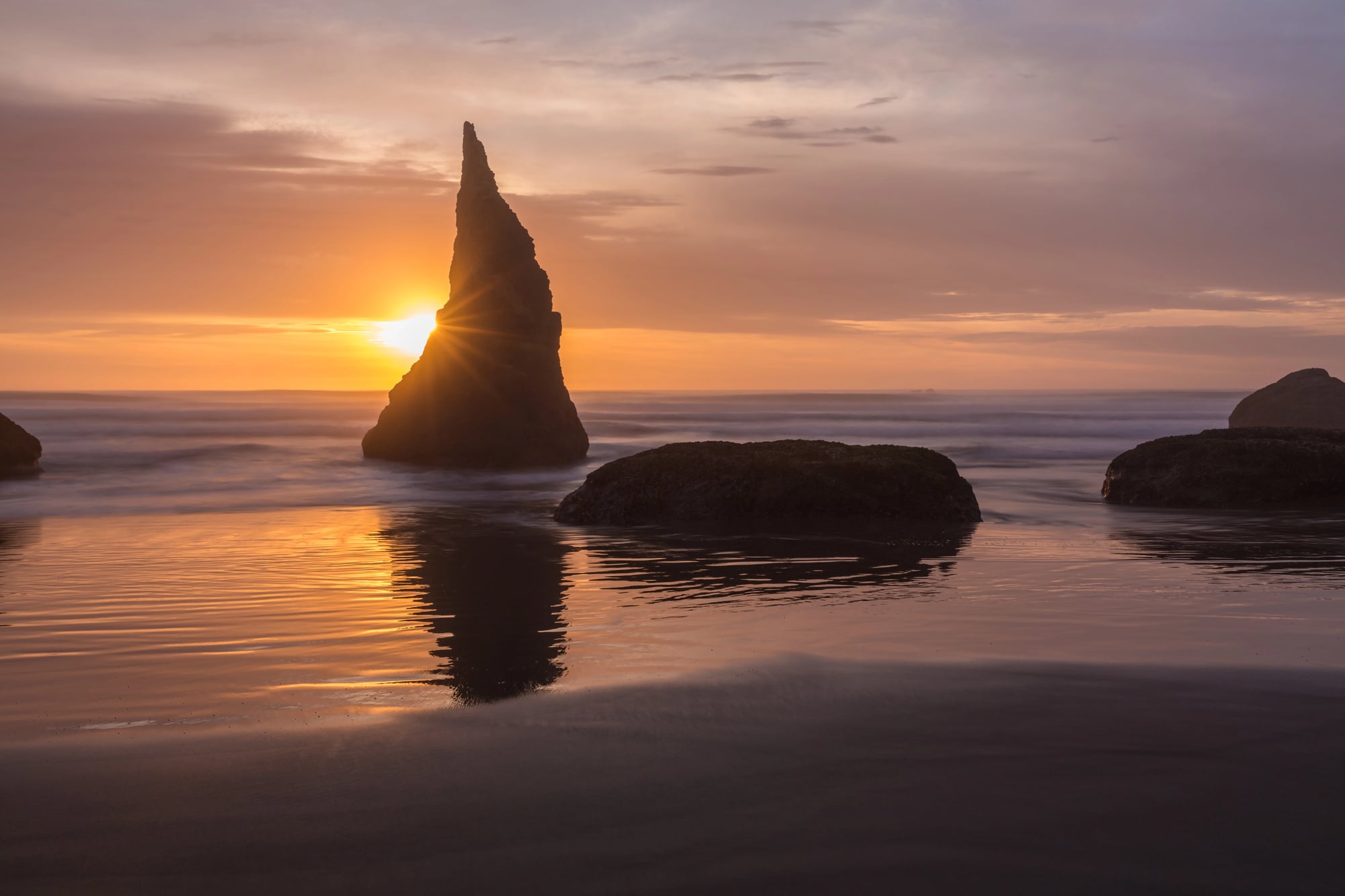
Oregon has several haystack rocks, but the monoliths at Bandon Beach form a collection rather than standing alone. These seastacks cluster offshore like a conversation frozen in stone — and the comparison isn’t entirely fanciful, because each formation represents a different moment in geological time, some more weathered than others, some still connected to the mainland by natural bridges that suggest they’re still in the process of becoming islands.
The beach itself is littered with smaller formations, creating a landscape that feels more like sculpture garden than coastline. At sunset, the rocks turn gold against purple skies.
At dawn, they’re black silhouettes against silver water.
Photographers arrive before sunrise to catch the light. The rocks cooperate by staying exactly where the ocean left them millions of years ago.
The Pinnacles
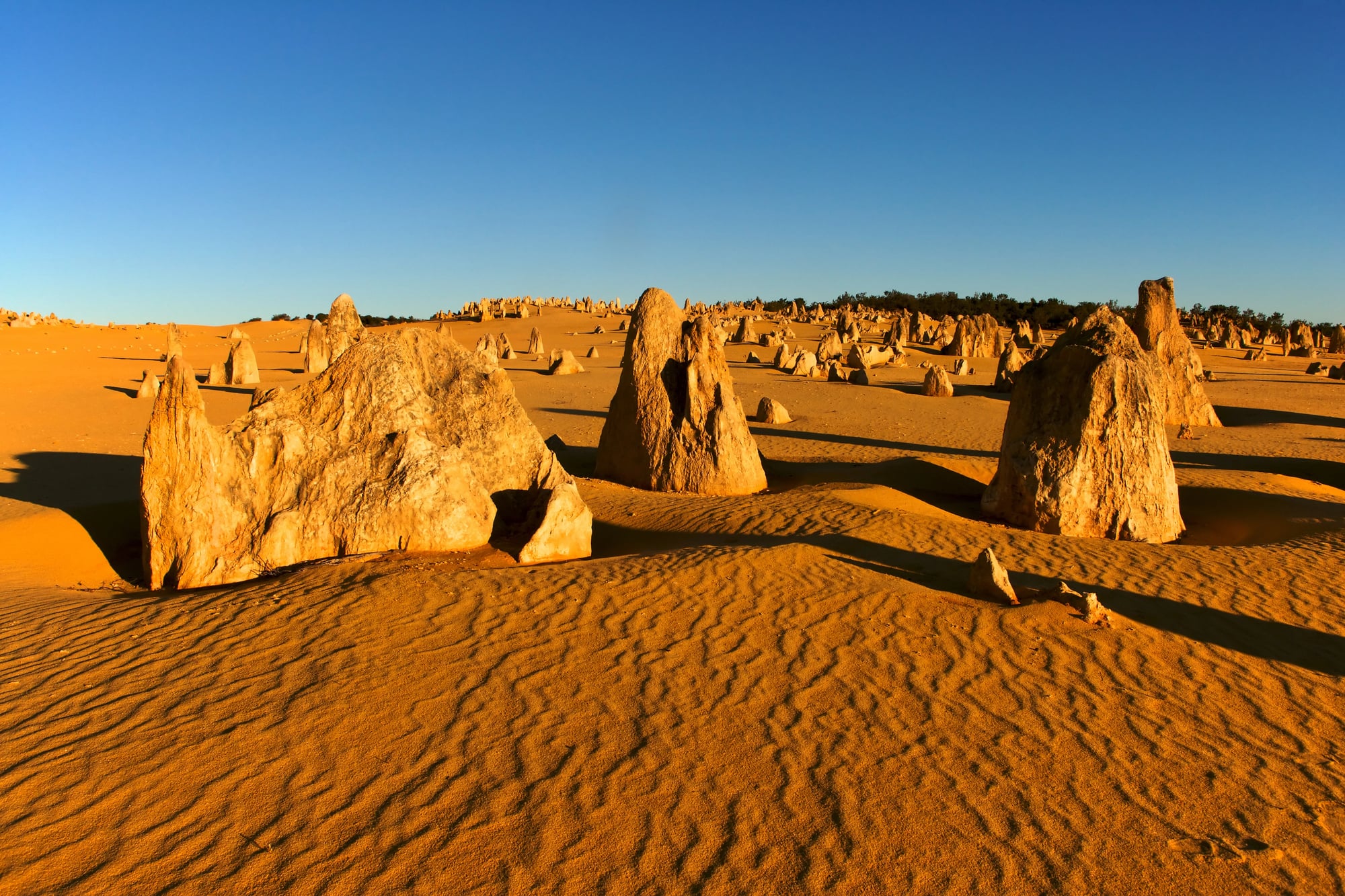
Western Australia’s Pinnacles Desert proves that beach formations don’t need to be near water. These limestone pillars rise from yellow sand like a stone forest, some reaching 12 feet high.
They’re the remains of an ancient coastline, now miles inland.
The formations began as seashells accumulated on the ocean floor. When sea levels dropped, the exposed limestone weathered into these isolated spires.
Wind and rain carved the details — some pillars are smooth, others deeply grooved, creating shadows that shift throughout the day.
The desert setting makes these formations particularly surreal. No waves, no tide pools, just stone fingers reaching toward an empty sky.
Ko Phi Phi Leh
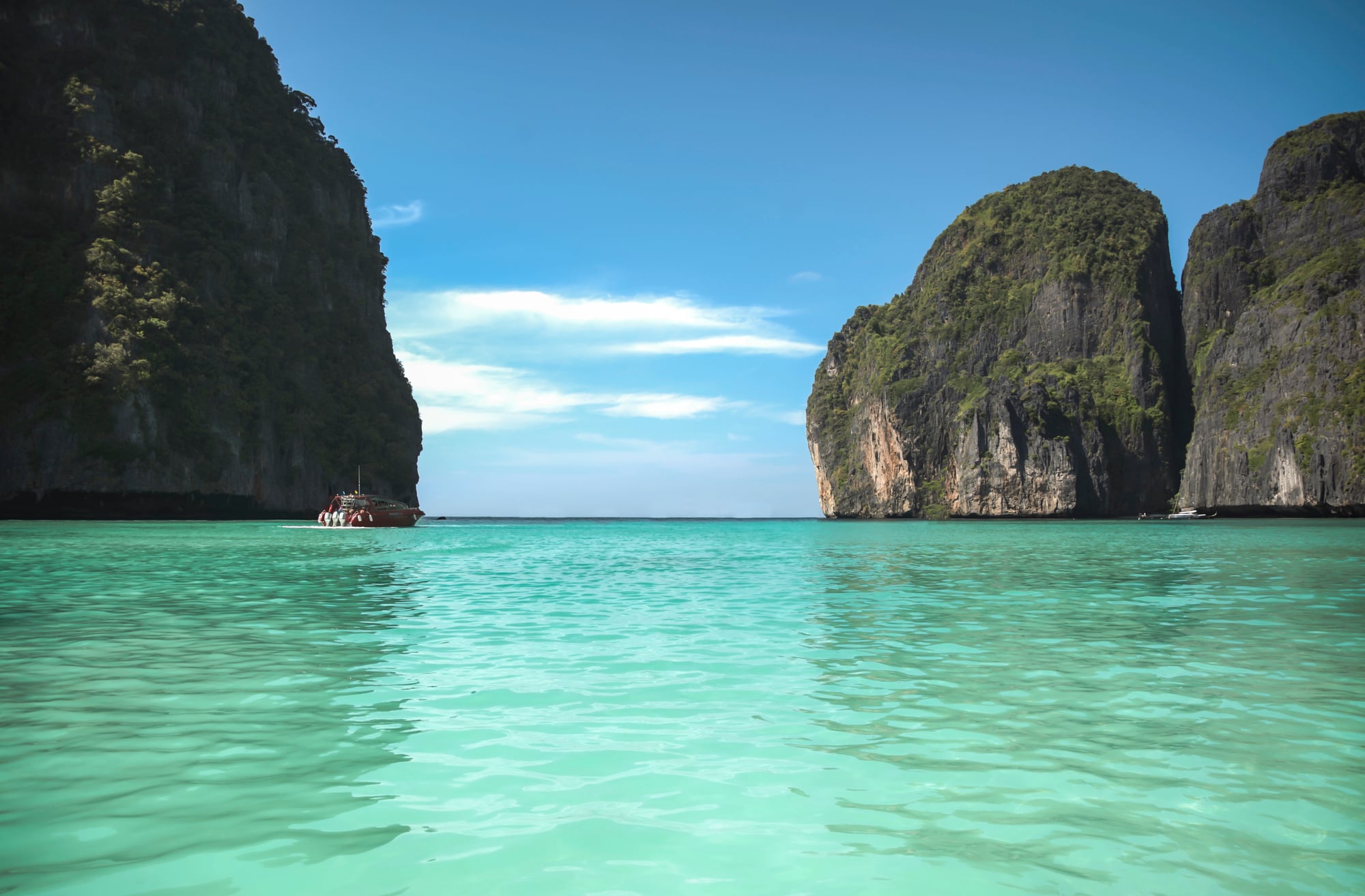
This Thai island showcases limestone karst at its most dramatic. Vertical cliffs rise directly from turquoise water, creating lagoons that feel more like outdoor cathedrals — the rock faces so sheer and tall that they frame the sky in narrow strips, and swimming in the protected waters below gives you the sensation of floating at the bottom of a geological well, though one filled with light rather than darkness.
Maya Bay, carved into the island’s center, became famous through “The Beach” but earned its reputation through millions of years of patient water erosion. The bay is almost completely enclosed, accessible only through narrow channels between towering limestone walls.
But the formation’s real achievement is its timing. The limestone happened to be exactly the right hardness — soft enough for water to carve, hard enough to maintain vertical walls. A slightly different mineral composition and the island would be either flat or completely dissolved.
Durdle Door
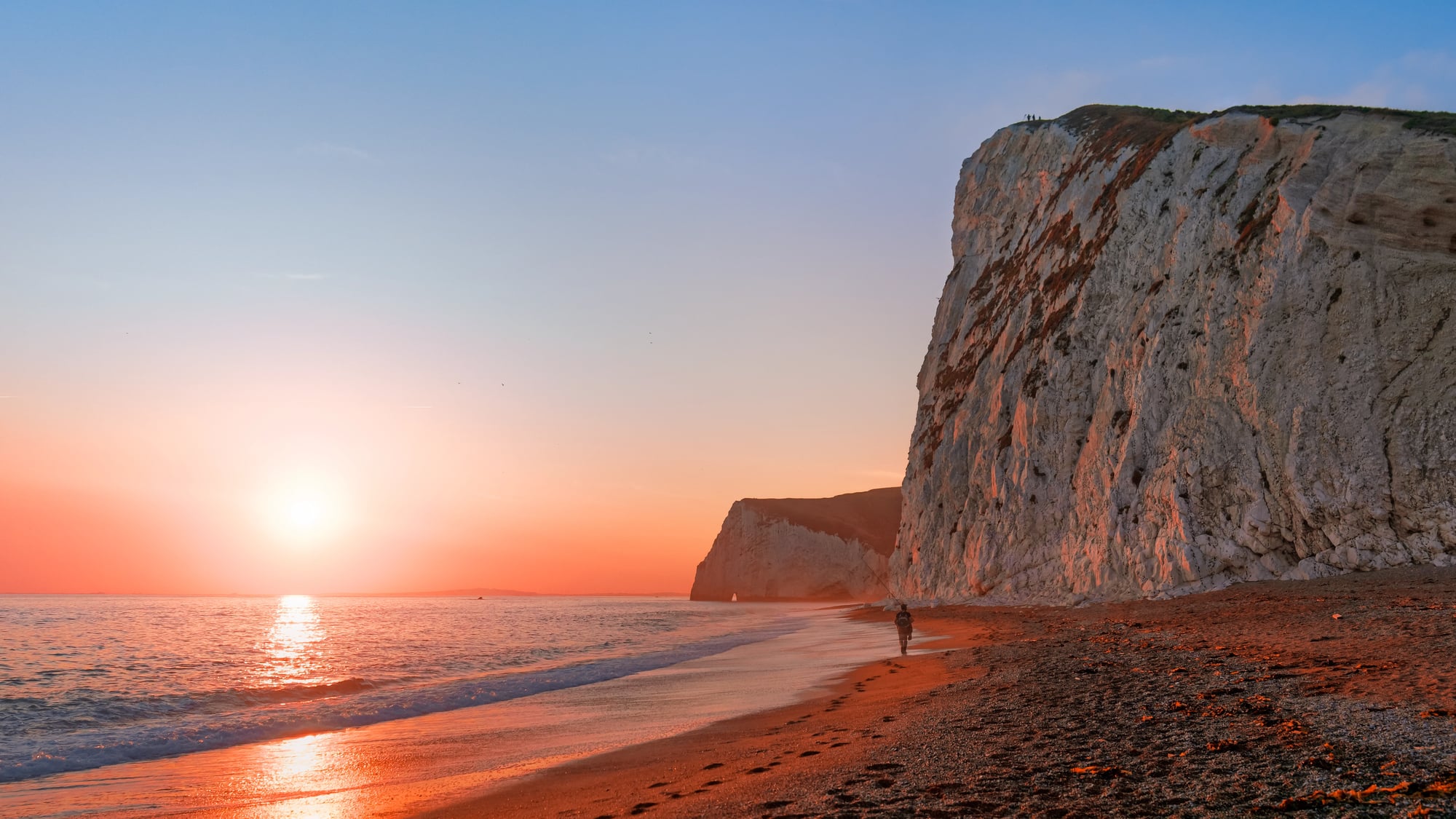
England’s Jurassic Coast produced this limestone arch that frames the English Channel like a natural window. Durdle Door stands 200 feet high, carved from Portland stone by waves that found a weakness in the cliff and exploited it over thousands of years.
The formation represents erosion at its most architectural.
The arch is perfectly proportioned — wide enough to frame distant headlands, tall enough to let sailing boats pass underneath. Nature apparently has opinions about composition and scale.
Bell Rock
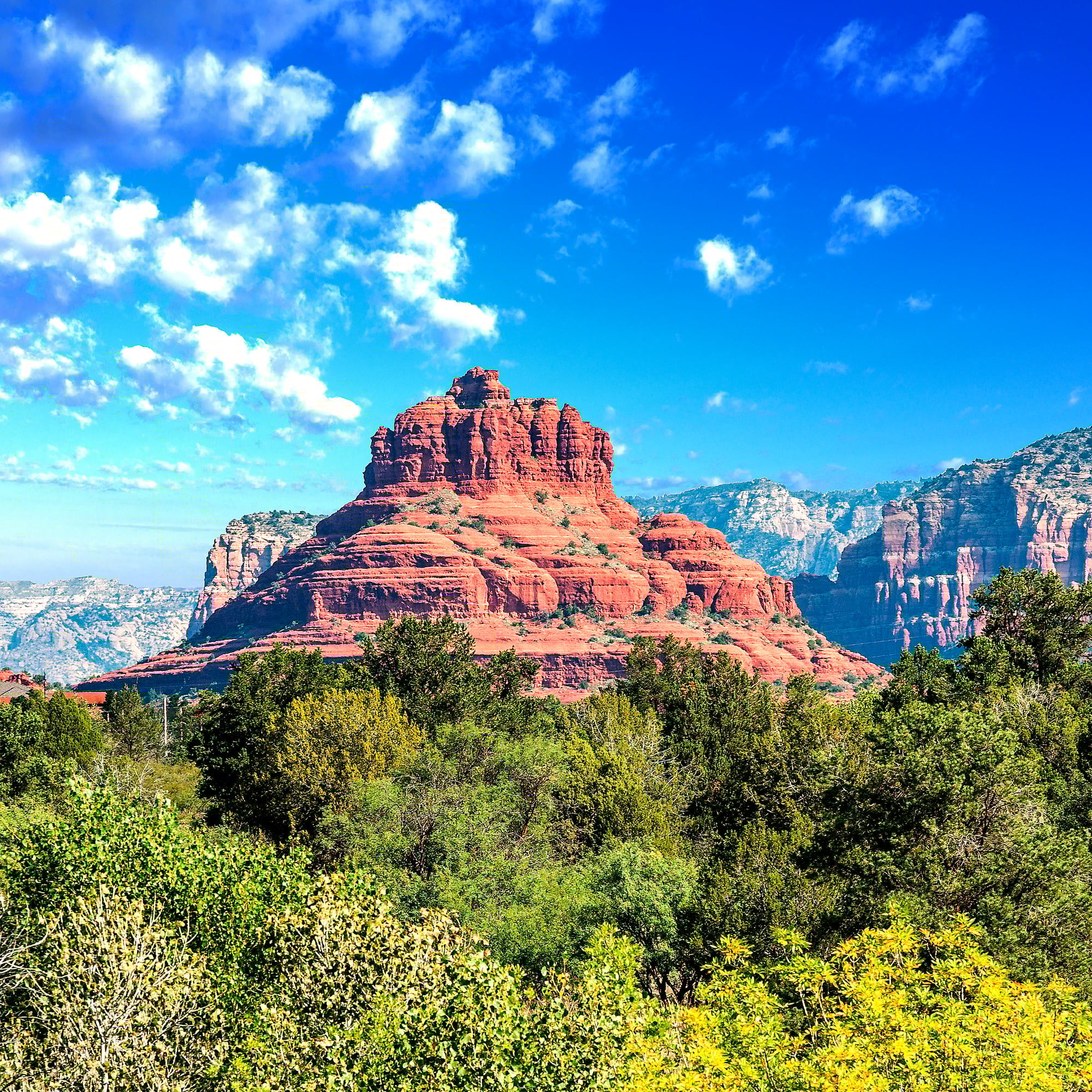
Scotland’s Bell Rock lighthouse sits on a formation that disappears entirely at high tide. The reef extends just four feet above the highest spring tides, making it one of the most challenging lighthouse locations ever attempted.
The rock itself formed from Old Red Sandstone, harder than the surrounding seabed but not by much.
It’s essentially a geological speed bump that happened to create one of the most dangerous shipping hazards in the North Sea. Ships discovered Bell Rock the hard way for centuries before engineers figured out how to build a lighthouse that could survive complete submersion twice daily.
The lighthouse, completed in 1811, stands 115 feet tall. At high tide, it appears to rise directly from the sea.
Elephant Rock
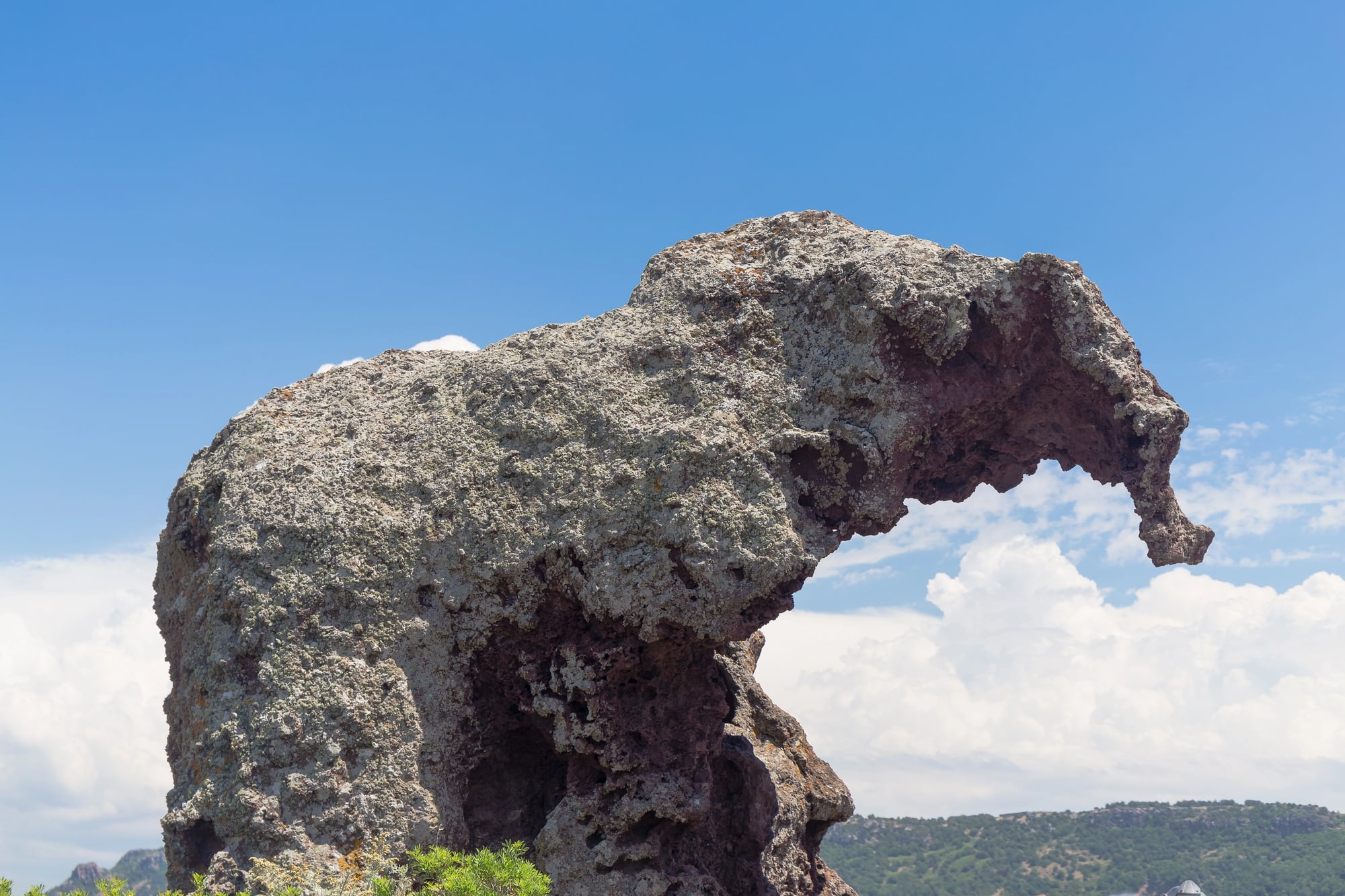
New Zealand’s Elephant Rock on Otago Peninsula requires no imagination to see the resemblance. The limestone formation displays a perfect trunk, legs, and body emerging from the surf.
Even the proportions work — this could be a life-sized elephant made of stone.
Coastal erosion carved the details over millions of years. The “trunk” formed where softer rock eroded faster than surrounding limestone.
The “legs” are simply the most resistant sections of the original cliff, left behind as waves carved away everything else.
The formation sits in a landscape of similar curiosities — nearby Castle Rock, Lovers Leap, and dozens of unnamed stacks and arches. Otago Peninsula seems to specialize in rock formations that look like something else.
The Grotto
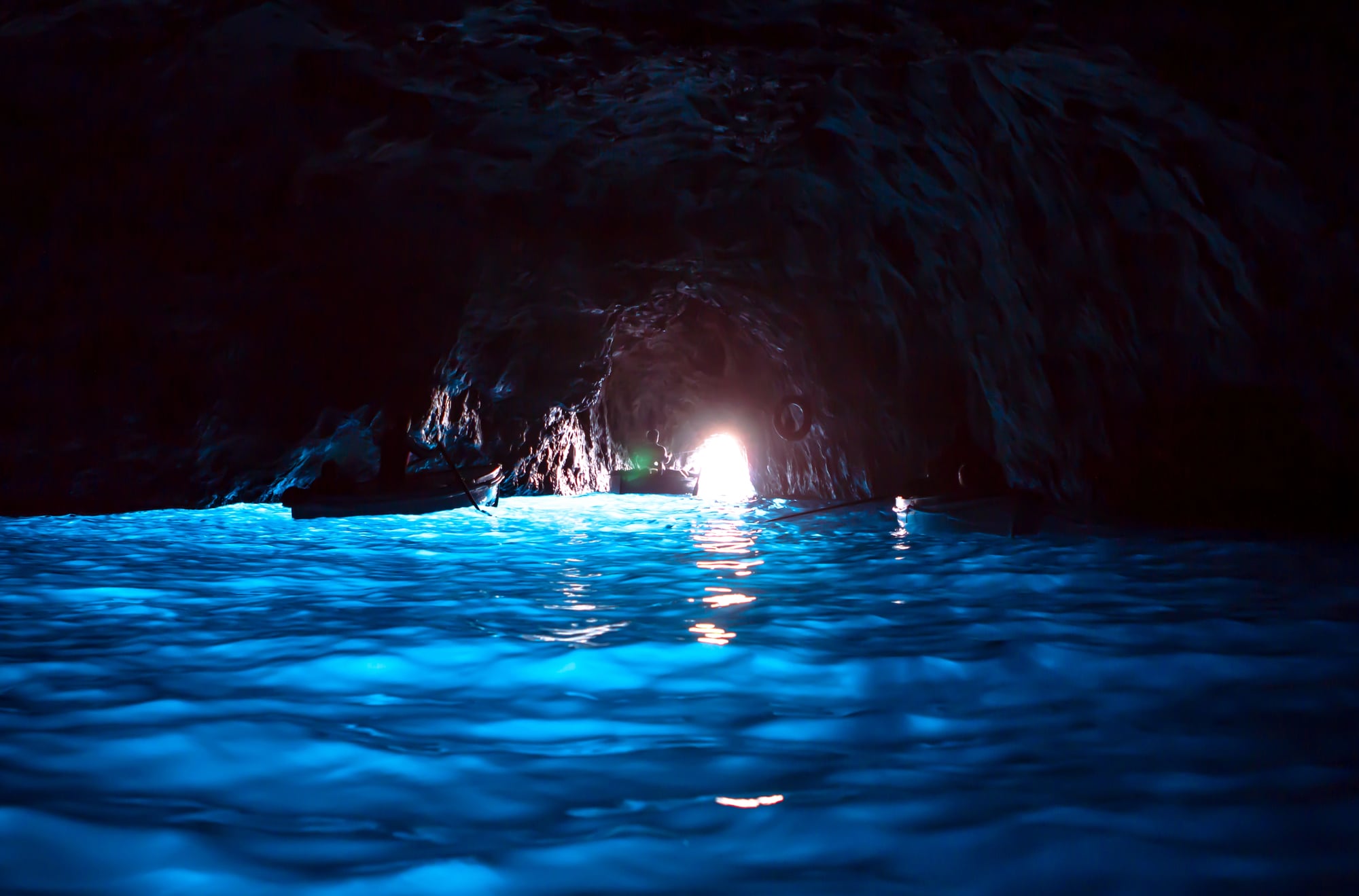
Australia’s Great Ocean Road saves one of its strangest formations for last. The Grotto is a sinkhole connected to the sea by an underground passage.
At the right tide and lighting conditions, the enclosed pool glows electric blue.
The formation began as a limestone cave. When the roof collapsed, it created this circular pool connected to the ocean by hidden channels.
Waves surge in and out through the underwater passage, creating a tidal pool that breathes with the sea.
The blue glow comes from sunlight filtering through the underwater connection. The effect is strongest at midday when the sun is directly overhead, illuminating the pool from below as well as above.
Where Geology Meets Wonder
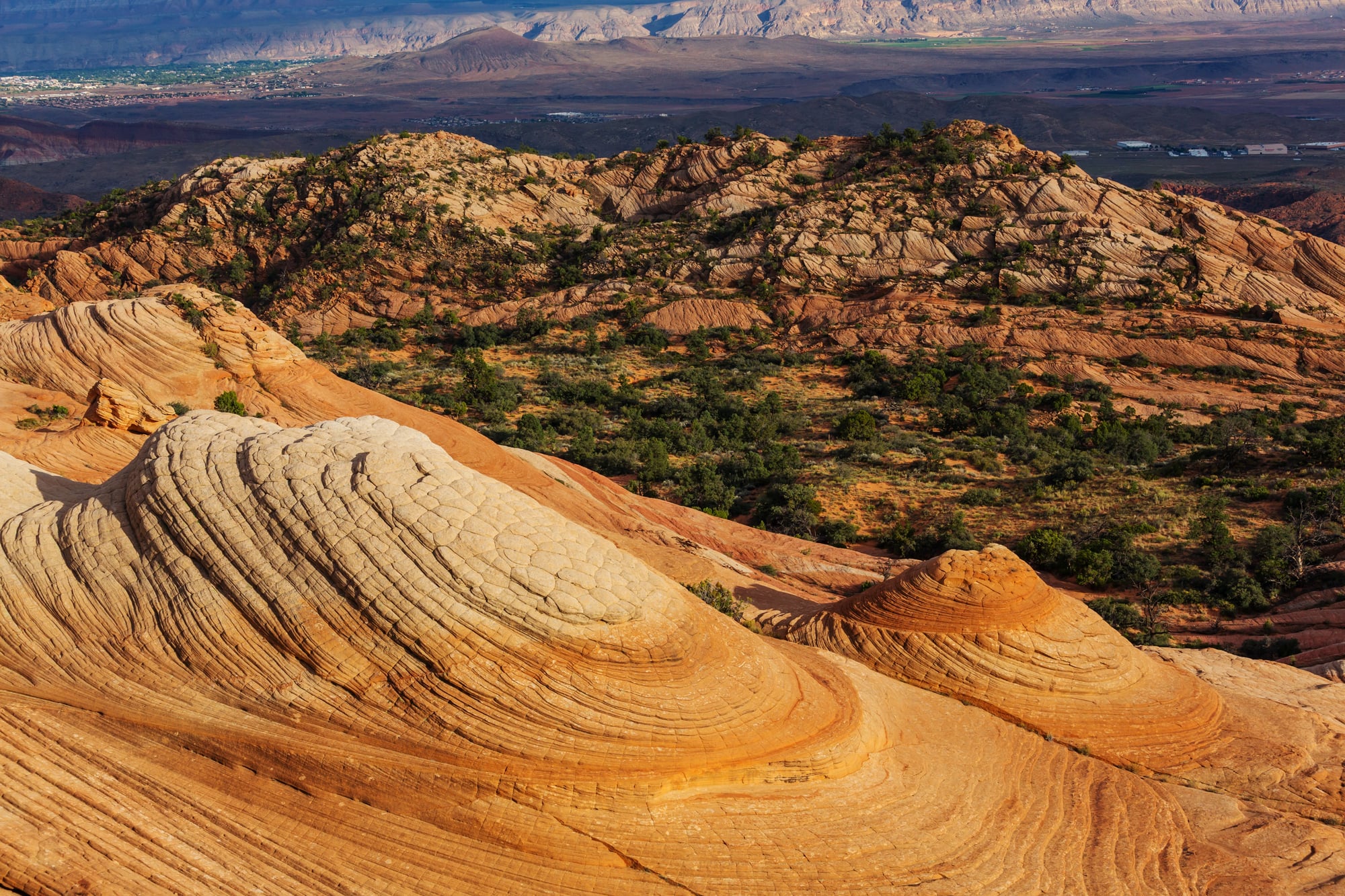
These formations remind you that the planet’s most impressive architecture wasn’t planned by anyone. Wind and water worked without blueprints, carving cathedrals and monuments through nothing more systematic than showing up every day for millions of years.
The results feel intentional precisely because they weren’t — each arch and pillar and impossible tower the result of forces that don’t care how their work will be received, which might be exactly why it moves you to stop and stare.
More from Go2Tutors!

- The Romanov Crown Jewels and Their Tragic Fate
- 13 Historical Mysteries That Science Still Can’t Solve
- Famous Hoaxes That Fooled the World for Years
- 15 Child Stars with Tragic Adult Lives
- 16 Famous Jewelry Pieces in History
Like Go2Tutors’s content? Follow us on MSN.