15 Cold Cases From History That Were Never Solved
There’s something unsettling about an unanswered question, especially when that question involves someone’s life or death. Cold cases occupy a strange space in our collective memory — stories frozen in time, missing their final chapter.
These aren’t just police files gathering dust in storage rooms; they’re puzzles that have confounded investigators, historians, and amateur sleuths for decades or even centuries. Some involve famous figures whose disappearances shocked the world, while others center on ordinary people whose fates remain achingly mysterious.
What unites them all is the maddening absence of closure, the way they continue to whisper their secrets just out of reach.
The Princes in the Tower

Edward V and his younger brother Richard disappeared in 1483. They were last seen playing in the Tower of London before vanishing completely.
History points fingers at their uncle, Richard III, but no proof ever emerged.
Two small skeletons were found in 1674 during renovations, buried under a staircase. The bones were assumed to be the princes and reburied in Westminster Abbey.
Modern analysis has been denied repeatedly — which only deepens the mystery.
The Disappearance of Amelia Earhart

When someone vanishes mid-flight over the Pacific Ocean, the questions multiply like ripples across water (and in Earhart’s case, those ripples have been spreading for nearly nine decades). She was attempting to circumnavigate the globe in 1937 — a feat that would have cemented her place in aviation history — when her plane disappeared somewhere near Howland Island, taking both her and navigator Fred Noonan into one of the most enduring mysteries of the modern era.
The search efforts were massive, involving ships and aircraft scouring thousands of square miles of ocean, but the Pacific is vast and unforgiving, swallowing secrets as easily as it swallows planes.
What makes this case particularly haunting isn’t just the disappearance itself, but the way it seems to hover just on the edge of being solved. Theories abound.
Radio transmissions that might have been distress calls. Pieces of aluminum that could be aircraft fragments. Bones discovered on remote islands that may or may not belong to a pioneering aviator.
Each potential clue arrives with its own shadow of doubt, as if the mystery is determined to remain just that — a mystery.
Jack the Ripper
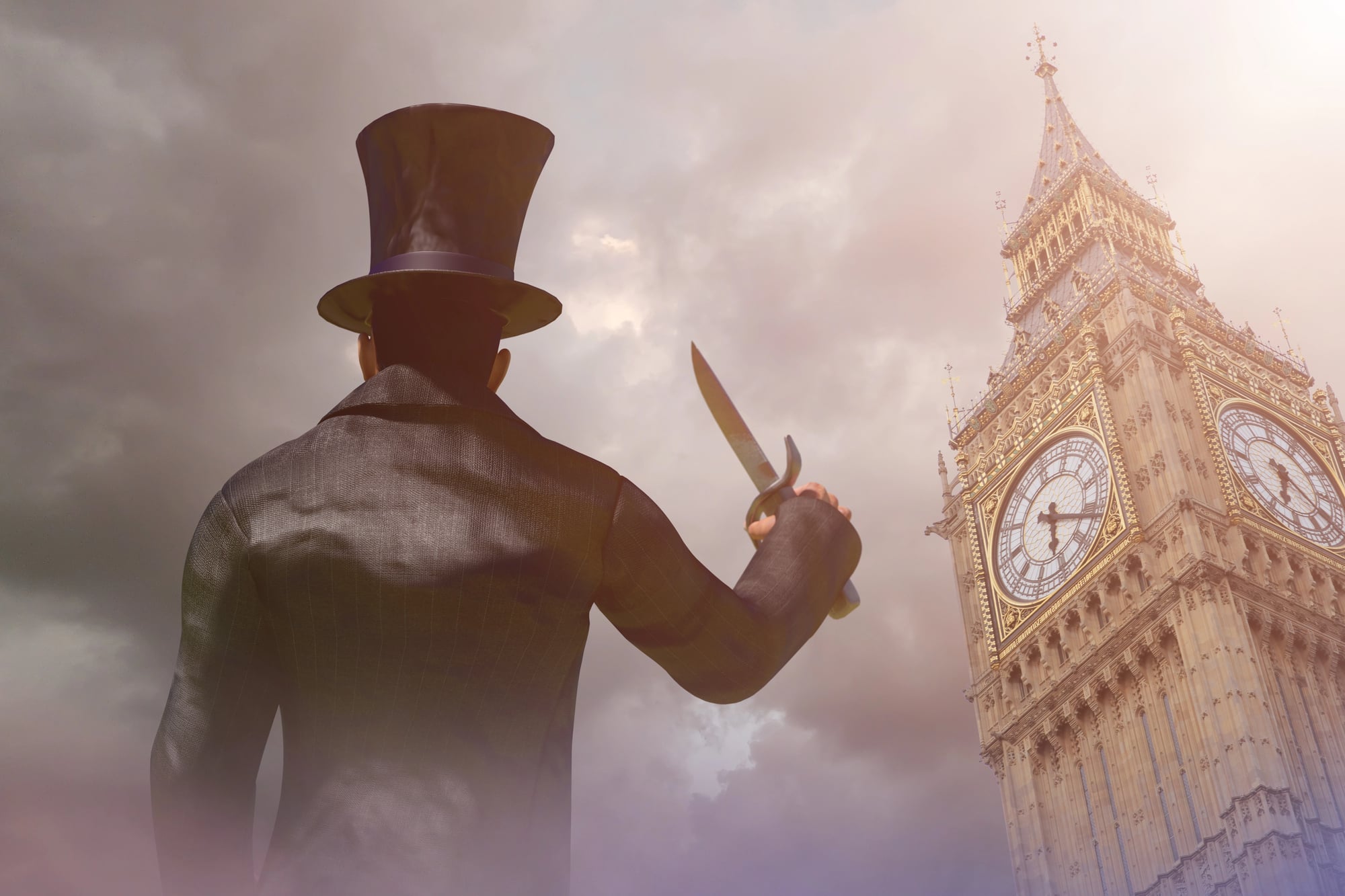
Jack the Ripper wasn’t just a criminal — he was a brand. The first serial killer to achieve global notoriety, largely because he operated in the right place at the right time.
London in 1888 had newspapers eager for sensational stories and a public hungry for dark entertainment.
Five women died in Whitechapel, all displaying similar patterns of violence. The killer sent taunting letters to police and press, though most were likely hoaxes.
Suspects have ranged from doctors to royalty, each theory more elaborate than the last. None have stuck because none needed to.
The mystery became more valuable than any solution.
The Zodiac Killer
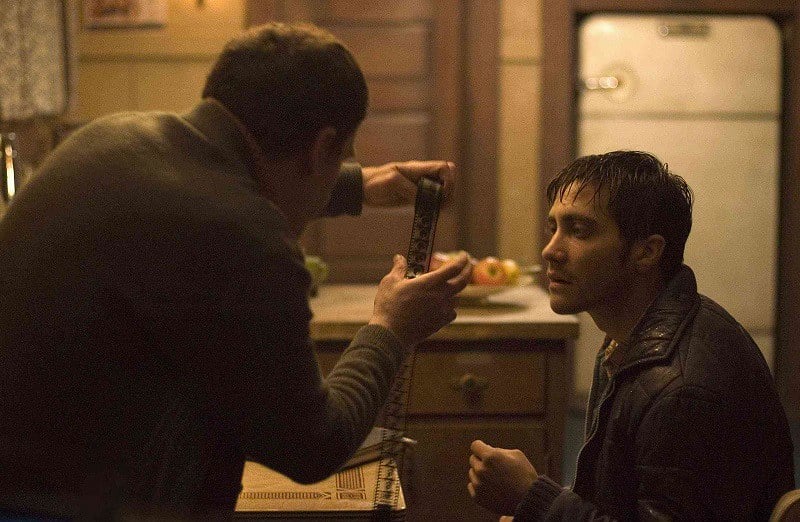
The Zodiac Killer turned murder into a game show, complete with cryptograms and media appearances. He operated in Northern California during the late 1960s and early 1970s, claiming responsibility for at least five deaths though he boasted of many more.
His letters to newspapers weren’t just confessions — they were performances.
What set the Zodiac apart was his understanding of publicity. He didn’t just kill; he created a character, complete with a distinctive symbol and a flair for psychological warfare.
The ciphers he sent were part genuine puzzle, part theatrical prop. Some have been solved, others remain impenetrable.
The killer himself vanished as abruptly as he appeared, leaving behind a legacy that’s equal parts genuine terror and calculated showmanship.
The Disappearance of the Roanoke Colony

In 1587, over 100 English settlers established a colony on Roanoke Island off the coast of present-day North Carolina, but when supply ships returned three years later, the entire settlement had vanished — not just the people, but nearly every trace of their daily lives.
The only clue was the word “CROATOAN” carved into a wooden post, a message that seemed to point toward a nearby island inhabited by friendly Native Americans, yet no definitive evidence of the colonists’ fate has ever been found there or anywhere else.
What makes the mystery particularly compelling (and frustrating) is how completely a hundred people managed to disappear from a fixed location, leaving behind questions that have outlasted empires: Did they attempt to relocate and perish in the attempt? Were they absorbed into local tribes? Did disease, starvation, or conflict claim them all?
The Lost Colony, as it came to be known, represents something deeper than just a historical puzzle — it’s a reminder of how precarious those early settlements really were, isolated on the edge of a vast and largely unknown continent.
And the word “CROATOAN” itself has taken on an almost mythical quality over the centuries, becoming a shorthand for mysterious disappearances and unanswered questions.
The Black Dahlia Murder
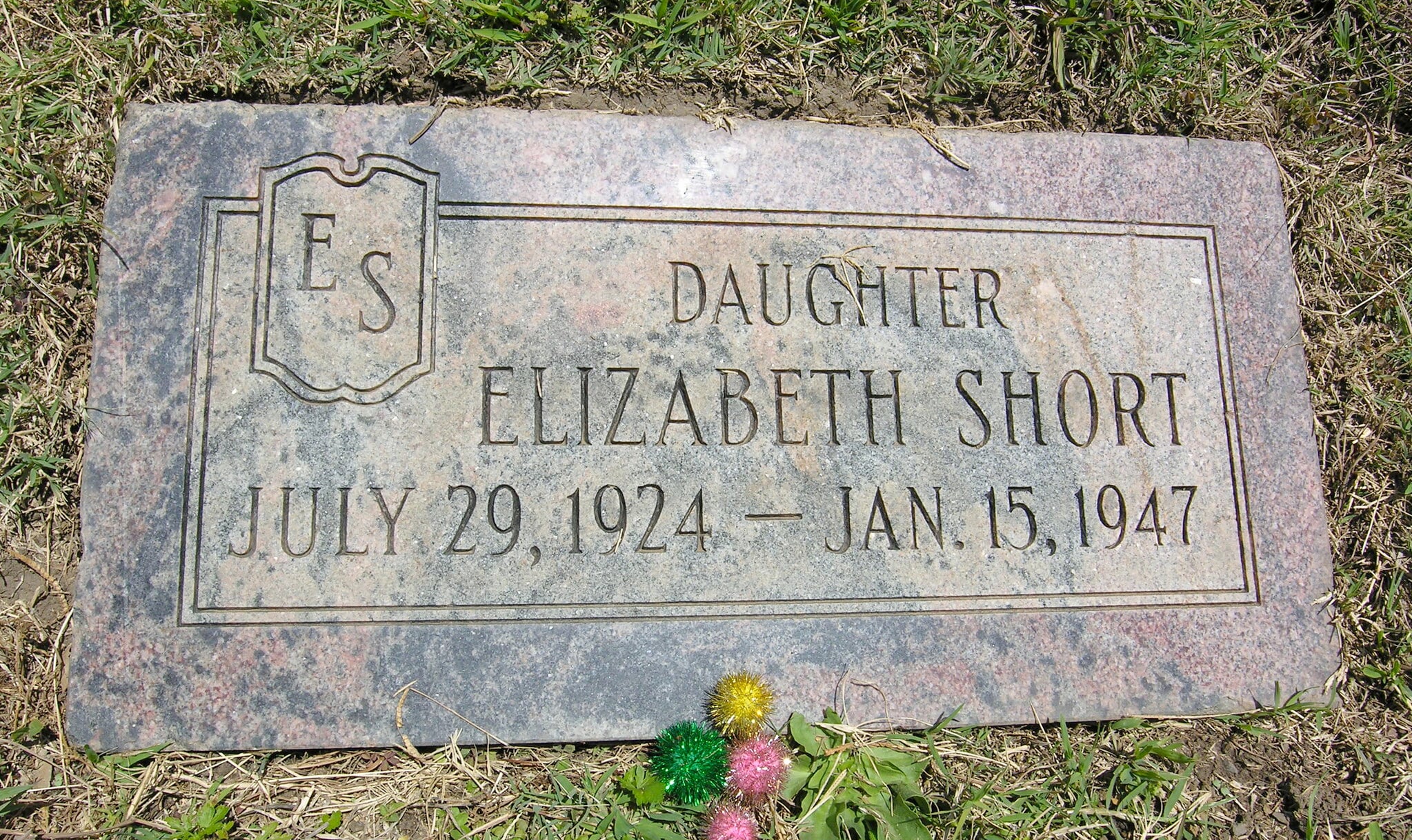
Elizabeth Short’s murder in 1947 Los Angeles became the template for every unsolved Hollywood mystery that followed. Her body was found in a vacant lot, bisected with surgical precision and posed for maximum shock value.
The press dubbed her the Black Dahlia — a name that stuck harder than any of the facts about her actual life.
The case generated hundreds of false confessions and thousands of tips, none leading anywhere useful. What it did produce was a mythology that grew more elaborate with each retelling.
Short became less a real person than a symbol of lost innocence in the city of dreams. The killer achieved a different kind of immortality — forever unknown, forever suspected, forever just out of reach.
The Disappearance of Judge Joseph Crater

Judge Joseph Crater walked out of a Manhattan restaurant on August 6, 1930, and into legend. He’d been dining with friends, seemed perfectly normal, hailed a taxi — and vanished.
No body, no ransom note, no explanation. Just a missing person who happened to be a sitting judge in New York City during the height of political corruption.
Theories ranged from mob hits to voluntary disappearance to elaborate insurance fraud. Crater had been involved in some questionable real estate deals, which gave investigators plenty of motives to consider.
But motives don’t solve cases, and this one went cold faster than a Depression-era bank account.
“Going Judge Crater” entered the lexicon as shorthand for mysterious disappearances — which says something about how thoroughly he managed to erase himself from existence.
The Axeman of New Orleans

Between 1918 and 1919, someone with an axe terrorized New Orleans, breaking into homes and attacking sleeping families with a violence that seemed almost supernatural in its randomness and brutality.
The killer left behind no clear pattern beyond the weapon of choice and a preference for Italian-American victims, though even that wasn’t consistent enough to provide real guidance for a city living in fear.
What elevated this from a standard murder spree into genuine nightmare fuel was a letter the killer allegedly sent to local newspapers, written in a voice that managed to be both theatrical and genuinely menacing: he claimed to be a demon from hell and promised to spare anyone playing jazz music on a particular Tuesday night (the city, not surprisingly, filled with the sound of jazz that evening).
But then, as suddenly as the attacks began, they stopped. No final victim, no arrest, no explanation — just silence where there had been terror.
The Axeman vanished into the humid Louisiana air, leaving behind a body count and a legend that still surfaces whenever someone wants to remind people that some mysteries are better left unsolved.
The Tylenol Murders

Someone in Chicago decided to turn over-the-counter medicine into a murder weapon in 1982. Seven people died after taking Tylenol capsules that had been laced with cyanide.
The tampering appeared to be random — bottles pulled from store shelves, opened, poisoned, and returned.
The case changed how we buy medicine forever. Tamper-evident packaging became standard across the industry.
But the killer was never found, despite one of the largest investigations in FBI history.
The randomness made it almost impossible to solve — no clear motive, no obvious connection between victims, no pattern beyond the method itself.
Someone committed multiple murders and reshaped consumer safety protocols, then melted back into anonymity.
The Disappearance of D.B. Cooper

D.B. Cooper committed the only unsolved commercial aircraft hijacking in American history, and he did it with a style that belonged in a movie rather than real life.
On November 24, 1971, a man identifying himself as Dan Cooper (the “D.B.” was a media error that stuck) boarded Northwest Orient Flight 305 in Portland, ordered a bourbon and soda, and quietly informed the flight attendant that he had a bomb in his briefcase… then asked the pilots to fly toward Seattle at low altitude and reduced speed.
He jumped somewhere over the densely forested area between Seattle and Reno, Nevada.
What happened next reads like a heist film written by someone with both imagination and manners: Cooper was polite to the crew, even offering to pay for his drinks, released the passengers unharmed after receiving the money and parachutes he’d requested, then asked the pilots to fly toward Mexico City at low altitude and reduced speed.
Somewhere over the dense forests of southwestern Washington, he jumped into a stormy night wearing a business suit and carrying a bag of cash, and was never seen again.
The FBI spent decades investigating, following up on hundreds of tips and suspects, but Cooper had vanished as completely as if he’d never existed at all.
And somehow, that seems appropriate.
The Servant Girl Annihilator

Austin, Texas, in the 1880s was terrorized by someone the press dubbed the Servant Girl Annihilator. Between 1884 and 1885, eight people were murdered — most of them African American domestic workers — in attacks that combined extreme violence with an eerie precision.
The killer used axes and knives, typically striking late at night, and seemed to target the servant quarters of well-to-do homes.
The case predated modern forensic techniques by decades, leaving investigators with little beyond witness accounts and crime scene observations.
Some historians suggest the Annihilator may have been among the first serial killers in American criminal history, establishing patterns that would become grimly familiar in later cases.
The murders stopped as suddenly as they’d begun, with no arrest and no explanation.
Austin moved on, but the questions lingered.
The Hinterkaifeck Murders

There’s something particularly unsettling about a family annihilated on their own property, especially when the evidence suggests the killer might have been living in their house for days before striking, and the crime scene at Hinterkaifeck — a remote farmstead in Bavaria — contains exactly that kind of detail that makes your skin crawl.
In March 1922, all six members of the Gruber family were found dead, killed with a mattock (a farming tool similar to a pickaxe), but what made the discovery even more disturbing was the evidence that someone had been staying in the house after the murders: the animals had been fed, meals had been eaten, and smoke had been seen rising from the chimney for days after the family was killed.
Andreas Gruber had mentioned strange occurrences in the weeks before his death — footprints in the snow leading to the house but not away from it, sounds coming from the attic, a newspaper that no one in the family had purchased.
Someone had been watching, waiting, perhaps even living in their home without their knowledge.
But who, and why, remains as mysterious now as it was a century ago.
The farmstead was eventually torn down, but the questions it raised about how well we really know who’s watching us have never been satisfactorily answered.
The Lead Masks Case

Two Brazilian electronic technicians went to Vintém Hill in 1966 for reasons that died with them. Manoel Pereira da Cruz and Miguel José Viana were found dead, wearing formal suits and strange lead eye masks.
Next to their bodies was a notebook with cryptic instructions about ingesting capsules and waiting for a signal.
The case spawned theories involving UFOs, secret experiments, and occult rituals. The lead masks suggested protection from radiation or bright lights, but protection from what?
The men had purchased the masks specifically for their trip to the hill, implying premeditation rather than random tragedy.
No cause of death was ever definitively established, and the signal they were apparently waiting for never came — or maybe it did, and that’s what killed them.
The Beaumont Children

On January 26, 1966, three children — Jane, Arnna, and Grant Beaumont — left their home in Adelaide, Australia, to spend a day at Glenelg Beach.
They were supposed to return by 2 p.m. They never came home.
Witnesses reported seeing the children playing with an older man on the beach, someone who seemed familiar with them, who bought them lunch and played games in the sand, but despite extensive investigations and numerous reported sightings over the decades, no trace of the children or their companion was ever found.
What makes the Beaumont case particularly heartbreaking isn’t just the disappearance itself, but the way it changed an entire country’s relationship with childhood innocence. Australia in the 1960s was a place where children could spend summer days unsupervised at the beach, where parents didn’t worry about strangers, where the community felt safe and knowable.
But after the Beaumont children vanished, that sense of security vanished with them.
The case remains one of Australia’s most famous unsolved mysteries, a reminder that some questions don’t have answers, and some children don’t come home.
The Somerton Man

The Somerton Man appeared on an Australian beach in 1948, impeccably dressed and completely dead.
No identification, no obvious cause of death, and no one who could say who he was.
In his pocket was a piece of paper with the words “Tamám Shud” — Persian for “finished” or “ended.”
The paper had been torn from a specific edition of the Rubaiyat of Omar Khayyam, a book later found with a cryptic code written inside.
The code has never been deciphered despite decades of effort by professional and amateur cryptographers.
DNA analysis has been attempted multiple times but yielded no definitive answers.
The Somerton Man remains exactly what he was when found — a well-dressed mystery with no name and no story.
When Questions Outlast Answers

These cases share something beyond their lack of resolution — they’ve become larger than the crimes themselves. The missing princes have spawned centuries of historical debate.
Jack the Ripper inspired an entire industry of speculation. D.B. Cooper became a folk hero.
Each unsolved mystery grows in the telling, accumulating theories and suspects and possible explanations that never quite explain enough.
Maybe that’s the point. Some stories resist endings because the questions they raise are more interesting than any answer could be.
They remind us that the world still contains genuine mysteries, that not everything can be reduced to evidence and logic and courtroom testimony.
In an age of surveillance cameras and digital footprints, there’s something almost nostalgic about crimes that simply vanish into silence, leaving behind only questions that echo across decades, unanswered and unanswerable.
More from Go2Tutors!

- The Romanov Crown Jewels and Their Tragic Fate
- 13 Historical Mysteries That Science Still Can’t Solve
- Famous Hoaxes That Fooled the World for Years
- 15 Child Stars with Tragic Adult Lives
- 16 Famous Jewelry Pieces in History
Like Go2Tutors’s content? Follow us on MSN.