15 Epic Rivalries That Shaped the Modern World (and Weren’t Even Close at First)
Some rival connections have drastically altered the path of human development across time. More than only petty squabbles, these wars were revolutionary ones that drove creativity, transformed whole industries, and sometimes changed whole societies.
These rivalries are particularly fascinating given how uneven they initially appeared; clear underdogs finally rising to face seemingly insurmountable foes. Starting as totally unbalanced rivalries and evolving into something considerably more significant, these 15 historical rivalries have greatly influenced our world.
Ford vs. Ferrari
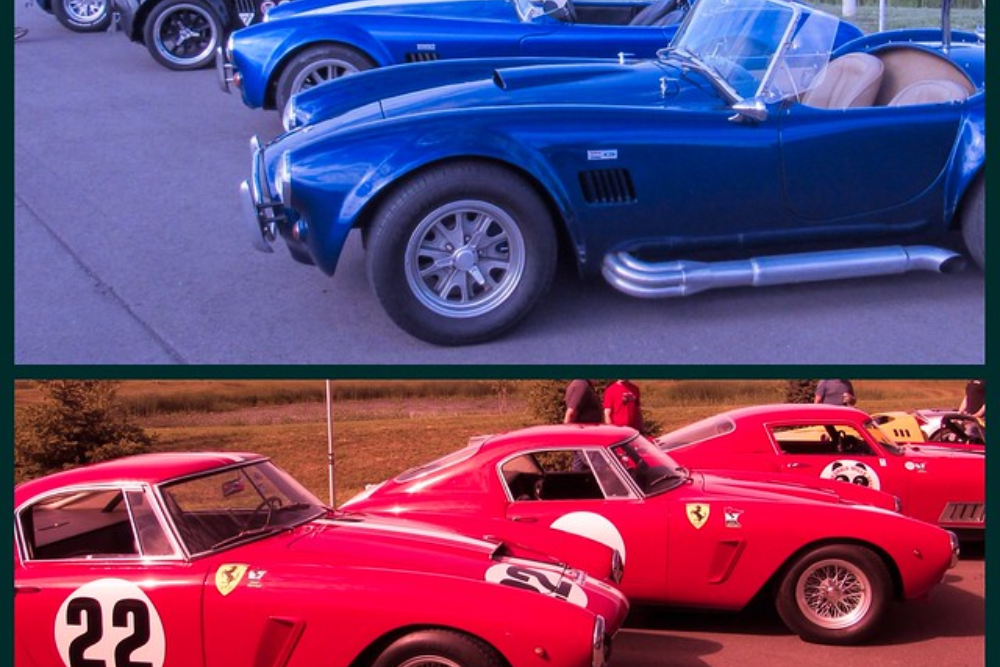
Henry Ford II made an attempt to buy Ferrari in the early 1960s, but Enzo Ferrari abruptly turned him down. An automotive vengeance that culminated at Le Mans, the most renowned endurance race in the world, was spurred by this denial.
When Ford, a corporation with almost no racing experience, chose to create a car expressly to beat the Italian icon, Ferrari had been dominating the race for years. Ford’s GT40 changed the course of motorsport history and demonstrated that American engineering could compete on a worldwide scale by winning four straight Le Mans races from 1966 to 1969 after their initial attempts failed.
Microsoft vs. Apple
When Apple released the Macintosh in 1984, Microsoft was primarily a software provider with no hardware products. The rivalry seemed entirely uneven, Apple’s revolutionary personal computer against a company still finding its footing.
Steve Jobs and Bill Gates initially collaborated before their relationship soured into one of tech’s most famous rivalries. Microsoft eventually gained dominance throughout the 1990s with Windows, pushing Apple to near bankruptcy.
The tables turned again when Jobs returned to Apple and launched products like the iPod, iPhone, and iPad, transforming Apple into the world’s most valuable company and creating a rivalry that continues to drive innovation in computing.
McDonald’s vs. Burger King
The golden arches of McDonald’s appeared well before the Burger King crown, giving them a significant head start in the fast-food industry. When the Whopper maker entered the scene in the 1950s, McDonald’s already had a well-established system of restaurants and brand recognition across America.
Burger King struggled for decades as a distant second, but their commitment to flame-broiled burgers and customization (‘Have it your way’) carved out a loyal customer base. This decades-long competition forced both chains to continuously innovate with their menus, pricing, and restaurant designs, ultimately shaping how billions of people around the world consume fast food today.
Nintendo vs. Sega

Nintendo dominated the video game market in the late 1980s following the industry crash, holding roughly 90% market share when Sega introduced its Genesis console. Sega’s ‘Genesis does what Nintendon’t’ campaign directly challenged the industry leader with faster games, edgier content, and a cool factor that Nintendo initially lacked.
The competition between these companies drove rapid technological advancement in gaming, with each release pushing hardware capabilities further. Their rivalry fundamentally shaped gaming culture and established many conventions still seen in the industry today, from aggressive marketing tactics to the concept of console wars that drive innovation.
Coca-Cola vs. Pepsi
Coca-Cola was the most popular soft drink in the country and had been refreshing Americans for seven years when Pepsi was created in 1893. Prior to Pepsi’s audacious decision to offer twice as much goods for the same price during the Great Depression, the rivalry appeared distinctly out of balance.
This sparked the ‘Cola Wars,’ a marketing conflict that would last for decades and have an impact on advertising all around the world. The renowned “Pepsi Challenge” blind taste testing, celebrity endorsements, and increasingly complex marketing efforts all contributed to the competition’s escalation in the 1970s and 1980s.
Both brands achieved worldwide domination as a result of their competition, which also contributed to the development of contemporary marketing strategies for many industries.
Amazon vs. Traditional Retail

When Amazon launched in 1994 as an online bookstore, established retailers barely noticed the small website operating from Jeff Bezos’ garage. Traditional retail giants like Walmart, Target, and department stores had physical locations across the country and decades of business experience.
Amazon’s growth from books to ‘everything store’ completely upended retail assumptions, forcing traditional stores to adapt to e-commerce or face extinction. The competition has transformed how people shop, sparked innovations in logistics and delivery, and changed consumer expectations about convenience and selection.
This initially uneven matchup has reshaped global commerce and continues to drive retail innovation today.
Netflix vs. Blockbuster

When Netflix started sending out DVDs in red envelopes in 1997, Blockbuster was the clear leader in the movie rental market, with over 9,000 locations throughout the globe. In 2000, Blockbuster even had the chance to pay $50 million to acquire Netflix, but they chose not to.
When Netflix invented streaming technology while Blockbuster stuck to its brick-and-mortar business strategy, the David vs Goliath dynamic was totally inverted. By 2010, Netflix was still growing internationally while Blockbuster was declaring bankruptcy.
In addition to paving the stage for the streaming revolution and drastically altering the economics of film and television production, this rivalry radically revolutionized how people consume entertainment material.
Facebook vs. MySpace
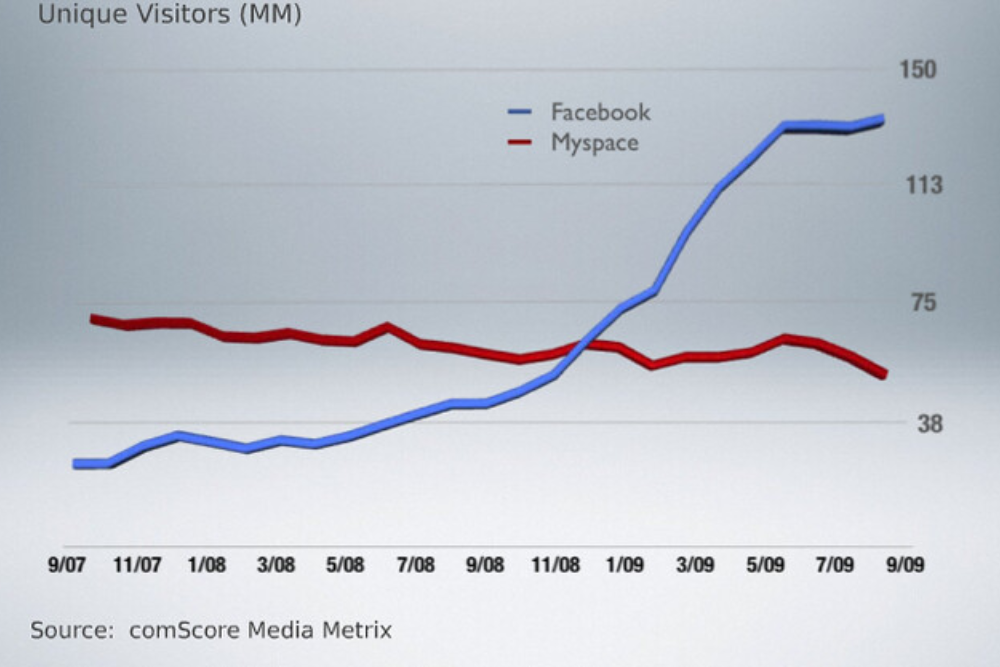
When Facebook launched in 2004, MySpace was the dominant social network with millions of users and cultural relevance that made it seem untouchable. MySpace had celebrity accounts, music integration, and was even purchased by News Corp for $580 million in 2005.
Facebook’s clean interface and college-focused growth strategy slowly built momentum until it overtook MySpace in 2008. This competition helped establish social media as a fundamental communications platform and shaped how people connect online.
The rivalry ultimately led to entirely new business models based on user data and targeted advertising that now underpin much of the internet economy.
Google vs. Yahoo
Yahoo was the internet gateway for millions when Google appeared in 1998 with nothing but a sparse search page. Yahoo even had the opportunity to purchase Google for $1 million in 1998 and again for $3 billion in 2002, declining both times.
Google’s superior search algorithm slowly gained market share while Yahoo diversified into a web portal with numerous services. The competition between these companies determined how people find information online and established search as the primary way users navigate the internet.
Their rivalry also created the digital advertising ecosystem that now powers much of the free content available online.
Adidas vs. Nike
When Nike was established in 1964 under the name Blue Ribbon Sports, Adidas had a dominant position in the sports footwear market. When Phil Knight started selling imported Japanese running shoes out of the trunk of his car, the German company had decades of experience and a global distribution network.
Beginning with Michael Jordan in 1984, Nike’s groundbreaking strategy for celebrity endorsements built a marketing powerhouse that eventually surpassed Adidas. Their rivalry has affected marketing tactics, fashion trends, and sports performance in a variety of businesses.
This competition turned sneakers from basic sports gear into collectibles with annual sales in the billions and symbols of cultural status.
Visa vs. Mastercard
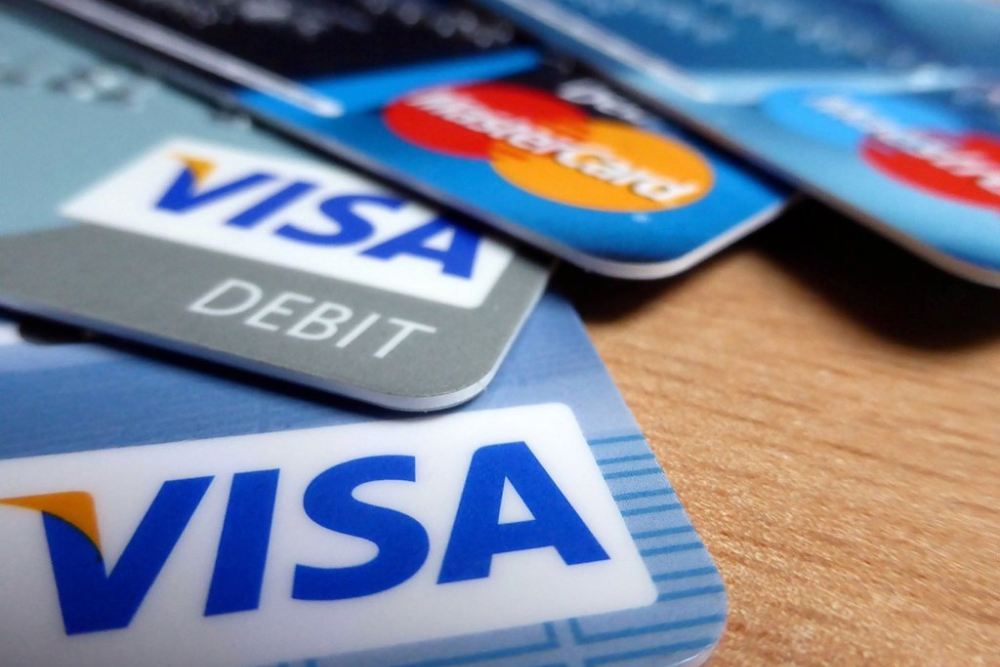
The first successful credit card network was built by BankAmericard (later renamed Visa) prior to the 1966 launch of Mastercard. Although the competition appeared to be somewhat unequal, Mastercard was able to progressively increase its market share thanks to its affiliation with several institutions.
Their continuous competition influenced advancements in security features and payment processing, hence reshaping contemporary financial systems. In the end, the rivalry between these payment networks shaped the flow of money in the digital era, made international e-commerce possible, and laid the groundwork for mobile payment technologies that are still developing today.
Android vs. iOS
Apple hadn’t even released the first iPhone when Google purchased Android in 2005. It seemed that Apple would control the smartphone market without any competition after the 2007 release of the iPhone. By distributing Android to several manufacturers, Google developed a whole new economic model that ultimately accounted for more than 70% of the worldwide smartphone market.
This intense rivalry sped up the development of mobile technology, produced whole app developer industries, and put sophisticated computers in the hands of billions of people around the globe. Their competition continues to affect how people use technology and has impacted everything from photography to personal privacy.
Edison vs. Tesla
Thomas Edison was America’s premier inventor with a vast business empire when Nikola Tesla arrived as an immigrant in 1884, briefly working for Edison before their relationship deteriorated. Edison championed direct current (DC) electricity while Tesla promoted the superior alternating current (AC) system, leading to the ‘War of the Currents.’
Edison used questionable tactics, including public electrocutions of animals, to discredit AC as dangerous. Despite the uneven resources, Tesla’s AC system proved more efficient for power transmission and became the worldwide standard.
Their rivalry accelerated electrical innovation and literally illuminated the modern world, creating the power infrastructure we still rely on today.
Boeing vs. Airbus
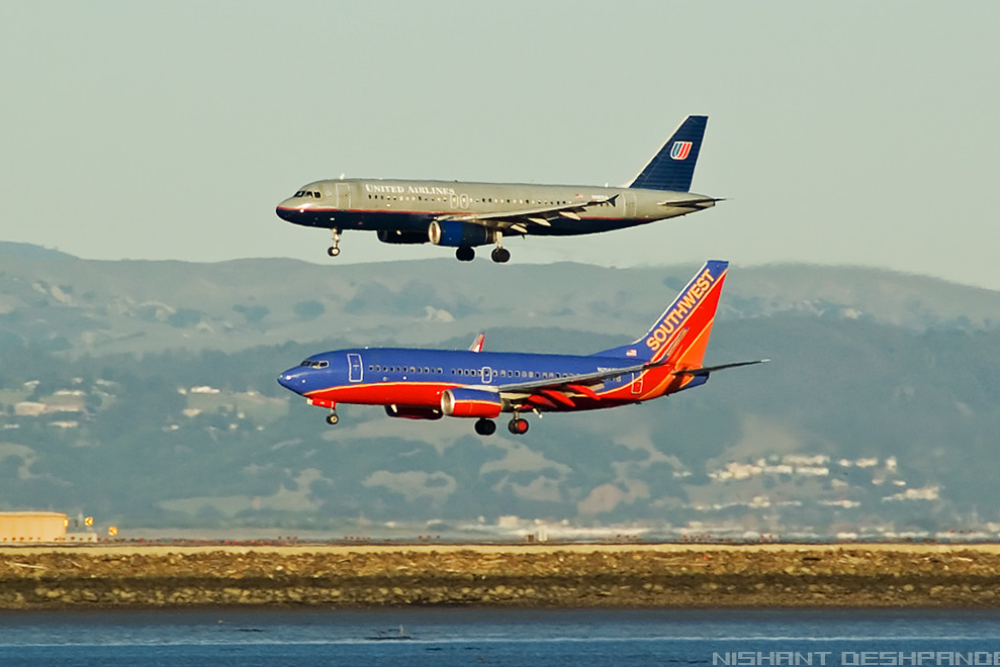
Boeing dominated commercial aviation for decades before Airbus was formed in 1970 as a European consortium specifically created to challenge American aerospace dominance. The competition appeared completely lopsided initially, with Boeing’s established global presence against a newcomer with no track record.
Airbus gradually gained market share through government backing and innovative aircraft designs like fly-by-wire technology. Their intense competition has driven aviation safety improvements, fuel efficiency advances, and aircraft innovations that have made air travel more accessible globally.
This rivalry has connected the world through increasingly affordable and efficient air transportation systems.
HBO vs. Netflix
HBO pioneered premium television content for decades with groundbreaking shows and films when Netflix began producing original programming in 2013 with ‘House of Cards.’ HBO’s prestige and industry connections made Netflix’s content ambitions seem laughable initially.
Netflix’s massive technology investments and willingness to spend billions on original productions gradually established it as a legitimate competitor. Their rivalry has transformed television production, distribution models, and viewing habits worldwide.
The competition between these companies sparked the ‘streaming wars’ that have fundamentally altered the entertainment landscape and created entirely new consumption patterns for visual media.
The New Competitive Landscape
These long-standing rivalries show that resources, market share, or technological advantages alone will never ensure sustained dominance. In every instance, the underdog discovered creative ways to question the established quo, frequently by radically rethinking the ideal way for an industry to operate.
Customers gained from the ensuing rivalry in the form of improved goods, reduced costs, and quicker invention. Our world is still shaped by these competitive interactions, which serve as a reminder that social and technological advancement frequently results from the most unexpected challenges to existing powers.
More from Go2Tutors!

- The Romanov Crown Jewels and Their Tragic Fate
- 13 Historical Mysteries That Science Still Can’t Solve
- Famous Hoaxes That Fooled the World for Years
- 15 Child Stars with Tragic Adult Lives
- 16 Famous Jewelry Pieces in History
Like Go2Tutors’s content? Follow us on MSN.