15 Historic Objects Found in Unexpected Places
History textbooks make it seem like archaeological discoveries happen in predictable spots — ancient ruins, museum excavations, or carefully planned dig sites. Reality tells a different story entirely. Some of the world’s most significant historical artifacts have turned up in the most mundane locations, discovered by people who weren’t even looking for them.
These unexpected finds remind us that history lies scattered everywhere, waiting beneath our feet or hidden in plain sight. Here is a list of 15 historic objects found in unexpected places.
Rosetta Stone

French soldiers didn’t set out to make one of archaeology’s greatest discoveries while rebuilding Fort Julien near the Egyptian town of Rosetta in 1799. They were simply moving stones when one caught their attention — a black granite slab covered in three different scripts.
This accidental find became the key to deciphering Egyptian hieroglyphs, revolutionizing our understanding of ancient Egypt.
Dead Sea Scrolls

A Bedouin shepherd boy searching for a lost goat in 1947 threw a rock into a cave near Qumran and heard pottery breaking. Instead of finding his goat, he’d stumbled upon jars containing ancient manuscripts dating back over 2,000 years.
These scrolls contained some of the oldest known biblical texts — discovered by someone who couldn’t even read them.
Terracotta Army

Chinese farmers digging a well during a drought in 1974 struck something hard with their shovels. What they initially thought were broken pottery pieces turned out to be fragments of life-sized clay warriors.
Their discovery led to unearthing over 8,000 terracotta soldiers, horses, and chariots — an entire buried army guarding China’s first emperor for over two millennia.
Sutton Hoo Treasure

Edith Pretty decided to investigate some mysterious mounds on her Suffolk estate in 1938, thinking they might contain interesting artifacts. Her curiosity led to discovering an intact Anglo-Saxon burial ship filled with gold jewelry, weapons, and ceremonial objects.
It was one of Britain’s most important archaeological finds, literally in someone’s backyard.
Hoxne Hoard
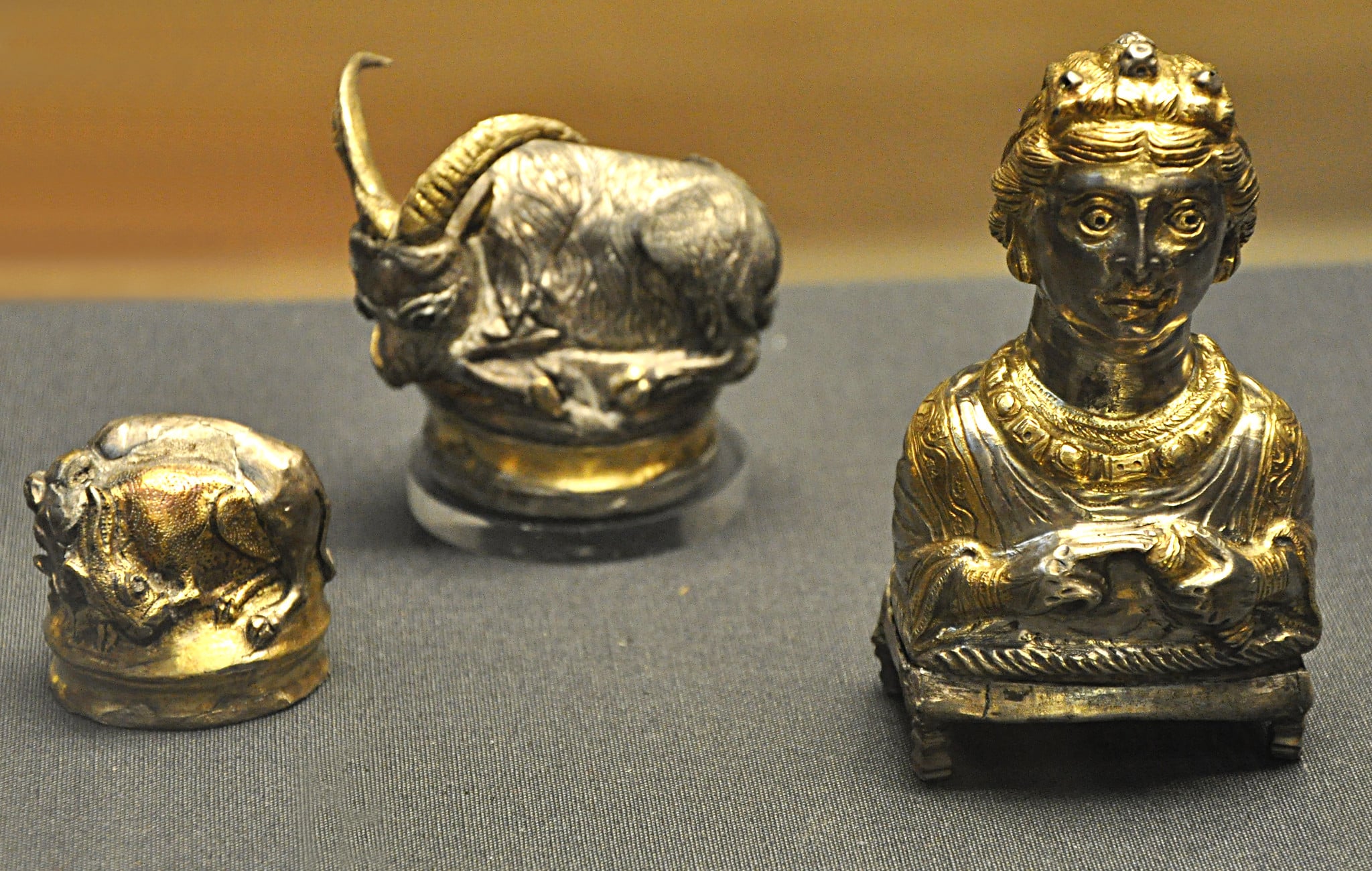
Eric Lawes was helping a friend find a lost hammer in a Suffolk field in 1992 when his metal detector picked up unusual signals. Instead of the hammer, he’d found over 15,000 Roman coins and 200 gold and silver objects.
It was the largest cache of late Roman precious metals ever discovered in Britain, buried in what’s now ordinary farmland.
Antikythera Mechanism
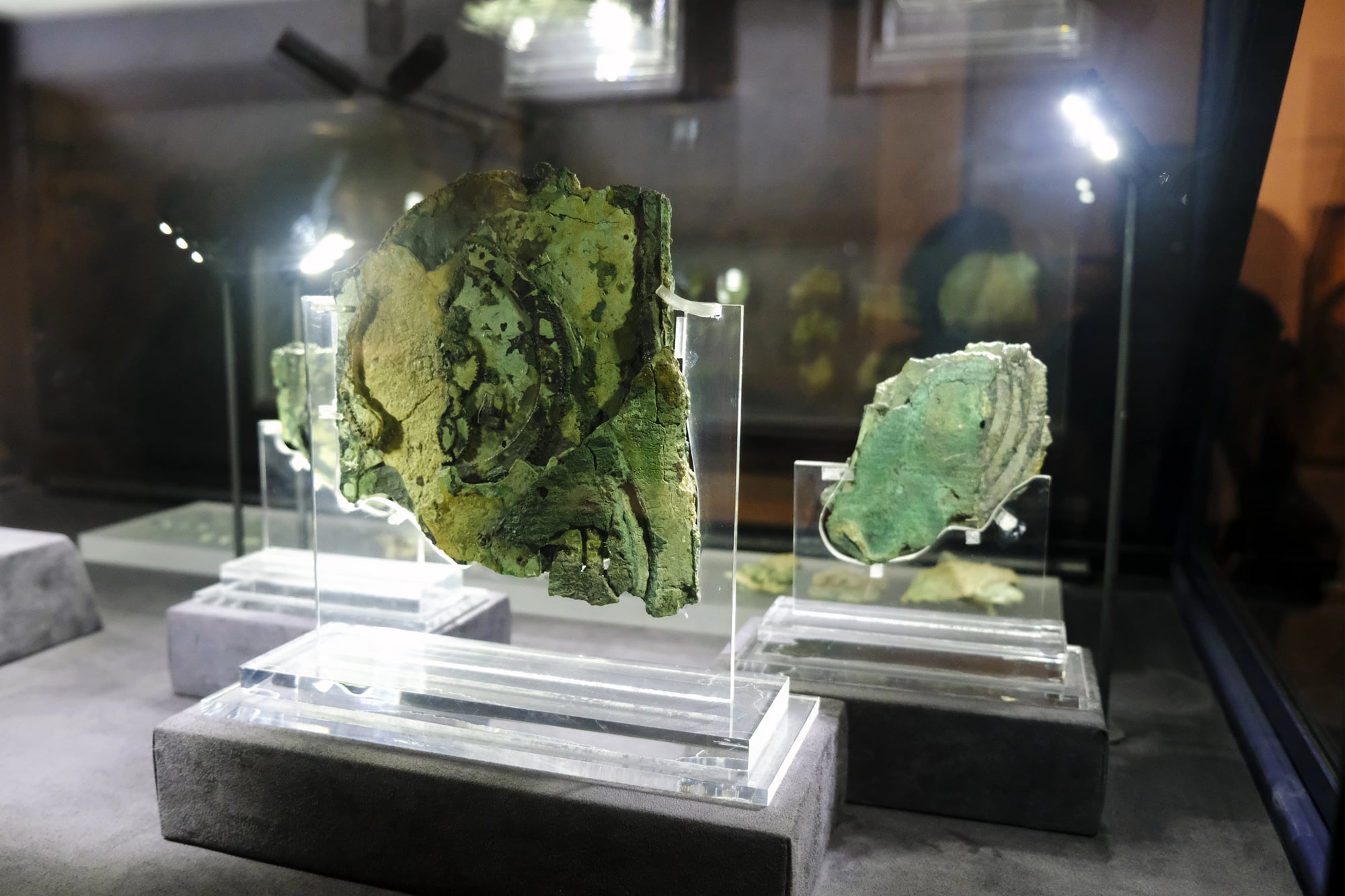
Greek sponge divers working off the island of Antikythera in 1901 were looking for sponges, not ancient technology. When they dove deeper than usual, they discovered a Roman shipwreck containing what would later be recognized as the world’s first analog computer.
It was a complex bronze device that predicted astronomical positions and eclipses from over 2,000 years ago.
Pompeii

Domenico Fontana was digging a water channel in 1599 when his workers uncovered ancient walls with Latin inscriptions. He covered them back up and continued his project, not realizing he’d found the entrance to Pompeii.
The buried city wasn’t properly excavated until 150 years later — meaning one of history’s most famous archaeological sites was literally stumbled upon during routine construction work.
Lascaux Cave Paintings

Four French teenagers exploring the woods near Montignac in 1940 were investigating a pit their dog had fallen into when they discovered something extraordinary. Their makeshift torch revealed cave walls covered in 17,000-year-old paintings of animals.
These are some of the finest examples of prehistoric art ever found, discovered during what started as a rescue mission for a pet.
Richard III’s Remains

Archaeologists looking for the lost Greyfriars Church in Leicester in 2012 decided to check under a city council parking lot. Beneath the asphalt and modern life, they found not just the church foundations but the skeleton of England’s most controversial king.
Richard III had been missing for over 500 years under what had become employee parking spaces.
Vindolanda Tablets

Archaeologists excavating the Roman fort of Vindolanda in northern England during the 1970s expected to find typical Roman artifacts. Instead, they discovered over 1,000 wooden tablets containing everyday correspondence from Roman soldiers.
Shopping lists, birthday party invitations, and personal letters provide intimate glimpses into daily life along Hadrian’s Wall nearly 2,000 years ago.
Cave of Altamira

Marcelino Sanz de Sautuola was exploring a cave on his Spanish estate in 1879 while his young daughter Maria played nearby. When she looked up at the cave ceiling and exclaimed about the painted animals above, they’d discovered some of Europe’s finest prehistoric cave art.
The scientific community initially dismissed the find as a hoax because the paintings seemed too sophisticated for prehistoric humans.
Staffordshire Hoard
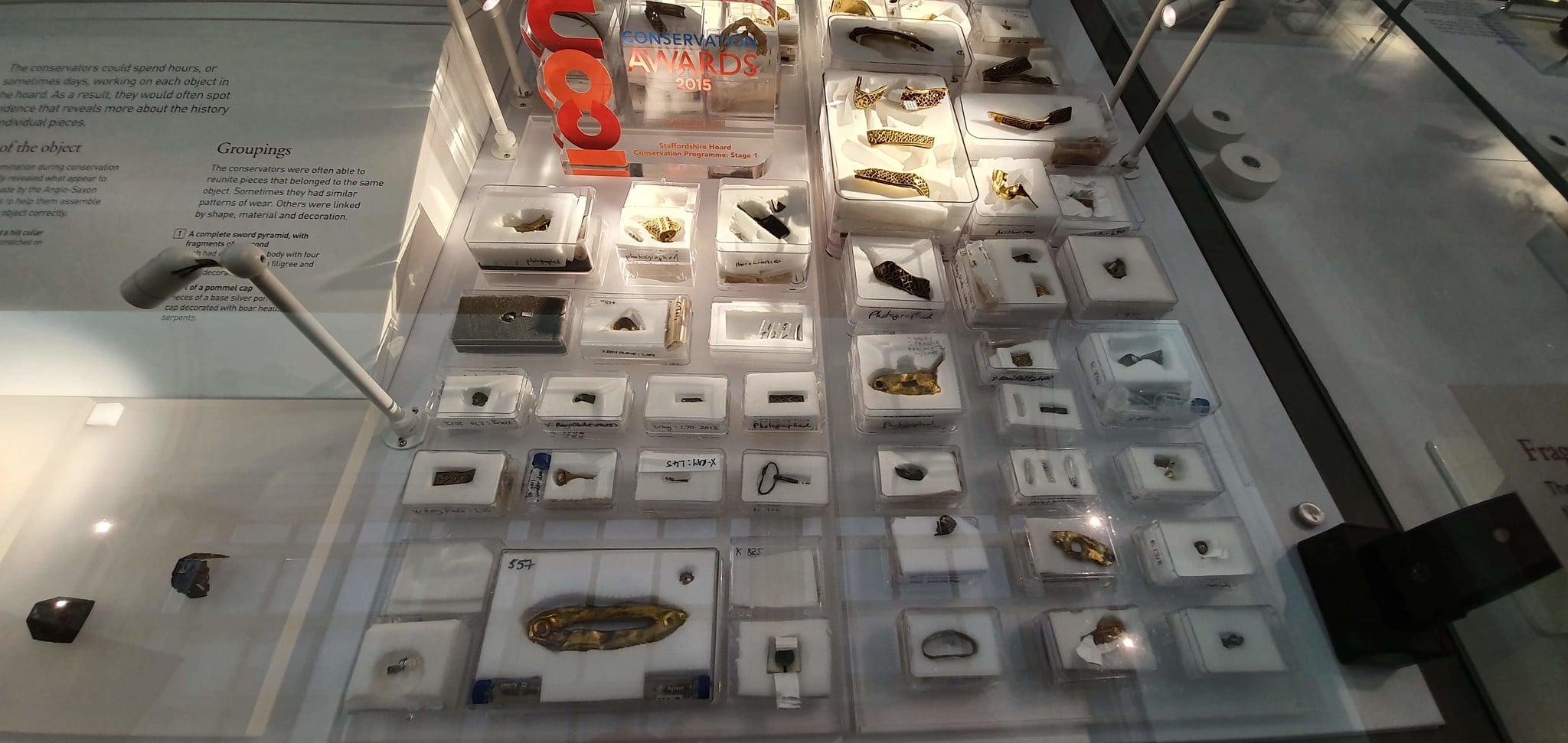
Terry Herbert was metal detecting in a Staffordshire field in 2009, hoping to find a few coins or old buttons. His detector led him to the largest collection of Anglo-Saxon gold and silver metalwork ever discovered.
Over 3,500 pieces dating from the 6th and 7th centuries were buried in what appeared to be completely ordinary English countryside.
Mycenaean Palace at Pylos
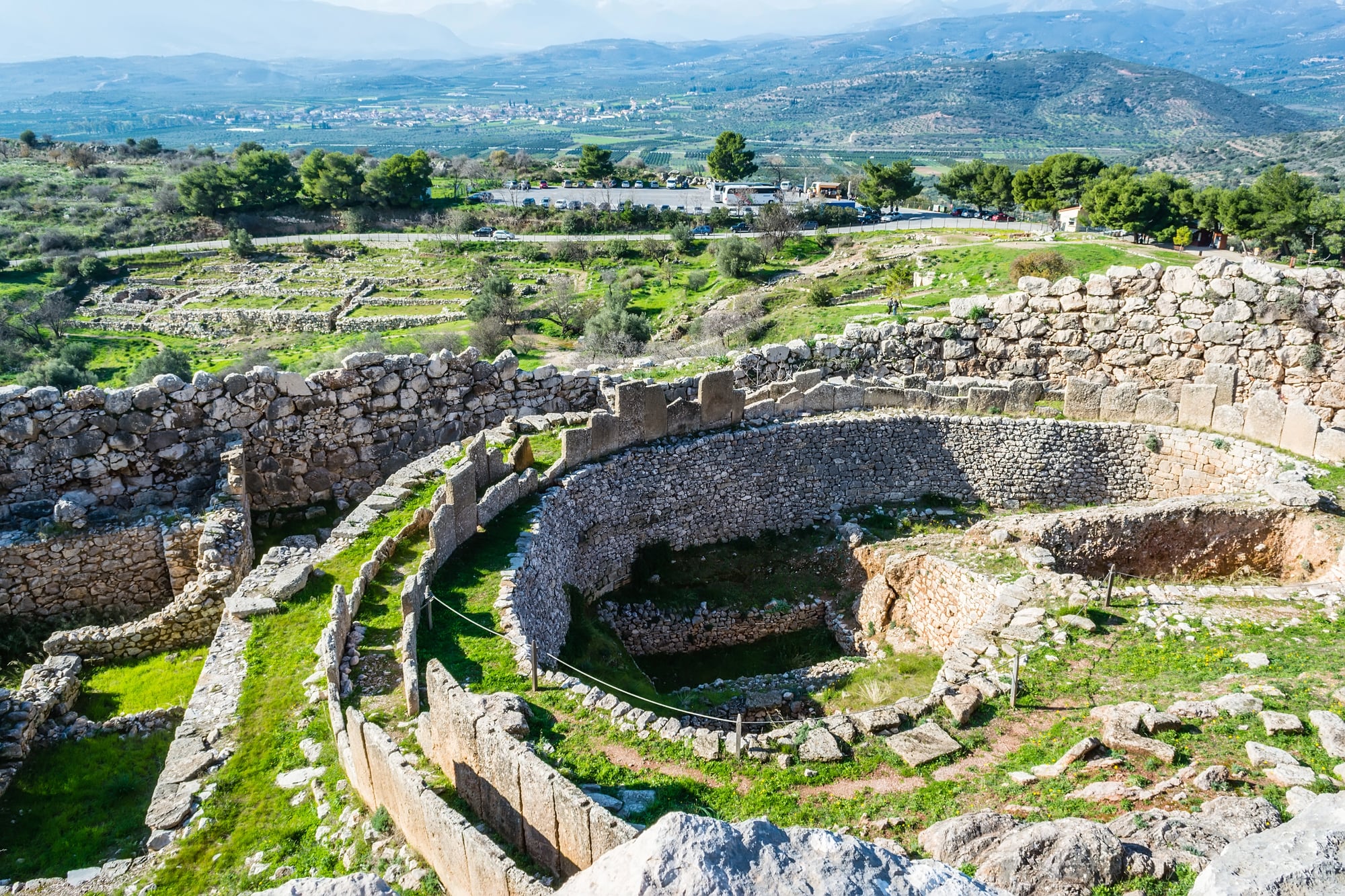
Carl Blegen was conducting a routine archaeological survey in southwestern Greece in 1939 when his team decided to investigate a small hill covered in olive trees. On their very first day of digging, they uncovered the remains of a Mycenaean palace complete with administrative archives written in Linear B script.
It was one of the most important Bronze Age discoveries in Greece, found almost immediately.
Uluburun Shipwreck

Turkish sponge diver Mehmed Çakir was working the waters off Cape Uluburun in 1982 when he noticed metal objects scattered on the seafloor 150 feet below. His discovery led to excavating a 3,300-year-old merchant ship containing cargo from across the ancient world.
Copper ingots from Cyprus, amber from the Baltic, and exotic goods revealed Bronze Age trade networks spanning continents.
Diary of Anne Frank

Otto Frank returned to the Amsterdam building where his family had hidden during World War II, hoping to find some trace of his daughter Anne. Miep Gies, who had helped hide the family, handed him a collection of notebooks and papers she’d saved from the ransacked hiding place.
These became The Diary of a Young Girl — one of the most important Holocaust documents, preserved by someone who recognized its value when others saw only scattered papers.
History Hiding in Plain Sight

These discoveries prove that significant historical artifacts don’t always wait patiently in designated archaeological sites or museum storage rooms. They’re buried beneath parking lots, scattered across farmers’ fields, and tucked away in caves where people seek shelter from rain or search for lost animals.
The most remarkable aspect isn’t just what these objects tell us about the past, but how often they surface through pure chance — reminding us that history surrounds us everywhere, just waiting for the right moment to reveal itself.
More from Go2Tutors!

- The Romanov Crown Jewels and Their Tragic Fate
- 13 Historical Mysteries That Science Still Can’t Solve
- Famous Hoaxes That Fooled the World for Years
- 15 Child Stars with Tragic Adult Lives
- 16 Famous Jewelry Pieces in History
Like Go2Tutors’s content? Follow us on MSN.



