15 Historical Figures Who Vanished Without Explanation
Some historical disappearances remain genuinely unsolved even after extensive investigation, while others have accepted explanations that nonetheless leave enough ambiguity to keep researchers revisiting the case. Each figure below left behind a mystery that outlived them.
Amelia Earhart
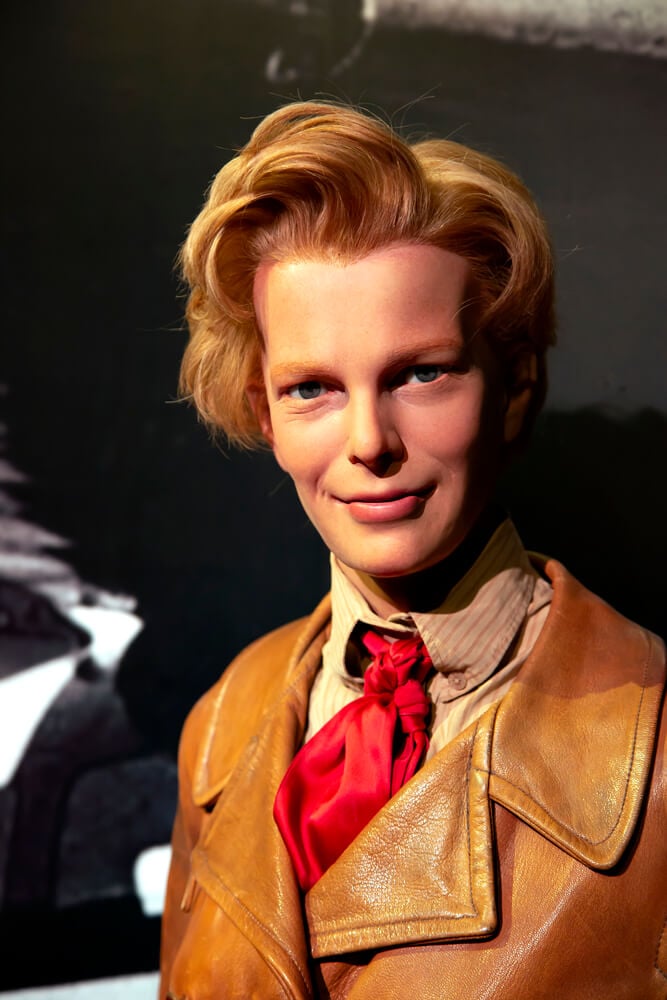
Aviator Amelia Earhart disappeared on July 2, 1937, while attempting to circumnavigate the globe, when her Lockheed Electra vanished somewhere over the central Pacific Ocean near Howland Island during the flight’s most difficult leg. Despite the largest air and sea search in U.S. history at the time, no confirmed wreckage has ever been definitively identified, and multiple competing theories continue to circulate among researchers.
Percy Fawcett
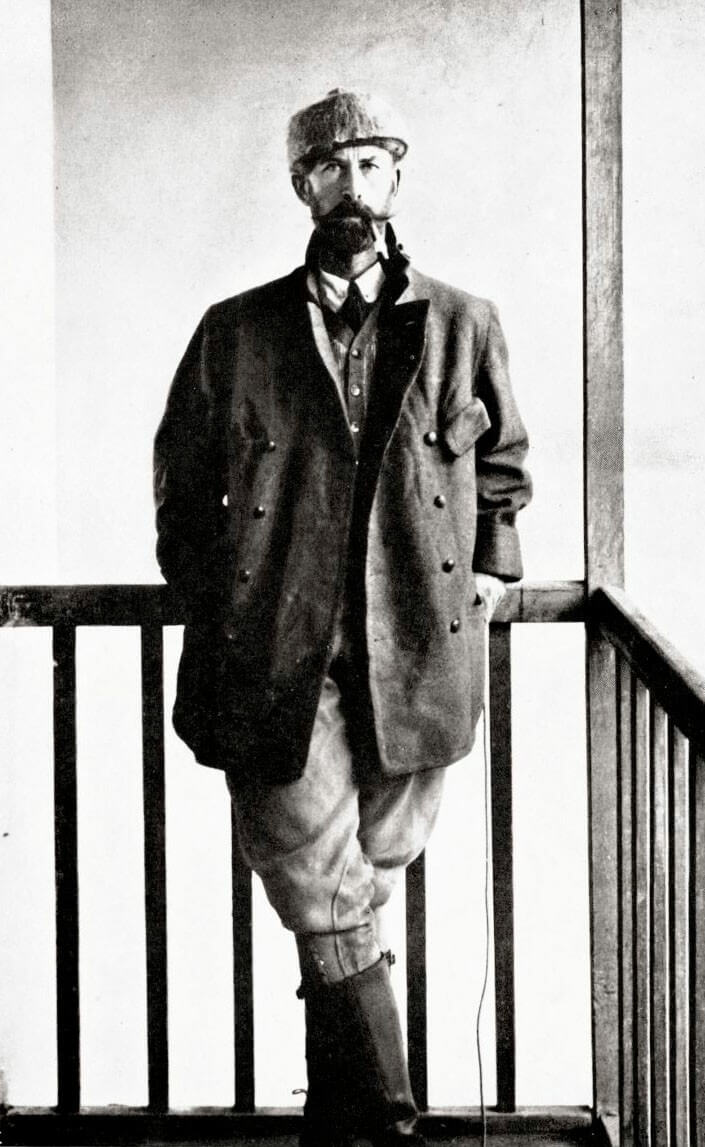
British explorer Percy Fawcett vanished in the Brazilian Amazon in 1925 while searching for a lost city he called “Z,” accompanied by his son Jack and Jack’s friend Raleigh Rimell. Numerous rescue expeditions over subsequent decades failed to determine their fate, and Fawcett’s disappearance directly inspired David Grann’s 2009 book The Lost City of Z, later adapted into a 2016 film.
Ambrose Bierce

American writer and Civil War veteran Ambrose Bierce disappeared in Mexico in late 1913 after traveling there, at age 71, reportedly to observe the Mexican Revolution firsthand while accompanying Pancho Villa’s forces. His final known letter was dated December 26, 1913, and no confirmed trace of him or his fate has ever been established.
The Roanoke Colony Settlers

The roughly 115 English colonists at Roanoke Island, in present-day North Carolina, vanished sometime between 1587 and 1590, leaving behind only a carved word on a fence post referencing a nearby island and no signs of violence or struggle. Governor John White, who had returned to England for supplies, found the colony completely abandoned upon his return in 1590, and the settlers’ fate remains one of the most enduring unsolved mysteries in early American history.
Michael Rockefeller

Michael Rockefeller, son of then-New York governor Nelson Rockefeller, disappeared in November 1961 off the coast of Netherlands New Guinea after his boat capsized near territory inhabited by the Asmat people. Rockefeller reportedly attempted to swim to shore after the capsizing, and despite an extensive search, his body was never recovered, with later reporting suggesting he may have been killed by Asmat tribesmen shortly after reaching land.
Louis Le Prince

French inventor Louis Le Prince, who many film historians credit with creating motion picture footage years before Thomas Edison’s competing claims, vanished from a train traveling between Dijon and Paris on September 16, 1890, shortly before he was scheduled to publicly demonstrate his invention in the United States. Neither his body nor his luggage was ever found, and his disappearance conveniently preceded Edison’s own motion picture patent claims by several years.
Solomon Northup

Solomon Northup, a free Black man from New York who was kidnapped into slavery in 1841 and later wrote the memoir Twelve Years a Slave after his 1853 rescue, disappeared from public record sometime after 1857, with no confirmed account of his later life, cause of death, or burial location ever established. His memoir became the basis for the Academy Award-winning 2013 film, but his own final years remain a historical blank.
Harold Holt

Australian Prime Minister Harold Holt disappeared on December 17, 1967, while swimming at Cheviot Beach near Portsea, Victoria, in rough surf conditions, and despite an extensive search, his body was never recovered. His disappearance while serving as sitting head of government remains unique in Australian history and prompted numerous conspiracy theories, none of which investigators have substantiated.
D.B. Cooper

An unidentified man using the alias “D.B. Cooper” hijacked a Northwest Orient Airlines flight on November 24, 1971, extorted $200,000 in ransom, and parachuted from the aircraft over the Pacific Northwest, never to be identified or located despite one of the longest-running FBI investigations in American history. The case remains officially unsolved, and the FBI formally suspended active investigation of new leads in 2016.
Benjamin Bathurst

British diplomat Benjamin Bathurst vanished on November 25, 1809, while changing horses at an inn in Perleberg, in what is now Germany, during a sensitive diplomatic mission during the Napoleonic Wars. Witnesses reported he walked around to the front of the horses and was never seen again, and despite investigations at the time, including suspicion of French involvement, no conclusive explanation was ever established.
Ettore Majorana
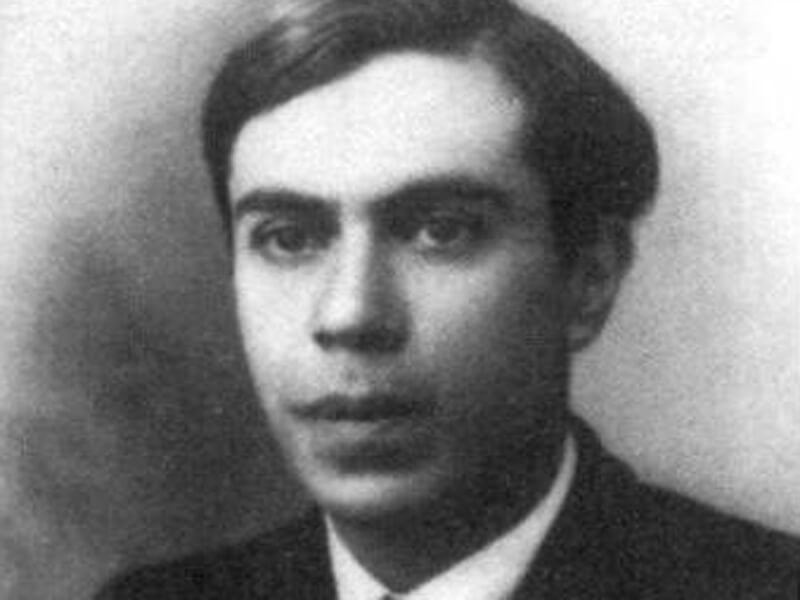
Italian theoretical physicist Ettore Majorana, known for foundational work on neutrino physics, disappeared on March 26, 1938, after boarding a ferry from Palermo to Naples, leaving behind letters suggesting a possible plan to end his life that he then seemingly contradicted in a follow-up message. Reported sightings of him continued for decades afterward, and Italian prosecutors reopened an investigation as recently as 2008 without reaching a definitive conclusion.
Vivian Gordon

Vivian Gordon, a witness scheduled to testify before a 1931 New York City corruption investigation, was found murdered in Van Cortlandt Park shortly before her scheduled testimony, and while her death was solved as a homicide, the full network behind the killing was never conclusively established despite extensive investigation. The case became a significant scandal during New York’s Seabury Commission corruption hearings.
Ludwig II of Bavaria’s Final Hours

King Ludwig II of Bavaria was found dead in Lake Starnberg on June 13, 1886, alongside his psychiatrist, one day after being declared mentally unfit to rule, and although officially ruled a drowning, a 2007 forensic reexamination found no water in his lungs, reopening questions about the circumstances of his death that remain formally unresolved.
Jean Spangler

American actress Jean Spangler disappeared from Los Angeles on October 7, 1949, after telling her family she was headed to a film shoot that, investigators later determined, did not exist. Her purse was found in Griffith Park days later containing a partially torn note, but neither her body nor a conclusive explanation for her disappearance has ever surfaced, and the case remains open with the Los Angeles Police Department.
Empress Elisabeth of Austria’s Missing Assassin Records

While Empress Elisabeth of Austria’s 1898 assassination by Italian anarchist Luigi Lucheni is well documented, several of Lucheni’s own personal writings and stated motives were destroyed or lost following his death in prison in 1910, leaving historians without complete access to his own account of his radicalization. The gaps in the surviving record continue to complicate full historical understanding of the assassination’s planning.
What Disappearance Leaves Behind

An unsolved disappearance operates differently than a death with a clear cause; it leaves a narrative gap that other people feel entitled, even compelled, to fill with theory, speculation, and occasionally outright invention. Amelia Earhart’s case alone has generated enough competing explanations to fill entire book series, most of them unsupported by physical evidence.
What all these cases share is not mystery for its own sake but the specific discomfort of an incomplete record. Historical narrative depends on endings, and when an ending is simply withheld, forever, the story never quite settles the way conventional history usually does.
More from Go2Tutors!

- The Romanov Crown Jewels and Their Tragic Fate
- 13 Historical Mysteries That Science Still Can’t Solve
- Famous Hoaxes That Fooled the World for Years
- 15 Child Stars with Tragic Adult Lives
- 16 Famous Jewelry Pieces in History
Like Go2Tutors’s content? Follow us on MSN.



