15 Historical Hoaxes People Believed for Years
Throughout history, human gullibility has been tested by elaborate deceptions that captured public imagination. These fabrications weren’t just momentary misunderstandings but enduring misconceptions that persisted for years, sometimes decades, before finally being exposed as false.
The psychology behind why we fall for such trickery reveals much about our desire to believe in the extraordinary. Here is a list of 15 historical hoaxes that fooled people for extended periods, showing just how convincing a well-crafted deception can be.
The Piltdown Man
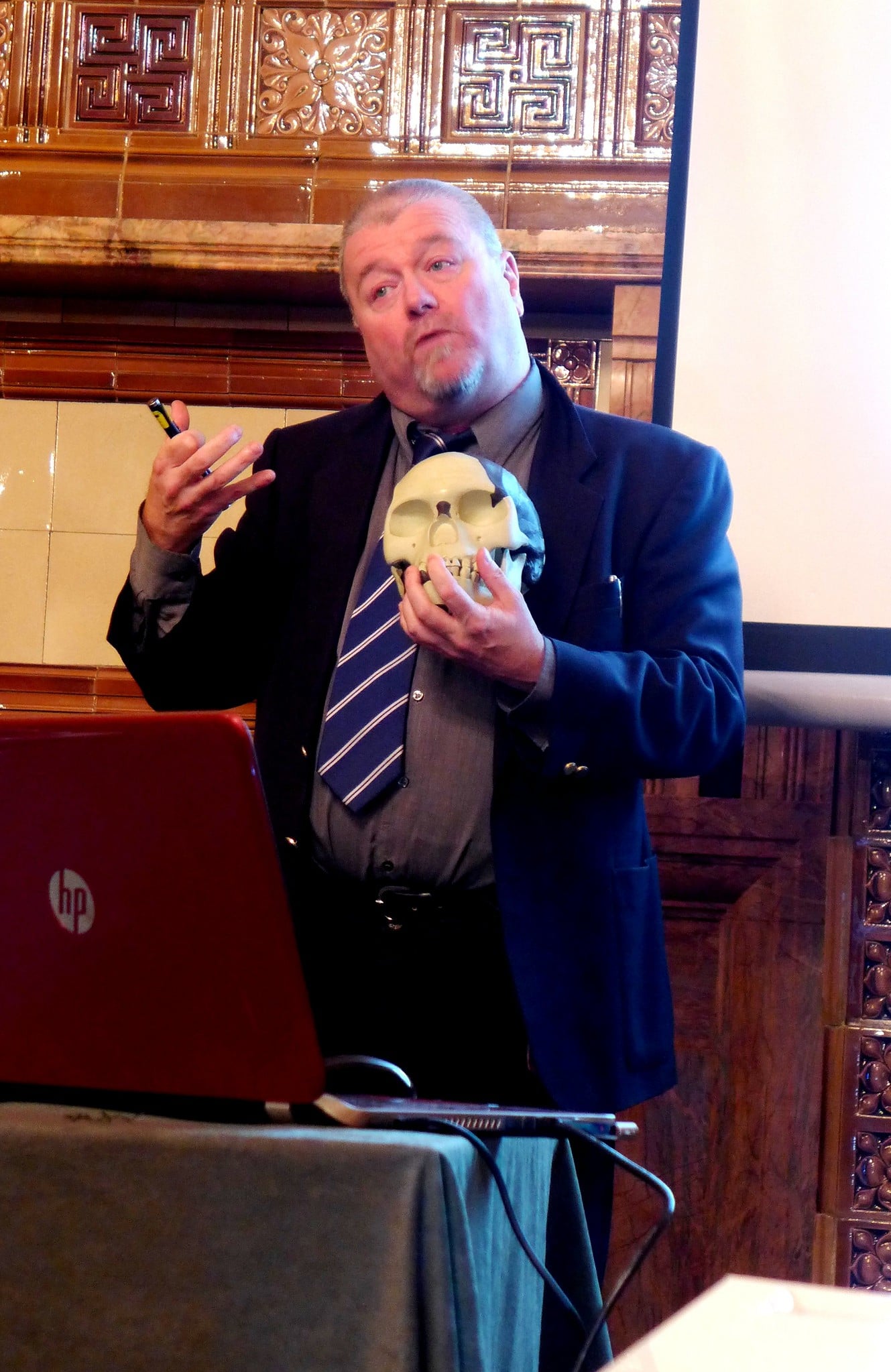
The scientific community was duped for over 40 years by this archaeological fraud. In 1912, amateur archaeologist Charles Dawson claimed to have discovered the ‘missing link’ between apes and humans in a gravel pit in Sussex, England.
The skull fragments combined a human-like cranium with an ape-like jaw, convincing experts until 1953 when modern testing revealed it was actually a human skull paired with an orangutan jaw, artificially aged using chemicals.
The Cardiff Giant

This massive stone figure unearthed in 1869 in Cardiff, New York, was claimed to be a petrified ancient giant. Crowds paid admission to view the 10-foot-tall ‘prehistoric man,’ making it one of America’s first major hoaxes.
The creation was actually commissioned by tobacconist George Hull, who had the figure carved from gypsum and artificially aged before secretly burying it on his cousin’s farm.
Like Go2Tutors’s content? Follow us on MSN.
The Cottingley Fairies

Two young cousins, Elsie Wright and Frances Griffiths, captured photos of themselves with ‘fairies’ in their garden in 1917. The images showed small, winged creatures dancing around the girls, captivating the public and even convincing Sir Arthur Conan Doyle of their authenticity.
The hoax lasted over 60 years until 1983 when the elderly women finally admitted they had used paper cutouts secured with hatpins.
The Hitler Diaries

In 1983, German magazine Stern announced the discovery of Adolf Hitler’s personal diaries, paying millions for publishing rights. The 60 handwritten volumes supposedly recovered from a plane crash site created an international sensation.
Forensic examination quickly revealed modern paper and ink, exposing them as forgeries created by Konrad Kujau, who had previously sold fake Hitler memorabilia.
The Turk

This mechanical chess-playing machine amazed audiences across Europe and America for almost 100 years. Constructed in 1770 by Wolfgang von Kempelen, ‘The Turk’ featured a life-sized figure in Ottoman dress that could play chess against human opponents, supposedly through complex mechanisms.
The illusion actually concealed a human chess master hidden inside who controlled the movements, a secret not fully revealed until decades after its destruction by fire in 1854.
Like Go2Tutors’s content? Follow us on MSN.
Clever Hans

This remarkable horse captivated German audiences in the early 1900s with his apparent ability to solve mathematical problems and answer complex questions by tapping his hoof. Owner Wilhelm von Osten toured with Hans, demonstrating these incredible intellectual feats to astonished crowds.
Psychologist Oskar Pfungst eventually discovered that Hans wasn’t calculating at all but responding to subtle, unconscious cues from his questioners.
The Fiji Mermaid

P.T. Barnum exhibited this ‘wonder’ in the 1840s, claiming it was the preserved body of a genuine mermaid. Visitors flocked to see the grotesque creature that appeared to have the upper body of a monkey sewn to the tail of a fish.
The attraction was actually created by Japanese fishermen who specialized in manufacturing such curiosities by stitching together animal parts and treating them to appear ancient.
Crop Circles

These intricate patterns appearing overnight in fields were widely attributed to extraterrestrial visitors throughout the 1970s and 80s. The geometric designs became increasingly complex, spawning theories about alien communications and supernatural phenomena.
In 1991, Doug Bower and Dave Chorley revealed they had been creating the patterns for years using simple tools like boards attached to ropes, demonstrating how easily they could make perfect circles.
Like Go2Tutors’s content? Follow us on MSN.
The Tasaday Tribe

This supposedly stone-age tribe discovered in the Philippines in 1971 was presented as having lived in complete isolation for thousands of years. The peaceful cave-dwelling group became international celebrities, featured in National Geographic and protected by the Marcos government.
Investigations in the 1980s revealed the tribe was actually composed of local farmers who had been convinced to play primitive for visitors.
The War of the Worlds Broadcast

Orson Welles’ 1938 radio adaptation of H.G. Wells’ alien invasion novel caused widespread panic across America. The realistic news bulletin format describing Martians landing in New Jersey triggered genuine fear in listeners who tuned in late and missed the introduction explaining it was fiction.
While the scale of panic was later exaggerated by newspapers, enough people believed the broadcast to create genuine concern in multiple communities.
Loch Ness Monster Photo

The famous ‘surgeon’s photograph’ from 1934 became the definitive image of the Loch Ness Monster for decades. The grainy picture showing a long neck emerging from the water convinced many that a prehistoric creature indeed inhabited the Scottish lake.
Sixty years later, Christian Spurling confessed on his deathbed that he had helped create the hoax using a toy submarine with a sculpted head attached.
Like Go2Tutors’s content? Follow us on MSN.
The Donation of Constantine

This forged Roman imperial decree claimed Emperor Constantine had transferred authority over Rome and the western Roman Empire to the Pope. For nearly 700 years, the Catholic Church used this document to justify its temporal power throughout medieval Europe.
Italian Renaissance scholar Lorenzo Valla finally exposed it as a forgery in 1440 through linguistic analysis showing Latin usage inconsistent with Constantine’s era.
The Protocols of the Elders of Zion

This fabricated antisemitic text purported to document a Jewish plan for global domination. First published in Russia in 1903, it was translated into multiple languages and used to justify persecution of Jewish communities.
Despite being thoroughly debunked as a plagiarized compilation of earlier fictional works, it continues to be circulated by hate groups, making it one of history’s most harmful and persistent hoaxes.
Popo Bawa

This flying creature allegedly terrorized Zanzibar in the 1990s, described as a one-eyed, bat-winged being that attacked people in their homes at night. The panic was so severe that families slept outside, believing they would be safer in groups under the open sky.
Sociologists later identified it as a case of mass hysteria spreading through communities, amplified by local radio reports and traditional beliefs.
Like Go2Tutors’s content? Follow us on MSN.
The Spaghetti Tree Harvest

In 1957, the BBC’s respected news program Panorama aired a segment showing Swiss farmers harvesting spaghetti from trees. The three-minute report described how a mild winter had resulted in an abundant pasta crop, with footage of families carefully removing strands from branches.
The broadcast aired on April 1st, but many viewers called the BBC asking how to grow their own spaghetti trees, unaware pasta comes from wheat.
The Legacy of Deception

Historical hoaxes reveal our complex relationship with skepticism and belief throughout different eras. From scientific frauds to cultural myths, these deceptions succeeded because they aligned with existing biases or fulfilled deep human desires for the extraordinary.
Modern communication makes fact-checking easier, but our fundamental vulnerability to convincing falsehoods remains largely unchanged.
The next time you encounter an amazing claim, remember that throughout history, the dividing line between healthy skepticism and missed opportunity has always been razor-thin. The most effective hoaxes don’t just fool us—they teach us something valuable about ourselves..
More from Go2Tutors!

- 16 Restaurant Chains That Went Too Fast
- 12 Things Sold in the 80s That Are Now Illegal
- 15 Strange Things People Have Tried to Ban (And Failed)
- 16 Collectibles People Tossed Out Too Soon
- 17 Myths from Your Childhood That Were Actually Based on Real Things
Like Go2Tutors’s content? Follow us on MSN.



