15 Incredible Facts About the Internet’s Earliest Days
Most people use the internet dozens of times a day without thinking much about where it came from. And that’s fair — it just works, so why would you? But the story of how this thing got built is genuinely strange.
It started with a handful of university computers, a few brilliant and occasionally stubborn people, and a set of problems that nobody had ever tried to solve before. Some of what happened along the way is funny.
Some of it is hard to believe. All of it is worth knowing.
The First Message Sent Over the Internet Crashed the System Immediately

On October 29, 1969, a programmer at UCLA named Charley Kline attempted to send the word “LOGIN” to a computer at the Stanford Research Institute. The receiving system crashed after just two letters.
So the very first message ever transmitted over what would become the internet was “LO” — not exactly the dramatic debut anyone had planned for. The full login was completed about an hour later once the system was back up, but history remembered the crash.
It All Started With Four Computers

ARPANET — the direct ancestor of the modern internet — launched in late 1969 with exactly four connected nodes. Those nodes were at UCLA, the Stanford Research Institute, the University of California Santa Barbara, and the University of Utah.
That was the entire network. Today, billions of devices connect to the internet every day.
The jump from four to billions happened in just over fifty years.
The Internet Has an Official Birthday

January 1, 1983 is recognised as the official birthday of the internet as we know it. That’s the date ARPANET and the Defense Data Network both switched over to a new communications standard called TCP/IP — Transmission Control Protocol/Internet Protocol.
Before that switch, different networks couldn’t talk to each other in any standardised way. TCP/IP gave every network a shared language for the first time, and the modern internet became possible almost immediately after.
The @ Symbol in Your Email Address Was Chosen by One Person

In 1971, a computer engineer named Ray Tomlinson created the first program that could send messages between computers on different networks. He needed a way to separate a user’s name from the name of their host computer in the address.
He looked at his keyboard and picked the @ symbol — mainly because it wasn’t commonly used in names or text and therefore wouldn’t cause confusion. Every email address in the world still follows the format he came up with that day.
Email Took Over the Network Faster Than Anyone Expected

Within two years of Ray Tomlinson’s invention, email had become the dominant activity on ARPANET. By 1973, it accounted for roughly 75% of all traffic on the network. Nobody designed ARPANET with email as the main use case — it was supposed to be about sharing computing resources and files between research institutions.
But people found messaging each other more immediately useful than almost anything else the network offered. That pattern — technology creates the infrastructure, but people find their own uses for it — repeated itself throughout internet history.
The Internet and the World Wide Web Are Not the Same Thing

A lot of people use the terms interchangeably, but they describe two different things. The internet is the physical and logical infrastructure — the cables, routers, servers, and protocols that connect computers worldwide.
The World Wide Web is a service that runs on top of that infrastructure — a system of interlinked documents and pages you access through a browser. The internet existed for about twenty years before the Web did.
Researchers were sending emails, transferring files, and connecting networks long before anyone had ever seen a webpage.
Tim Berners-Lee Invented the Web at a Particle Physics Lab

In 1989, a British scientist named Tim Berners-Lee was working at CERN — the European Organisation for Nuclear Research in Switzerland — when he wrote a proposal for a system to help researchers share information more easily. That proposal eventually became the World Wide Web. CERN formally introduced the Web to the public in 1991.
Berners-Lee developed the core components still used today: HTML for writing pages, HTTP for transferring them, and URLs for addressing them. He never patented any of it, which is a large part of why the Web spread as fast as it did.
The First Freely Available Web Browser Was Built at a University

Most people think of Netscape as the browser that introduced the web to everyday users, but it was actually Mosaic that came first. Mosaic was developed at the National Center for Supercomputing Applications at the University of Illinois and released in 1993.
It was the first browser that could display images and text together on the same page — which sounds basic now but was a meaningful shift at the time. NSF funded the research behind it. Mosaic made the Web feel like something a regular person could actually use, not just a research tool for academics.
Commercial Use of the Internet Was Illegal for Years

Through most of the 1980s, the internet’s backbone was run by the National Science Foundation, and its acceptable use policy explicitly prohibited commercial traffic. The network existed for research and education, full stop. Businesses weren’t allowed on it.
That restriction was only gradually lifted in the early 1990s, and the final commercial restrictions ended on April 30, 1995, when NSF shut down its backbone entirely and handed control over to private providers. Within a few years, the internet had become the most commercially active space in human history.
The First Commercial Internet Service Provider Appeared in 1989
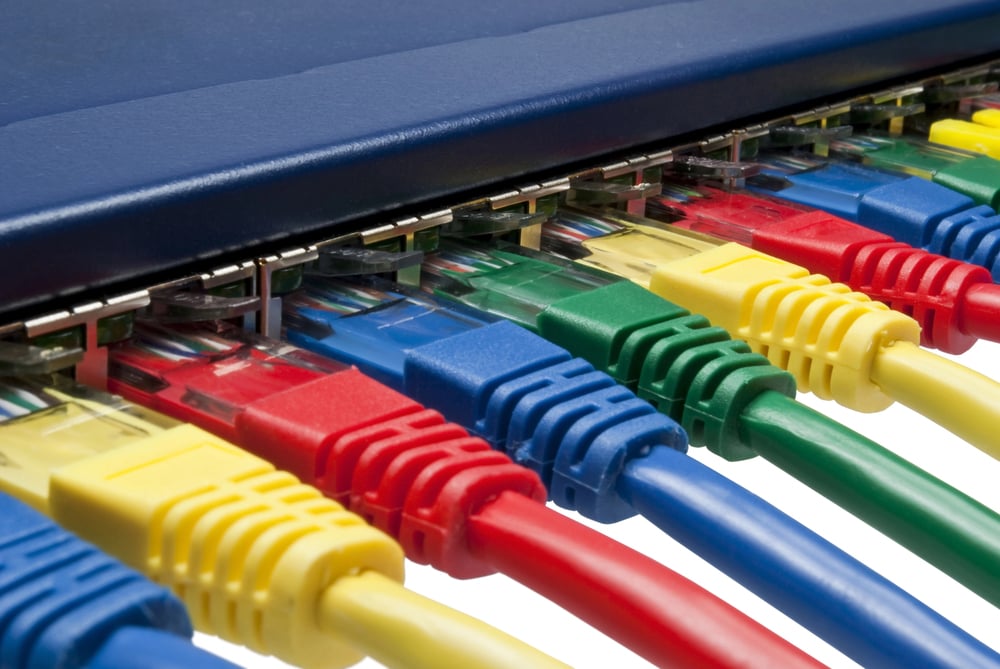
A service called World.std.com became the first commercial provider of dial-up internet access to the public in 1989. This was a full two years before the World Wide Web even existed.
People connecting to the internet at that point were doing things like accessing bulletin board systems, sending email, and downloading files using text-based interfaces. The experience was nothing like what came later, but the idea that an ordinary person could pay for internet access was new and significant.
Real-Time Online Chat Was Invented Before the Web

CompuServe — a commercial online service — launched a feature called CB Simulator in 1980, which let users chat with each other in real time. This was eleven years before the Web existed and at a time when most people had never heard of the internet.
CompuServe also became the first service to offer commercial email capabilities to personal computer users in 1979. The company was operating in a space that didn’t have a mainstream audience yet, but the things it was building were recognisably the ancestors of everything that came after.
Graduate Students Wrote the Rules the Early Internet Ran On

Flickr/joi
The host-to-host protocol that governed how computers on ARPANET communicated was largely specified by graduate students. A group led by Steve Crocker at UCLA, along with Jon Postel and others, did much of the technical specification work in the early days.
Postel went on to manage critical internet infrastructure for decades and became one of the most influential figures in internet governance — a role that grew far beyond what anyone imagined when he was a graduate student helping figure out how a four-node network should operate.
The Word “Internet” Was First Written Down by Vint Cerf

Vint Cerf, one of the key architects of TCP/IP and widely regarded as one of the fathers of the internet, is credited with the first written use of the word “internet.” He helped design the protocols that made it possible for separate networks to communicate with each other — which is exactly what the word describes.
Along with Bob Kahn, Cerf published the foundational TCP paper in 1974. The two of them effectively solved the problem of how to connect different networks together, which was the core technical challenge of the entire project.
The Dot-Com Crash Actually Built the Internet We Use Today

The dot-com bubble of the late 1990s collapsed spectacularly in 2000 and 2001, wiping out trillions of dollars in market value and bankrupting hundreds of companies. But the infrastructure spending that funded that bubble — the fiber optic cables laid under oceans, the server farms built across continents, the routing equipment installed in cities worldwide — didn’t disappear when the companies did.
Most of it stayed in the ground and in the racks. The physical backbone of today’s internet was largely funded by investors who lost enormous amounts of money chasing companies that no longer exist.
The Man Who Dreamed It Up Called It an “Intergalactic Computer Network”
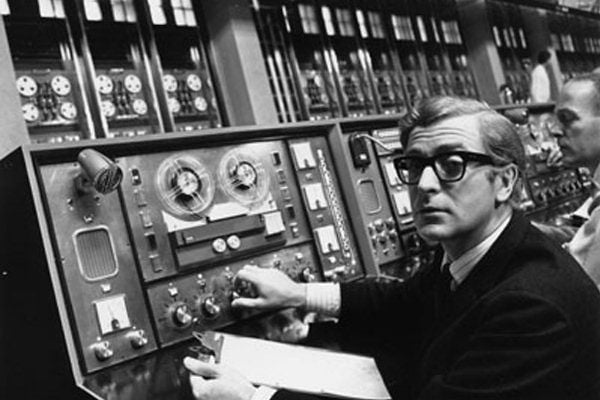
From 1962 into the next year, J.C.R. Licklider put pen to paper in a string of notes outlining something he dubbed an “Intergalactic Computer Network.” What if anybody, anywhere, could pull up facts in seconds – on anything at all? That was his thought.
Tools letting people work together through software appeared in his writings, along with central stores of data, plus distant control over machines able to crunch numbers – all absent back then, even far off. Those notes shaped the minds behind ARPANET’s creation.
He passed before witnessing how fully his ideas came true. Yet nearly every word he penned arrived just as he saw it.
What Those Four Computers Started

People building ARPANET faced a narrow challenge: moving data between labs without mailing tapes. Their aim wasn’t to remake society through instant connection across continents.
Yet it unfolded regardless – step by step, rule after rule, odd choice following odd choice. This network never appeared complete.
It gathered pieces over time. Within those gradual layers sat hints of what most modern life would become.
More from Go2Tutors!

- The Romanov Crown Jewels and Their Tragic Fate
- 13 Historical Mysteries That Science Still Can’t Solve
- Famous Hoaxes That Fooled the World for Years
- 15 Child Stars with Tragic Adult Lives
- 16 Famous Jewelry Pieces in History
Like Go2Tutors’s content? Follow us on MSN.