Inventions from the 1800s We Still Use
You probably interact with dozens of 19th-century inventions before you even leave your house each morning. The 1800s shaped modern life in ways that remain surprisingly intact.
These weren’t just historical stepping stones—many of these creations still function in your daily routine, often unchanged from their original designs.
The Bicycle

The bicycle went through several awkward phases before becoming the machine you recognize today. Early versions had wooden wheels and no pedals.
The “safety bicycle” emerged in the 1880s with two equal-sized wheels, a chain drive, and actual comfort. This design stuck because it worked.
You can still hop on a bike today and find the same basic structure. Two wheels, a frame, pedals connected to the rear wheel through a chain.
The materials have improved and gears have multiplied, but the fundamental concept remains untouched. Cities worldwide now build infrastructure specifically for this 19th-century invention.
The Safety Pin

Walter Hunt created the safety pin in 1849 to pay off a debt. He twisted a piece of wire, added a clasp, and sold the patent for $400.
That simple mechanism—a spring, a pin, and a protective cover—solved a problem that had plagued humanity for centuries. You still use this exact design.
Baby diapers, clothing alterations, emergency repairs, craft projects—the safety pin handles them all. No one has improved on Hunt’s design because it doesn’t need improvement.
Sometimes the first solution is also the best one.
The Postage Stamp

Before 1840, receiving mail cost money. The sender didn’t pay—the recipient did.
Rowland Hill changed this system by introducing prepaid postage stamps in Britain. The idea spread quickly because it made mail accessible to regular people, not just the wealthy.
Stamps remain essential to postal services everywhere. You stick one on an envelope and trust that your letter will reach its destination.
The adhesive backing, the perforated edges, the printed value—all of these elements come straight from Hill’s original concept. Email hasn’t killed the stamp.
Physical mail still matters, and stamps still get it where it needs to go.
Photography

The daguerreotype process arrived in 1839, giving people their first chance to capture reality permanently. Louis Daguerre’s method used silver-plated copper sheets and some very toxic chemicals.
The results were remarkable—crisp, detailed images that didn’t fade. Photography has obviously advanced since then, but you still use the core principle.
A lens focuses light onto a surface that records the image. Your smartphone camera is just a highly refined version of what Daguerre started.
The chemistry changed to electronics, but the basic idea—capturing light to preserve a moment—remains identical.
The Typewriter

Christopher Latham Sholes patented the first practical typewriter in 1868. The QWERTY keyboard layout he designed was meant to prevent mechanical jams by separating commonly used letter pairs.
That layout became standard, and it’s still standard now. Every keyboard you touch uses Sholes’ arrangement.
Your laptop, your phone screen, every computer terminal in existence—they all follow a design created to solve a problem that no longer exists. Mechanical jams aren’t a concern with digital keyboards, but QWERTY persists because retraining billions of people isn’t practical.
Blue Jeans

Levi Strauss and Jacob Davis patented riveted denim pants in 1873. They were making workwear for miners and laborers who needed something durable.
The copper rivets reinforced stress points, and the heavy denim could withstand hard labor. Jeans never stopped being popular.
They transitioned from workwear to casual wear to fashion statements, but the basic construction hasn’t changed much. Five pockets, riveted corners, denim fabric, button fly or zipper—you probably own several pairs right now.
What started as mining gear became a wardrobe staple across every demographic.
The Zipper

The zipper had a rough start. Whitcomb Judson invented it in 1893, but his version kept failing.
Gideon Sundback improved the design in 1913, creating the modern zipper with interlocking teeth. It took years for clothing manufacturers to trust it.
Now you use zippers constantly. Jackets, pants, bags, boots, tents—they’re everywhere.
The mechanism is elegant: two strips of teeth that lock together when you pull a slider. Simple, reliable, and faster than buttons.
Once people saw how well they worked, zippers became irreplaceable.
The Telephone

Alexander Graham Bell patented the telephone in 1876, though others were working on similar devices. The concept was wild at the time—speaking to someone miles away through a wire.
Early phones were clunky and required operators to connect calls manually. Your smartphone is a telephone with extra features.
The core function—transmitting voice across distances—is exactly what Bell invented. The technology changed from analog to digital, wires gave way to radio waves, but you’re still making phone calls.
The 1800s gave you the ability to talk to anyone, anywhere. Everything since then has just been refined.
The Electric Light Bulb

Thomas Edison didn’t invent the light bulb, but he made it practical in 1879. His version lasted long enough and was efficient enough to replace gas lamps.
He also built the infrastructure to deliver electricity to homes, which mattered just as much as the bulb itself. You flip switches every day without thinking about it.
The incandescent bulb has been replaced by LEDs and CFLs in many places, but the concept remains the same. Electricity flowing through a material produces light.
Edison’s bulb changed how humans experience nighttime. Before electric light, darkness dictated schedules.
After it, people could choose when to be productive.
The Phonograph

Edison invented the phonograph in 1877, creating the first device that could record and play back sound. His initial version used tin foil cylinders and a needle.
The sound quality was terrible, but the principle was groundbreaking. You still record and play back audio.
The medium changed from cylinders to vinyl to magnetic tape to digital files, but the basic idea—capturing sound for later playback—started with Edison’s machine. Every podcast, audiobook, and music streaming service traces its lineage back to that scratchy tin foil cylinder.
Aspirin

Felix Hoffmann synthesized acetylsalicylic acid in 1897 while working for Bayer. He was trying to find a less harsh alternative to salicylic acid, which helped his father’s arthritis but destroyed his stomach.
Aspirin worked better and became one of the most widely used medications in history. You probably have aspirin in your medicine cabinet right now.
The chemical formula hasn’t changed since 1897. It still reduces pain, lowers fever, and prevents blood clots.
Billions of people take it regularly. For a 19th-century invention to remain a frontline treatment in modern medicine says something about how well Hoffmann understood chemistry.
The Elevator

Elisha Otis demonstrated his safety elevator in 1854 at a New York exhibition. He rode the platform up, then had the rope cut.
The safety brake engaged, and Otis didn’t fall. That demonstration made tall buildings practical.
You ride elevators constantly, and they still use Otis’s safety system. Modern elevators are faster and smoother, but the fundamental safety mechanism—a brake that engages if the cable fails—is unchanged.
Without this invention, cities couldn’t grow vertically. Skyscrapers exist because Otis made people trust elevators.
Matches
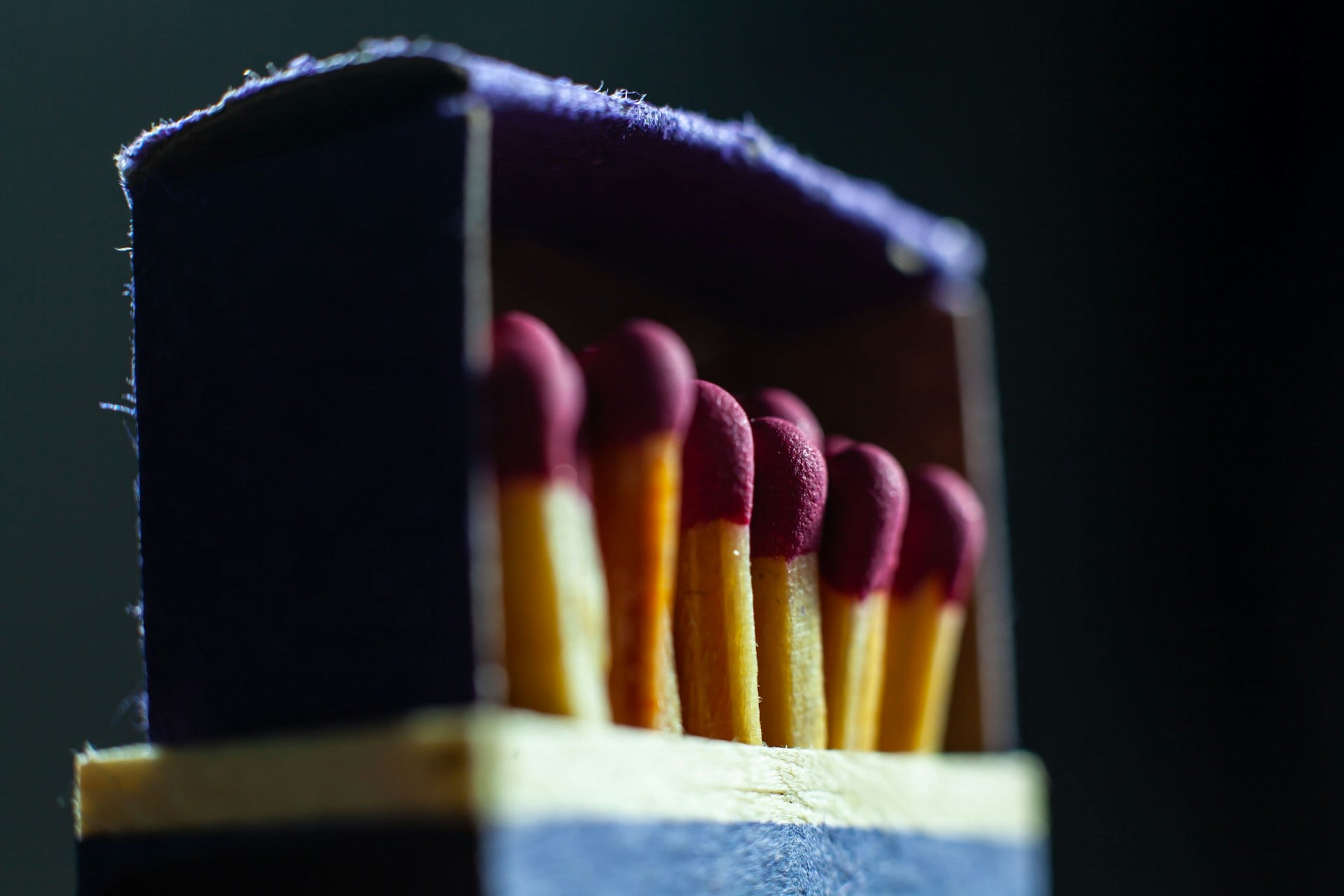
John Walker created the friction match in 1826, giving people fire on demand for the first time. Before matches, starting a fire required effort, time, and luck.
Strike-anywhere matches came later, followed by safety matches in the 1850s, which only lit when struck against a special surface. You still use matches.
They’re in your kitchen drawer, your camping gear, your emergency kit. The design is brilliantly simple: a wooden stick with a chemical head that ignites from friction.
Gas lighters and electric igniters exist, but matches remain reliable, cheap, and universal. Sometimes old technology survives because it just works.
The Sewing Machine

Elias Howe got a patent for the sewing machine back in 1846 – then later on, around the 1850s, Isaac Singer made tweaks that boosted its use. Until then, people stitched each bit of clothing using just needles and thread at home or workshops.
This new gadget shifted how factories worked, reshaped trends in outfits folks wore, even altered daily routines inside households. Pretty quick, stitching up garments turned into something speedy and cheap.
Some folks keep stitching clothes by hand. Even though factories make nearly all garments today, plenty still buy sewing gadgets for their homes.
Here’s how it works: a needle jabs down through cloth, linking with thread spun under from a spool below – all this stays just like before. Anyone who stitched in the 1800s would spot these tools right away, used now by makers, fixers, or people just doing it for fun.
Objects That Outlast Their Makers

Some old gadgets have more in common than just being ancient. Despite new tech popping up everywhere, they still work great – no fixes required.
Sure, you could swap out parts, toss in a smart chip here or there, yet the original thinking holds strong. Their basic design hasn’t aged a bit.
The 1800s handed down gadgets that still match how we live. Jeans cover your legs, bikes roll under you, aspirin knocks out pain, zippers pull tight, while lights turn on with a flick.
These things don’t seem old-fashioned since they aren’t locked in glass cases. Instead, they’re around every day, doing their job, staying useful.
The creators have vanished over time, yet their ideas still pop up in daily life. This is why you can tell a creation truly counted – because it never fades away.
More from Go2Tutors!

- The Romanov Crown Jewels and Their Tragic Fate
- 13 Historical Mysteries That Science Still Can’t Solve
- Famous Hoaxes That Fooled the World for Years
- 15 Child Stars with Tragic Adult Lives
- 16 Famous Jewelry Pieces in History
Like Go2Tutors’s content? Follow us on MSN.