15 Monuments Built Just to Win Arguments
Throughout history, humans have found creative ways to settle disputes—and sometimes that means building massive structures just to prove a point. These monuments weren’t erected to honor heroes or commemorate victories.
They were constructed purely out of spite, competition, or the burning need to have the last word in an argument. From feuding neighbors to rival nations, people have channeled their disagreements into stone, steel, and concrete.
Here are 15 monuments that exist today because someone, somewhere, absolutely had to win an argument.
The Spite House

In Alameda, California, there’s a narrow house that’s only 10 feet wide and 54 feet deep. Charles Froling built this peculiar structure in 1908 after his neighbor refused to sell a small strip of land.
Rather than accepting defeat, Froling constructed his ‘spite house’ to block his neighbor’s view—and spite him for the refusal. The house still stands today. It’s become a testament to petty neighborhood feuds taken to architectural extremes.
Christ the Redeemer

Most people see Rio de Janeiro’s iconic Christ the Redeemer as a symbol of faith, yet it actually began as Brazil’s response to France’s Statue of Liberty. Brazilian Catholics felt their nation needed something grander to showcase their religious devotion and national pride.
The 98-foot statue was completed in 1931, effectively winning the argument about which country could build the most impressive monument to their values.
Like Go2Tutors’s content? Follow us on MSN.
The Berlin Victory Column

This 220-foot column in Berlin wasn’t originally about celebrating German victories—it was built to settle an argument about Prussian military might. After Denmark questioned Prussia’s strength in 1864, the Prussians decided actions spoke louder than words.
They erected this golden-topped monument to commemorate their subsequent military successes. Essentially, they’d created a permanent ‘told you so’ in the middle of Berlin.
Sam Hill’s Maryhill Stonehenge

In the remote hills of Washington state stands a full-scale replica of Stonehenge—built by eccentric millionaire Sam Hill. Hill constructed this monument in the 1920s to prove his point about World War I being a senseless waste of young lives.
He argued that ancient peoples built Stonehenge for human sacrifice, drawing a parallel to modern warfare. His concrete Stonehenge serves as both a war memorial and a permanent argument against the futility of conflict.
The Watts Towers

Simon Rodia spent 33 years building the Watts Towers in Los Angeles, partly to prove that one man could create something magnificent without help from architects or engineers. When neighbors and city officials questioned the structural integrity of his 17-tower creation, Rodia simply kept building.
The towers were completed in 1954. They stand today as his winning argument that determination and vision matter more than formal training.
Like Go2Tutors’s content? Follow us on MSN.
Mount Rushmore

Mount Rushmore exists because South Dakota wanted to win a tourism argument with other western states. Historian Doane Robinson conceived the idea to attract visitors to South Dakota—which was losing the tourism battle to Colorado and Wyoming.
Sculptor Gutzon Borglum carved four presidential faces into the granite mountainside between 1927 and 1941, successfully creating the tourist magnet South Dakota needed to compete.
The Crazy Horse Memorial

This massive sculpture in South Dakota’s Black Hills began as Native American sculptor Korczak Ziolkowski’s response to Mount Rushmore. When asked where the Native American heroes were commemorated, Ziolkowski decided to answer with action rather than words.
He started carving Crazy Horse into a mountainside in 1948—creating a monument that would dwarf Mount Rushmore while honoring Native American heritage.
Bishop Castle

Jim Bishop has been building his medieval castle in Colorado since 1969, partly to prove that building codes are unnecessary restrictions. When local authorities questioned his construction methods and permits, Bishop responded by adding more towers, bridges, and decorative elements.
His castle now stands 160 feet tall, complete with a fire-breathing dragon—serving as his architectural middle finger to bureaucratic oversight.
Like Go2Tutors’s content? Follow us on MSN.
The Leaning Tower of Pisa

The famous lean in Pisa’s bell tower wasn’t intentional, though the decision to continue building it was a matter of civic pride. When the tower started tilting during construction in 1173, other Italian cities mocked Pisa’s engineering skills.
Rather than admitting defeat, Pisa’s builders continued construction for nearly 200 years—creating a leaning monument that proved their determination to finish what they’d started.
Carhenge

In Alliance, Nebraska, artist Jim Reinders built a full-scale replica of Stonehenge using vintage cars instead of stones. Reinders created this roadside attraction in 1987 to prove that American creativity could rival ancient British engineering.
His automobile monument demonstrates that modern materials can create something just as mysterious and enduring as the original Stonehenge.
The Space Needle

Seattle’s Space Needle exists because the city wanted to prove it belonged on the world stage during the 1962 World’s Fair. When other cities questioned Seattle’s ability to host a successful international exposition, the city responded by building the most futuristic structure they could imagine.
The 605-foot tower became Seattle’s winning argument that the Pacific Northwest could compete with any major metropolitan area.
Like Go2Tutors’s content? Follow us on MSN.
The Gateway Arch

St. Louis built the Gateway Arch to win an argument about the city’s historical importance to American expansion. When other cities claimed to be the true ‘Gateway to the West,’ St. Louis responded with the tallest man-made monument in the Western Hemisphere.
The 630-foot stainless steel arch, completed in 1965, serves as St. Louis’s permanent claim to its role in westward expansion.
The World’s Largest Twine Creation

Francis Johnson started rolling twine into a colossal sphere in his barn in Darwin, Minnesota, partly to prove that one person’s dedication could create something remarkable. As his creation grew larger, neighboring towns claimed they had bigger twine formations, sparking a friendly competition.
Johnson’s sphere eventually reached 17,400 pounds and 40 feet in circumference, settling the argument about which Minnesota town had the most impressive twine creation.
Coral Castle
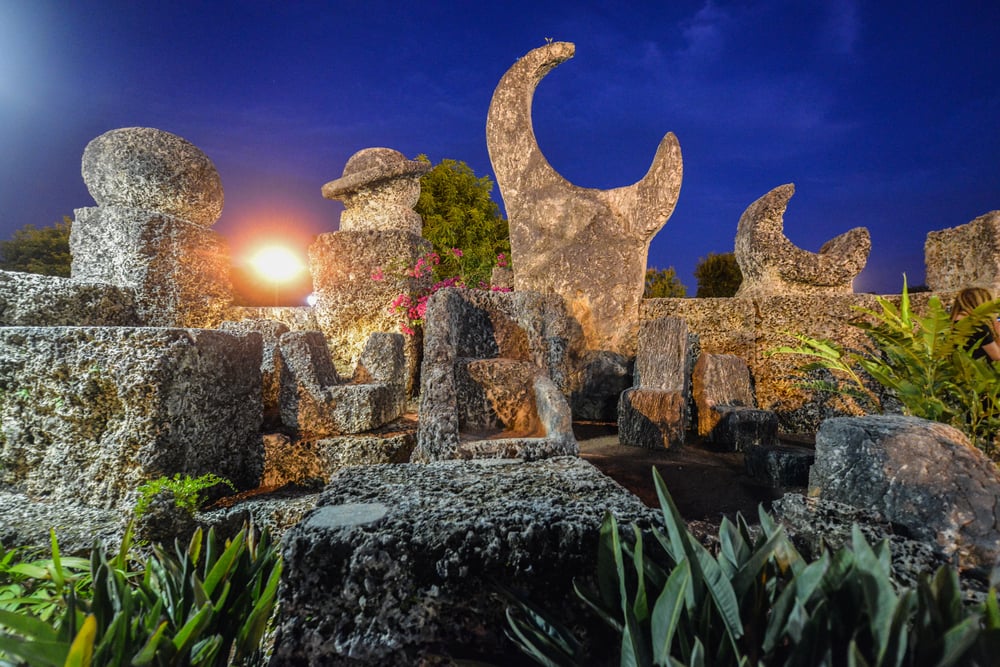
Edward Leedskalnin spent 28 years building Coral Castle in Florida to prove his devotion to a woman who had left him. When Agnes Scuffs broke off their engagement, Leedskalnin decided to show her what she was missing by creating an elaborate stone monument.
He carved and moved massive coral blocks weighing several tons each, using techniques he never revealed, creating a lasting argument for his engineering skills and romantic dedication.
Like Go2Tutors’s content? Follow us on MSN.
The Motherland Calls

This 279-foot statue in Volgograd, Russia, was built to prove Soviet superiority after World War II. When the United States and other Western nations questioned Soviet strength and resolve, the USSR responded by building the world’s tallest statue at the time.
Completed in 1967, the monument depicts a woman holding a sword above her head, serving as the Soviet Union’s concrete argument about their victory over fascism and their continued military might.
Arguments Set in Stone
These monuments remind us that human stubbornness can create surprisingly beautiful and lasting results. What started as petty disputes, national competitions, and personal vendettas became tourist attractions, architectural marvels, and cultural landmarks that continue drawing visitors decades or centuries later.
Sometimes the best way to win an argument isn’t with words. It’s with something so impressive that it speaks for itself, long after the original disagreement has been forgotten.
More from Go2Tutors!

- 16 Historical Figures Who Were Nothing Like You Think
- 12 Things Sold in the 80s That Are Now Illegal
- 15 VHS Tapes That Could Be Worth Thousands
- 17 Historical “What Ifs” That Would Have Changed Everything
- 18 TV Shows That Vanished Without a Finale
Like Go2Tutors’s content? Follow us on MSN.