15 Most Valuable Treasures Ever Found by Accident
Some of the world’s most incredible discoveries happened when people were doing something completely ordinary—walking the dog, renovating a house, or just digging in their backyard. These accidental finds prove that fortune really can favor the unprepared, turning regular folks into millionaires overnight and rewriting history books in the process.
From ancient artifacts to modern masterpieces, these treasures were hidden in plain sight, waiting for the right person to stumble upon them at exactly the right moment. Here is a list of 15 of the most valuable treasures ever discovered by pure chance.
Staffordshire Hoard
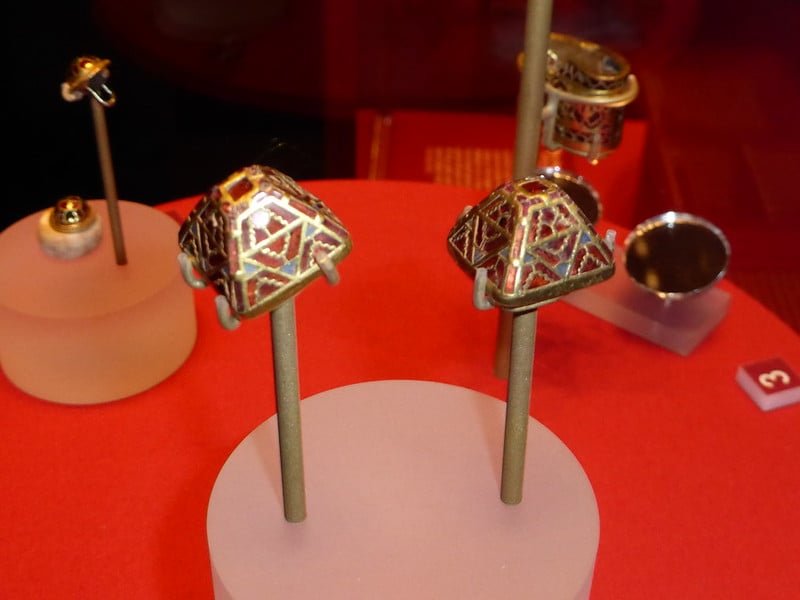
Terry Herbert was metal detecting in a farmer’s field in 2009 when his detector went crazy over what he thought might be a few old coins. Instead, he unearthed the largest collection of Anglo-Saxon gold and silver ever found—over 3,500 pieces dating back 1,300 years. The hoard’s value exceeded $5 million, transforming Herbert from an unemployed man into someone who could afford to buy the very field where he made his discovery.
Antikythera Mechanism

Greek sponge divers in 1901 were just looking for their next harvest when they discovered an ancient shipwreck off the coast of Antikythera. Among the artifacts was a corroded bronze device that scientists now call the world’s first computer, capable of predicting astronomical events with remarkable accuracy. This 2,000-year-old marvel proved that ancient Greeks possessed technological sophistication that wouldn’t be matched for another millennium.
Caesarea Sunken Treasure

Israeli divers Ran Feinstein and Ofer Ra’anan were exploring the ancient harbor of Caesarea in 2015 when they spotted what looked like toy coins scattered on the seafloor. Their ‘toys’ turned out to be nearly 2,000 gold coins from the Fatimid period, the largest medieval treasure ever found in Israel. The discovery was so significant that it changed historians’ understanding of trade routes in the Mediterranean during the 11th century.
Hoxne Hoard

Eric Lawes was helping a friend find a lost hammer in a Suffolk field when his metal detector led him to the largest cache of late Roman silver and gold ever discovered in Britain. The 1992 find included over 15,000 coins, 200 items of silver tableware, and dozens of gold jewelry pieces worth more than $4 million. Lawes never did find that hammer, but his detour made him considerably richer than any tool ever could.
Crosby Garrett Helmet

An anonymous metal detectorist in 2010 was sweeping a field in Cumbria when he uncovered what appeared to be a dented piece of bronze. The object turned out to be a complete Roman cavalry helmet, one of only three ever found in Britain. When it sold at auction for $3.6 million, it became the most expensive piece of Roman armor ever sold, proving that even the most unassuming finds can hide extraordinary value.
Bactrian Gold
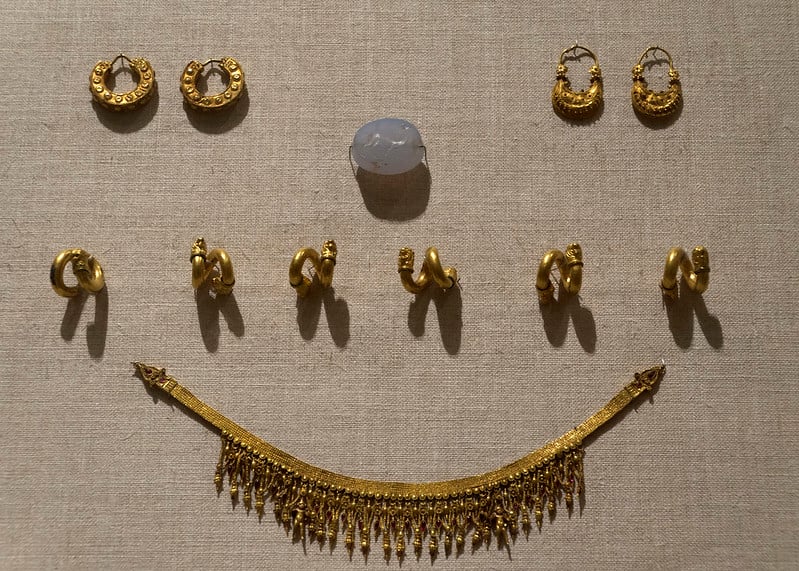
Soviet archaeologist Viktor Sarianidi wasn’t looking for treasure when he excavated a site in northern Afghanistan in 1978—he was studying ancient civilizations. His team uncovered six tombs containing over 20,000 gold artifacts from the Bactrian kingdom, including intricate jewelry and ceremonial items. The collection, worth an estimated $200 million, remained hidden during decades of war and was rediscovered in the Afghan National Museum’s secret vaults.
Panagyurishte Treasure

Three brothers were digging clay for a local tile factory in Bulgaria in 1949 when they struck something much more valuable than ceramic materials. Their shovels revealed nine solid gold vessels from the 4th century BC, decorated with mythological scenes and weighing over 13 pounds total. The Thracian treasure, now worth approximately $50 million, represents some of the finest ancient goldwork ever discovered.
Saddle Ridge Hoard

A California couple was walking their dog on their property in 2013 when they noticed something metallic protruding from the ground. Their curiosity led to the discovery of eight cans containing 1,427 gold coins from the 1800s, many in mint condition. The cache, valued at over $10 million, remains the largest buried treasure ever found in the United States.
Ringlemere Cup

Cliff Bradshaw was metal detecting in a Kent field in 2001 when he uncovered fragments of what looked like old brass. The pieces formed a Bronze Age gold cup, over 3,500 years old and one of only seven such vessels known to exist. The British Museum acquired the cup for $520,000, making Bradshaw’s casual afternoon sweep one of the most profitable walks in history.
Sevso Treasure

Hungarian authorities discovered the Sevso Treasure in the 1970s, though its exact location remains mysterious due to the secretive nature of its discovery. The collection includes 14 large silver pieces from the late Roman Empire, decorated with hunting scenes and mythological figures. Valued at over $200 million, it represents the most significant cache of late Roman silver ever assembled.
Cuerdale Hoard

Workers repairing a riverbank in Lancashire in 1840 accidentally broke open a lead chest containing the largest Viking silver hoard ever found. The cache included over 8,600 items—coins, jewelry, and silver ingots—weighing more than 90 pounds. The find provided crucial evidence of Viking trade networks and remains one of the most important archaeological discoveries in British history.
Lena Goldfields Treasure
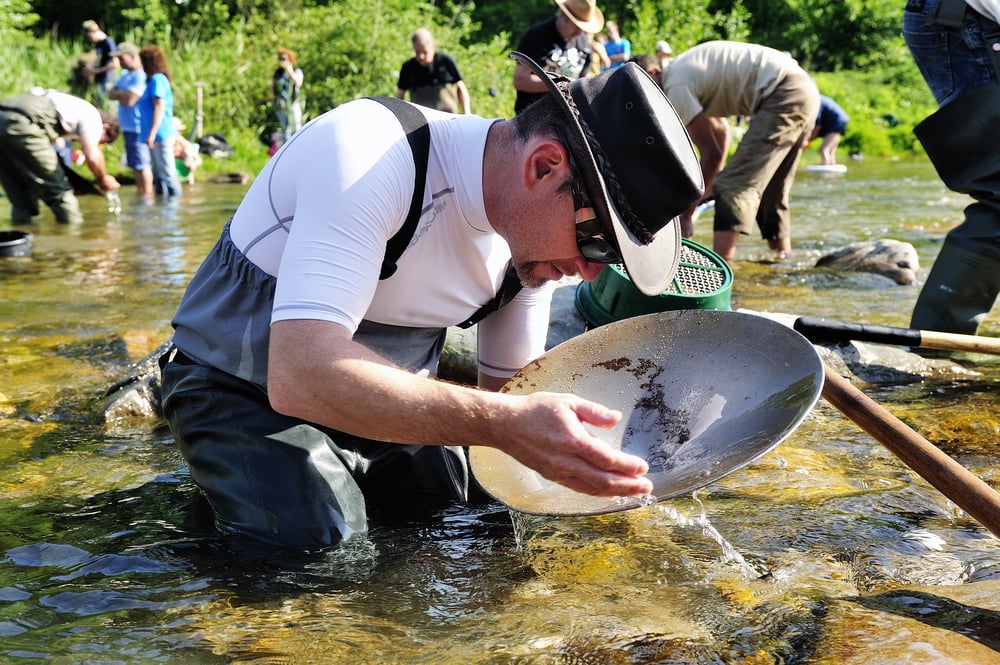
Gold prospectors in Siberia in 1912 were following a promising stream when they discovered carved mammoth tusks emerging from the permafrost. The tusks led to a burial site containing Scythian gold artifacts over 2,500 years old, including intricate animal designs and ceremonial weapons. The collection’s value exceeded $75 million, making it one of the richest prehistoric finds ever made.
Środa Treasure
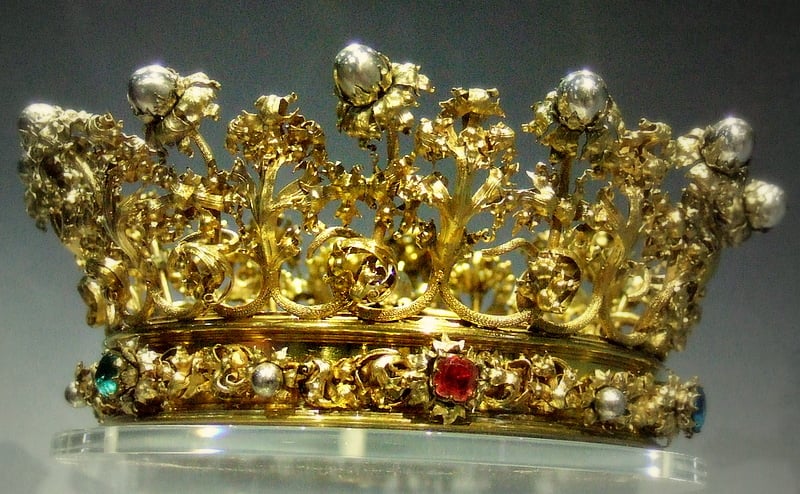
Construction workers renovating a building in the Polish town of Środa Śląska in 1985 kept finding old coins and jewelry pieces in the walls. Their discoveries accumulated into a massive 14th-century treasure hoard, including a gold crown and royal regalia possibly belonging to Charles IV, Holy Roman Emperor. The complete collection, worth over $120 million, transformed the small town into a significant archaeological site.
Frome Hoard

Dave Crisp was metal detecting in a Somerset field in 2010 when he found what he thought were a few Roman coins. His careful excavation revealed 52,503 coins buried in a single pot, the largest Roman coin hoard ever discovered in Britain. The collection, spanning several centuries of Roman rule, was valued at over $5 million and provided unprecedented insight into Roman monetary systems.
Fishpool Hoard

A laborer filling in a pond in Nottinghamshire in 1966 struck his shovel against something hard and unearthed a lead container filled with medieval gold. The cache contained 1,237 coins, four rings, and several pieces of jewelry from the 15th century, likely buried during the Wars of the Roses. The hoard’s value of $3.2 million made it one of the most significant medieval treasure finds in England.
Fortune’s Favorite Children

These accidental discoveries remind us that history’s greatest treasures often reveal themselves to the most unexpected people at the most ordinary moments. Each find not only enriched the discoverers but also expanded our understanding of ancient civilizations, trade routes, and human craftsmanship. The next time you’re walking through a field or renovating an old building, remember that beneath your feet might lie artifacts that have been waiting centuries for someone just like you to find them. After all, the greatest treasures aren’t always buried in exotic locations—sometimes they’re hiding right in your own backyard.
More from Go2Tutors!

- The Romanov Crown Jewels and Their Tragic Fate
- 13 Historical Mysteries That Science Still Can’t Solve
- Famous Hoaxes That Fooled the World for Years
- 15 Child Stars with Tragic Adult Lives
- 16 Famous Jewelry Pieces in History
Like Go2Tutors’s content? Follow us on MSN.



