15 Photos Of The Most Ornate And Elaborate Armors Ever Worn In Battle
Standing before a museum display case, looking at centuries-old armor, you can almost feel the weight of history pressing down through those polished plates. Each piece tells a story not just of protection, but of power, artistry, and the peculiar human need to turn even the tools of war into works of beauty.
These weren’t just functional pieces of metal hammered into shape — they were statements, declarations of wealth and status that happened to stop swords. The most elaborate battle armor in history went far beyond simple protection.
Master armorers spent months, sometimes years, crafting pieces that would make their wearers stand out on any battlefield. Gold inlays, intricate engravings, and impossible attention to detail transformed these warriors into walking works of art.
Here are fifteen of the most spectacular examples ever created.
Maximilian I’s Gothic Plate Armor
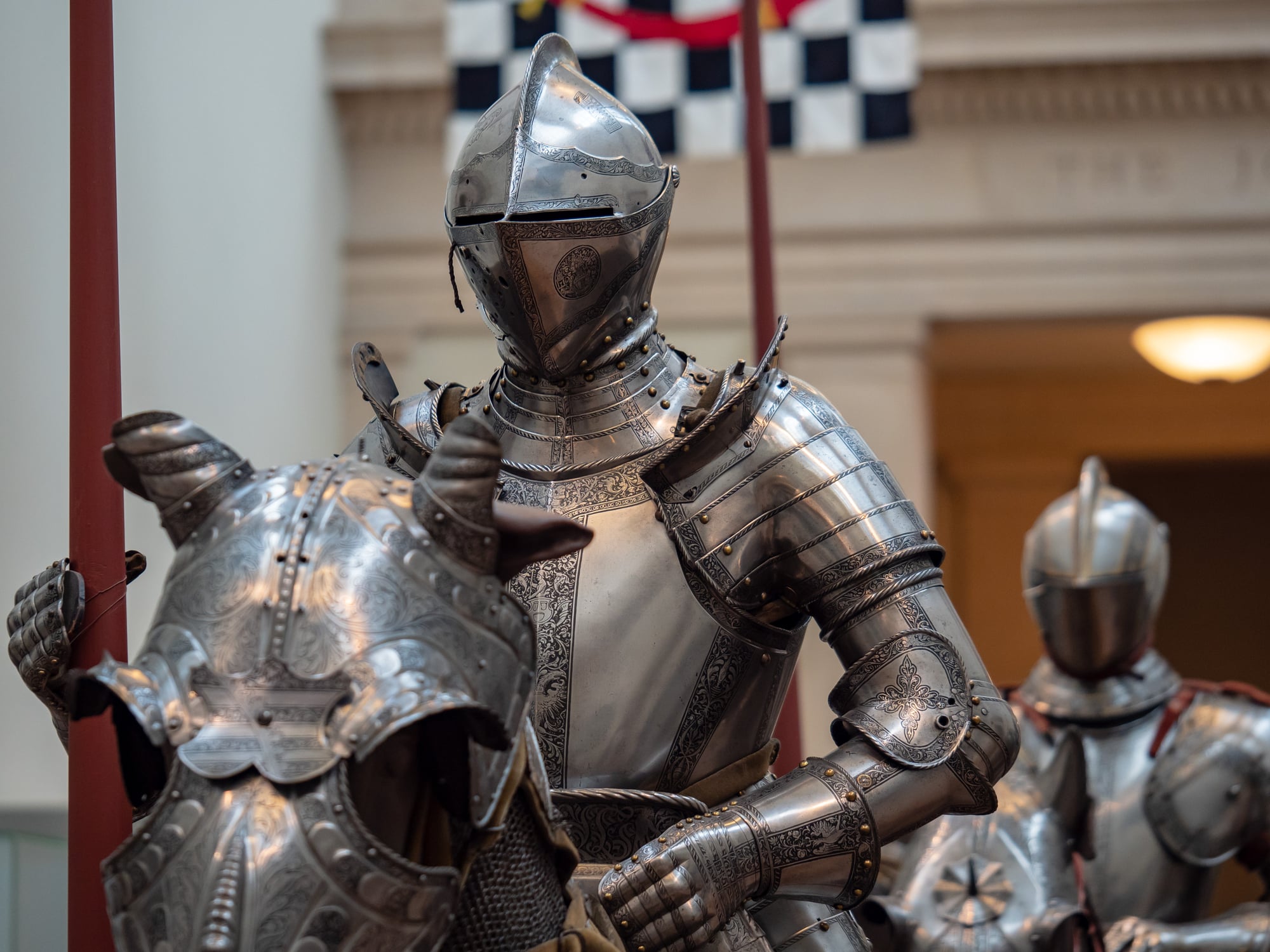
This armor gets straight to the point. Fluted steel ridges run the length of every plate.
No decoration for decoration’s sake. The Holy Roman Emperor knew what worked.
The Field Armor Of Henry VIII
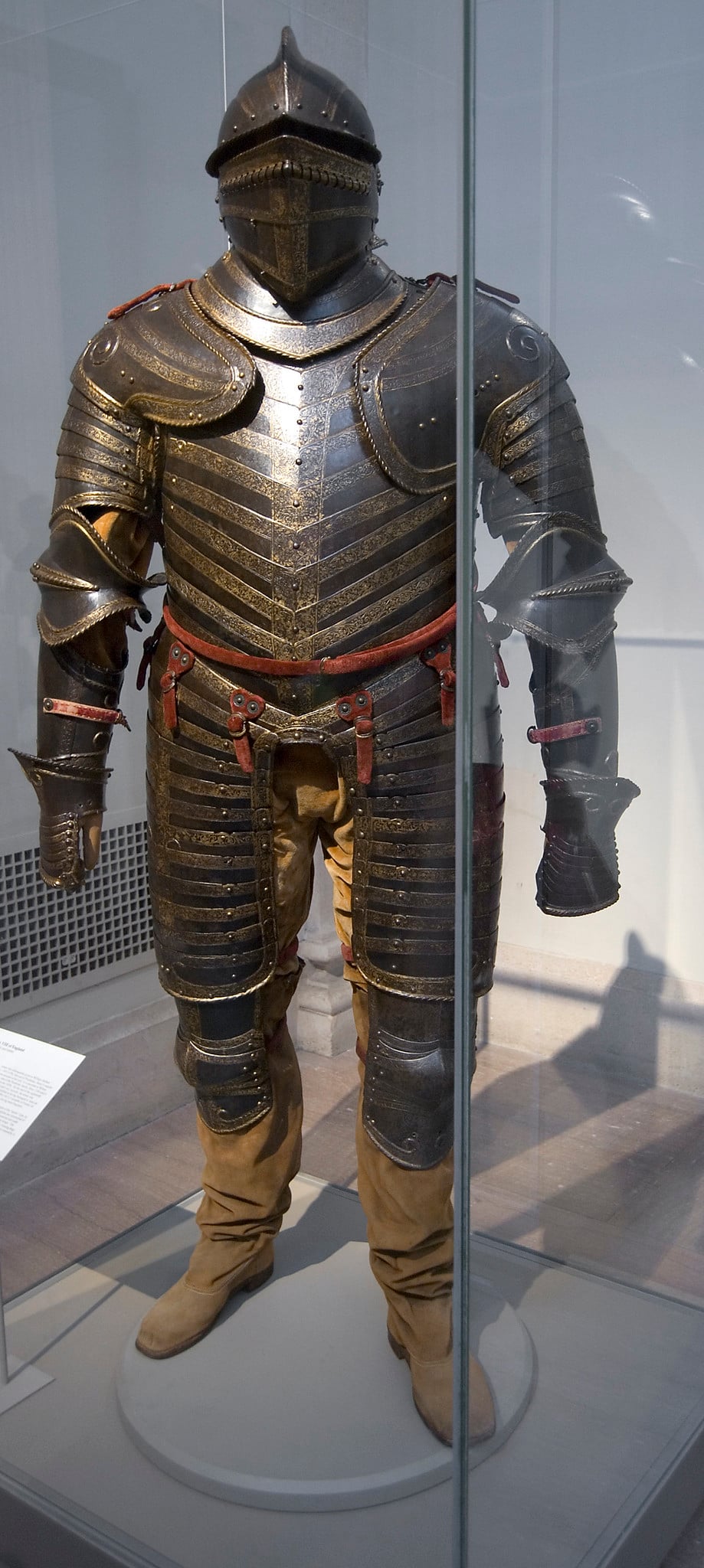
The relationship between a king and his armor runs deeper than most people realize (especially when that king happens to be Henry VIII, whose relationship with everything ran deeper and more complicated than it needed to). This particular suit, crafted around 1540, represents something beyond mere protection — it’s a conversation between the man who would reshape England and the craftsmen who understood that a king’s armor must speak before he does.
And yet, standing in the Tower of London today, the suit feels almost modest compared to what Henry demanded from his marriages, his churches, and his dinners. The etched scenes covering every surface tell stories of classical mythology, but they whisper something else entirely: this was a man who needed his clothing to match his ambitions.
Each breastplate bears the kind of detail that would make a Renaissance painter envious, flowing in patterns that catch light and throw it back in ways that must have been breathtaking on a Tudor battlefield. The craftsmanship borders on the obsessive — which, when you think about it, describes Henry’s approach to most things in his life.
The Armor Of Emperor Charles V
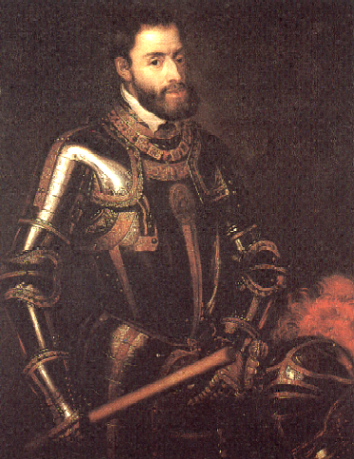
Charles V’s armor is the most overengineered piece of battlefield equipment ever created. Every joint articulates with mechanical precision that modern engineers still admire.
The fact that it worked perfectly in actual combat makes it even more impressive. Turns out you can have form and function without choosing between them.
Charles proved that on multiple battlefields across Europe, wearing armor that belonged in an art gallery but stopped bullets just fine. The etched scenes covering the breastplate weren’t just for show — they were propaganda that traveled with the emperor, telling his story to anyone who got close enough to read the details.
The Milanese Armor Of Francesco Sforza
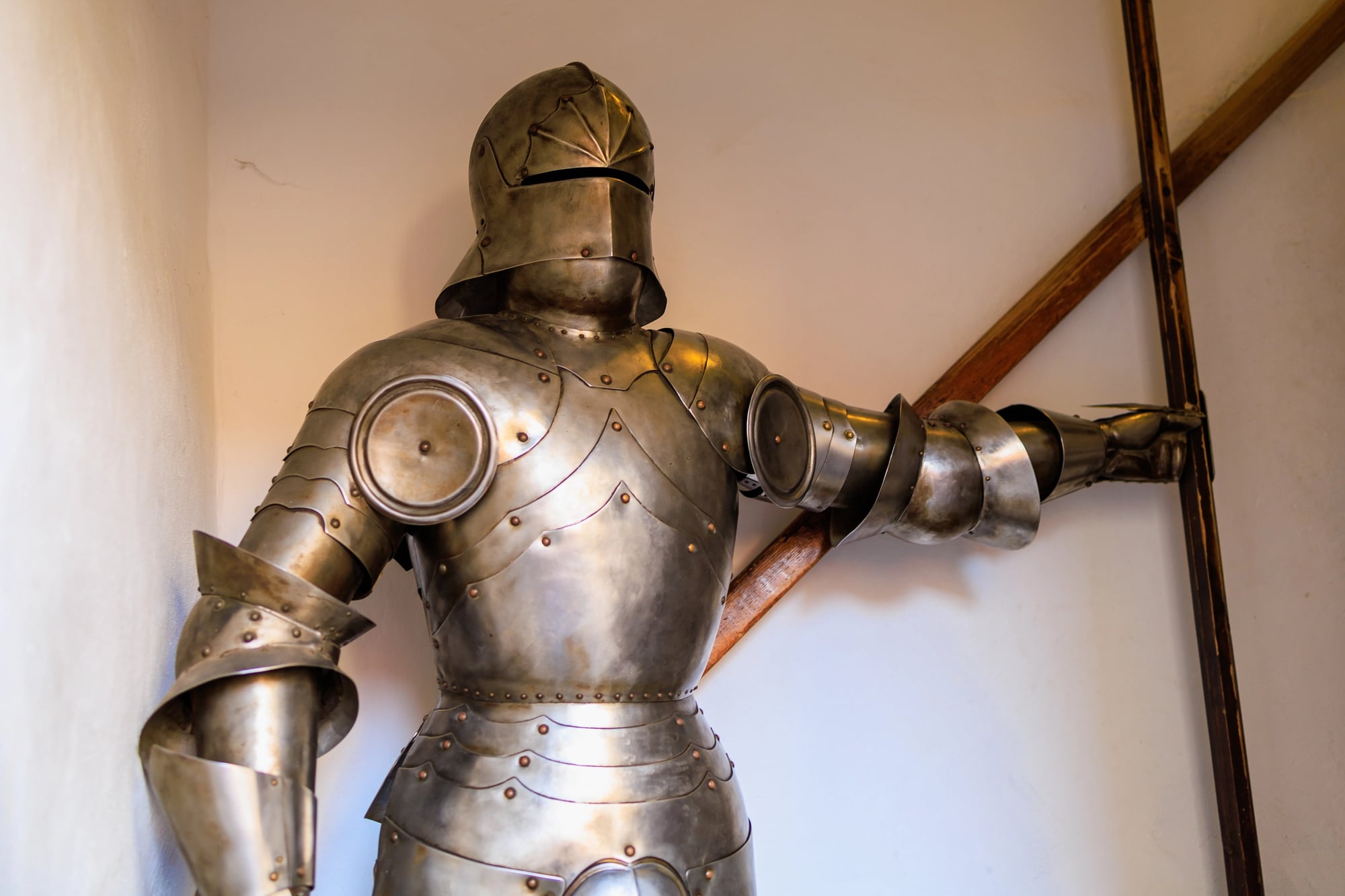
There’s something about Italian armor that corrects the way you think about medieval warfare. This isn’t the clunky, awkward metal suit that popular imagination conjures — it’s fluid, almost organic in the way it moves with the wearer’s body.
Francesco Sforza’s suit, crafted in Milan around 1450, demonstrates what happens when the world’s finest metalworkers decide that protection and elegance aren’t mutually exclusive concepts. The surface work alone requires you to reconsider what’s possible with hammer and steel.
Tiny figures dance across the breastplate in scenes so detailed they seem to move in changing light, telling stories of conquest and glory that would have been immediately recognizable to anyone who encountered Sforza on the battlefield. But the real artistry lives in the joints — each articulation so perfectly balanced that the armor enhances movement rather than restricting it.
The Tournament Armor Of Archduke Ferdinand II
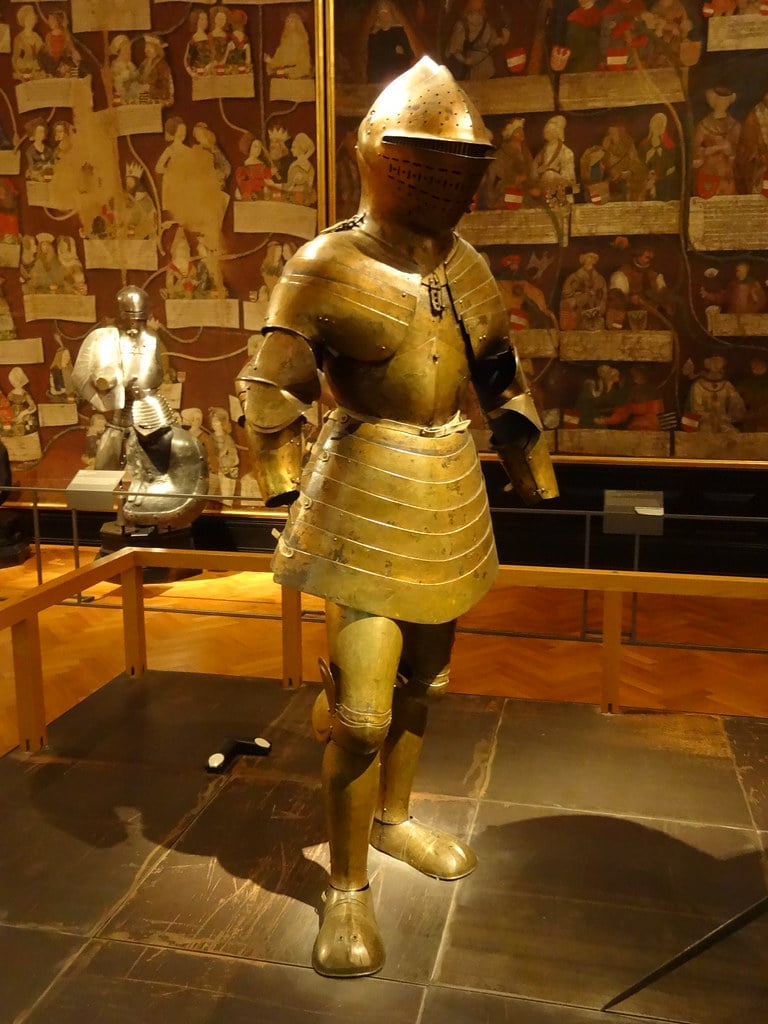
Ferdinand’s tournament armor exists purely to make other nobles feel inadequate. Gold leaf covers surfaces that will never see actual combat.
The helmet alone cost more than most people earned in a lifetime.
The Black And Gold Armor Of Duke Julius Of Brunswick
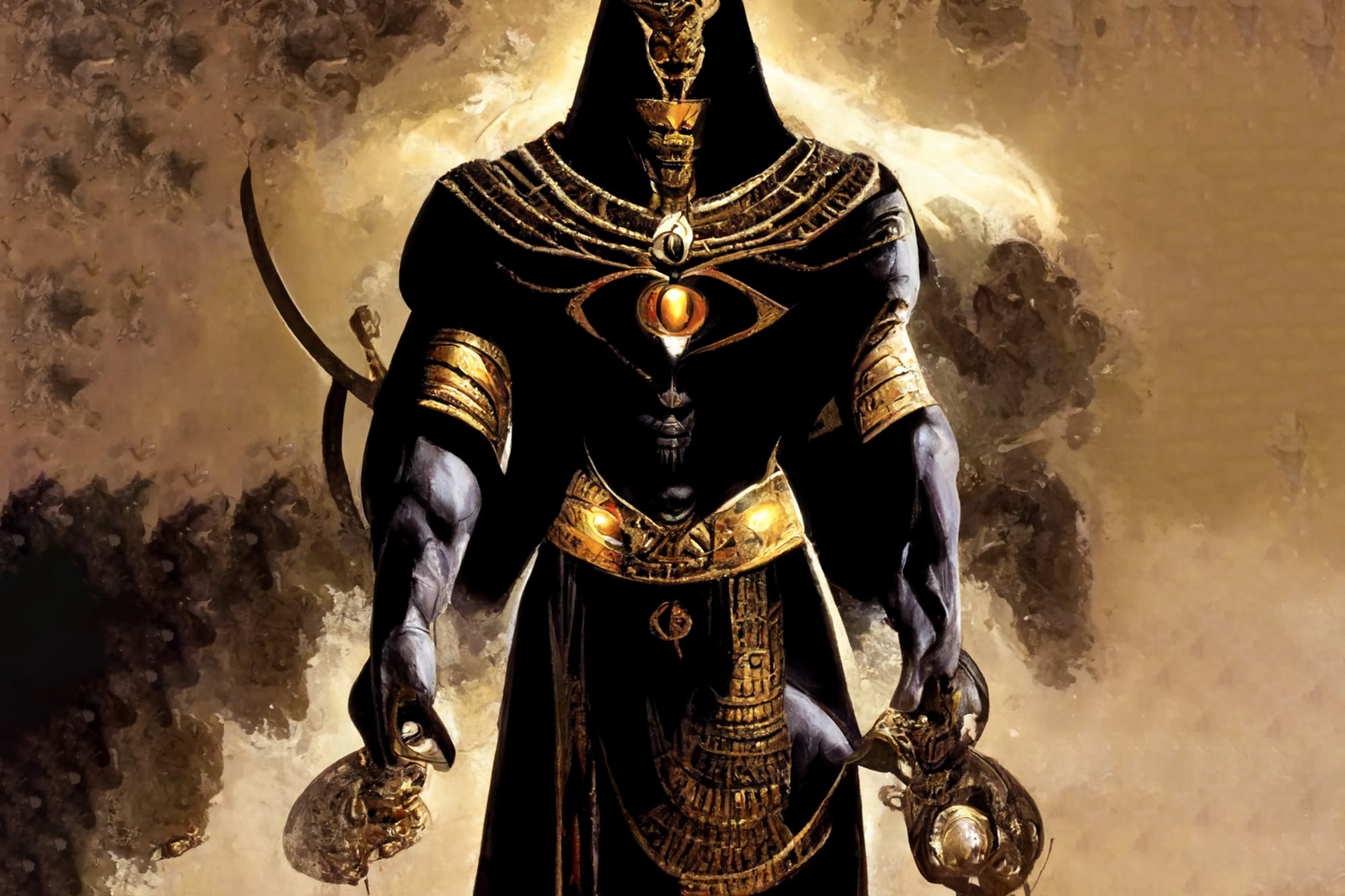
Some armor whispers its intentions. Others announce them with trumpets and fanfare.
Duke Julius of Brunswick’s black and gold masterpiece, forged in the 1570s, falls firmly into the second category — and makes no apologies for it. The contrast between the deep black steel and the intricate gold inlay creates an effect that must have been hypnotic in torchlight, drawing attention across any room or battlefield where it appeared.
But the real genius lives in the details that reveal themselves slowly, the way good craftsmanship always does. Lions and eagles march across the surface in procession, each figure rendered with the kind of precision that suggests the armorer cared more about his reputation than his schedule.
The shoulder pieces (called pauldrons, though that technical term hardly captures their sculptural presence) curve and flow in ways that seem to defy the limitations of steel, creating a silhouette that’s both intimidating and oddly graceful. And the helmet — well, the helmet looks like it belongs on a warrior-poet who happened to have excellent taste in metallurgy.
The Ceremonial Armor Of Christian I Of Saxony
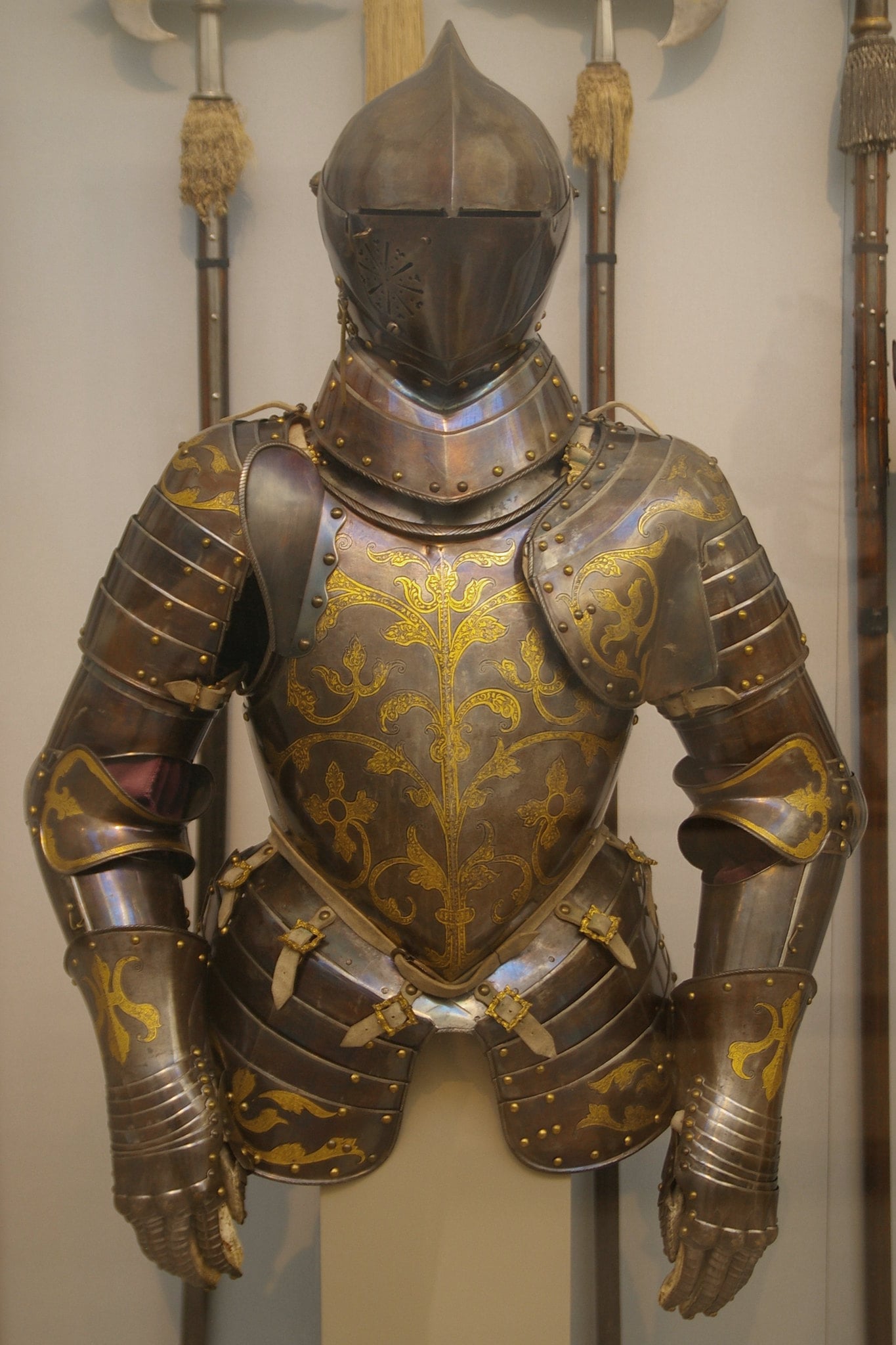
Christian I understood that sometimes armor serves as diplomacy by other means. His ceremonial suit prioritizes intimidation through artistry.
Every surface tells a story of power and divine right. The engravings cover theological themes mixed with military victories.
Smart politics wrapped in steel. This armor was designed to end conversations before they started, and judging by contemporary accounts, it worked exactly as intended.
The Composite Armor Of Shah Abbas I

Persian armor operates on entirely different principles than its European counterparts, and Shah Abbas I’s composite suit demonstrates why those differences mattered on the battlefield. Rather than relying on solid plates, this armor combines steel, leather, and chain mail in patterns that create protection through flexibility rather than rigid strength.
The result feels less like wearing metal and more like wearing liquid that happens to stop arrows. The surface decoration draws from centuries of Persian artistic tradition, with calligraphy and geometric patterns flowing across the chest and arms in designs that manage to be both beautiful and slightly hypnotic.
Each element serves multiple purposes — the raised sections deflect blows while creating visual rhythm, and the gold and silver inlay catches light in ways that would have made the wearer visible and impressive across considerable distance. But the real innovation lies in how the different materials work together, creating a system of protection that moves like cloth while providing coverage that solid plate could never match.
The Parade Armor Of Louis XIV
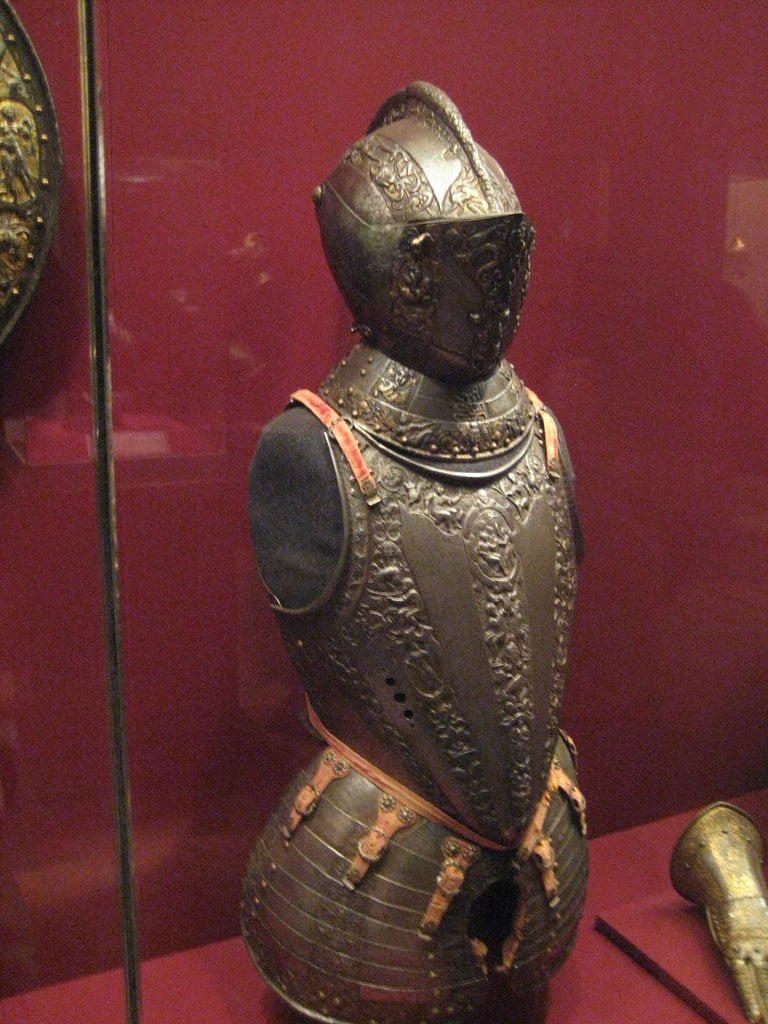
Louis XIV’s parade armor exists to remind everyone present that absolute monarchy comes with matching accessories. This suit never saw combat and wasn’t designed to.
Pure theater made from steel and precious metals.
The Japanese O-Yoroi Of Minamoto No Yoritomo
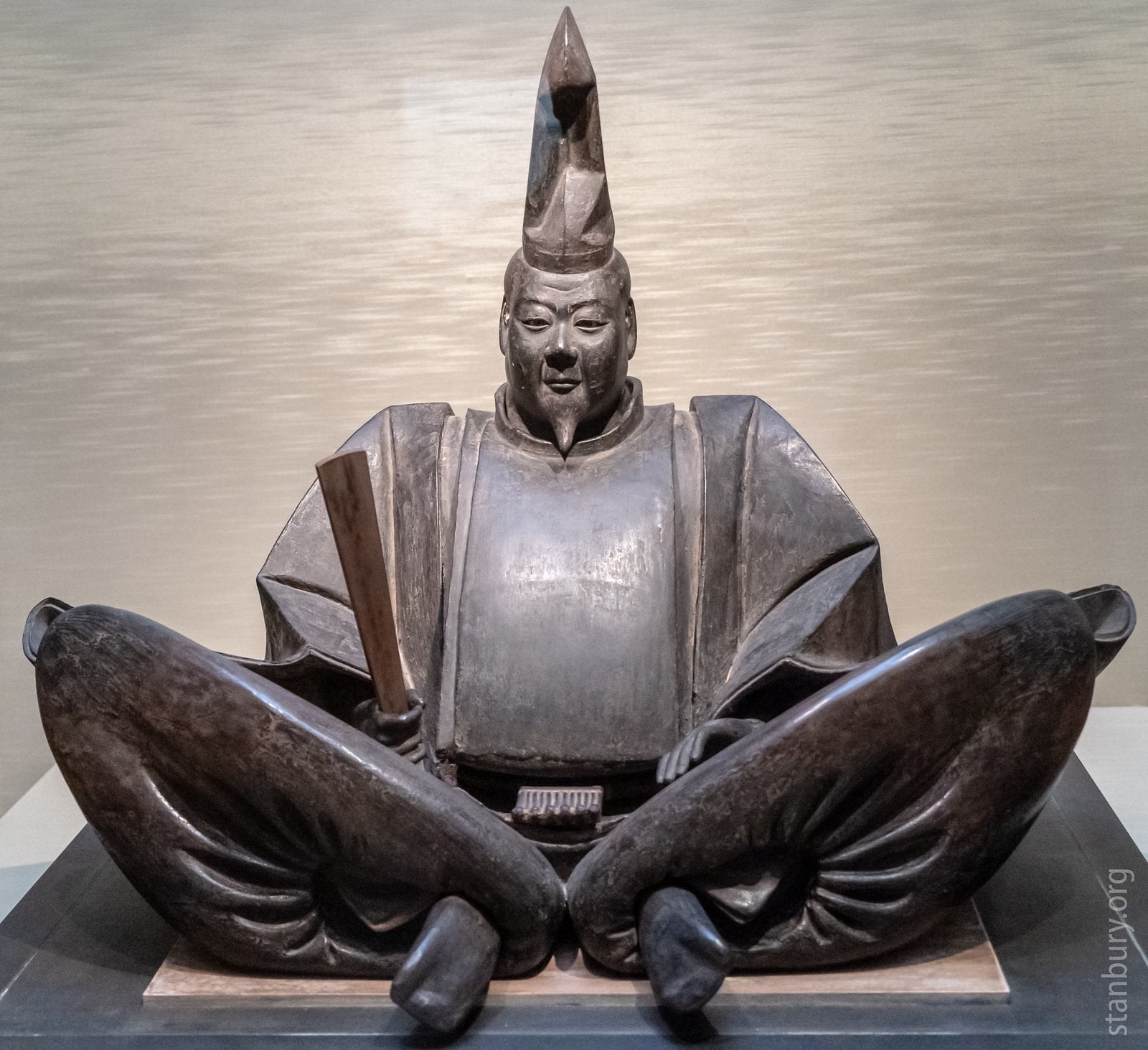
Japanese armor inhabits a completely different philosophical space than Western plate mail, and Minamoto no Yoritomo’s O-Yoroi demonstrates why that difference produced something genuinely beautiful. Instead of encasing the warrior in metal, this armor drapes and flows, built from thousands of individual scales laced together with silk cords in patterns that create both protection and movement.
The overall effect resembles elaborate textile work more than metalworking, until you realize that each of those scales was individually crafted and fitted. The color combinations alone require you to rethink what armor can be — deep blues and golds mixed with lacquered black, creating combinations that change appearance depending on light and angle.
The shoulder guards sweep upward in curves that seem almost architectural, and the helmet (with its fierce face mask) manages to be both practical and theatrical without compromising either function. And those silk cords aren’t just decorative — they allow the armor to flex and bend in ways that solid plates never could, creating protection that enhances the samurai’s mobility rather than restricting it.
The Fluted Armor Of Albrecht Dürer’s Design
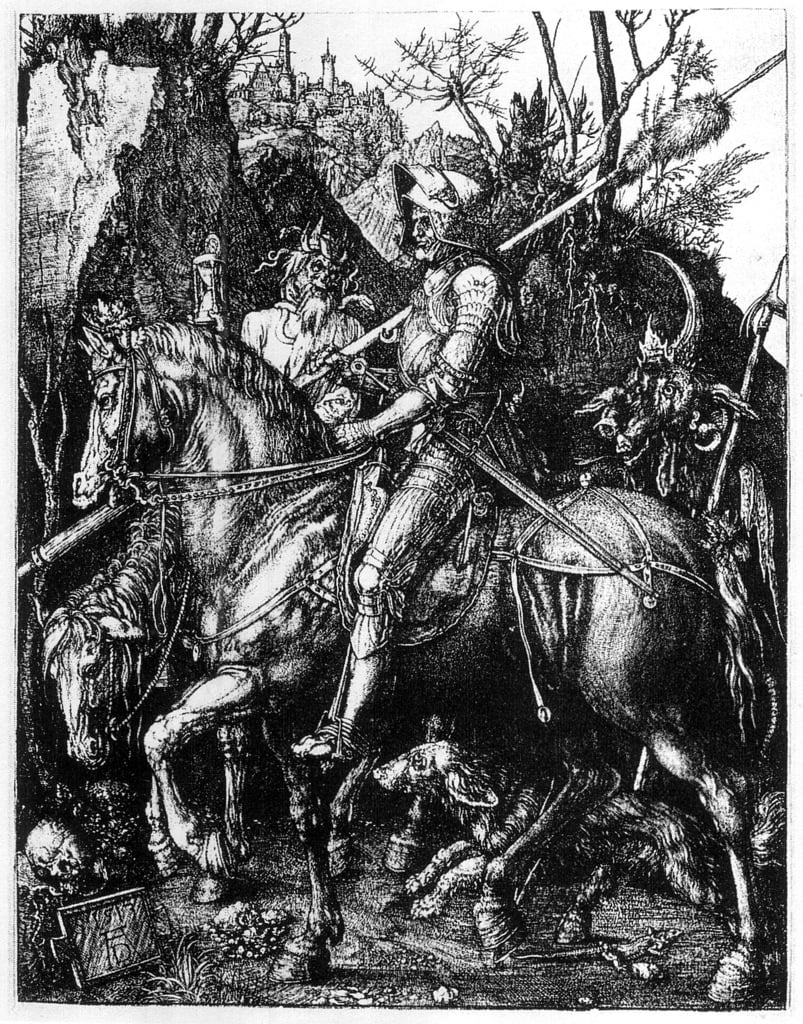
Dürer’s armor design proves that sometimes the best military equipment comes from people who understand art better than warfare. This suit prioritizes visual impact through mathematical precision.
Every line and curve follows artistic principles. The fluting isn’t decorative — it actually strengthens the metal while reducing weight.
Dürer understood that good design solves multiple problems simultaneously, which is why this armor works as both protection and sculpture.
The Dragon Armor Of Emperor Akbar
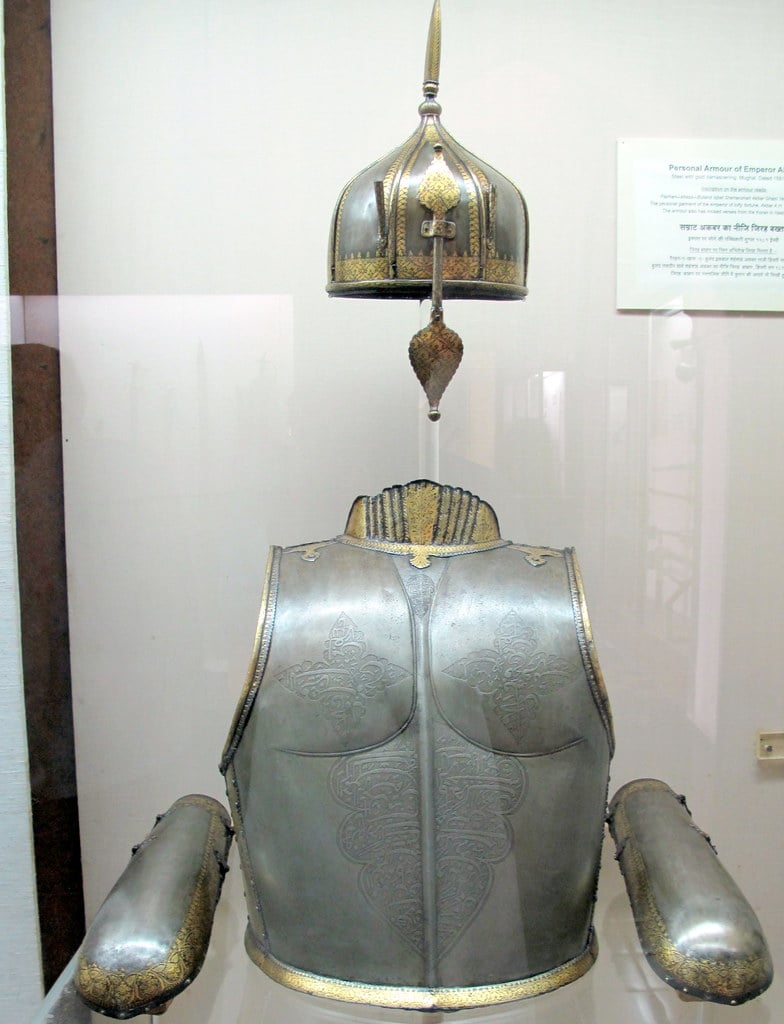
Mughal armor traditions produced some of the most elaborate metalwork in military history, and Emperor Akbar’s dragon suit represents the peak of that artistry. The entire surface crawls with mythical creatures rendered in gold and silver inlay, each dragon carefully positioned to flow with the armor’s movement.
The effect creates the impression that the wearer is clothed in living mythology rather than simple steel. But the real sophistication shows in how the decorative elements enhance rather than compromise the armor’s function.
The raised dragon scales help deflect blows while creating visual texture, and the strategic placement of the most elaborate decoration draws enemy attention to the armor’s strongest points. The helmet incorporates practical elements — excellent visibility and ventilation — while maintaining the dragon theme through subtle sculptural details that are easy to miss unless you’re looking closely.
The whole suit manages to be both intimidating and genuinely beautiful, which takes considerable skill to pull off.
The Etched Armor Of Alessandro Farnese
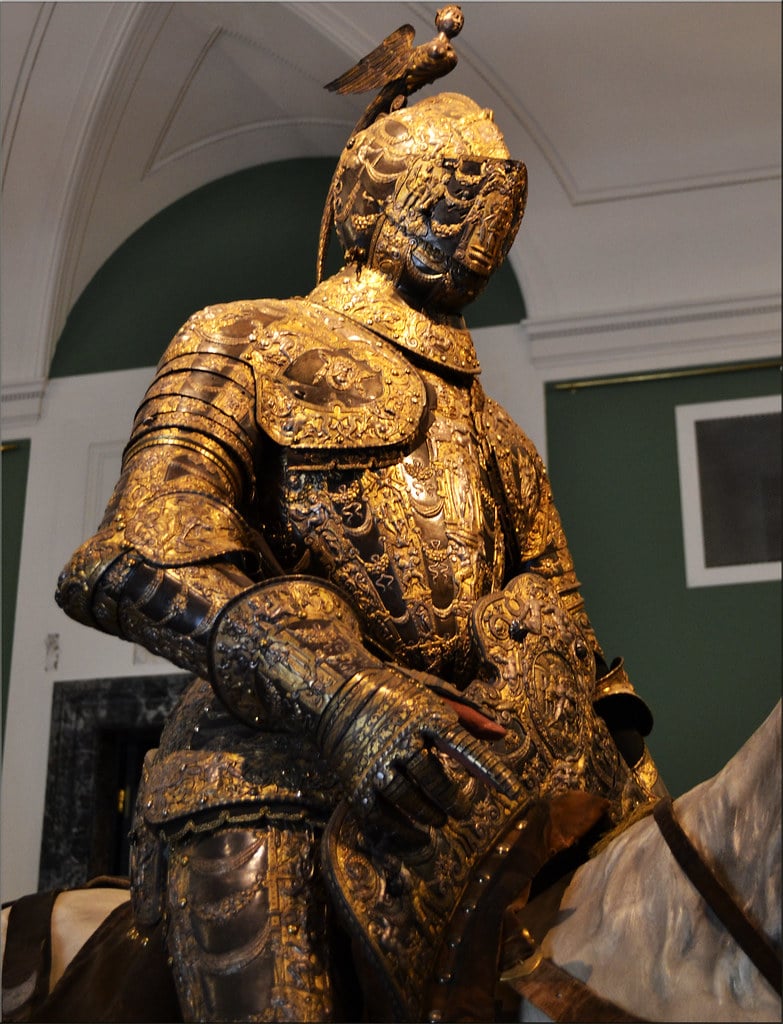
Alessandro Farnese’s etched armor represents the moment when Renaissance artistry fully conquered military equipment. Every available surface carries scenes from classical literature rendered in microscopic detail.
This armor was designed to be read as much as worn. The technical achievement alone is staggering.
Each figure shows individual expression and movement, creating narrative scenes that unfold as light moves across the metal. Farnese understood that sometimes the most effective weapon is the one that makes your opponent stop to admire your craftsmanship.
The Silvered Armor Of Philip II Of Spain
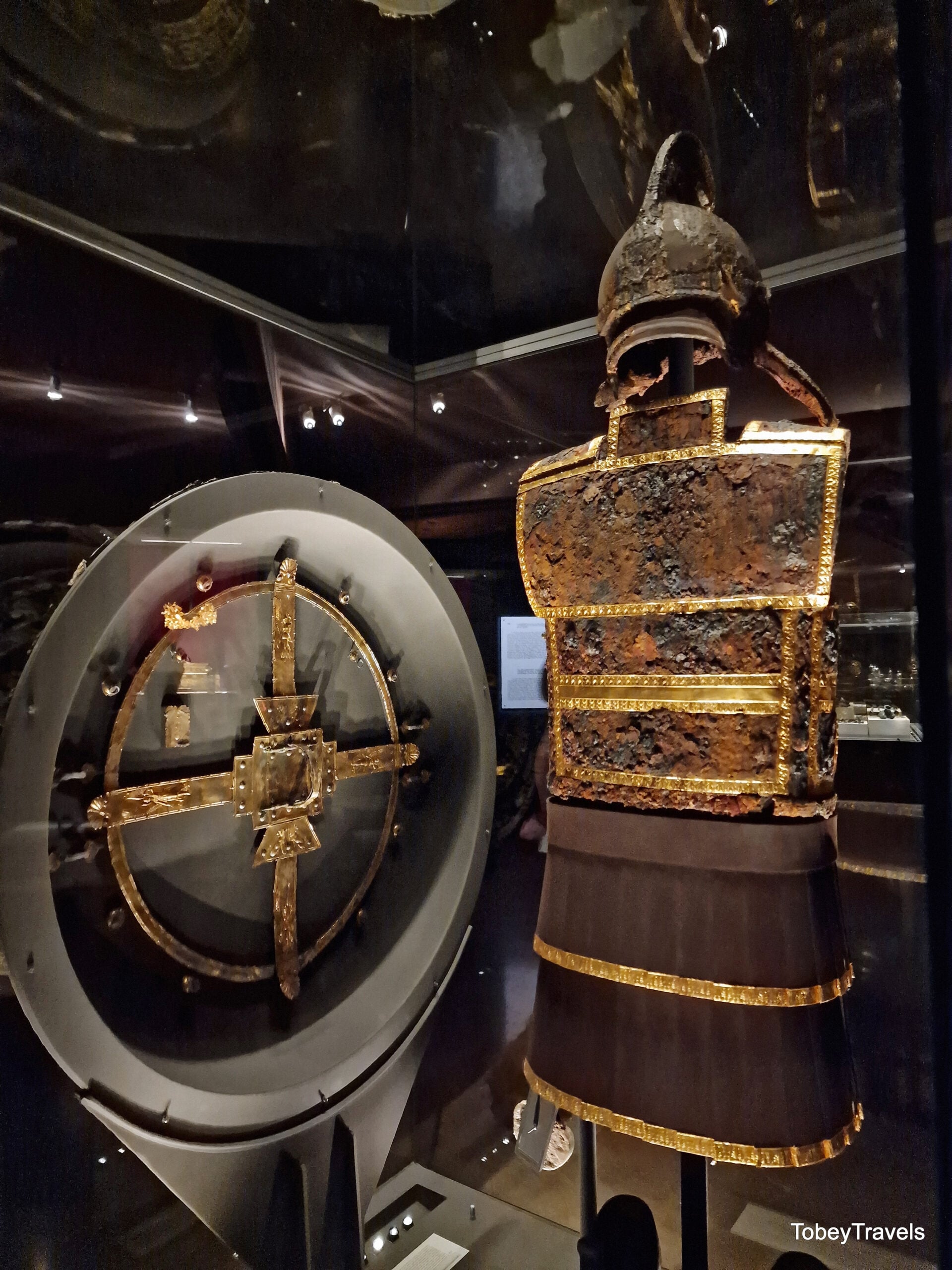
Philip II’s silvered armor embodies the Spanish approach to imperial display — austere elegance backed by unlimited resources. The entire suit has been covered in silver leaf and then engraved with religious and dynastic symbols that reinforce Philip’s claim to rule half the known world.
The overall effect creates an impression of divine authority made manifest in metal, which was exactly the political message Philip intended to broadcast. The craftsmanship reveals itself in subtleties rather than obvious flourishes.
The proportions have been adjusted to enhance Philip’s rather modest physical stature, creating the illusion of greater height and broader shoulders through careful manipulation of the armor’s lines and angles. The helmet incorporates practical features — excellent visibility and air circulation — while maintaining the formal dignity appropriate to a king who controlled territories from Madrid to Manila.
And that silver surface isn’t just decorative — it also provides enhanced protection against certain weapons while creating a visual impact that contemporary accounts suggest was genuinely intimidating to encounter in person.
The Composite Masterpiece Of Rudolf II
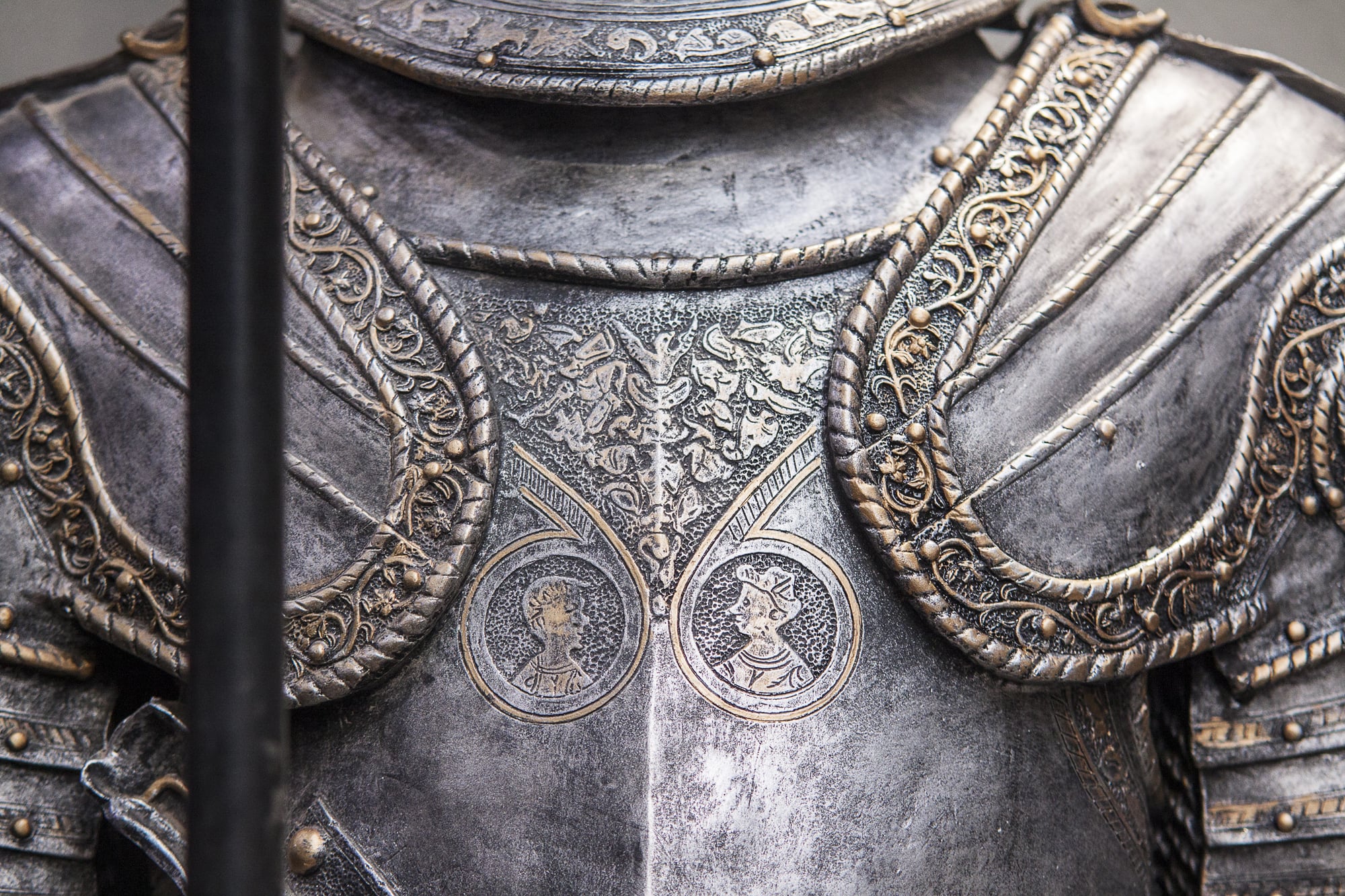
Rudolf II’s composite armor defies easy categorization. Part German craftsmanship, part Italian artistry, part imperial fantasy made real.
This suit combines the best techniques from across Europe into something that transcends regional styles. The result looks like what would happen if you gave unlimited resources to a team of master craftsmen and told them to create the most elaborate armor possible.
They succeeded, creating a piece that exists more as sculpture than military equipment. Rudolf rarely wore it into actual battle, which was probably wise given its artistic value.
When Art Conquers War

These fifteen suits represent something beyond simple military equipment — they’re evidence of humanity’s stubborn refusal to let purely functional objects remain purely functional. Each piece required months or years of work from master craftsmen who understood that armor could serve as canvas, sculpture, and political statement while still stopping arrows and sword blades.
The photographs capturing these pieces today can only hint at their original impact. Standing in torchlight on a medieval battlefield, reflecting fire and movement, these suits must have been genuinely overwhelming to encounter.
They transformed their wearers into walking works of art who happened to be carrying weapons, which might be the most human approach to warfare ever devised.
More from Go2Tutors!

- The Romanov Crown Jewels and Their Tragic Fate
- 13 Historical Mysteries That Science Still Can’t Solve
- Famous Hoaxes That Fooled the World for Years
- 15 Child Stars with Tragic Adult Lives
- 16 Famous Jewelry Pieces in History
Like Go2Tutors’s content? Follow us on MSN.