15 Skyscrapers with Unique Designs
Skyscrapers aren’t just about reaching for the clouds – they’re about making bold statements that reshape entire city skylines. While many tall buildings follow predictable glass-and-steel formulas, some architects have dared to push boundaries and create structures that defy conventional wisdom.
These aren’t your typical office towers.From buildings that twist like giant corkscrews to structures that seem to defy gravity itself, the world’s most unique skyscrapers prove that architecture can be both functional and absolutely breathtaking.
Each one tells a story of innovation, cultural identity, and the relentless human desire to build something extraordinary.Here is a list of 15 skyscrapers that changed the game with their one-of-a-kind designs.
Burj Khalifa
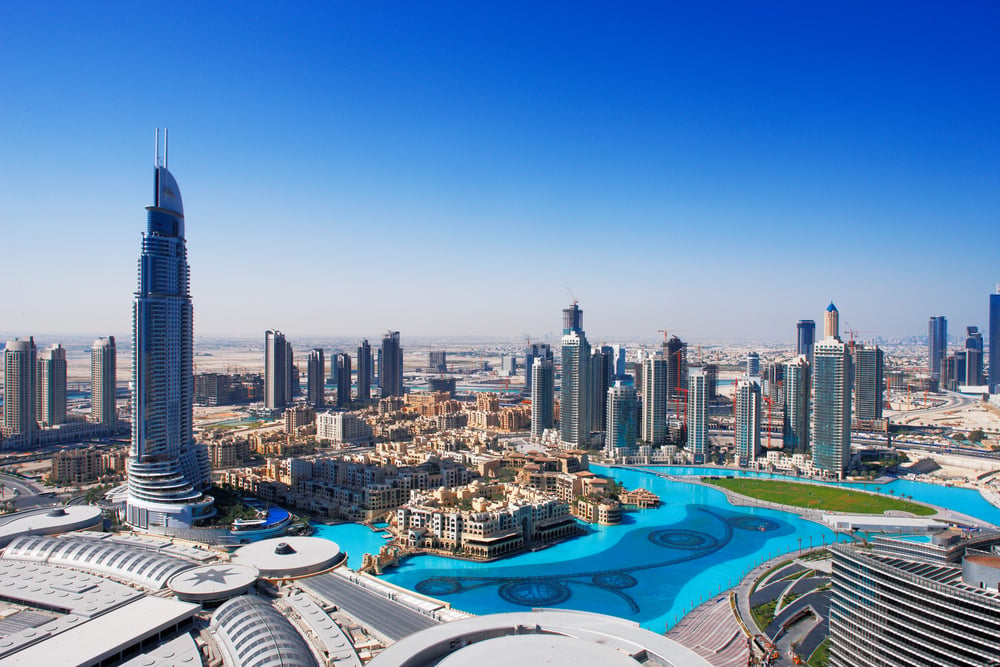
Standing at an incredible 2,717 feet, Dubai’s Burj Khalifa isn’t just the world’s tallest building – it’s an engineering marvel that redefined what’s possible in skyscraper design. The tower uses a buttressed core system, essentially a concrete spine that runs through the entire structure, allowing it to reach unprecedented heights.
Its Y-shaped cross-section isn’t just for show; it confuses wind patterns and reduces the building’s sway. The neo-futurist design incorporates Islamic architectural elements while showcasing cutting-edge construction techniques that took over 10,000 workers from around the world to complete.
Petronas Twin Towers
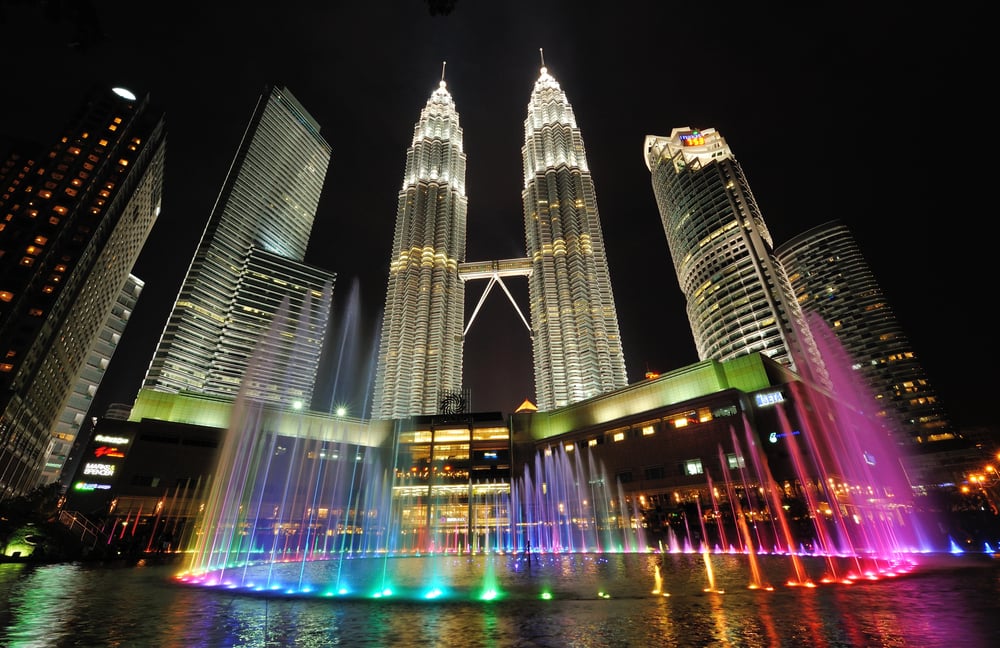
Malaysia’s Petronas Towers brought Islamic geometric patterns into the modern skyscraper world in a way nobody had seen before. The twin 1,483-foot towers feature an eight-pointed star floor plan that reflects Malaysia’s cultural heritage while maintaining sleek contemporary lines.
What makes them truly unique is the sky bridge connecting them at the 41st and 42nd floors – the highest two-story bridge in the world at 574 feet above ground. These towers proved that skyscrapers could honor local culture while competing on the global stage, holding the title of world’s tallest buildings from 1998 to 2004.
Marina Bay Sands
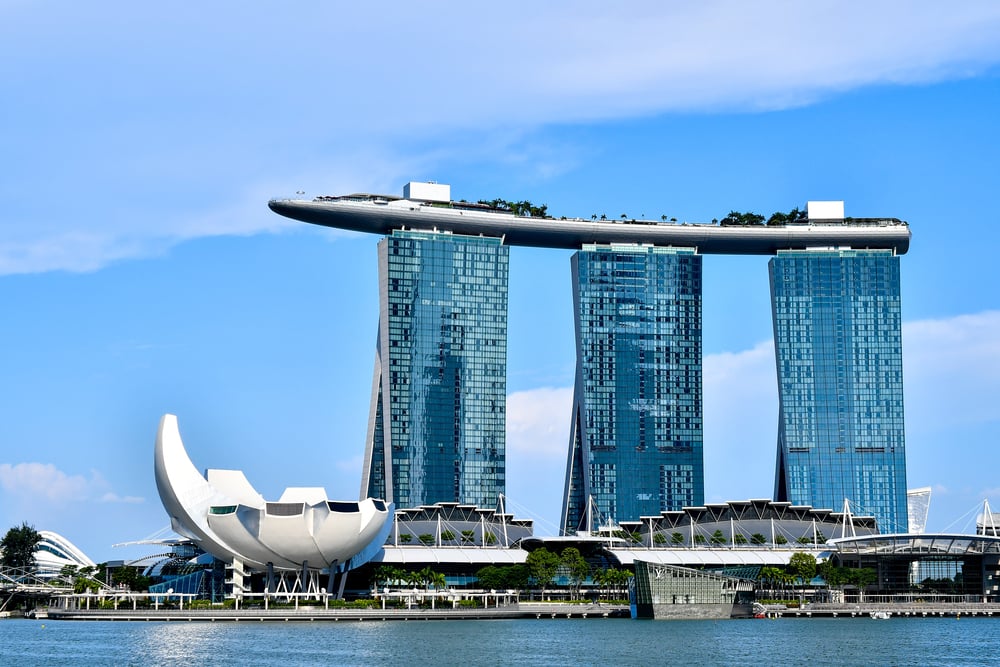
Singapore’s Marina Bay Sands looks like three towers decided to balance a massive ship on their heads – and somehow made it work brilliantly. The three 55-story towers are topped by a 1.2-acre sky park that cantilevers 213 feet beyond the north tower, creating one of the most distinctive silhouettes in modern architecture.
The infinity pool perched 650 feet above the city has become an Instagram icon, but the real genius lies in the structural engineering that makes this gravity-defying design possible. The building’s ship-like crown houses restaurants, gardens, and an observation deck that offers unparalleled views of Singapore’s skyline.
Turning Torso
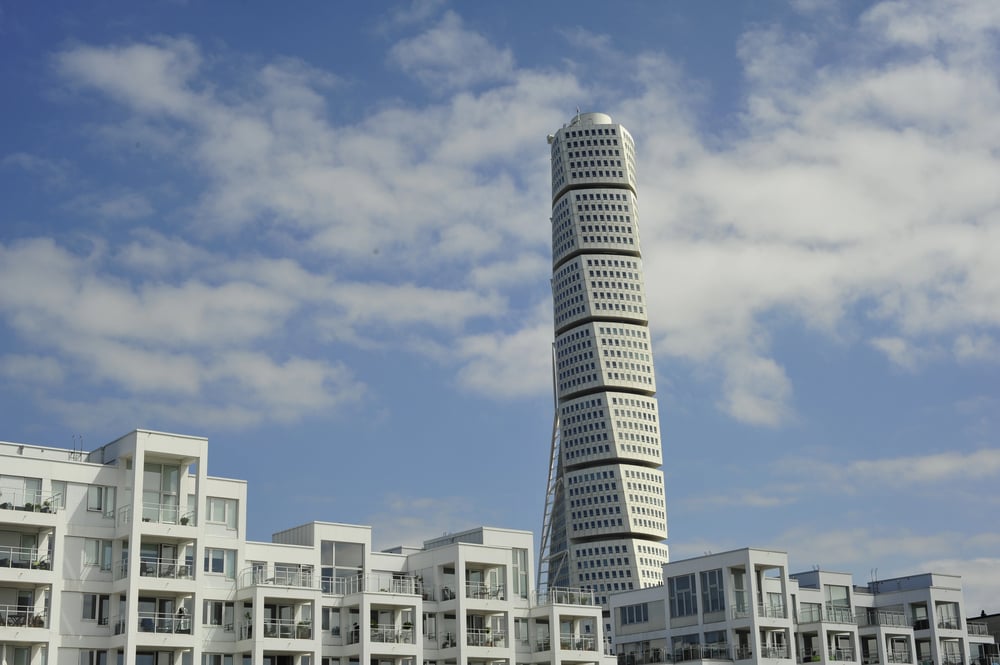
Sweden’s Turning Torso in Malmö was the world’s first twisting skyscraper, rotating a full 90 degrees from bottom to top. This 623-foot residential tower consists of nine five-story cubes that gradually twist around a central spine, creating a helical sculpture that changes appearance depending on your viewing angle.
Architect Santiago Calatrava based the design on a twisting human torso, proving that inspiration can come from the most unexpected places. The building’s innovative design earned it the 10-Year Award from the Council on Tall Buildings and Urban Habitat in 2015, recognizing both its architectural boldness and structural success.
Empire State Building
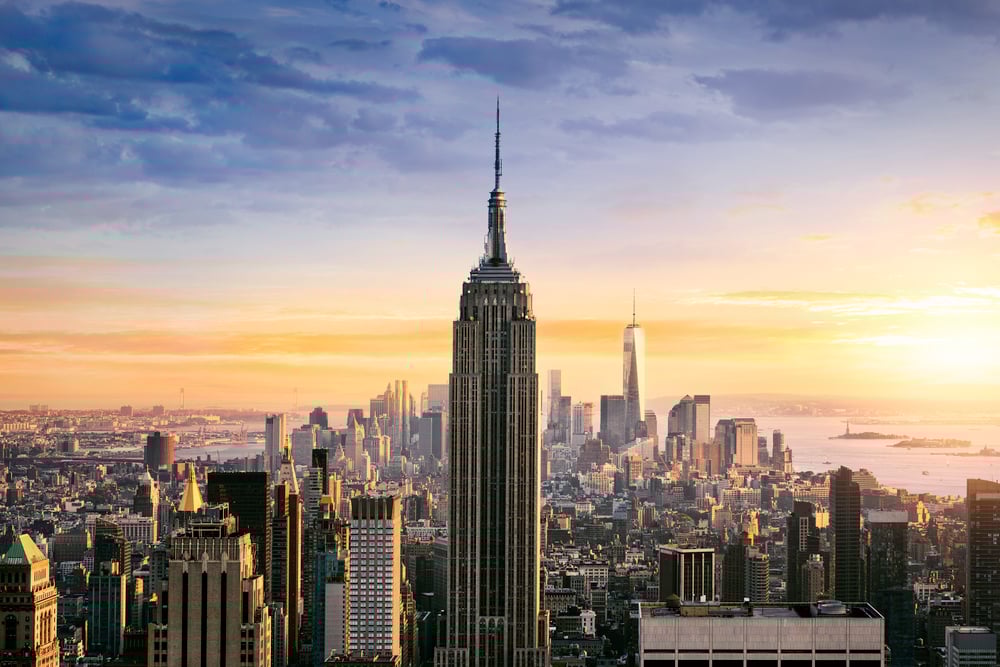
The Empire State Building represents the pinnacle of Art Deco design, with its limestone and steel facade creating a stepped pyramid that seems to pierce the New York sky. Completed in just 410 days during the Great Depression, this 1,454-foot giant features setbacks that follow the city’s zoning laws while creating an incredibly elegant silhouette.
The building’s distinctive crown and spire, illuminated in different colors for various occasions, have made it one of the most recognizable structures on Earth. Its design influenced countless skyscrapers and remains a masterclass in how architectural constraints can inspire iconic solutions
Cayan Tower
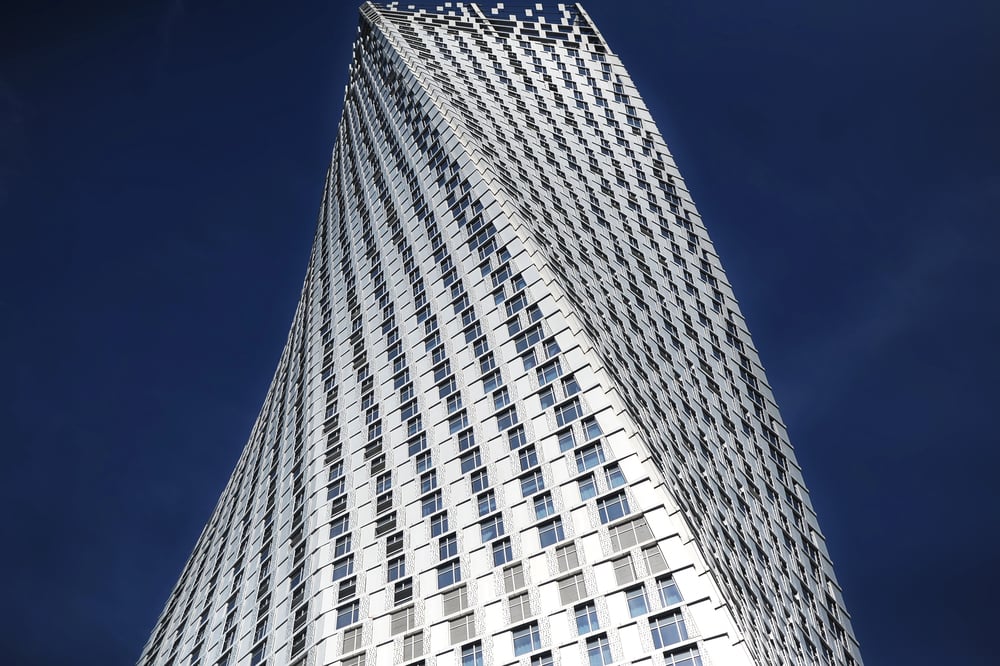
Dubai’s Cayan Tower takes the twisting skyscraper concept to the extreme with a complete 90-degree rotation from base to top. This 1,010-foot residential tower spirals like a giant DNA strand, with each floor rotated 1.2 degrees from the one below it.
The helical design isn’t just for visual impact – it reduces wind loads and provides every apartment with different views as you ascend the building. Originally called the Infinity Tower, this architectural marvel was the world’s tallest building with a complete 90-degree twist until Shanghai Tower was completed, though Shanghai’s twist covers a greater height with a larger but incomplete rotation.
Chrysler Building
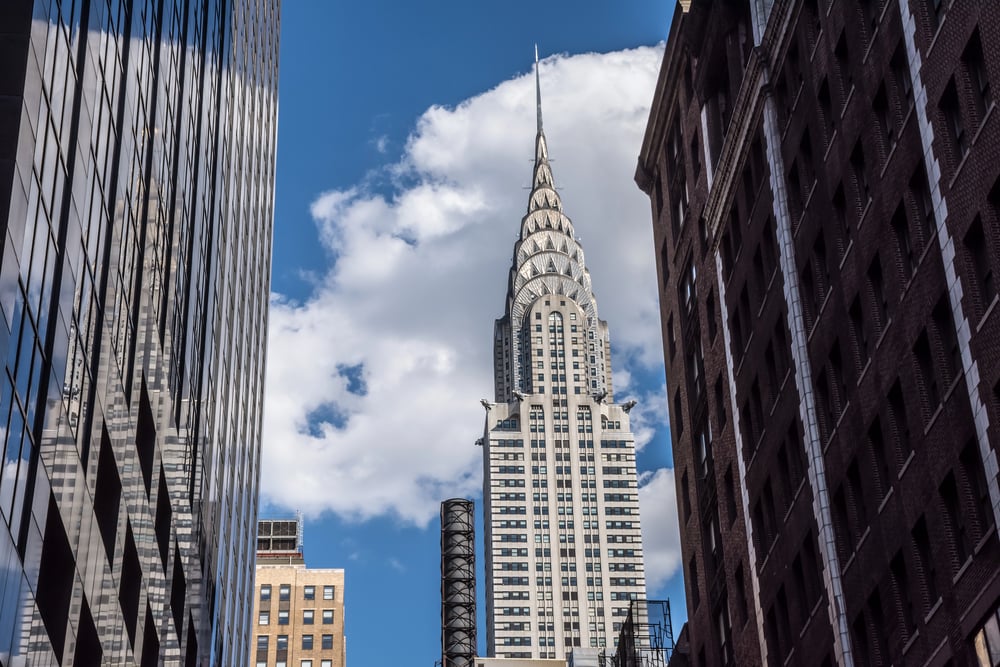
New York’s Chrysler Building crowned the city’s skyline race of the 1920s with its gleaming metallic spire and automotive-inspired ornamentation. The 1,046-foot Art Deco masterpiece features distinctive eagle gargoyles, hubcap-inspired decorations, and a crown that captures light like a beacon.
Its stainless steel arches and needle-like spire created a new template for skyscraper tops, moving away from flat roofs to dramatic architectural statements. Though it held the title of world’s tallest building for less than a year, its influence on skyscraper design has lasted nearly a century.
Shanghai Tower
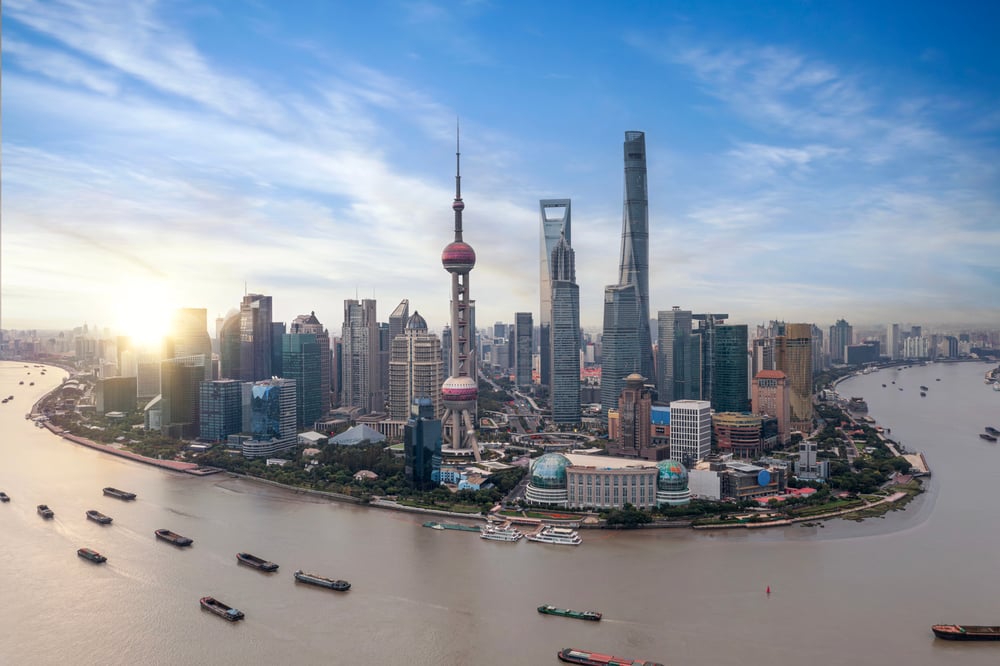
China’s Shanghai Tower achieves its unique appearance through a dramatic 120-degree twist that spirals up its entire 2,073-foot height. The building’s double-skin facade not only creates stunning visual effects but also improves energy efficiency and reduces wind loads by up to 24 percent.
Nine stacked zones create vertical neighborhoods, each with its own sky garden and atrium, making it feel more like a vertical city than a single building. The tower houses the world’s highest observation deck at 1,841 feet and demonstrates how sustainable design can be integrated into supertall architecture.
Bahrain World Trade Centre
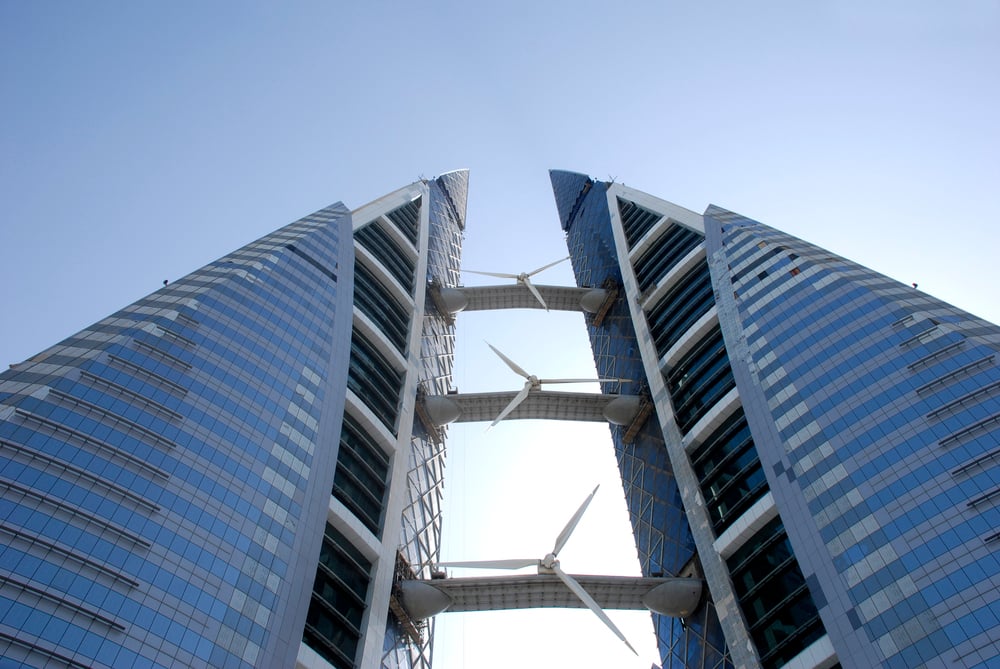
The Bahrain World Trade Centre made history as the first skyscraper to integrate wind turbines into its design, featuring three massive turbines suspended between its twin towers. The 787-foot towers are shaped like airplane wings to funnel wind through the turbines, which generate up to 15% of the building’s electricity needs.
This sustainable design approach earned multiple environmental awards and proved that skyscrapers could generate their own renewable energy. The building’s sail-like profile and innovative green technology set a new standard for environmentally conscious high-rise design.
Taipei 101

Taiwan’s Taipei 101 brings traditional Chinese pagoda architecture into the 21st century with its distinctive stepped design that narrows as it rises to 1,667 feet. The building features eight sections of eight floors each – the number eight being considered extremely lucky in Chinese culture.
What makes it truly unique is the massive 660-ton damper suspended near the top, the world’s largest publicly visible tuned mass damper, which stabilizes the building during earthquakes and typhoons. The tower’s postmodern design successfully blends cultural symbolism with cutting-edge engineering solutions.
Willis Tower
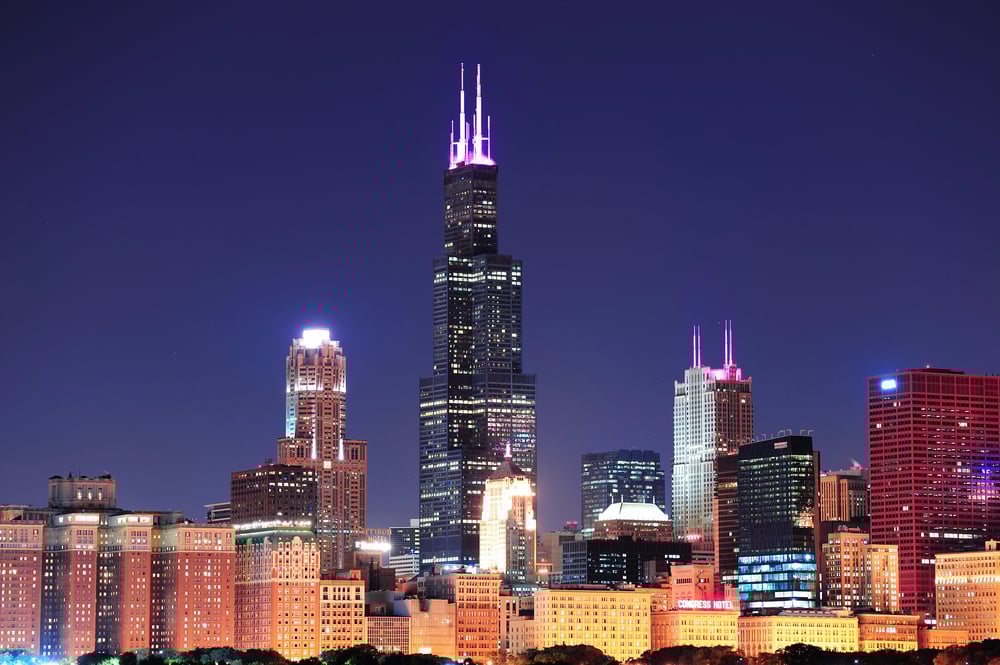
Chicago’s Willis Tower pioneered the bundled tube structural system that revolutionized skyscraper construction. The 1,729-foot building consists of nine square tubes bundled together, with tubes dropping off at different heights to create the building’s distinctive stepped silhouette.
This innovation by engineer Fazlur Rahman Khan allowed for much taller buildings while using less steel than traditional designs. The tower’s black aluminum and bronze-tinted glass exterior creates a monolithic appearance that changes dramatically with lighting conditions throughout the day.
Kingdom Centre
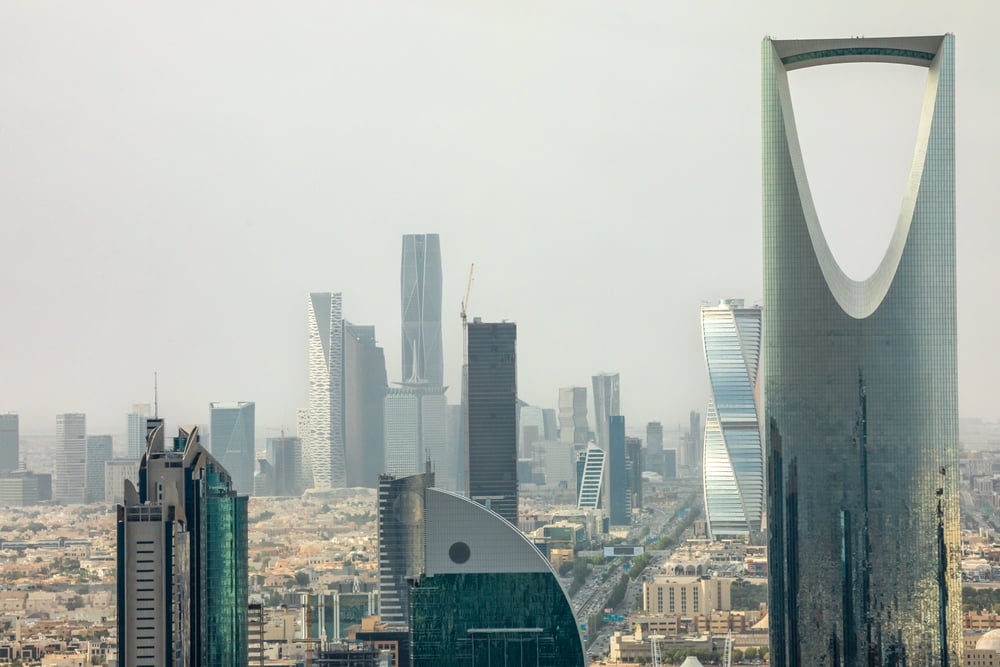
Saudi Arabia’s Kingdom Centre in Riyadh features one of the most distinctive crowns in skyscraper design – a massive arch with a 213-foot opening at the top. The 992-foot tower’s parabolic arch houses a sky bridge with panoramic views of the city, making it the world’s third-tallest building with an opening at its peak, following the Shanghai World Financial Center and China Zun Tower.
The building’s sleek glass facade and dramatic silhouette have made it an iconic symbol of modern Saudi Arabia. The sky bridge itself is a 300-ton steel structure that seems to float impossibly in the building’s crown.
One World Trade Center
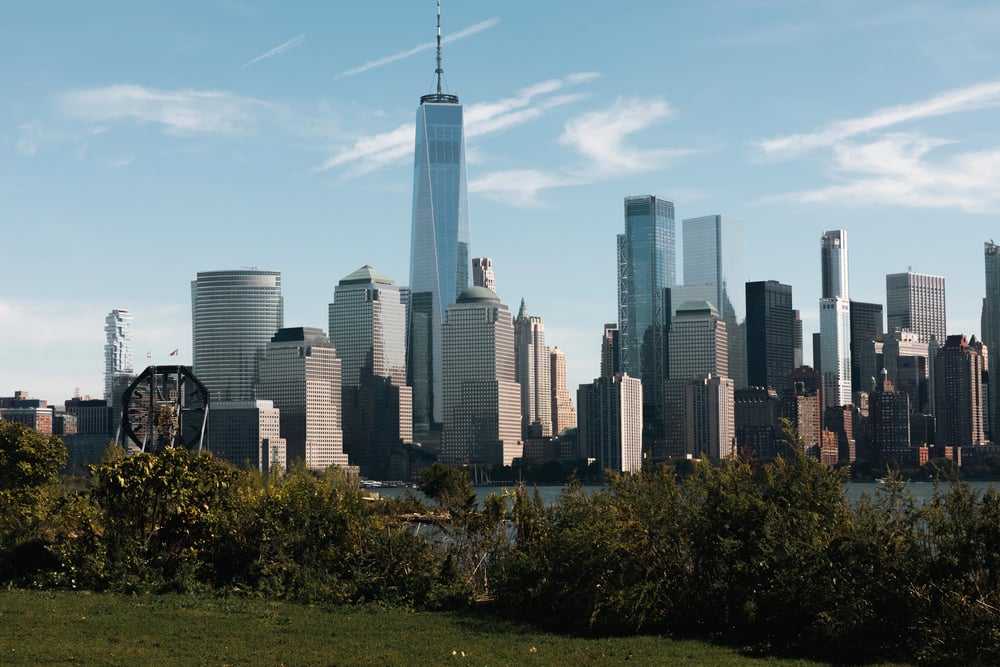
New York’s One World Trade Center transforms from a square base to an octagonal middle section and finally to a square rotated 45 degrees at the top, creating a building that appears different from every angle. The 1,776-foot tower’s height deliberately honors the year of American independence, while its chamfered corners and crystalline form create a powerful yet elegant memorial to the original World Trade Center.
The building’s base is clad in prismatic glass that reflects light differently throughout the day, while its spire reaches toward the sky as a symbol of resilience and renewal.
Evolution Tower
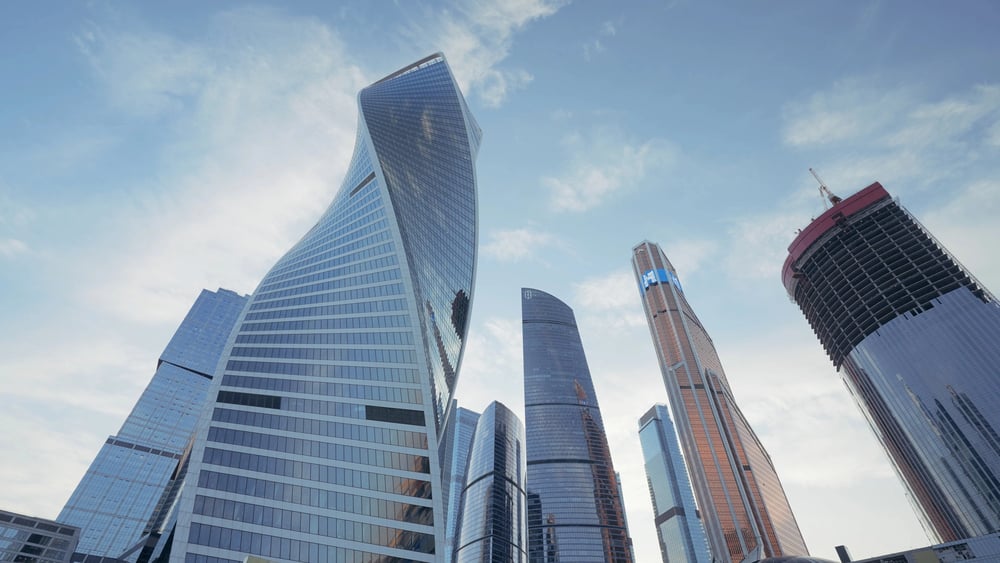
Moscow’s Evolution Tower literally evolves as it rises, with each floor rotating slightly to create a full 150-degree twist over its 794-foot height. The tower’s DNA-inspired helical design creates a dynamic facade that appears to be in constant motion.
Each apartment enjoys unique views and different solar orientations, while the building’s twisted form reduces wind resistance. The tower’s glass facade features a special coating that changes color throughout the day, making it a constantly shifting landmark on Moscow’s skyline.
Central Plaza
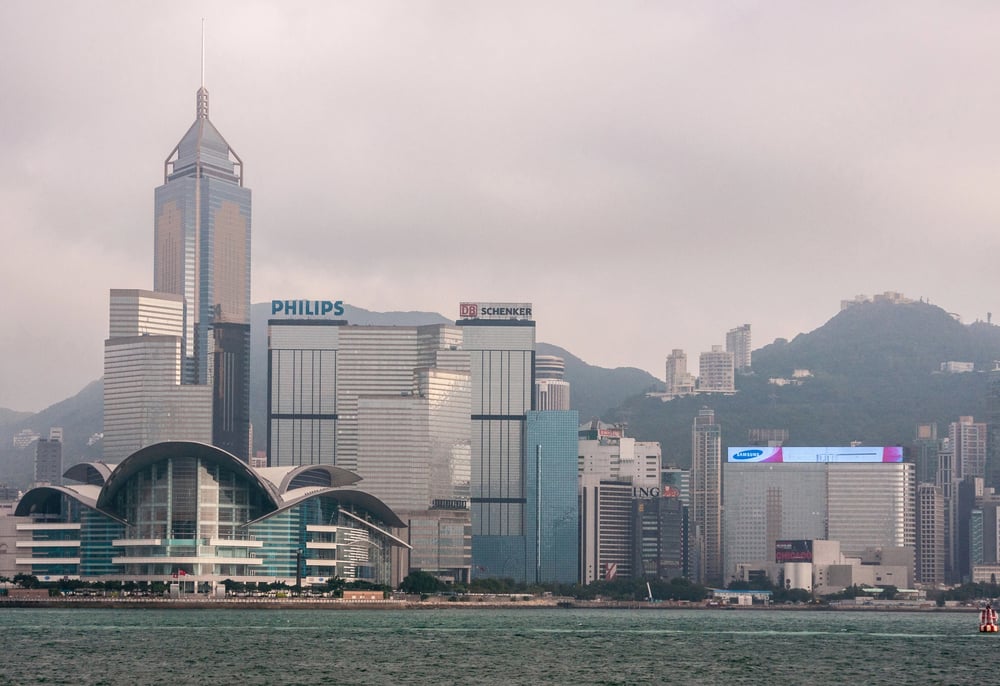
Hong Kong’s Central Plaza broke new ground with its triangular design and distinctive pyramid crown topped by a colorful LED light installation. The 1,227-foot tower’s unique three-sided shape maximizes floor space while creating one of Hong Kong’s most recognizable silhouettes.
The building’s crown features a four-sided pyramid with different colored lights for each face, serving as a giant public clock that displays the time through colored patterns. Its golden facade and dramatic lighting have made it a beloved part of Hong Kong’s famous harbor skyline.
Architectural Pioneers Reaching New Heights
These extraordinary skyscrapers prove that great architecture goes far beyond simply building tall. Each structure represents a moment when architects and engineers decided to challenge conventions and create something the world had never seen before.
From Dubai’s record-breaking heights to Sweden’s innovative twists, from Singapore’s gravity-defying cantilevers to Bahrain’s renewable energy integration, these buildings show how modern skyscrapers can honor cultural heritage while pushing technological boundaries. As cities continue to grow and architectural possibilities expand, these pioneering designs serve as inspiration for the next generation of builders who dare to reach even higher and dream even bolder.
More from Go2Tutors!

- The Romanov Crown Jewels and Their Tragic Fate
- 13 Historical Mysteries That Science Still Can’t Solve
- Famous Hoaxes That Fooled the World for Years
- 15 Child Stars with Tragic Adult Lives
- 16 Famous Jewelry Pieces in History
Like Go2Tutors’s content? Follow us on MSN.



