15 Times Companies Bet on the Wrong Thing
Corporate history is filled with fascinating missteps where even the most successful companies made expensive wagers that completely missed the mark. These strategic blunders serve as valuable lessons about innovation, market trends, and the dangers of corporate hubris.
Every business takes risks, but some bets go spectacularly wrong despite the best intentions and market research. Here is a list of 15 noteworthy times when companies put their chips on the wrong square and lost big.
New Coke

When Coca-Cola replaced its iconic formula with “New Coke” in 1985, it made what many believe to be the greatest marketing mistake ever. The result was an instant and intense backlash from consumers, who demanded the reinstatement of the original recipe and hoarded it.
When the firm relaunched the original formula as “Coca-Cola Classic,” after just 79 days, they were essentially admitting defeat in a move that cost them millions of dollars.
Blockbuster Rejecting Netflix

Perhaps one of the most cited business missteps in recent history was Blockbuster’s decision to pass on purchasing Netflix for $50 million in 2000. The video rental giant couldn’t envision a future where physical stores would become obsolete.
Netflix went on to revolutionize entertainment distribution while Blockbuster filed for bankruptcy in 2010, a cautionary tale of failing to adapt to changing consumer habits.
Like Go2Tutors’s content? Follow us on MSN.
Microsoft Zune

Microsoft’s attempt to challenge Apple’s iPod dominance came in the form of the Zune music player in 2006. Despite decent technical specifications and some innovative features, the device came to market too late and never captured consumers’ imagination.
Microsoft discontinued the product in 2011 after investing hundreds of millions in development and marketing, demonstrating how timing and brand perception can doom even well-designed products.
Google Glass

When Google unveiled Glass in 2013, the wearable computer seemed like the future of technology. However, the combination of a $1,500 price tag, privacy concerns, and the undeniable “geek factor” of wearing the device led to its commercial failure.
While Google has since repurposed the technology for industrial applications, the consumer version stands as a reminder that technological innovation must also account for social acceptance.
Nokia’s Smartphone Missteps

Once the world’s leading mobile phone manufacturer, Nokia failed to adapt to the smartphone revolution. The company’s executives dismissed touchscreen technology and the importance of software, focusing instead on hardware excellence.
By the time Nokia realized its mistake, Apple and Android devices had captured the market. Microsoft eventually purchased Nokia’s phone business for $7.2 billion in 2013, a fraction of the company’s former value.
Like Go2Tutors’s content? Follow us on MSN.
Amazon Fire Phone

Even the retail giant Amazon isn’t immune to product failures. In 2014, Amazon released the Fire Phone, hoping to leverage its retail dominance into the smartphone market. The device featured novel 3D effects and deep integration with Amazon’s ecosystem, but consumers weren’t impressed.
Amazon took a $170 million write-down on unsold inventory just months after release, showing that even companies with vast resources can misread market demand.
Kodak’s Digital Dismissal
In a twist of corporate irony, Kodak actually invented the first digital camera in 1975 but shelved the technology fearing it would cannibalize their lucrative film business. This defensive strategy ultimately backfired spectacularly.
As digital photography went mainstream in the 1990s and 2000s, Kodak’s market position collapsed, leading to bankruptcy in 2012. The company that once captured 90% of US film sales failed to capitalize on its own innovation.
Sony Betamax

Sometimes, superior technology doesn’t guarantee market success. In the 1970s, Sony’s Betamax video format offered better picture quality than JVC’s competing VHS format, but Sony misjudged the importance of recording time and affordability.
VHS offered longer recording capabilities and more affordable hardware, ultimately winning the format war. Sony continued producing Betamax recorders until 2002, long after the format had become obsolete.
Like Go2Tutors’s content? Follow us on MSN.
WebTV

Before streaming was commonplace, WebTV attempted to merge television and internet browsing in 1996. Microsoft acquired the company for $425 million in 1997, but the product never gained mainstream traction.
The clunky interface, slow connection speeds, and limited functionality failed to deliver on the promise of interactive television. WebTV (later renamed MSN TV) was finally discontinued in 2013, showing how being too early with an underdeveloped concept can be just as problematic as being too late.
Segway

When the Segway Personal Transporter launched in 2001, it was hyped as a revolutionary invention that would transform urban transportation. Inventor Dean Kamen predicted sales of 100,000 units in the first year, but the company sold just 30,000 units in its first six years.
The combination of a high price tag (around $5,000), regulatory uncertainty about where Segways could legally operate, and the device’s fundamental awkwardness limited its appeal to niche markets and tourism.
HD DVD vs. Blu-ray

Toshiba invested heavily in HD DVD technology as the successor to DVDs, going head-to-head with Sony’s Blu-ray format in the mid-2000s. This format war cost both companies millions in development and marketing, but Toshiba’s bet proved disastrous when major studios and retailers sided with Blu-ray.
Toshiba abandoned HD DVD in 2008 after just two years on the market, writing off substantial investments and damaging their reputation in consumer electronics.
Like Go2Tutors’s content? Follow us on MSN.
Apple Newton
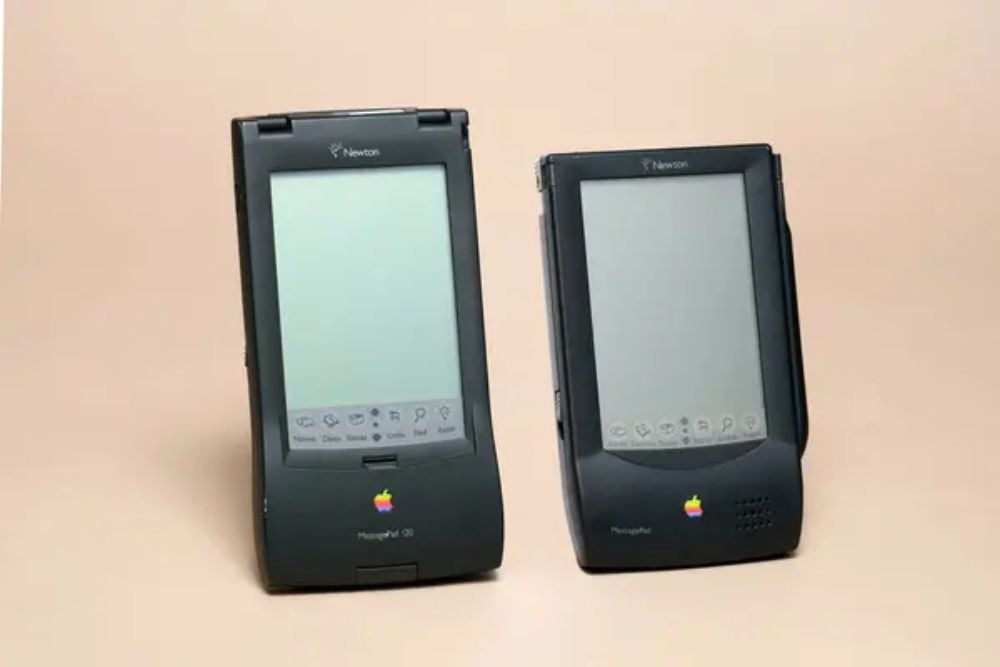
Even Apple has had its share of product failures. The Apple Newton, launched in 1993, was an early personal digital assistant with handwriting recognition capabilities.
While technologically ambitious, the Newton was plagued by problems, including its bulky size, high price, and notoriously inaccurate handwriting recognition. Apple discontinued the Newton in 1998, though many of its concepts would later find success in the iPhone and iPad, demonstrating how timing and execution are crucial even with promising technology.
RJ Reynolds’ Smokeless Cigarettes

In 1988, tobacco company RJ Reynolds launched Premier, a “smokeless cigarette” that heated rather than burned tobacco. After spending more than $300 million on development, the product failed within months.
Smokers complained about the difficult lighting process, unusual taste, and charcoal-like smell. The company tried again in the 2010s with similar products, but the initial failure shows how difficult it can be to change established consumer behaviors, even with good intentions.
Crystal Pepsi

In the early 1990s, Pepsi attempted to capitalize on consumer trends toward purity and health with Crystal Pepsi, a clear cola. Despite strong initial sales and a massive marketing campaign, consumers were confused by the disconnect between the drink’s appearance and cola flavor.
Sales quickly plummeted, and the product was discontinued by 1994. Crystal Pepsi has since become a cultural touchstone for failed product innovations, occasionally returning for limited nostalgic runs.
Like Go2Tutors’s content? Follow us on MSN.
Virtual Boy

Nintendo’s Virtual Boy, released in 1995, was one of the gaming giant’s rare missteps. Marketed as the first portable console capable of displaying stereoscopic 3D graphics, the system suffered from a monochromatic (red-only) display, uncomfortable ergonomics, and a lack of compelling games.
Nintendo discontinued the Virtual Boy within a year, selling only 770,000 units worldwide. The failure stands in stark contrast to Nintendo’s typically careful approach to hardware innovation.
The Lessons Still Resonate

These corporate missteps remind us that market dominance is never guaranteed, and even brilliant companies can make catastrophic misjudgments. From misreading consumer preferences to dismissing emerging technologies, these cautionary tales continue to influence business strategy today.
Perhaps the most valuable takeaway is the importance of humility and adaptability in an ever-changing business landscape – qualities that separate companies that stumble temporarily from those that never get back up.
More from Go2Tutors!

- 18 Unexpectedly Valuable Collectibles You Might Have Lying Around
- 15 Things Every Teenager in the ’70s Did That Teens Today Wouldn’t Understand
- 15 Strange Things People Have Tried to Ban (And Failed)
- 15 Inventions That Were Immediately Banned After Being Created
- 20 Actors Who Were Almost Cast in Iconic Roles
Like Go2Tutors’s content? Follow us on MSN.