15 Times the Wrong Person Got Credit for a Major Discovery
History books love a neat story with a singular hero. We’ve all grown up learning about inventors and scientists who changed the world with their brilliant discoveries. But the reality of innovation is messy, collaborative, and sometimes downright unfair. Many groundbreaking achievements we attribute to famous names actually belong to overlooked pioneers who never received their due recognition.
Here is a list of 15 instances where the wrong person got credit for a major scientific or technological breakthrough, revealing the complex and sometimes unjust nature of how we record human achievement.
The Telephone’s True Inventor

Alexander Graham Bell is universally celebrated as the telephone’s inventor, but Antonio Meucci created a working ‘telettrofono’ years earlier. The Italian immigrant demonstrated his device in 1860, nearly 16 years before Bell’s patent.
Meucci even filed a caveat (a preliminary patent application) in 1871 but couldn’t afford the $10 fee to maintain it. The U.S. Congress officially recognized Meucci’s contribution in 2002, acknowledging that he would have been recognized as the telephone’s inventor had his financial circumstances been different.
Edison’s Lightbulb Moment

Thomas Edison didn’t actually invent the lightbulb as most people believe. British scientist Joseph Swan developed and patented an incandescent lightbulb in Britain a year before Edison’s version.
Swan’s home was the first in the world to be lit by a lightbulb. Edison improved upon Swan’s design with a better filament and superior vacuum technology, but the fundamental invention wasn’t his. Their patent war eventually ended with a merger forming the Edison-Swan United Electric Company.
The Forgotten Father of Television
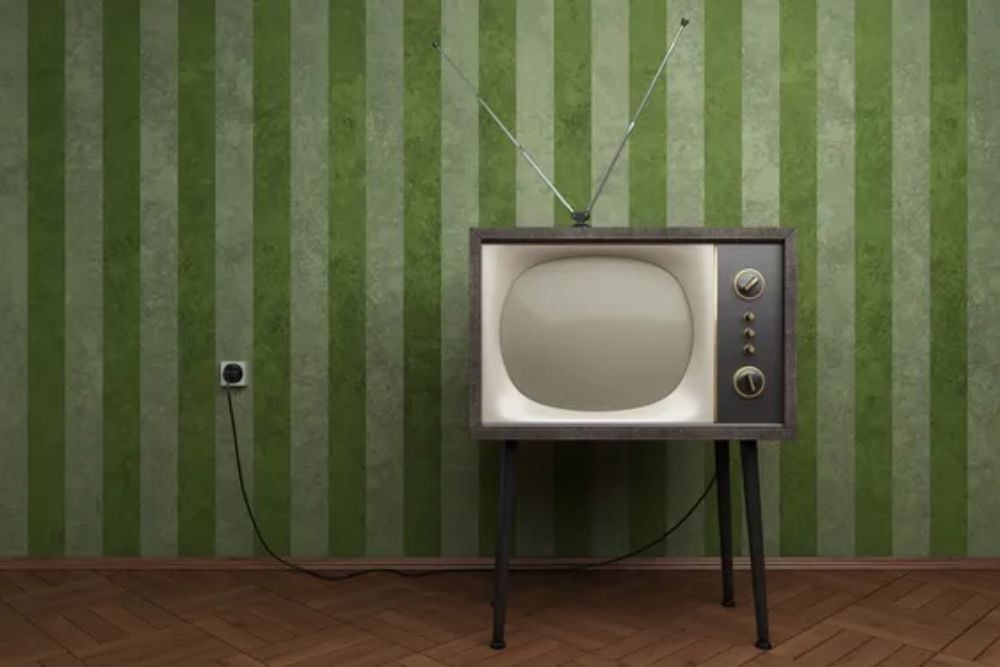
While Philo Farnsworth is sometimes recognized as television’s inventor, it’s John Logie Baird who often gets the historical spotlight, particularly in Britain. However, both men were actually preceded by German inventor Paul Nipkow, who created the fundamental scanning disk technology that made television possible back in 1884.
His ‘Nipkow disk’ laid the groundwork for mechanical television systems decades before either Baird or Farnsworth. Yet Nipkow received little recognition during his lifetime and remains largely unknown to the general public.
The Real Radio Pioneer

Guglielmo Marconi is widely credited with inventing radio, winning the 1909 Nobel Prize in Physics for his work. However, Nikola Tesla had already demonstrated wireless transmission of signals in 1893, two years before Marconi’s first experiments.
Tesla patented radio technology in 1897, only to have the U.S. Patent Office mysteriously reverse itself and award critical patents to Marconi instead. The Supreme Court eventually overturned Marconi’s patents in 1943, acknowledging Tesla’s prior work—but this came months after Tesla’s death, when it was too late for him to enjoy the recognition.
The True Theory of Evolution
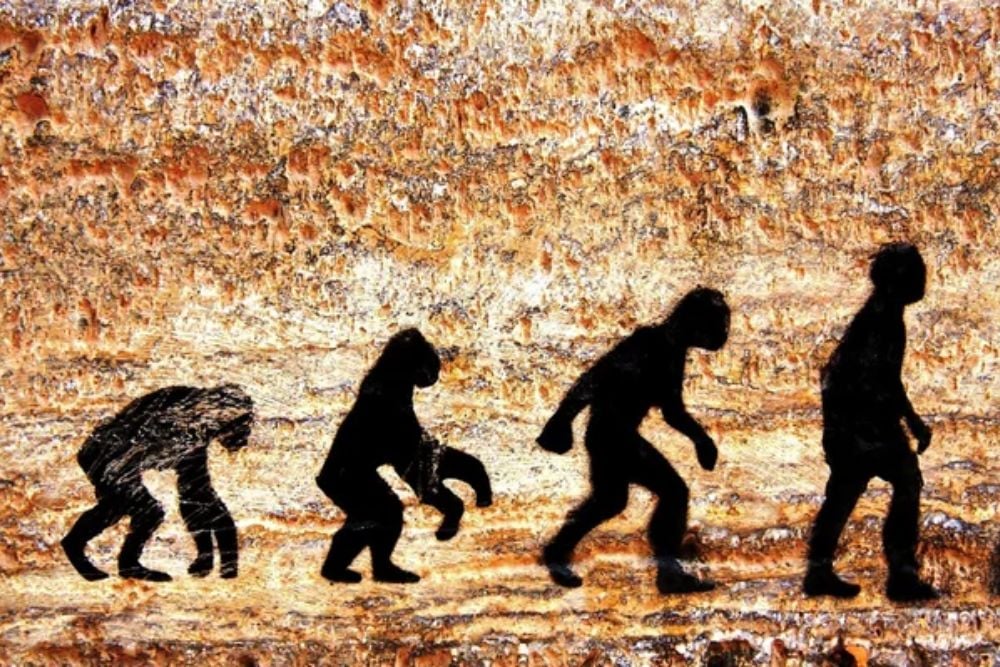
Charles Darwin is synonymous with evolution, but naturalist Alfred Russel Wallace independently conceived the theory of natural selection around the same time. Wallace sent Darwin his paper outlining the theory in 1858, which prompted Darwin to finally publish his long-developed ideas.
Their papers were presented jointly to the Linnean Society, yet history primarily remembers Darwin. Wallace’s contributions, although occasionally acknowledged in scientific circles, remain overshadowed despite being crucial to bringing the evolutionary theory to public attention.
The Overlooked Computer Programmer

While most people associate early computing with men like Alan Turing or John von Neumann, it was Ada Lovelace who wrote what is considered the first computer program in history. Working with Charles Babbage’s Analytical Engine designs in the 1840s, Lovelace created an algorithm for calculating Bernoulli numbers.
Her notes on Babbage’s engine went far beyond his mechanical focus, envisioning that computers could manipulate symbols and even create music—ideas well ahead of her time. For nearly a century, her groundbreaking work remained in Babbage’s shadow.
The DNA Discovery Controversy

James Watson and Francis Crick received the Nobel Prize for discovering DNA’s double-helix structure, but their breakthrough relied heavily on Rosalind Franklin’s X-ray crystallography work. Franklin’s famous ‘Photo 51’ provided critical evidence for DNA’s structure, which Watson and Crick saw without her knowledge or permission.
Franklin died of cancer in 1958, four years before the Nobel was awarded, and the prize is not given posthumously. Her essential contribution remained underappreciated for decades until historians of science began highlighting the gender bias that diminished her role.
The Calculator’s True Origin
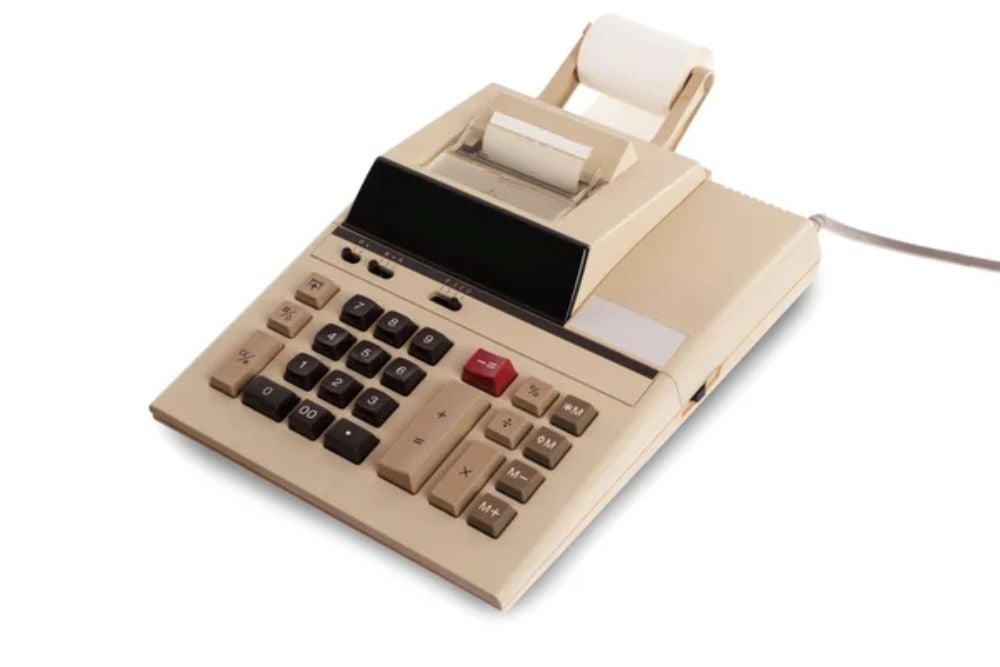
Blaise Pascal is often credited with inventing the first mechanical calculator in 1642, but German professor Wilhelm Schickard had already created a ‘calculating clock’ two decades earlier in 1623. Schickard’s machine could add, subtract, multiply and divide, making it more advanced than Pascal’s addition-only device.
Unfortunately, Schickard’s prototype was destroyed in a fire, and his invention remained unknown until scholars discovered his design drawings in letters to astronomer Johannes Kepler in the 20th century.
The Periodic Table’s Earlier Architect
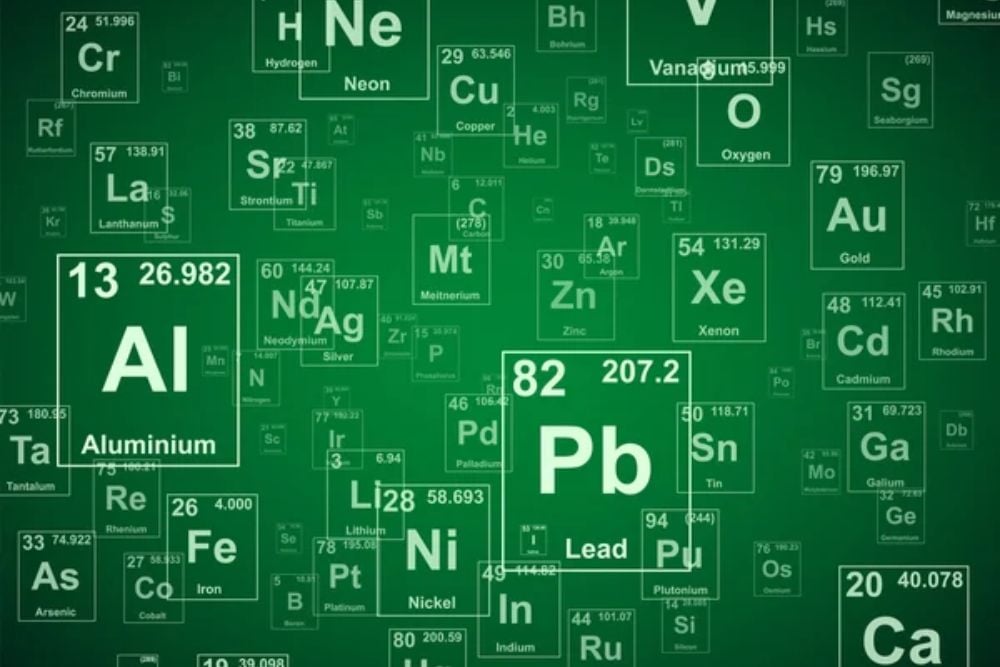
Dmitri Mendeleev is celebrated for creating the periodic table of elements in 1869, but French geologist Alexandre-Émile Béguyer de Chancourtois published a three-dimensional ‘telluric screw’ arrangement of elements based on atomic weight in 1862, seven years earlier. His work appeared in an obscure geology journal without the accompanying diagram, severely limiting its recognition.
De Chancourtois organized elements by atomic weight and noted that properties repeated at regular intervals—the fundamental insight behind periodicity—yet chemistry textbooks rarely mention his pioneering contribution.
The True Father of Motion Pictures

Though French inventor Louis Le Prince invented and showed the first operational motion picture camera years before Thomas Edison, he is usually credited with coining motion pictures. Filming “Roundhay Garden Scene” in 1888, Le Prince produced the first ever surviving film.
Le Prince disappeared mysteriously while on his way to patent his work in 1890; his contributions were mostly lost. With his better resources and business sense, Edison controlled the fledgling sector and guaranteed his place in history while Le Prince’s innovative successes went mostly unrecorded for a century.
The Hidden Hand Behind Relativity

With his theories of relativity, Albert Einstein transformed physics; nevertheless, before Einstein, mathematician Henri Poincaré published papers covering many related ideas. Early in 1900, years before Einstein’s well-known 1905 publication, Poincaré developed the concept of relativity and understood the relevance of the constant speed of light.
He even showed almost exactly matching equations to Einstein’s. Although scientists recognize Poincaré’s contributions, the public is mostly ignorant of how his foundation affected Einstein’s ideas; Einstein himself hardly mentioned Poincaré in his works.
The Airplane’s Earlier Flight

German inventor Gustav Weißkopf (later Whitehead) is said to have flown his aircraft in 1901, two years before the Wright Brothers, who are credited with making the first powered flight in 1903. Whitehead’s accomplishment was chronicled in a Bridgeport Herald newspaper piece, and other witnesses reported seeing his flights.
Although there is still disagreement on Whitehead’s achievements, the Wrights’ place in history was essentially cemented when the Smithsonian Institution signed a contentious contract that promised to acknowledge them as the first in flight in exchange for obtaining their original flyer.
The Real Father of Modern Computing
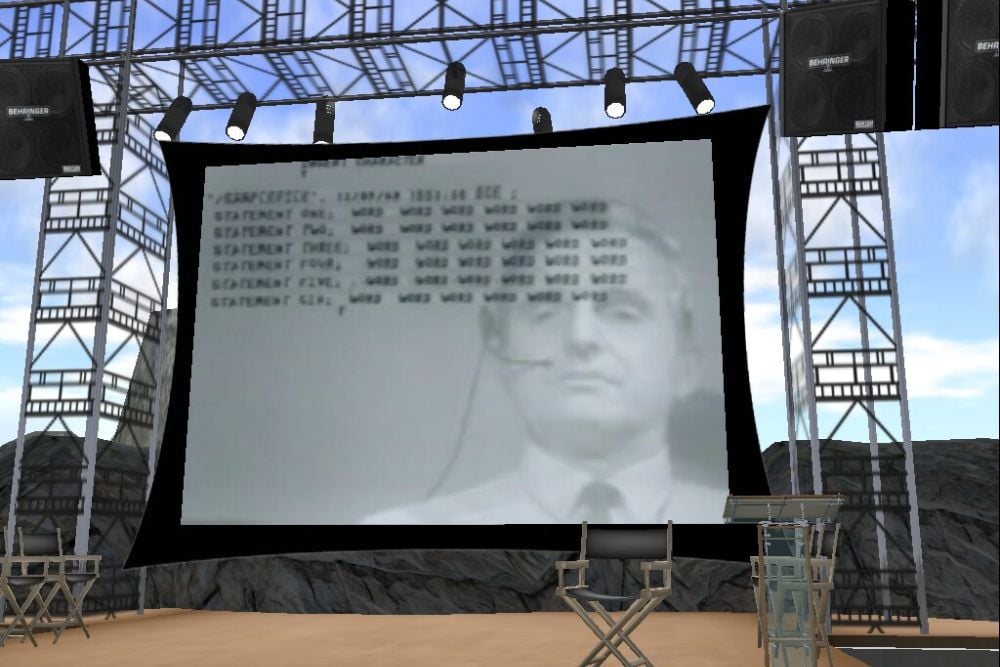
Although Bill Gates and Steve Jobs are well-known names in computing, Douglas Engelbart presented almost all the capabilities of modern computing in one presentation titled “The Mother of All Demos” in 1968. Years before they became widely used, Engelbart presented the first computer mouse, graphical user interface, word processing, hypertext, video conferencing, and cooperative real-time editing.
Engelbart remained mostly unknown to the public, his revolutionary vision split and ascribed to other leaders who built commercial empires on his basis, while billions like those who commercialized his ideas.
Calculus’s Dual Discovery
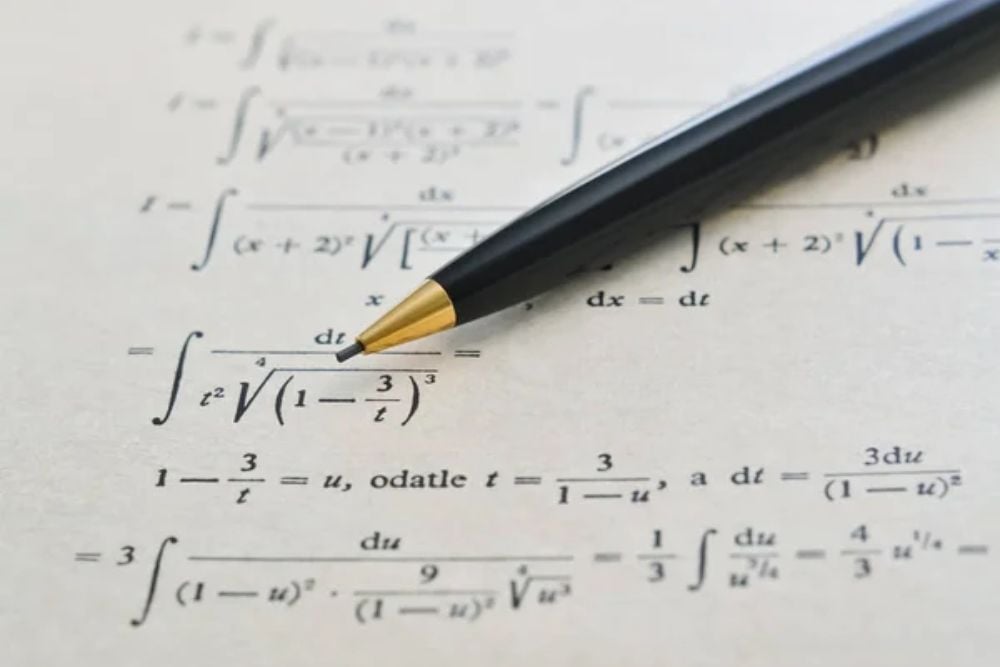
Isaac Newton is widely credited with inventing calculus, but German mathematician Gottfried Wilhelm Leibniz independently developed and published his own calculus notation around the same time. A bitter priority dispute erupted between the two men and their respective supporters.
While Newton developed his methods first, Leibniz published first and created the superior notation system that mathematicians still use today. The controversy divided European mathematics for decades, with English scientists supporting Newton and continental Europeans backing Leibniz.
Modern historians recognize both men deserved credit for independent discovery.
The Forgotten Photography Pioneer

Louis Daguerre is celebrated as photography’s inventor for his daguerreotype process announced in 1839, but Frenchman Joseph Nicéphore Niépce created the first permanent photograph in 1826 or 1827, over a decade earlier. Niépce called his process ‘heliography’ and spent years perfecting it before partnering with Daguerre. When Niépce died in 1833, Daguerre continued their work but increasingly minimized Niépce’s contributions.
When the French government purchased the rights to the daguerreotype process in 1839, Niépce’s name was barely mentioned, allowing Daguerre to claim the lion’s share of fame and recognition.
The Complex Web of Innovation

The stories above reveal a pattern that repeats throughout history—scientific and technological breakthroughs rarely emerge in the straightforward manner our textbooks suggest. Innovation is typically built on collaborative efforts, parallel discoveries, and incremental advancements rather than singular ‘eureka’ moments.
The individuals who receive credit often benefit from better connections, institutional support, marketing abilities, or simply being alive at the right time to claim recognition. This reality doesn’t diminish their achievements but reminds us that progress typically happens through networks of minds building upon each other’s work, sometimes separated by vast distances yet arriving at similar conclusions nearly simultaneously.
More from Go2Tutors!

- The Romanov Crown Jewels and Their Tragic Fate
- 13 Historical Mysteries That Science Still Can’t Solve
- Famous Hoaxes That Fooled the World for Years
- 15 Child Stars with Tragic Adult Lives
- 16 Famous Jewelry Pieces in History
Like Go2Tutors’s content? Follow us on MSN.