16 Ancient Technologies That Still Mystify Scientists
People have been coming up with clever ways to solve problems since forever. Some ancient inventions, though, feel like they were made by actual wizards. They figured out stuff that modern scientists still haven’t quite cracked — and that’s pretty wild. No fancy computers or machines back then, just pure smarts, patience, and maybe a bit of trial and error.
Here’s a list of 16 ancient technologies that keep researchers scratching their heads — showing just how creative humans were, way back when.
Roman Concrete

The Romans whipped up a kind of concrete that actually gets stronger with age. Unlike the stuff we pour today, theirs could stand up to waves smashing against it for hundreds of years.
They tossed in volcanic ash — which sounds simple, but it makes their concrete practically immortal. Scientists are still trying to figure out the magic behind it, hoping to make modern buildings last as long.
Damascus Steel

These legendary swords were as tough as nails — sharp enough to slice through other metals and flexible enough to take a beating. The recipe for making Damascus steel got lost somewhere in history.
Turns out, it involved tiny structures on the metal’s surface that modern science only recently discovered. So far, nobody’s nailed the exact process, but plenty have tried.
Like Go2Tutors’s content? Follow us on MSN.
Antikythera Mechanism

This ancient Greek gadget is basically the world’s first mechanical computer. Found in a shipwreck, it predicted the movements of planets and eclipses with some serious accuracy.
Just imagine gears and wheels doing complex math — over 2,000 years ago! It’s like something from a sci-fi movie, and experts are still piecing together how it worked.
Egyptian Blue Pigment

Long before modern paint, the Egyptians invented a vibrant blue pigment that wouldn’t fade. It was made by heating a mix of sand, copper, and natron — which sounds simple, but the resulting color was unlike anything else around.
The recipe was lost for centuries, and scientists have only recently rediscovered it. This blue had a glow that’s even useful in some modern tech applications today.
Baghdad Battery

Found in Iraq, this curious artifact looks like an ancient battery. It’s a clay jar with a copper cylinder inside — some think it could generate a small electric charge.
Whether it was actually used for electricity or something else is still up for debate, but the idea of ancient electrical tech is pretty mind-blowing.
Like Go2Tutors’s content? Follow us on MSN.
Greek Fire

This secret weapon of the Byzantine Empire was basically ancient napalm. It could burn even on water and was impossible to put out easily.
The exact recipe was a closely guarded secret and lost to history. Scientists have tried recreating it but can only guess what ingredients made it so deadly.
Incan Road System

The Incas built thousands of miles of roads across steep mountains and tough terrain without modern tools. What’s impressive is how durable and well-planned these roads were — some are still in use today.
They didn’t have wheeled vehicles but created a network that allowed rapid communication and transport across the empire.
Egyptian Surgical Tools
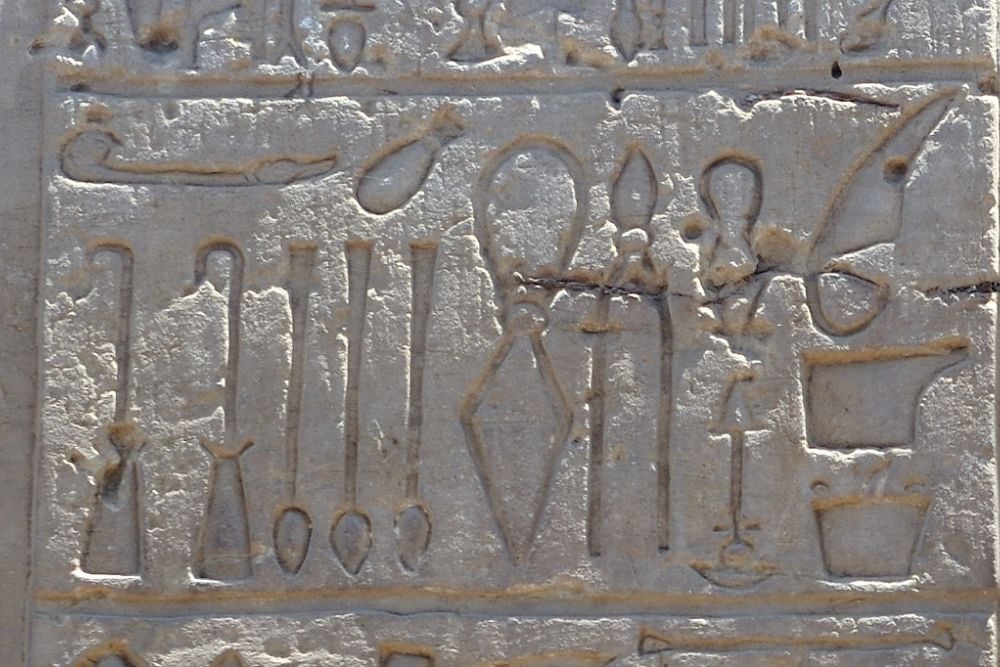
Ancient Egyptians had surprisingly advanced surgical instruments. They used bronze scalpels, forceps, and needles that are similar to some modern designs.
Mummies show evidence of surgeries like bone setting and even brain operations. It’s a reminder that ancient medicine was often far ahead of its time.
Like Go2Tutors’s content? Follow us on MSN.
Chinese Seismograph

Over 2,000 years ago, the Chinese invented a device that could detect earthquakes miles away. It used a series of levers and orbs that would drop to indicate the direction of tremors.
This was well before modern sensors, showing how much they understood about natural phenomena.
Roman Aqueducts

The Romans were masters at moving water long distances through gravity-powered aqueducts. These structures could bring fresh water to cities from miles away, using precise angles and arches to keep flow steady.
The fact that many still stand today is a testament to their engineering genius.
Mayan Calendar

The Mayans developed a calendar system that was incredibly accurate. It tracked solar and lunar cycles, eclipses, and even planetary movements.
The precision is so impressive that some of their calculations still puzzle scientists, especially given the tools they had.
Like Go2Tutors’s content? Follow us on MSN.
Indian Iron Pillar

This pillar, standing in Delhi for over 1,600 years, hasn’t rusted much despite exposure to the elements. Ancient Indians mastered ironworking techniques that resisted corrosion better than some modern metals.
Scientists are still studying the composition to figure out how it’s stayed so well-preserved.
Viking Navigation

Before compasses, Vikings used sunstones and clever observations to navigate the seas. These crystals could locate the sun even on cloudy days, guiding sailors across thousands of miles of open ocean.
This technique shows how resourceful they were in mastering the natural world.
Japanese Tatara Steel

This method of steelmaking produced incredibly strong metal used for samurai swords. It involved a special furnace and careful control of temperature and materials.
The process was so intricate it remained a closely guarded secret for centuries, inspiring awe from metallurgists even now.
Like Go2Tutors’s content? Follow us on MSN.
Mesopotamian Irrigation

Early Mesopotamians built complex irrigation systems to farm in arid lands. They dug canals and dikes that controlled water flow and supported growing cities.
Their understanding of hydraulics laid the groundwork for agriculture in some of the toughest environments.
Polynesian Navigation

Polynesian explorers used the stars, ocean currents, and bird flight patterns to navigate vast Pacific distances. They sailed thousands of miles without modern tools, relying on detailed environmental knowledge passed through generations.
This ancient tech enabled them to settle some of the most remote islands on Earth.
Past Meets Present

Looking back, these ancient technologies reveal how inventive people were with the resources at hand. They didn’t have modern gadgets, yet they created tools and systems that still inspire awe and fuel scientific curiosity today.
Each discovery reminds us that innovation isn’t just about today’s tech — it’s a long human story of figuring things out, adapting, and pushing boundaries. The past still has plenty to teach the present if we’re willing to listen.
Like Go2Tutors’s content? Follow us on MSN.
More from Go2Tutors!

- 16 Historical Figures Who Were Nothing Like You Think
- 12 Things Sold in the 80s That Are Now Illegal
- 15 VHS Tapes That Could Be Worth Thousands
- 17 Historical “What Ifs” That Would Have Changed Everything
- 18 TV Shows That Vanished Without a Finale
Like Go2Tutors’s content? Follow us on MSN.