16 Cities Where Buildings Seem to Defy Physics
Architecture has always pushed boundaries, though some cities take this to extraordinary levels. From structures that appear to float mid-air to buildings that twist like corkscrews into the sky, these urban landscapes challenge our understanding of what’s physically possible.
Here’s a list of 16 cities where the buildings genuinely seem to break the laws of physics.
Singapore
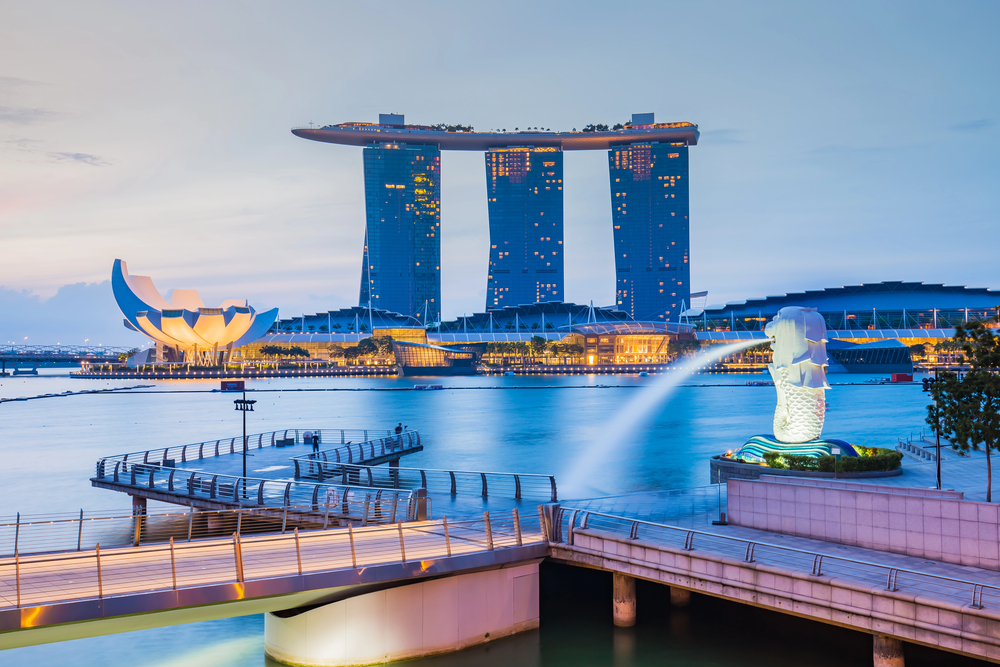
Marina Bay Sands looks like someone balanced a massive boat on top of three skyscrapers and somehow made it work. The 340-meter-long rooftop infinity pool sits 200 meters above ground — creating an optical illusion where water appears to spill into the sky.
Engineers used advanced cantilever technology to support the weight, yet from street level, it appears to completely defy gravity.
Dubai
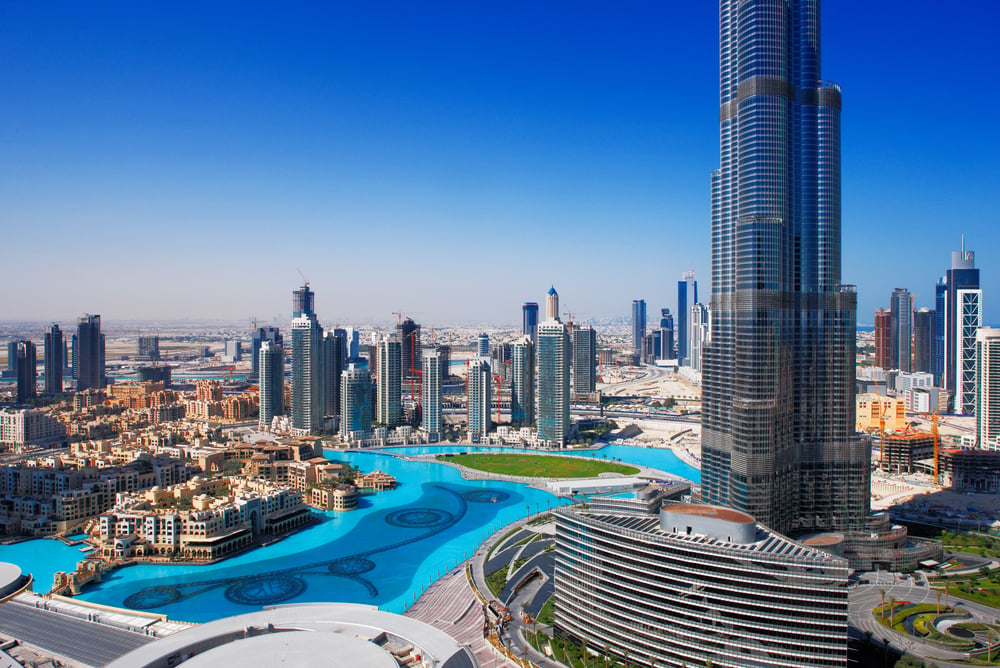
The Burj Khalifa twists as it rises, rotating a full 120 degrees from base to top to reduce wind load. This spiraling motion creates the illusion that the building’s drilling itself into the clouds.
Meanwhile, the Cayan Tower takes this concept even further — completing a full 90-degree twist over its 75 floors, making it look like a giant concrete corkscrew frozen mid-spin.
New York City
One57 appears impossibly thin when viewed from certain angles. At 1,005 feet tall but only 60 feet wide, it’s earned the nickname ‘supertall pencil tower’ for good reason — its width-to-height ratio seems to mock structural engineering principles.
The building sways up to three feet in strong winds, though it remains perfectly stable thanks to advanced damping systems.
Chicago

The Aqua Tower’s undulating facade creates waves that ripple up the building’s surface like water frozen in motion. Each floor plate extends different distances from the core — creating balconies that flow like liquid metal.
The effect is so convincing that many visitors report feeling seasick when looking up from the base.
London
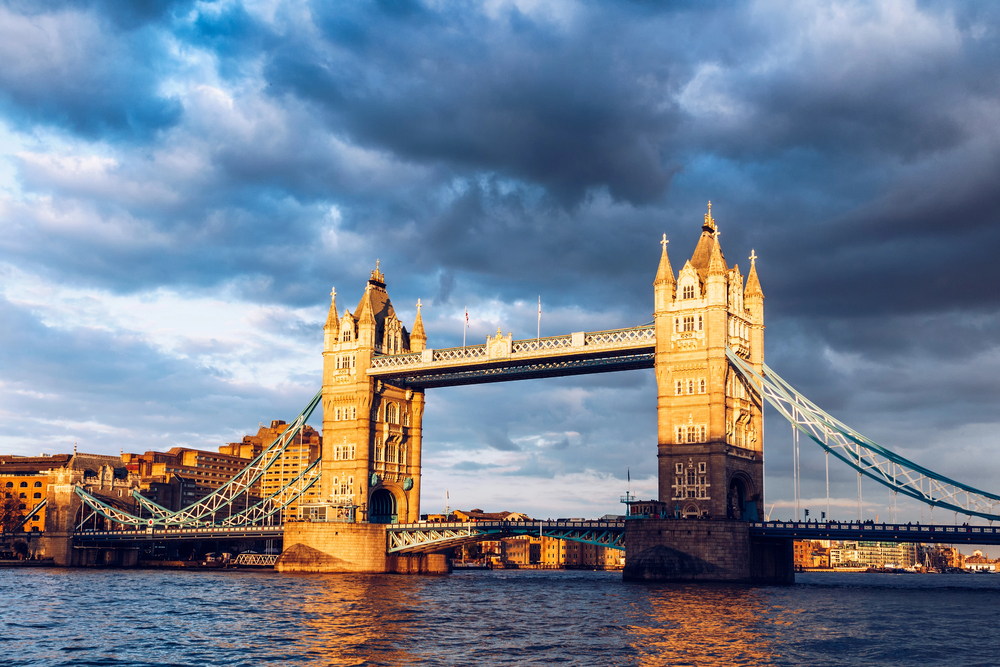
The Shard pierces the sky like a giant glass pyramid that forgot to have a proper base. Its faceted surface reflects light in constantly changing patterns, sometimes making portions of the building appear transparent or invisible.
As the structure narrows while rising, it creates the illusion that it’s defying the basic principle that buildings need wide foundations.
Abu Dhabi
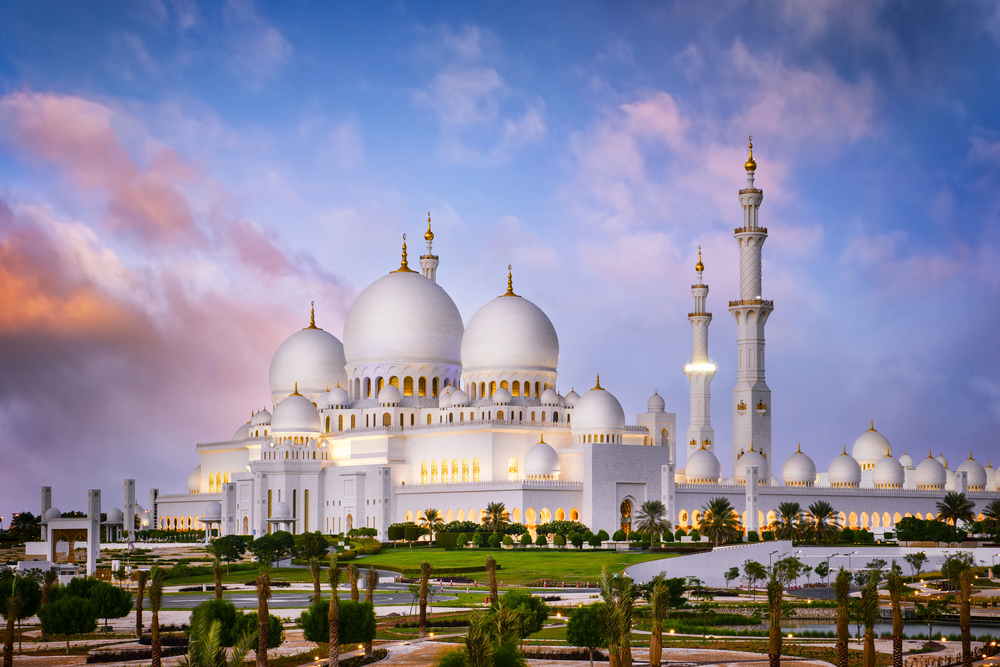
The Capital Gate leans at an 18-degree angle — making the Leaning Tower of Pisa look perfectly upright by comparison. This deliberate tilt required engineers to pre-curve the building’s steel frame and use a complex system of counterweights.
From certain viewpoints, it appears ready to topple over at any moment, though it’s actually more stable than many conventional skyscrapers.
Rotterdam
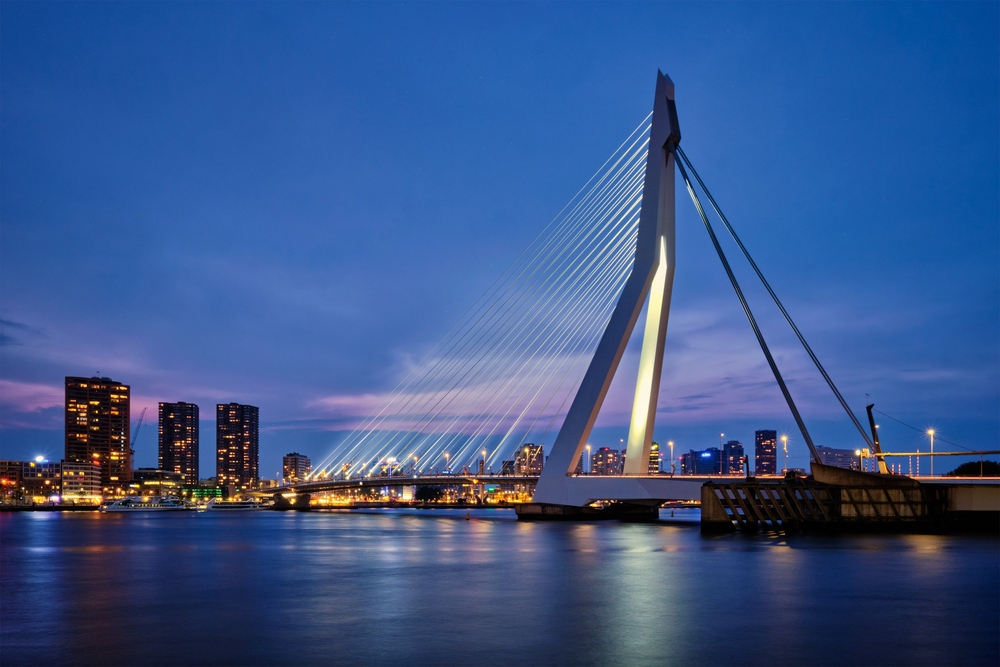
The Cube Houses look like someone took normal homes, tilted them 45 degrees, and balanced them on hexagonal pillars. Living in these yellow cubes means walking on slanted floors and having triangular rooms where traditional furniture simply won’t fit.
The design maximizes space efficiency — though visitors often experience vertigo just from looking at the complex.
Barcelona
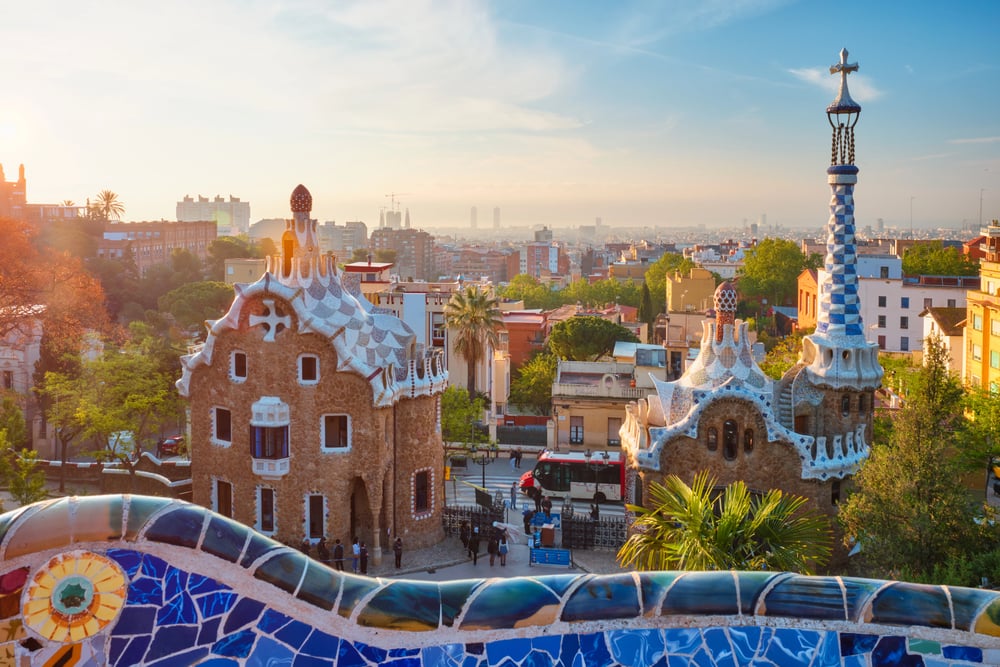
The Sagrada Familia’s towers seem to grow organically from the earth like stone trees reaching toward heaven. Gaudí designed the structure using hanging chain models turned upside down, creating curves and angles that appear impossible to achieve with traditional masonry.
The interplay of light through the stained glass windows creates the illusion that the stone itself is alive.
Bilbao
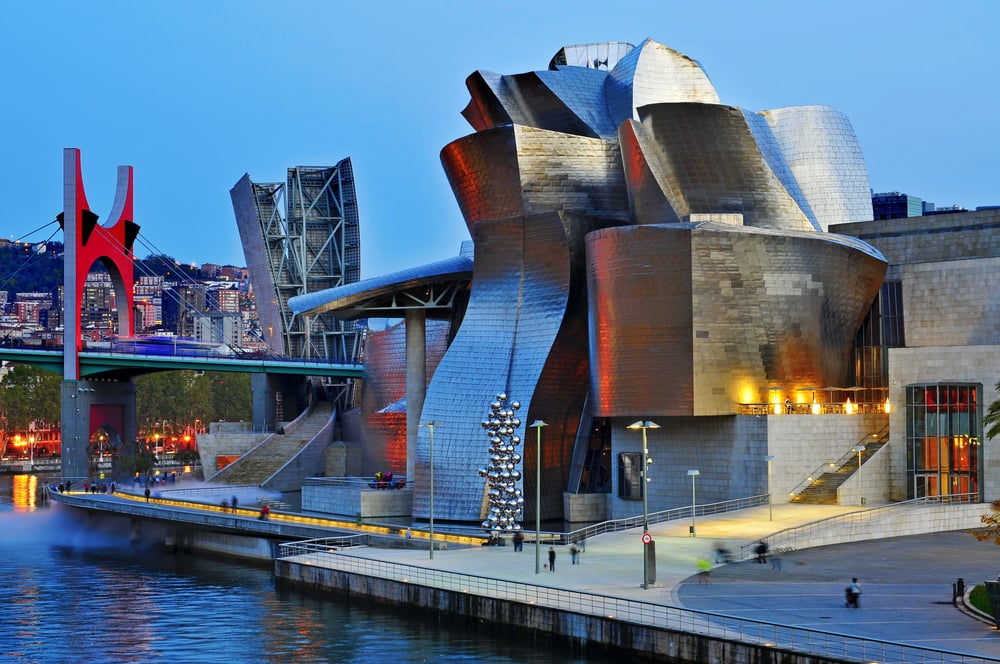
The Guggenheim Museum looks like a metallic flower that bloomed overnight in the middle of the city. Frank Gehry’s titanium-clad design uses computer-generated curves that were impossible to draft by hand — creating surfaces that seem to shift and flow depending on the viewing angle.
The building appears to have no right angles whatsoever, as if conventional geometry doesn’t apply.
Seattle
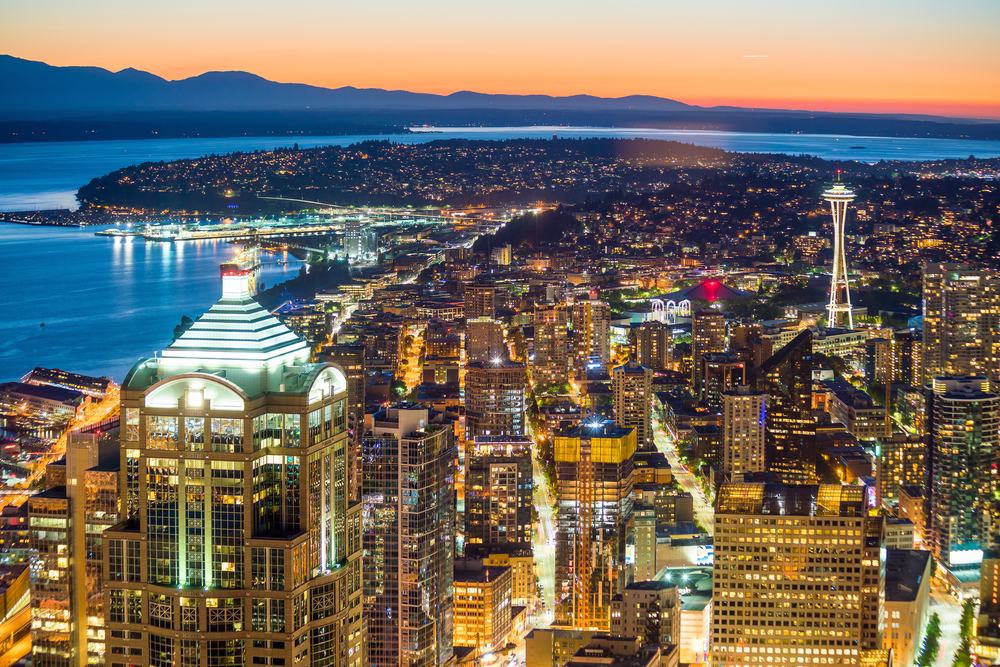
The Space Needle balances a flying saucer-shaped restaurant on what appears to be three impossibly thin legs. Built for the 1962 World’s Fair, its tripod design and narrow waist create the illusion that the top section is floating freely above the city.
The recent renovation added glass floors — making visitors feel like they’re standing on air.
Beijing
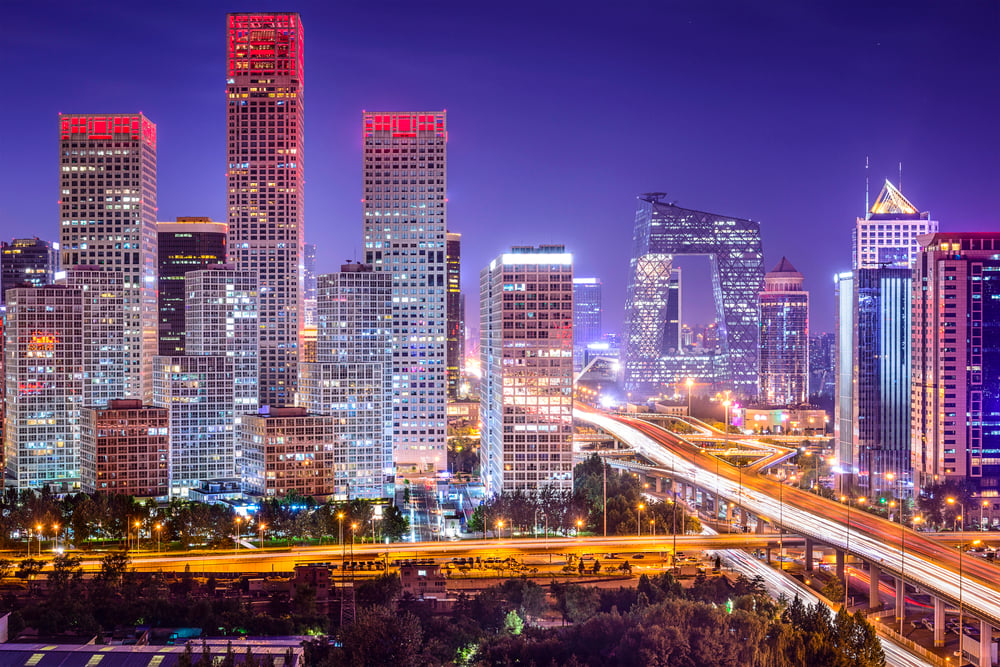
The CCTV Headquarters creates a continuous loop that seems to defy structural logic, earning the nickname ‘big pants’ from locals. The two leaning towers connect at the top and bottom, forming a closed loop that appears to have no beginning or end.
Engineers used advanced computer modeling to ensure the structure wouldn’t collapse under its own unconventional geometry.
Tokyo
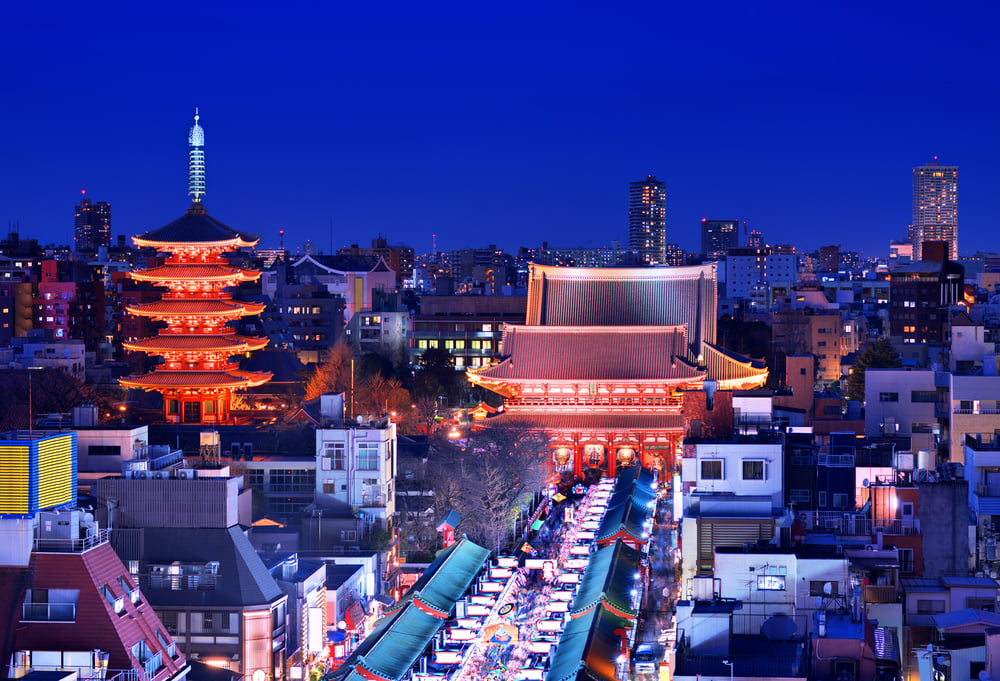
The Nakagin Capsule Tower looks like someone stacked washing machines to create an apartment building. Each pod was prefabricated and bolted onto the central core, creating a modular design that appears ready to transform like a giant robot.
The building’s metabolism-inspired architecture suggests that individual capsules could be removed and replaced, though this has never actually happened.
Melbourne
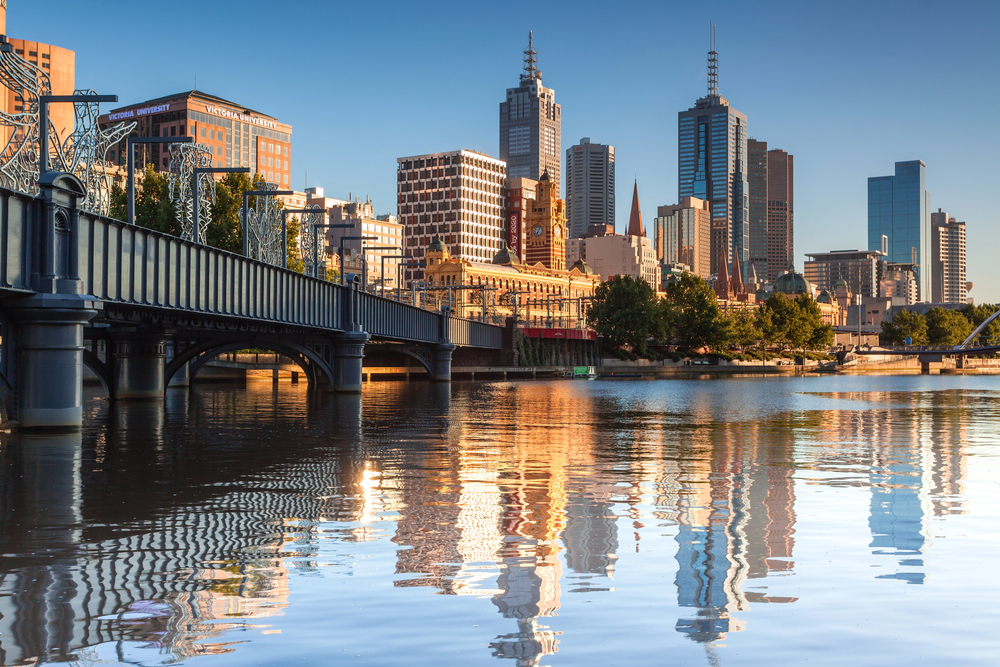
Federation Square’s geometric facade resembles a giant piece of abstract origami that someone partially unfolded. The complex angular patterns create optical illusions where surfaces appear to fold into themselves, making it difficult to determine which parts are concave and which are convex.
The building seems to change shape as visitors walk around it, like a three-dimensional puzzle.
Paris
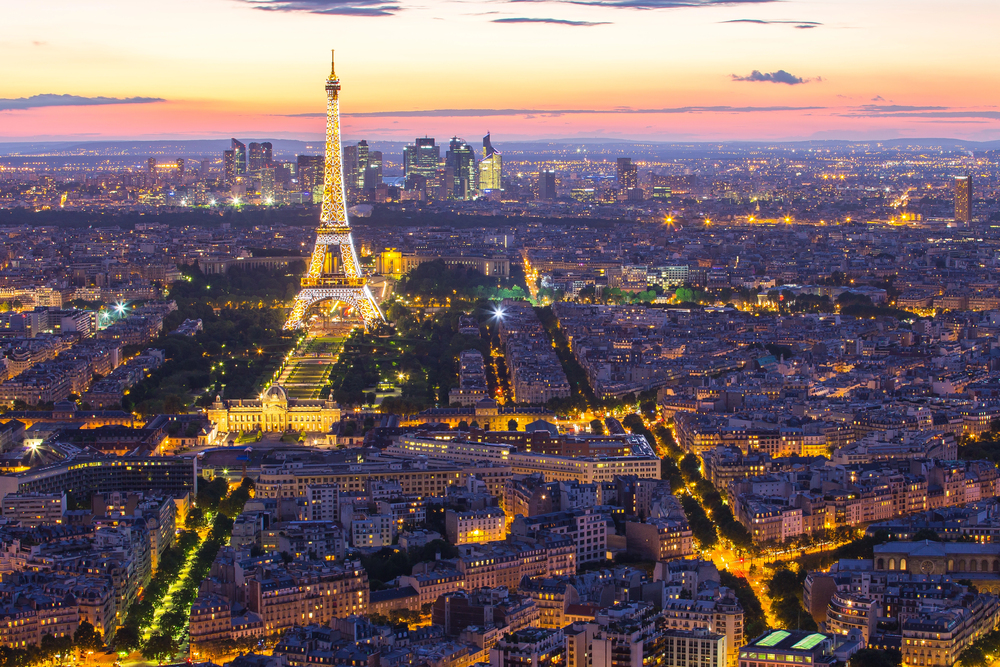
The Centre Pompidou turned architecture inside out by placing all its mechanical systems on the exterior. Color-coded pipes, escalators, and structural elements wrap around the building like mechanical intestines, creating the impression that you’re looking at a building’s skeleton rather than its skin.
The effect is so jarring that it still shocks visitors nearly 50 years after its completion.
Los Angeles
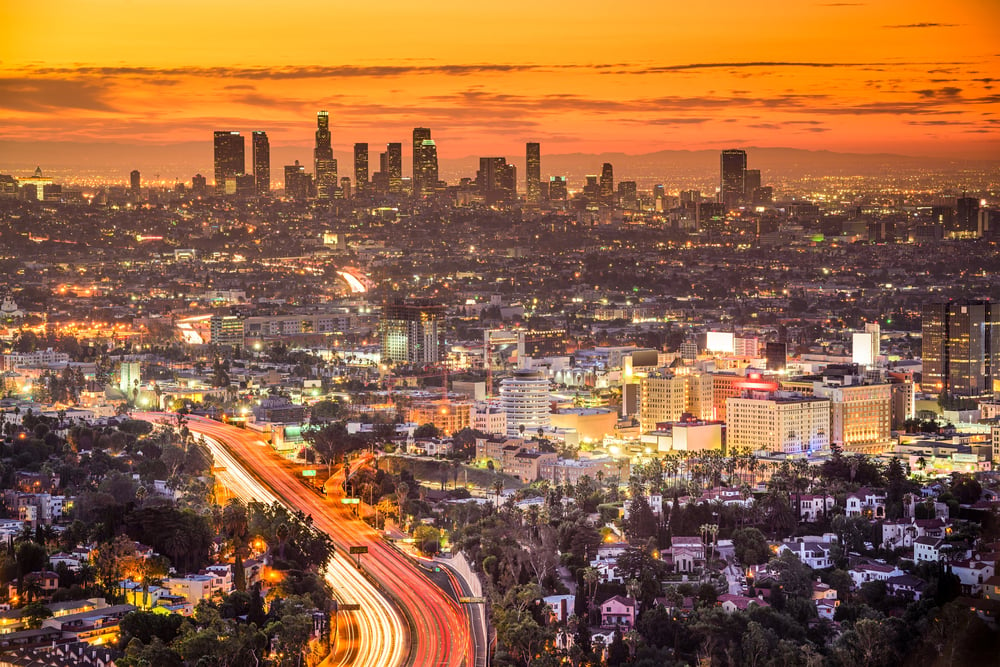
The Walt Disney Concert Hall’s stainless steel curves flow like frozen music, with surfaces that seem to ripple and dance in the California sunlight. Frank Gehry designed the building using the same computer software developed for aerospace engineering, creating compound curves that were impossible to construct using traditional methods.
The reflective surface can actually focus sunlight intensely enough to melt plastic on nearby cars.
Copenhagen

The Mountain Dwellings combine a parking garage with residential units in a way that creates the illusion of houses literally growing out of a hillside. Cars drive up ramps that wind around the building’s exterior, while apartments cascade down the opposite slope like an artificial mountain range.
The green roofs complete the illusion that this is a natural landscape rather than an urban development.
Where Engineering Meets Imagination
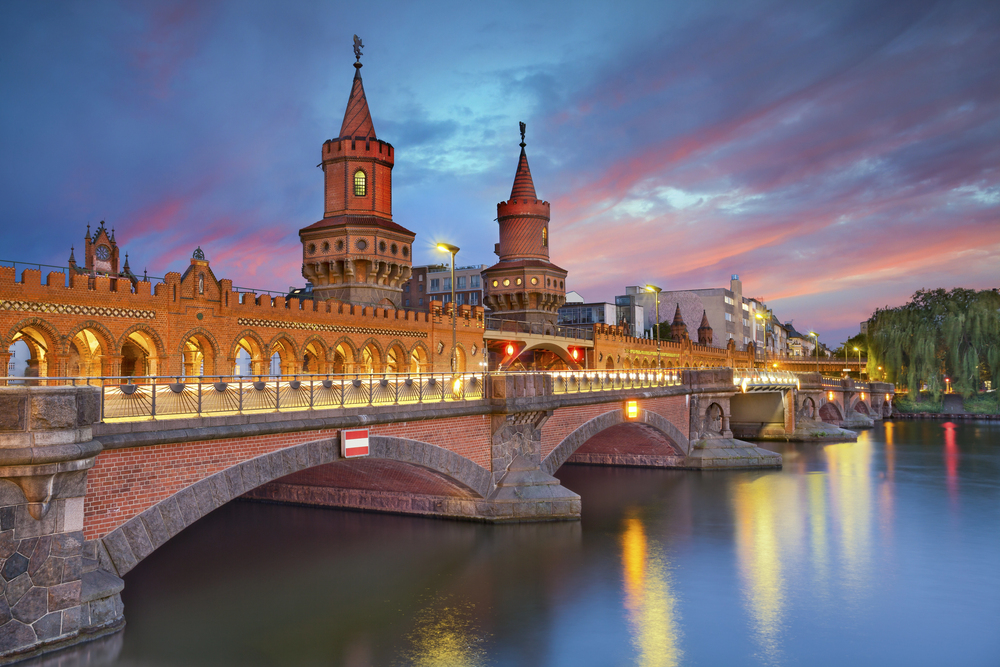
These cities prove that the line between engineering and magic continues to blur as architects push the boundaries of what’s structurally possible. Each building represents not just a triumph of technology, but a bold statement that our urban environments don’t have to conform to conventional expectations.
As materials science and computer modeling advance, we can expect even more gravity-defying structures to reshape our skylines. The real magic isn’t that these buildings seem to defy physics — it’s that they work perfectly within physical laws we’re only beginning to fully understand.
More from Go2Tutors!

- The Romanov Crown Jewels and Their Tragic Fate
- 13 Historical Mysteries That Science Still Can’t Solve
- Famous Hoaxes That Fooled the World for Years
- 15 Child Stars with Tragic Adult Lives
- 16 Famous Jewelry Pieces in History
Like Go2Tutors’s content? Follow us on MSN.