16 Forgotten Historical Alliances That Shaped Borders
Throughout history, powerful nations have forged alliances that dramatically altered the world map. While some partnerships like the Allied Powers of World War II remain firmly etched in our collective memory, countless others have faded into obscurity despite their profound impact on the geopolitical landscape we know today.
These forgotten handshakes between empires and kingdoms redrew boundaries that millions of people still live within, yet few recognize the diplomatic maneuvers that created them. Here is a list of 16 forgotten historical alliances that dramatically shaped borders around the world, showing how temporary friendships between nations had permanent consequences for the map.
The Franco-Ottoman Alliance

When King Francis I of France found himself cornered by the Habsburg Empire in the 16th century, he made a move that shocked Christian Europe—he allied with the Ottoman Sultan Suleiman the Magnificent. This partnership, sometimes called ‘the unholy alliance,’ allowed France to prevent Habsburg domination of Europe while giving the Ottomans strategic leverage in the Mediterranean.
The alliance helped solidify Ottoman control over territories in Eastern Europe and North Africa, creating borders that would last for centuries.
The Anglo-Japanese Alliance

Before becoming bitter enemies in World War II, Britain and Japan maintained a surprisingly strong alliance from 1902 to 1923. This partnership allowed Japan to defeat Russia in the 1904-1905 Russo-Japanese War without fear of other European powers intervening.
The victory gave Japan control over parts of Manchuria and the southern half of Sakhalin Island, establishing boundaries that influenced East Asian geopolitics throughout the 20th century and beyond.
Like Go2Tutors’s content? Follow us on MSN.
The League of the Three Emperors
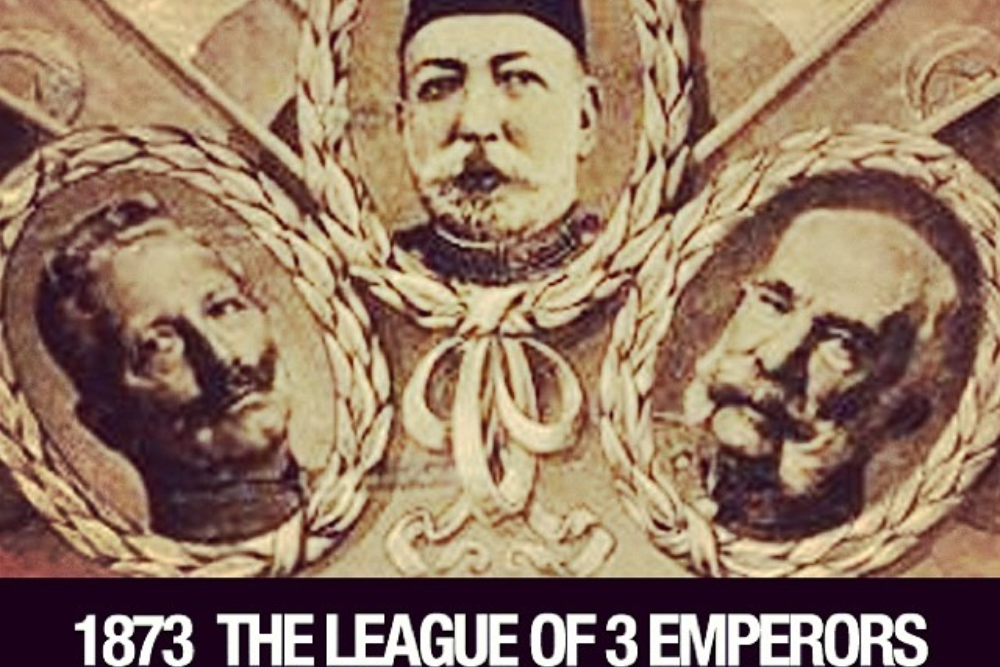
When the leaders of Austria-Hungary, Germany, and Russia formed an alliance in 1873, they created a conservative bloc that dominated Central and Eastern Europe. Though the alliance eventually collapsed due to conflicting interests in the Balkans, it temporarily stabilized borders following the upheaval of German unification.
This three-emperor agreement helped cement the post-1871 boundaries in Europe and delayed the outbreak of a major European conflict for several decades.
The Sykes-Picot Agreement

Perhaps no secret alliance had more lasting border implications than the 1916 Sykes-Picot Agreement between Britain and France. While technically more of a bilateral understanding than a formal alliance, this arrangement divided the Ottoman Empire’s Middle Eastern territories between the two powers.
The artificial borders they drew created Iraq, Syria, Lebanon, and influenced the boundaries of Jordan and Israel/Palestine—borders that continue to be sources of regional conflict today.
The Polish-Lithuanian Commonwealth

Before Poland became the nation we know today, it formed an incredible partnership with the Grand Duchy of Lithuania that lasted for over four centuries. Beginning with the 1385 Union of Krewo and formalized by the 1569 Union of Lublin, this commonwealth became one of Europe’s largest states.
The alliance created a massive buffer zone between Western Europe and Russia, establishing eastern borders that—though later altered—influenced regional identity long after the commonwealth’s 1795 dissolution.
Like Go2Tutors’s content? Follow us on MSN.
The Triple Alliance of 1668

When England, Sweden, and the Netherlands joined forces against an expanding France in 1668, they created the first major coalition designed specifically to maintain Europe’s territorial status quo. This alliance successfully halted Louis XIV’s ambitions in the Spanish Netherlands (modern Belgium), preserving a crucial buffer state between France and the Dutch Republic.
The borders they defended created the foundation for the modern Benelux region.
The Sino-Soviet Alliance

The 1950 Treaty of Friendship between Communist China and the Soviet Union temporarily settled long-disputed borders between the two giants. While the alliance would spectacularly collapse by the 1960s, the border settlements made during this honeymoon period largely endure today.
The partnership also secured Chinese control over Xinjiang and solidified the division of Mongolia into Outer Mongolia (the modern nation) and Inner Mongolia (the Chinese autonomous region).
The Rio Pact

When twenty-one American nations signed the Inter-American Treaty of Reciprocal Assistance in 1947, they created a security shield that helped freeze South American borders during the Cold War. This forgotten alliance prevented many potential territorial disputes from erupting into armed conflicts.
The pact essentially codified existing borders throughout the Western Hemisphere, creating the longest period of territorial stability in South American history despite political turmoil within many member states.
Like Go2Tutors’s content? Follow us on MSN.
The Anglo-Portuguese Alliance

Dating back to the 1386 Treaty of Windsor, the alliance between England and Portugal stands as history’s longest unbroken diplomatic partnership. This relationship helped Portugal maintain its independence from Spain and secure its colonial holdings in Africa.
The borders of modern Angola and Mozambique were directly shaped by British diplomatic support for Portuguese claims during the 19th century ‘Scramble for Africa,’ creating boundaries that outlasted colonial rule.
The Holy League of 1684

When Pope Innocent XI united Poland, Venice, and the Habsburg Empire against Ottoman expansion, he created a military alliance that permanently pushed back the borders of the Ottoman Empire in Europe. The Holy League’s victories, including the reconquest of Hungary and Transylvania, established boundaries between Central Europe and the Ottoman lands that largely remain intact today.
This forgotten religious alliance essentially drew the southeastern borders of modern Austria, Hungary, and parts of the Balkans.
The Entente Cordiale

Before becoming the foundation of the Allied Powers, the 1904 agreement between longtime rivals Britain and France settled numerous colonial border disputes across Africa and Asia. This diplomatic revolution divided contested territories in Morocco, Egypt, and Southeast Asia.
The borders established through this entente created the modern boundaries of Thailand, which remained as a buffer state between British and French colonial possessions, as well as defining many current borders across North Africa.
Like Go2Tutors’s content? Follow us on MSN.
The Iberian Union

For sixty years (1580-1640), the crowns of Spain and Portugal united under a single Habsburg monarch, creating the largest global empire of its time. Though ultimately dissolved, this dynastic alliance established lasting borders in South America.
The joint administration during this period led to modifications of the earlier Treaty of Tordesillas line, effectively creating the distinctive bulge of Brazil into the Spanish territories that defines South America’s map today.
The Little Entente

Formed by Czechoslovakia, Romania, and Yugoslavia after World War I, this defensive alliance aimed to prevent Hungarian revisionism and maintain the borders established by the post-war treaties. Though ultimately unsuccessful in preventing Nazi Germany’s dismantling of Czechoslovakia, the alliance temporarily preserved the controversial borders drawn at Versailles and Trianon.
These interwar boundaries would later influence the post-Soviet borders of Central and Eastern Europe that emerged in the 1990s.
The Baghdad Pact

This Cold War alliance (formally called the Central Treaty Organization) united Turkey, Iraq, Iran, Pakistan, and the United Kingdom in 1955 to contain Soviet influence. While the alliance itself collapsed after the 1958 Iraqi Revolution, the security guarantees it provided helped stabilize borders along the southern frontier of the Soviet Union.
The territorial status quo it temporarily preserved and eventually formed the basis for the current borders of the Central Asian states following the Soviet collapse.
Like Go2Tutors’s content? Follow us on MSN.
The ANZUS Treaty

When Australia, New Zealand, and the United States formed a mutual defense pact in 1951, they created a security umbrella that helped preserve existing territorial arrangements throughout the South Pacific. This alliance indirectly shaped modern Pacific borders by preventing communist expansion into Oceania during the Cold War.
The treaty’s influence extended beyond member nations, effectively guaranteeing the territorial integrity of emerging island nations as they gained independence from colonial powers.
The Zollverein

Before Germany existed as a unified country, the Prussian-led customs union of the 1830s-60s created economic cooperation that laid the groundwork for political unification. This economic alliance effectively defined which German states would eventually be included in the German Empire of 1871.
The Zollverein’s membership largely determined Germany’s borders with Denmark, the Netherlands, and France, establishing boundaries that—despite two world wars—remain recognizable in contemporary Europe.
Mapping the Modern World

These forgotten alliances remind us that today’s world map isn’t the product of natural geography but rather complex human negotiations, often conducted behind closed doors between unlikely partners. The borders we take for granted as permanent features of our world were frequently determined by temporary alliances formed out of convenience rather than lasting friendship.
From the Middle East to South America, these diplomatic arrangements—many now barely footnotes in history books—continue to shape the lives of billions of people who live within the boundaries they established. The next time you look at a world map, remember that each line represents not just a dividing point between nations, but the legacy of relationships between powers that once found common cause, however briefly, in redrawing the world to their advantage.
Like Go2Tutors’s content? Follow us on MSN.
More from Go2Tutors!

- 16 Restaurant Chains That Went Too Fast
- 12 Things Sold in the 80s That Are Now Illegal
- 15 Strange Things People Have Tried to Ban (And Failed)
- 16 Collectibles People Tossed Out Too Soon
- 17 Myths from Your Childhood That Were Actually Based on Real Things
Like Go2Tutors’s content? Follow us on MSN.



