16 Inventions That Changed Entertainment
Entertainment has been revolutionized time and again by brilliant minds who dared to dream beyond the ordinary. From the first moving pictures that made audiences gasp in wonder to streaming services that put entire libraries in our pockets, human ingenuity has consistently transformed how we escape, laugh, and lose ourselves in stories. Here are 16 groundbreaking inventions that fundamentally changed how the world experiences entertainment.
The phonograph
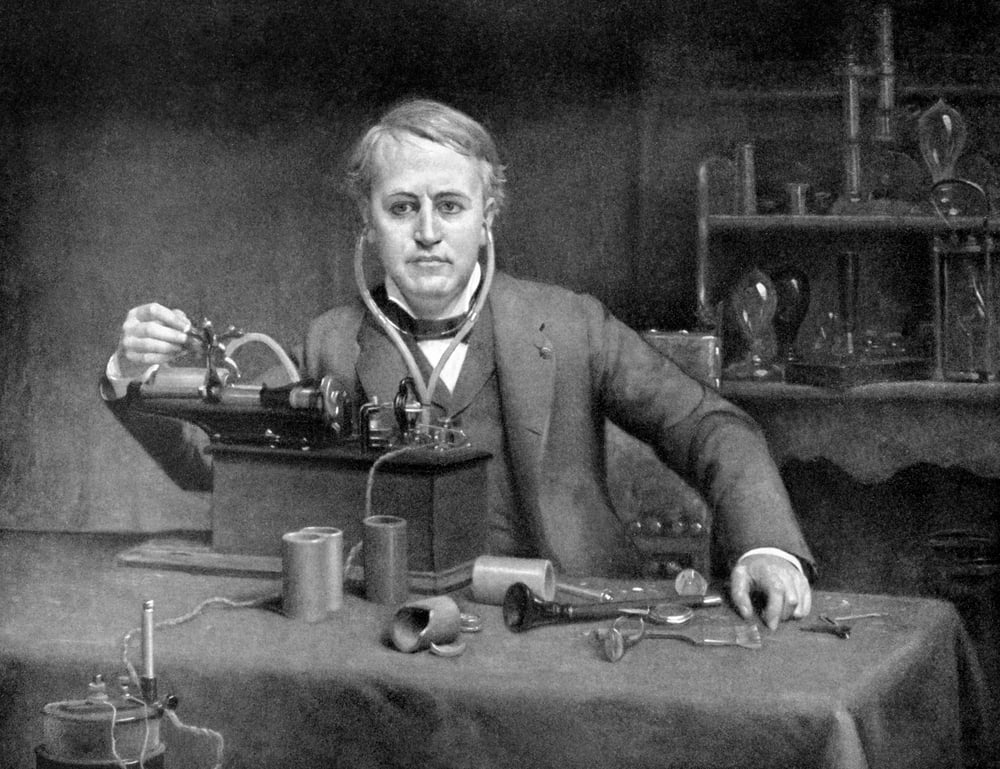
Thomas Edison’s 1877 creation didn’t just record sound—it gave music a permanent home. Before this cylindrical marvel, hearing your favorite tune meant hoping a musician would play it nearby.
The phonograph changed everything by capturing performances and playing them back whenever you wanted. The device used a needle to etch sound waves into tinfoil wrapped around a rotating cylinder.
When played back, those tiny grooves recreated the original sounds with startling clarity. Suddenly, opera singers could perform in parlors across America, and politicians could address crowds without leaving their offices.
Motion pictures

The Lumière Brothers’ cinematograph in 1895 literally set the world in motion. Their first public screening in Paris showed a train arriving at a station, and legend says audience members ducked, fearing the locomotive would burst through the screen.
This wasn’t just moving pictures—it was the birth of an entirely new art form. Within decades, silent films evolved into talkies, black and white gave way to color, and Hollywood became the dream factory of the world.
The cinematograph planted seeds that grew into a multi-billion dollar industry.
Radio broadcasting
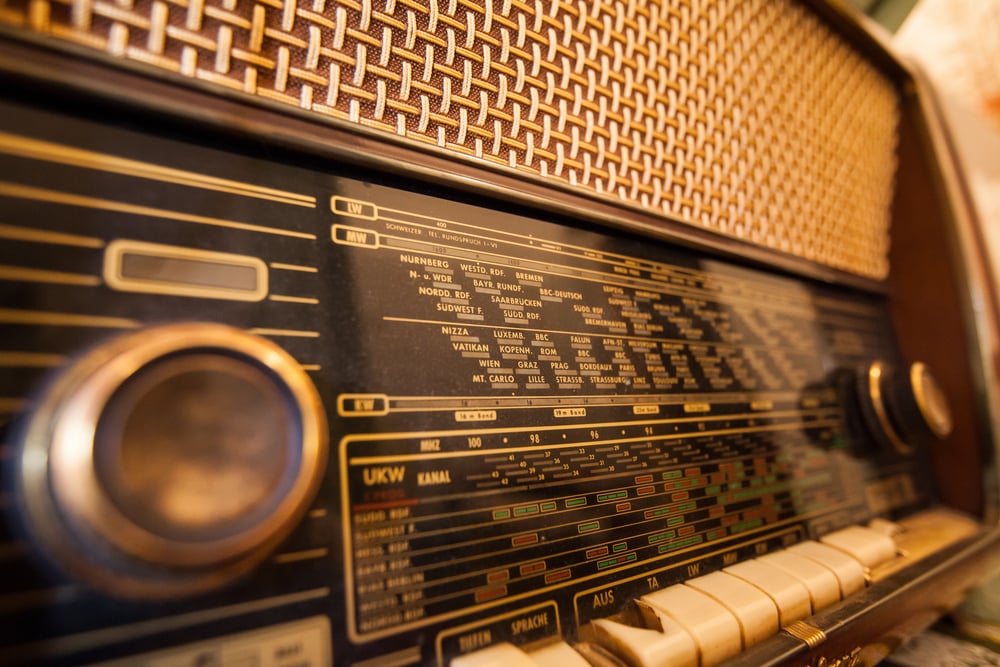
Guglielmo Marconi’s wireless technology sparked a communication revolution in the early 1900s. But it was radio broadcasting that truly changed entertainment forever.
Families gathered around crackling receivers to hear everything from comedy shows to baseball games. Radio created the first truly mass entertainment medium.
A single broadcast could reach millions simultaneously, creating shared cultural moments. The medium’s golden age brought us iconic shows, made stars out of voices, and proved that imagination could paint pictures more vivid than any camera.
Television
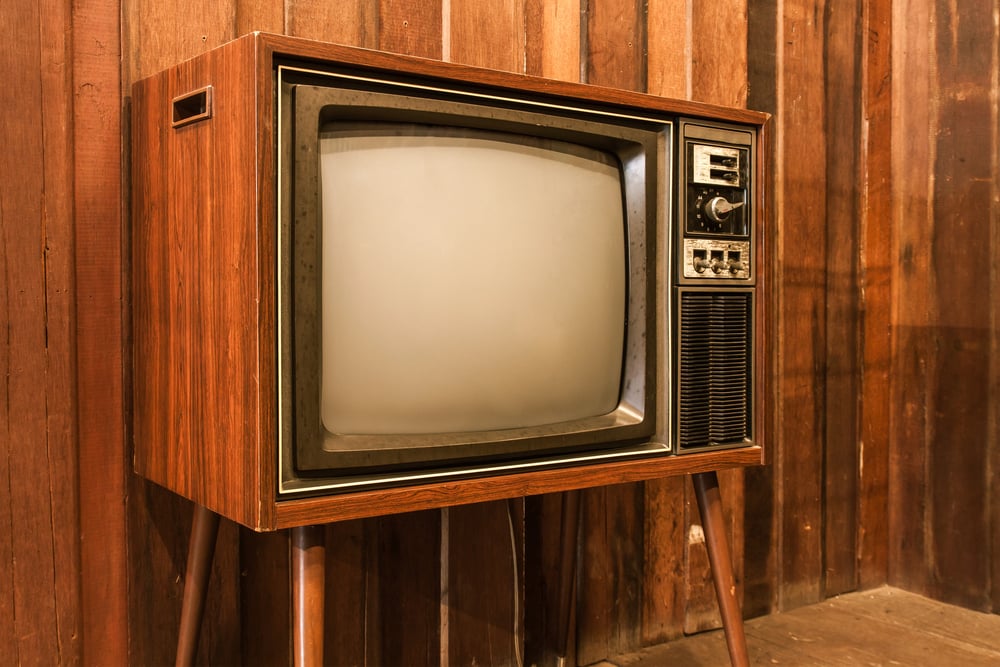
John Logie Baird’s mechanical television system in the 1920s was crude—fuzzy images that barely resembled reality. Yet this primitive technology launched the medium that would dominate entertainment for generations.
Television combined radio’s reach with cinema’s visual power. By the 1950s, families planned their evenings around TV schedules.
The small screen brought news, drama, comedy, and sports directly into living rooms, fundamentally changing how societies consumed information and entertainment.
The electric guitar

Leo Fender’s solid-body electric guitar in 1950 didn’t just amplify sound—it amplified an entire cultural revolution. Rock and roll needed this invention to truly rock.
The electric guitar’s sustain, distortion capabilities, and sheer volume created sounds impossible with acoustic instruments. Chuck Berry’s duck walks, Jimi Hendrix’s feedback sculptures, and countless garage bands found their voices through electrified strings.
Popular music hasn’t been the same since.
Magnetic tape recording
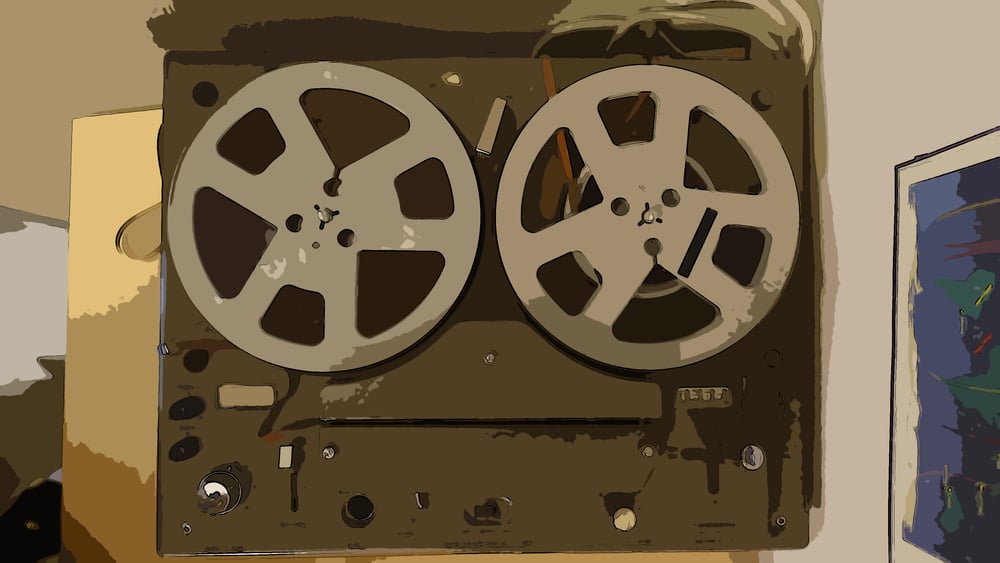
The German Magnetophon, refined by American companies after World War II, revolutionized both music creation and radio production. Suddenly, performances could be edited, layered, and perfected.
Tape recording enabled multitrack recording, where musicians could layer instrument upon instrument. The Beatles’ “Sgt. Pepper’s” wouldn’t exist without this technology.
Radio shows could be pre-recorded and edited for the first time. Quality improved dramatically, and creative possibilities exploded.
The transistor

Bell Labs’ 1947 transistor invention seems technical, but it made portable entertainment possible. Before transistors, electronics required bulky vacuum tubes that consumed enormous amounts of power.
Transistor radios put music in teenagers’ hands during the 1960s. Suddenly, kids could carry the latest hits to beaches, bedrooms, and anywhere parents weren’t listening.
This tiny component enabled everything from portable TVs to boom boxes, democratizing entertainment access.
Cable television

Community antenna systems in the late 1940s were designed to bring television to remote areas. But cable TV evolved into something far more revolutionary—a platform for specialized programming.
Cable broke the three-network stranglehold on television content. MTV launched music videos into cultural prominence.
CNN created 24-hour news cycles. HBO proved audiences would pay premium prices for quality content without commercials.
Cable television fragmented audiences but enriched programming diversity beyond imagination.
Video cassette recorder

Sony’s Betamax and JVC’s VHS systems in the 1970s brought Hollywood home in a completely new way. For the first time, viewers controlled when they watched movies and TV shows.
The VCR created the home video market, turning living rooms into personal theaters. Movie studios initially fought this technology, fearing it would destroy theatrical releases.
Instead, home video became a massive revenue source. Time-shifting changed viewing habits forever, and movie night became a rental store adventure.
Personal computers

While IBM and Apple developed PCs for productivity, these machines quickly became entertainment powerhouses. Early computer games like “Pong” and “Space Invaders” were primitive, but they launched an industry worth hundreds of billions today.
Home computers democratized game development and enabled interactive entertainment experiences impossible in other media. Players weren’t just watching stories unfold—they were controlling the action.
The PC gaming revolution created entirely new genres and transformed entertainment from passive consumption to active participation.
Compact disc

Sony and Philips’ collaboration in 1982 replaced scratchy vinyl and degrading cassettes with pristine digital audio. The CD’s crystal-clear sound quality and durability made it an instant success.
Digital audio didn’t just improve sound quality—it enabled new distribution methods. CD players became standard in cars, homes, and portable devices.
The format’s success paved the way for all digital media that followed, from DVDs to streaming audio.
The Internet

ARPANET’s academic origins couldn’t have predicted how the Internet would revolutionize entertainment distribution. Suddenly, geographic barriers disappeared, and content creators could reach global audiences instantly.
The Internet enabled file sharing, streaming media, and social platforms that redefined entertainment creation and consumption. Musicians could bypass record labels, filmmakers could distribute directly to audiences, and anyone with a camera could become a content creator.
Traditional entertainment hierarchies crumbled.
DVD

The Digital Versatile Disc in 1997 brought movie theater quality to home viewing while adding features impossible in theaters. Director commentaries, deleted scenes, and multiple camera angles enhanced the viewing experience.
DVDs offered superior picture quality, durability, and convenience compared to VHS tapes. The format’s success demonstrated consumer appetite for high-quality home entertainment and special features.
DVD collections became status symbols, and the format generated billions in revenue for content creators.
Digital video recorder

TiVo’s 1999 launch gave viewers unprecedented control over television consumption. Recording shows became as simple as clicking a button, and commercial skipping became effortless.
The DVR fundamentally altered television viewing habits and advertising effectiveness. Viewers could pause live TV, build personal libraries of favorite shows, and watch content on their own schedules.
Traditional broadcast television had to adapt to audience members who increasingly ignored network programming schedules.
iPod and iTunes

Apple’s 2001 iPod put “1,000 songs in your pocket,” while iTunes provided legal digital music purchasing. This combination transformed the music industry more dramatically than any invention since recorded sound itself.
The iPod made carrying vast music libraries practical and stylish. iTunes offered convenient, affordable alternatives to music piracy while giving artists new distribution channels.
Album sales declined, but single-song purchases flourished. The music industry’s entire economic model shifted toward individual tracks rather than complete albums.
YouTube

Chad Hurley, Steve Chen, and Jawed Karim’s 2005 video sharing platform democratized video content creation and distribution. Suddenly, anyone with a camera and Internet connection could reach global audiences.
YouTube transformed entertainment from a top-down industry to a participatory medium. Cat videos became cultural phenomena, unknown musicians found massive audiences, and traditional celebrities competed with bedroom broadcasters for viewer attention.
The platform created entirely new entertainment categories and career paths.
Streaming services

Netflix’s transition from DVD-by-mail to streaming video in 2007 marked entertainment’s digital transformation. Other services followed, creating the streaming wars that define modern entertainment consumption.
Streaming eliminated physical media requirements and geographic distribution limitations. Viewers gained access to vast content libraries for monthly fees lower than single movie tickets.
Binge-watching became culturally acceptable, and traditional television scheduling became increasingly irrelevant. The entire entertainment industry restructured around on-demand viewing preferences.
More from Go2Tutors!

- 16 Historical Figures Who Were Nothing Like You Think
- 12 Things Sold in the 80s That Are Now Illegal
- 15 VHS Tapes That Could Be Worth Thousands
- 17 Historical “What Ifs” That Would Have Changed Everything
- 18 TV Shows That Vanished Without a Finale
Like Go2Tutors’s content? Follow us on MSN.