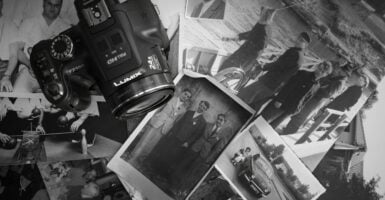
Images of Historic Inventions That Changed Daily Life
The clutter in your kitchen drawer tells a story. That can opener, the safety pins, the flashlight with dead batteries — each represents a moment when someone solved a problem that had frustrated humanity for centuries.
These weren’t grand gestures or sweeping declarations. They were quiet revolutions, the kind that slip into daily routine so completely that imagining life without them feels impossible.
Historic inventions don’t announce themselves with fanfare. They arrive, prove useful, and disappear into the background of ordinary life.
Yet their images carry weight — frozen moments that capture the precise instant when everything changed, even if nobody realized it at the time.
The Printing Press
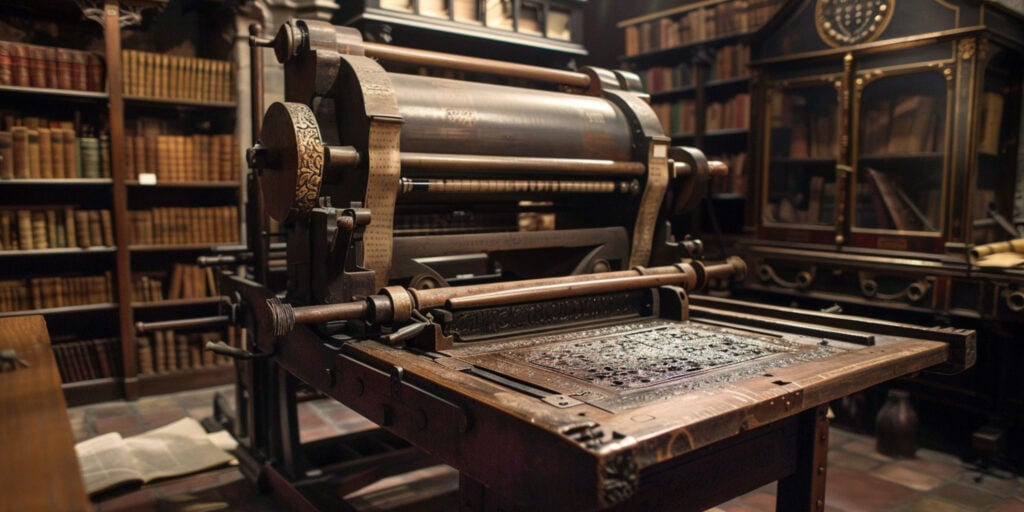
Johannes Gutenberg’s printing press sits in old illustrations like a mechanical prophet. Heavy wooden frame, metal type arranged in neat rows, ink-stained fingers working the lever.
The machine looks stubborn, built to outlast the centuries it would reshape.
The Light Bulb

Edison’s first successful light bulb glows in photographs with the fragile intensity of captured lightning. That thin carbon filament, enclosed in blown glass, ended humanity’s dependence on flame for illumination.
The image is deceiving in its simplicity — just a bulb in a socket — but it represents the moment darkness became optional.
The Telephone
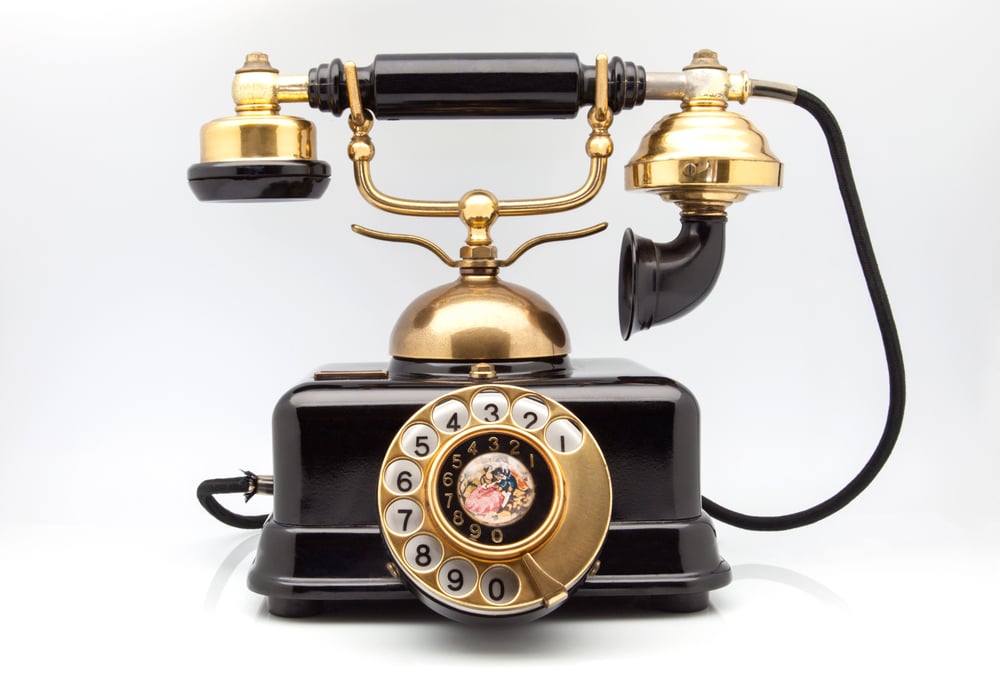
Alexander Graham Bell’s telephone (and here’s where the story gets tangled, because invention rarely happens in isolation) changed how distance worked between people, though the early models looked more like wooden boxes with speaking tubes attached — which, to be fair, is essentially what they were. But the first images of people holding those receivers to their ears, speaking to someone they couldn’t see, capture something almost supernatural: the collapse of geography into a simple conversation.
The formality in those early photographs is striking too, as if the subjects understood they were documenting magic. Even so, the invention that truly mattered wasn’t the device itself but what it made possible.
The Steam Engine
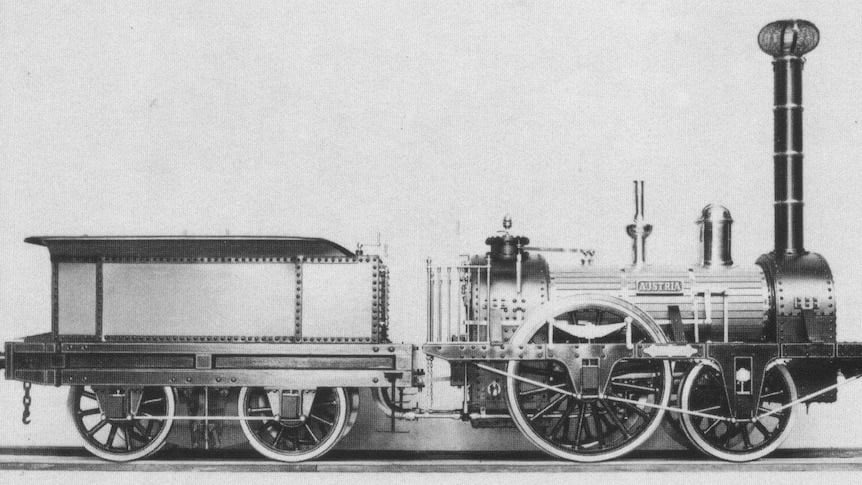
Steam engines look like iron dinosaurs in vintage photographs. Massive, breathing metal beasts that transformed coal into motion and motion into possibility.
Those images capture more than machinery — they show the moment human power became insufficient.
The Camera
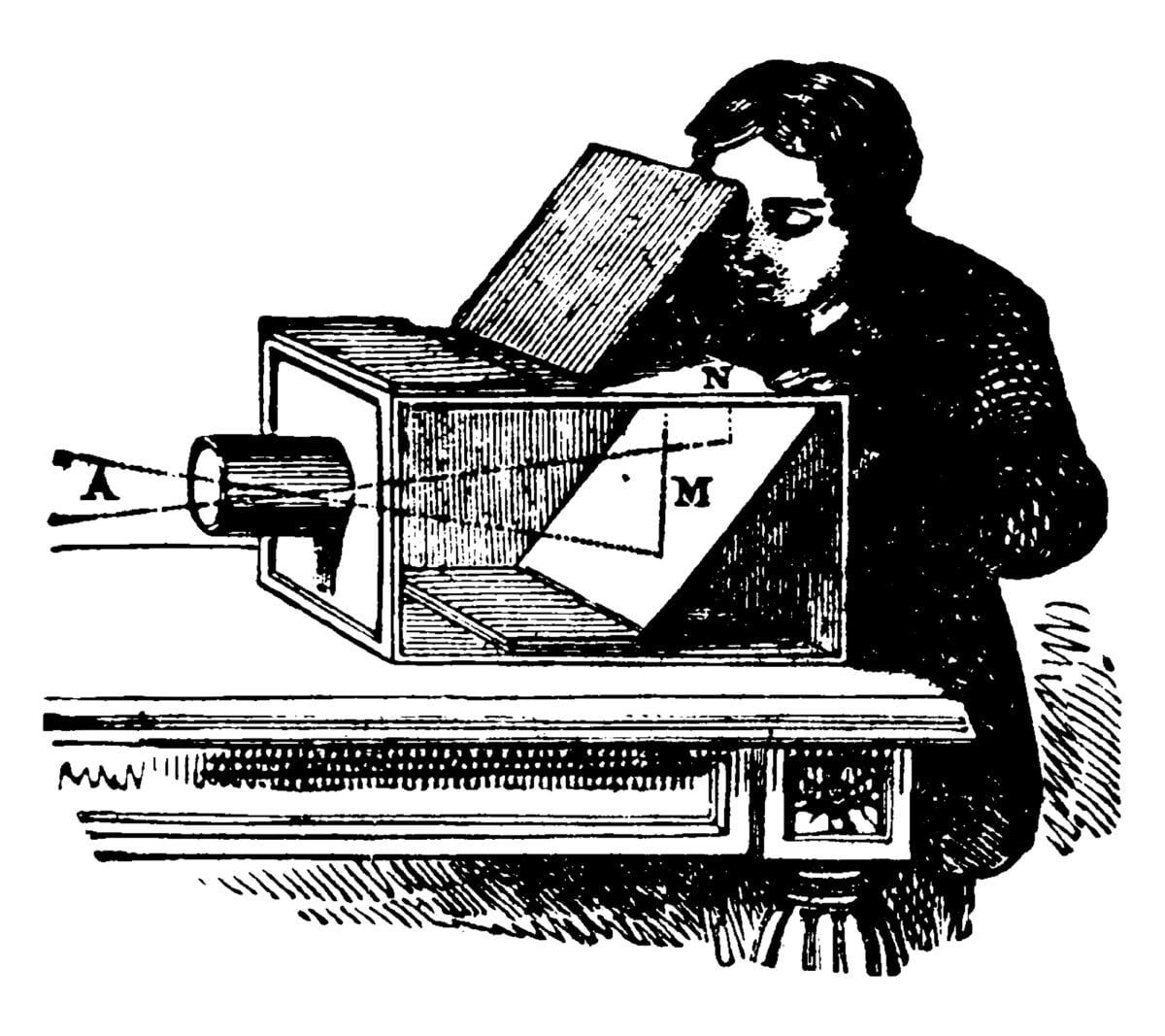
The camera’s invention created its own documentation problem. Early photographs of cameras are wonderfully recursive — images of the thing that makes images possible.
Those daguerreotypes and tintypes feel urgent, as if the inventors knew they were stealing time itself and making it permanent.
The Sewing Machine
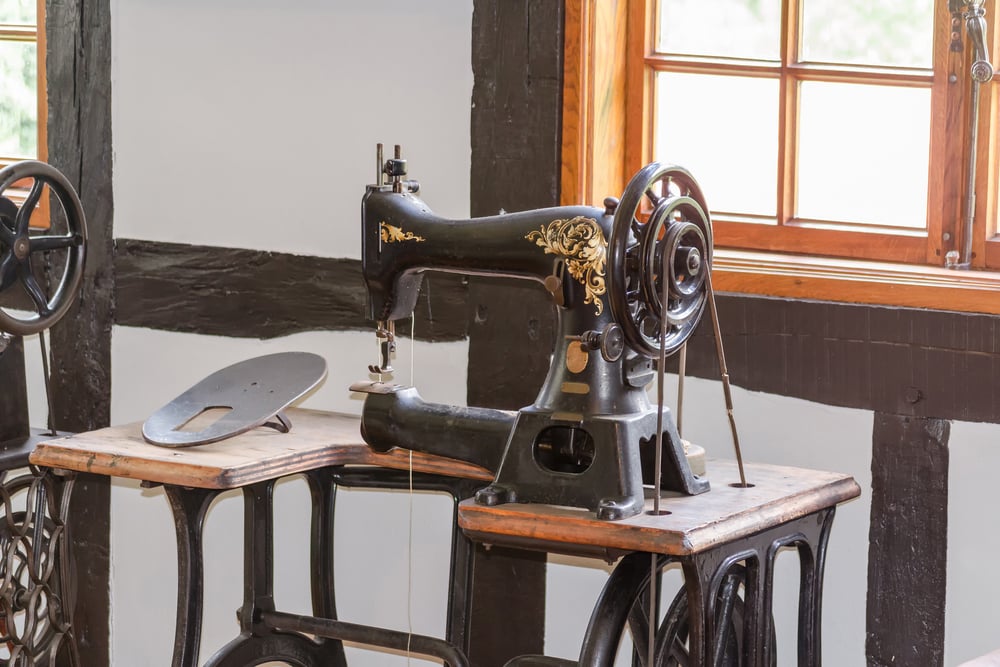
There’s something stubborn about early sewing machines that sits well with their purpose — taking the endless, repetitive work of stitching fabric and making it mechanical rather than personal. The images from the 1850s show these devices perched on wooden tables, their iron arms curved like question marks over whatever fabric happened to be threaded through.
Watching someone operate one of these machines must have felt like watching magic: thread becoming seam faster than any hand could manage. The invention didn’t just change how clothes were made — it changed who could afford to own them.
But it goes deeper than economics, really, because the sewing machine corrected something fundamental about how humans had always worked with cloth, turning what had been meditation into efficiency.
The Spinning Wheel

The spinning wheel appears in countless historical paintings, usually beside women whose hands move in practiced rhythm. Thread emerges from chaos — loose fiber becoming something useful through repetition and patience.
These images document the foundation of textile civilization.
The Telegraph
Telegraph poles stretching across empty landscapes look lonely in old photographs. Thin wires carrying messages faster than any horse could run, connecting cities that had never spoken to each other before.
The technology seems almost apologetic in its simplicity — just electricity pulsing through copper wire.
The Steam-Powered Printing Press
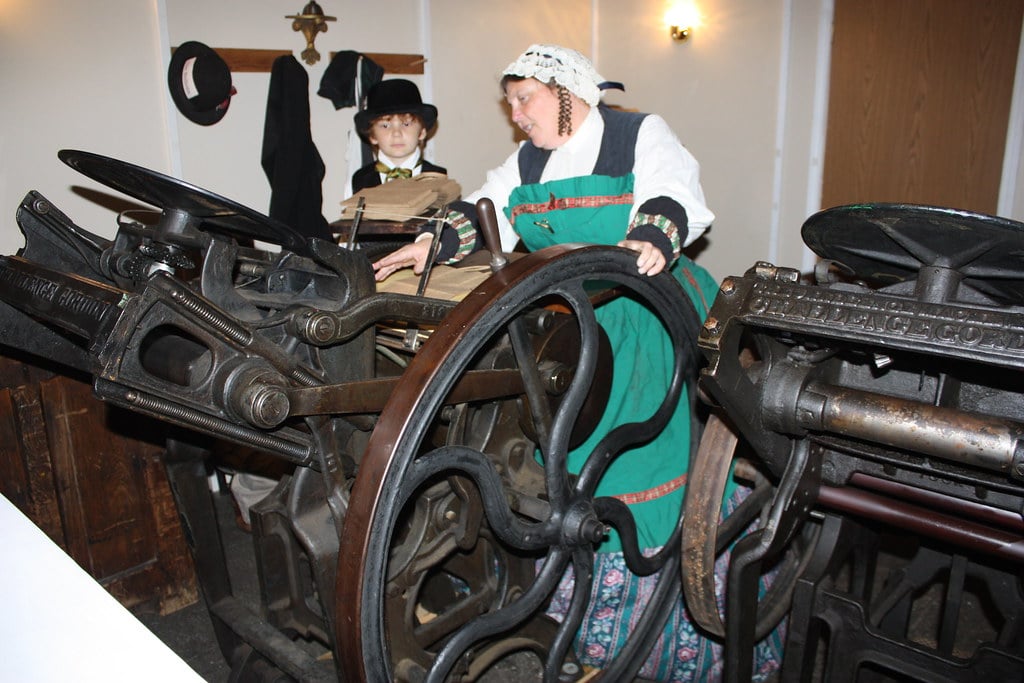
The marriage of steam power and printing created newspapers as we know them, though the early steam-powered presses look more like locomotives that happened to produce pages instead of movement. Those massive cylindrical drums, fed by continuous rolls of paper, could print thousands of copies in the time it took a hand press to produce dozens — which meant that information, for the first time in human history, could travel faster than the people who created it.
And so newspapers became daily rather than weekly, and weekly rather than monthly, until staying informed became a habit rather than an occasion.
The photographs of these machines in operation show workers feeding paper into mechanical mouths that never stopped consuming, never stopped producing.
The Cotton Gin
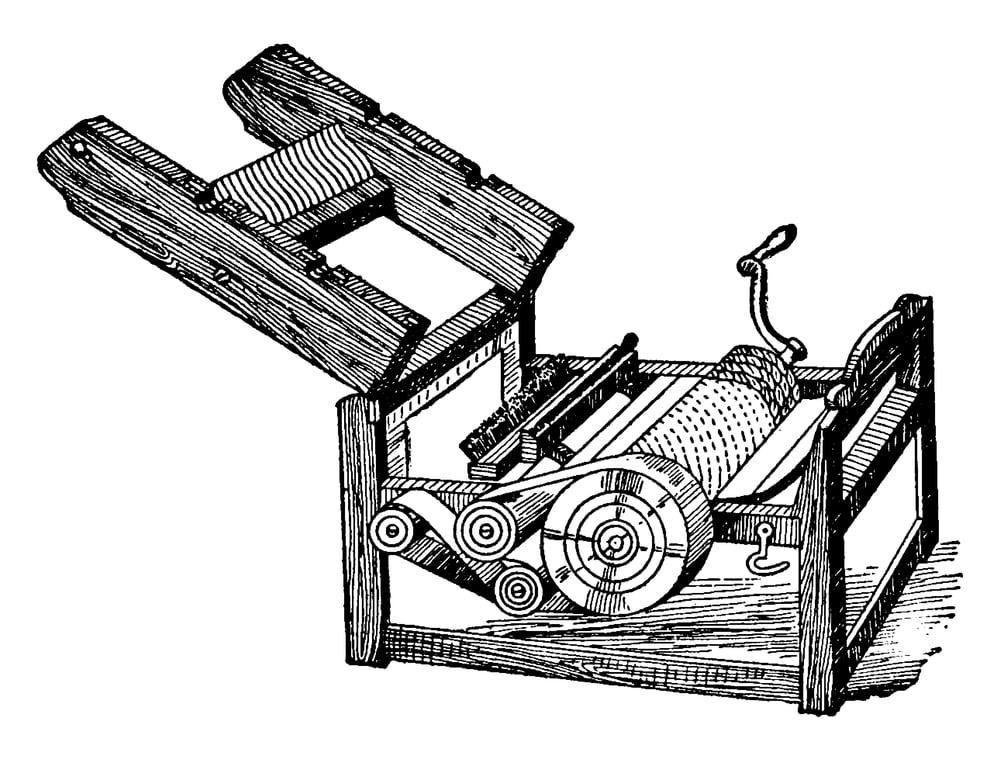
Eli Whitney’s cotton gin looks deceptively simple in historical illustrations. A wooden box with rotating brushes and wire teeth, designed to separate cotton fibers from seeds.
The invention made cotton profitable on an industrial scale, though the images never show the human cost that profitability demanded.
The Water Frame
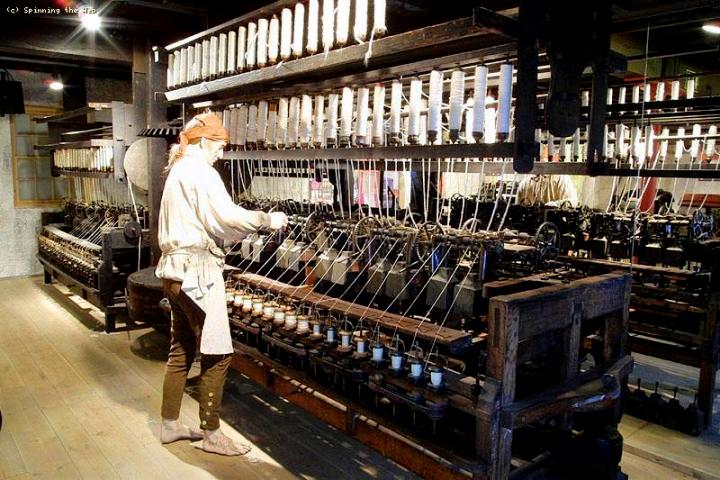
Spinning multiple threads simultaneously was the breakthrough that made cotton production industrial rather than artisanal (and Richard Arkwright’s water frame, powered by flowing streams, could operate dozens of spindles where human hands had managed only one). The early images show these machines as forests of thread — hundreds of strands running parallel through wooden frames, tended by workers whose job became watching rather than doing.
Something essential changed here: the rhythm of work shifted from human pace to mechanical pace. Water never gets tired.
The Power Loom
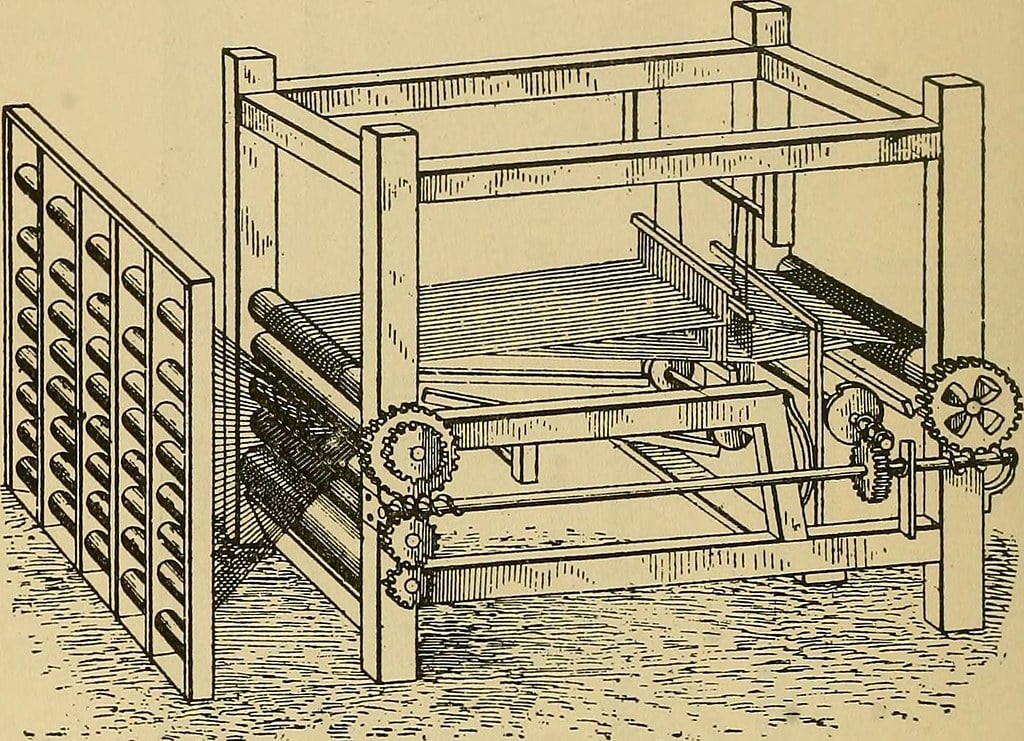
Power looms stand in old factory photographs like rows of wooden soldiers. Each machine weaving cloth faster than any human weaver could match, their shuttles flying back and forth with mechanical precision.
The images capture the birth of mass production — identical products emerging from identical processes.
The Spinning Jenny
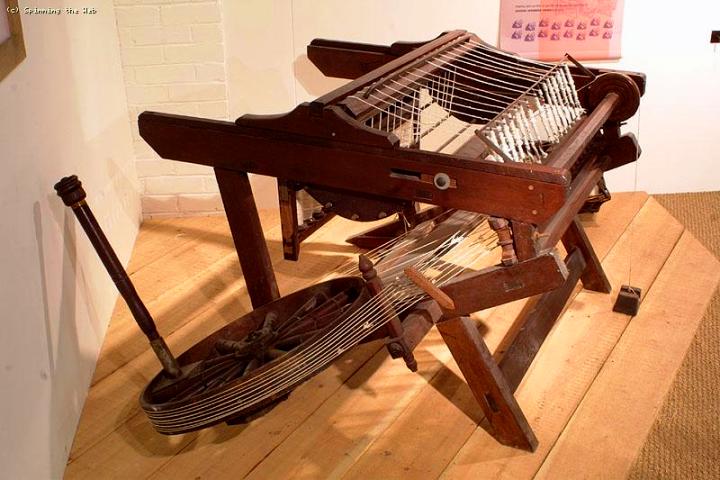
James Hargreaves’ spinning jenny could spin eight threads where traditional wheels managed one, though the machine itself looks almost apologetic in historical drawings — a wooden frame holding multiple spindles, operated by a single wheel. The multiplication of human capability had begun, quietly and without ceremony, in workshops that barely had room for the invention that would reshape manufacturing.
The images show something that looks handmade producing results that weren’t.
The Mechanical Reaper
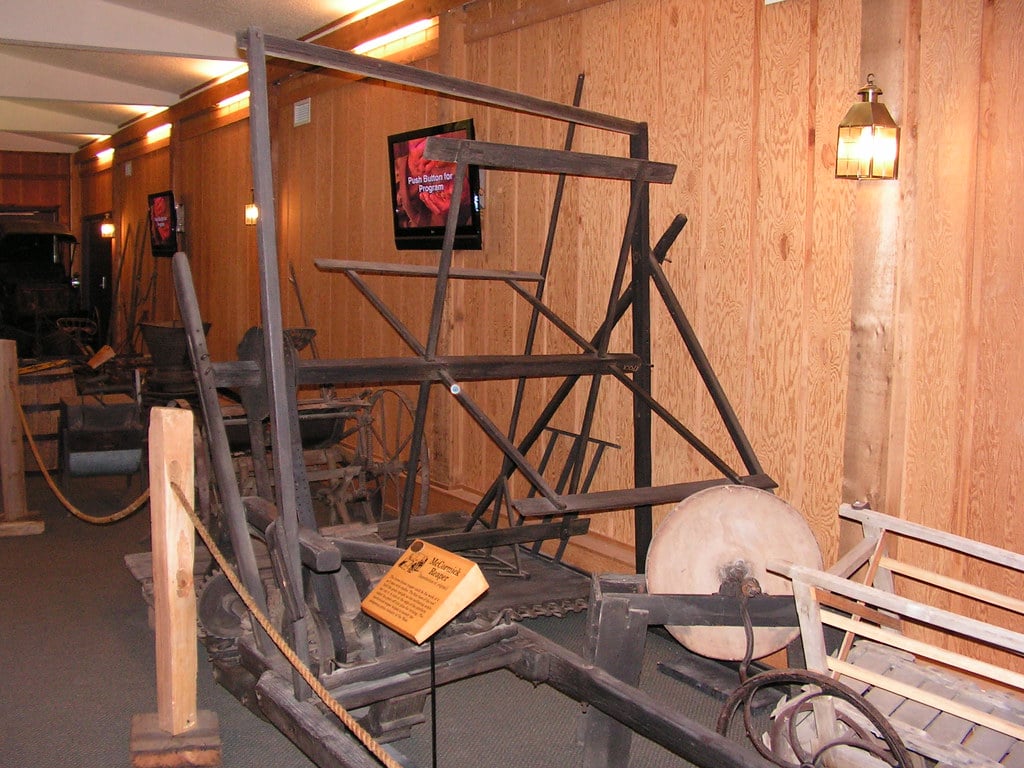
Cyrus McCormick’s mechanical reaper cuts across fields in vintage photographs like a wooden ship sailing through grain. Horses pull the contraption while blades slice wheat in neat rows, accomplishing in hours what had taken days by hand.
The machine looks awkward, almost experimental, but it made large-scale farming possible.
Forever Changed

The most striking thing about these historic images isn’t their age or their rarity. It’s how ordinary the inventions look — simple solutions to problems that had seemed permanent.
A printing press is just metal type and wooden frame.
A light bulb is glass and wire.
A sewing machine is needle and thread made mechanical.
Yet these quiet machines rewrote the rules of daily life so completely that their absence would render modern existence unrecognizable. The images preserve not just objects, but moments when everything shifted, usually without anyone noticing until it was already done.
More from Go2Tutors!

- The Romanov Crown Jewels and Their Tragic Fate
- 13 Historical Mysteries That Science Still Can’t Solve
- Famous Hoaxes That Fooled the World for Years
- 15 Child Stars with Tragic Adult Lives
- 16 Famous Jewelry Pieces in History
Like Go2Tutors’s content? Follow us on MSN.