16 Military Vehicles That Were Repurposed for Civilian Life
Military vehicles, ranging from tough off-roaders to trustworthy workhorses, have long impacted civilian transportation. These specially constructed machines, made to endure harsh environments and carry out certain duties, have found new uses outside of combat zones.
Their shift to civilian use serves as an example of how adaptable engineering can be in applications during times of peace. These 16 military vehicles have effectively transitioned into civilian life and are now used on a daily basis thanks to their special characteristics.
Jeep Willys
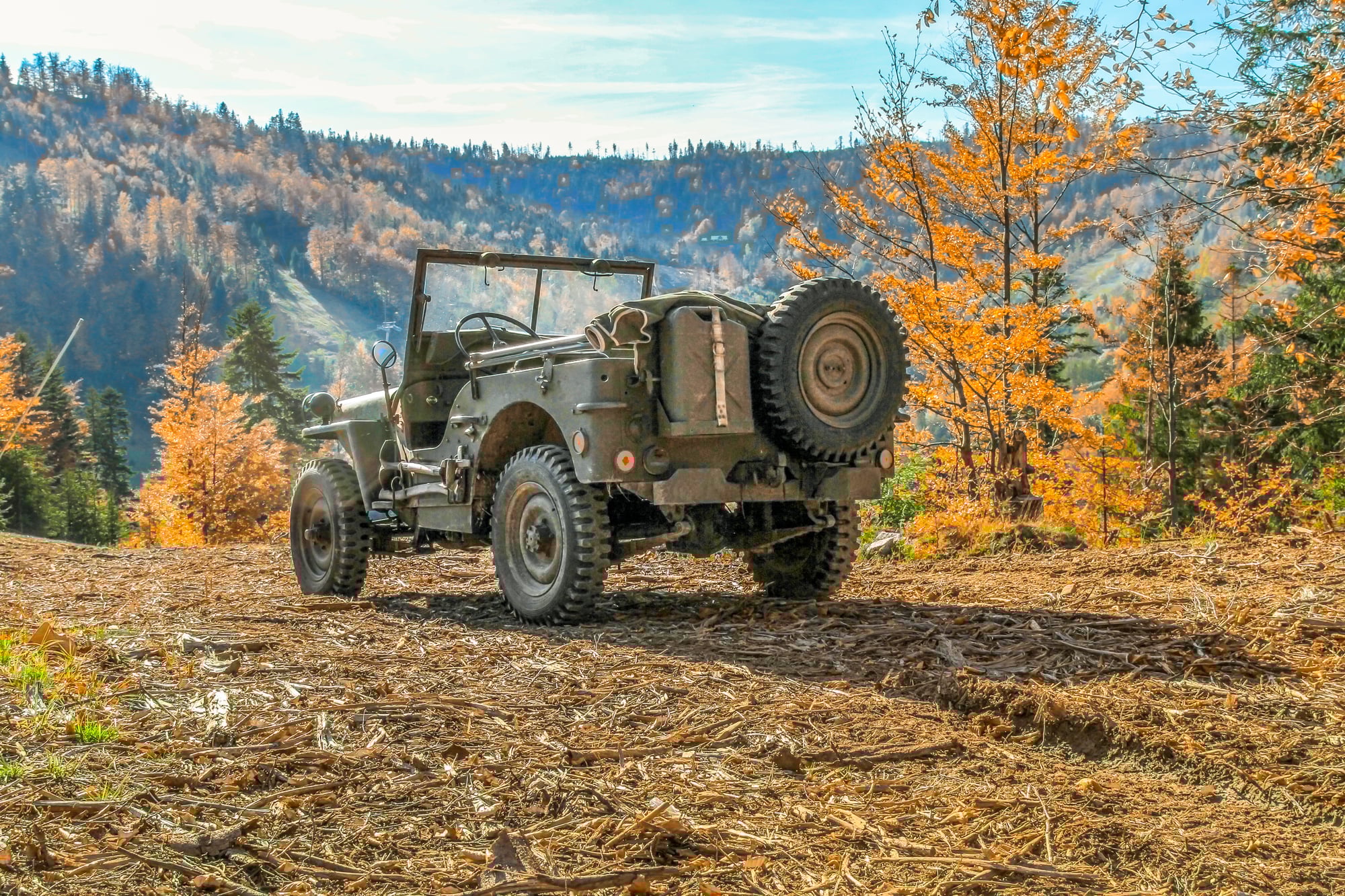
The entire civilian Jeep brand today was built on the legendary Willys MB, which was created during World War II. This lightweight four-wheel-drive vehicle successfully made the transition to farming, ranching, and leisure after demonstrating its value on battlefields throughout Europe and the Pacific.
Generations of off-road vehicles were influenced by its straightforward, tough design, which effectively established the SUV market as we know it today.
Hummer H1

The civilian Hummer H1 is a direct descendant of the military High Mobility Multipurpose Wheeled Vehicle (HUMVEE). AM General began selling these oversized vehicles to civilians in 1992, following their high-profile use in the Gulf War.
Though impractical for most daily driving with their massive footprint and poor fuel economy, H1s became status symbols for celebrities and off-road enthusiasts seeking military-grade capabilities for weekend adventures.
Land Rover Series I
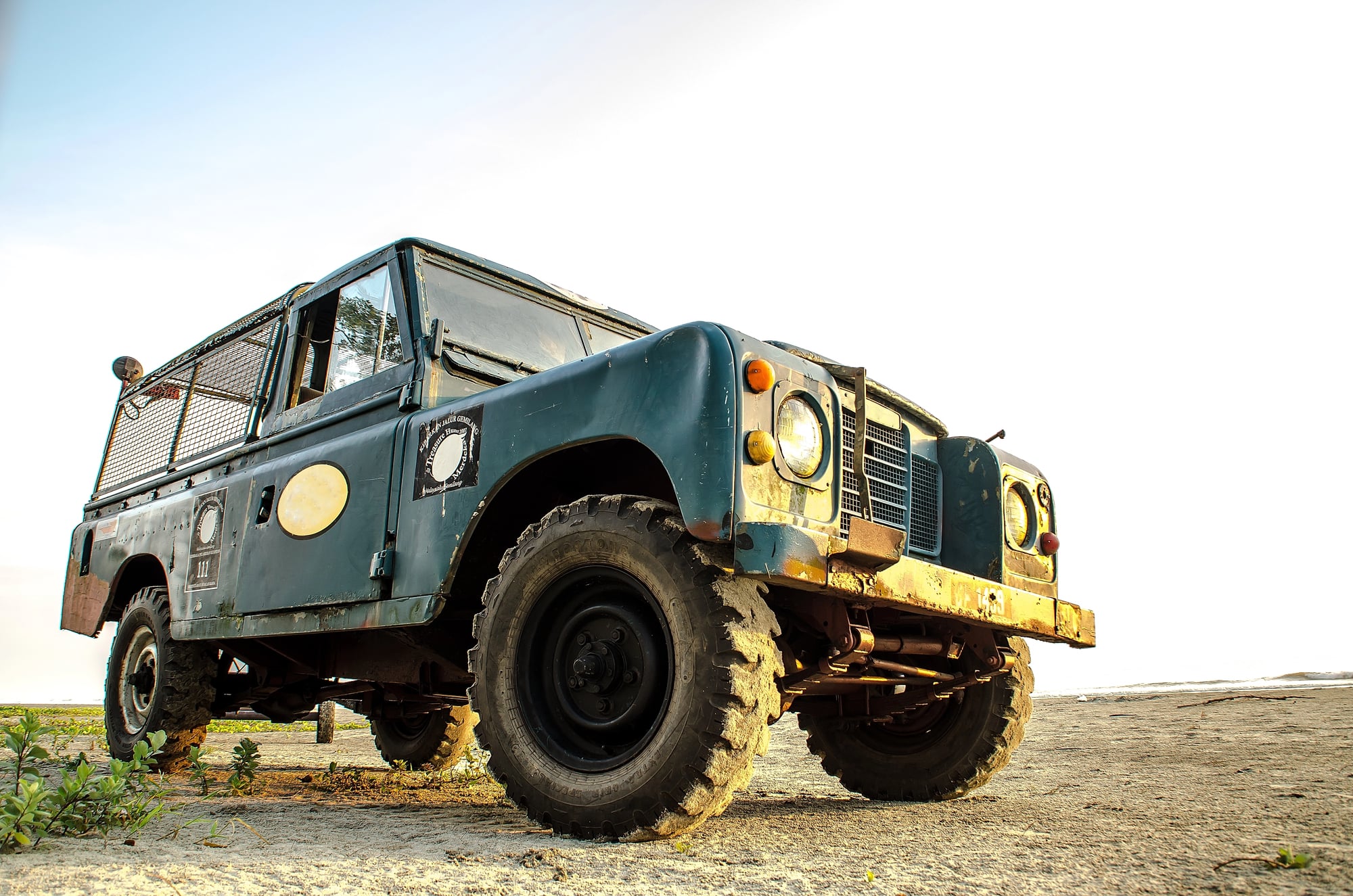
The original Land Rover, launched in 1948, took significant inspiration from the American Willys Jeep while adding unique British engineering. The Rover Company designed it to serve as an agricultural vehicle in peacetime Britain, where rationed steel meant aluminum body panels became a signature feature.
This utilitarian 4×4 eventually evolved into today’s luxury Range Rover line while maintaining its reputation for extraordinary off-road capability.
Mercedes-Benz G-Wagen

Developed as a military vehicle for the Shah of Iran’s army in the late 1970s, the G-Wagen (short for Geländewagen or “cross-country vehicle”) has transformed from a bare-bones utility vehicle to luxury status symbol. Its boxy design remained largely unchanged for decades, while the interior gradually incorporated premium materials and advanced technology.
Modern G-Class vehicles retain serious off-road credentials despite their frequent deployment to upscale shopping districts.
Unimog

The Universal-Motor-Gerät (Unimog) was initially conceived as an agricultural implement in post-war Germany when farming machinery was scarce. This Mercedes-Benz vehicle with massive ground clearance and portal axles soon found military applications across Europe, then returned to civilian life as the ultimate utility vehicle.
Modern Unimogs serve as snowplows, firetrucks, expedition vehicles, and even mobile homes for adventurous travelers.
Toyota Land Cruiser
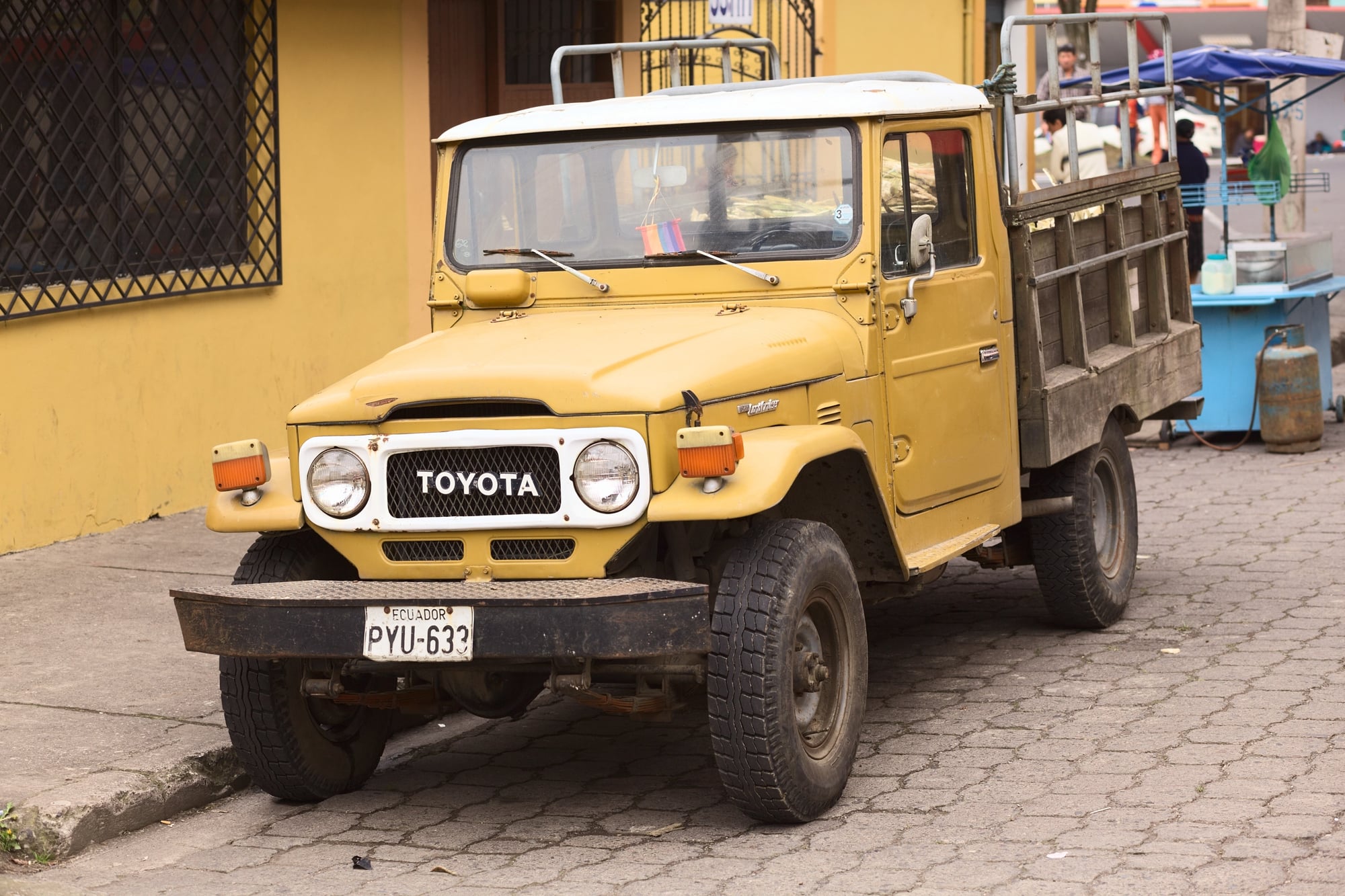
The Land Cruiser began as Toyota’s answer to the Jeep, developed for military use during the Korean War. This dependable off-roader quickly gained popularity with civilians for its reliability in harsh conditions.
From Australian outback stations to African safari tours, the Land Cruiser earned a global reputation for toughness that has made it one of the longest-running vehicle nameplates in automotive history.
Dodge Power Wagon

Based on Dodge’s WC series of World War II military trucks, the Power Wagon became America’s first mass-produced 4×4 pickup when introduced to civilians in 1946. This workhorse featured innovations like a power takeoff system that could operate machinery and winches, making it particularly valuable for construction, forestry, and utility companies.
Modern Ram trucks still carry some of the Power Wagon’s DNA in their heavy-duty models.
Volkswagen Type 181/Thing

This quirky recreational vehicle began life as the Type 181, designed for the West German military in the late 1960s. When sold to American civilians in the 1970s, it was marketed as ‘The Thing’ – a stripped-down, convertible utility vehicle with removable doors and windshield.
While not particularly comfortable or practical, its distinctive charm and mechanical simplicity earned it a dedicated following among automotive enthusiasts.
M35 Deuce and a Half

The 2.5-ton M35 cargo truck, affectionately known as the ‘deuce and a half,’ served the US military from the 1950s through the 1990s. These surplus workhorses found civilian applications with construction companies, forestry services, and disaster relief organizations.
Their multi-fuel engines can run on diesel, gasoline, or even cooking oil, making them particularly valuable in remote areas with limited fuel options.
Chevrolet Suburban Carryall
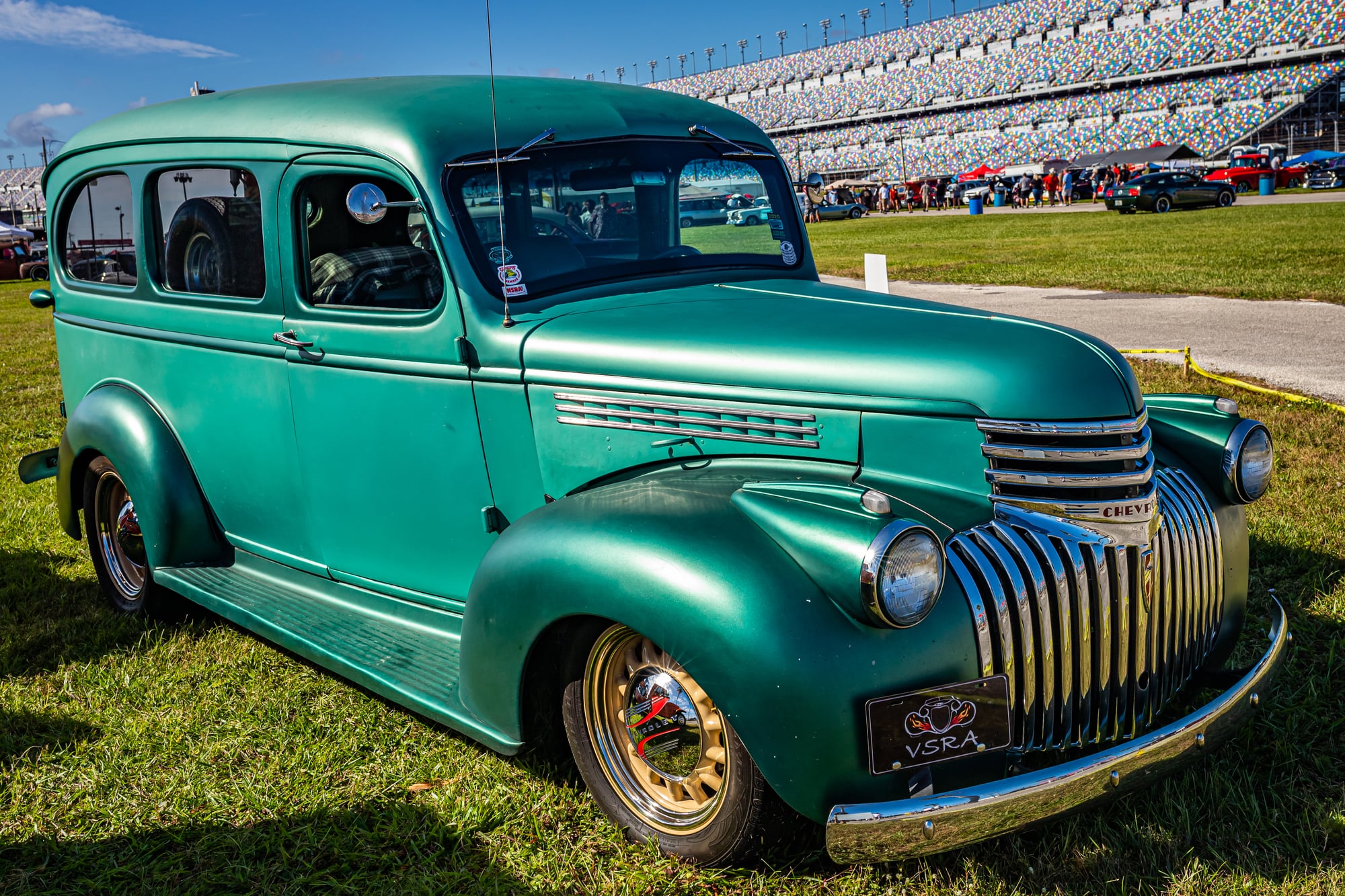
While the Suburban predates World War II, its military service greatly influenced its post-war development. Used for transporting officers and equipment during the conflict, the Suburban returned to civilian life with greater capability and robustness.
Today’s Suburban carries forward this military heritage, maintaining body-on-frame construction and significant towing capacity while adding modern amenities.
Halftrack Snowcats
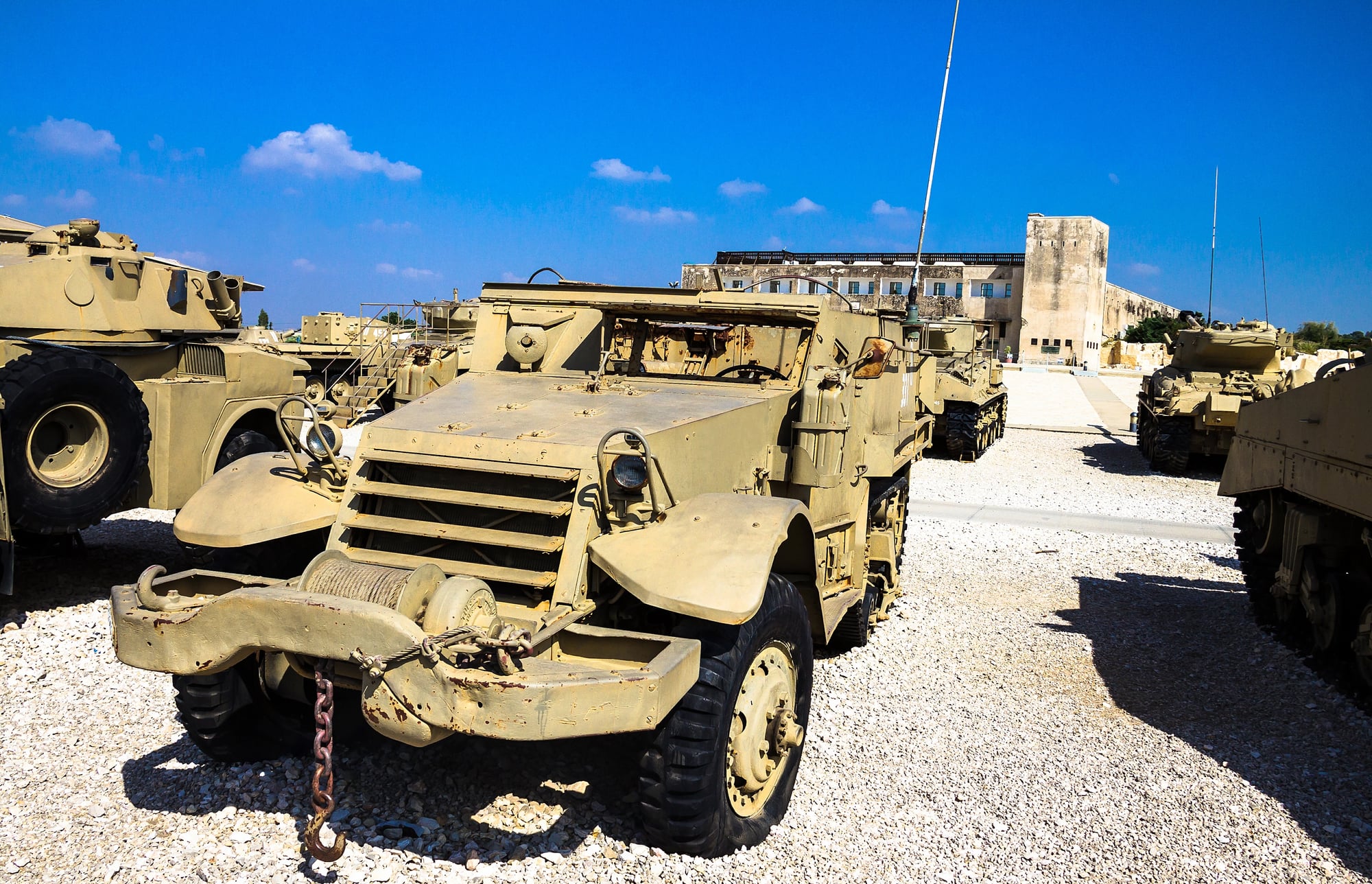
The tracked transportation technology developed for military half-tracks during World War II directly influenced the development of civilian snowcats used at ski resorts worldwide. Companies like Tucker and Thiokol adapted military track systems for use on snow, creating vehicles capable of grooming slopes and accessing remote winter terrain.
These specialized machines make modern ski resort operations possible in areas that would otherwise be inaccessible during winter months.
DUKW ‘Duck’ Boats

The DUKW amphibious truck (nicknamed ‘Duck’) transported troops and supplies from ships to beaches during World War II. After the war, these versatile vehicles found new life as tourist attractions in waterfront cities.
Painted in bright colors and modified with seating, these amphibious tours operate in Boston, Seattle, and other tourist destinations, giving visitors a unique perspective from both land and water.
Pinzgauer
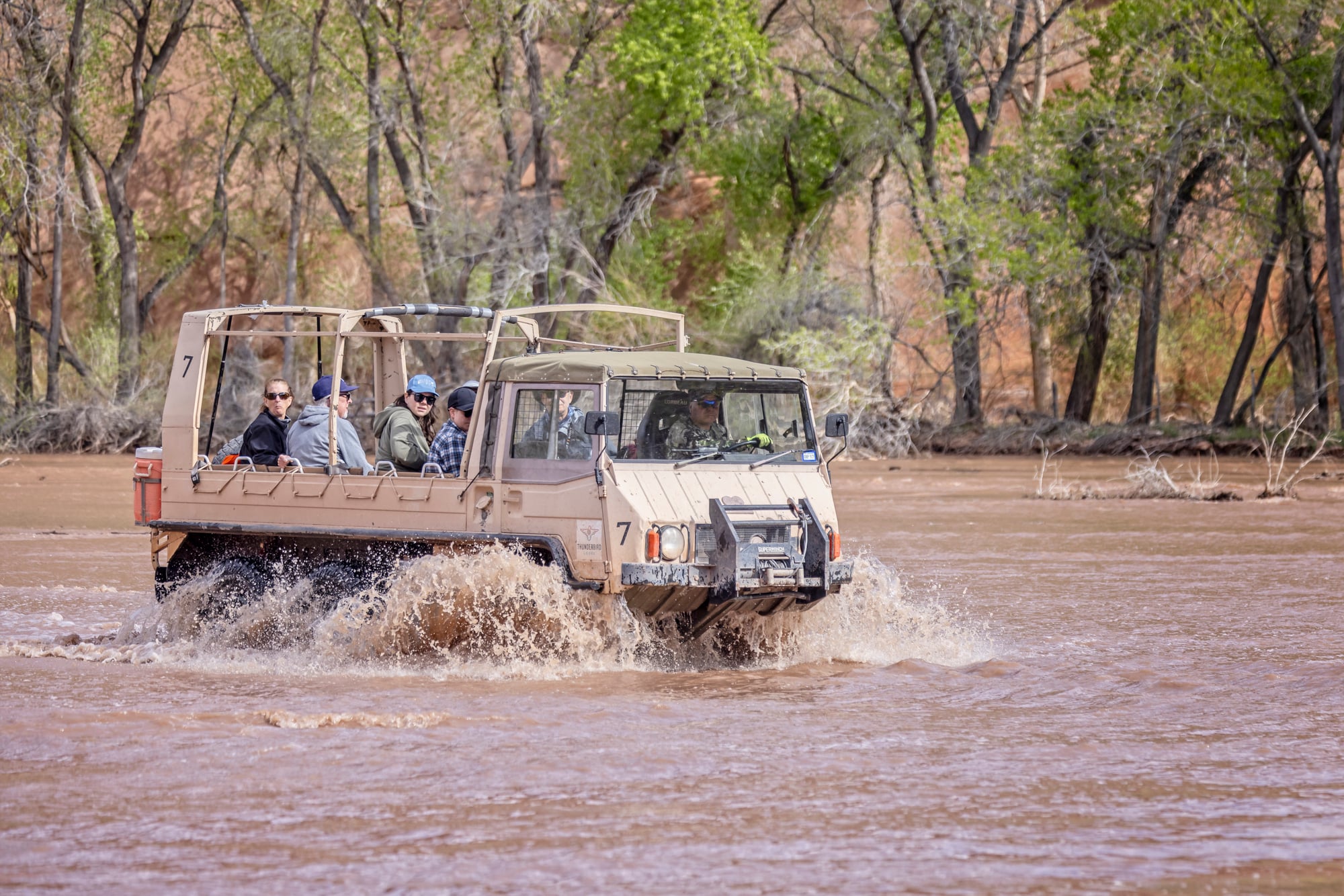
This Austrian-designed military transport vehicle entered civilian markets in the 1970s as an extreme off-road specialty vehicle. With its high ground clearance, all-wheel drive, and differential locks, the Pinzgauer can navigate terrain that stops most other 4×4 vehicles.
Remote communities, expedition teams, and search-and-rescue organizations prize these capable machines for accessing areas conventional vehicles simply cannot reach.
Oshkosh MTVR Snow Plow
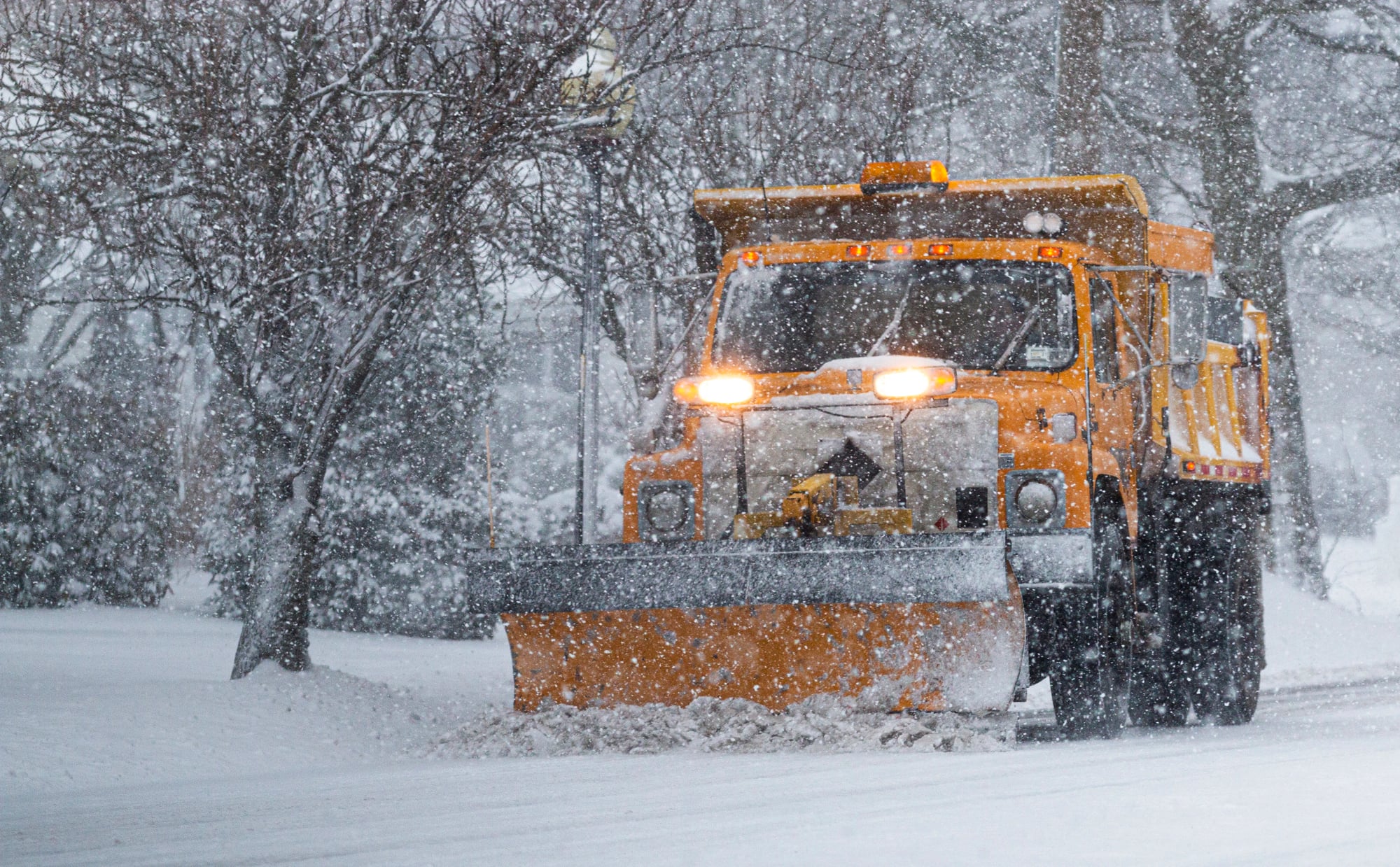
The Medium Tactical Vehicle Replacement (MTVR) developed for the Marine Corps has found civilian application with municipal highway departments in snow-prone regions. These massive trucks, when fitted with commercial plows, can clear highways during extreme blizzard conditions that would overwhelm conventional snow removal equipment.
Their all-wheel drive and central tire inflation systems allow them to operate in conditions that would strand lighter vehicles.
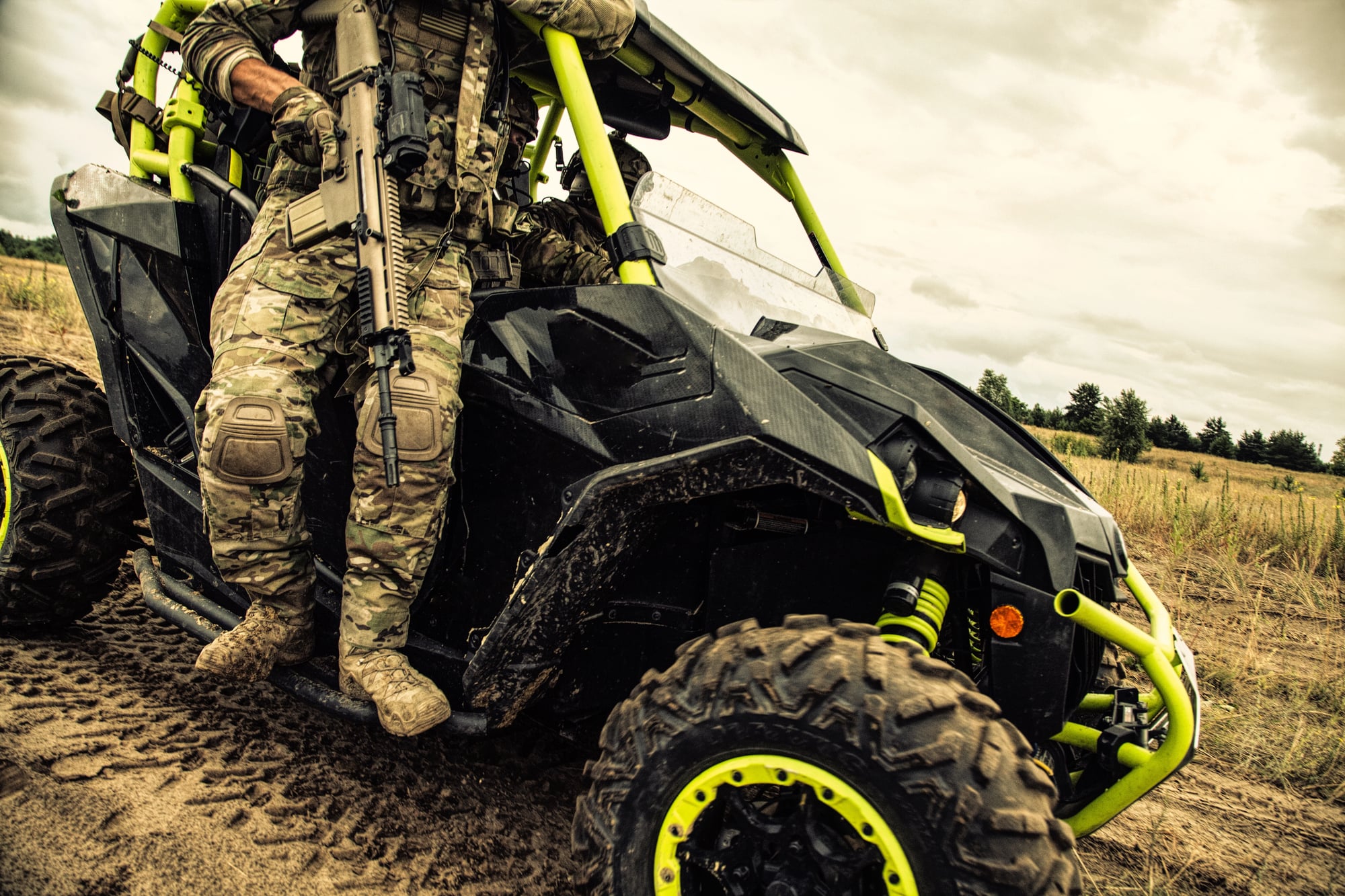
Chenowth Desert Patrol Vehicle
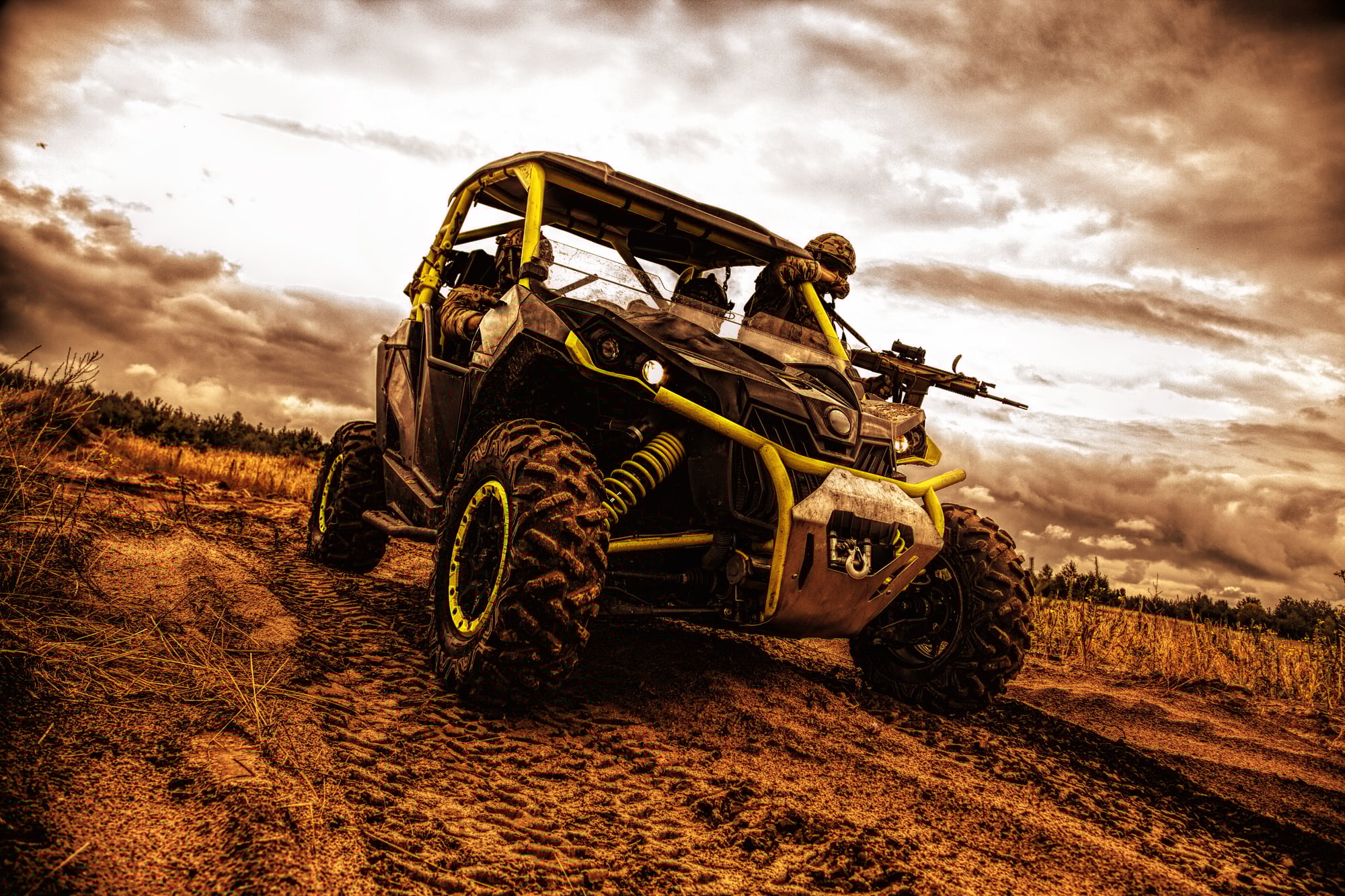
The lightweight Chenowth Desert Patrol Vehicle (DPV) and Fast Attack Vehicle (FAV) used by Special Forces units inspired a generation of civilian off-road racing buggies. Their tubular space-frame design, long-travel suspension, and rear-mounted engines became the template for vehicles competing in events like the Baja 1000.
Today’s side-by-side recreational vehicles share much of their design philosophy with these military forerunners.
Freightliner M2 Commercial Trucks
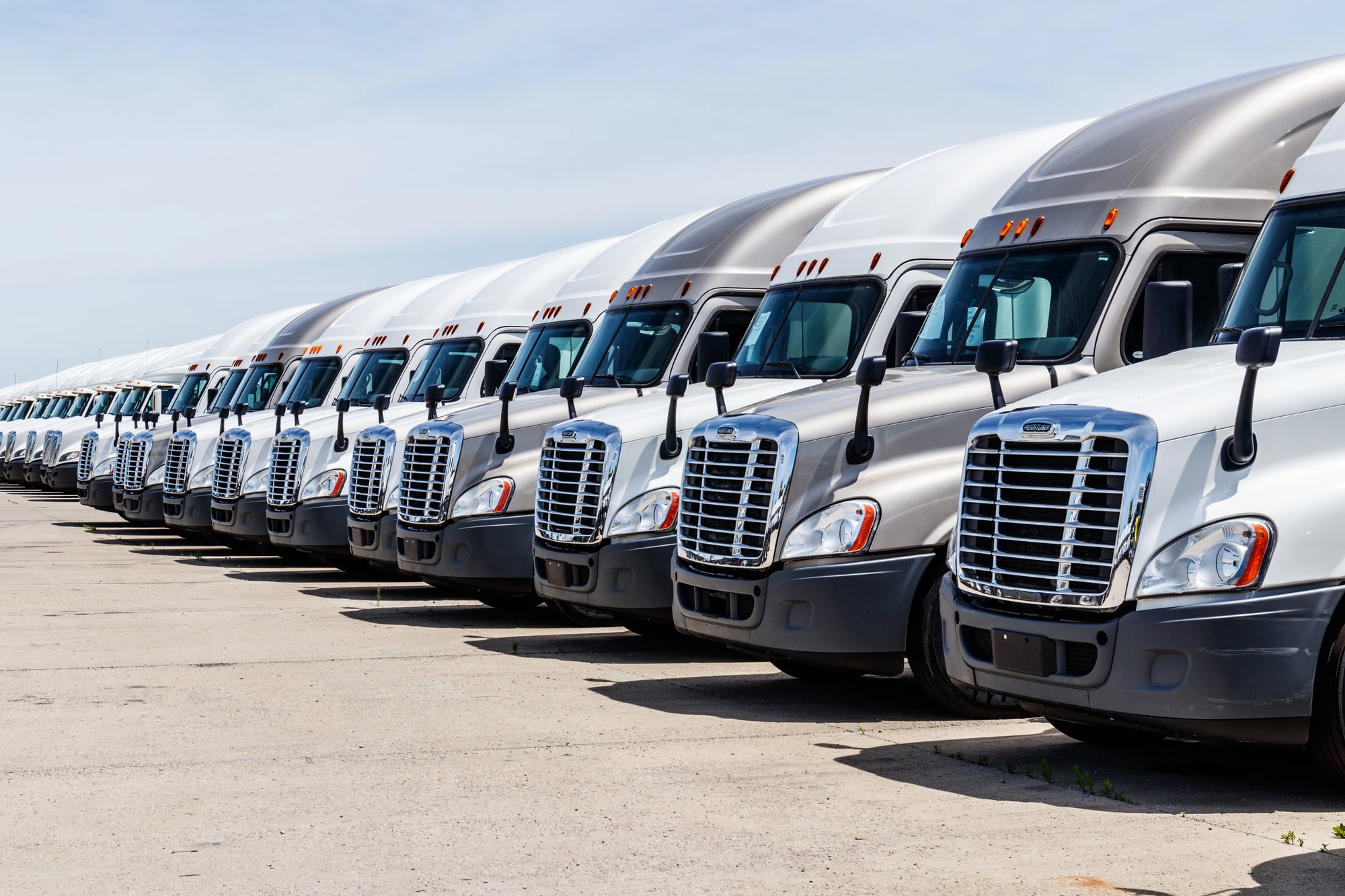
Developed for logistics and support roles in military operations, the M2 platform later became a staple of civilian commercial transportation. These adaptable medium-duty trucks now serve as everything from delivery vehicles to utility service trucks.
Their standardized chassis design allows for countless specialized bodies, making them among the most versatile commercial platforms in North America.
From Battlefield to Main Street
These vehicles’ shift from military to civilian use demonstrates how purpose-built engineering can change to meet evolving demands. Certain civilian applications, especially in demanding situations or specialized industries, benefit greatly from the military’s demands for robustness, ease of use, and functionality in harsh environments.
Some military vehicles have undergone significant change, becoming luxury status symbols that are far different from their fighting roots, while others still retain a lot of their utilitarian qualities in civilian life.
More from Go2Tutors!

- The Romanov Crown Jewels and Their Tragic Fate
- 13 Historical Mysteries That Science Still Can’t Solve
- Famous Hoaxes That Fooled the World for Years
- 15 Child Stars with Tragic Adult Lives
- 16 Famous Jewelry Pieces in History
Like Go2Tutors’s content? Follow us on MSN.