Famous Slogans That Changed Over the Years
Brand slogans are supposed to be forever, right? Companies spend millions crafting the perfect phrase that captures their essence in just a few words. But the reality is that even the most iconic slogans eventually show their age.
What resonated with consumers in the 1970s might feel outdated or irrelevant decades later, and sometimes a brand needs to pivot its entire identity to stay competitive.Here is a list of 15 famous slogans that brands decided to retire, replace, or reinvent over the years.
McDonald’s

McDonald’s launched ‘You Deserve a Break Today’ in 1971, and it became one of the most successful advertising campaigns in history. The slogan positioned fast food as a treat rather than just quick fuel during a hectic day.
After cycling through various taglines during the 1980s and 1990s, including ‘Food, Folks and Fun’ and ‘It’s a Good Time for the Great Taste of McDonald’s,’ the company introduced ‘I’m Lovin’ It’ in 2003. The new slogan was designed to unify McDonald’s marketing across more than 100 countries and featured a five-note jingle created by Pharrell Williams and The Neptunes, with Justin Timberlake receiving $6 million to record the vocals.
Nike
Nike initially used the slogan ‘There is No Finish Line’ to convey the idea of continuous improvement. The company introduced ‘Just Do It’ in 1988, inspired by the last words of death row inmate Gary Gilmore, who said ‘Let’s do it.’
Dan Wieden of advertising agency Wieden+Kennedy adapted this phrase to create the now-iconic slogan. The three-word challenge became infinitely more memorable and helped Nike’s North American market share jump from 18% to 43% over the next decade.
Nike briefly attempted to replace it with ‘I Can’ in the 1990s, but wisely abandoned that tagline and readopted its three-word gem.
Like Go2Tutors’s content? Follow us on MSN.
Burger King

Burger King introduced ‘Have It Your Way’ in 1974 to highlight the fast food chain’s commitment to customization, differentiating itself from McDonald’s. The slogan became deeply embedded in American culture, complete with a catchy jingle that people still remember today.
In 2014, the chain decided it was time for a change, settling on the millennial-friendly ‘Be Your Way,’ designed to connect with customers’ lifestyles rather than just their burger preferences. Then in 2022, as part of a $400 million comeback plan, Burger King switched again to ‘You Rule,’ described as an emotional articulation that puts customers at the forefront of every touchpoint.
KFC
The story behind KFC’s most famous slogan is that a franchise manager responded to a viewer’s complaint about finger-licking in an ad, and the wording stuck. ‘Finger Lickin’ Good’ became synonymous with the brand for decades.
In 2011, the fast food chain decided the slogan’s greasy connotations didn’t gel with KFC’s healthier makeover, and it was dumped for the more virtuous ‘So Good.’ The company later attempted to introduce ‘Unthink’ as a new slogan, but research found it wasn’t catchy enough, and many consumers still recalled ‘Finger Lickin’ Good’ as the brand’s tagline.
Pepsi

As America grappled with the Great Depression in the 1930s, Pepsi adopted a folksy slogan emphasizing value and affordability to connect with cash-strapped consumers, with the catchy ‘Nickel, Nickel’ jingle touting how cheap Pepsi was compared to other soft drinks. In the prosperous 1950s, Pepsi capitalized on growing consumer appetites by branding itself ‘The Light Refreshment.’
The company later used ‘The Choice of a New Generation’ in the 1980s to rebrand Pepsi as a modern and youthful alternative to its competitors. In 2024, Pepsi flipped its decades-old approach with ‘More Than OK,’ inviting consumers to see that Pepsi can always offer more in terms of flavor choices and formats.
Like Go2Tutors’s content? Follow us on MSN.
Apple

Apple’s slogan ‘Think Different’ was a response to IBM’s slogan ‘Think,’ and it aimed to position Apple as a brand for creative and innovative people. The slogan was accompanied by a series of ads featuring famous figures who changed the world, such as Albert Einstein, Martin Luther King Jr., and Muhammad Ali, and the campaign boosted Apple’s sales by 300% in 12 months.
The slogan was introduced in 1997 during a critical turnaround period for the company. Although Apple has since retired the tagline, it still occasionally references the concept in its marketing, and many longtime Apple users still associate the brand with that rebellious spirit.
Walmart

In 1994, the National Advertising Review Board panel ordered Walmart to change its long-running ‘Always the low price. Always’ motto, which was ruled misleading to customers, and the retailer chose ‘Always low prices’ as a replacement.
The motto stood Walmart in good stead for more than 20 years, but in 2011, the monster chain went upmarket and wanted to highlight its premium product ranges, so the motto was changed to ‘Save money. Live better.’ The world’s largest retailer introduced this new slogan in 2007 to promote the benefits of low prices rather than simply touting the fact that their prices are low.
Subway

Subway used the advertising slogan ‘Eat Fresh’ and focused on how its sandwiches were made from freshly baked bread and fresh ingredients, in front of customers to their exact specifications. In 2000, Subway introduced the ‘Eat Fresh’ slogan to emphasize its commitment to fresh ingredients and healthier menu options, distinguishing Subway from traditional fast-food chains.
In 2018, Subway replaced ‘Eat Fresh’ with ‘Make It What You Want’ to highlight customization and focus on the brand’s unique selling point of personalized sandwiches. Despite the change, ‘Eat Fresh’ still represents Subway in many consumers’ minds.
Like Go2Tutors’s content? Follow us on MSN.
Verizon

The full slogan ‘Can You Hear Me Now? Good’ was retired in 2010 likely due to the changing usage of cellphones, as calling was king in 2008 but the next decade would change everything with texting and video chatting becoming more prevalent. From 2010 to 2016, Verizon used ‘Rule the Air’ to brag about coverage, and in 2016, when competitors began to close the coverage gap, they went with the slogan ‘Better Matters’ to instead emphasize the quality of connection.
The evolution reflected how the telecommunications landscape shifted from traditional phone calls to data-heavy smartphone usage.
L’Oréal
— Photo by info.cineberg.com
L’Oréal’s ‘because I’m worth it’ was created in 1973 by McCann-Erickson copywriter Ilon Specht. The slogan, used since 1971, has been empowering, focusing on self-esteem and personal value in the beauty industry.
The tagline became one of the most recognizable in cosmetics, emphasizing that women deserve premium products. While L’Oréal has made subtle variations to the slogan over the decades, including changing it to ‘Because you’re worth it’ and later ‘Because we’re worth it’ to be more inclusive, the core message has remained remarkably consistent compared to other brands on this list.
Maybelline
Maybelline’s famous slogan was devised in 1991 by the marketing team of New York investment company Wasserstein Perella & Co., and ‘Maybe she’s born with it. Maybe it’s Maybelline’ that helped nail the brand’s reputation for flawless, natural-looking make-up.
By the mid-2010s, the slogan had become much-parodied and Maybelline’s parent company L’Oréal decided it was time for a change, plumping for the empowering ‘make it happen’ in 2015. The swap was clearly a resounding success for Maybelline, which enjoyed impressive growth the following year.
Like Go2Tutors’s content? Follow us on MSN.
FedEx

FedEx started out focusing on its punctuality and reliability as a parcel delivery service with ‘When it absolutely, positively has to be there overnight’ from 1978 to 1983. The company had several relatively forgettable taglines including ‘Our Most Important Package is Yours’ and ‘Why Fool Around with Anyone Else?’ ‘Relax, It’s FedEx,’ which came on the scene in 2004, was a vast improvement over the vaguely-worded and less memorable taglines of the years before, and FedEx finally adopted the tagline ‘The World on Time’ in 2009.
The progression showed how the company evolved from emphasizing domestic overnight delivery to positioning itself as a global logistics leader.
Taco Bell

Taco Bell’s catchy slogans ranged from ‘The Cure for the Common Meal’ to ‘Yo Quiero Taco Bell’ and their most popular in recent decades, ‘Think Outside the Bun,’ which was recently replaced with ‘Live Mas.’ Taco Bell introduced the slogan ‘Live Mas’ in 2012, encouraging customers to enjoy life to the fullest while choosing their favorite fast food.
The slogan reflects Taco Bell’s fun and bold identity, attracting younger audiences, and replaced the previous tagline ‘Think Outside the Bun’ to focus on experiences rather than just food.
General Electric

GE introduced the slogan ‘We Bring Good Things to Life’ in 1979, showcasing the company’s wide range of products and services. The campaign focused on innovation and improving everyday life, and created by BBDO, the slogan helped rebrand GE as a leader beyond appliances.
The tagline ran successfully for over two decades before the company moved toward different messaging to reflect its transformation into a more diversified industrial and financial services conglomerate. GE has since cycled through several slogans as the company’s focus has shifted over the years.
Like Go2Tutors’s content? Follow us on MSN.
Got Milk?

The campaign worked wonders on nationwide milk sales, but MilkPEP called time on the slogan in 2014, adopting ‘Milk Life’ instead to focus on the drink’s high protein content and health benefits. The original ‘Got Milk?’ campaign from the 1990s became one of the most parodied and recognizable advertising campaigns in American history, spawning countless imitations.
‘Got milk’ still lives on in California however, and the trademark continues to be licensed out. The shift to ‘Milk Life’ represented the dairy industry’s attempt to reposition milk as a fitness beverage rather than just a household staple.
When Familiarity Becomes a Liability
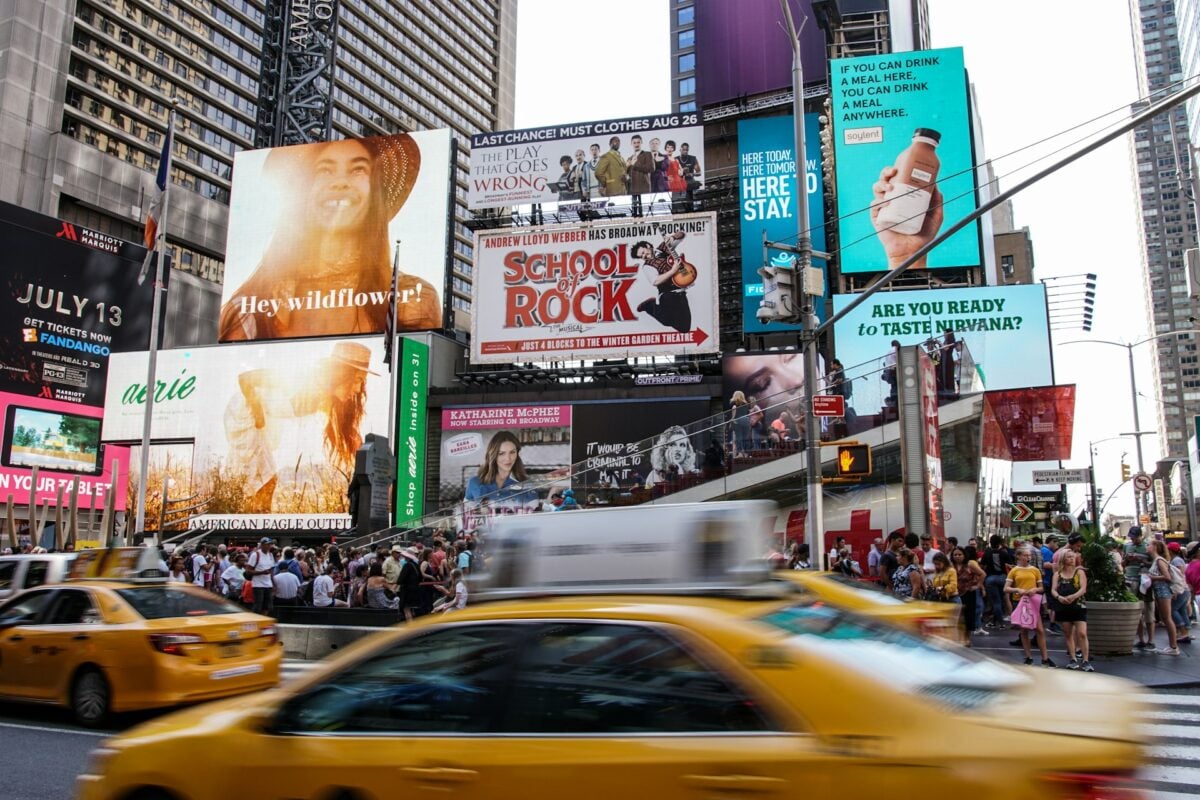
Changing a beloved slogan is always a gamble. Some brands have successfully reinvented themselves with fresh messaging that captures new generations of consumers, while others have learned the hard way that nostalgia is a powerful force.
The slogans that endure tend to be those that balance timelessness with relevance, managing to feel both classic and contemporary. What’s clear is that even the most carefully crafted tagline has a shelf life, and the brands that thrive are those willing to evolve when the moment demands it.
More from Go2Tutors!

- 16 Historical Figures Who Were Nothing Like You Think
- 12 Things Sold in the 80s That Are Now Illegal
- 15 VHS Tapes That Could Be Worth Thousands
- 17 Historical “What Ifs” That Would Have Changed Everything
- 18 TV Shows That Vanished Without a Finale
Like Go2Tutors’s content? Follow us on MSN.