16 Products That Made Inventors Instantly Famous
Some of the world’s most brilliant minds toiled away in obscurity for years before striking gold with a single invention. Others stumbled upon life-changing discoveries by pure accident. What unites them all is how one breakthrough product catapulted them from unknown tinkerers to household names, forever changing both their lives and ours.
The path from inventor to icon isn’t always predictable, but these 16 stories show just how quickly the right idea at the right time can transform someone’s entire existence. Here is a list of 16 products that made their inventors instantly famous.
Post-it Notes

Art Fry was just a 3M scientist trying to solve a personal problem in 1974. He sang in his church choir and grew frustrated when bookmarks kept falling out of his hymnal. Using a weak adhesive that his colleague Spencer Silver had developed years earlier, Fry created small, repositionable notes.
The company initially dismissed the idea, but after employees started using the samples obsessively, 3M realized they had a goldmine on their hands.
Velcro

George de Mestral’s fame came from taking a closer look at the burrs stuck to his dog’s fur after a hunting trip in 1941. The Swiss engineer spent years studying how these annoying plant seeds attached themselves so effectively to fabric and animal hair.
His resulting hook-and-loop fastener became essential for everything from shoes to space suits, making de Mestral wealthy and ensuring his name would be remembered long after those frustrating walks in the woods.
The Pet Rock

Gary Dahl became a millionaire in 1975 by selling people something they could literally find in their backyard for free. After listening to friends complain about their high-maintenance pets, he jokingly suggested they get rocks instead.
Dahl packaged ordinary stones with air openings, bedding, and a tongue-in-cheek care manual, creating one of the most absurd fads in American history. Within months, he had sold over a million ‘pets’ and proved that clever marketing could turn anything into gold.
Super Glue
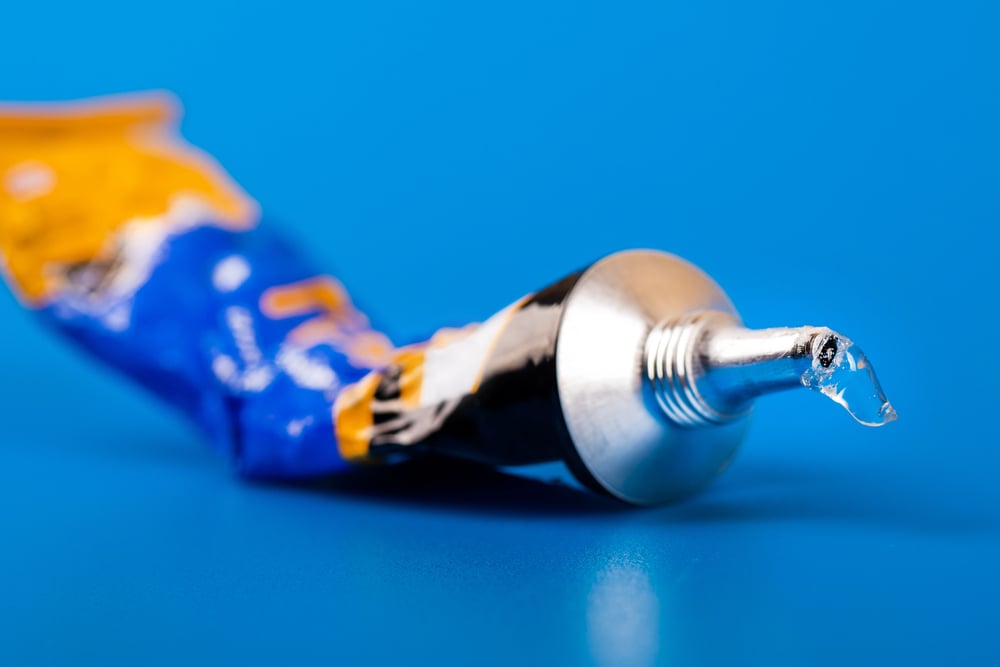
Harry Coover accidentally created one of the most useful household products while trying to develop clear plastic gun sights during World War II. His cyanoacrylate formula was initially rejected for being too sticky, but Coover recognized its potential years later when working on a different project.
The adhesive that could bond almost anything in seconds made him famous and spawned countless emergency repairs in homes worldwide.
The Slinky

Richard James was working on springs to stabilize sensitive equipment on Navy ships in 1943 when one of his prototypes fell off a shelf and ‘walked’ down a series of books. His wife Betty suggested the name ‘Slinky,’ and within two years they were manufacturing 400 of these metal coils daily.
The simple toy that turned physics into play made the James family wealthy and created a cultural phenomenon that’s still going strong decades later.
Liquid Paper

Bette Nesmith Graham was a secretary who got tired of retyping entire pages because of minor mistakes. In 1956, she began using tempera paint to cover her errors, eventually perfecting a formula that dried quickly and matched standard typing paper.
She built a business empire from her kitchen table, selling her correction fluid to offices nationwide and proving that practical solutions to everyday problems could lead to extraordinary success.
ChapStick

Dr. Charles Browne Fleet created the first lip balm in the early 1880s, but it was John Morton who bought the rights and turned it into a household staple. Morton’s wife came up with the familiar push-up tube design, and their simple solution to chapped lips became so synonymous with lip care that people still call all lip balms ‘ChapStick.’
The product made Morton wealthy while solving a problem that affects nearly everyone at some point.
The Frisbee

Walter Morrison’s path to fame began with pie tins and evolved into one of America’s favorite outdoor activities. After noticing college students throwing Frisbie Pie Company tins for fun in the 1930s, Morrison developed an improved flying disc design.
His ‘Pluto Platter’ eventually caught the attention of Wynn toy company, which renamed it the Frisbee and turned Morrison’s simple concept into a multimillion-dollar phenomenon.
Bubble Wrap
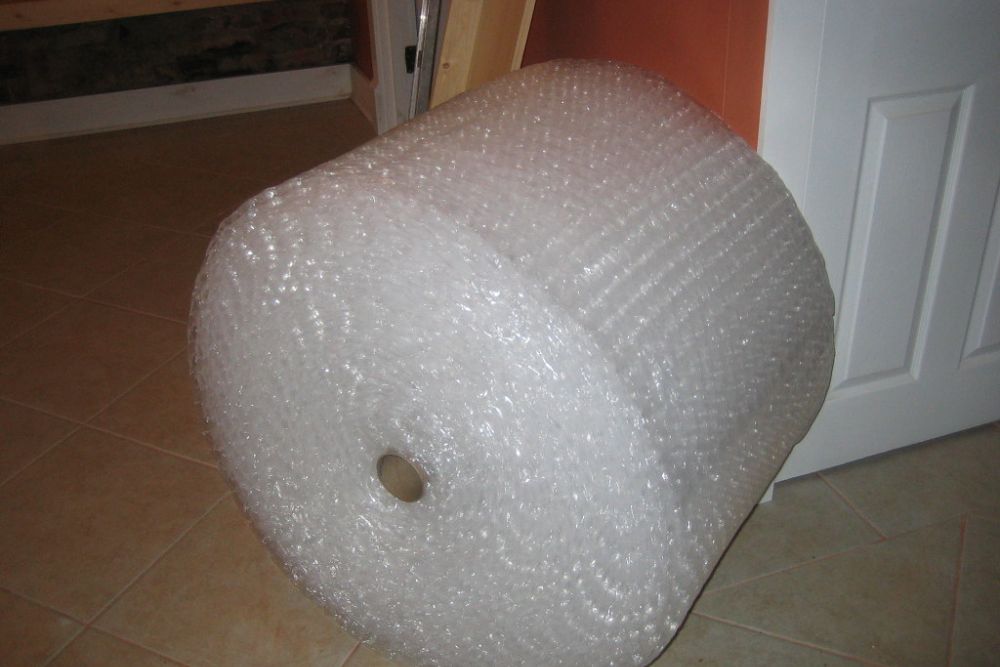
Alfred Fielding and Marc Chavannes were trying to create textured wallpaper in 1957 when they accidentally invented something far more useful. Their sealed air bubble sheets failed as wall coverings but proved perfect for protecting fragile items during shipping.
The packaging material became indispensable for businesses worldwide, and the satisfying pop of those bubbles turned their practical invention into an unexpected stress reliever for millions.
The Hacky Sack

John Stalberger was recovering from a knee injury when his friend Mike Marshall introduced him to a simple kicking game using a small bean bag. Together, they refined the design and created the Hacky Sack in 1972, turning an ancient concept into a modern craze.
Their footbag became a cultural symbol of the 1970s and 1980s, spreading from college campuses to playgrounds nationwide and making both men famous in the process.
Scotchgard

Patsy Sherman was working as a chemist at 3M in 1953 when a laboratory accident changed her life forever. A colleague accidentally spilled an experimental fluorochemical compound on her tennis shoe, creating a spot that repelled water, oil, and other liquids.
Sherman recognized the commercial potential immediately, and her fabric protection spray became a household essential that made her one of the most successful female inventors of her generation.
WD-40

Norm Larsen developed his water displacement formula in 1953 for the nuclear industry to prevent corrosion on nuclear equipment. The Rocket Chemical Company’s 40th attempt at the formula worked perfectly, hence the name WD-40.
When employees started sneaking the product home for personal use, Larsen realized he had created something with mass appeal, and the versatile spray became a garage and toolbox staple that made him wealthy beyond his original dreams.
Magic 8-Crystal

Albert Carter turned his mother’s spirit board concept into one of the most recognizable novelty items in history. The ‘Syco-Seer’ evolved into the familiar black sphere with a floating die that provides cryptic answers to any question.
Carter’s simple fortune-telling toy became a cultural icon that spans generations, making him famous for creating something that perfectly captures humanity’s desire to peek into the future, even if just for fun.
Silly Putty
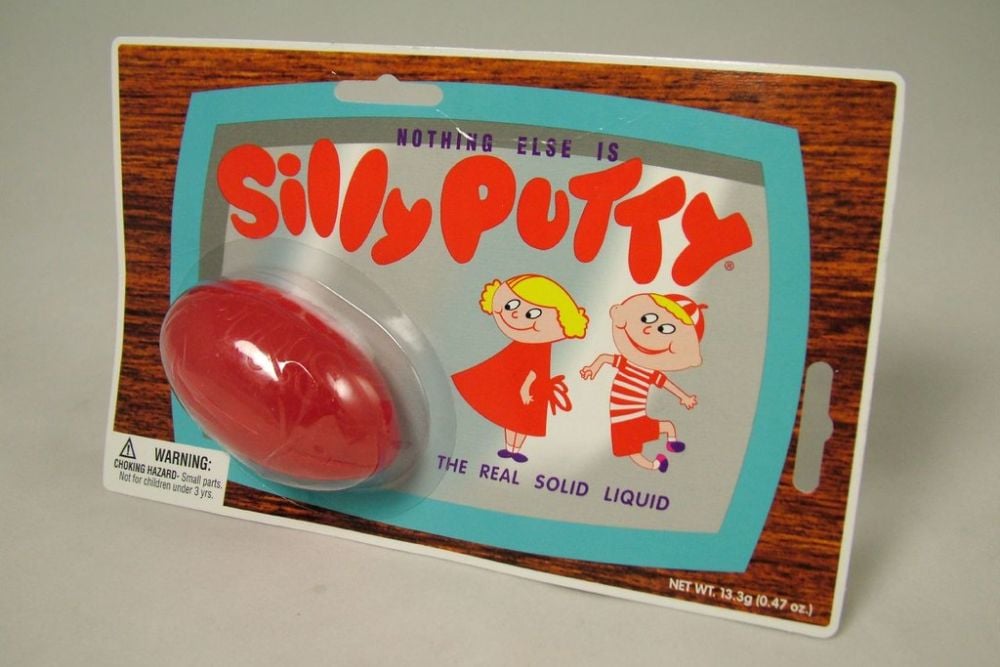
James Wright was trying to develop synthetic rubber for the war effort in 1943 when he created a bouncy, stretchy substance that seemed useless for military purposes. Years later, toy store owner Ruth Fallgatter and marketing consultant Peter Hodgson recognized its entertainment value.
Packaged in plastic eggs, Silly Putty became a sensation that could bounce, stretch, and transfer comic strip images, making Hodgson wealthy and Wright famous for his accidental discovery.
The Pogo Stick

George Hansburg improved upon an ancient jumping stick concept when he added springs to create the modern pogo stick in 1919. His bouncing device became a popular toy and even inspired competitive hopping, with record-breaking attempts making headlines worldwide.
Hansburg’s simple addition of spring-powered propulsion turned an old idea into a fitness craze and playground favorite that made him famous among children and adults alike.
Lava Lamps

Edward Craven Walker’s moment of inspiration came in 1963 while watching a homemade liquid timer in a pub. He spent years perfecting the formula and mechanics needed to create smoothly flowing wax blobs in colored liquid.
His ‘Astro Lamp’ became the ultimate symbol of 1960s counterculture, and Walker’s hypnotic creation continues to fascinate people decades later, proving that sometimes the most impractical inventions become the most beloved.
The Lasting Impact of Accidental Fame

These inventors prove that fame can strike from the most unexpected places, whether through methodical problem-solving or pure serendipity. Many started with simple frustrations or happy accidents, yet their willingness to see potential where others saw problems transformed both their lives and our daily experiences.
Today’s world is filled with products we take for granted, each representing someone’s moment of breakthrough that changed everything. The next time you reach for correction fluid or pop a piece of bubble wrap, remember that behind every familiar item is an inventor whose life was forever changed by a single brilliant idea.
More from Go2Tutors!

- The Romanov Crown Jewels and Their Tragic Fate
- 13 Historical Mysteries That Science Still Can’t Solve
- Famous Hoaxes That Fooled the World for Years
- 15 Child Stars with Tragic Adult Lives
- 16 Famous Jewelry Pieces in History
Like Go2Tutors’s content? Follow us on MSN.



