Retro Arcade Games That Swallowed All Our Quarters
The dim glow of CRT monitors. The cacophony of bleeps, bloops, and electronic melodies competing for attention.
The distinct weight of a quarter between your fingers as you approached that machine — the one that had been taunting you all week. Arcade culture in the 80s and 90s wasn’t just about gaming; it was about feeding an insatiable hunger that lived in those wooden cabinets.
Every game promised that this time would be different, that this quarter would be the one to finally beat the high score or see the ending. Of course, it rarely worked out that way.
These games were designed with surgical precision to extract maximum coinage while delivering just enough progress to keep you coming back. Some were more ruthless than others, turning players into quarter-feeding zombies who would scrape together lunch money for just one more attempt.
Pac-Man

Pac-Man was a friendly-looking trap. Those dots seemed so simple to collect.
The ghosts moved predictably enough that victory felt achievable. Each quarter bought you the illusion of mastery.
The genius lay in its deceptive simplicity. Anyone could pick up the joystick and understand the objective immediately, but the game’s difficulty curve was calibrated like a slot machine.
Just when you thought you had the ghost patterns figured out, the speed would increase or the timing would shift slightly, sending you straight into Blinky’s path.
Galaga
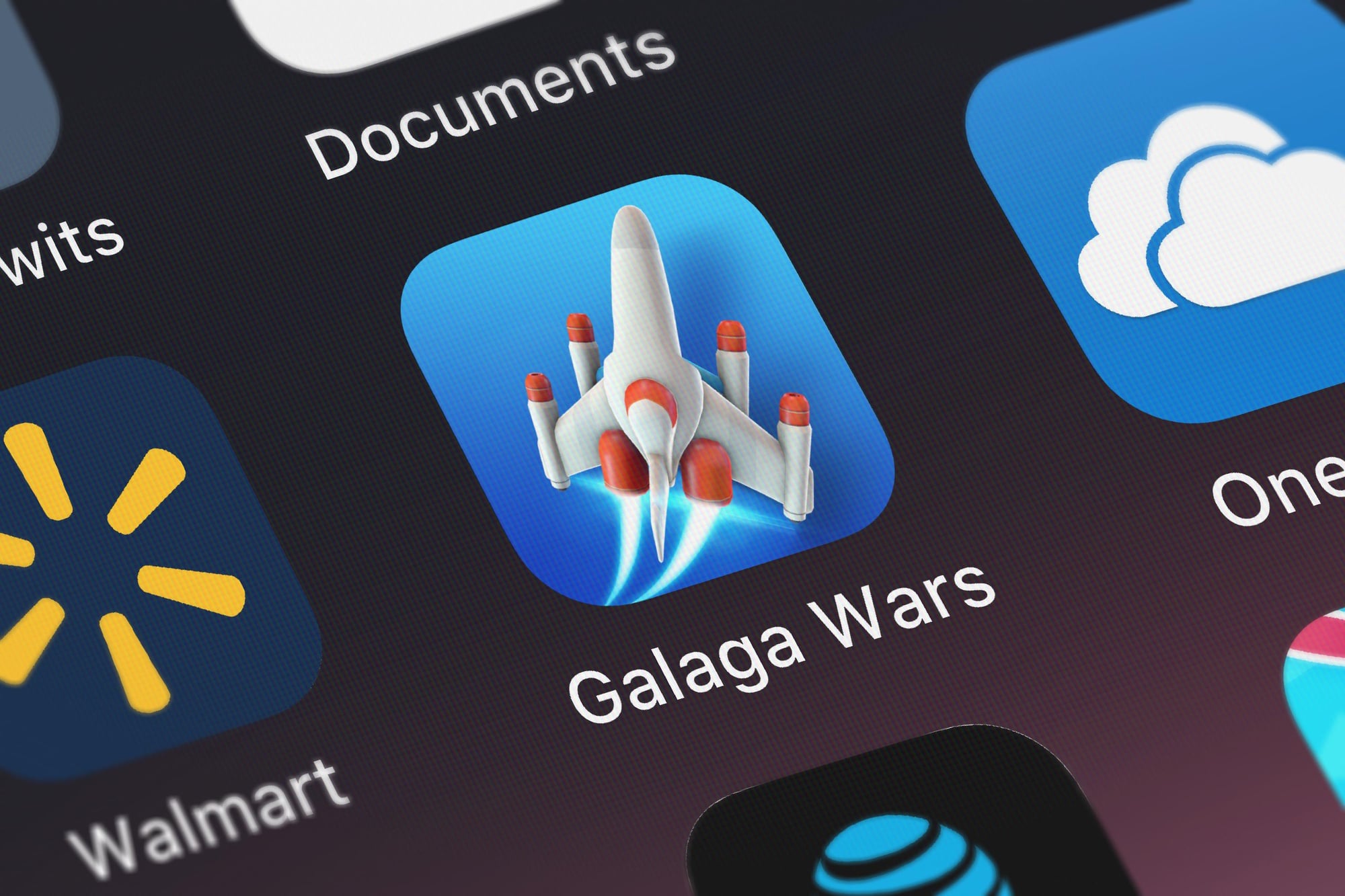
The ship formations that swooped down in perfect arcs became hypnotic after the first few waves, and that’s when Galaga had you (much like those swooping enemies had your ship). The game’s masterstroke wasn’t just the shooting mechanics — it was the bonus stages that appeared just often enough to make you believe big points were always one wave away.
And then there was the captured ship mechanic, where one of your fighters could be snatched by a diving enemy and held hostage until you shot it free, doubling your firepower — or watching helplessly as you accidentally destroyed your own ship trying to rescue it.
That moment of tactical decision-making, whether to risk the rescue shot or play it safe, kept players feeding quarters long after common sense should have prevailed. So you’d stand there, sweating slightly under the arcade’s fluorescent lights, convinced that this time you’d execute the perfect rescue and ride that double-ship formation all the way to the high score board.
Street Fighter II
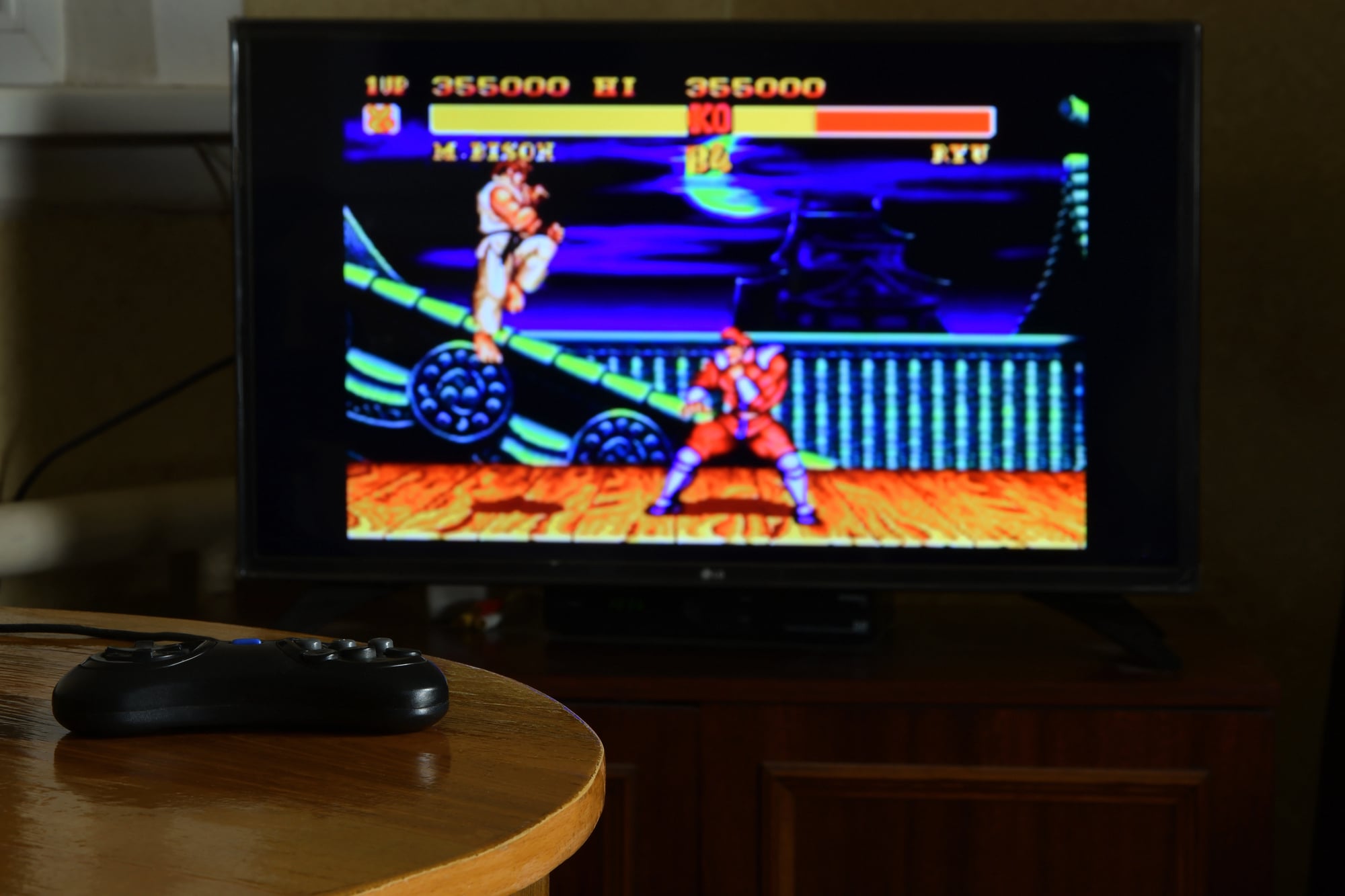
Street Fighter II arrived like a perfectly tuned engine designed to drain wallets. The special moves felt just difficult enough to execute that landing a Hadouken carried genuine satisfaction.
But satisfaction in fighting games lasts exactly as long as your next opponent.
The quarter consumption reached absurd levels once human opponents entered the picture. Losing to the computer stung, but losing to another player — especially one who seemed to pull off combos effortlessly while you mashed buttons — demanded immediate revenge.
The machine didn’t care about your pride, but it certainly profited from it.
Defender
Defender was the arcade equivalent of being thrown into the deep end while someone pelted you with tennis serves. The control scheme alone — five buttons and a joystick — felt like piloting actual spacecraft rather than playing a game, and the learning curve wasn’t so much a curve as it was a cliff face that most players never successfully scaled.
But here’s what made it particularly effective at quarter extraction: just when you were about to give up entirely, you’d have one moment of clarity where everything clicked.
The scanner made sense, your ship responded properly, and you’d clear a wave with something approaching grace. That single moment of competence was enough to convince you that mastery was achievable, that you just needed more practice (and more quarters) to unlock whatever skill had briefly surfaced.
Centipede
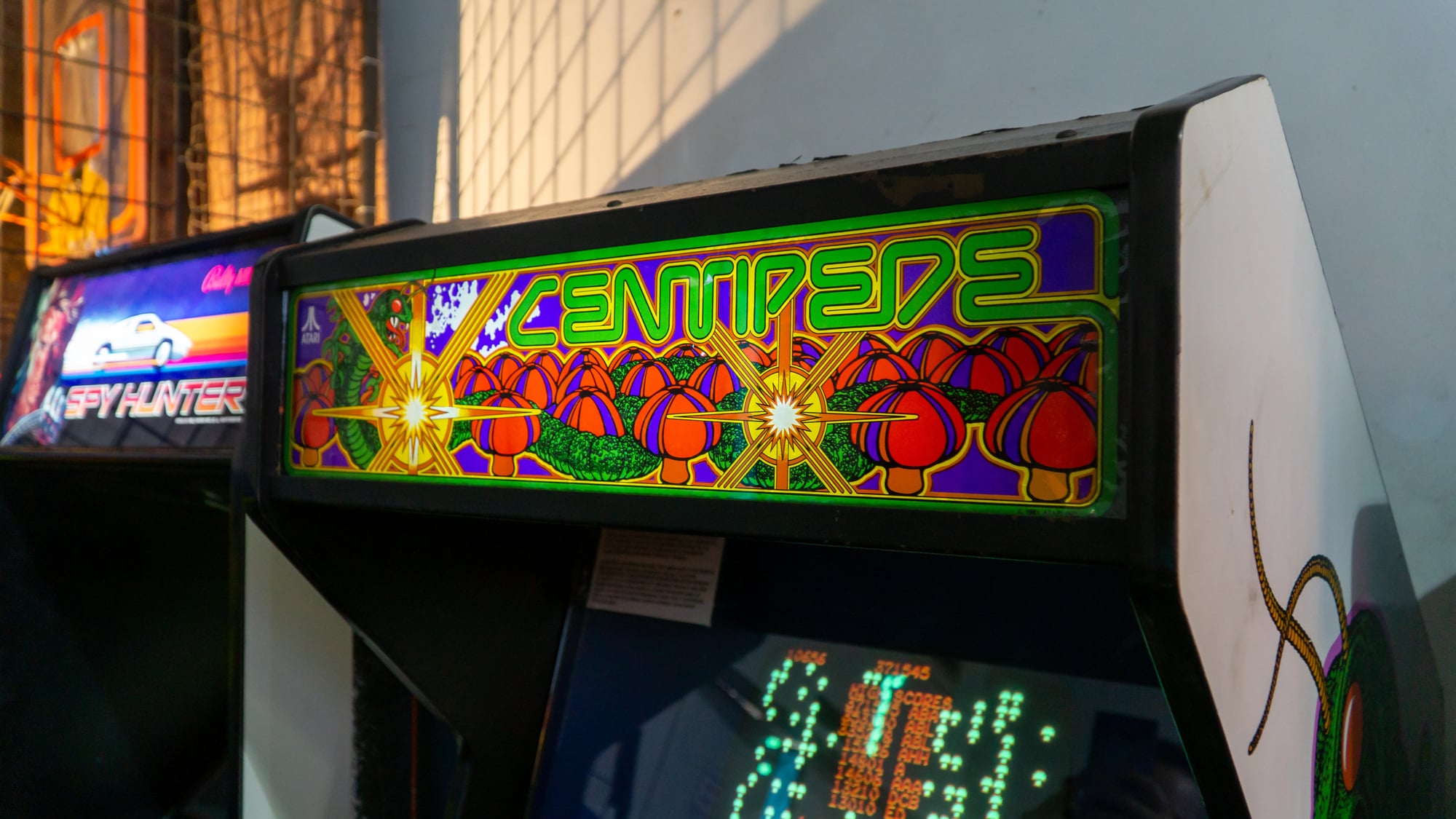
Centipede moved like anxiety made visible. Each segment that broke off created two new problems, and the mushrooms cluttered the screen like obstacles in a fever dream.
The trackball gave the illusion of precision control, but precision meant nothing when chaos multiplied faster than you could manage it.
The game’s brilliance lay in how it made every death feel preventable. You could always see exactly how you died — that spider that crept down while you focused on the centipede, the flea that dropped one mushroom too many.
It never felt unfair, just overwhelming, which made it impossible to walk away without trying to prove you could handle the chaos better next time.
Asteroids

Floating through space while rocks tumbled toward you from every direction, Asteroids created a uniquely claustrophobic experience despite its vast black emptiness. The physics felt real enough that your ship had genuine momentum, which meant every movement required forethought — or at least it should have, though panic rarely allowed for such luxury.
The hyperspace button served as both salvation and curse, randomly teleporting your ship to safety or directly into an asteroid’s path with equal probability.
That element of desperate gambling, the moment when you had no choice but to hit hyperspace and hope, perfectly captured what made these games so addictive. You weren’t just playing against the rocks; you were playing against your own desperation and the machine’s random number generator.
Donkey Kong
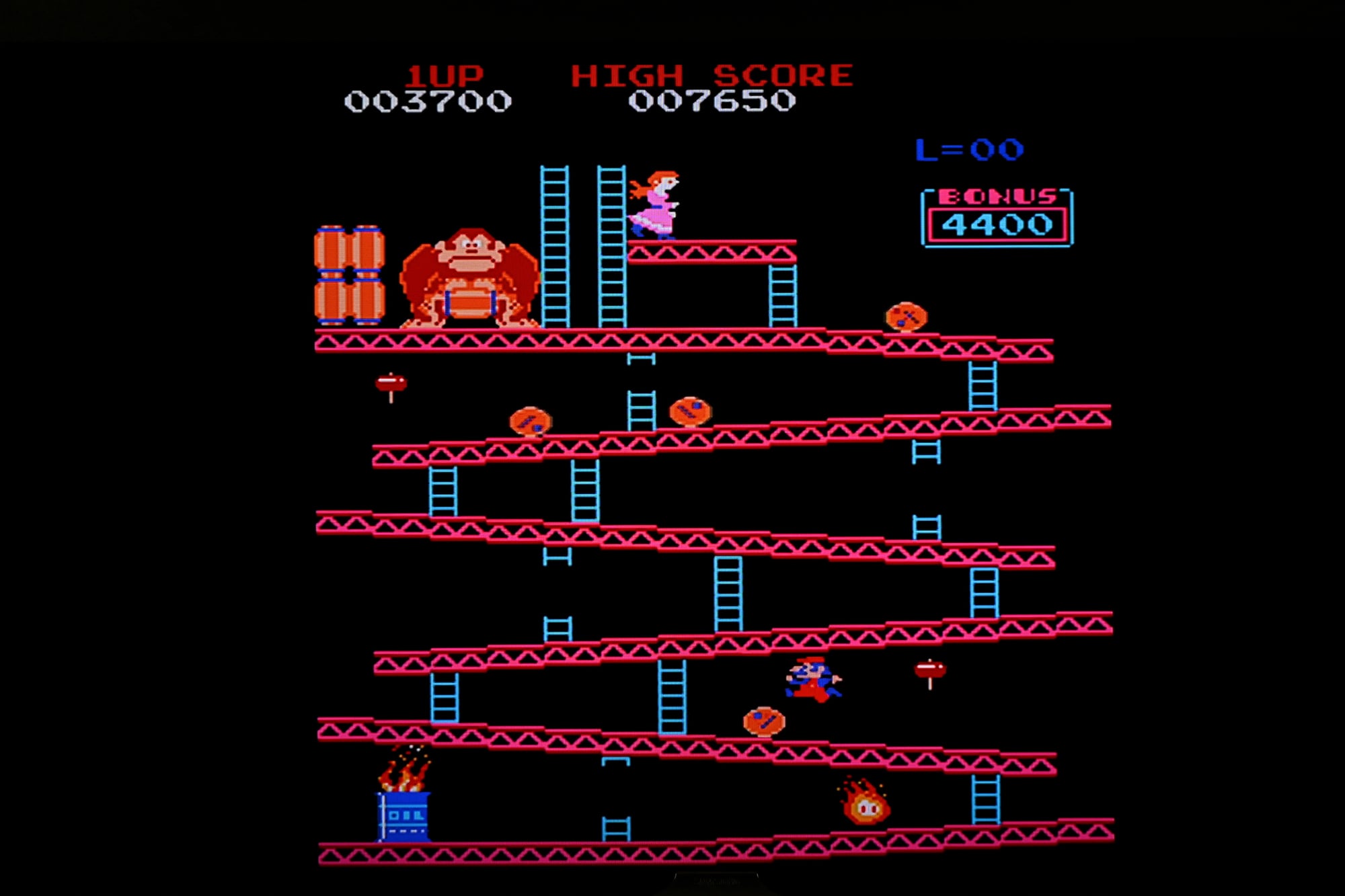
Mario’s first starring role came with a brutal education in precision platforming. Each girder demanded perfect timing, and the hammer power-up created impossible decisions — grab it for points and protection, but lose the ability to climb ladders.
The barrels rolled with malicious intelligence, finding gaps you didn’t know existed.
What made Donkey Kong particularly ruthless was how it front-loaded the difficulty. The first screen looked manageable, almost inviting, but success there only delivered you to increasingly sadistic variations of the same basic challenge.
By the time you reached the rivets stage, you’d already invested enough quarters that walking away felt like admitting defeat.
Ms. Pac-Man

Ms. Pac-Man corrected everything that made the original Pac-Man predictable, then used those improvements to become even more effective at extracting quarters (because apparently what the original needed wasn’t mercy, but better aim). The ghost movements became semi-random, destroying the patterns that dedicated players had memorized, while the bouncing fruit added an element of risk-reward calculation that demanded split-second decisions.
The maze layouts changed between levels, which sounds like a welcome variety until you realize it meant you could never fully master the geography — every game demanded fresh adaptation, fresh learning, fresh quarters to fund that education.
And those intermission cutscenes, brief animated stories of Pac-romance, provided just enough narrative motivation to make the next attempt feel emotionally justified rather than financially reckless.
Frogger
Traffic patterns that seemed random but followed just enough logic to feel predictable — until they weren’t. Frogger turned crossing the street into a life-or-death puzzle, then added the logs and turtles to make safe arrival only the halfway point.
The second half of each screen demanded even more precision as platforms disappeared and crocodiles snapped at poorly timed jumps.
The game’s genius was making every death feel like a timing error rather than bad luck. You could see the truck coming, count the spaces between logs, watch the turtle patterns.
When you died, it was because you miscalculated, not because the game cheated. That distinction kept players convinced that better observation and quicker reflexes would solve everything.
Robotron 2084
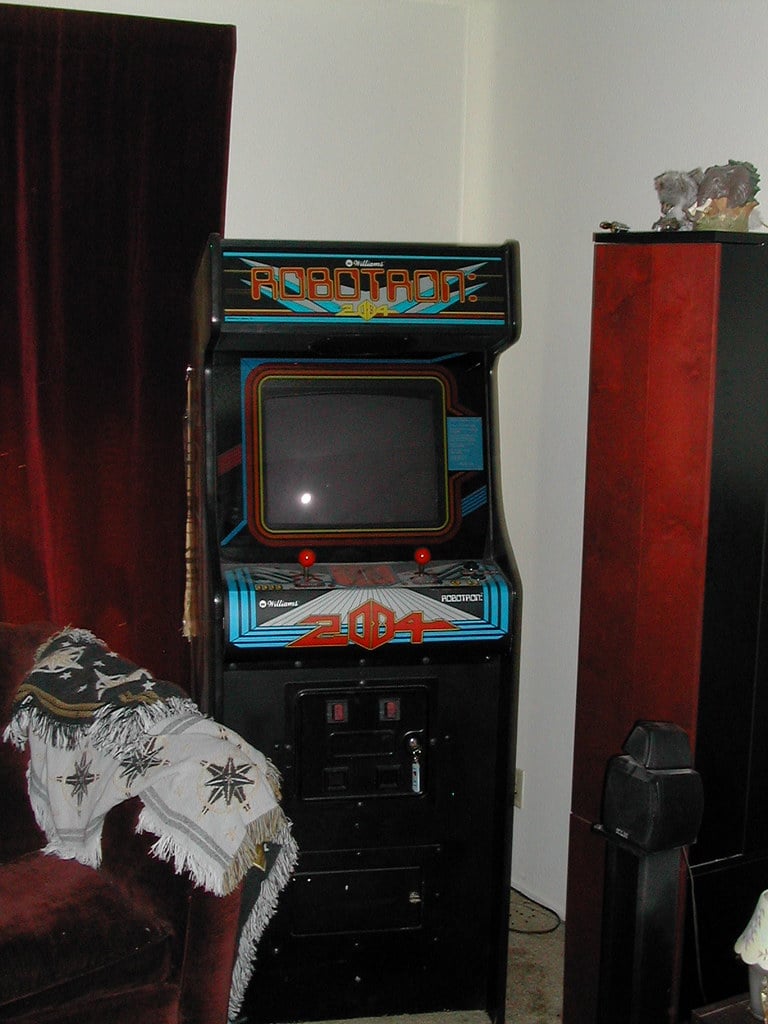
Twin-stick controls that felt like conducting an orchestra while running from a burning building. Robotron threw so many enemies on screen that survival became a matter of pure instinct rather than strategy.
The humans you were supposed to save wandered aimlessly through the chaos, often directly into danger, turning rescue attempts into moral dilemmas played out at 60 frames per second.
Eugene Jarvis designed Robotron to punish hesitation and reward aggression, but finding the right balance between those impulses required the kind of practice that only came from feeding the machine repeatedly.
Each wave introduced new enemy types with different movement patterns, ensuring that just when you thought you understood the chaos, the rules would shift again.
Tempest
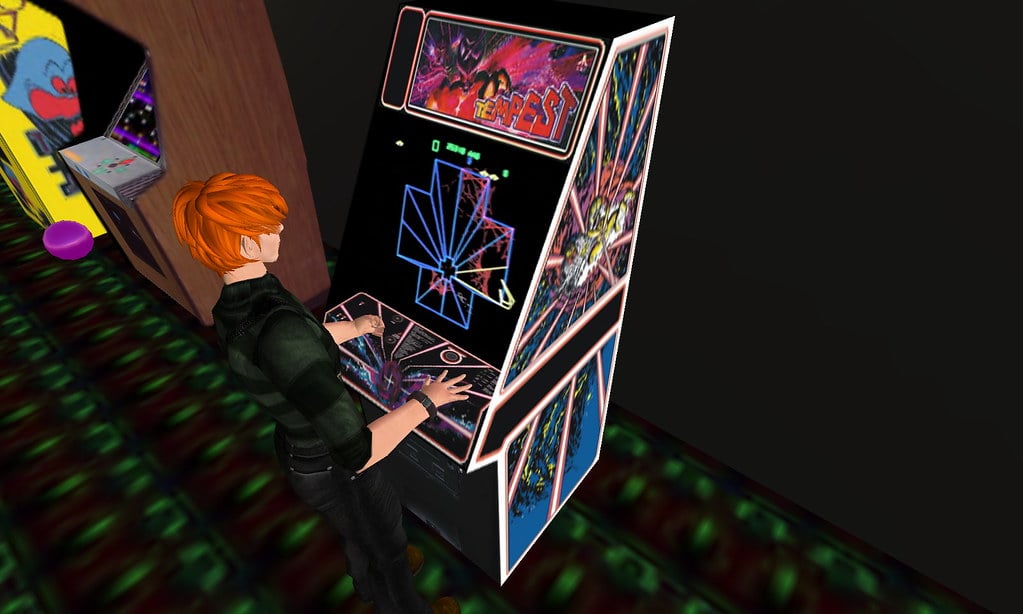
The geometric tunnel that spiraled toward infinity, populated by creatures that moved like living equations. Tempest’s vector graphics created a unique visual language that was both beautiful and threatening, with enemies that emerged from mathematical precision rather than cartoon logic.
The spinner control demanded smooth, continuous movement that felt more like drawing than gaming.
What made Tempest particularly addictive was how it transformed geometric shapes into sources of genuine tension. A simple triangle moving up the tunnel became a threat that required immediate attention, while the spikes that lined each level’s edges turned every movement into a calculated risk.
The game’s abstract nature meant that pattern recognition became everything, but the patterns were complex enough to require serious investment of time and quarters to decode.
Joust
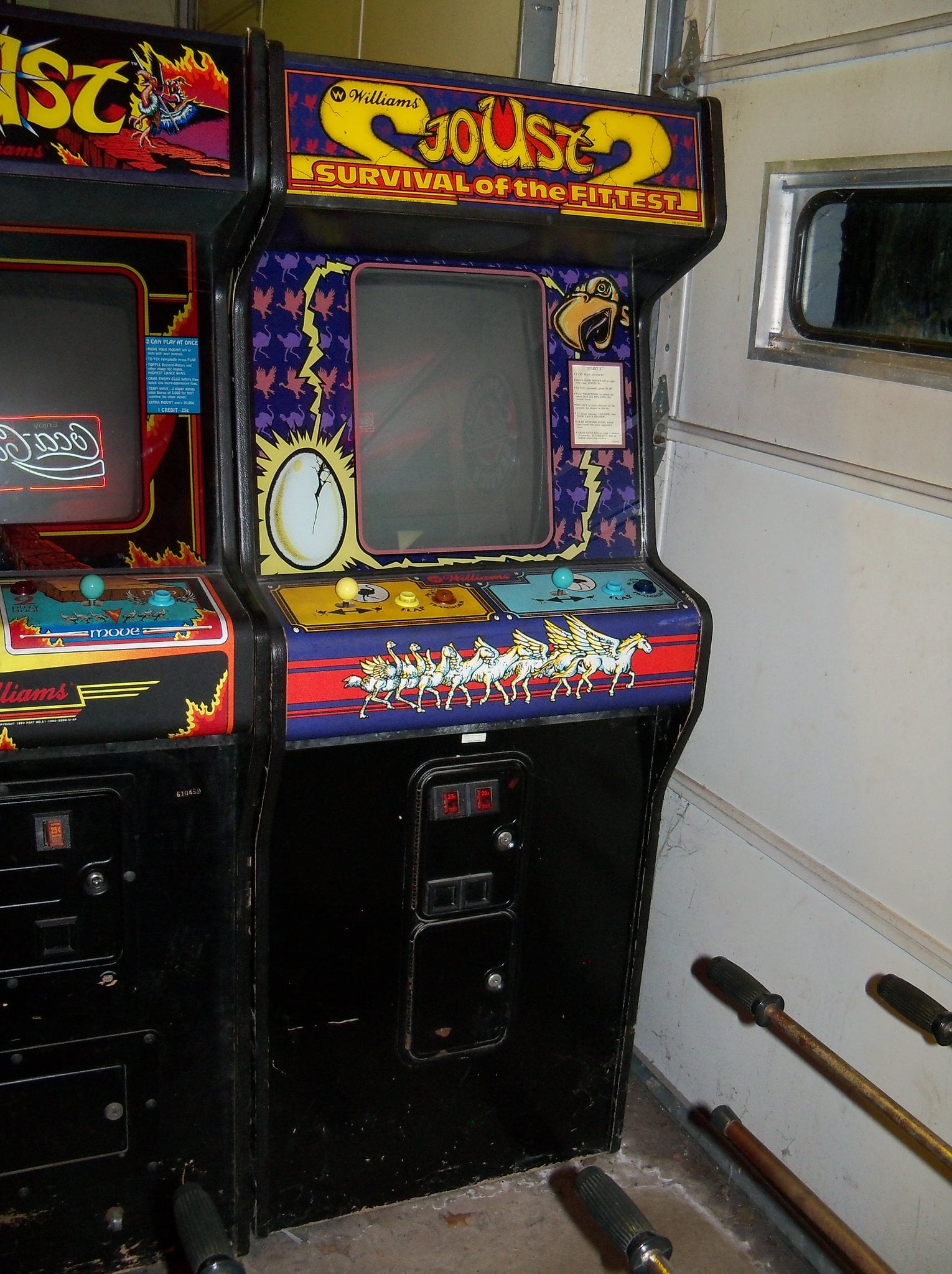
Flapping frantically while trying to position your ostrich for the perfect collision angle, Joust turned flying into a constant struggle against physics. The momentum-based movement meant that every action had consequences that played out over several seconds, making precise maneuvering a matter of prediction rather than reaction.
Mount your bird warrior, but remember that height advantage was temporary and hard-won.
The two-player mode created a fascinating dynamic where cooperation and competition blended unpredictably — you needed your partner to survive the early waves, but the high score was still individual. That tension between helping and competing added a psychological element that pure single-player games couldn’t match, especially when the pterodactyl showed up to punish anyone who took too long to finish a wave.
Dig Dug
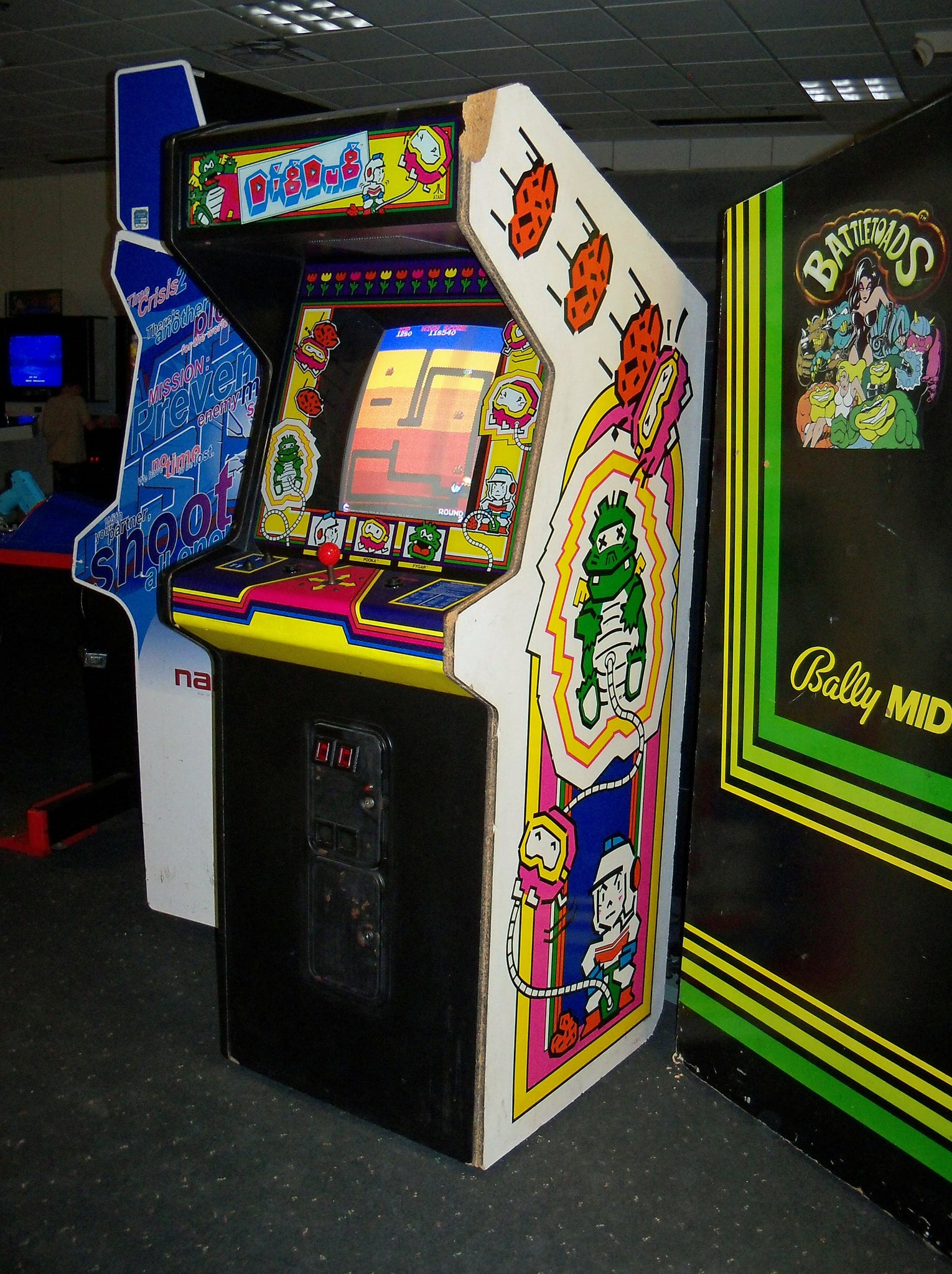
Digging tunnels while inflating monsters until they exploded sounds absurd enough to be harmless, but Dig Dug’s underground maze created a uniquely claustrophobic pressure. Every tunnel you carved became a potential trap, limiting your movement options while providing the same pathways to your enemies.
The Pookas and Fygars moved through dirt like it was water, making nowhere truly safe.
The rock-dropping mechanic added a risk-reward element that encouraged dangerous play — you could crush multiple enemies for bonus points, but only by positioning yourself in precisely the wrong place and hoping your timing was perfect.
That constant temptation to go for the spectacular kill rather than the safe escape kept players taking unnecessary risks, which kept the quarters flowing.
Gauntlet
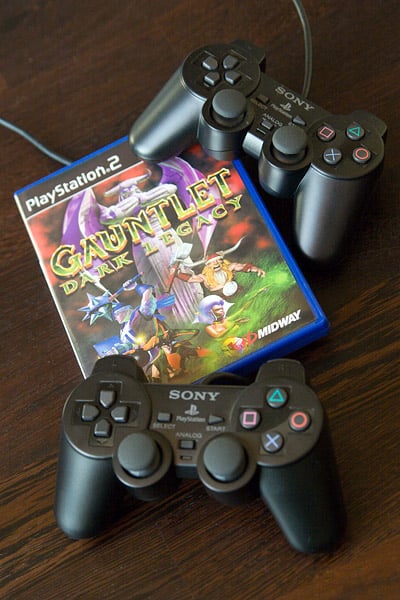
Four-player chaos where cooperation was essential but resources were limited. Gauntlet’s “food is about to be destroyed” warnings created artificial urgency that drove normally rational people to make terrible tactical decisions.
The health meter constantly drained, turning every moment of indecision into a step closer to death.
The genius lay in how it made death feel like a temporary setback rather than failure. Insert another quarter and you could rejoin immediately, which meant that difficult sections became wars of financial attrition rather than skill challenges.
The game didn’t need to be fair when it could simply be expensive, and the four-player setup meant that peer pressure often made the decision for you.
Dragon’s Lair
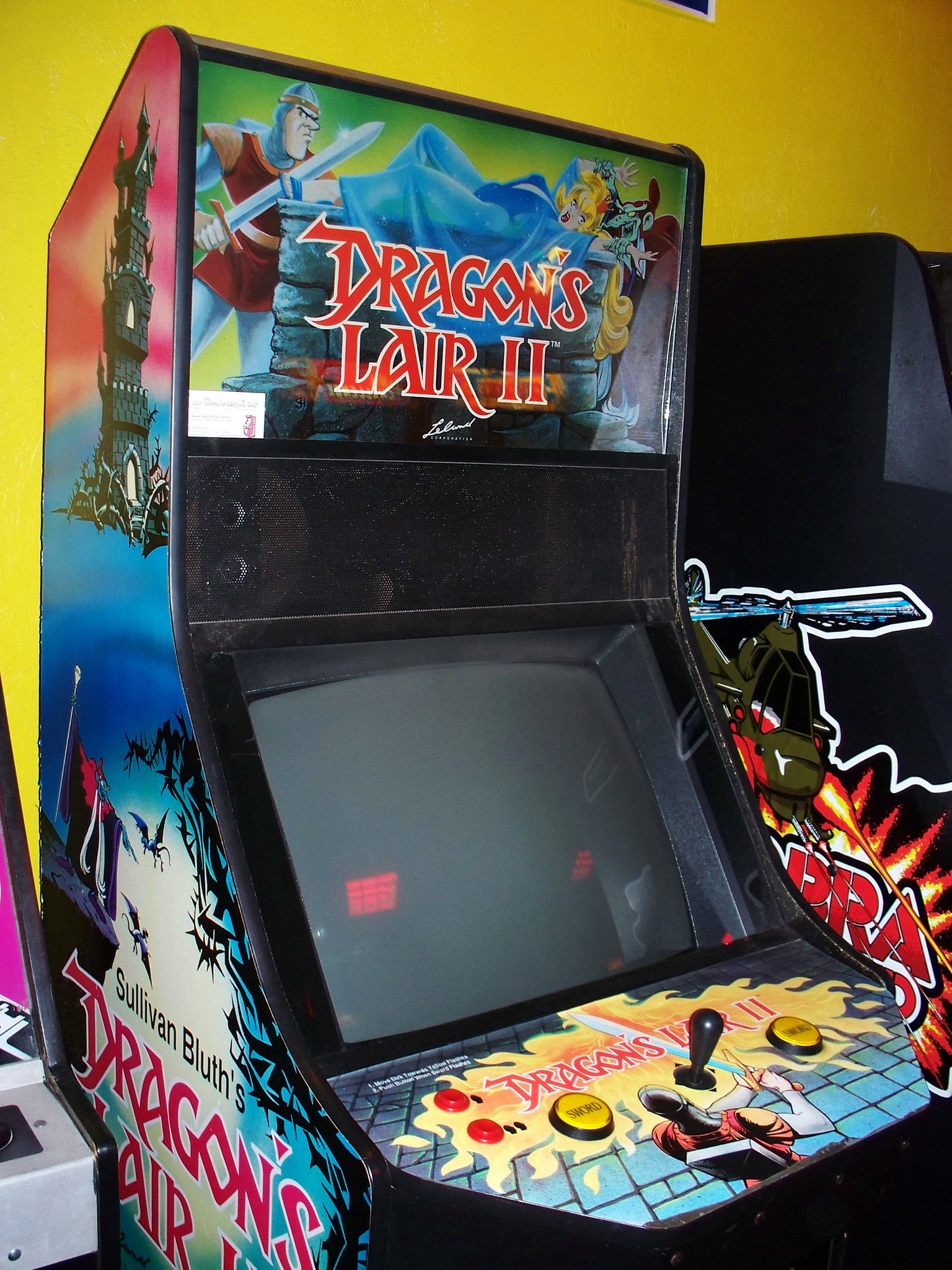
The most beautiful way to lose quarters ever created. Dragon’s Lair looked like an interactive cartoon because it essentially was one, but the gameplay consisted entirely of memorizing precise timing for directional inputs.
There was no room for creativity or adaptation — each scene had exactly one solution, and failure meant watching Dirk die in elaborately animated ways.
What made it particularly cruel was how the stunning animation masked the fact that you were essentially playing an expensive memory game. The movie-quality graphics drew crowds, but the unforgiving trial-and-error gameplay meant that seeing the entire adventure required either incredible memorization skills or a substantial investment in quarters.
Most players experienced both the wonder of seeing something genuinely revolutionary and the frustration of being punished for not knowing things they couldn’t possibly have known.
The Last Quarter
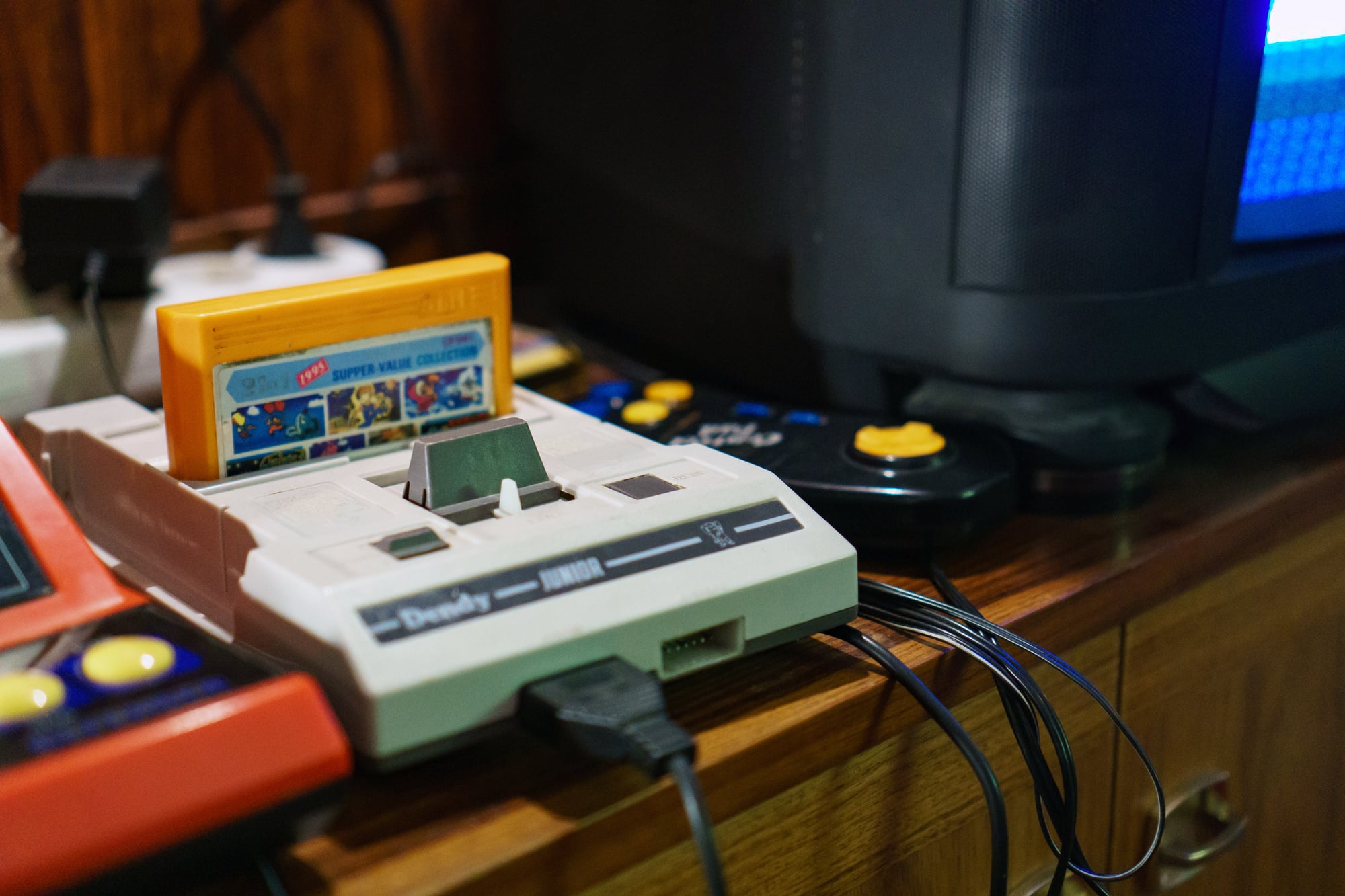
These games understood something fundamental about human nature that modern gaming, with its save states and unlimited continues, has largely abandoned. They knew that the possibility of loss made victory meaningful, that the weight of consequence made every decision matter.
The quarter wasn’t just a payment — it was a commitment, a declaration that you believed this attempt would be different from the last.
Standing in those dimly lit arcades, surrounded by the electronic symphony of a dozen different games competing for attention, players learned lessons about risk and reward that went far beyond gaming. Every quarter represented a small gamble, every game over a moment of decision about whether to double down or walk away.
The machines were relentless teachers, and we were willing students, even when the curriculum was expensive.
More from Go2Tutors!

- The Romanov Crown Jewels and Their Tragic Fate
- 13 Historical Mysteries That Science Still Can’t Solve
- Famous Hoaxes That Fooled the World for Years
- 15 Child Stars with Tragic Adult Lives
- 16 Famous Jewelry Pieces in History
Like Go2Tutors’s content? Follow us on MSN.