17 Business Fads That Lasted Only a Few Years
Corporate America can’t resist a shiny new trend. Every few years, some management guru rolls out the next revolutionary idea that’ll supposedly fix everything wrong with business. Companies jump on these bandwagons like teenagers chasing the latest TikTok dance, throwing money at consultants and restructuring entire departments around concepts that often make little sense in practice.
The pattern’s always the same. Someone writes a book, gives a few TED talks, and suddenly every CEO in the country thinks they’ve found the secret sauce.
Millions get spent on implementation, employees get trained on new methodologies, and everyone acts like this time will be different. Then reality hits, the results disappoint, and the whole thing quietly gets shelved when the next big idea comes along.
Here’s a rundown of 17 business fads that had their moment in the sun before burning out spectacularly.
Quality Circles

Back in the ’80s, American companies got obsessed with Japan’s manufacturing success and decided quality circles were the answer. Small groups of workers would meet regularly to brainstorm solutions to workplace problems.
Sounded reasonable enough — who doesn’t want employees more engaged in improving their jobs? Problem was, most of these circles turned into complaint sessions where the same gripes got aired week after week.
Management would nod along during presentations but rarely gave these groups any real authority to change things. Workers got frustrated, managers got bored, and by the late ’80s most companies had moved on to whatever came next.
Business Process Reengineering

Michael Hammer’s 1993 book made “reengineering” the hottest buzzword in corporate America. Instead of gradually improving how things worked, companies would tear everything down and rebuild from scratch.
Consulting firms made a fortune selling this idea to executives who thought their problems could be solved by starting over. Turns out, most business processes exist for good reasons that aren’t immediately obvious.
Companies that threw out decades of institutional knowledge often created bigger messes than they started with. By the mid-’90s, “reengineering” had become corporate speak for “we’re laying people off and hoping technology fixes everything.”
Like Go2Tutors’s content? Follow us on MSN.
Six Sigma

Six Sigma promised mathematical precision in quality control — reduce defects to 3.4 per million opportunities through rigorous statistical analysis. General Electric’s Jack Welch became the poster child for this approach, creating armies of “Black Belts” and “Green Belts” who’d analyze every process to death.
Manufacturing companies saw real benefits from this level of precision. But when service companies tried applying the same rigid methodology to creative work or customer interactions, things got weird fast.
You can’t reduce human relationships to statistical models, though plenty of companies wasted years trying.
Flat Organizations

The early ’90s brought a war on middle management. Traditional hierarchies were apparently stifling innovation and slowing down decision-making, so companies started eliminating management layers left and right.
Everyone would be “empowered” to make decisions without bureaucratic interference. Chaos ensued.
Without clear chains of command, nobody knew who was responsible for what. Projects stalled as teams waited for someone with actual authority to make decisions.
Most organizations quietly rebuilt their management structures within a few years, just under different job titles.
The Learning Organization

Peter Senge convinced corporate America that successful companies were those that continuously learned and adapted. Organizations needed to become living, breathing entities that evolved with changing conditions.
The concept sounded almost spiritual — businesses as organisms that grew wiser over time. Implementation proved trickier than inspiration.
Most “learning organization” initiatives amounted to more training sessions and team-building exercises that didn’t fundamentally change how companies operated. Turns out, organizational learning happens through experience and necessity, not because you declare yourself a learning organization.
Like Go2Tutors’s content? Follow us on MSN.
Dot-Com Business Models

The late ’90s internet boom created a parallel universe where traditional business logic didn’t apply. Revenue was optional as long as you were “building market share.”
Venture capitalists threw millions at companies whose entire strategy was “we’ll figure out how to make money later.” Pets.com spent $300 million before realizing that shipping heavy bags of dog food to individual customers might not be profitable.
Webvan burned through $1.2 billion trying to revolutionize grocery delivery two decades before the infrastructure existed to make it work. When the bubble burst in 2000, reality came crashing back.
Corporate Universities

Every major company in the ’90s decided it needed its own “university.” McDonald’s had Hamburger University, Disney had Disney Institute — suddenly corporate training programs weren’t good enough unless they had academic-sounding names attached.
Most of these corporate universities were just fancy training centers that cost way more than sending employees to actual schools. The novelty wore off when budget cuts hit and companies realized they were paying premium prices for education they could get cheaper elsewhere.
Balanced Scorecard

The balanced scorecard was supposed to move companies beyond just focusing on financial metrics. Customer satisfaction, internal processes, employee development — all would be measured and balanced for a more complete picture of organizational health.
Companies got so caught up in measuring everything that they forgot to actually manage anything. Elaborate dashboards with dozens of metrics replaced simple focus on what mattered most.
Many organizations found that tracking fewer things more carefully worked better than comprehensive measurement systems nobody really understood.
Like Go2Tutors’s content? Follow us on MSN.
Virtual Organizations

Mid-’90s pundits predicted the death of the traditional office. Why pay for expensive real estate when employees could work from anywhere?
Virtual organizations would tap into global talent while slashing overhead costs. The technology wasn’t ready, and neither were most managers.
Video calls were clunky, file sharing was primitive, and company culture suffered when everyone worked in isolation. Remote work eventually succeeded, but the virtual organization evangelists of the ’90s were about 20 years ahead of the technology curve.
Customer Relationship Management Systems

CRM software promised to revolutionize how companies interacted with customers. Every phone call, email, and meeting would be tracked and analyzed to create personalized experiences that would boost loyalty and sales.
Reality was messier. Sales teams hated entering data into complex systems that seemed designed more for managers than for people actually dealing with customers.
Many expensive CRM implementations turned into digital filing cabinets that nobody maintained properly.
Enterprise Resource Planning

ERP systems were supposed to integrate every aspect of business operations into one comprehensive software platform. No more disparate systems that couldn’t talk to each other — everything would flow seamlessly from accounting to inventory to human resources.
These implementations became legendary for going over budget and taking years longer than planned. Companies often had to completely change how they worked to fit the software’s requirements, rather than the other way around.
Simple tasks that used to take minutes now required navigating through multiple screens and approval workflows.
Like Go2Tutors’s content? Follow us on MSN.
Knowledge Management

The late ’90s brought panic about losing institutional knowledge when baby boomers retired. Companies invested heavily in systems to capture and organize everything employees knew, creating digital repositories of best practices and lessons learned.
These knowledge management systems mostly became digital junkyards where information went to die. Nobody wanted to spend time documenting what they knew, and finding anything useful in these databases was nearly impossible.
Real knowledge sharing happened through conversations and relationships, not formal documentation systems.
Lean Manufacturing

Toyota’s lean production system worked incredibly well for automotive manufacturing, so naturally every other industry decided to adopt it. The focus on eliminating waste and improving flow seemed applicable everywhere.
Service companies struggled to apply manufacturing concepts to knowledge work. Trying to optimize creative processes or customer relationships using lean principles often created more bureaucracy than it eliminated.
The tools worked fine, but the underlying philosophy required cultural changes that took years to develop properly.
Emotional Intelligence
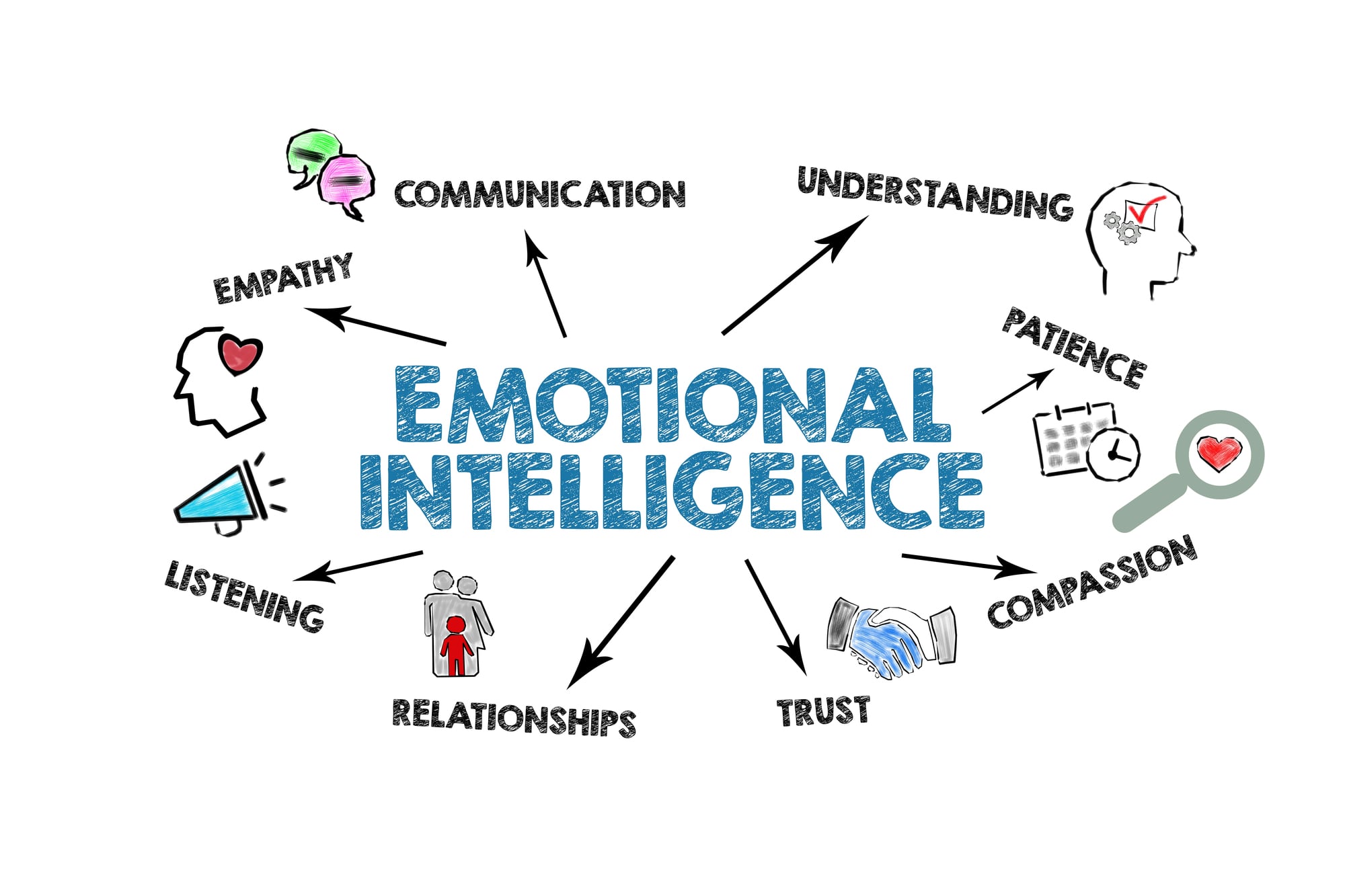
Daniel Goleman’s research on emotional intelligence hit corporate America like a revelation. Technical skills weren’t enough for leadership success — managers needed to understand and manage emotions, both their own and others’.
Companies rushed to assess and train emotional intelligence without really understanding what it meant. Many programs turned into touchy-feely exercises that made everyone uncomfortable without actually improving workplace relationships.
EQ became another checkbox on performance reviews rather than a meaningful development focus.
Like Go2Tutors’s content? Follow us on MSN.
Strategic Planning

Strategic planning has always existed, but the elaborate multi-year processes that became popular in the ’80s and ’90s often produced beautiful documents that had little connection to reality. Complex matrices and five-year projections looked impressive in boardroom presentations.
These comprehensive plans usually became obsolete before the ink dried. Markets changed too quickly for rigid long-term planning to be useful.
Companies learned that staying flexible and adapting quickly was more valuable than having detailed plans that couldn’t survive contact with reality.
Total Quality Management

TQM promised to make quality as everyone’s job by embedding quality principles throughout the entire organization. Quality circles, statistical process control, continuous improvement — the whole company would become obsessed with doing things right the first time.
The comprehensive nature of TQM often overwhelmed organizations. Employees got tired of endless quality meetings and measurement exercises that seemed disconnected from their actual work.
Companies found that focusing on specific quality issues worked better than trying to implement quality everywhere at once.
Matrix Organizations

Matrix structures seemed like the perfect solution for companies working on complex projects that required diverse expertise. Employees would report to both functional managers and project managers, getting the best of both worlds.
This dual reporting structure created confusion and conflict more often than collaboration. Workers got caught between competing demands from different bosses, and projects often stalled as managers fought over resources and priorities.
Most companies that tried matrix organizations eventually gave up and went back to clearer, simpler structures.
Like Go2Tutors’s content? Follow us on MSN.
What These Fads Teach Us

Looking back at these trends reveals something important about how business works. Each fad started with genuine problems that needed solving, but the solutions got oversold and overapplied.
Companies wanted quick fixes for complex issues, and consultants were happy to provide them. The organizations that survived these fads best were those that took what worked and ignored the rest.
They understood that lasting improvement comes from understanding principles, not following formulas. Business success still comes down to basics: understanding customers, managing costs, developing people, and adapting to change.
No management fad has ever changed those fundamentals, though plenty have tried to convince us otherwise.
More from Go2Tutors!

- 16 Historical Figures Who Were Nothing Like You Think
- 12 Things Sold in the 80s That Are Now Illegal
- 15 VHS Tapes That Could Be Worth Thousands
- 17 Historical “What Ifs” That Would Have Changed Everything
- 18 TV Shows That Vanished Without a Finale
Like Go2Tutors’s content? Follow us on MSN.