17 counterfeit olive oil schemes worldwide
The golden liquid drizzled over your salad might not be what you think it is. Olive oil fraud has become one of the most widespread food scams on the planet, with criminal networks making billions by deceiving consumers who believe they’re buying premium extra virgin olive oil.
From sophisticated mafia operations to simple kitchen-table schemes, fraudsters have found countless ways to turn cheap vegetable oils into ‘liquid gold.’ The scale of deception is staggering.
Some experts estimate that 70% of extra virgin olive oil sold is adulterated, cut with cheaper oils, while the fake olive oil market is worth a staggering $16 billion per year. What makes this fraud particularly insidious is how difficult it can be to detect—even trained taste experts have been fooled by sophisticated counterfeits.
Here is a list of 17 documented counterfeit olive oil schemes that have rocked the global market and left consumers questioning what’s really in their bottles.
Operation Golden Oil – Italy

In March 2008, 400 Italian police officers conducted “Operation Golden Oil,” arresting 23 people and confiscating 85 farms after an investigation revealed a large-scale scheme to relabel oils from other Mediterranean nations as Italian.
This massive bust exposed how criminals were importing cheap olive oil from countries like Spain, Greece, and Tunisia, then repackaging it with fake Italian labels to command premium prices. The operation sent shockwaves through the industry and prompted Italy to overhaul its labeling laws.
The Chlorophyll Ring – Italy

In April 2008, another operation impounded seven olive oil plants and arrested 40 people in nine provinces of northern and southern Italy for adding chlorophyll to sunflower and soybean oil.
The criminals had figured out that by adding green plant pigment and beta-carotene for color, they could make cheap seed oils look and smell convincingly like olive oil. Over 25,000 bottles of this fraudulent blend were seized and destroyed.
Like Go2Tutors’s content? Follow us on MSN.
The Agromafia Empire – Italy

The Italian farming organization Coldiretti reported that the Agromafia has accelerated its growth and reached €21.8bn in value in 2016 across all food categories. This isn’t just small-time fraud—organized crime families have built entire empires around food counterfeiting.
In 2016, the authorities successfully completed operation ‘Mama Mia’ and seized over 2000 tonnes of fake Extra Virgin Olive Oil from the region of Puglia, worth over 13 million euros. The mafia had been importing and adulterating low-quality Spanish and Greek olive oil, planning to export it as a premium Italian product.
The Sunflower Substitute – Greece

Greek police have cracked a suspected olive oil adulteration operation and made seven arrests. The investigation revealed the gang added a dye to make yellow sunflower seed oil to simulate the green colour and appearance of olive oil from a base in the region of Larissa.
The scheme was remarkably sophisticated—the organization had been active since at least the beginning of 2015 and adulterated oil was sold under different trade names in domestic and European markets. They exported around 100,000 liters to Germany, Belgium, and the Netherlands, earning an estimated €200,000 in profits.
The Father-Son Bulgarian Operation – Greece

A father and son duo were apprehended by Greek authorities outside the northern city of Thessaloniki recently, accused of peddling counterfeit sunflower oil labelled as olive oil.
Police uncovered some 13 tonnes of counterfeit oil, with the sunflower oil being purchased in nearby Bulgaria. This cross-border operation showed how criminals exploit price differences between countries, buying cheap Bulgarian sunflower oil and selling it as premium Greek olive oil.
Like Go2Tutors’s content? Follow us on MSN.
The Dcoop Cooperative Scandal – Spain

In Spain, the world’s largest olive oil cooperative was fined in 2018 for failing to pay the tariffs on imported olive oil from Tunisia, which was then blended with lower quality olive oil and exported to the United States as virgin olive oil.
This case highlighted how even legitimate cooperatives can get caught up in fraudulent schemes, mixing imported oil with domestic production to cut costs while maintaining premium pricing.
The Danish Supermarket Deception – Denmark

In 2017, only six of the 35 sampled extra virgin olive oils sold in Danish supermarkets were actually extra virgin. This systematic testing revealed that consumers across Denmark were unknowingly buying inferior oil at premium prices.
The fraud was so widespread that it affected nearly 83% of products on supermarket shelves, showing how deeply embedded these deceptive practices had become in the retail supply chain.
The French Magazine Investigation – France

The independent magazine ’60 Millions de consommateurs’ showed an unsatisfactory situation, with serious suspicions of food fraud. The brands indicated are Naturalia Like a Virgin, La Vie Claire, Cauvin La Bio, Terra Delyssa, Simplemente bon et bio, Bio Village and Carapelli extravergine classico.
French consumer testing revealed that major brands were marketing olive oil as extra virgin without meeting the required quality standards, affecting products sold across French supermarkets.
Like Go2Tutors’s content? Follow us on MSN.
The Europol Mega-Bust – Spain and Italy

In December 2023, it was reported that the Spanish Civil Guard and the Italian Carabinieri together with Europol had arrested 11 people, who adulterated more than 260,000 liters, or roughly 68,000 gallons, of olive oil with lampante oil in Sicily, Tuscany and Ciudad Real in Spain.
This international operation dismantled a sophisticated network that was mixing low-grade ‘lamp oil’ (unsuitable for human consumption) with regular olive oil and selling it as premium extra virgin.
The Portuguese Label Scam – Portugal

Portuguese officials announced they had seized over 16,000 litres of cooking oil falsely labeled as olive oil, along with 82,000 counterfeit labels.
This operation revealed an industrial-scale counterfeiting operation where criminals weren’t just adulterating oil—they were manufacturing thousands of fake labels to make their products appear legitimate.
The Spanish Truck Seizure – Spain to Italy

Police made the decision to impound 54,000 liters of olive oil en route from Spain Friday after discovering that it was being falsely passed off as Italian.
The discovery was made during a check of a large truck that was making its way to southern Italy from the Spanish town of Valencia. This case shows how fraudsters exploit consumers’ willingness to pay premium prices for Italian olive oil by simply relabeling Spanish products.
Like Go2Tutors’s content? Follow us on MSN.
The Brazilian Soybean Mix – Brazil

In Brazil, the mixing of olive oil with lampante or soybean oil was the most common fraudulent practice.
Brazilian criminals developed a system of diluting expensive imported olive oil with cheap local soybean oil, taking advantage of consumers’ limited familiarity with authentic olive oil characteristics in a market where the product is primarily imported.
The Bertolli Brand Controversy – Multiple Countries
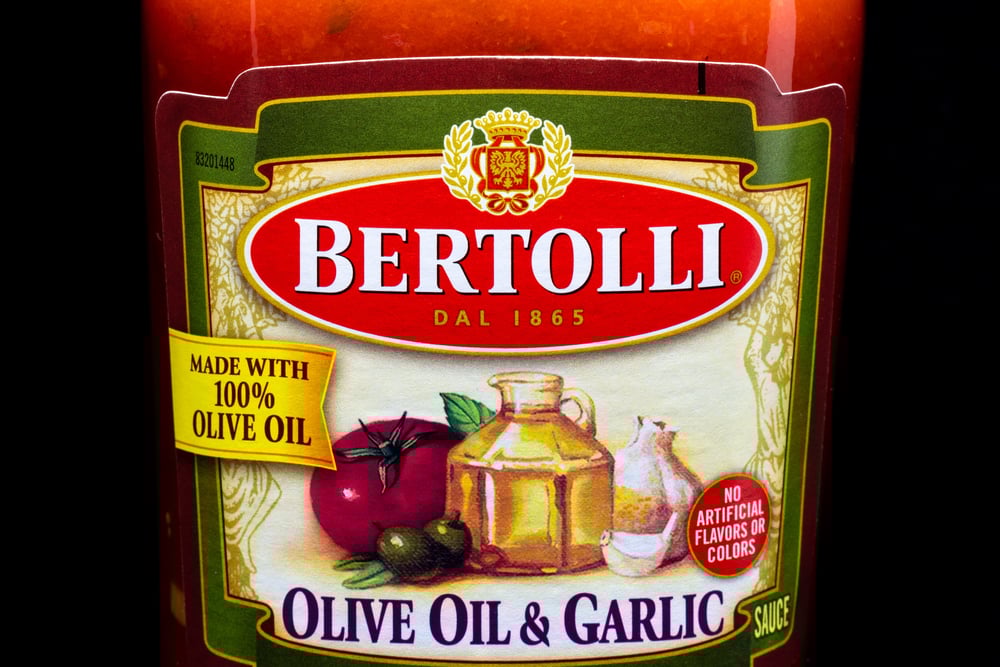
In June 2017, the Olive Oil Times published, that according to independent testing, oil from the brands Bertolli, Carapelli, Coricelli, Primadonna, and Sasso labelled as “extra virgin” was in fact only “virgin”.
This wasn’t criminal fraud but represented systematic mislabeling by major brands that misled consumers across multiple countries about the quality of their products.
The UC Davis Study Revelation – United States

A landmark study found that 73% of top-selling imported olive oil brands in California failed to meet international extra virgin standards, exposing widespread mislabelling and quality manipulation.
While controversial, this study highlighted how the U.S. market had become flooded with products that didn’t meet their labeled specifications, affecting major supermarket chains nationwide.
Like Go2Tutors’s content? Follow us on MSN.
The Lampante Oil Network – Italy
Some oil labeled “extra-virgin” is diluted with cheaper olive oils or other vegetable oils.
In some cases, lampante, or “lamp oil,” which is made from spoiled olives fallen from trees, is used, even though it can’t legally be sold as food. This represents one of the most dangerous forms of fraud, where oil literally unfit for human consumption is refined and mixed into products sold as premium food-grade oil.
The Turkish Import Scheme – Italy
It involves olive oils from Syria, Turkey, Morocco and Tunisia, bottled and sold as authentic Italian extra virgin to foreign markets, particularly the United States and Japan.
This ongoing scheme involves importing cheap oil from these countries and repackaging it in Italy with false documentation claiming Italian origin, specifically targeting high-value export markets.
The Record-Breaking 2024 Fraud Wave – European Union

Potential olive oil fraud and mislabeling cases in the EU hit a record high in the first quarter of 2024. In the first quarter of 2018, just 15 cases were recorded by the EU.
That rose more than three times, to a record 50 cases in the first three months of 2024. This represents a systematic explosion in fraudulent activity across Europe, driven by soaring prices that have made olive oil an increasingly attractive target for criminals.
Like Go2Tutors’s content? Follow us on MSN.
The Reality Behind the Golden Liquid
These schemes reveal a sobering truth about the olive oil industry. With olive oil prices at record highs and supply at decade-lows, this kind of fraud will only escalate.
The combination of climate change reducing harvests, rising consumer demand, and the high profits available from successful fraud has created a perfect storm. What makes these schemes particularly troubling is their sophistication.
Modern fraudsters don’t just mix oils randomly—they use industrial chlorophyll, carefully calibrated color additives, and complex distribution networks that span multiple countries. Some operations involve legitimate businesses that gradually shift toward fraudulent practices, making detection even more difficult.
The impact extends far beyond disappointed consumers. Legitimate olive oil producers, especially small family farms, find themselves undercut by fraudulent products sold at impossibly low prices.
The race to the bottom in pricing often forces honest producers out of business while enriching criminal networks that face minimal consequences for their actions. As olive oil prices continue climbing and climate change threatens traditional growing regions, the economic incentives for fraud will only increase.
Until enforcement catches up with innovation in counterfeiting techniques, consumers will need to become their own detectives in the quest for authentic liquid gold.
More from Go2Tutors!

- 16 Historical Figures Who Were Nothing Like You Think
- 12 Things Sold in the 80s That Are Now Illegal
- 15 VHS Tapes That Could Be Worth Thousands
- 17 Historical “What Ifs” That Would Have Changed Everything
- 18 TV Shows That Vanished Without a Finale
Like Go2Tutors’s content? Follow us on MSN.