17 Fascinating Stories Behind Disney Park Icons
Every Disney park visitor knows the feeling of stepping through those gates for the first time. The careful choreography of wonder, the impossible precision of magic made manifest, the way childhood dreams seem to bloom from concrete and steel.
But behind every beloved attraction, every iconic structure, every carefully placed detail lies a story that’s often more fascinating than the magic itself. These aren’t just rides and buildings — they’re monuments to human creativity, stubbornness, and the occasionally magnificent failure to accept the word “impossible.”
The stories behind them reveal something deeper than nostalgia: they show how dreams get built, one impossible decision at a time.
Space Mountain

Space Mountain exists because Walt Disney refused to let physics win. The ride opened at Magic Kingdom in 1975, but the concept had been haunting Disney Imagineers since the early 1960s.
The problem was simple: build an indoor roller coaster in complete darkness that wouldn’t kill anyone. The solution required inventing new technology that didn’t exist yet.
Imagineers had to figure out how to make a coaster that could operate safely when riders couldn’t see what was coming. Computer-controlled block zones, onboard audio systems, and precisely timed lighting effects — none of this existed in amusement parks before Space Mountain demanded it.
Pirates of the Caribbean

Walt Disney wanted Pirates of the Caribbean to be a walkthrough wax museum. His Imagineers convinced him that was a terrible idea by building the boat ride anyway and hoping he wouldn’t fire them.
They were right on both counts. The attraction’s famous auction scene originally featured pirates bidding on women as brides.
Disney kept this storyline for decades, through cultural changes that made it increasingly uncomfortable, until finally updating it in 2018. Sometimes even Disney magic needs a conscience update.
The Haunted Mansion
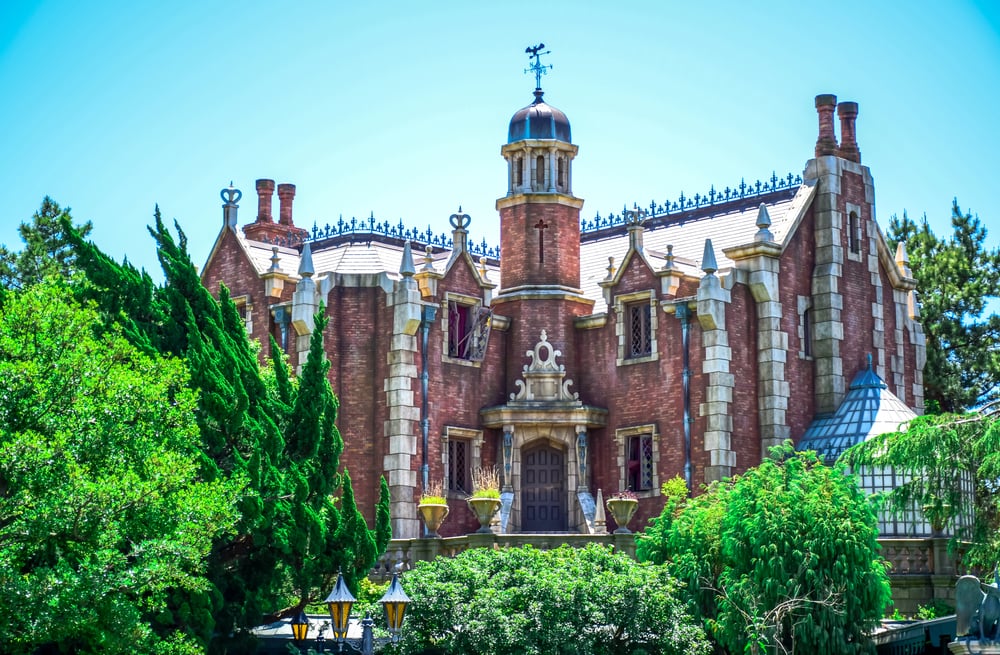
The Haunted Mansion took longer to build than some actual haunted houses took to accumulate their ghosts — sixteen years from concept to opening. The delay wasn’t creative differences or budget problems.
Walt Disney couldn’t decide if he wanted the house to be scary or funny. Two competing teams of Imagineers spent years developing completely different versions: one genuinely frightening, the other filled with pratfalling specters and comic mishaps.
The final version splits the difference, which explains why the Haunted Mansion manages to be both genuinely eerie and oddly charming. Compromise, it turns out, can create something better than either pure vision would have been.
It’s a Small World
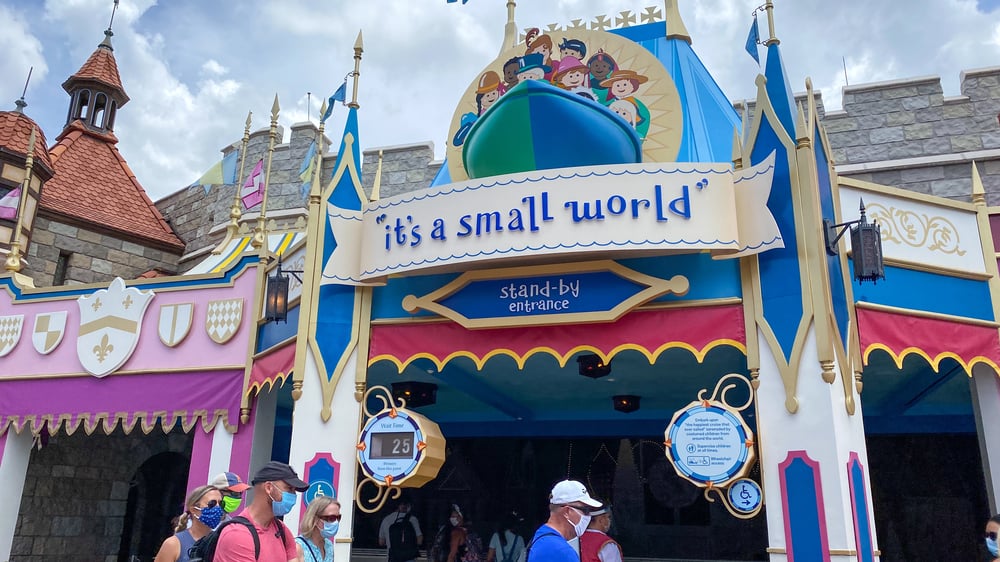
The most earworm-inducing song in human history was written in a single day because Walt Disney needed a theme song for his UNICEF pavilion at the 1964 World’s Fair, and he needed it fast. Richard Sherman and Robert Sherman (the Sherman Brothers) delivered “It’s a Small World” in one afternoon, never imagining it would become the sonic equivalent of glitter — impossible to get rid of once it’s in your head.
And here’s the thing about that relentlessly cheerful melody that parents learn to dread: it was designed to be sung in any language without losing its rhythm or emotional impact. The song’s mathematical precision isn’t accidental — it’s engineered optimism, calculated to work across every cultural barrier except good taste.
But even that proves the point, doesn’t it: the song annoys everyone equally, which is a kind of unity.
Matterhorn Bobsleds
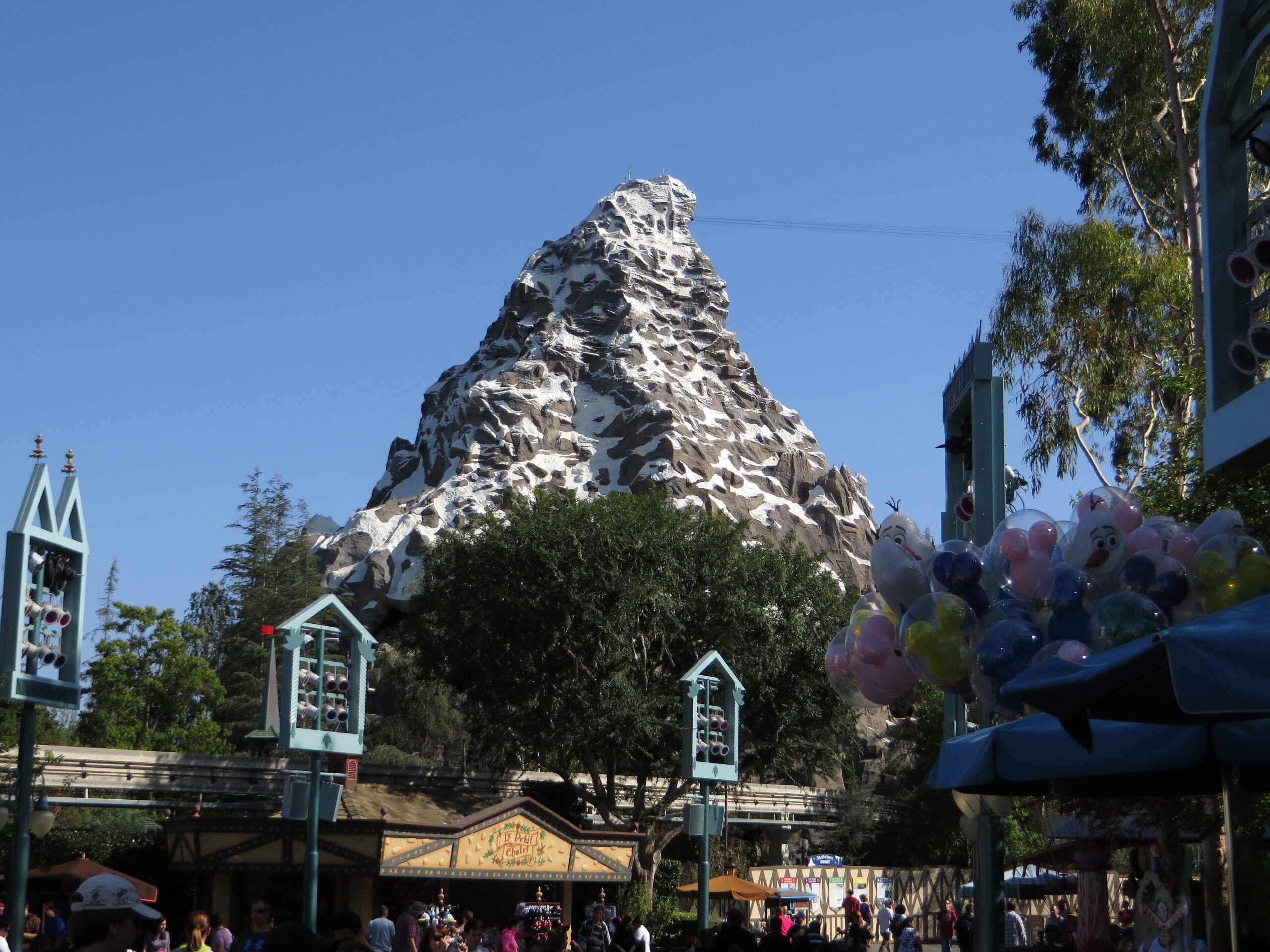
The Matterhorn was born from Walt Disney’s vacation photos. After a trip to Switzerland in the 1950s, Disney became obsessed with building his own version of the famous mountain.
The resulting attraction, which opened in 1959, was the world’s first tubular steel roller coaster. But here’s what makes the story stranger: Disney’s Matterhorn is exactly 1/100th the size of the real thing, and it houses a basketball court inside its peak for employee recreation.
Even fictional mountains need practical purposes.
Jungle Cruise
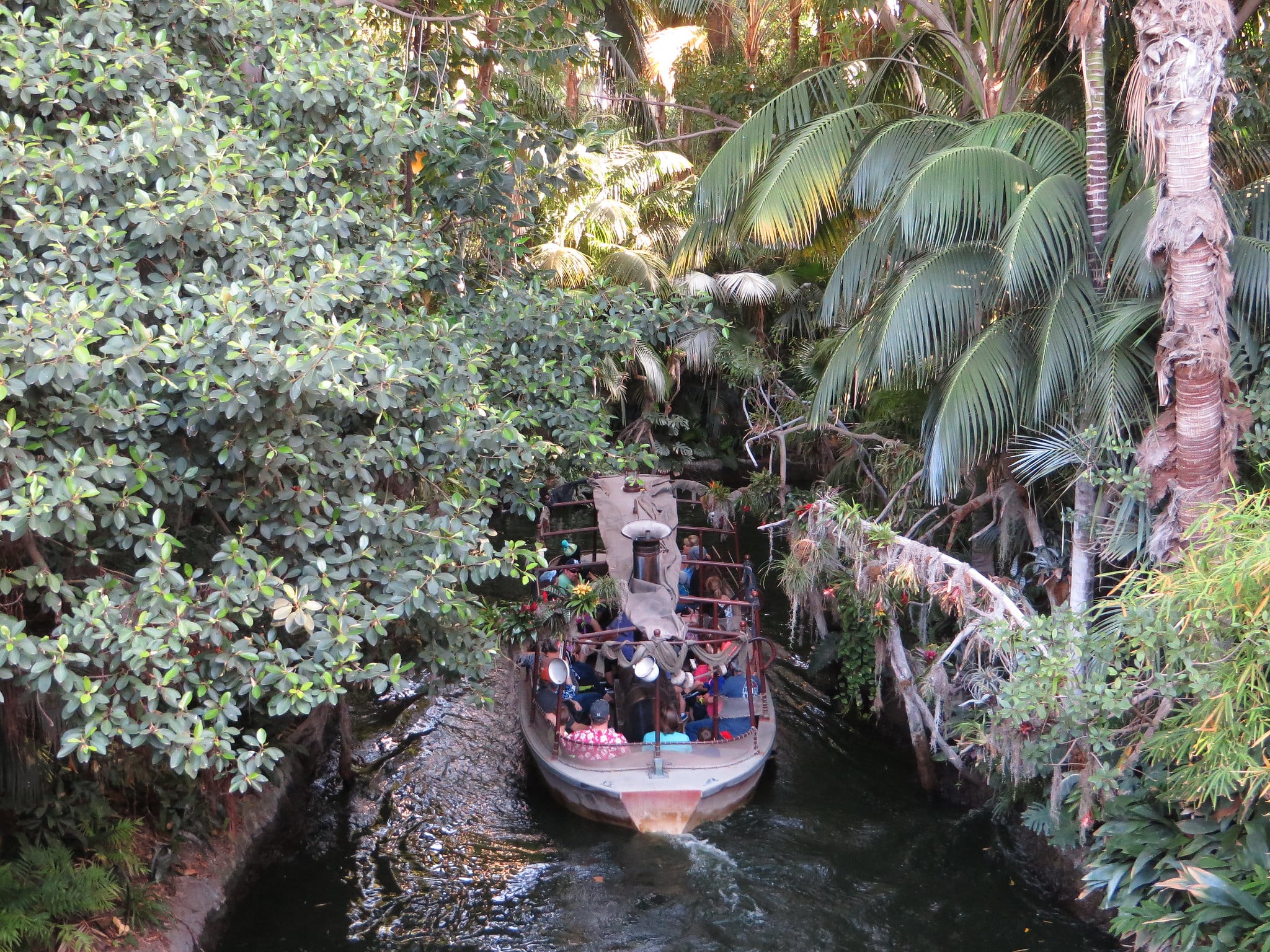
Plants don’t perform on cue, which makes them terrible Disney employees. The Jungle Cruise opened in 1955 with elaborate landscaping meant to simulate different global ecosystems along the boat route.
Most of the exotic plants died within months of opening because Southern California’s climate had no interest in accommodating Walt Disney’s botanical ambitions. The solution was quintessentially Disney: if reality won’t cooperate, replace it with something better than reality.
Plastic plants, artificial vines, and mechanical animals that actually work when they’re supposed to. The Jungle Cruise became a tribute to the idea that nature is fine, but Disney nature is more reliable.
The skippers’ puns, however, remain authentically painful — some things even Disney won’t artificially improve.
Sleeping Beauty Castle

Sleeping Beauty Castle stands 77 feet tall, which makes it shorter than most office buildings and barely taller than many suburban houses. This wasn’t an accident or a budget constraint — it was calculated psychology.
Disney’s architects used forced perspective to make the castle appear much larger than it actually is. The stones at the base are larger than those at the top, the windows shrink as they climb higher, and the proportions subtly compress as your eye travels upward.
The result is a building that photographs like a fairy tale but could fit in your neighborhood, assuming your neighborhood allows drawbridges.
Big Thunder Mountain Railroad
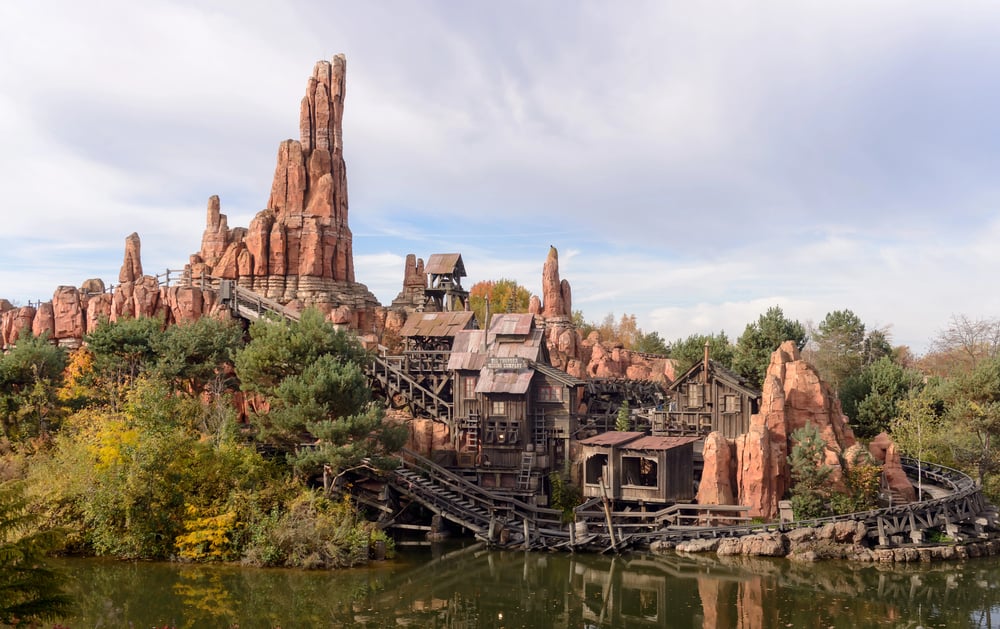
Big Thunder Mountain sits on an island in the middle of Frontierland, surrounded by the Rivers of America. Building a roller coaster on an island created engineering problems that would have been easier to solve by just picking a different location.
Disney chose the hard way because the hard way looked better. The mountain itself is hollow, containing not just the roller coaster track but an entire maintenance facility, staff areas, and enough structural support to prevent the artificial mountain from collapsing into the artificial river.
It’s a masterpiece of engineering disguised as a pile of rocks, which might be the most Disney thing ever built.
Carousel of Progress
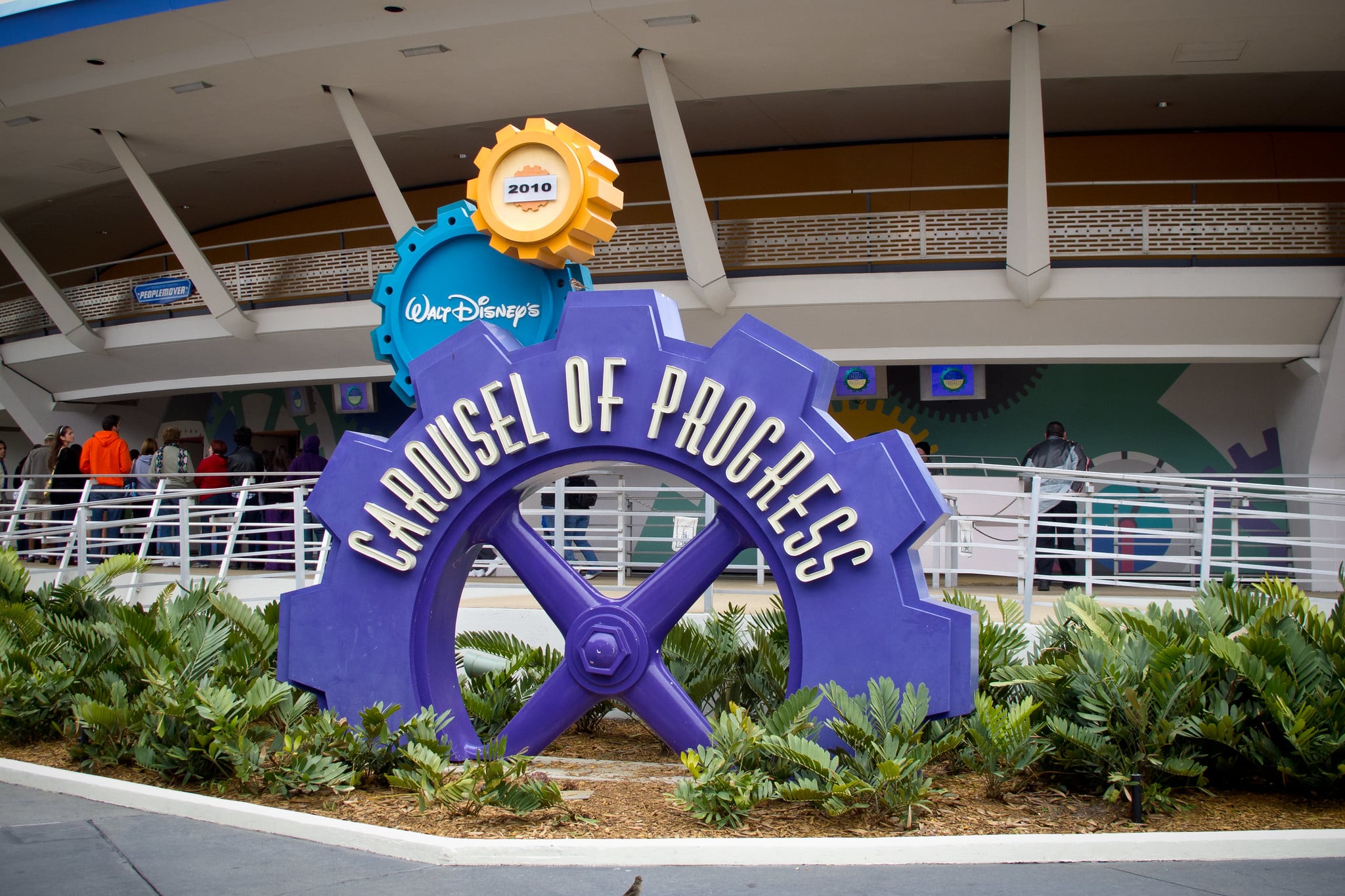
The Carousel of Progress is Disney’s ode to technological optimism, showcasing how American families have been improved by modern conveniences across the decades. The show opened at the 1964 World’s Fair and has been updated periodically to keep pace with progress itself, though “periodically” might be generous.
The final scene, meant to represent the modern era, still features a car phone and a laser disc player as cutting-edge technology (this is what happens when you build attractions faster than the future arrives, then forget to keep updating them, but somehow the dated vision of tomorrow feels more charming than any accurate prediction would have been).
The grandfather figure who narrates the show delivers the same optimistic message he’s been sharing for six decades: technology will make life better, just as soon as everyone figures out how to use it properly.
Splash Mountain

Splash Mountain’s story begins with a movie Disney would rather forget. Song of the South, released in 1946, has been locked in Disney’s vault for decades due to its problematic racial content.
But the film’s animated sequences featuring Br’er Rabbit, Br’er Fox, and Br’er Bear were considered suitable for theme park adaptation. The attraction opened in 1989 and became immediately popular despite — or perhaps because of — its disconnection from its source material.
Most riders experienced the story of Br’er Rabbit’s adventures without any knowledge of the film that inspired it. Disney announced in 2020 that Splash Mountain would be re-themed to The Princess and the Frog, finally severing the connection to Song of the South entirely.
Expedition Everest

Expedition Everest cost more to build than some countries spend on their entire annual infrastructure budgets. Disney’s Animal Kingdom opened this attraction in 2006 after spending six years and approximately $100 million creating not just a roller coaster, but an entire fictional Himalayan village, complete with authentic architectural details, hand-carved woodwork, and a 200-foot artificial mountain.
The attraction’s famous Yeti animatronic — one of the most complex figures Disney has ever built — broke shortly after opening and has remained in “B-mode” (stationary with strobe lights) for most of its operational life. Fixing it would require partially dismantling the mountain, which apparently even Disney considers too expensive and complicated to attempt.
Indiana Jones Adventure

The Indiana Jones Adventure exists because Disney reverse-engineered a movie franchise into a theme park attraction, then made the ride better than most of the actual sequels. The attraction opened at Disneyland in 1995, using enhanced motion vehicle technology that was revolutionary for its time.
Each ride vehicle follows the same track but can be programmed to move independently — tilting, shaking, and lurching in response to the action on screen. This creates the illusion that riders are driving through the adventure rather than following a predetermined path.
The technology was so successful that Disney has used variations of it in attractions around the world, proving that sometimes the best way to honor a beloved film is to let people live inside it for four minutes.
Tower of Terror

The Twilight Zone Tower of Terror operates on a simple premise that required complex engineering: drop people faster than gravity would naturally pull them. The attraction’s famous “drop sequence” uses cables to actually yank riders downward, creating moments of negative G-force that feel like floating.
Disney Imagineers spent months studying the physics of fear, calculating exactly how to manipulate riders’ sense of up and down to maximize the psychological impact. The result is an attraction that manages to be genuinely frightening without relying on gore, monsters, or anything more threatening than an elevator that refuses to follow the normal rules of elevators.
Spaceship Earth
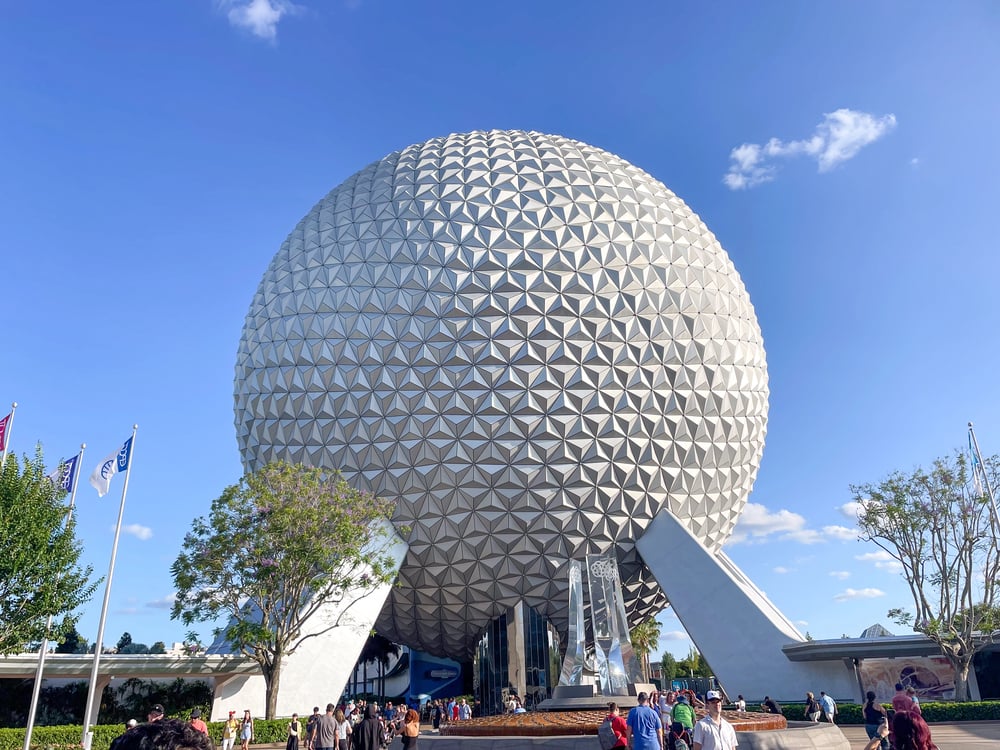
Spaceship Earth, the giant geodesic sphere that serves as EPCOT’s icon, weighs 16 million pounds and appears to be resting on the ground. It’s actually supported by six legs buried deep underground, creating the illusion that the sphere is simply sitting in place rather than being held up by a complex support structure.
The attraction inside tells the story of human communication, from cave paintings to the internet age. Like Carousel of Progress, Spaceship Earth’s vision of the future has required periodic updates as the actual future keeps arriving and looking different than predicted.
The final scenes have been revised multiple times, each version reflecting the technological optimism of its era while trying to predict what comes next.
Dumbo the Flying Elephant

Dumbo the Flying Elephant proves that sometimes the simplest ideas create the most lasting magic. The attraction is essentially a carnival ride dressed up with Disney theming, but it’s been a cornerstone of every Disney park since Disneyland opened in 1955.
The ride’s enduring popularity among small children has led to various attempts to “plus” the experience — adding interactive elements, queue entertainment, and more elaborate theming. But the core appeal remains unchanged: kids get to control their own flying elephant, going up and down at will.
Sometimes magic doesn’t need improvement, just reliable maintenance and fresh paint.
Walt Disney’s Enchanted Tiki Room

The Enchanted Tiki Room was Walt Disney’s first experiment with Audio-Animatronics technology. The show opened in 1963, featuring dozens of singing birds, flowers, and tiki gods synchronized to a tropical musical revue.
The technology was revolutionary — and temperamental. The original show ran for decades with minimal changes, becoming a beloved piece of Disney history.
Various attempts to update or replace it have met with resistance from fans who appreciate the Tiki Room’s mid-century charm and deliberately dated humor. Sometimes nostalgia is more powerful than progress, and the Tiki Room exists as proof that not everything needs to be updated to remain relevant.
Cinderella Castle

Cinderella Castle at Magic Kingdom is bigger than Sleeping Beauty Castle at Disneyland, but it uses the same forced perspective techniques to appear even larger than its actual 189-foot height. The castle’s design incorporates architectural elements from multiple European castles, creating a structure that looks historically authentic while being completely fantastical.
The castle contains a working suite originally designed for Walt Disney’s family, though Walt died before it was completed. The space was used for storage for years before being converted into the Cinderella Castle Suite, which is now used for special events and contests.
It remains one of the most exclusive hotel rooms in the world, despite technically being located inside a theme park attraction.
The Magic Continues

These stories reveal something essential about Disney’s approach to entertainment: the willingness to solve problems that don’t need to be solved, simply because the solution might create something wonderful. Whether it’s dropping people faster than gravity, building mountains on islands, or teaching plants to perform on schedule, Disney’s history is built on the assumption that impossible is just another word for “not yet figured out.”
The real magic isn’t in the attractions themselves — it’s in the stubborn creativity that refuses to accept limitations as permanent conditions. Every time someone visits these parks and feels that spark of wonder, they’re experiencing the residue of thousands of small decisions to do things the hard way, simply because the hard way might be more magical.
More from Go2Tutors!

- The Romanov Crown Jewels and Their Tragic Fate
- 13 Historical Mysteries That Science Still Can’t Solve
- Famous Hoaxes That Fooled the World for Years
- 15 Child Stars with Tragic Adult Lives
- 16 Famous Jewelry Pieces in History
Like Go2Tutors’s content? Follow us on MSN.



