17 Meals That Started As Survival Food
Some of the most beloved dishes in the world were never meant to be celebrated. They were invented out of necessity — by people who were hungry, poor, at sea, under siege, or making do with whatever hadn’t run out yet.
Scarcity has always been one of the most inventive forces in cooking. Here are seventeen meals that started as a way to get through hard times and ended up on menus everywhere.
Hardtack
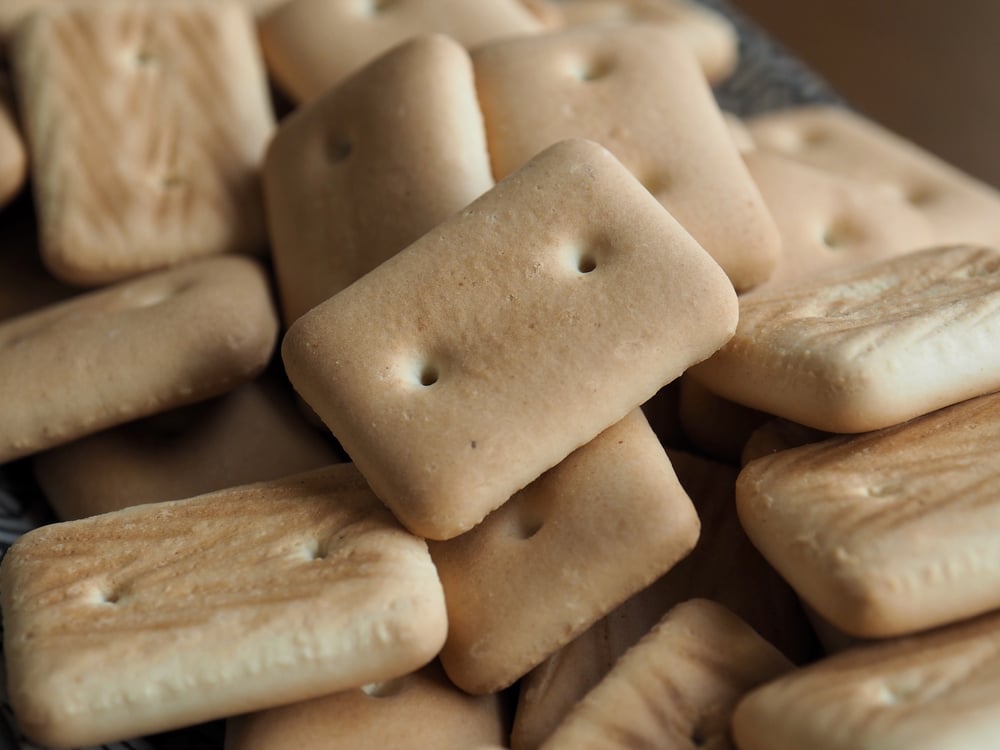
Hardtack is one of the oldest surviving foods still recognizable today. It’s a thick, dry cracker made from flour, water, and salt — baked until almost all moisture is gone so it won’t mold.
Sailors carried it on long voyages for centuries, soldiers ate it during wartime campaigns, and pioneers packed it for overland journeys where fresh food wasn’t an option. On its own, hardtack is nearly inedible.
It was often softened in water, coffee, or whatever liquid was available, and fried in fat when fat could be found. It fed people who had nothing else.
Modern crackers owe something to it.
Pottage
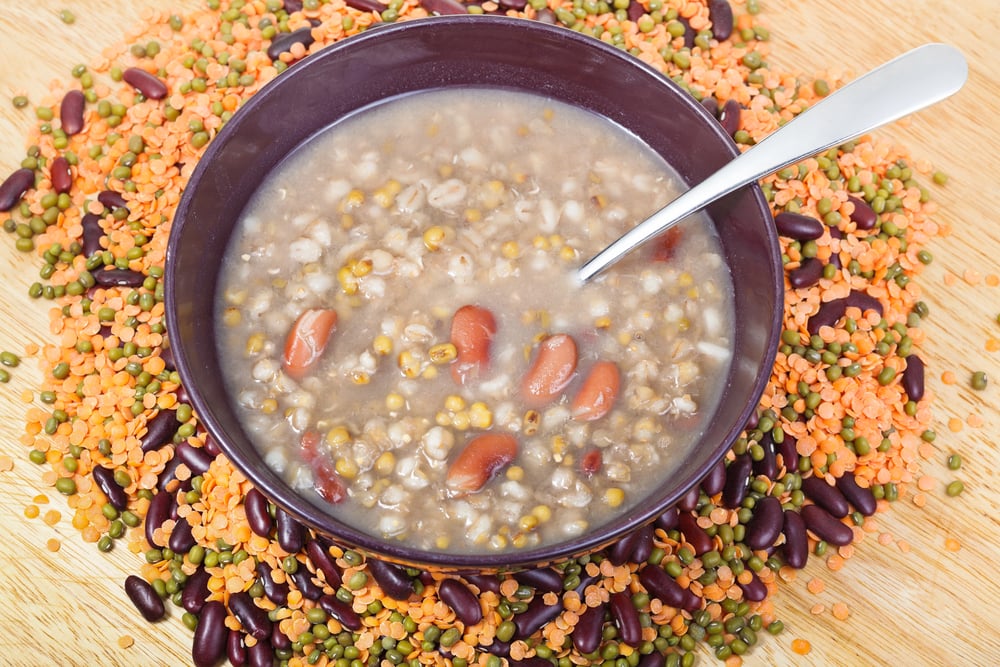
Before the modern concept of a recipe existed, most common people in medieval Europe ate pottage — a thick stew made from whatever vegetables, grains, or scraps were available. Leeks, oats, beans, and occasional scraps of meat went into a pot and cooked down into something filling if not particularly refined.
Pottage wasn’t a single dish. It was a method of survival, adapted daily to what was on hand.
Many of the hearty vegetable stews and soups that define European peasant cuisine are its direct descendants.
Salt Cod

Preserving fish with salt allowed coastal communities to eat through winters and feed sailors on months-long voyages. Salt cod — dried and salted to the point of needing overnight soaking before it’s edible — became a staple across Portugal, West Africa, the Caribbean, and parts of South America, all connected by the Atlantic trade routes that moved it.
Today it forms the backbone of dishes like bacalhau, brandade, and saltfish fritters. Cuisines that once depended on it for survival now celebrate it as tradition.
Haggis

Scottish haggis is made from sheep offal — heart, liver, and lungs — mixed with oatmeal, onions, and spices, then cooked in a sheep’s stomach. It sounds confronting to people unfamiliar with it, but it emerged from straightforward necessity: after slaughter, the organs spoiled fastest and had to be eaten first.
Combining them with oatmeal stretched the meal further. It has since become a point of Scottish national pride, served at formal dinners and Burns Night celebrations with real ceremony.
The survival origin is rarely the part of the story that gets told.
Minestrone

Minestrone is Italian peasant food at its core — a vegetable soup made from whatever the garden or the market had left over. The word translates roughly to “big soup,” which is less a recipe than a philosophy.
You add what you have. You make it stretch.
In parts of Italy, old bread was added to thicken it. In others, beans carried the protein.
The version that appears on restaurant menus today is tidier and more consistent than the original, which was never the same twice.
Corned Beef
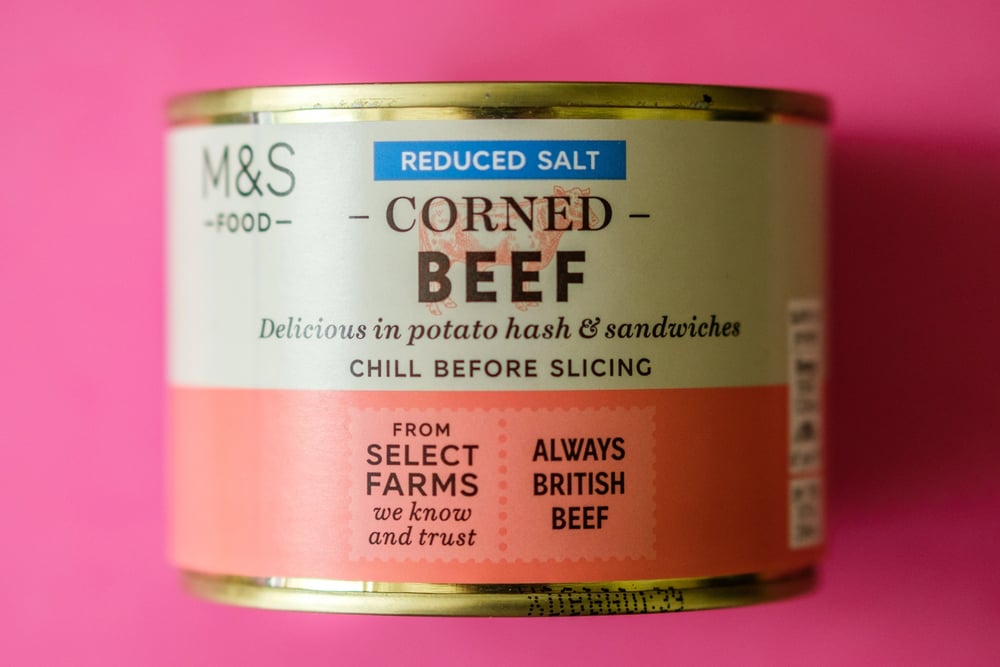
Before refrigeration, preserving beef required curing it with large-grained salt — the “corns” of salt that give the dish its name. The process extended the life of the meat significantly, making it viable for long sea voyages, military rations, and communities without reliable access to fresh livestock.
Irish immigrants in America adapted the dish using the cheapest available cuts, and it became embedded in Irish-American cooking traditions. St. Patrick’s Day menus across the world now feature a dish that began as a preservation solution.
Cassoulet
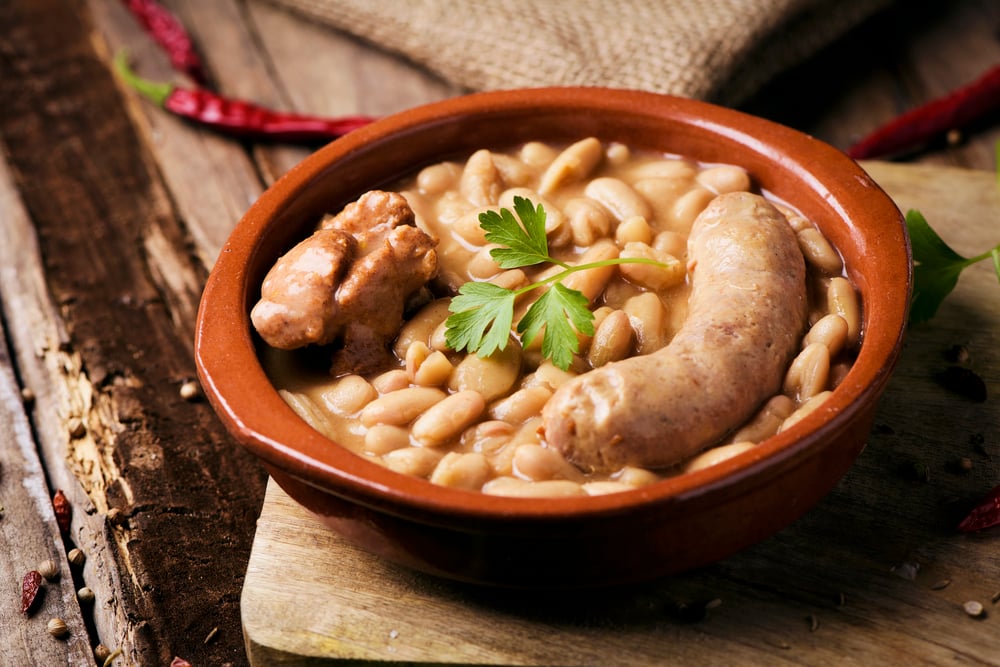
The French cassoulet — a slow-cooked casserole of white beans, sausage, duck confit, and pork — has a creation story tied to war. According to local legend, the dish originated in the town of Castelnaudary during the Hundred Years’ War, when townspeople under siege gathered whatever meat and beans they had and cooked them together to feed defending soldiers.
Whether that exact story is true is debated, but the dish’s bones are clearly peasant food — inexpensive cuts, preserved meats, and legumes that kept people going when fresh provisions were scarce.
Hardboiled Eggs

Eggs boiled in their shell require no tools, no fat, and minimal skill. They travel well, don’t spoil as quickly as raw eggs, and provide reliable protein.
For centuries, hardboiled eggs were carried by laborers, soldiers, and travelers as an easily portable, self-contained meal. Their survival origins are so basic that they barely register as history.
But the deviled egg at a modern party is a direct descendant of the egg that soldiers slipped into their packs before a long march.
Jerky
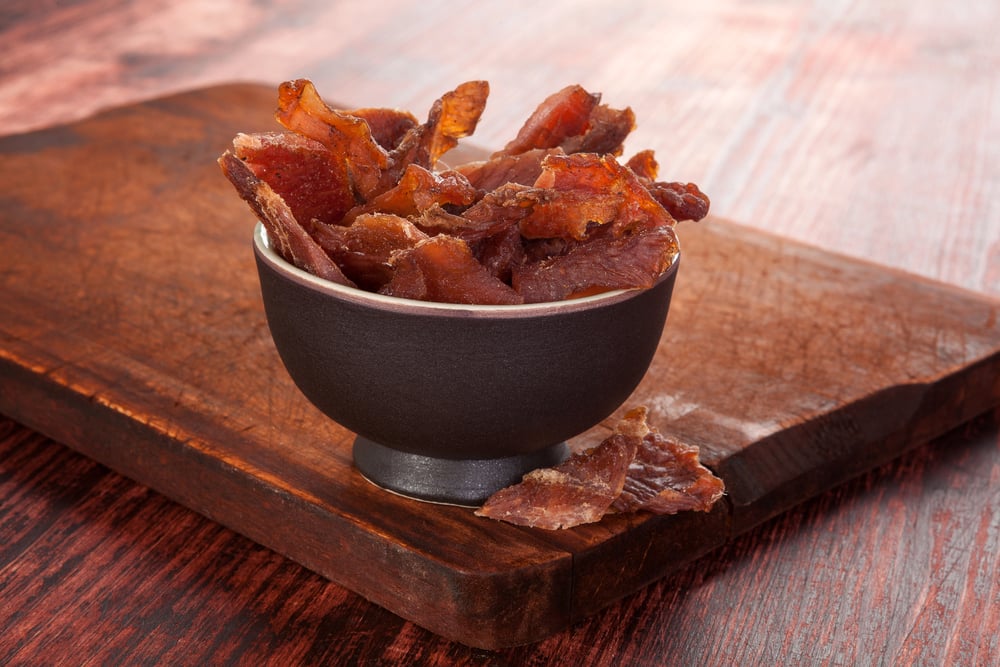
Drying meat in thin strips to remove moisture and prevent spoilage is one of the oldest food preservation techniques in human history. Indigenous peoples across North America made pemmican and dried meat for exactly this purpose — to carry high-calorie protein over long distances without refrigeration.
Jerky today is a convenience snack, sold in plastic bags near the checkout counter. Its origins are in serious survival calculation: how do you carry enough calories to stay alive on a weeks-long journey through territory where food cannot be guaranteed?
Ramen

Before ramen became an art form in Japan’s dedicated ramen shops, it was wartime and postwar survival food. After World War II, Japan faced severe food shortages, and cheap wheat noodles — supplied in part by American aid programs — became a staple.
Momofuku Ando’s invention of instant ramen in 1958 was driven by the same logic: make cheap noodles available to people who needed affordable calories. The dish went from postwar necessity to global phenomenon, with restaurants now charging high prices for bowls that take days to prepare.
Succotash
Succotash is a dish of corn and beans cooked together, originally from the Wampanoag people of North America. The combination isn’t accidental — corn and beans together provide a more complete nutritional profile than either does alone, which made succotash a reliable survival staple for communities through long winters.
European colonists adopted it when their own food supplies failed. It sustained people through some of the most difficult early years of American colonial history and became embedded in Southern cooking traditions.
Bouillabaisse

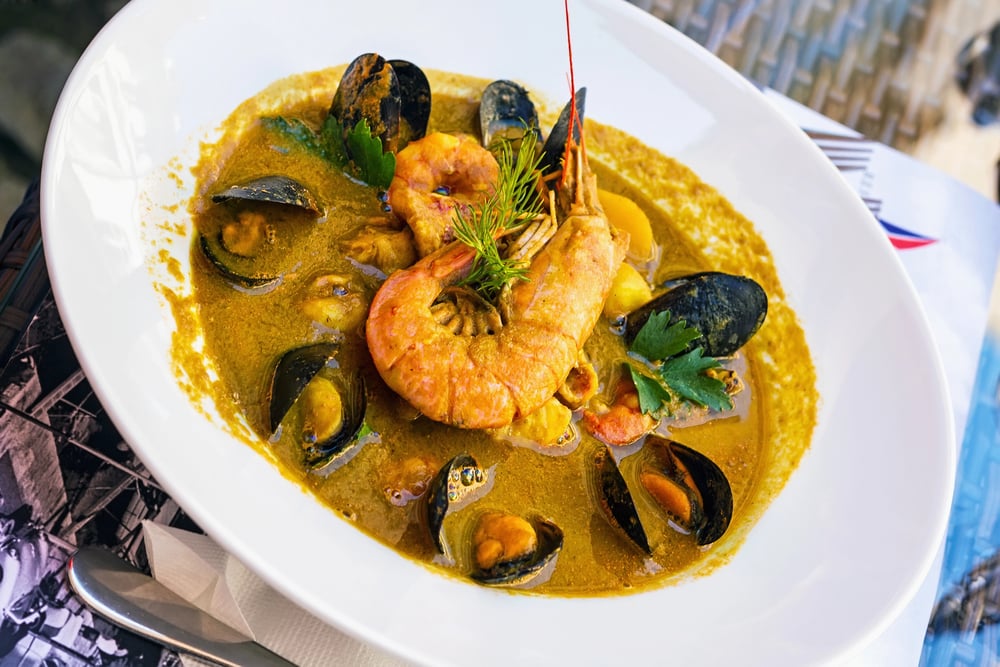
The fishermen of Marseille made bouillabaisse from the fish that couldn’t be sold — bony, odd-looking species that had no market value but were perfectly edible. They cooked them together in a broth with saffron, tomato, and whatever aromatics were available, producing a dish from the scraps of their trade.
It has since become one of the most famous dishes in French cuisine, with restaurants in Marseille serving elaborate versions with strict traditional specifications. The fish that fishermen once couldn’t give away now anchors one of the country’s most celebrated meals.
Soda Bread

Traditional Irish soda bread uses baking soda as a leavening agent instead of yeast, which requires neither time nor temperature control to activate. It was developed in the 1800s during a period when many Irish families had limited access to ingredients and fuel.
The bread could be made quickly with minimal equipment and basic pantry items — flour, buttermilk, salt, and baking soda. It fed families through poverty and hardship and is now considered a staple of Irish culinary identity.
Lentil Soup
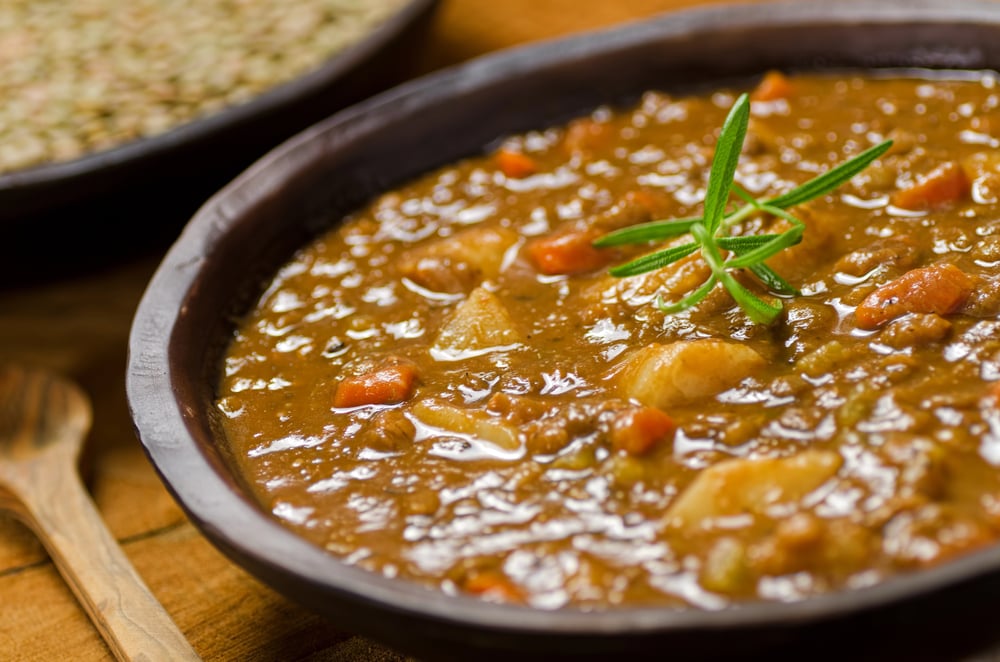
Lentils are among the oldest cultivated crops, and lentil soup has fed people across the Middle East, South Asia, and the Mediterranean for thousands of years. They’re cheap, shelf-stable, high in protein, and require no soaking before cooking.
For communities facing famine, drought, or poverty, lentils were often what stood between enough and not enough. The dish appears in the Bible, in ancient Egyptian records, and in the food traditions of dozens of cultures, each with its own version.
Survival food that became comfort food is a pattern. Lentil soup fits it completely.
Ship’s Biscuits And Burgoo
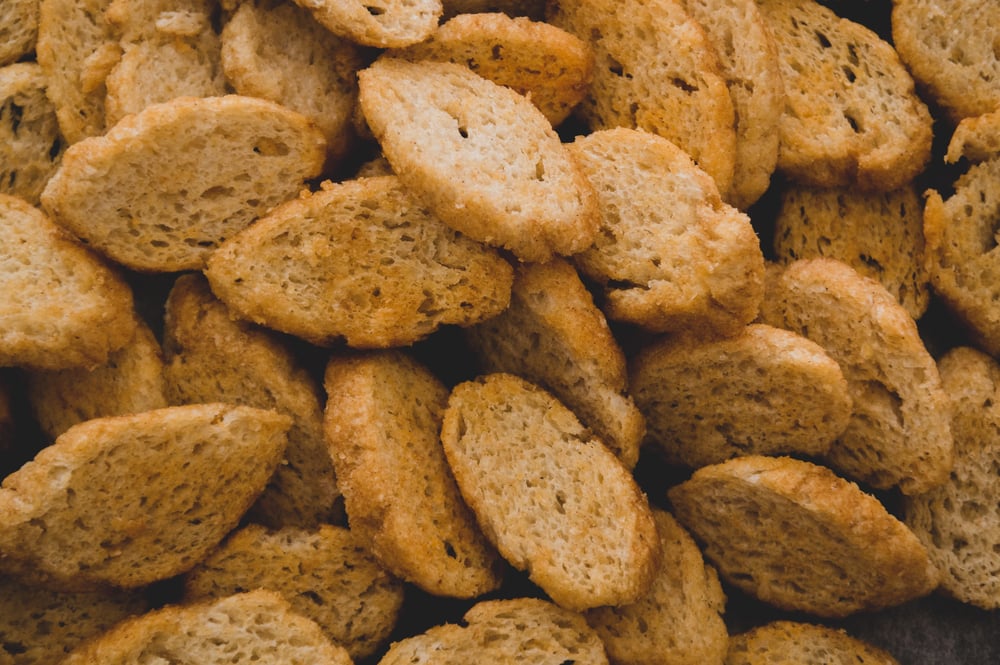
Out at sea, journeys lived off just hardtack along with burgoo – oatmeal simmered in water till thick. This porridge could be cooked quickly, even for large crews, needing nothing that spoiled easily.
Weeks passed without new supplies; meals like these held hunger at bay when the shore felt like a dream. No extras needed, just heat and time turned basic grains into steady fuel.
A bowl of oats boiled slowly till it clumped together appears again and again among poor communities around Britain, usually when stretching meals to cover every hungry mouth mattered most.
Pozole

Pozole comes from Mexico, built around hominy – corn soaked in alkali to shift its feel and value. Long before strangers arrived by sea, people shared it under open darkness at solemn meetings.
After control shifted among rulers, it slipped into regular meals, warming pots when food ran low. These days it lives on where custom nourishes deeper needs.
Out of the old days comes a force in pozole – hominy changed by a method lost to most, born when life was tougher. More than mere corn, it reveals a truth pulled forward by need.
Today it steams with pork, fierce chiles, slices of crisp radish, and lime’s sour touch curling through. In every bite rests what survived time.
Congee
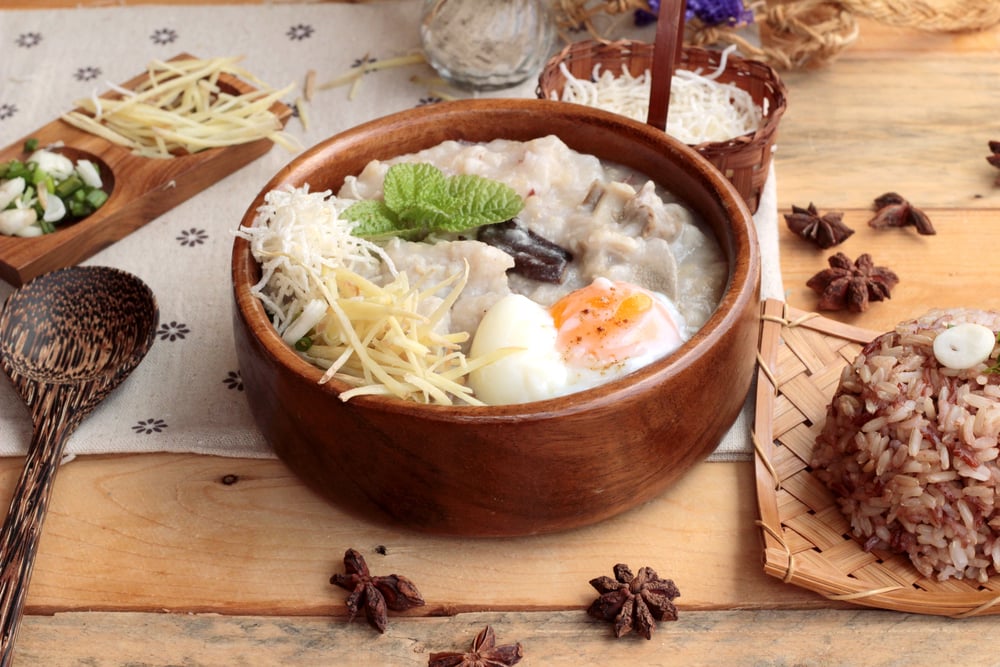
Porridge made from rice has nourished communities throughout China, Japan, Korea, the Philippines, and wide parts of Southeast Asia over countless generations – simply because modest portions of grain, simmered gently in plenty of liquid, yield servings far beyond what raw rice might offer.
Making meager supplies last shaped its purpose entirely. When hunger struck during war or a flood, congee fed those who had nothing left.
Across Asian hospitals today, patients eat it – gentle on stomachs, simple to make. What sits in bowls now, scattered with preserved egg, slivers of ginger, green onion, crisp croutons, still holds quiet traces of bare necessity.
Remove every topping and underneath lies only rice, water, fire, and patience. First recipe born from need.
When Hunger Builds Something Worth Keeping

What connects these dishes sits just beneath the surface. Not born from choice, but built quietly over the years, handed down without words.
Hunger started it all, though hunger is gone now. What remains lives in flavor, in routine – the stew dressed up for guests, the broth simmering with precision, flatbread puffing in heat while memory of scarcity slips further away.
What lingers is usually just the taste. Behind it, the effort fades without notice.
Still, knowing where food starts doesn’t dull the eating. Instead, hunger shaping a dish makes it carry more weight. When survival pushes creation, the result reaches farther than dinner.
More from Go2Tutors!

- The Romanov Crown Jewels and Their Tragic Fate
- 13 Historical Mysteries That Science Still Can’t Solve
- Famous Hoaxes That Fooled the World for Years
- 15 Child Stars with Tragic Adult Lives
- 16 Famous Jewelry Pieces in History
Like Go2Tutors’s content? Follow us on MSN.



