17 Natural Wonders You’ve Probably Never Heard Of
The world is filled with breathtaking landscapes that receive millions of visitors each year — the Grand Canyon, Victoria Falls, and the Northern Lights regularly make travel bucket lists. But beyond these famous attractions lies a world of equally spectacular natural phenomena that remain relatively unknown to the average traveler.
These hidden gems offer the same sense of wonder without the crowds. Here is a list of 17 natural wonders that have somehow managed to stay under the radar despite their incredible beauty and unique characteristics.
Socotra Island
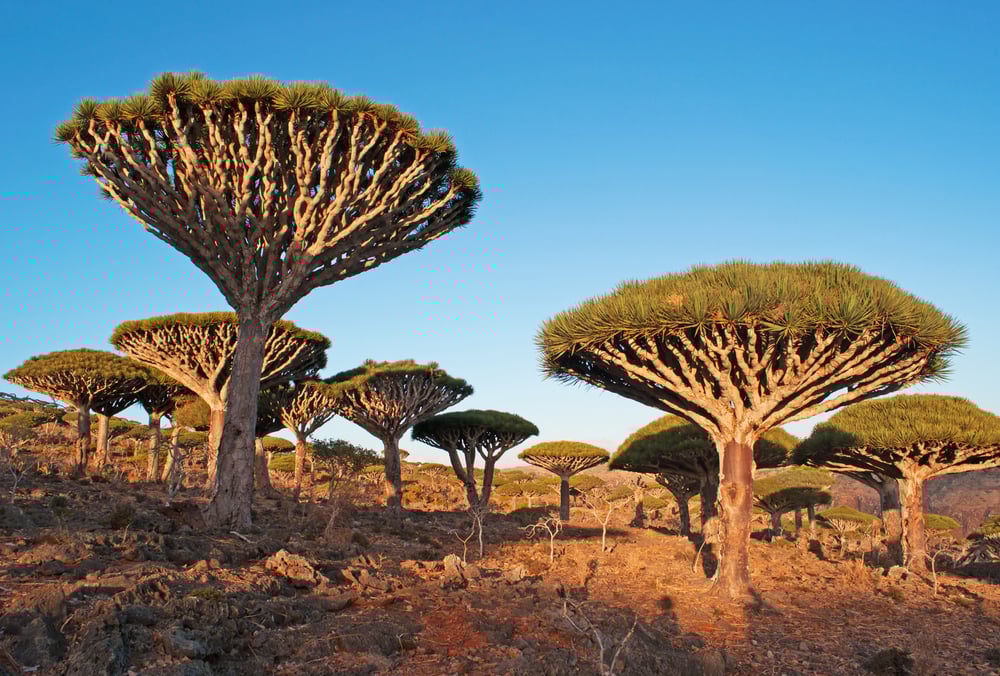
Off the coast of Yemen lies an island that looks more like an alien landscape than a place on Earth. Socotra Island features bizarre-looking dragon blood trees with umbrella-shaped tops and red sap.
The island has been isolated for millions of years, resulting in over 700 endemic species found nowhere else on the planet.
The Wave

Tucked away in the Arizona wilderness sits a sandstone formation so delicate and surreal it seems designed by an artist. The Wave features undulating patterns of red, orange, and yellow sandstone that have been carved by wind and water over millions of years.
Access is strictly limited to just 64 visitors daily through a highly competitive lottery system to protect its fragile beauty.
Fly Geyser

In the Nevada desert sits a colorful mound that looks like something from a science fiction movie. Fly Geyser was accidentally created in 1964 when a well was drilled and not properly sealed, allowing minerals to accumulate and create the multi-colored mounds we see today.
The surrounding pool contains thermophilic algae, which create the vivid red and green coloration that changes with the seasons.
Chocolate Hills
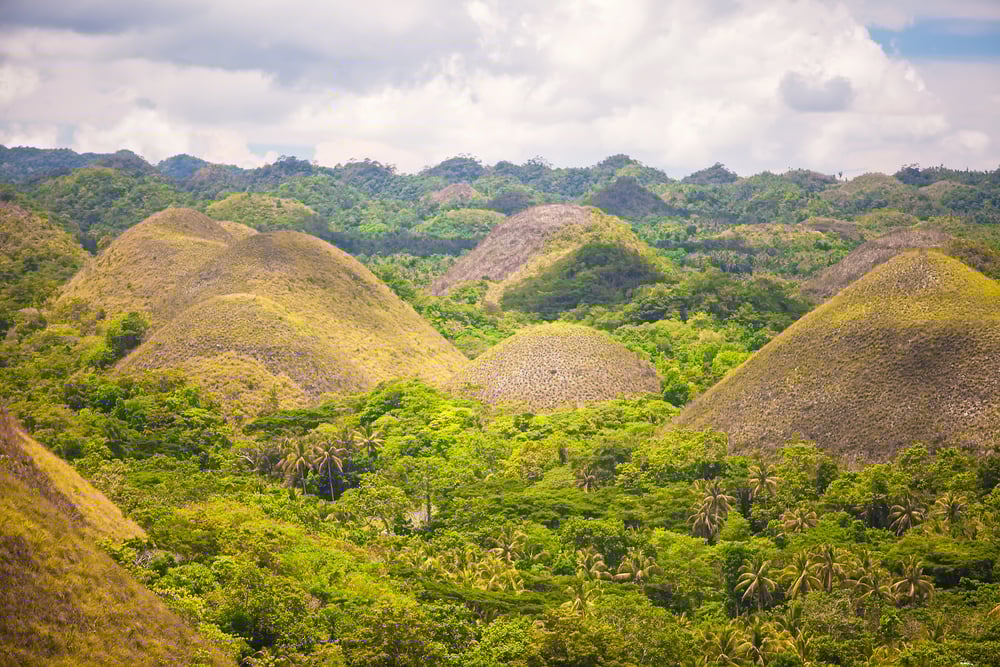
The Philippines hides one of nature’s most peculiar landscapes – over 1,200 perfectly cone-shaped hills spread across 20 square miles. The Chocolate Hills earned their name because during the dry season, the grass covering them turns brown, making them look like giant chocolate mounds rising from the earth.
Local legend claims they formed from the tears of a heartbroken giant, but geologists attribute them to weathered limestone deposits.
Spotted Lake

In British Columbia’s Okanagan Valley sits a polka-dotted body of water that seems almost too strange to be natural. Spotted Lake contains some of the highest concentrations of minerals in any lake worldwide, including magnesium, calcium, and sodium sulfates.
During summer, water evaporates and leaves behind hundreds of mineral ‘pools’ in various colors, creating a spotted appearance visible from nearby highways.
Waitomo Glowworm Caves

Deep beneath New Zealand’s North Island is a cave system illuminated not by electric lights but by thousands of tiny living creatures. The Waitomo Glowworm Caves feature Arachnocampa luminosa, a species found exclusively in New Zealand that produces a blue-green light to attract prey.
Visitors glide silently through the caves on boats, looking up at what appears to be a living galaxy of stars.
Caño Cristales
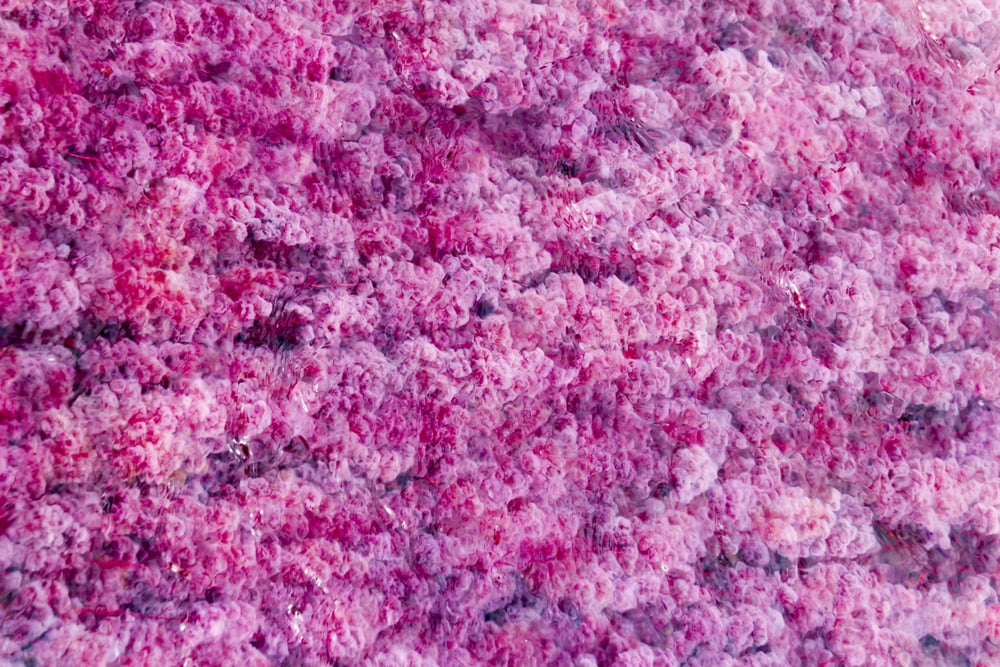
For a few weeks each year, a river in Colombia transforms into what locals call ‘the river that ran away from paradise.’ Caño Cristales erupts into vibrant shades of red, yellow, green, blue, and black thanks to an aquatic plant called Macarenia clavigera.
The plant only displays these colors during the brief period between the wet and dry seasons when water levels and sunlight are perfect.
Pamukkale
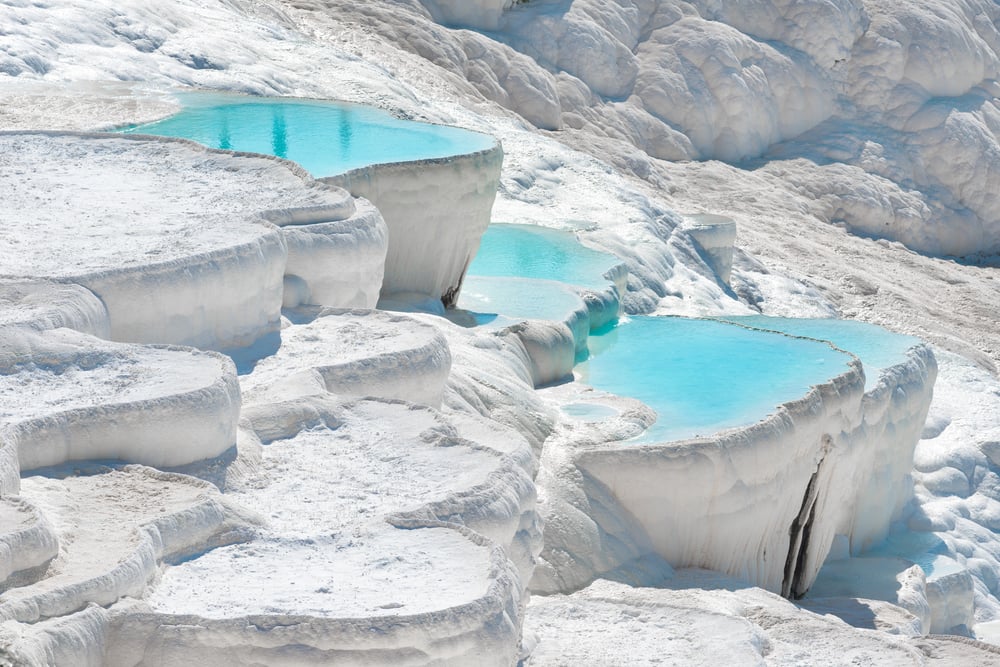
In western Turkey, a hillside gleams white as if covered with snow year-round, regardless of temperature. Pamukkale consists of mineral-rich thermal waters flowing down white travertine terraces, creating natural infinity pools that have attracted visitors since Roman times.
The name translates to ‘cotton castle’ in Turkish, an apt description for these otherworldly calcium formations.
The Door to Hell

In the middle of Turkmenistan’s Karakum Desert burns a fire that has remained lit for over 50 years. The Door to Hell is a natural gas field that collapsed into a cavern, which Soviet geologists set on fire in 1971 to prevent methane spread.
They expected it to burn out in a few weeks, but decades later, the 230-foot-wide crater continues to blaze, creating an eerie nighttime spectacle visible for miles.
Marble Caves
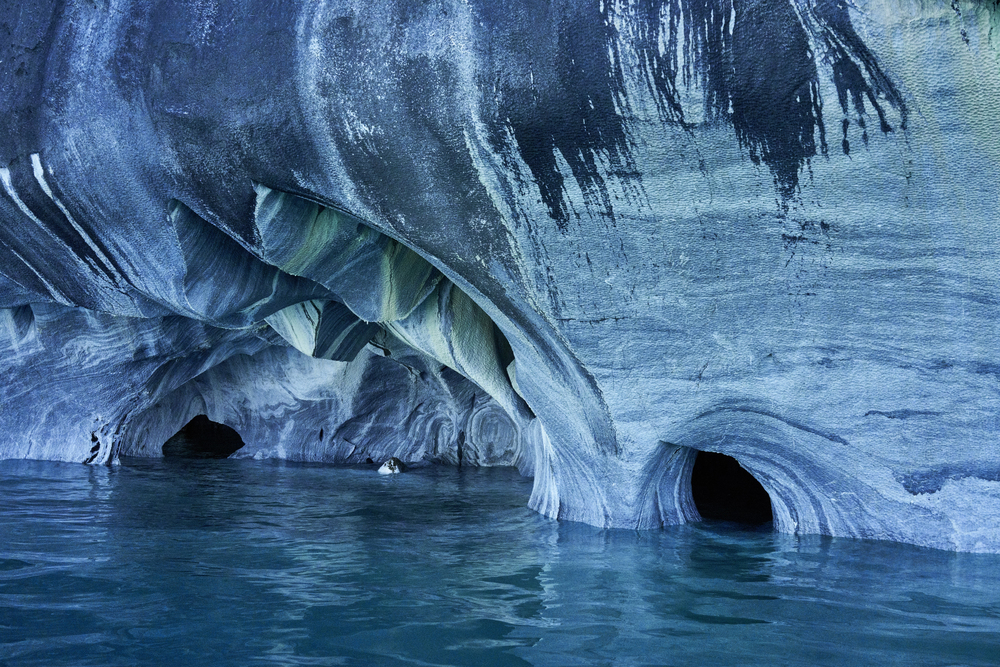
Along the Chile-Argentina border, rising from the turquoise waters of Lake General Carrera, are swirling marble formations that change color with the seasons. The Marble Caves were formed by 6,000 years of wave action eroding the calcium carbonate.
The water’s color shifts throughout the year based on water levels and glacial melt, reflecting different blue hues onto the polished marble surfaces.
Fingal’s Cave

Off the coast of Scotland on the uninhabited island of Staffa stands a sea cave formed entirely of hexagonal basalt columns. Fingal’s Cave resembles a massive pipe organ, with its geometric columns creating natural acoustics so remarkable that composer Felix Mendelssohn wrote an overture inspired by the sounds he heard there.
The cave was formed by the same ancient lava flow that created Northern Ireland’s Giant’s Causeway.
Richat Structure
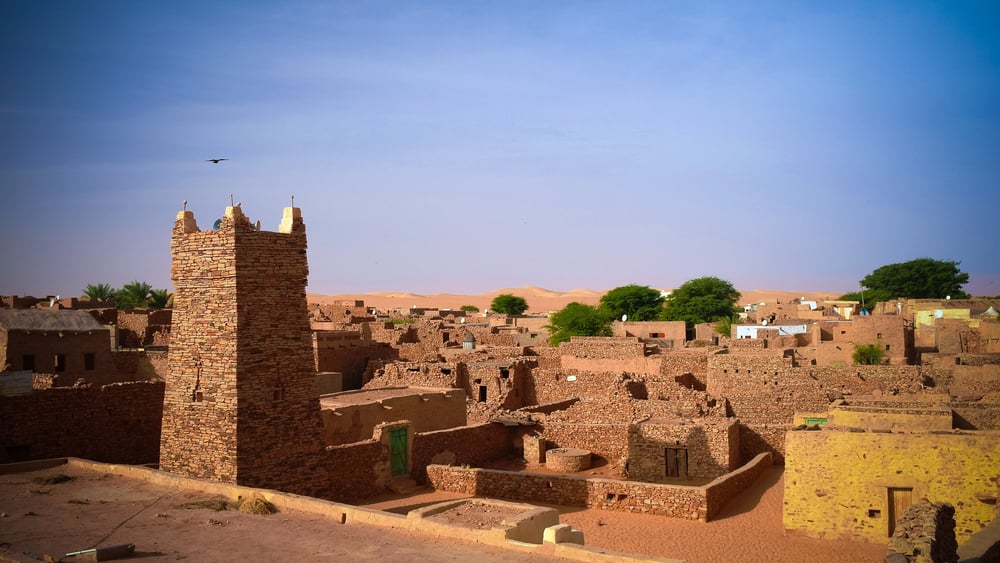
In the Sahara Desert of Mauritania lies a perfectly circular formation nearly 30 miles across that’s so precise it was initially thought to be artificial. The Richat Structure, also called the Eye of the Sahara, consists of concentric rings of exposed geological layers created when a symmetrical dome of rock was gradually eroded.
It remained largely unknown until space programs revealed its perfect circular nature from orbit.
Lake Hillier

Australia’s Lake Hillier maintains its bubblegum pink color year-round, regardless of temperature changes. The lake’s distinctive hue comes from the presence of Dunaliella salina microalgae, which produce carotenoids, and halophilic bacteria that thrive in its extreme salinity.
Unlike other pink lakes that change color, Lake Hillier’s pink shade remains vibrant even when water is removed and placed in a container.
Salar de Uyuni

In Bolivia sits the world’s largest salt flat, spanning over 4,000 square miles at an elevation of nearly 12,000 feet. Salar de Uyuni transforms into the world’s largest mirror during the rainy season when a thin layer of water creates a perfect reflection of the sky.
The salt flat contains over half the world’s lithium reserves and is so flat that NASA uses it to calibrate satellite altimeters.
Zhangye Danxia Landform

In China’s Gansu Province, rainbow-colored mountains rise from the landscape in stripes so vibrant they seem painted. The Zhangye Danxia Landform features layers of different colored sandstone and minerals that were pressed together over 24 million years and then buckled by tectonic activity.
The result is a mountain range with swirls of reds, yellows, greens, and blues that appear most vivid after rainfall.
Blue Hole
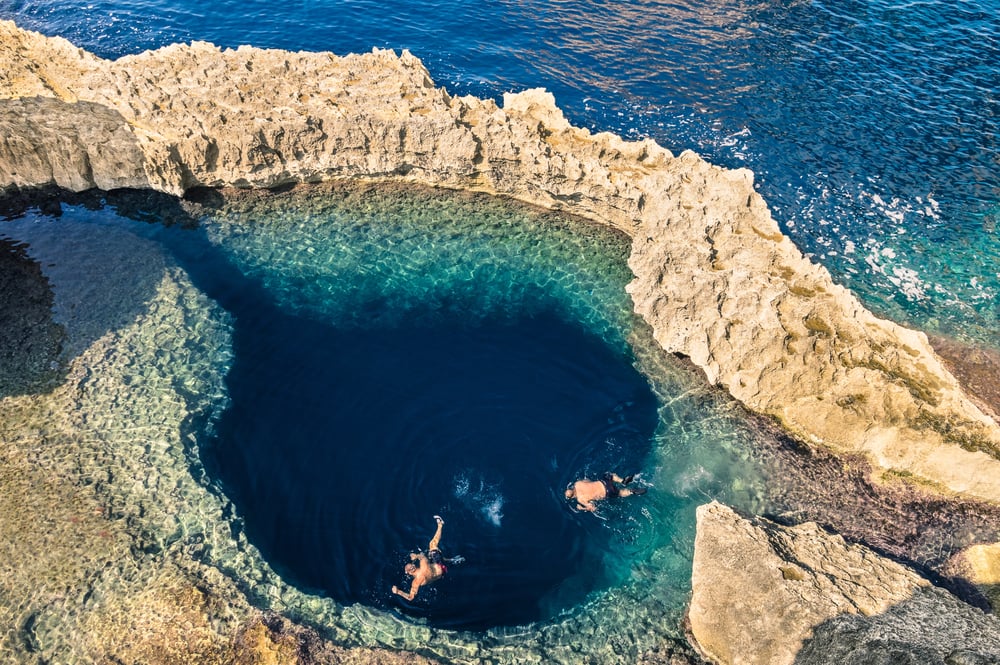
Off the coast of Belize sits a perfectly circular deep blue hole that plunges 407 feet into darkness. The Blue Hole is a massive underwater sinkhole that formed during several episodes of glaciation when sea levels were much lower.
When the ocean rose again, the cave was flooded, creating one of the most distinctive dive sites in the world with stalactites and stalagmites visible deep below the surface.
Moeraki Boulders
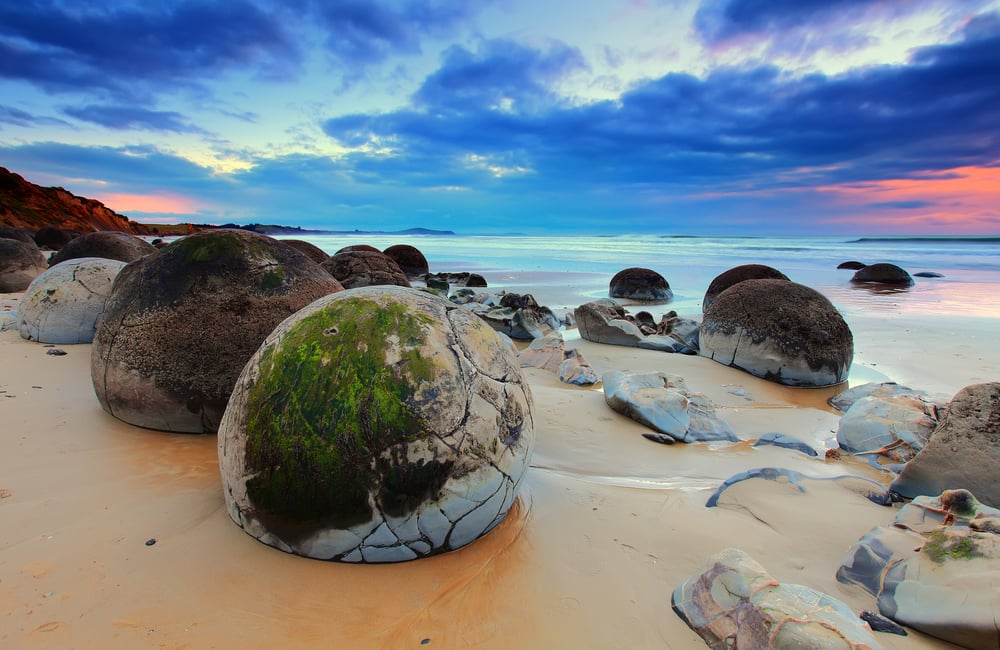
Along a stretch of New Zealand’s Otago coast lie perfectly spherical boulders that look like giant marbles left by giants. The Moeraki Boulders began forming over 60 million years ago from sediment accumulation around a core, similar to how pearls form.
Some of the boulders have cracked open, revealing stunning crystallized yellow centers that contrast with their gray exteriors.
Beyond the Familiar Horizon

These natural wonders remind us that our planet still holds countless secrets, even in an age when satellite imagery has mapped every inch of Earth’s surface. Each of these places tells a story of geological processes working over millennia to create something truly extraordinary.
While Instagram feeds fill with the same popular destinations, these lesser-known wonders offer both exceptional beauty and the thrill of discovery. The next time you plan an adventure, consider seeking out the places that don’t make typical travel lists – they often provide the most memorable experiences.
More from Go2Tutors!

- The Romanov Crown Jewels and Their Tragic Fate
- 13 Historical Mysteries That Science Still Can’t Solve
- Famous Hoaxes That Fooled the World for Years
- 15 Child Stars with Tragic Adult Lives
- 16 Famous Jewelry Pieces in History
Like Go2Tutors’s content? Follow us on MSN.