17 Vintage Toy Advertisements That Shaped Generations
There’s something magnetic about flipping through old magazines and stumbling across toy ads from decades past. The bold colors, the wild promises, the kids with perfectly feathered hair clutching plastic treasures like they’d just discovered gold.
These weren’t just advertisements—they were cultural architects, quietly building the foundation of what childhood should look like for millions of kids who’d never met but somehow shared the exact same dreams. Those 30-second TV spots and glossy magazine spreads didn’t just sell toys.
They sold entire worlds, complete with soundtracks and storylines that lasted long after the batteries died. They taught kids what to want, what to expect, and what growing up might feel like if you played your cards right.
Barbie

The original 1959 Barbie commercial opens with a declaration that still lands like a small revolution: “Someday I’m gonna be exactly like you.” Not a baby doll, not a stuffed animal—a woman with a career, a car, and a wardrobe that suggested infinite possibility.
The ad positioned Barbie as an aspiration made tangible. What made those early Barbie commercials brilliant wasn’t the doll itself but the promise embedded in every scene.
Here was a toy that didn’t ask you to nurture or protect something smaller than yourself—it asked you to imagine being someone larger. The commercial’s narrator spoke directly to that yearning: “Till then I know just what I’ll do—Barbie, beautiful Barbie, I’ll make believe that I am you.”
Hot Wheels
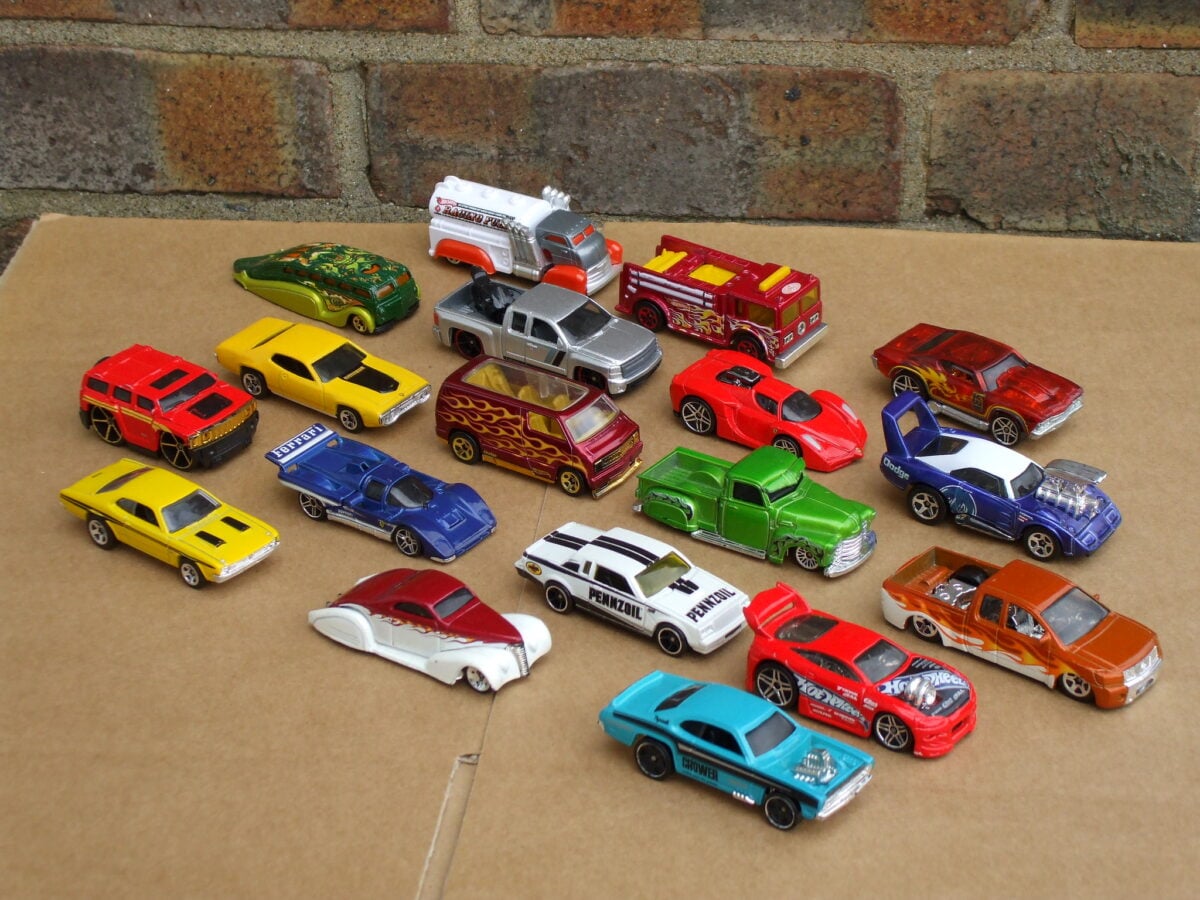
Mattel’s Hot Wheels burst onto television screens in 1968 with the kind of kinetic energy that made sitting still feel like punishment. Those orange track pieces snapped together with satisfying precision, and the cars—polished to mirror brightness—screamed down loops and curves that defied every law of physics except the ones that mattered most to eight-year-olds.
The genius lived in the promise of speed without consequences, of engineering marvels that fit in your pocket. “Hot Wheels are the fastest metal cars in the world!” the narrator announced, and the kids believed it completely.
Why wouldn’t they? The cars on screen moved with a precision that suggested real automotive mastery was just a few track pieces away.
G.I. Joe
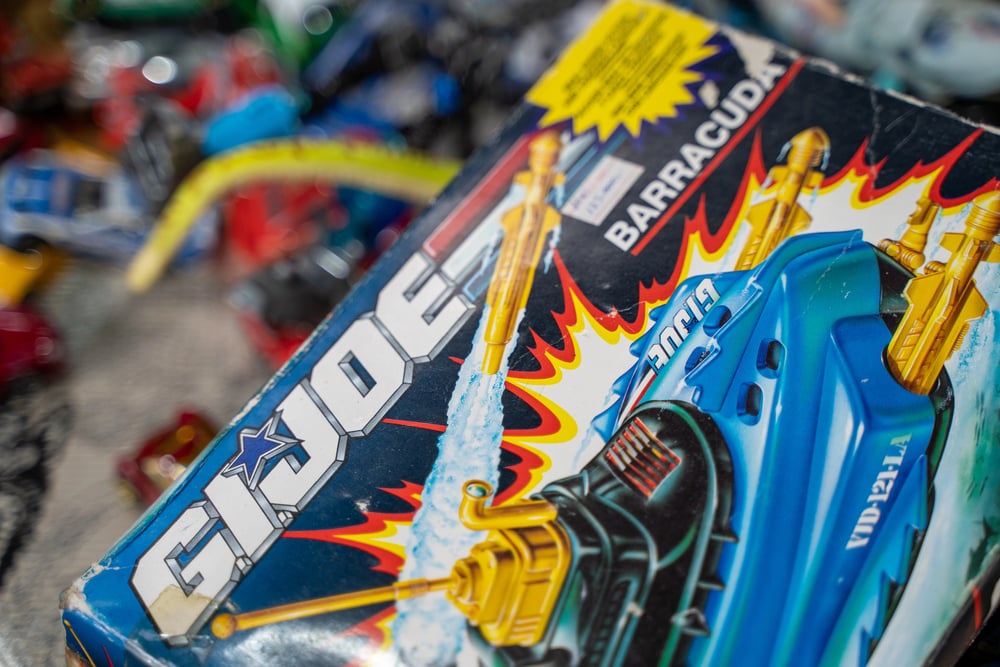
When Hasbro introduced G.I. Joe in 1964, the marketing walked a careful line between military fantasy and childhood play. These weren’t toy soldiers—they were “America’s Movable Fighting Man,” complete with realistic uniforms and accessories that transformed any living room into contested territory.
The early commercials presented Joe as more than a doll (though that’s exactly what he was). He represented capability, resourcefulness, and a kind of grown-up competence that felt both thrilling and achievable. The tagline that emerged later—”A Real American Hero”—wasn’t just a marketing copy.
It was a roadmap for how boys might imagine their own futures: brave, prepared, and unquestionably capable.
Easy-Bake Oven
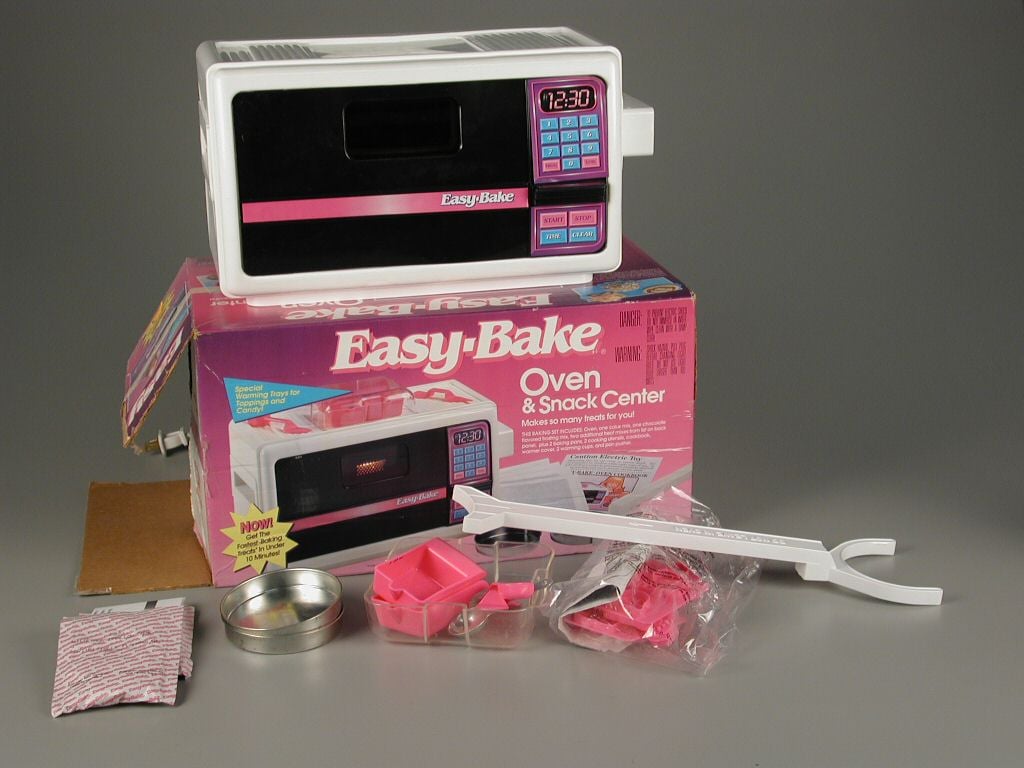
The Easy-Bake Oven commercials of the 1960s and 70s operated on a premise that seems almost quaint now: children desperately wanted to replicate adult domestic life, and they wanted to do it with the seriousness that real cooking demanded. Those ads showed kids—mostly girls, because that’s how these things worked—bent over tiny ovens with the concentration of professional chefs.
But there’s something unexpectedly subversive about those commercials when you watch them now (and you can find them if you dig around YouTube, which is a rabbit pit worth falling into). They weren’t selling play—they were selling competence.
The message was clear: with the right tools, even a seven-year-old could produce something worth eating, something worth sharing, something worth taking seriously.
Lincoln Logs
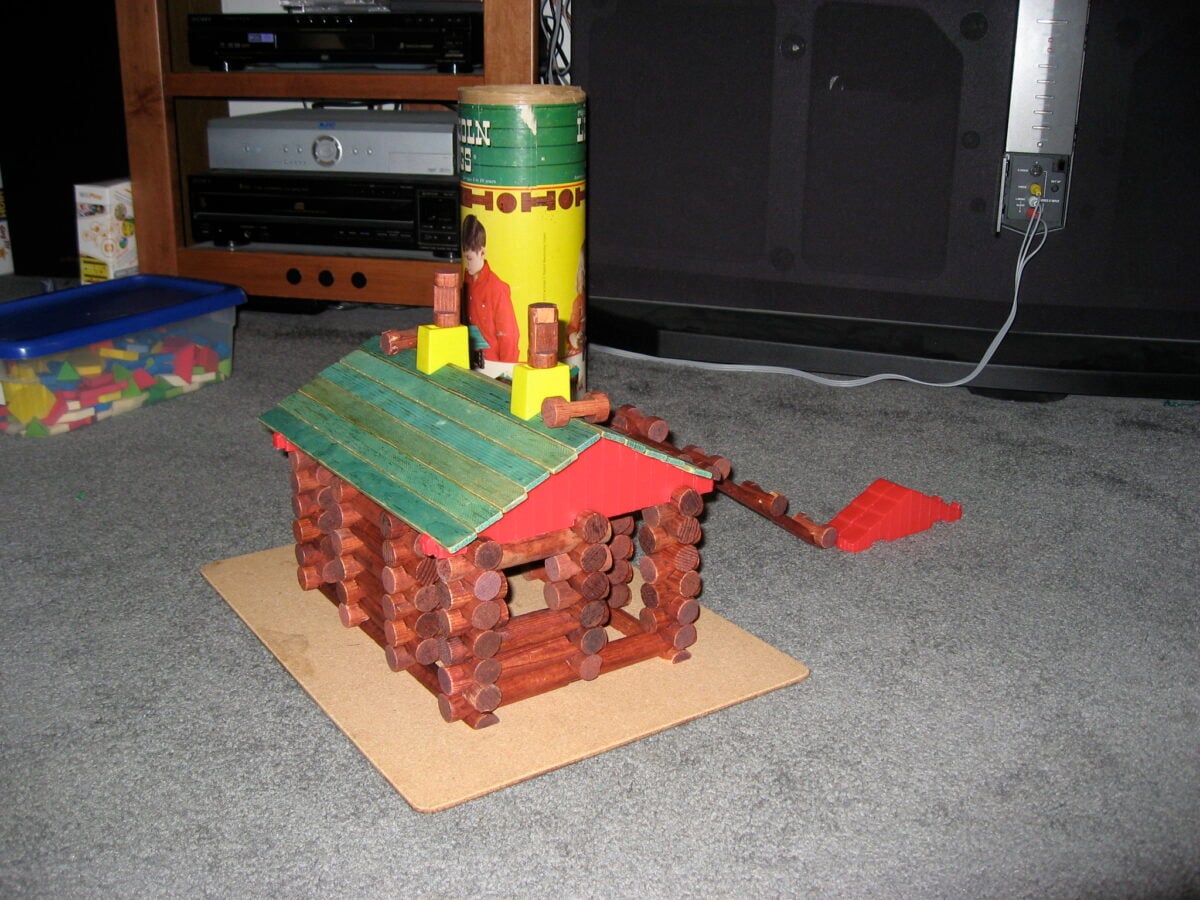
Lincoln Logs advertisements from the 1950s and 60s carry a weight that modern toy commercials rarely attempt. These weren’t toys for immediate gratification—they were tools for building something that would last, something you could be proud of when you stepped back to admire your work.
The commercials showed children constructing elaborate frontier settlements with a patience that seems impossible now (though maybe that’s just nostalgia talking—maybe kids were just as impatient then, but the cameras only rolled when they were focused). And here’s the thing about those ads: they never promised easy success.
They promised the satisfaction that comes from doing something difficult well. Which is saying something.
So what made these advertisements different from the toy marketing that followed? They assumed children were capable of sustained effort, that the process of building something complex was itself a form of entertainment. The tagline—”Lincoln Logs, America’s National Toy”—suggested that playing with these wooden pieces was somehow essential to proper childhood development, and honestly, they might have been right.
Tinker Toys
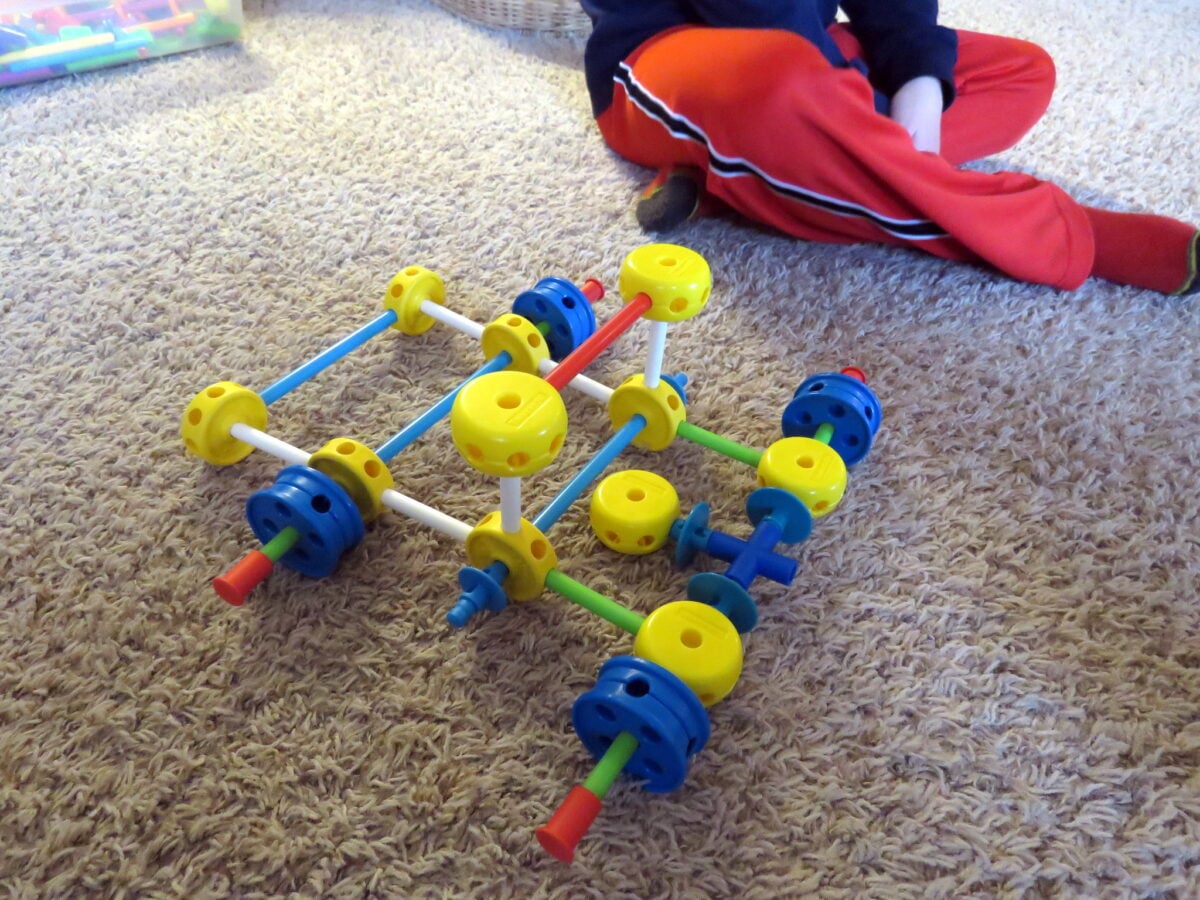
The Tinker Toy commercial opens with a simple question that manages to be both innocent and profound: “What are you going to build today?” It’s the kind of question that assumes infinite possibility lives inside a canister of wooden spools and sticks—and for generations of children, that assumption turned out to be correct.
These weren’t toys with predetermined outcomes. The commercial showed kids constructing everything from simple windmills to elaborate architectural impossibilities, and the message was clear: the only limit was imagination (plus whatever you could manage with basic engineering principles and a finite number of wooden pieces).
But what strikes you about those old Tinker Toy ads is how they celebrated the process of figuring things out. Not the finished product, not the moment of completion, but the actual work of problem-solving with your hands.
Mr. Potato Head
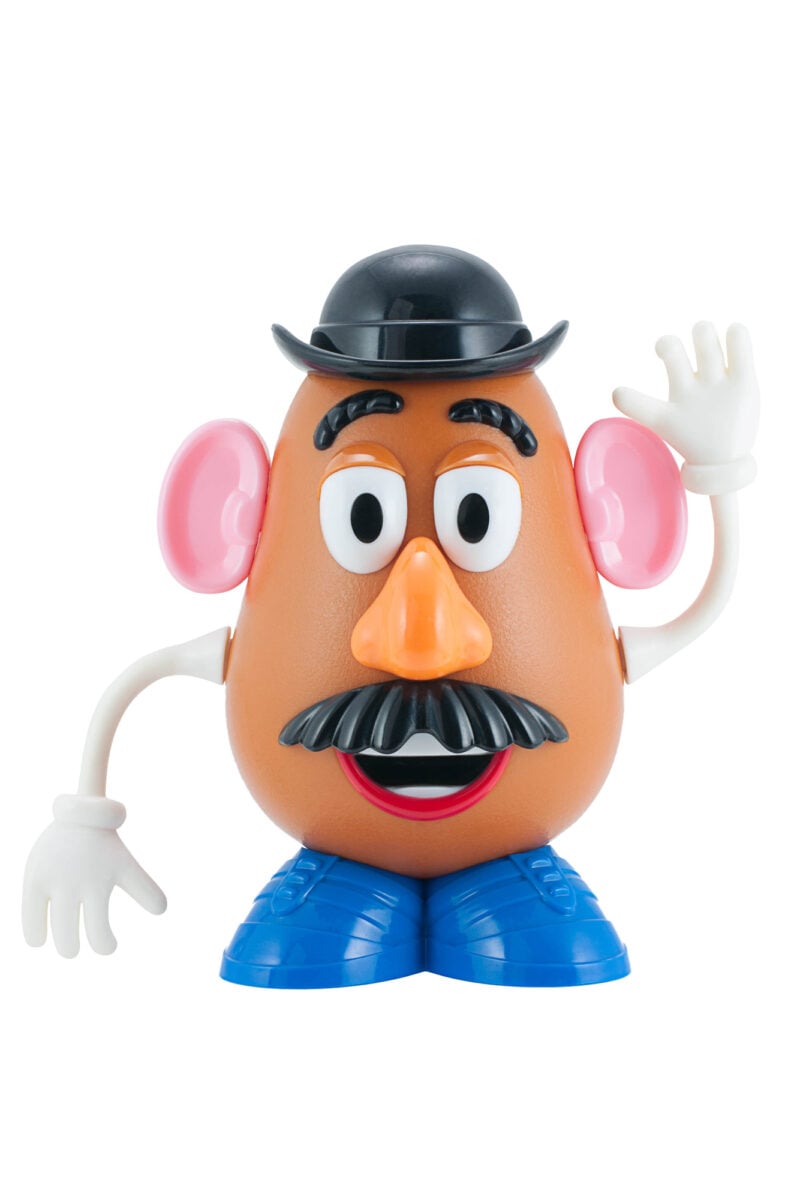
Mr. Potato Head’s early commercials are wonderfully absurd in retrospect, partly because they featured children jamming plastic features into actual potatoes—real vegetables that would eventually rot if you forgot about them in your toy box. But there’s something almost sophisticated about the original concept: a toy that required you to provide part of the raw materials yourself.
The commercial narrator’s enthusiasm feels genuine rather than manufactured: “Mr. Potato Head! You can make him glad or sad or mad!” It’s a simple promise, but it touches on something fundamental about play—the desire to control emotional outcomes, to be the director of someone else’s mood, even if that someone else is a potato.
When Hasbro started including the plastic potato body in 1964, something essential was lost. The original version required kids to raid the kitchen, to negotiate with parents, to understand that play sometimes demanded real-world resources.
That’s a lesson worth learning, even if it came with occasional produce spoilage.
Slinky

The Slinky commercial is perfect in its simplicity, and that perfection feels almost accidental—like someone stumbled onto the ideal way to sell a metal spring and decided not to overthink it. “It’s Slinky, it’s Slinky, for fun it’s a wonderful toy,” the jingle begins, and then proceeds to demonstrate exactly what a metal spring can do when gravity gets involved.
There’s no story, no character development, no promise of transformation. Just a spring walking down stairs with the kind of hypnotic rhythm that suggests the universe operates according to principles both predictable and magical.
The commercial understands something important: sometimes the most compelling advertisement is simply showing a thing doing what it does best, without embellishment or explanation. And yet (because there’s always an “and yet” with these vintage ads), there’s something almost zen about watching Slinky descend those stairs in perfect mechanical rhythm. It’s meditation disguised as marketing, a 30-second lesson in physics that feels like poetry.
Etch A Sketch
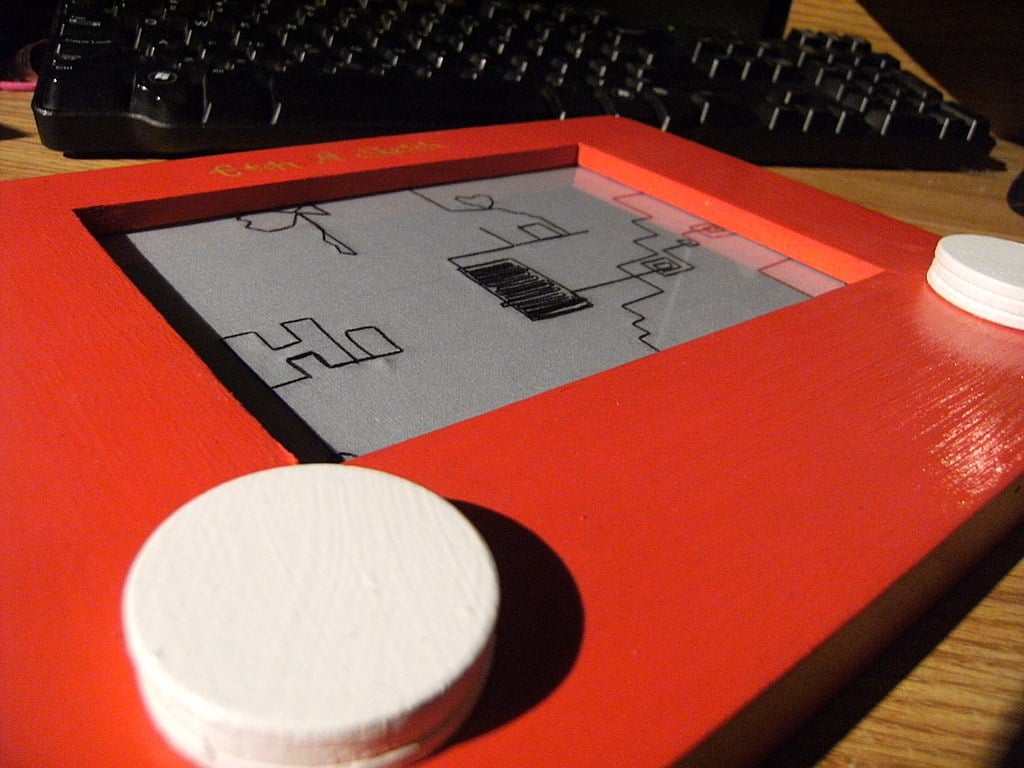
The Etch A Sketch commercial presents drawing as a form of magic—which, when you think about the actual mechanics of aluminum powder and a stylus, isn’t that far from the truth. But what made those ads compelling wasn’t the novelty of the drawing mechanism; it was the promise of endless second chances.
“Draw anything—then erase and draw again!” The tagline captures something essential about creative confidence: the knowledge that mistakes aren’t permanent, that you can always shake away what isn’t working and start fresh.
For kids who spent most of their time in environments where errors had consequences, the Etch A Sketch offered a rare space for fearless experimentation. Those commercials showed children creating elaborate drawings with the kind of precision that suggested real artistic skill was just a few knob twists away.
Whether that was true probably depended on the kid, but the promise itself—that art could be both adventurous and forgiving—was worth believing in.
Tonka Trucks
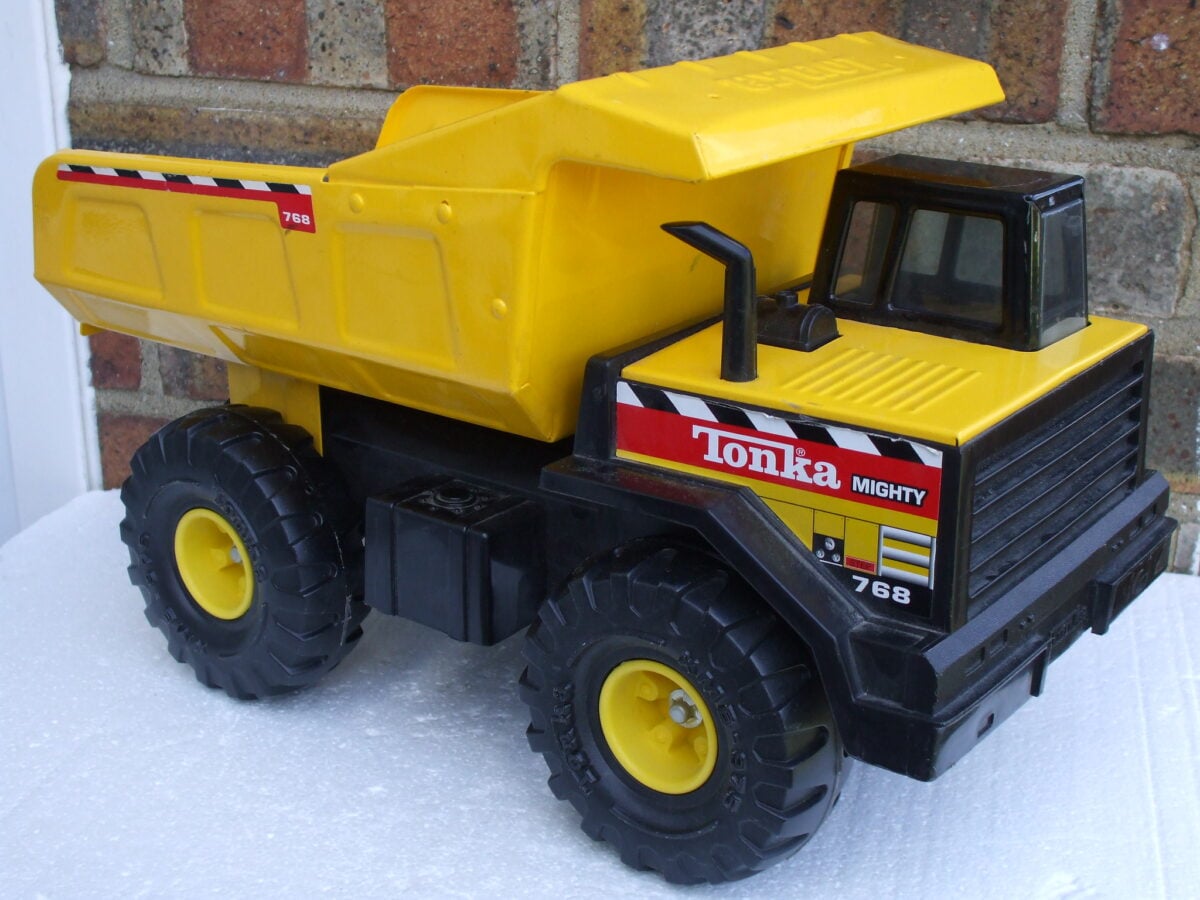
Tonka truck commercials from the 1960s and 70s operated on a single, unwavering premise: these weren’t toys, they were small-scale versions of real construction equipment that happened to fit in sandboxes. The ads showed kids operating dump trucks and bulldozers with the seriousness of actual heavy machinery operators, and somehow it didn’t feel ridiculous.
“Tonka—built like the real thing!” wasn’t just a slogan—it was a promise that childhood play could have real-world weight and consequences. These trucks could haul actual dirt, move actual rocks, reshape actual landscapes (even if those landscapes were mostly backyard sandbox territories).
The commercials understood that kids didn’t want to pretend to be construction workers; they wanted to actually be construction workers, just temporarily and on a smaller scale.
Spirograph
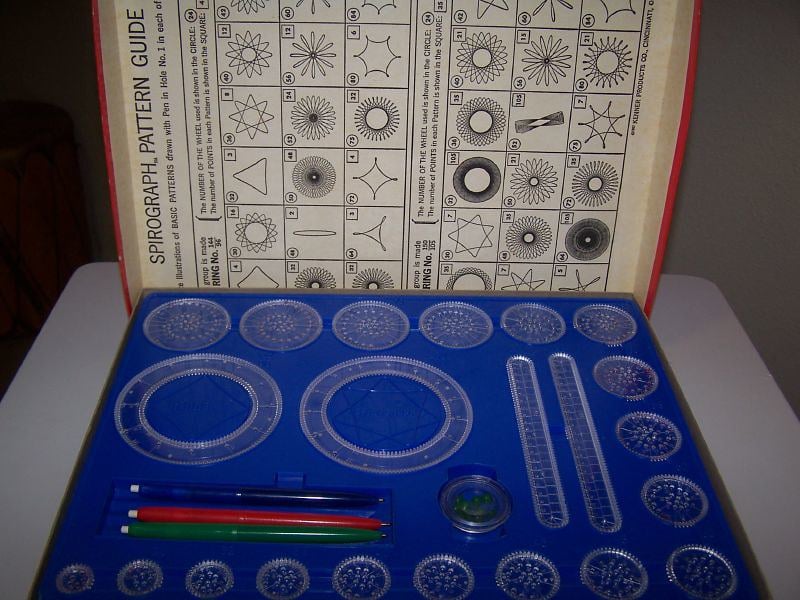
Spirograph advertisements promised mathematical beauty without the mathematics—geometric art that emerged from simple mechanical processes. The commercial showed kids creating elaborate mandala-like patterns with the kind of precision that suggested they’d unlocked some secret artistic technique.
“Beautiful, intricate designs that seem impossible to draw!” The narrator’s enthusiasm feels earned because Spirograph really did deliver something that looked more sophisticated than the process required.
Here was a toy that made complex beauty accessible to anyone who could hold a pen steady and follow a simple procedure. But there’s something deeper happening in those Spirograph commercials.
They’re selling the idea that art doesn’t always require natural talent—sometimes it requires the right tools and the patience to let mechanical processes reveal their own inherent beauty. That’s not a bad lesson for kids to learn, even if they’re learning it through plastic gears and colored pens.
Rock ‘Em Sock ‘Em Robots
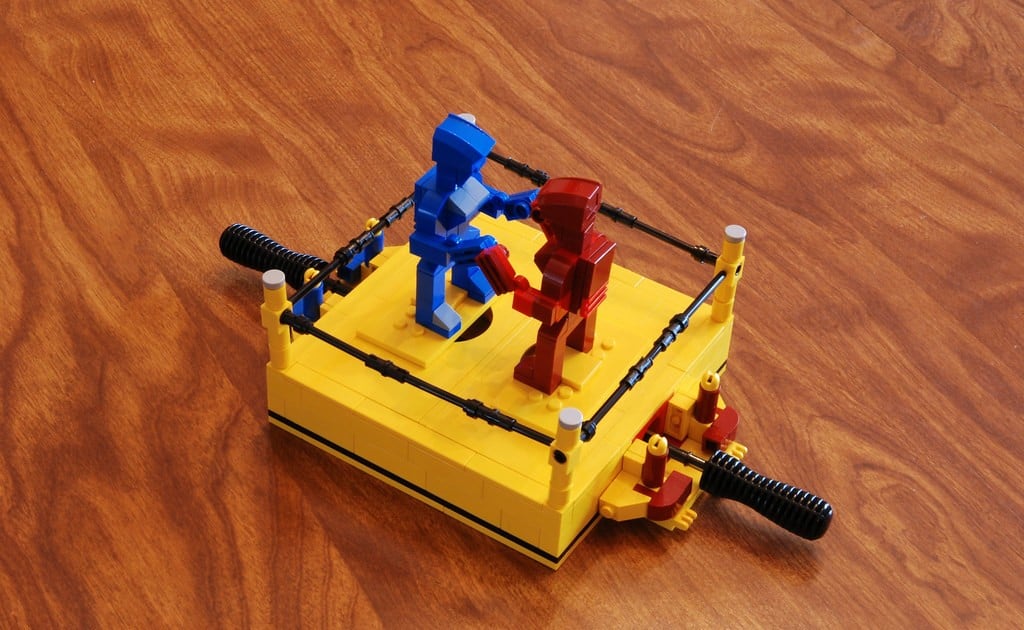
The Rock ‘Em Sock ‘Em Robots commercial is pure kinetic joy—two kids hunched over a boxing ring, frantically pushing buttons while plastic robots pound each other into mechanical submission. When one robot’s head finally pops up, the commercial delivers its perfect tagline: “You knocked my block off!”
There’s something beautifully direct about the whole enterprise. No complex rules, no elaborate setup, no story beyond the most basic competitive framework imaginable.
Just two robots, two kids, and the primal satisfaction of mechanical victory. The commercial understands that sometimes the best games are the ones that don’t require much explanation—you push buttons, things happen, someone wins.
View-Master
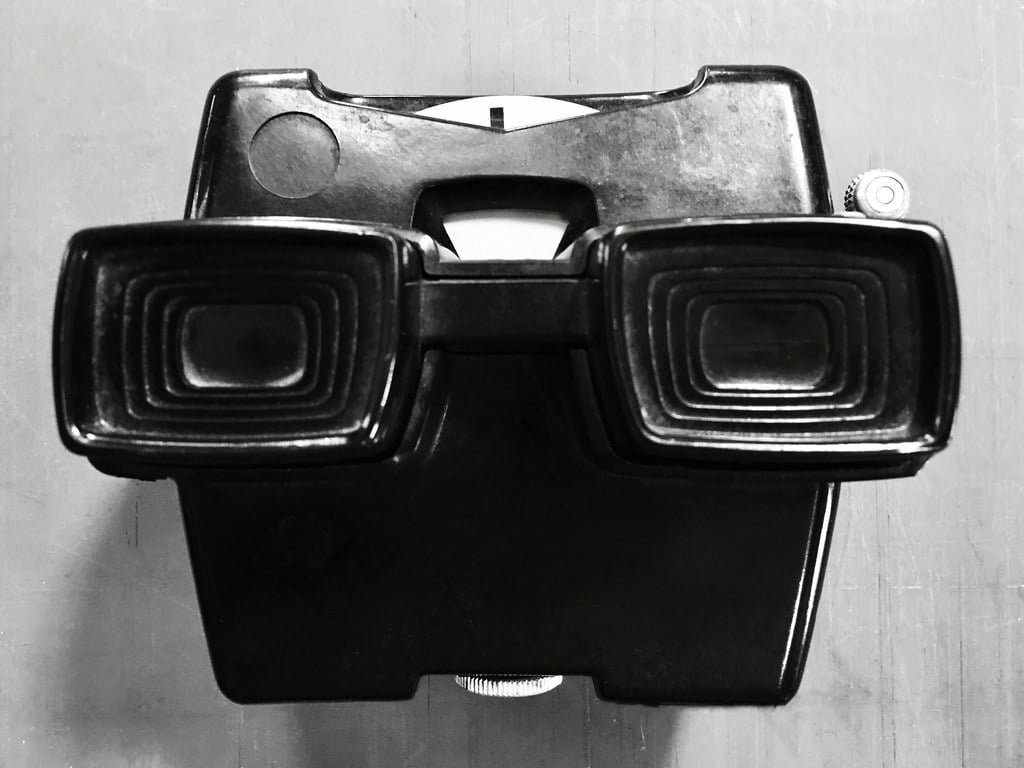
View-Master commercials transported children to impossible places without leaving their living rooms, and the marketing leaned into that transportive power with the kind of earnest wonder that modern advertising rarely attempts. “See the Grand Canyon! Visit exotic lands! Explore outer space!”—all delivered with the breathless enthusiasm of a travel agent selling impossible vacations.
Those 3D images, perfectly aligned and surprisingly sharp, really did deliver something that felt magical in an era before personal computers or streaming video. The commercial showed kids clicking through reels with the focused attention of explorers documenting new territories, and in a way, that’s exactly what they were doing.
The genius of View-Master marketing was how it positioned the device not as a toy but as an educational tool that happened to be entertaining. Parents could justify the purchase, kids got their adventure fix, and everyone could pretend that clicking through cartoon scenes counted as geography lessons.
Lite-Brite
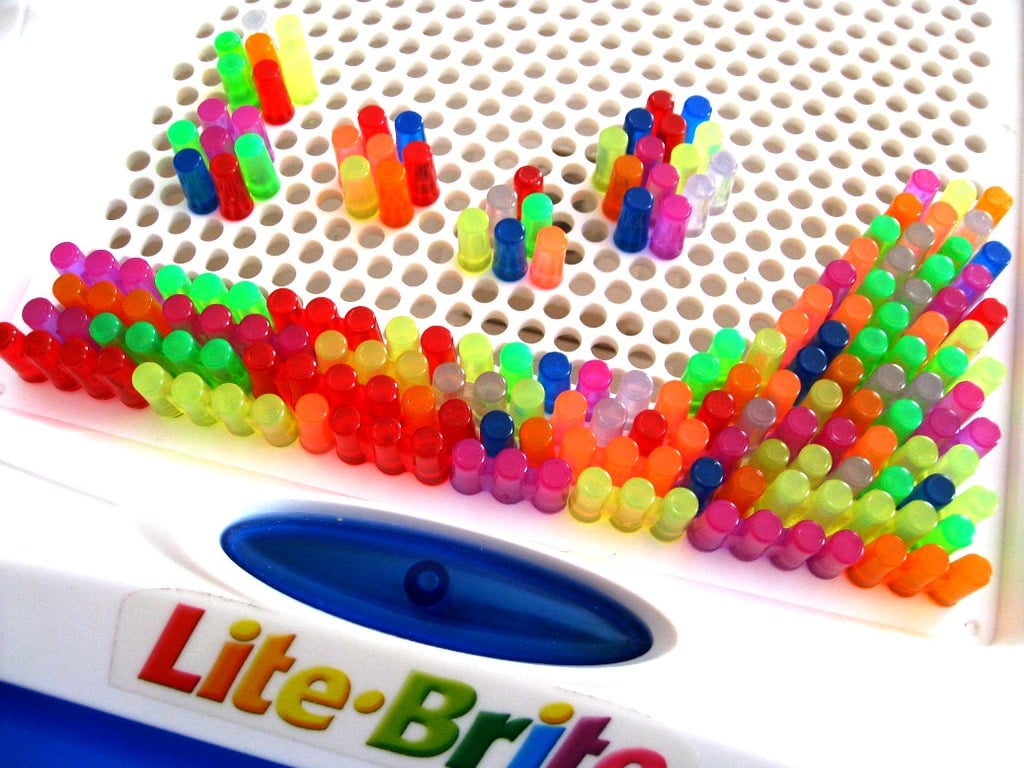
Lite-Brite commercials understood something fundamental about children’s relationship with light and color: given the right tools, kids will spend hours creating illuminated art with the dedication of professional designers. “Lite-Brite, makin’ things with light, out-a-sight, makin’ things with Lite-Brite!”
The jingle is impossible to forget (which was, of course, the point), but what made those commercials compelling was how they showed the creative process itself. Kids hunched over light boxes, carefully placing colored pegs into black paper templates, transforming simple patterns into glowing masterpieces.
The commercial promised that art could be both methodical and magical—you followed the template, but the result was something genuinely beautiful.
Operation
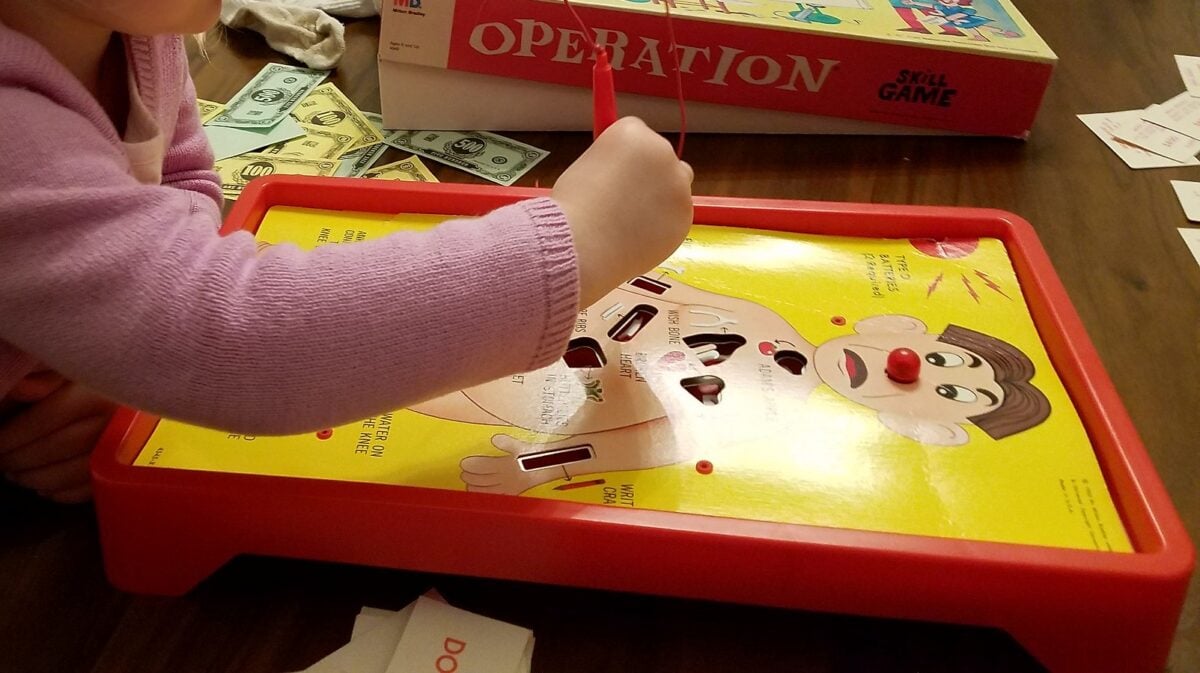
The Operation commercial is a masterclass in tension and release—kids approaching the patient with surgeon-like concentration, attempting to remove tiny plastic ailments without triggering that horrible buzzing sound. “Don’t touch the sides!” becomes both instruction and warning, delivered with the kind of urgency usually reserved for actual medical emergencies.
But here’s what makes those Operation ads brilliant: they turn steady hands into a superpower. In a world where kids are mostly told to be careful, to slow down, to think before they act, Operation rewards precision and celebrates control.
The commercial shows children discovering that they’re capable of delicate work, that their hands can be instruments of careful success rather than agents of accidental destruction.
Big Wheel
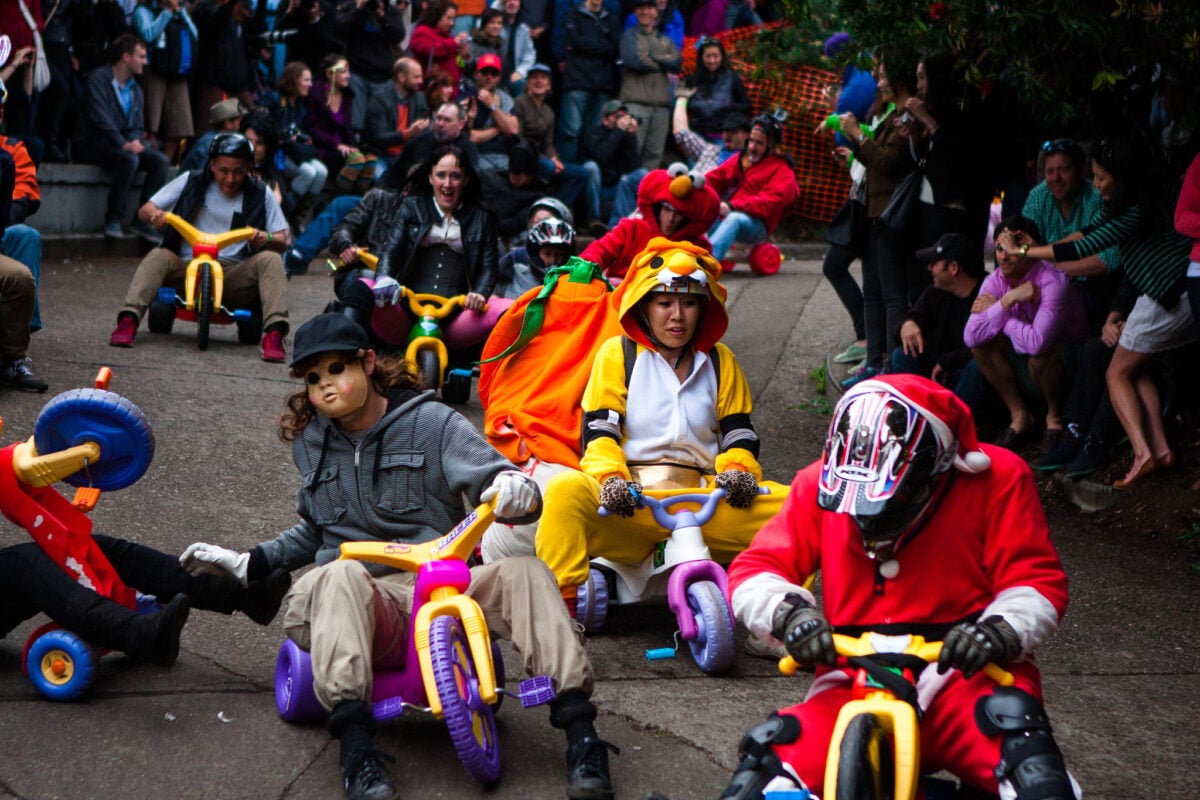
Big Wheel commercials from the 1970s captured something essential about childhood mobility: the desire to move fast and low to the ground, to feel speed in your bones without the safety equipment that adults insisted on for “real” bikes. “Big Wheel keeps on turnin’!” wasn’t just a catchy jingle—it was a promise of perpetual motion.
Those ads showed kids racing around suburban streets and driveways with the kind of reckless confidence that made watching them feel both thrilling and slightly terrifying. The Big Wheel represented freedom from training wheels, from parental assistance, from the cautious pace that defined most childhood transportation.
You climbed on, started pedaling, and trusted physics to handle the rest.
Magic 8-Sphere

The Magic 8-Sphere commercial operates on a beautifully simple premise: children need answers, and sometimes those answers can come from a plastic sphere filled with dark liquid and a floating die. “Will I be famous? Will I be rich? Ask the Magic 8-Sphere!” The commercial showed kids asking life’s biggest questions with the kind of earnest curiosity that adults usually discourage.
But there’s something almost profound about the Magic 8-Sphere’s approach to uncertainty. Instead of promising definitive answers, it offers possibilities: “Reply hazy, try again,” “Cannot predict now,” “Ask again later.”
The commercial teaches kids that some questions don’t have immediate answers, that uncertainty itself can be a form of entertainment, and that sometimes the best response to life’s big questions is simply to shake things up and see what happens.
When Wonder Was Something You Could Hold
These advertisements didn’t just sell toys—they sold entry points into different ways of being in the world. They promised that the right purchase could unlock creativity, competence, adventure, or transformation, and for millions of children, those promises weren’t entirely false.
The toys themselves might have broken or been outgrown, but the ideas embedded in those commercials—that childhood should be expansive, that play could be meaningful, that wonder was something you could hold in your hands—shaped how entire generations understood their own potential. Looking back at these ads now, what strikes you isn’t their quaintness or their outdated gender assumptions or their sometimes questionable promises.
What strikes you is how seriously they took children’s inner lives, how confidently they assumed that kids were capable of sustained engagement with complex ideas, and how beautifully they captured that particular childhood hunger for experiences that feel both magical and real.
More from Go2Tutors!

- The Romanov Crown Jewels and Their Tragic Fate
- 13 Historical Mysteries That Science Still Can’t Solve
- Famous Hoaxes That Fooled the World for Years
- 15 Child Stars with Tragic Adult Lives
- 16 Famous Jewelry Pieces in History
Like Go2Tutors’s content? Follow us on MSN.