19 Largest Cave Systems Mapped in North America
Beneath the surface of North America, an entirely different world exists. It has no sunlight, no weather, and no sense of how many hours have passed.
It was carved not by human hands but by millions of years of water dissolving limestone, acid eating through rock, and rivers finding paths where none seemed possible. The caves that resulted range from short crawlways accessible by any adventurous family to vast underground networks so enormous that even the teams who mapped them cannot say with certainty where they end.
What follows is a look at the 19 largest cave systems documented across North America, ordered roughly by mapped length. The numbers shift as cavers continue to push deeper, so treat any figure here as a snapshot rather than a final count.
1. Mammoth Cave, Kentucky — 426+ Miles
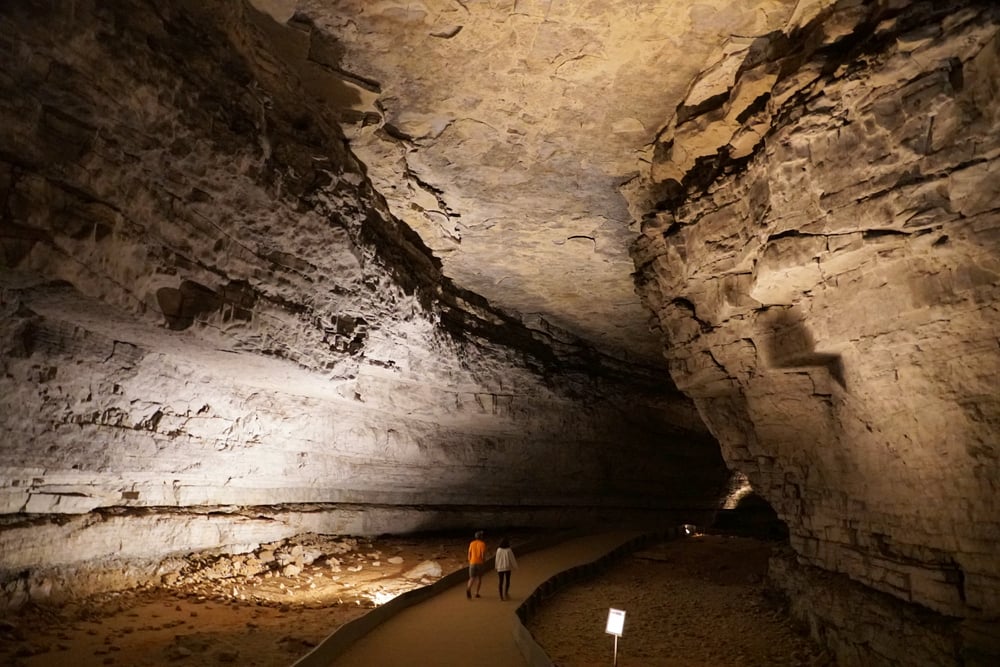
Nothing else on this continent comes close. Mammoth Cave in south-central Kentucky is the longest known cave system on Earth, with over 426 miles of surveyed passages and no clear sign that surveyors are done finding more.
The cave entered the record books back in 1969 with just 65 miles on the map. A 14-hour survey in September 1972 connected it to the Flint Ridge cave system, and the total jumped to 144 miles overnight.
Since then it has grown steadily as volunteer cavers with the Cave Research Foundation have pieced together connections to smaller systems like Roppel Cave and Morrison Cave. The cave sits beneath the rolling green hills of Mammoth Cave National Park, a UNESCO World Heritage Site and International Biosphere Reserve.
Inside, the spaces vary wildly — from cathedral-sized chambers like the Rotunda to passages so narrow that even slim cavers move sideways. Some corridors still carry the signatures of 19th-century tourists scratched into the walls with candle soot.
Saltpeter mining operations once ran deep inside, with enslaved workers doing much of the labor during the War of 1812. That history sits alongside the geology in a way that makes Mammoth Cave unlike anywhere else on the planet.
2. Sistema Sac Actun, Yucatán, Mexico — 239+ Miles
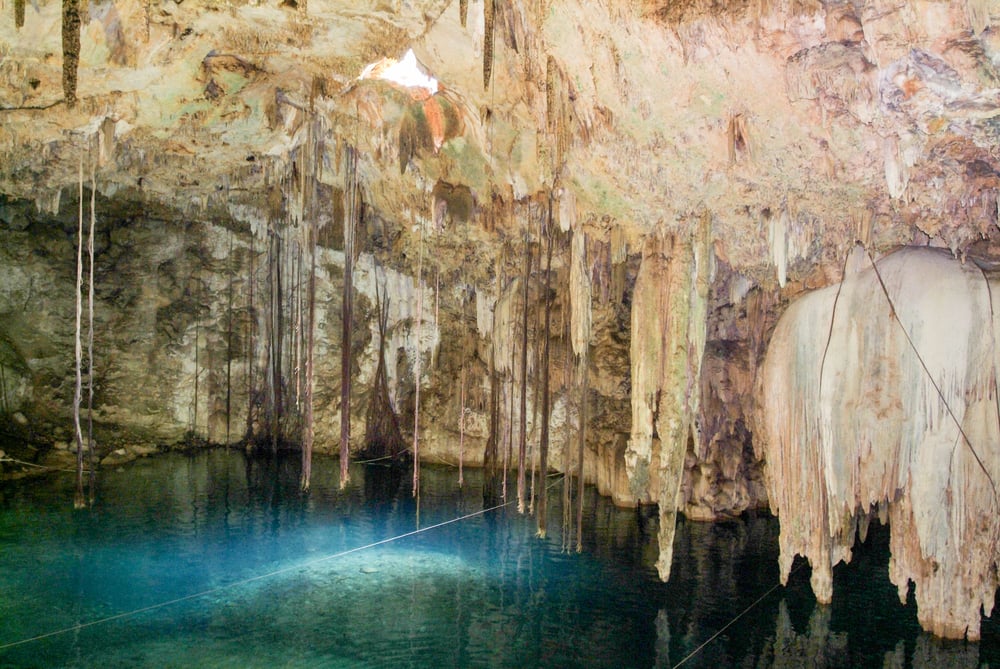
The Yucatán Peninsula holds no mountains and no major rivers running above ground. Instead, water moves through limestone beneath the jungle floor, filling an extraordinary network of flooded tunnels.
Sistema Sac Actun — the name means “White Cave System” in Yucatec Maya — is the longest underwater cave system in the world, with over 239 miles of mapped passages along Mexico’s Caribbean coast. Exploration began in 1987 through a sinkhole called Gran Cenote, near the town of Tulum.
The system grew steadily as cave divers pushed further, and in 2018 a survey team confirmed a long-suspected connection between Sac Actun and the adjacent Sistema Dos Ojos. That link pushed the combined total past 215 miles at the time, with continued exploration adding more.
The caves sit within the ancient Mayan world, and divers have found human remains, ceramics, and animal bones deep in the flooded passages — evidence that some sections were dry and inhabited thousands of years ago, before sea levels rose.
3. Jewel Cave, South Dakota — 208+ Miles

Jewel Cave holds the title of the world’s second-longest cave on land, with more than 208 miles of passages mapped through the limestone of the Black Hills. It earned its name from the calcite crystals lining its walls — they catch a headlamp beam and sparkle in ways that stop experienced cavers in their tracks.
The cave formed differently from most on this list. Rather than fast-flowing underground rivers, acidified groundwater slowly dissolved the surrounding limestone over millions of years, then left behind layers of calcite, aragonite, and hydromagnesite.
The result is a visual landscape that looks more sculpted than dissolved — cave bacon, draperies, flowstones, and frostwork in almost every passage. Cavers estimate that only 3 to 5 percent of the system has been discovered, which makes it one of the most exciting long-term exploration projects in the country.
4. Wind Cave, South Dakota — 161+ Miles
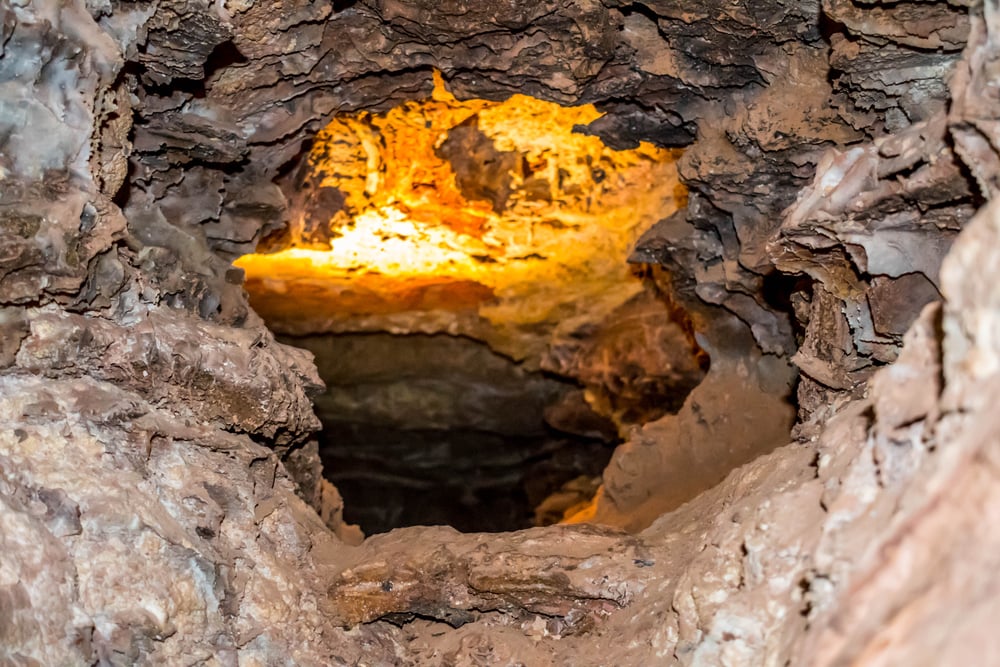
Wind Cave sits about 10 miles north of Hot Springs in the same Black Hills limestone belt as Jewel Cave, and it holds a distinction no other cave on Earth can claim: the densest known cave system in the world, meaning it packs more passage length into a given cubic area than anything else documented. With over 161 miles mapped, it ranks as the seventh-longest cave system globally.
The cave’s name comes from the powerful winds that flow in and out of its single natural opening, equalizing pressure between the cave’s air and the atmosphere above. That opening was discovered in 1881 when Jesse and Tom Bingham followed a strange whistling sound across the prairie.
The cave is famous for its boxwork — thin blades of calcite that project from the walls and ceilings in a honeycomb pattern — and for the fact that roughly 95 percent of all known boxwork formations in the world are found here. President Theodore Roosevelt made it one of the first national park sites in the US in 1903.
5. Sistema Ox Bel Ha, Quintana Roo, Mexico — 160+ Miles

Running parallel to Sistema Sac Actun along the Caribbean coast of the Yucatán, Sistema Ox Bel Ha is the second-longest underwater cave system in North America. Its name translates from Yucatec Maya as “Three Paths of Water,” a reference to the branching structure of its flooded passages.
Discovered in 1996, the system stretches across the peninsula for over 160 miles. Like Sac Actun, Ox Bel Ha formed during the last ice age when sea levels were much lower and the caves were dry.
Rising seas flooded them, and today the passages hold water that serves as a critical freshwater source for communities along the coast. The system sits within 30 miles of Sac Actun, and researchers have long speculated about possible connections between the two that have yet to be confirmed.
6. Lechuguilla Cave, New Mexico — 138+ Miles
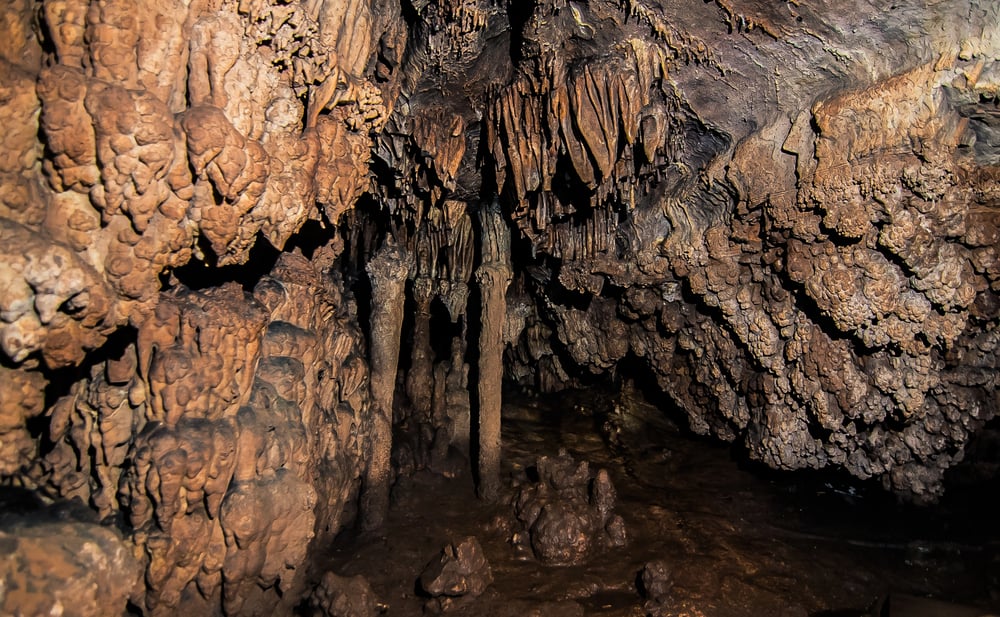
Lechuguilla sits within Carlsbad Caverns National Park but is nothing like the tourist-accessible caverns nearby. It is closed to the public entirely, with access limited to approved researchers and exploration teams.
That restriction exists because what’s inside is too fragile and too scientifically important to open to general visits. The cave was rediscovered in 1986 when cavers noticed a strong cool breeze coming up from a rubble-filled pit — a reliable sign that large open space exists below.
Since then, over 138 miles of passages have been mapped, reaching depths of more than 1,600 feet and making it the deepest limestone cave in the United States. The formations inside are unlike those in most other caves.
Lechuguilla formed through sulfuric acid rising up from petroleum deposits below rather than rainwater filtering down, and the process left behind gypsum chandeliers, rare helictites, and pools of crystalline water so clear they appear invisible. Scientists have found microbial colonies in its walls that survive by breaking down minerals — organisms that have given researchers clues about how life might persist in extreme environments elsewhere in the solar system.
7. Fisher Ridge Cave System, Kentucky — 131+ Miles
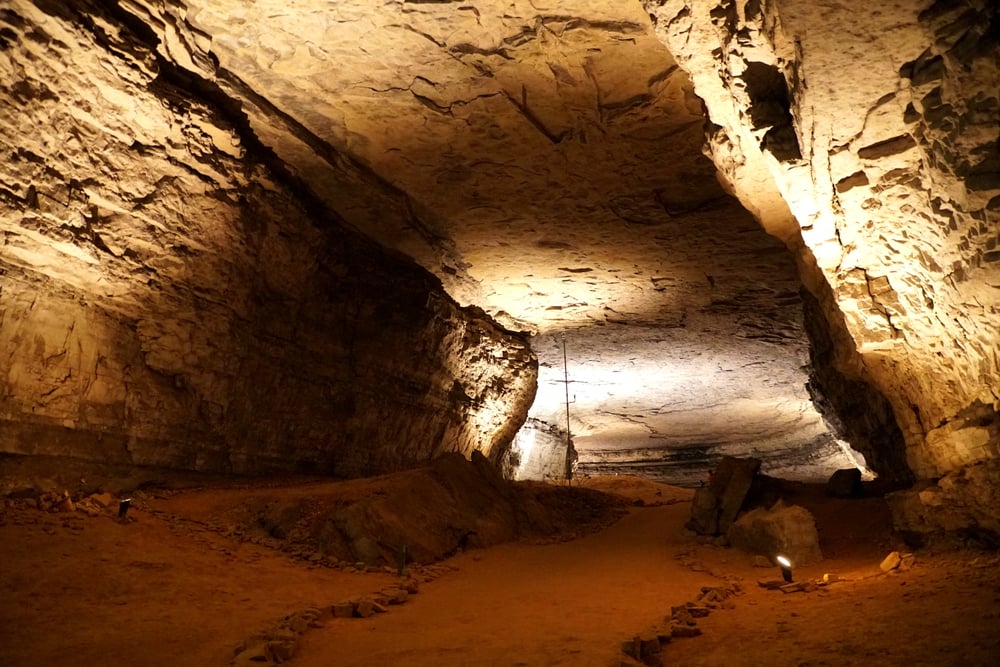
Fisher Ridge lies in Hart County, Kentucky, just a few miles from Mammoth Cave. With over 131 miles of mapped passages, it ranks as the fifth-longest cave in the United States.
The cave was rediscovered in January 1981 by a group of cavers from Detroit, and what they found was a system nearly split in two — two large sections connected only by a 1,000-foot crawlway that takes real determination to get through. Because of its proximity to Mammoth Cave, researchers have long believed that undiscovered connections between the two systems exist.
Confirming that connection would create an underground network of staggering size. Until that day, Fisher Ridge stands as its own remarkable place, with gypsum flowers, helictites, and dry tunnels that share the character of the larger cave just down the road.
8. Organ Cave System, West Virginia — 45+ Miles
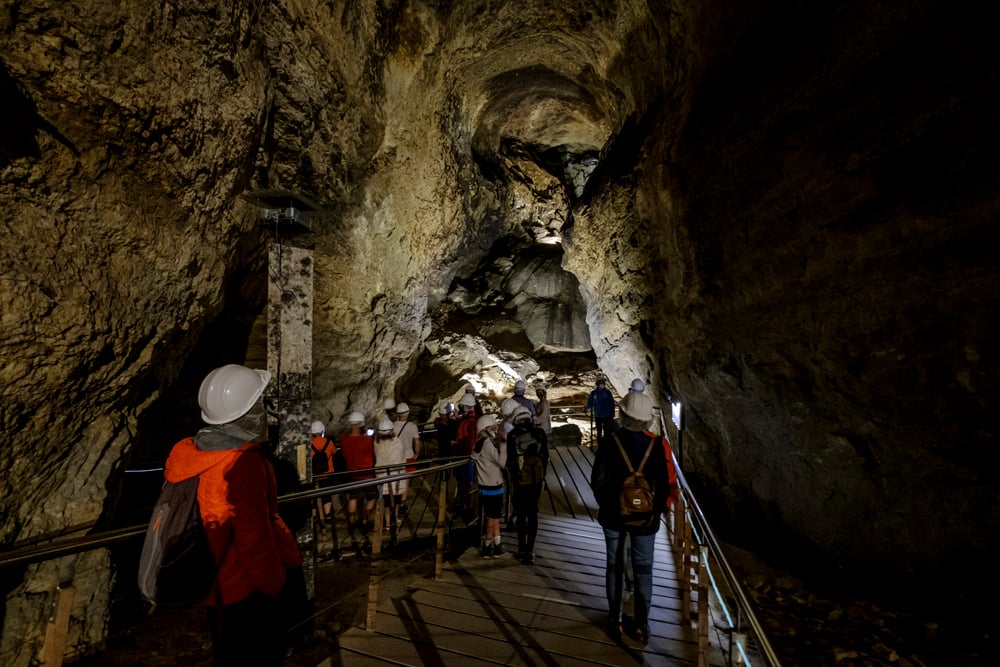
West Virginia is riddled with caves, and the Organ Cave System in Greenbrier County is among the longest. With over 45 miles of surveyed passages, it ranks among the top cave systems on the East Coast and carries history as old as the country itself.
Saltpeter was mined from the cave during both the Revolutionary War and the Civil War, and original mining equipment remains inside in remarkably preserved condition. The cave takes its name from a large formation near the main entrance that early visitors thought resembled a pipe organ.
Today, guided tours take visitors through sections of the cave while the deeper reaches remain the territory of serious cavers.
9. Friars Cave System, West Virginia — 44+ Miles
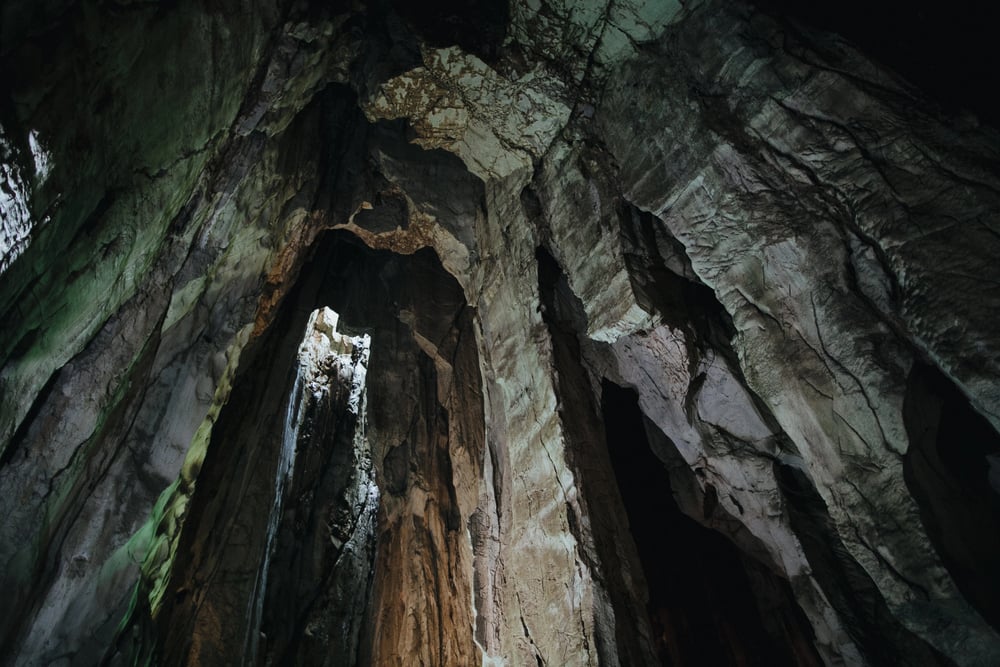
Friars stretches through Greenbrier County with over 44 miles of mapped passages and ten separate entrances — a number that makes it unusually accessible by the standards of large cave systems. Each entrance opens into a different part of the system and delivers a different experience, from walking passages to tight crawlways to open chambers.
A subterranean river called Culverson Creek runs through the heart of the cave, shaping it and sustaining a fragile ecosystem of cave-adapted organisms. The system sits within a region of extensive karst terrain, and the groundwater flowing through it connects to springs that resurface miles away.
Scientists study Friars partly for what it reveals about how water moves underground through the Appalachian karst.
10. Great Savannah Cave System, West Virginia — 44+ Miles
Another product of Greenbrier County’s exceptional geology, the Great Savannah Cave System runs for over 44 miles through the limestone beneath the Appalachian hills. Unlike some of the harder-to-navigate systems in the region, Great Savannah is known for wide passages and large chambers that make movement relatively straightforward — at least by caving standards.
The system is considered among the more accessible of the large cave systems in the eastern United States, though it still demands proper equipment and preparation. Its broad corridors and modest vertical relief make it a destination for experienced cavers who want to cover significant ground without constant technical challenges.
11. Hellhole Cave, West Virginia — 43+ Miles
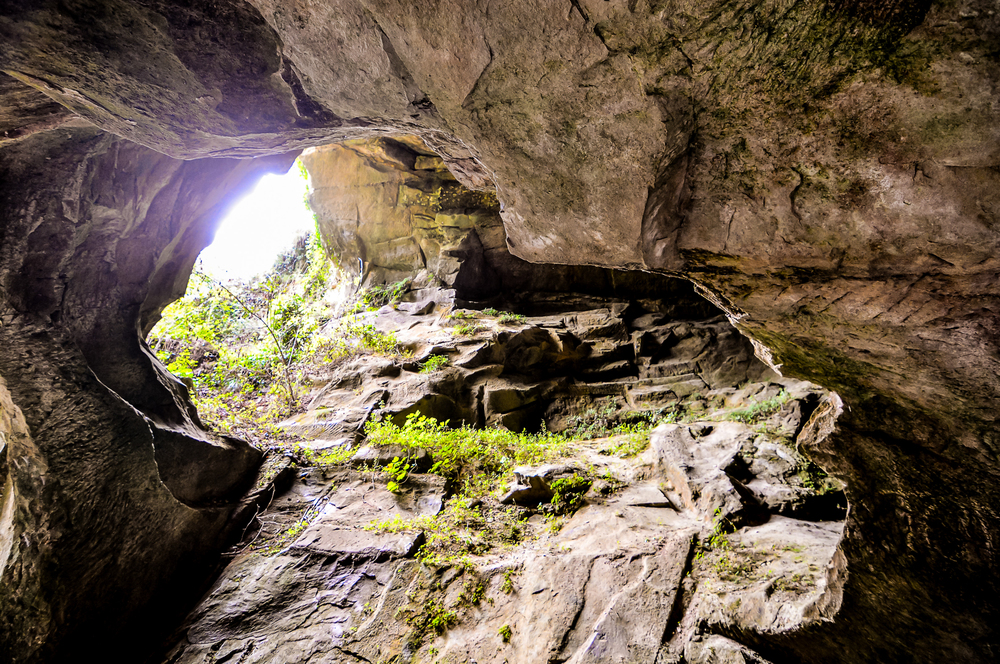
The name is earned. Hellhole in Pendleton County, West Virginia, earns its reputation from a passage called The Corkscrew — a section so narrow and twisted that cavers must use a specific twisting technique to pass through it.
The cave’s complex geometry makes it one of the harder systems to map accurately, and some estimates place its true length beyond what has been confirmed on paper. Despite its demanding nature, Hellhole attracts serious cavers willing to accept its terms.
The formations are spectacular in sections, and the cave’s difficulty has kept it relatively undisturbed. A strong airflow through certain passages hints at connections to adjacent systems that have not yet been confirmed.
12. Binkley’s Cave System, Indiana — 37+ Miles

Indiana might not be the first state that comes to mind when thinking about caves, but it holds more cave systems than many people realize. Binkley’s, in Washington County, stretches for over 37 miles and stands as the longest cave in the state.
It takes its name from the farmer who owned the land when the system was formally identified. Confirming the cave’s true extent required some creative detective work.
Surveyors used dye-tracing and smoke to determine whether two large cavities on the property were actually connected, eventually confirming a link through a shaft only a few hundred meters long. Underground streams and pools continue to shape the passages, and exploration pushed the total length significantly in the late 1980s and beyond.
13. Carlsbad Caverns, New Mexico — 30+ Miles
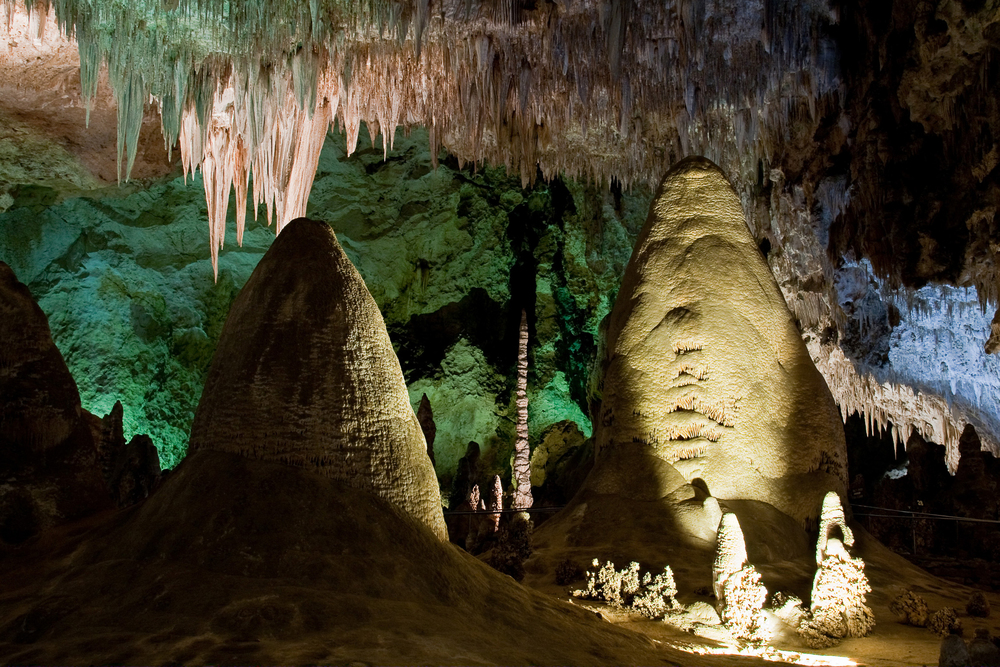
Carlsbad Caverns doesn’t make this list for passage length alone. The mapped sections cover roughly 30 miles, which puts it behind many caves on this list.
But Carlsbad holds its place here because of the Big Room — the largest single cave chamber by volume in North America. The Big Room measures 4,000 feet long, 625 feet wide, and 255 feet high.
Walking its perimeter trail takes about 90 minutes. The cave formed through sulfuric acid dissolution rather than the rainwater process that created most other large caves, and the resulting chambers are enormous where the acid worked hardest.
Some 400,000 Brazilian free-tailed bats roost in the cave during summer months and emerge at dusk in spiraling columns that draw crowds of spectators to the cave entrance every evening.
14. Kazamura Cave, Hawaii — 40+ Miles
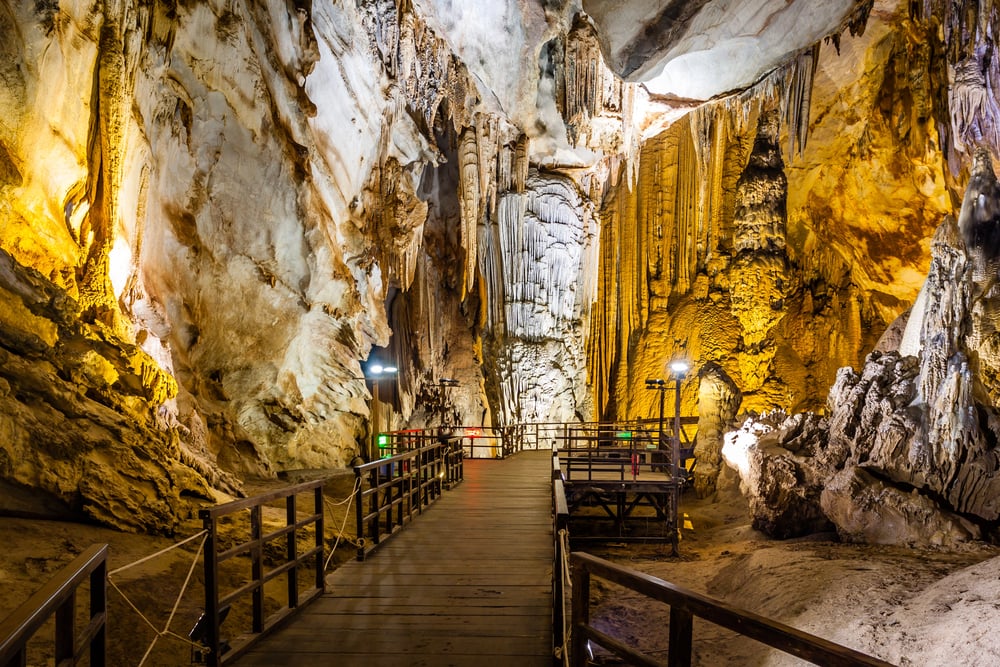
Kazamura is a different kind of cave entirely. Rather than limestone dissolved by acid or water, Kazamura is a lava tube — a passage left behind when a lava flow’s outer surface hardened while molten rock continued to run through underneath.
When the eruption ended and the flow stopped, a hollow tube remained. Kazamura stretches over 40 miles on the slopes of Kilauea volcano on Hawaii’s Big Island and is considered the longest lava tube system in the world.
The cave drops more than 3,600 feet in elevation as it runs from high on the volcano’s flank toward the coast. Its passages vary from walking tunnels to crawlways, all formed by the dynamics of a single sustained lava flow.
Lava stalactites hang from the ceiling where drips of molten rock cooled mid-fall, and lavacicles line sections of the walls. It’s a geological environment that has no equivalent in limestone cave systems anywhere on the continent.
15. Cumberland Caverns, Tennessee — 32+ Miles
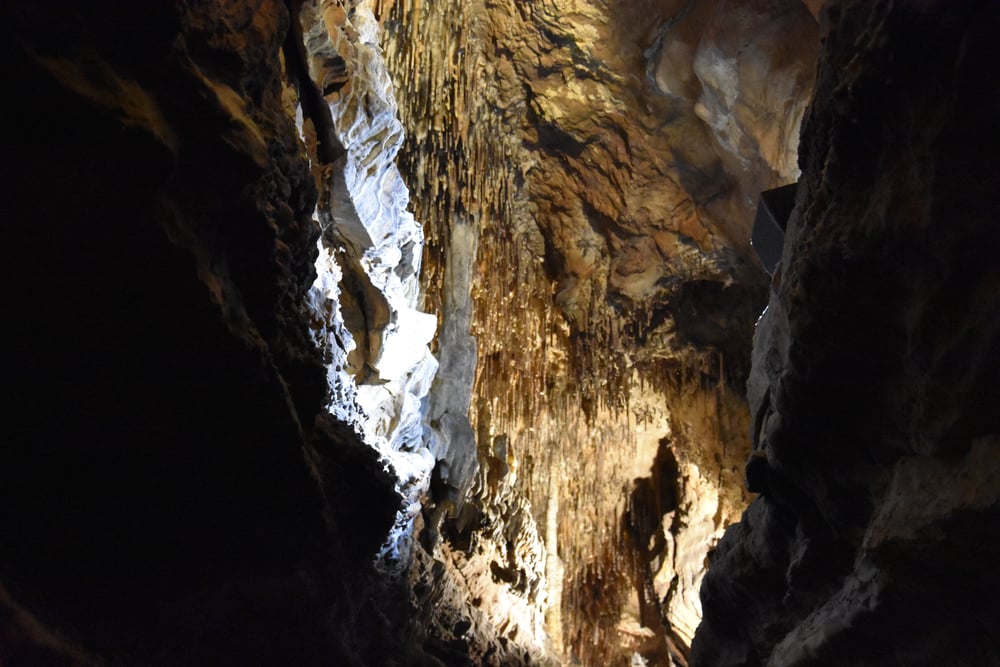
Tennessee has more caves per square mile than any other state in the US — around 10,000 documented systems — and Cumberland Caverns in Warren County stands as one of the most substantial. With over 32 miles of mapped passages, it ranks among the longest caves in the eastern United States.
The cave is notable for the Volcano Room, which contains a large chandelier that once hung in the Ford Theater in Washington DC where Abraham Lincoln was shot, and for a flowstone formation that stretches across a wide chamber ceiling. Cumberland Caverns also hosts underground concerts and dinners in its largest rooms, a nod to the exceptional acoustics that large cave chambers tend to produce.
16. Ellison’s Cave, Georgia — 12+ Miles
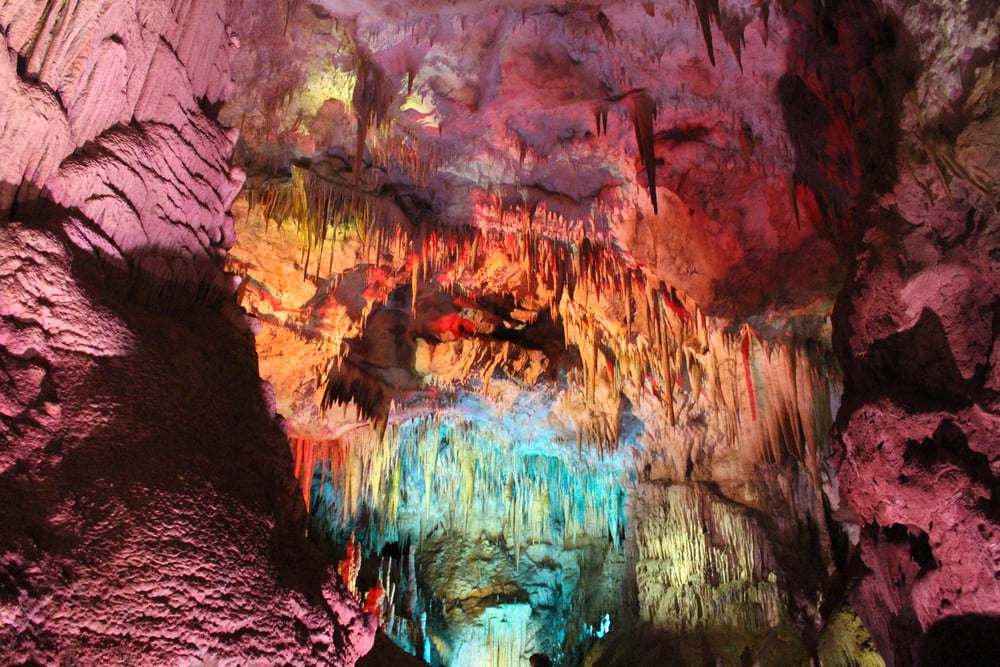
Ellison’s Cave in Walker County, Georgia, does not rank by passage length alone. Its 12 miles of mapped passages are modest compared to the giants further up this list, but Ellison’s holds a distinction that no other cave in the continental United States can claim: it contains Fantastic Pit, the deepest known cave pit in the contiguous 48 states.
Fantastic Pit drops 586 feet in a single free-fall — the longest unobstructed vertical drop in any American cave. Cavers need hundreds of feet of rope and solid rope-handling skills just to enter the most interesting sections.
The cave also contains Incredible Pit, which drops 440 feet. Georgia’s cave is less about length and more about sheer vertical scale, which earns it a place in any honest accounting of North America’s most significant underground systems.
17. Fort Stanton Cave, New Mexico — 20+ Miles
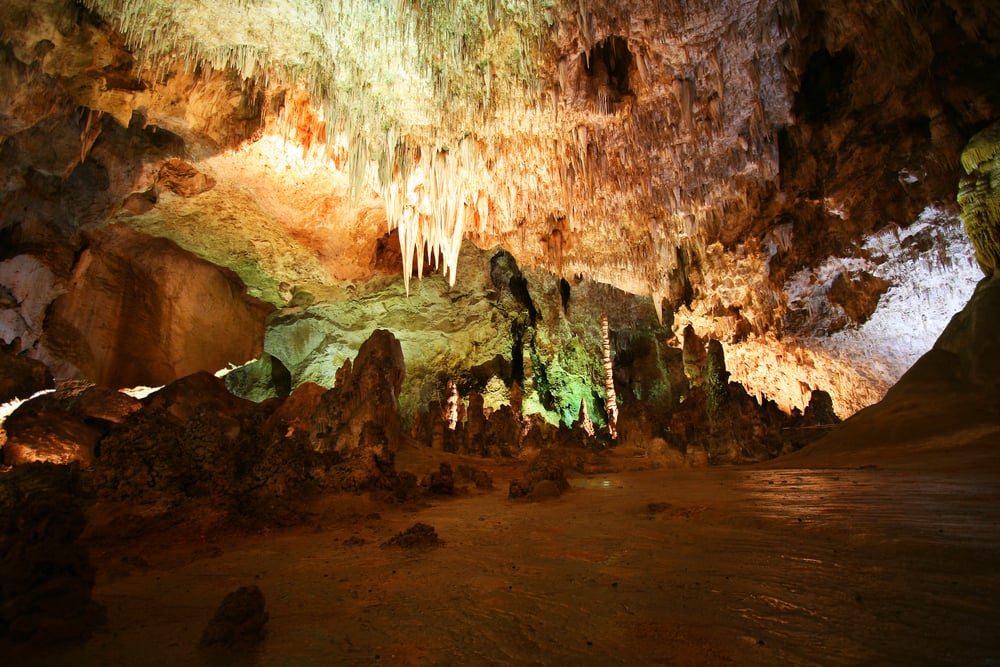
Fort Stanton Cave in Lincoln County, New Mexico, is managed by the Bureau of Land Management and contains one of the most remarkable features in any cave on this continent: the Snowy River. The Snowy River is a passage floored entirely with bright white calcite deposited by a stream that has since receded.
Its gleaming white surface stretches for at least 15 miles of explored passage — making it the longest cave formation of its kind in the world. The full cave footprint is considered the fourth-largest in the United States, though surveyed passage length lags behind caves that have been explored more aggressively.
The Snowy River passage remains one of the most visually distinctive underground environments anywhere in North America, and new surveys continue to extend its known length.
18. Sistema Dos Ojos, Quintana Roo, Mexico — 51+ Miles
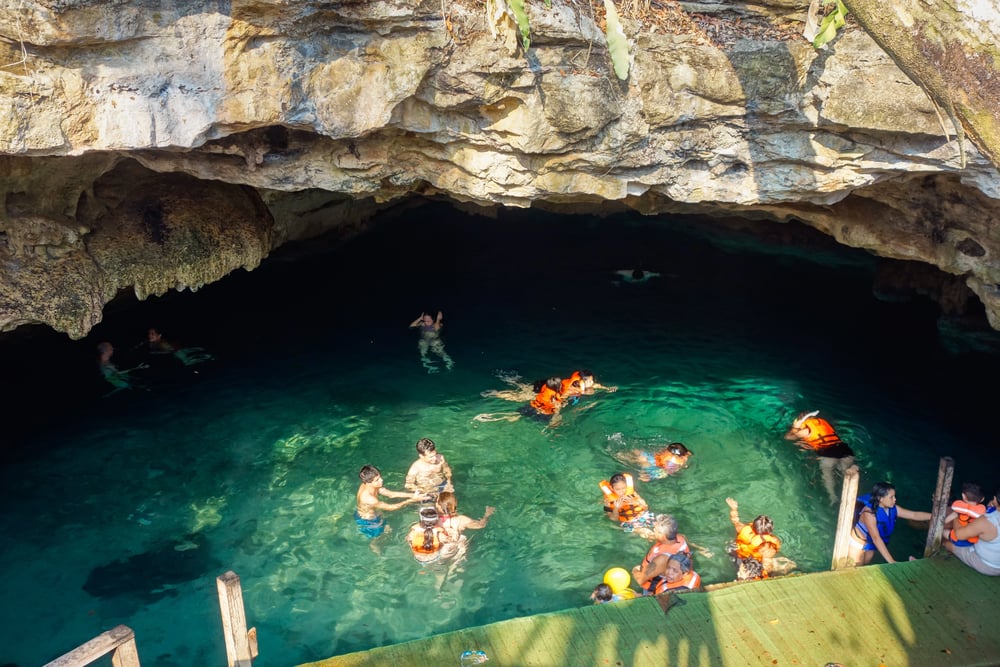
Before its connection to Sistema Sac Actun was confirmed in 2018, Sistema Dos Ojos — “Two Eyes,” named for twin cenotes at the entrance — stood as a world-class cave system in its own right. The name refers to two circular sinkholes side by side at the main entrance, both open to the sky and accessible by scuba from the surface.
The system attracted cave divers from around the world for its clear water, dramatic formations, and the disorienting experience of navigating flooded passages with a visibility that can exceed 100 feet. When the Sac Actun connection was confirmed, Dos Ojos was absorbed into that larger system, but many divers and researchers still refer to it by its original name when describing the specific passages in the southeast portion of the combined system.
19. Horne Lake Caves, British Columbia, Canada — Ongoing Survey

Horne Lake Caves appear only once among Canada’s entries – exploration here lags behind efforts in U.S. regions like the Southwest or Appalachians – yet these passages demand attention. Found within fractured limestone near the island’s core, they weave together several distinct sections, each differing in reach and challenge.
From deep under Vancouver Island, Horne Lake opens parts of its maze to visitors – though it keeps fragile zones off-limits. Drips over millennia built up odd-shaped cones, rising columns, and rippled stone walls, packed tight in modest tunnels.
Mapping work creeps forward inch by inch. As gear gets smarter and cavers shift focus toward northern terrain, BC’s limestone pockets might still hide longer passages beneath the surface.
The Map Is Always Changing
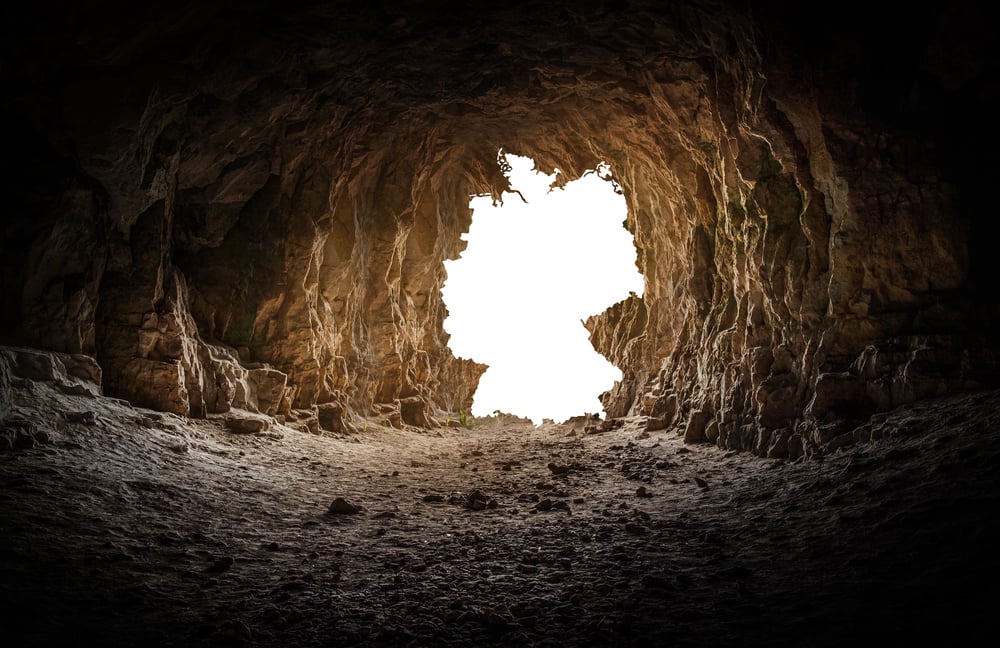
Numbers here won’t stay fixed. Surveying caves takes time, effort, heavy gear – climbers crawling forward hand over hand, guided only by headlamps in untouched blackness.
Once two isolated tunnels link up, distances stretch without warning. When adventurers pass what was thought to be the end, corridors extend silently.
Lengths shift while people sleep. The land doesn’t change much.
Sitting above a rare mix of soft limestone, hardened lava stone, and old ocean floor lies North America – carved slowly by water, shaped deeply by age, now home to more caves than nearly anywhere else. These entries reflect only what explorers have uncovered until now.
What remains hidden? Tougher to tally.
Simpler to picture.
More from Go2Tutors!

- The Romanov Crown Jewels and Their Tragic Fate
- 13 Historical Mysteries That Science Still Can’t Solve
- Famous Hoaxes That Fooled the World for Years
- 15 Child Stars with Tragic Adult Lives
- 16 Famous Jewelry Pieces in History
Like Go2Tutors’s content? Follow us on MSN.



