20 Bizarre Government Projects That Sound Like Science Fiction
Tax dollars often fund legitimate research that advances society. Sometimes, though, government agencies venture into territory so strange you’d swear they hired science fiction writers as consultants.
Between Cold War paranoia and the endless quest for military superiority, bureaucrats have greenlit some truly mind-boggling initiatives. Here is a list of 20 bizarre government projects that actually happened, despite sounding completely made up.
Project Acoustic Kitty

The CIA once blew $20 million trying to turn ordinary house cats into walking surveillance devices—a scheme doomed from the start. Surgeons implanted microphones in cat ears, tiny radio transmitters at the base of their skulls, and antenna wires along their tails.
The first feline spy barely made it across the street before getting flattened by a taxi—abruptly ending one of espionage history’s most ridiculous chapters.
The Stargate Project

For two decades—spanning both Republican and Democratic administrations—the U.S. government dumped millions into researching psychics. The military employed people claiming paranormal abilities who’d attempt to visualize enemy bases or technology through “remote viewing.”
Despite generating thousands of reports, a congressional investigation eventually pulled the plug. The final assessment wasn’t kind: twenty years of psychic spying had produced exactly zero pieces of actionable intelligence.
HAARP Weather Control

Up in Alaska sits a field of 180 radio antennas pointing skyward—the High-frequency Active Auroral Research Program. While officially conducting ionospheric research, this facility has sparked wild theories about Pentagon weather weapons and mind control technology.
Scientists laugh off claims about HAARP causing earthquakes or hurricanes—yet the military’s secretive approach and vague explanations about the facility’s purpose haven’t exactly helped quiet the conspiracy theories.
Weaponized Insects Program

DARPA currently funds research to create insects that deliver genetically modified viruses to agricultural plants—supposedly to protect American farms from disease. Plenty of international scientists aren’t buying this explanation—warning the program could easily become a food-targeting bioweapon system in disguise.
The thin line between crop protection and agricultural warfare hasn’t stopped the money from flowing in, despite serious ethics concerns from the scientific community.
Project Sunstreak

The U.S. Army ran its own psychic spy program—less famous than Stargate but equally bizarre—focusing specifically on counterterrorism applications. Military contractors claiming extrasensory perception tried locating hostages, finding hidden weapons stockpiles, and identifying terrorist cells through meditation.
This paranormal intelligence gathering operated under various code names whenever criticism mounted—switching from Grill Flame to Center Lane to Sun Streak before finally getting axed when external review questioned whether any useful intelligence ever justified its hefty budget.
Artificial Clouds for Climate Control

China employs thousands in its weather modification department—making it the world’s largest program of its kind—using anti-aircraft guns and rockets to blast silver iodide into passing clouds. Government officials claim they can create rainfall across an area roughly the size of Alaska whenever needed.
During the 2008 Beijing Olympics, they ensured blue skies over the capital while surrounding provinces got the diverted rain—displaying weather manipulation as a matter of national pride rather than scientific curiosity.
Weaponized Animals

Soviet naval units trained dolphins to carry explosive charges against enemy ships—a program that reportedly killed several animals during its development phase. Not to be outdone, the U.S. Navy created its own Marine Mammal Program using dolphins and sea lions to detect underwater mines and recover equipment.
When Hurricane Katrina hit naval facilities—rumors spread about trained military dolphins escaping into the Gulf of Mexico, though officials insist no combat-trained mammals swam off to freedom.
The Philadelphia Experiment
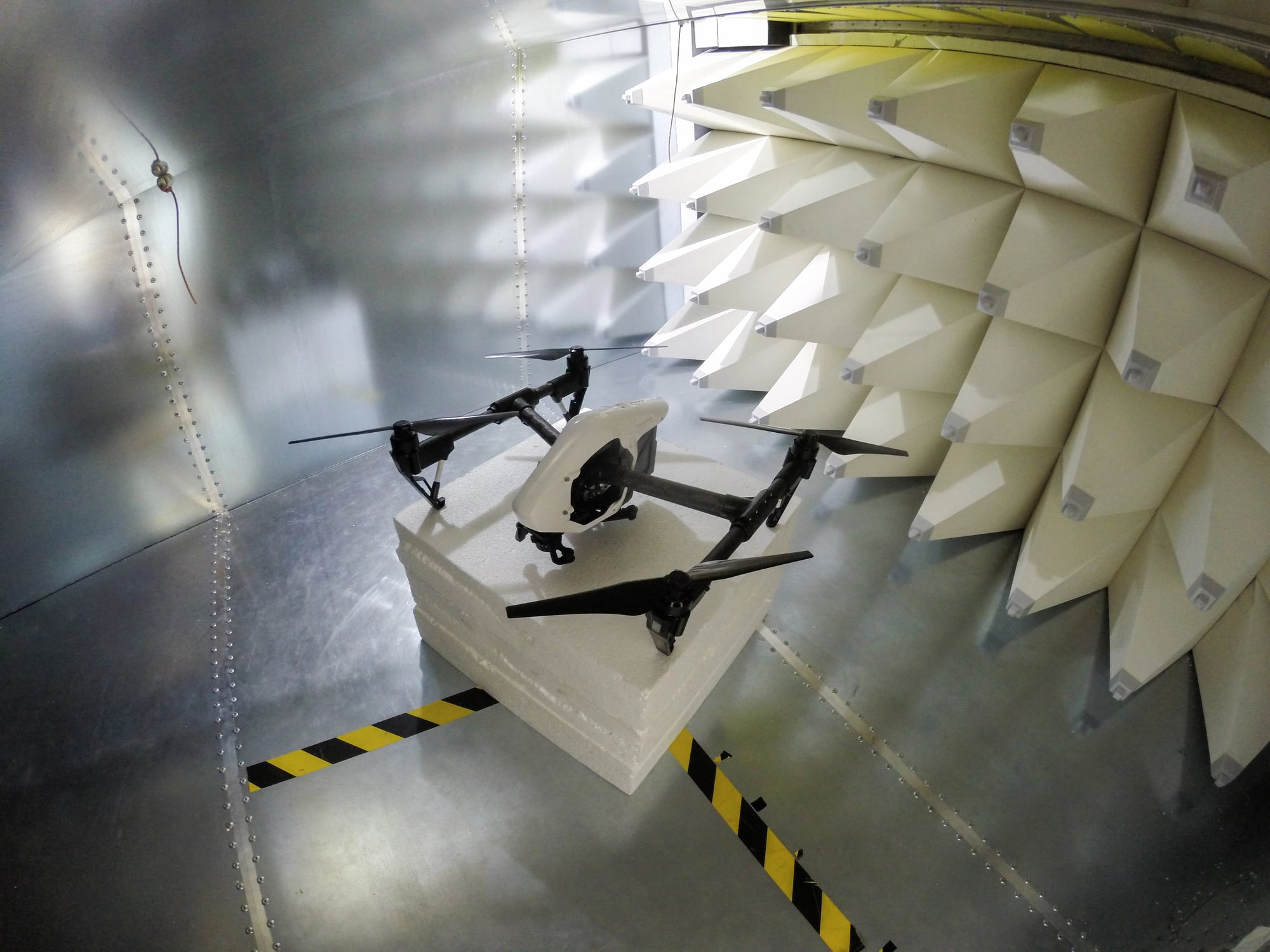
Naval archives confirm that in 1943, the military conducted electromagnetic tests aimed at making ships radar-invisible—though official accounts stop miles short of the wild legends. According to persistent stories, the USS Eldridge didn’t just disappear from radar—it physically vanished before teleporting miles away with horrifying results for the crew.
Sailors allegedly returned with body parts fused into the metal deck. The Navy dismisses these tales as fiction—while declassified documents show they did explore electromagnetic cloaking during exactly that time period.
Synthetic Telepathy

DARPA has poured millions into developing technology enabling soldiers to communicate through thought alone—no radios or spoken words required. The program focuses on brain implants that can translate neural signals into digital data for transmission to similarly equipped team members.
Early prototypes have successfully decoded basic brain patterns, suggesting that rudimentary mind-reading tech might eventually become standard military equipment despite the obvious privacy concerns that such technology raises.
The Russian Zombie Gun

Soviet scientists reportedly developed psychotronic weapons designed to hijack normal brain function from a distance—potentially allowing remote behavioral control of target populations. While never officially confirmed, multiple intelligence sources described devices using focused electromagnetic radiation to induce extreme disorientation or heightened suggestibility in test subjects.
Similar research allegedly continues today in several countries—despite international agreements that should theoretically prohibit such research.
Project Blue Book

For twenty-two years, the Air Force formally investigated over 12,000 UFO sightings through this systematic program. Teams collected witness statements, radar data, and photographic evidence while attempting to classify each incident.
When the project wrapped in 1969, officials announced nothing suggested extraterrestrial visitation, though 701 cases remained labeled “unexplained” even after thorough analysis. The government maintains these were likely atmospheric phenomena beyond scientific understanding at that time.
Operation Popeye

During Vietnam, American aircraft secretly seeded clouds over enemy supply routes with silver iodide crystals, artificially extending monsoon season by weeks. This classified weather manipulation program increased rainfall by roughly 30% in targeted areas, transforming dirt roads into impassable mud pits.
The operation ran for five years before exposure, eventually helping inspire international treaties prohibiting environmental warfare techniques – agreements many experts consider practically unenforceable.
Mind Control Experiments

The CIA’s notorious MKUltra program conducted non-consensual experiments using LSD, electroshock, hypnosis, and sensory deprivation on unwitting Americans and Canadians. Researchers explored techniques for interrogation enhancement and behavior control across 80 institutions throughout North America.
When congressional investigations finally exposed these activities, the CIA had already destroyed most documentation, leaving the program’s full scope permanently concealed from public scrutiny.
Project Thor

Military engineers designed a kinetic bombardment system consisting of tungsten rods dropped from orbit. These massive metal spears would reach speeds of Mach 10 during descent, hitting targets with the destructive force of nuclear weapons but without radiation.
Budget constraints rather than technical limitations prevented deployment of the “Rods from God” system, which remains theoretically viable despite space weaponization treaties that would complicate implementation.
Voice of God Weapon

Special forces developed directed audio technology that projects voices directly into people’s heads using the microwave auditory effect. This psychological operations tool can target specific individuals with messages only they can hear, potentially convincing enemy fighters they’re receiving divine communications.
Field reports from Middle Eastern conflicts suggest early versions created significant confusion among opposition forces who couldn’t identify the source of voices they alone heard.
Project Stormfury

The National Oceanic and Atmospheric Administration spent decades trying to weaken hurricanes by seeding their eyewalls with silver iodide particles. Scientists theorized this would disrupt storm formation, potentially saving coastal regions from devastating impacts.
After multiple hurricane modification attempts yielded inconsistent results, researchers discovered their intervention mimicked natural processes storms already undergo, rendering the expensive project fundamentally pointless despite its humanitarian goals.
Acoustic Weapons Development

Government research labs have created sound-based weapons capable of causing disorientation, pain, or permanent hearing damage at significant distances. The Long Range Acoustic Device can emit directional sounds exceeding 150 decibels, well beyond human tolerance thresholds.
Originally developed for military vessel protection against small boat attacks, these devices now appear at protest sites worldwide despite serious medical concerns about their potential to cause permanent neurological damage.
Operation Plumbbob

In 1957, the government conducted nuclear tests in Nevada that accidentally created what might have been humanity’s first object in space. One underground detonation capped a test shaft with a one-ton steel plate that was blasted skyward at roughly 125,000 mph by the nuclear explosion.
The plate moved too quickly for tracking cameras and was never recovered, leading scientists to speculate it achieved escape velocity, potentially becoming the first human-made object in space years before Sputnik.
Project Iceworm

Military planners secretly attempted to build a massive nuclear launch facility beneath Greenland’s ice sheet without Denmark’s knowledge or permission. The ambitious plan involved constructing 2,500 miles of tunnels housing 600 medium-range nuclear missiles aimed at the Soviet Union.
Construction began before engineers realized shifting glacial ice made the base structurally unsustainable, forcing abandonment and leaving hazardous materials buried that now threaten to emerge as climate change melts the ice cap.
Living Bioweapons Program

Soviet bioweapons scientists worked extensively on combining highly virulent pathogens with plague bacteria to create self-spreading weapons resistant to vaccines and antibiotics. Their program, called Biopreparat, employed over 30,000 specialists across dozens of secret facilities throughout the USSR.
When the Soviet Union collapsed, Western security experts worried about desperate scientists potentially selling their expertise to hostile regimes, prompting cooperative threat reduction programs to redirect these researchers toward legitimate medical work.
Reality Check: When Government Dreams Get Weird

These bizarre projects show what happens when national security logic ventures into territory that ordinary taxpayers might consider absurd or disturbing. Some failed spectacularly, others raised profound ethical questions, yet a few laid groundwork for technologies we now take for granted.
The blurry line between visionary research and wasteful folly keeps shifting, as yesterday’s outlandish experiments sometimes become tomorrow’s standard tools. These examples should remind us to maintain a healthy skepticism about government research priorities while recognizing innovation often requires exploring unconventional possibilities.
Most unsettling might be knowing the truly strangest projects likely remain classified, with future generations left to discover how their tax money funded experiments that once seemed impossible outside science fiction novels.
More from Go2Tutors!

- The Romanov Crown Jewels and Their Tragic Fate
- 13 Historical Mysteries That Science Still Can’t Solve
- Famous Hoaxes That Fooled the World for Years
- 15 Child Stars with Tragic Adult Lives
- 16 Famous Jewelry Pieces in History
Like Go2Tutors’s content? Follow us on MSN.



