20 Times Scientists Thought They Made a Major Discovery—But Were Wrong
Science doesn’t always march forward in a straight line. Even brilliant minds sometimes announce groundbreaking discoveries only to watch them collapse under scrutiny.
These scientific stumbles aren’t embarrassing failures though – they’re vital stepping stones that ultimately strengthen our understanding of the natural world. Here is a list of 20 times scientists believed they’d changed everything we know about the world—before discovering their mistakes.
Cold Fusion

Back in 1989, chemists Martin Fleischmann and Stanley Pons shocked the scientific community by claiming they’d achieved nuclear fusion at room temperature – something that promised unlimited clean energy. Labs worldwide scrambled to replicate what would’ve been the energy breakthrough of the century.
Nobody could consistently reproduce their results, however, as their methodology contained several critical flaws including improper calorimetry techniques. Cold fusion ended up resembling scientific fool’s gold – tantalizing yet ultimately disappointing.
Faster-Than-Light Neutrinos

CERN physicists sparked a media frenzy in 2011 when they detected neutrinos apparently traveling faster than light – a direct challenge to Einstein’s theory of relativity. The research team spent months checking their work before going public, yet still missed something remarkably simple – a loose fiber optic cable combined with a faulty timer created measurement errors that shaved about 60 nanoseconds off the particles’ journey.
Einstein’s theories remained intact, while the scientific community learned a valuable lesson about equipment verification protocols.
The Planet Vulcan

Throughout much of the 19th century, astronomers genuinely believed an undiscovered planet called Vulcan orbited between Mercury and the Sun – explaining Mercury’s irregular orbit. Several respected scientists claimed they’d observed it during solar transits, lending credibility to its existence.
The mystery wasn’t solved until Einstein’s theory of general relativity explained Mercury’s orbital peculiarities without needing any additional celestial body. Vulcan became astronomy’s persistent phantom – seen only because scientists expected to see something there.
Phlogiston Theory

Eighteenth-century chemists developed a framework suggesting a fire-like element called phlogiston was released during combustion. This theory seemed to neatly explain burning, rusting, and even breathing for nearly a century.
Careful experiments eventually showed that some metals actually gained weight when burned – contradicting the idea of losing their phlogiston. Antoine Lavoisier finally unraveled the mystery by identifying oxygen’s role in combustion. Phlogiston represents how scientific frameworks can stubbornly persist despite mounting contradictory evidence.
Fleischmann-Pons Effect

Following their cold fusion announcement, Fleischmann and Pons reported something more modest – excess heat in their experiments that couldn’t be explained by conventional chemical reactions. Several other scientists initially supported this less extraordinary claim.
More rigorous analysis later revealed serious measurement errors combined with poor experimental controls. The observed heat variations resulted from inconsistent stirring and temperature recording – not from novel nuclear processes. This incident demonstrates how confirmation bias can influence even experienced researchers with impressive credentials.
N-Rays

French physicist Prosper-René Blondlot announced his discovery of N-rays in 1903 – a supposedly new type of radiation that could pass through aluminum but not iron. Dozens of scientists claimed they too could see these rays, leading to over 300 published papers on the phenomenon.
American physicist Robert Wood disproved their existence through a brilliantly simple test – he secretly removed a crucial prism from Blondlot’s apparatus, yet Blondlot continued to “observe” the non-existent rays. N-rays became a textbook example of how expectation can powerfully shape perception in scientific observation.
Steady State Theory
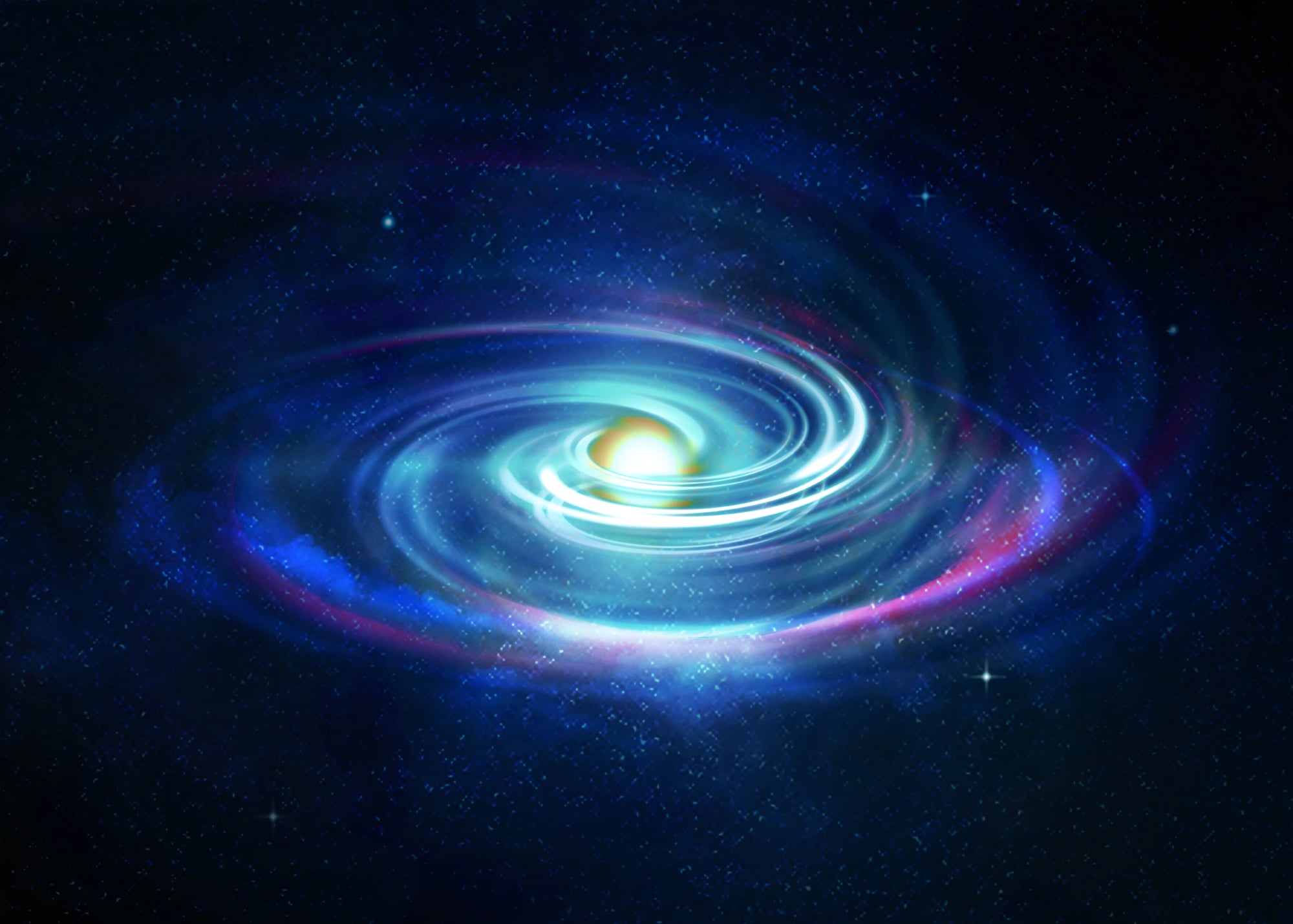
For years, prominent astronomers including Fred Hoyle championed the Steady State Theory – arguing the universe had always existed in roughly its current form with matter continuously created to maintain constant density. This elegant model couldn’t survive the 1964 discovery of cosmic microwave background radiation, which decisively supported the competing Big Bang theory instead.
The Steady State Theory reminds us that even mathematically beautiful models must eventually face experimental evidence – and sometimes they don’t survive the encounter.
Luminiferous Aether

Nineteenth-century physicists couldn’t imagine light waves traveling through empty space – they needed a medium for propagation, just as sound needs air. They proposed an invisible substance called “luminiferous aether” that supposedly permeated all space.
The famous Michelson-Morley experiment tried to detect this aether, but found no evidence whatsoever – paving the way for Einstein’s special relativity. The aether theory resembles trying to complete a puzzle with a piece that doesn’t actually exist – sometimes the most elegant solution requires removing rather than adding concepts.
Martian Canals

Astronomer Percival Lowell developed an obsession with the theory that Mars has artificial canals constructed by an advanced civilization. Evidence of intelligent engineering, he said, his precise sketches revealed a complex network of straight lines crisscrossing the red planet.
These canals just disappeared when more strong telescopes ultimately thoroughly studied Mars; they were only optical illusions mixed with the influence of persuasion. Like recognizing familiar forms in passing clouds, the human brain excels in linking random elements into meaningful patterns.
Lamarckian Evolution

Jean-Baptiste Lamarck proposed that organisms could pass acquired characteristics directly to their offspring – suggesting giraffes developed long necks by stretching to reach tall trees, then passed this trait to their young. Darwin’s natural selection eventually replaced this intuitive but flawed model, though Lamarck’s ideas stubbornly persisted for decades among some scientists.
Modern genetics conclusively confirmed Darwin was right about inheritance mechanisms. Lamarck’s theory serves as a reminder that what seems intuitively correct often isn’t how nature actually works.
The Expanding Earth

Some respected geologists once proposed that Earth was gradually expanding over time, which would explain continental drift without needing plate tectonics. This theory gained substantial traction in the mid-20th century through scientists like S. Warren Carey at the University of Tasmania.
Space-based geodetic measurements eventually proved Earth maintains essentially constant volume. The expanding Earth concept demonstrates how competing scientific theories can coexist for decades until definitive measurements finally settle the debate.
Polywater

Soviet scientists in the 1960s claimed to discover “polywater”—a form of water with dramatically different properties caused by interactions with narrow quartz capillaries. Western laboratories initially confirmed these surprising findings.
Further investigation revealed the strange properties came from impurities, not a fundamentally new water structure. Tiny amounts of sweat, soap residue, and dissolved silica created all the observed effects. Polywater illustrates how contamination can create apparent scientific breakthroughs that vanish under stricter laboratory conditions.
Piltdown Man

For forty years, Piltdown Man was celebrated as the “missing link” in human evolution after its discovery in England in 1912. The skull combined a human cranium with an orangutan jawbone, artificially aged using chemicals to appear ancient.
Modern analysis exposed this as a sophisticated fraud perpetrated by someone with inside knowledge of paleontology. The hoax succeeded partly because it matched British expectations about human origins having significant roots in England. National pride and confirmation bias delayed critical analysis of this too-perfect fossil.
Ptolemy’s Geocentric Model
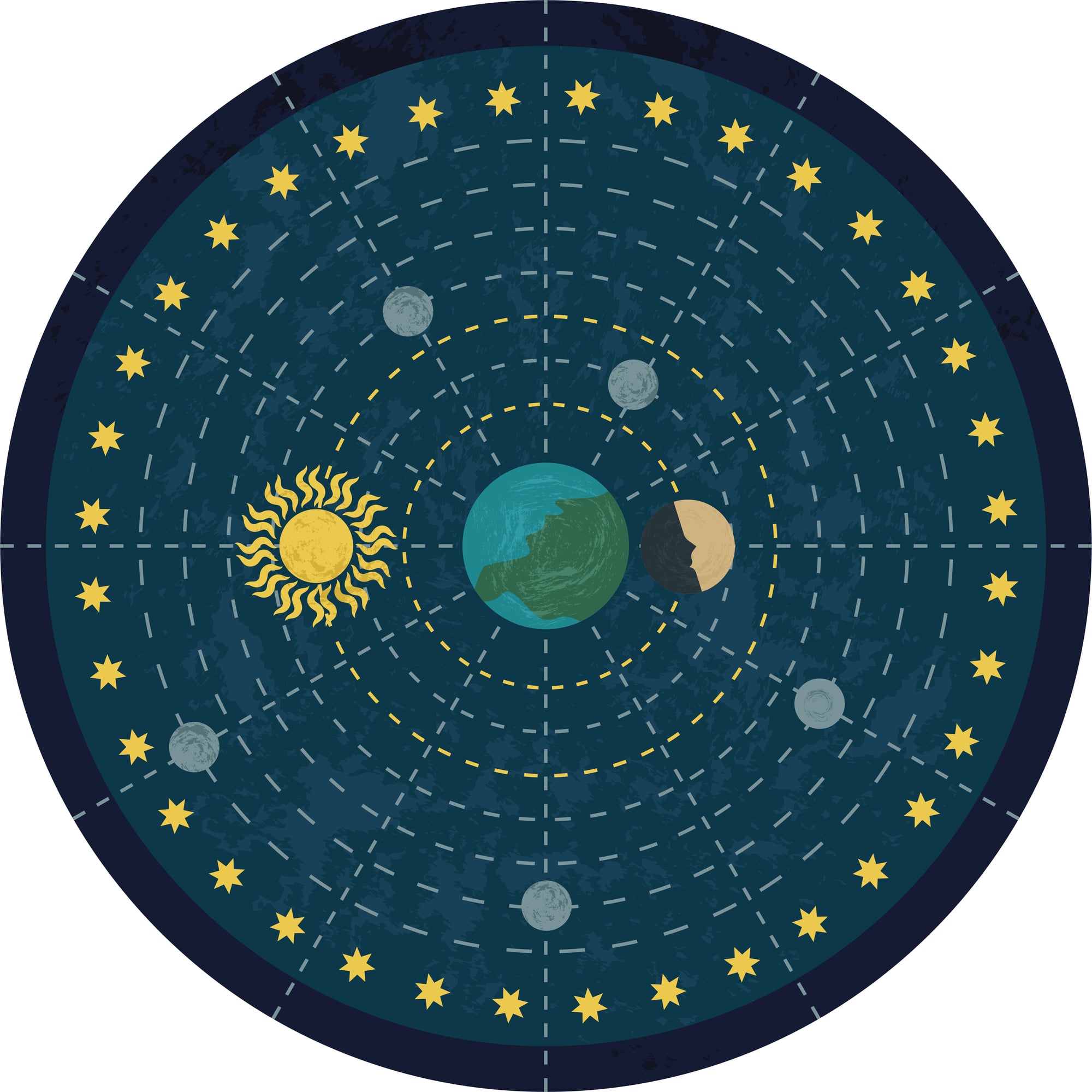
For more than 1,500 years, scientists used Ptolemy’s model—which positions Earth at the center of the universe with planets and stars whirling around it in perfect circles. This theory needs progressively more complex “epicycles” to explain planetary motions observed to defy logic.
Copernicus’s heliocentric model eventually took front stage over this Earth-centered viewpoint, despite strong resistance. Ptolemy’s continuous influence demonstrates how strong ideas may be even if they require ever more sophisticated interpretations for new evidence over millennia.
The Ether Drift

Physicist Dayton Miller claimed success in follow-up observations carried out at greater altitudes after the Michelson-Morley experiment failed to find the aether. After all, his effort produced exhilaration as ideal evidence of the aether’s presence.
Later investigation revealed Miller’s observations resulted from daily temperature variations influencing his equipment rather than cosmic events. Especially in very sensitive measures where minor effects are under investigation, the occurrence emphasizes the great difficulty of controlling ambient variables.
Caloric Theory

Scientists once believed heat was an invisible, weightless fluid called “caloric” that flowed from warmer to cooler objects. Count Rumford challenged this theory after observing that boring cannons generated seemingly unlimited heat, inconsistent with the idea of a finite caloric substance.
Modern thermodynamics results from the mechanical theory of heat finally substituting for caloric theory. This development demonstrates how occasionally more successful practical observations and industrial procedures might challenge accepted scientific paradigms than abstract theory.
Blank Slate Theory

Many psychologists and social scientists adopted the “blank slate” theory—that human behavior is practically totally formed by environment and education, with little effect from genetics or natural traits—for decades. Research in modern neuroscience and behavioral genetics has completely underdone this extreme viewpoint.
Molecular genetics, brain imaging, and twin studies all suggest major biological implications on behavior. The blank slate theory shows how occasionally ideological inclinations could affect scientific results in many different fields.
Phrenology

Phrenology claimed a person’s character traits could be determined by measuring bumps on the skull. This pseudoscience was widely accepted in the 19th century, practiced by medical professionals and used to justify racial hierarchies.
Despite lacking scientific validity, phrenology influenced fields from criminology to education. Modern neuroscience has shown that brain function isn’t compartmentalized in the way phrenologists imagined. The theory serves as a cautionary tale about applying scientific veneer to fundamentally biased assumptions.
The 1903 ‘Flying Machine’ Fiasco

Just nine weeks before the Wright brothers successfully flew at Kitty Hawk, The New York Times published an article claiming human flight might require “millions of years” of development. The paper’s editorial board relied on flawed calculations from astronomer Simon Newcomb regarding the impossibility of powered flight.
This famous miscalculation demonstrates how expert opinion can sometimes impede progress rather than advance it, especially when theoretical limitations are applied without practical experimentation.
The Hygiene Hypothesis Overreach

Early forms of the hygiene hypothesis postulated that by suppressing appropriate immune system development, ultra-clean environments have resulted in autoimmune disorders and allergies. Although partly accurate, the initial idea stretched too far.
Modern studies considering particular organisms and timing rather than overall cleanliness levels demonstrate a far more complex interaction between microbial exposure and immunity. The changing theory shows how scientific ideas sometimes begin with a kernel of truth but need significant improvement by more investigation and data.
Beyond Right and Wrong

Rarely does scientific advancement proceed in a straight line. Rather, it zigzags among brilliant ideas, bad decisions, and unanticipated discoveries. The errors listed above were not only blunders; they were also required phases toward better knowledge.
With every mistake made researchers reevaluate basic presumptions, create improved techniques, and finally create more exact models of reality. These scientific errors remind us that knowledge is always changing rather than fixed. Strong scientific hypotheses welcome problems rather than running away from them; they sustain demanding testing. In this sense, being wrong turns into a necessary component of finally getting things right.
More from Go2Tutors!

- The Romanov Crown Jewels and Their Tragic Fate
- 13 Historical Mysteries That Science Still Can’t Solve
- Famous Hoaxes That Fooled the World for Years
- 15 Child Stars with Tragic Adult Lives
- 16 Famous Jewelry Pieces in History
Like Go2Tutors’s content? Follow us on MSN.



