25 Phrases Grandparents Still Use That Confuse Younger Generations
There’s a particular kind of conversational whiplash that happens when you’re talking with your grandparents and they drop a phrase that stops you cold. You nod politely, pretend you followed along, and then quietly try to figure out what on earth they just said.
It’s not a gap in intelligence — it’s a gap in era. Language is stubborn that way. Words and phrases that were everywhere in 1955 or 1972 don’t quietly retire; they get carried forward by the people who grew up with them, surfacing in kitchens and phone calls and holiday dinners like artifacts from a world that mostly doesn’t exist anymore.
Some of these phrases are charming. Some are baffling.
All of them have a story behind them — and once you know that story, you’ll never unhear them again.
Don’t Touch That Dial

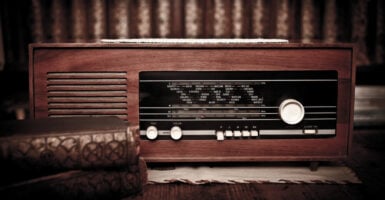
This one is a relic of a very specific object. Televisions and radios used to have physical dials that you turned to change the channel or station, and “don’t touch that dial” was the broadcaster’s way of keeping your hand off the knob during a commercial break.
There are no dials anymore — everything is a tap or a click or a voice command — but the phrase survived anyway, stubborn as an old set that refused to stop working.
Hung Out to Dry
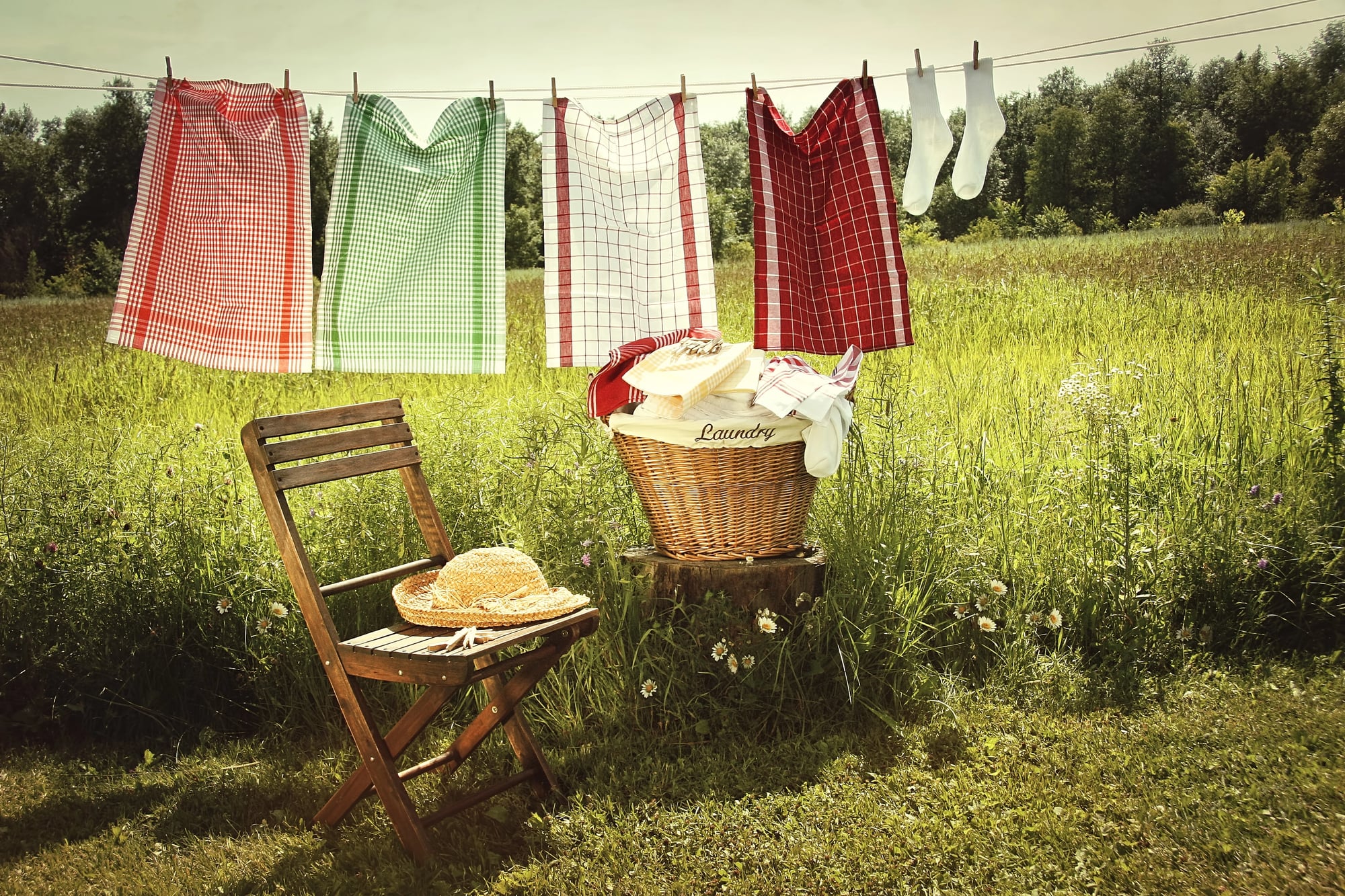
Before electric dryers existed in most American homes, laundry was carried outside in a basket and pinned to a clothesline, left to the mercy of the weather and however much sun the afternoon had in it. The phrase migrated from the literal act to mean being abandoned or left to deal with consequences alone, and your grandparents almost certainly remember both the metaphor and the actual experience of racing outside when the clouds rolled in.
Carbon Copy

Long before “CC” became a standard email field that everyone uses without thinking about it, a carbon copy was a physical thing. A second sheet of paper with a sheet of carbon paper pressed behind the original produced a duplicate every time a typewriter key struck the page.
So when your grandmother looks at you and says you’re a carbon copy of your mother, she’s reaching for an image of duplication that was once tactile and slightly ink-stained.
Put It on the Back Burner

Kitchen stoves — particularly the older gas ranges that lived in midcentury American homes — had front burners and back burners, and the back burners were where you moved a pot when it needed to keep simmering without your full attention. The expression stuck with remarkable precision: something on the back burner isn’t abandoned, it’s just not the priority right now, still warm, still there.
What’s quietly impressive is how well the phrase survived the move from gas to electric to induction.
Bite the Bullet
This phrase is old enough that it predates your grandparents by a few generations, but they’re the ones still using it without irony. Before reliable anesthesia was widespread, soldiers undergoing field surgery were sometimes given a bullet to bite down on — something to clench against the pain rather than cry out.
Your grandparents use it to mean pushing through something unpleasant. Younger people have generally replaced it with just saying “I guess I’ll deal with it,” which lacks the same dramatic weight entirely.
Going Whole Hog

Something about this phrase sounds like it arrived from a county fair, and it probably did. “Whole hog” refers to buying or roasting an entire pig rather than just a portion of it — a commitment that signals seriousness, excess, and a refusal to do things halfway.
When your grandfather says he went whole hog on the garage renovation, he means he held nothing back, which is a perfectly good sentiment, just wrapped in an image that most people under forty have never personally encountered.
Knee-High to a Grasshopper

This is one of those phrases that sounds like it was invented specifically to be said by a grandparent, and the image it conjures — something improbably small, crouched in a field — is both vivid and slightly absurd. It means very young or very small, and it’s almost always said while looking at a person who is clearly no longer either.
There’s a particular fondness tucked inside it: the observation that you were once so small, delivered by someone who was there to witness it.
Heavens to Betsy

Nobody is entirely certain who Betsy was, or why the heavens were being invoked on her behalf — and that uncertainty is part of what makes this phrase feel so specifically grandmotherly. It’s an exclamation of mild surprise or mild alarm, the kind of thing you say when something is unexpected but not catastrophic.
Younger generations have shorter, blunter options for that same feeling, none of which have the same flustered charm.
The Bee’s Knees

Bees don’t have especially notable knees, which is part of what makes this phrase so interesting — it means something is excellent or top-tier, and the logic behind the image is slippery at best. It dates to 1920s American slang, when nonsense phrases built around animal anatomy were briefly fashionable (“the cat’s pajamas” belongs to the same family).
Your grandparents probably inherited it from their own parents rather than coining it themselves, which makes it a hand-me-down twice over.
Keep Your Nose to the Grindstone
Grindstones were large, flat stones used to sharpen tools and blades, and keeping your nose close meant you were focused, hunched over your work, not looking up to be distracted. The phrase means to work hard and stay focused, and it carries a physical exhaustion inside it that “stay focused” simply doesn’t.
There’s something about the word “grindstone” that communicates effort in a way no productivity app notification ever will.
Not My Cup of Tea
This is a British expression that crossed the Atlantic long ago and found a comfortable home in midcentury American speech — particularly among women of a certain generation who used it as the polite, civilized way to decline something without being rude about it. “That’s not really my cup of tea” means “I don’t care for that” but says it with enough distance that no feelings get hurt.
Younger people tend to be more direct. Whether that’s better is a matter of preference, which is itself something you might say is not your cup of tea.
See a Man About a Horse

Nobody is going to see a man about a horse. This phrase is a deflection — a deliberately vague excuse used when someone wanted to leave without explaining where they were going, usually to use the restroom or handle something private.
It dates back to at least the 1860s and survived well into the twentieth century as a way of excusing yourself with a raised eyebrow and no real explanation. Younger generations tend to just say “I’ll be back” or say nothing at all — a different kind of deflection, but less theatrical.
Don’t Count Your Chickens

The full phrase is “don’t count your chickens before they hatch,” and it’s a warning against assuming an outcome before it’s certain. Farms were once common enough in American life that the image made immediate sense: a clutch of eggs isn’t a clutch of chickens yet, and acting like it is leads to disappointment.
The agricultural reference has faded, but the caution embedded in it hasn’t — your grandfather still reaches for this phrase every time someone announces plans that hinge on things not yet decided.
That Dog Won’t Hunt
Blunt, regional, and oddly satisfying. This phrase — common in Southern American speech — means that something won’t work, that a plan or excuse or idea is fundamentally flawed.
The image is of a hunting dog that refuses to do the one thing it’s supposed to do. It’s a complete verdict delivered in four words, and younger generations mostly encounter it as a punchline in period films rather than an active part of daily conversation.
Cat Got Your Tongue
The phrase is more unsettling than the situation that prompts it, which is usually just a child being shy or quiet. “Cat got your tongue?” is a taunt aimed at someone who isn’t speaking up — and the image it chooses, of a cat absconding with someone’s tongue, is vivid in a way that perhaps explains why it lodged so deeply in the language.
There’s a whole miniature piece of gothic folklore compressed into a question your grandmother asks when you haven’t said anything for two minutes.
Burning the Midnight Oil

Oil lamps required oil, and staying up late meant burning through it — a literal cost, not just a metaphor for sacrifice. The phrase means working late into the night, and it carries a faint texture of pre-electric life inside it, a time when choosing to work after dark meant committing real resources to do so.
Every time your grandparent uses it to describe a college kid studying for finals, they’re accidentally reaching back to a world lit by lamps and the smell of burning wick.
Kick the Bucket
This one means to die, stated plainly, and it’s been doing that work since at least the sixteenth century, though its exact origins are genuinely disputed by language historians. Your grandparents use it with a matter-of-fact tone that younger generations sometimes find startling.
There’s a generation that grew up treating death as a topic for plain speech rather than careful euphemism, and “kicked the bucket” belongs to that tradition entirely.
Hissy Fit

A “hissy fit” is a tantrum — a sudden, dramatic outburst of frustration or anger, usually brief and always loud. The word “hissy” likely derives from “hysterical,” filtered down through Southern American vernacular until it became something almost affectionate in tone, the way grandparents sometimes describe even adult meltdowns with the same fond exasperation they’d apply to a toddler.
Younger people say someone “lost it” or “went off,” which communicates the same event without the theatrical flair.
Don’t Take Any Wooden Nickels
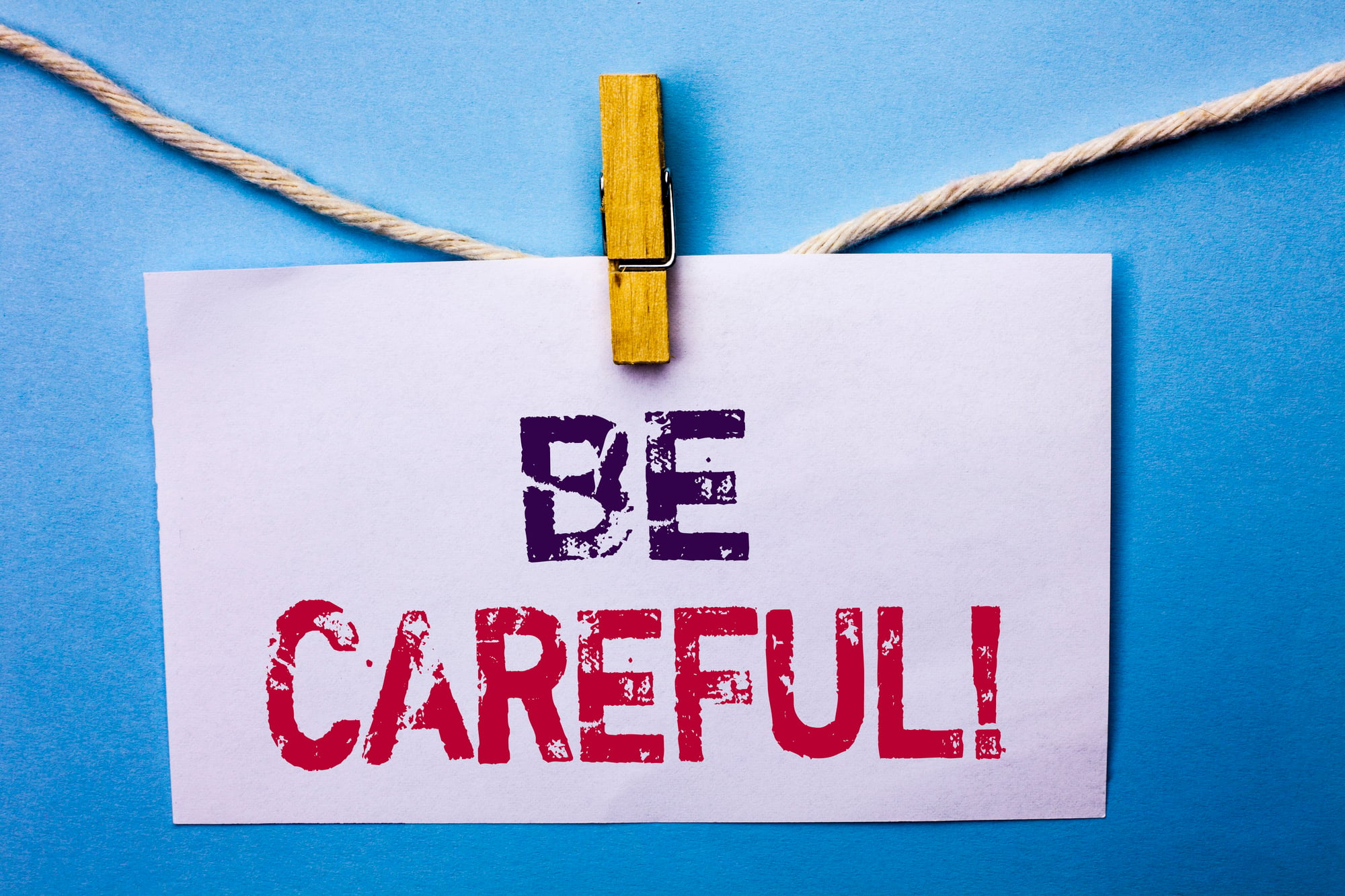
This is genuinely confusing without context: it’s a farewell phrase — something you say to someone leaving, meaning “be careful” or “don’t get cheated.” Wooden nickels were novelty items and promotional goods created as advertising gimmicks in the late 1800s and early 1900s, not counterfeit coins in circulation.
The phrase evolved from this context of not being fooled by worthless imitations. The warning is ancient by now, but your grandparents still say it at the end of phone calls with the warmth of something that’s been said in their family for decades.
Spitting Image

Younger people sometimes mishear this as “splitting image,” which makes a kind of visual sense but isn’t the phrase. “Spitting image” means an exact likeness — most likely derived from “spit and image,” an older expression meaning something created from the same substance as the original.
When your grandmother says you’re the spitting image of your grandfather at your age, she means it as the highest compliment possible, a verdict on resemblance that she’s been saving for the right moment.
As the Crow Flies

Navigation used to require mental calculation rather than a glowing blue dot on a screen. “As the crow flies” means the straight-line distance between two points — no roads, no curves, no detours, just the direct path a bird would take.
It’s still perfectly useful, still geometrically accurate, but younger generations rarely have cause to measure distance that way when a GPS has already routed them around the construction on Route 9.
Fly Off the Handle

This phrase comes from the very real hazard of a poorly fitted ax head — if the handle was loose, the metal head could fly off mid-swing in a direction nobody wanted. It means to lose your temper suddenly and disproportionately, the emotional equivalent of a tool malfunctioning in spectacular fashion.
The carpentry origin has been so thoroughly forgotten that most people using it now have no image in mind at all — they just know exactly what it means.
Through the Wringer

Old-fashioned washing machines — the hand-cranked or early electric kind — had a wringer attached: two rollers pressed together that you fed wet clothes through to squeeze out the water. Coming out the other side was an experience of compression and exhaustion.
When your grandparent says someone put them through the wringer, they might actually remember what a wringer looked like, which gives the phrase a weight it doesn’t carry for anyone who grew up with front-loading washers.
Bright-Eyed and Bushy-Tailed

This is a squirrel. Specifically, it’s the image of a squirrel at peak alertness — eyes wide open, tail aloft and fully fluffed, the picture of readiness.
It means energetic and eager, usually applied to someone who showed up prepared and enthusiastic when others were still dragging. The squirrel comparison is so embedded in the phrase that it long ago stopped registering as an animal metaphor, but it absolutely is one.
In a Pickle

Shakespeare used this one. “In a pickle” means in a difficult situation, in a jam, in a predicament from which easy escape is unclear.
The word “pickle” here likely comes from the Dutch “pekel,” meaning brine — being immersed in pickling liquid being a fair metaphor for being in over your head. Your grandparents use it lightly, for mild inconveniences and moderate disasters alike, and it lands with a softness that phrases like “in deep trouble” simply don’t manage.
The Words That Carried a World With Them

Language doesn’t travel light. Every one of these phrases arrived in the present carrying something behind it — a tool that no longer exists, a domestic routine that disappeared with a specific appliance, a social code from a time when directness required camouflage.
When your grandparents speak this way, they’re not being confusing on purpose. They’re just still living partly inside the language that shaped them, reaching for the words that were true when they first learned them. And there’s something worth slowing down for in that — not to decode it, but to hear the world it’s describing, the one that built the people now sitting across the table from you.
More from Go2Tutors!

- The Romanov Crown Jewels and Their Tragic Fate
- 13 Historical Mysteries That Science Still Can’t Solve
- Famous Hoaxes That Fooled the World for Years
- 15 Child Stars with Tragic Adult Lives
- 16 Famous Jewelry Pieces in History
Like Go2Tutors’s content? Follow us on MSN.