25 School Subjects That Used to Be Taught Everywhere (And What Happened to Them)
Ask someone over sixty what school was like, and the curriculum they describe sounds almost foreign.
Penmanship drills. Declamation contests. Home economics. Shop class. Latin verbs conjugated at the chalkboard until they lived in your fingers.
These weren’t electives tucked into a corner of the timetable — they were the core of what school meant for most of the 20th century and much of the 19th. Then, quietly, they disappeared.
Not all at once. More like furniture removed one piece at a time until the room felt different without anyone being able to say exactly when it changed.
Some subjects were cut for money. Some fell out of fashion.
Some were crowded out by standardized testing requirements that left no room for anything that couldn’t be measured with a bubble sheet. And a few are now creeping back, which suggests that the people who designed those old curricula understood something that got lost along the way.
Rhetoric and Public Speaking

For most of human history, the ability to speak persuasively in public was considered the central skill of an educated person. Ancient Greek and Roman education was built around it.
Medieval universities taught it as one of the seven liberal arts. American schools well into the 20th century held declamation contests where students memorized and delivered speeches — not as a club activity, but as a required part of schooling.
The decline came gradually. Written communication took over.
Public speaking shrank into an elective, then into a club. Today most students graduate having never given a formal speech to an audience, which is remarkable given how much professional life depends on exactly that skill.
The irony is that employers consistently rank communication as the ability they most want in new hires, and schools have spent decades teaching almost everything except that.
Penmanship

There was a time when how you wrote by hand was taken as seriously as what you wrote. Schools devoted specific daily periods to penmanship, using copybooks with careful models of each letter.
The Spencerian script of the 19th century gave way to Palmer Method in the early 20th — a system so systematic that its creator, Austin Norman Palmer, produced training materials used in schools across the country for decades. The typewriter began loosening handwriting’s grip, and the keyboard finished the job.
Cursive is now dropped from many school curricula entirely, which means children growing up today cannot read handwritten historical documents, including the original Declaration of Independence, without assistance. Whether that matters depends on what you think education is for.
Latin
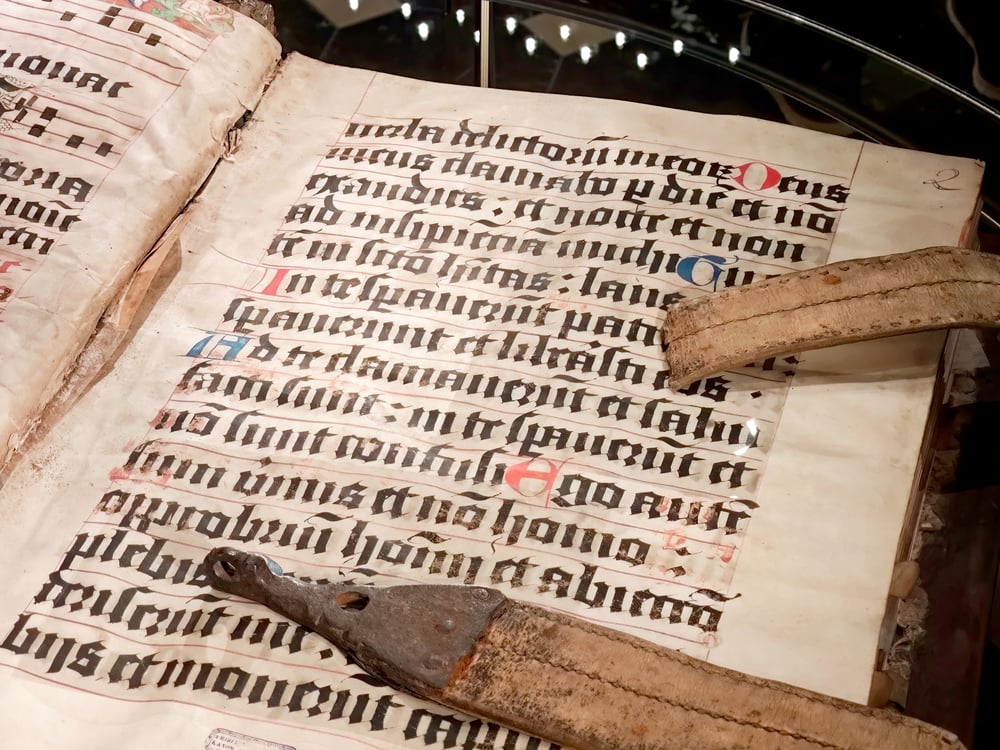
Latin dominated the secondary school curriculum for centuries. Not as a curiosity or an enrichment activity — as a required course that most students took for multiple years.
The argument was partly practical (Latin was the language of law, medicine, and the church) and partly intellectual: learning to translate Latin required rigorous grammatical analysis that transferred to clearer thinking in any language. The Great Debate about whether Latin was worth teaching played out repeatedly through the 20th century.
Progressive educators argued it was elitist and useless. Traditionalists argued it trained the mind like nothing else. By the 1960s, enrollments had collapsed.
Today Latin persists in a small number of schools, often as an optional course with a handful of students. The students who take it tend to score higher on standardized verbal tests, which either proves the traditionalists were right or proves that the kind of student who takes Latin was always going to score well.
Home Economics

Home economics courses taught cooking, nutrition, sewing, budgeting, and basic household management. At their peak, these classes enrolled millions of American students — though the enrollment was overwhelmingly female, which both explained their reach and contributed to their demise.
As the feminist movement rightly pushed back against the idea that women’s education should be oriented toward domestic skills, home economics carried the stigma of that assumption with it. The courses shrank and were renamed — “family and consumer sciences” sounds less gendered — but the substance thinned along with the label.
What went with them was practical knowledge that genuinely makes daily life easier: how to balance a household budget, how to cook a nutritious meal from basic ingredients, and how to read a lease. Those skills haven’t become less necessary.
They just stopped being taught.
Shop Class
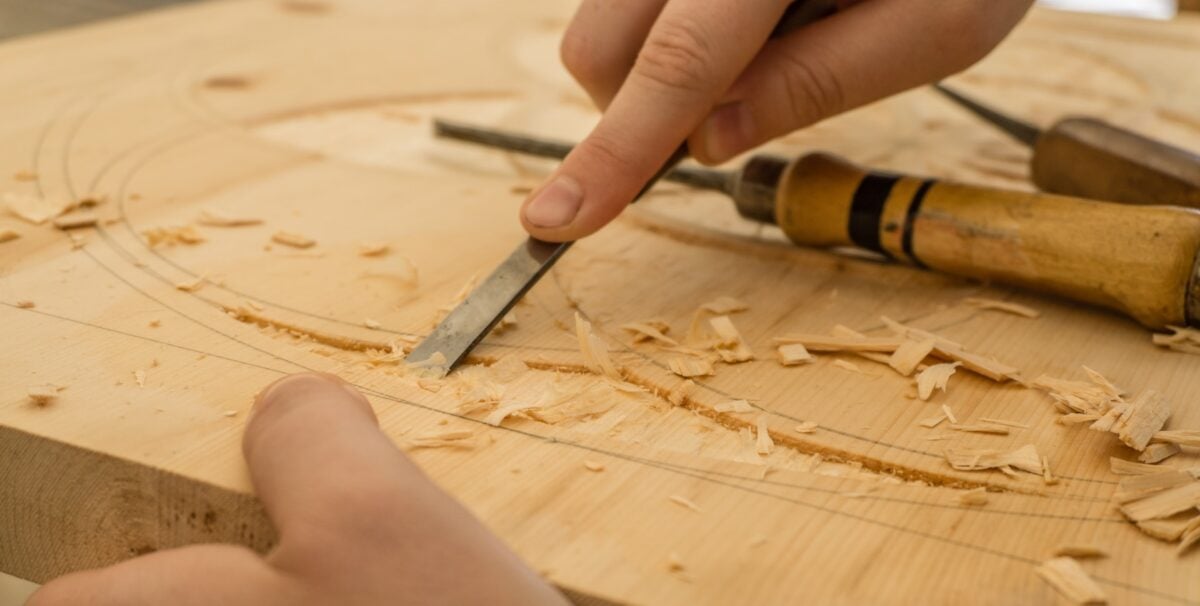
Industrial arts — woodworking, metalworking, basic mechanics — was standard in American schools through most of the 20th century. Boys in particular spent hours learning to build things with their hands, to use tools, to read technical drawings and turn them into objects you could hold and use.
The subject fell victim partly to the college-prep shift in American education, which increasingly treated anything hands-on as second-tier. The implicit message was that working with your hands was what you did if you weren’t smart enough for university. Shop classes were cut.
A generation later, the skilled trades face a critical shortage of workers, and there’s a genuine debate about whether the wholesale abandonment of vocational education was one of the more expensive mistakes the education system made in the latter half of the 20th century.
Civics

Civics was once a distinct subject that taught how government actually worked — not just the structure of the three branches, but how a bill moved through a legislature, how local government functioned, what rights citizens had and what responsibilities came with them. Students argued about Supreme Court cases and held mock elections. The goal was to produce people who could participate meaningfully in self-government.
The subject merged into broader social studies curricula, then shrank further as standardized testing focused attention on reading and mathematics. A 2018 survey found that less than a quarter of Americans could name all three branches of government.
Whether teaching civics would have changed that is debatable. Not teaching it certainly didn’t help.
Elocution

Elocution was the formal study of how to speak: pronunciation, tone, pacing, the physical production of sound. Victorian schools treated it as seriously as grammar.
Students practiced vowel sounds, learned to project their voices, and drilled on the proper emphasis for different kinds of sentences. The elocution recital was a standard school event, where children stood before parents and community and demonstrated they could command a room.
It sounds fussy now, partly because bad elocution teaching became a caricature — the received pronunciation drilled out of working-class British children, the affected speech patterns that marked class aspiration more than genuine communication. But underneath the snobbery was something real: the idea that speaking clearly and confidently is a skill that needs practice, not something people either have or don’t.
Geography

Real geography — the physical world, how landscapes form, why rivers run where they do, what drives climate patterns, how human settlement follows terrain — was once a core subject. Students memorized not just capitals but mountain ranges, river systems, and the relationship between geography and the economics and politics of regions.
The subject got hollowed out over time. Map skills became less emphasized as GPS made navigation feel automatic.
Physical geography shrank in favor of human geography, which then merged into social studies. Ask most high school graduates today to locate a dozen countries on a blank map, and the results are humbling. The world didn’t get less complex.
The teaching of where things are just quietly stopped.
Moral Philosophy
Before psychology and sociology existed as academic disciplines, schools taught something called moral philosophy — a structured examination of how people should live, what obligations they owed each other, and how to reason about ethical questions. At the university level this was the capstone course, often taught by the president of the institution.
At lower levels it was simplified, but the core idea persisted: education wasn’t just about what you knew but about what kind of person you were becoming. The subject lost its footing as the curriculum secularized and academic disciplines professionalized.
Ethics became a subfield of philosophy, taught in universities. Schools dropped it.
Whether students are better or worse for growing up without structured practice in thinking about how to live is exactly the kind of question that’s now difficult to even raise in an educational setting.
Ancient History

Courses in classical history — Greece, Rome, Egypt, Mesopotamia — were once standard parts of secondary education. The assumption was that understanding the ancient world was necessary for understanding the modern one.
Democratic theory came from Athens. Legal concepts came from Rome.
The very alphabets and number systems in daily use had ancient roots that were worth knowing. As the curriculum expanded to include more recent history, ancient history contracted.
Today most students study American history with some world history overlaid, but the deep past gets compressed into a few weeks at most. The result is a kind of historical amnesia — educated people who know a great deal about the last two centuries and almost nothing about the previous forty.
Astronomy

In the era before electric light, the night sky was visible to almost everyone, and understanding what you were looking at felt practically necessary. Schools taught basic astronomy — the movement of planets, the names of constellations, how to use the stars for navigation, why seasons happened.
It connected mathematics, physics, and natural science in a way that felt grounded in observable reality. The subject faded as physics and earth science absorbed pieces of it without quite holding it together as a whole.
Today astronomy survives mainly in planetarium visits and elective courses. The night sky itself has become invisible to most people in developed countries, buried under light pollution, which removed the daily reminder that there was something up there worth understanding.
Memorization and Recitation

The entire practice of memorizing substantial texts and reciting them aloud has fallen so completely out of fashion that it barely registers as a lost subject. But for most of educational history, memory was a skill developed deliberately.
Students memorized poems, speeches, scripture, mathematical tables, and historical dates — not as punishment but as a recognized way of building the kind of internal resource library that could be drawn on throughout life. The critique of rote learning has merit: memorizing without understanding is limited.
But the baby left with the bathwater was the recognition that some things genuinely should live inside you rather than on a reference sheet. The student who has memorized a few hundred lines of poetry carries something that no search engine can quite replicate.
Bookkeeping and Commercial Arithmetic

Before spreadsheets, before calculators, before computerized accounting systems, knowing how to keep books was a vocational skill with near-universal application. Schools taught double-entry bookkeeping, the arithmetic of business transactions, how to maintain ledgers and balance accounts.
The subject was practical to the point of being unglamorous, and that practicality was its whole appeal. The subject disappeared partly because software made manual bookkeeping obsolete and partly because financial literacy became assumed rather than taught.
The result is a population that regularly makes consequential financial decisions — taking on debt, signing contracts, managing retirement accounts — with less formal preparation than previous generations received in dedicated coursework.
Classical Literature in the Original

Greek and Latin texts were once read in their original languages as a matter of course for serious students. Homer, Virgil, Cicero, Plato — these were encountered directly, not through translations, because educators believed something was lost in translation that was worth keeping.
The effort required was enormous. That was the point.
The decline of classical language instruction removed the possibility. Without Greek and Latin, reading Thucydides in the original is simply not available to most students.
What replaced it was wider reading in more accessible texts — a real gain in breadth, and a real loss in the particular depth that comes from wrestling with a difficult text in an unfamiliar language.
Drawing and Technical Illustration
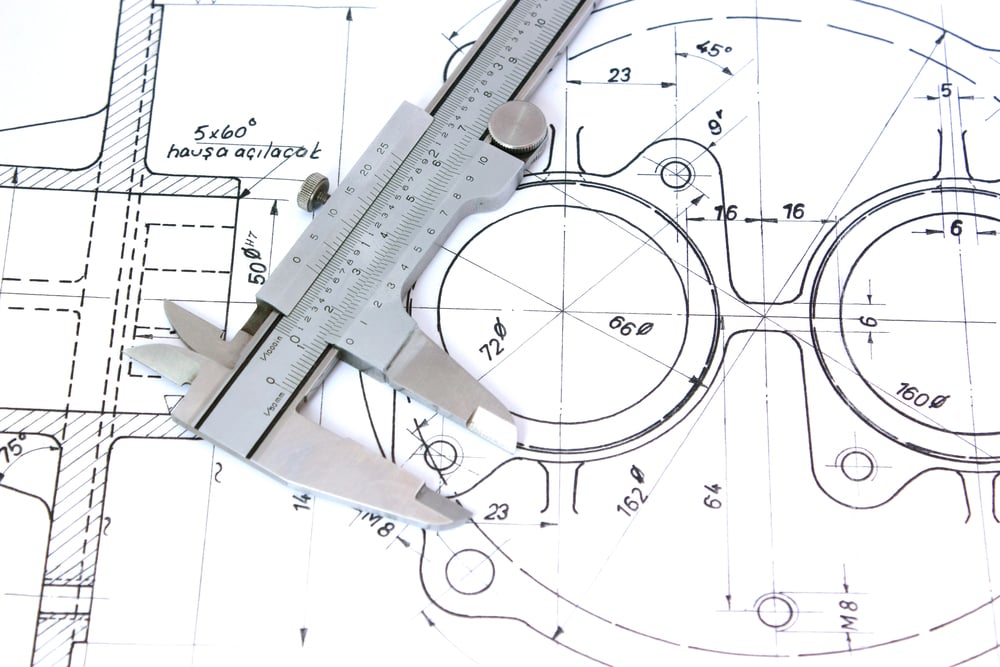
Technical drawing — the ability to represent objects accurately in two dimensions, to understand perspective and proportion, to communicate visually with precision — was taught in schools as a practical skill tied to drafting, engineering, and the visual arts. Students learned to draw what they actually saw rather than what they thought things looked like.
The subject split as it contracted. Art class became expressive, focused on creativity and self-expression.
Technical drawing moved into vocational tracks. The general student lost both the discipline of careful observation and the practical ability to represent ideas visually without software.
Those are different skills than operating design software, and they’re less common now.
Logic and Argumentation
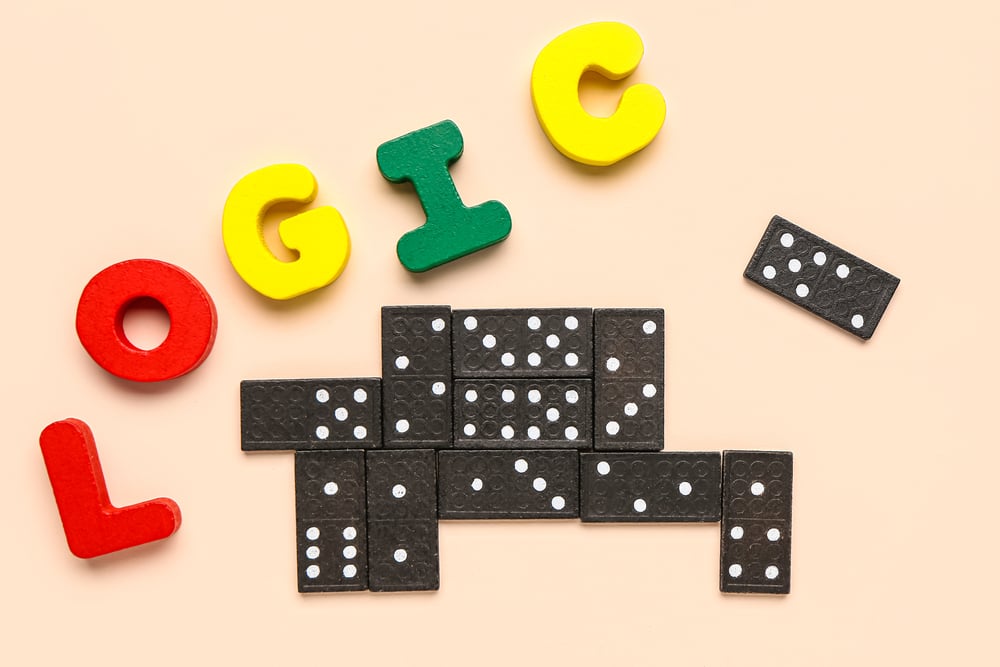
Formal logic — the study of valid inference, the structure of arguments, the identification of fallacies — was once considered foundational to educated thinking. Students learned what a valid deductive argument looked like, what distinguished evidence from assertion, and what made a reasoning chain break down.
They could name the common fallacies and identify them in practice. The subject shrank into corners: a unit in some English classes, a fragment of the mathematics curriculum.
Most students graduate without formal instruction in how to assess whether an argument actually holds. In an environment of abundant information and competing claims, that’s a significant gap. The ability to evaluate reasoning is exactly what’s needed, and it’s one of the things schools stopped teaching explicitly.
Religious Education and Scripture

Whatever one’s views on the appropriate relationship between religion and public education, the fact is that religious texts were central to the early American curriculum and remained part of schooling, in various forms, through much of the 19th century. Students read scripture not necessarily for devotional reasons but because those texts were considered essential cultural knowledge — the same way ancient mythology was considered worth knowing regardless of whether anyone believed it.
The separation enforced by 20th-century court decisions was constitutionally justified, but it removed from public schools any structured engagement with religious thought and text at the same moment that religious literacy in the broader population began to decline. Students who don’t encounter the Bible, the Quran, or the Bhagavad Gita in any formal educational context are navigating a world where those texts are constantly referenced, contested, and cited without background to place any of it.
Physical Culture

Physical education in its earlier forms was quite different from modern PE. “Physical culture” classes in the late 19th and early 20th centuries taught calisthenics, gymnastics, posture correction, and sometimes dance — with an emphasis on developing physical control and awareness rather than athletic competition.
The goal wasn’t to produce athletes but to develop bodily discipline in the same way mental discipline was developed through academic work. Modern PE varies enormously in quality, but it generally moved toward sports and away from the systematic physical development that physical culture represented.
The idea that physical and mental development are connected — that how you inhabit your body affects how you think — shows up now in research on exercise and cognition, making the old physical culture curriculum look more coherent than it seemed.
Nature Study

Elementary schools of the early 20th century taught nature study as a distinct subject. Children went outside and looked at things — insects, plants, birds, rocks, weather — and then came back and drew and wrote about what they’d seen. The goal was direct observation of the natural world, not mediated through textbooks.
Students in rural areas were expected to know the names of local plants and birds the way they knew the names of letters. The subject faded as the curriculum consolidated and urban schooling made direct nature observation logistically harder.
Environmental education picked up some of what nature study was doing, but with more emphasis on ecology as a system and less on the particular pleasures of knowing that the bird sitting on the fence is a cedar waxwing and not a starling. That specific, patient, local knowledge is rarer now.
Agriculture

For most of American history, a substantial portion of the population farmed or was closely connected to farming, and schools reflected that reality. Agricultural education taught soil science, crop rotation, animal husbandry, and the business of running a farm.
The curriculum was deeply practical and deeply local — what you grew depended on where you were. FFA (Future Farmers of America, now Future Business Leaders of Agriculture) kept some agricultural education alive in rural schools, but the subject largely vanished from suburban and urban curricula as the population moved off farms.
Today three percent of Americans produce food for everyone else, and most people have no formal education in how that food is grown, what it requires, or what its production involves. That gap matters more as questions about food systems become increasingly public and political.
Typewriting

Typewriting was introduced to school curricula in the 1880s and became a standard course within decades. It taught not just how to operate a typewriter but how to format documents, manage correspondence, and produce professional written output efficiently. The class was genuinely useful and widely taken.
When personal computers arrived, typing class became keyboarding class and then faded into something assumed rather than taught. The result is that many people type with two fingers for their entire lives, producing perhaps a third of the words per minute of a trained touch typist, which adds up to an enormous amount of lost time spread across a working life.
The skill was quietly dropped at exactly the moment it became more important than ever.
Music Theory
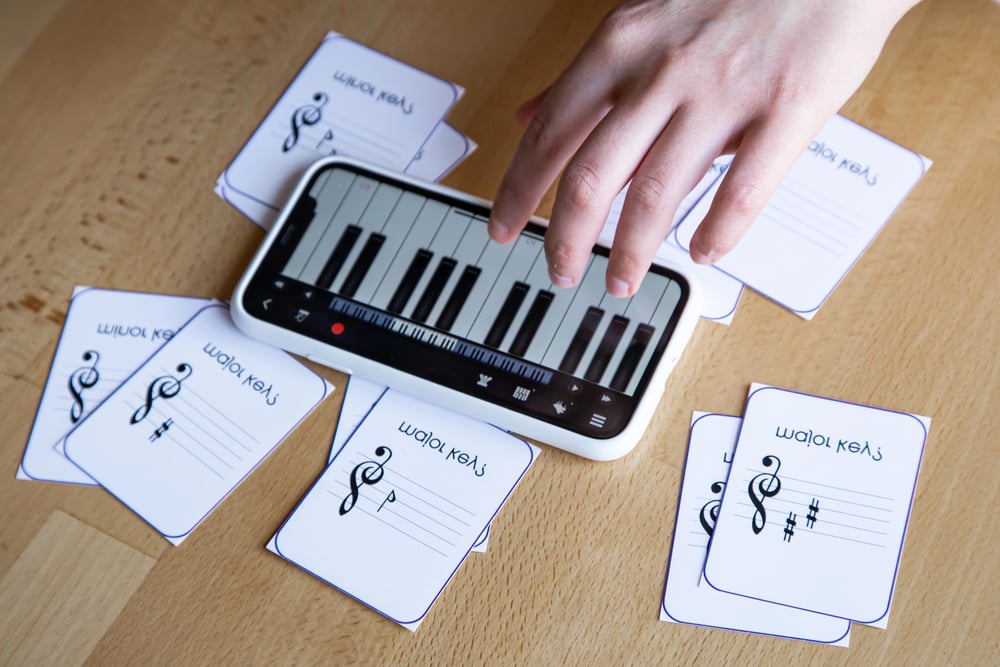
Music performance has survived as a school subject in various forms, but music theory — understanding how music is constructed, how to read notation, why certain harmonies work and others don’t — has largely disappeared from general education. It used to be taught as part of the standard music curriculum, giving students not just the ability to play an instrument but the ability to understand what they were playing.
What was lost was a particular kind of literacy: the ability to think about music structurally rather than just experience it emotionally. Reading a score, understanding what a composer intended, recognizing how a piece is put together — these skills remain available to the few but were once considered part of a reasonable general education.
Classical Mythology

Greek and Roman mythology was once taught as a matter of cultural necessity. These stories are embedded in the language — the words cereal, music, mercurial, atlas, and hundreds of others come from mythological sources — and in the art, literature, and architecture that surround educated life.
Understanding why the ceiling of a bank looks the way it does, or what a sculptor meant by a figure reaching toward the sun, required knowing these stories. The subject merged into general literature units, then shrank further.
Students who graduate today often encounter classical references in novels, films, and art without the background to place them. The stories are still there in the culture. The education that made them accessible quietly stopped.
Debate

Formal debate was once a standard school activity and often a required course. Students learned to argue both sides of a question, to research and marshal evidence, to think on their feet under pressure, and to respond to opposing arguments in real time.
The discipline was explicitly adversarial and explicitly educational — the goal wasn’t to win but to develop the capacity for rigorous argument. Debate clubs exist, but the formal course requirement disappeared from most schools.
What replaced it was often group discussion, which sounds democratic but frequently produces something closer to a meeting where everyone agrees or no one actually engages with anyone else’s argument. Knowing how to disagree well, in structured and productive ways, turns out to be a skill that needs teaching.
It was taught, and then it mostly wasn’t.
The Empty Desks

What’s striking about this list isn’t that any individual subject went away. Curricula change — that’s healthy. What’s striking is the pattern of what went: the practical, the physical, the oral, the ancient, the ethical.
What stayed, and grew, was the written, the testable, the quantifiable, the recent. Schools are now very good at producing people who can sit and process information presented in text and answer questions about it in writing.
That’s a real skill. But the students who emerged from schools a hundred years ago could also speak in public, build something with their hands, balance accounts, grow food, read a score, argue formally, and find their way by the stars.
Whether that person was better educated is a real question, and the honest answer is: in some ways, undeniably yes. The subjects that are coming back — coding as the new shop class, mindfulness as a descendant of physical culture, financial literacy repackaged as life skills — suggest that each generation rediscovers what the previous one quietly dropped.
The curriculum keeps turning. Some things come back around.
More from Go2Tutors!

- The Romanov Crown Jewels and Their Tragic Fate
- 13 Historical Mysteries That Science Still Can’t Solve
- Famous Hoaxes That Fooled the World for Years
- 15 Child Stars with Tragic Adult Lives
- 16 Famous Jewelry Pieces in History
Like Go2Tutors’s content? Follow us on MSN.