25 Vintage Advertising Tins That Move Fast at Antique Shows
There’s something about a lithographed tin that stops people cold. You’ll see it happen at any decent antique show — someone walks past a folding table loaded with old housewares, and then they stop, backtrack, and pick up a battered little container with faded graphics and a slightly dented lid.
Something about holding it feels like being handed a piece of someone else’s life. Collectors know this feeling well, and dealers know it even better.
Certain tins don’t sit long — they get scooped up before the show floor even hits full crowd. Here are 25 of the ones that consistently disappear fastest.
Planters Peanuts
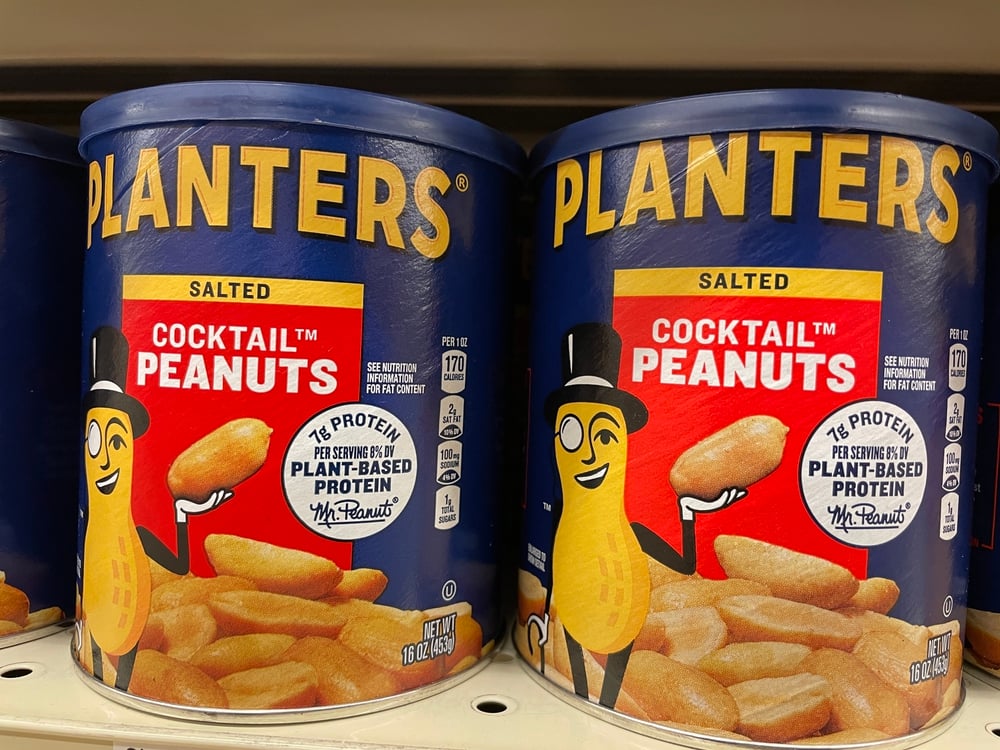
Mr. Peanut has been moving tins since the 1910s, and he hasn’t slowed down. The monocle, the top hat, the cane — that character design is so specific and so consistent that collectors can track graphic evolution across decades just from the tin art alone.
Early Planters peanut tins with embossed lettering and original lithography regularly command serious attention.
Prince Albert
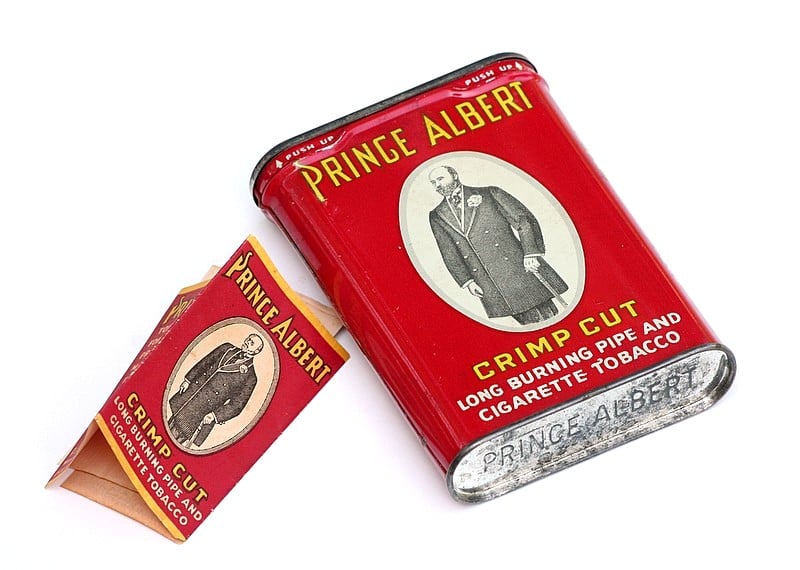
Prince Albert tins are the pocket-sized workhorses of the advertising tin world. They’re small, they’re durable, and they were produced in enormous quantities — which means they survived in large numbers, and yet collectors still want them.
The familiar red and gold color scheme is immediately recognizable, and condition variations keep the hunt interesting.
Crisco
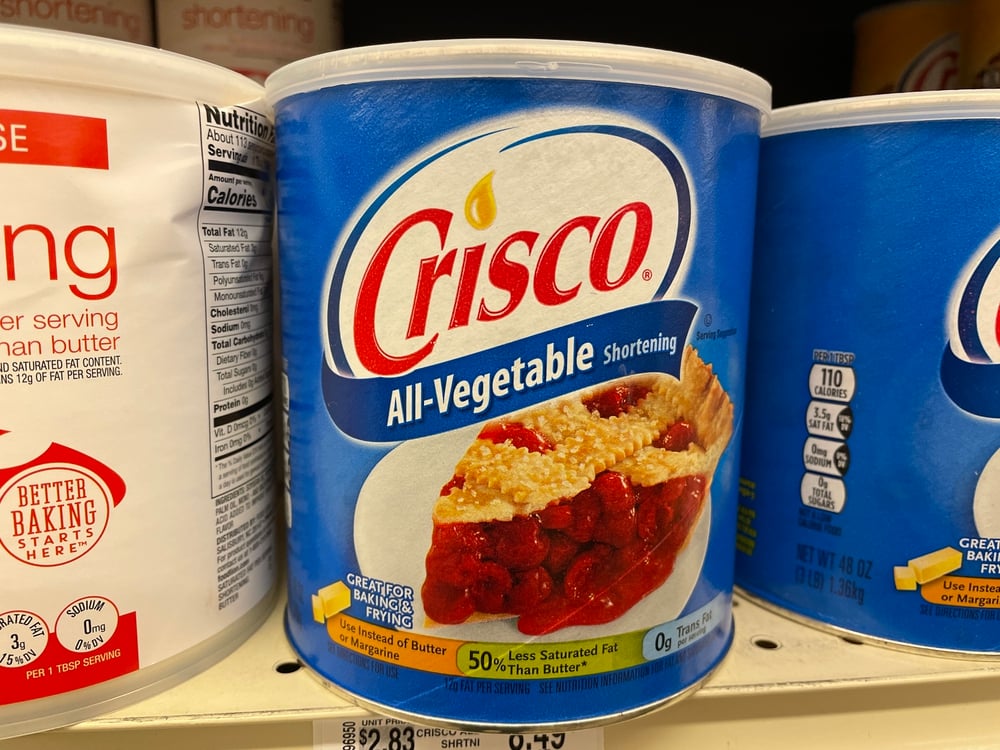
Crisco shortening tins from the 1910s through the 1940s carry a quiet dignity — like an object that never expected to outlive the kitchen it served in but did anyway, and now sits in the hands of strangers who find it beautiful. The clean white and blue graphics against the steel age beautifully.
Larger one- and three-pound sizes with intact paper labels underneath the lithography are the ones dealers price highest.
Union Leader
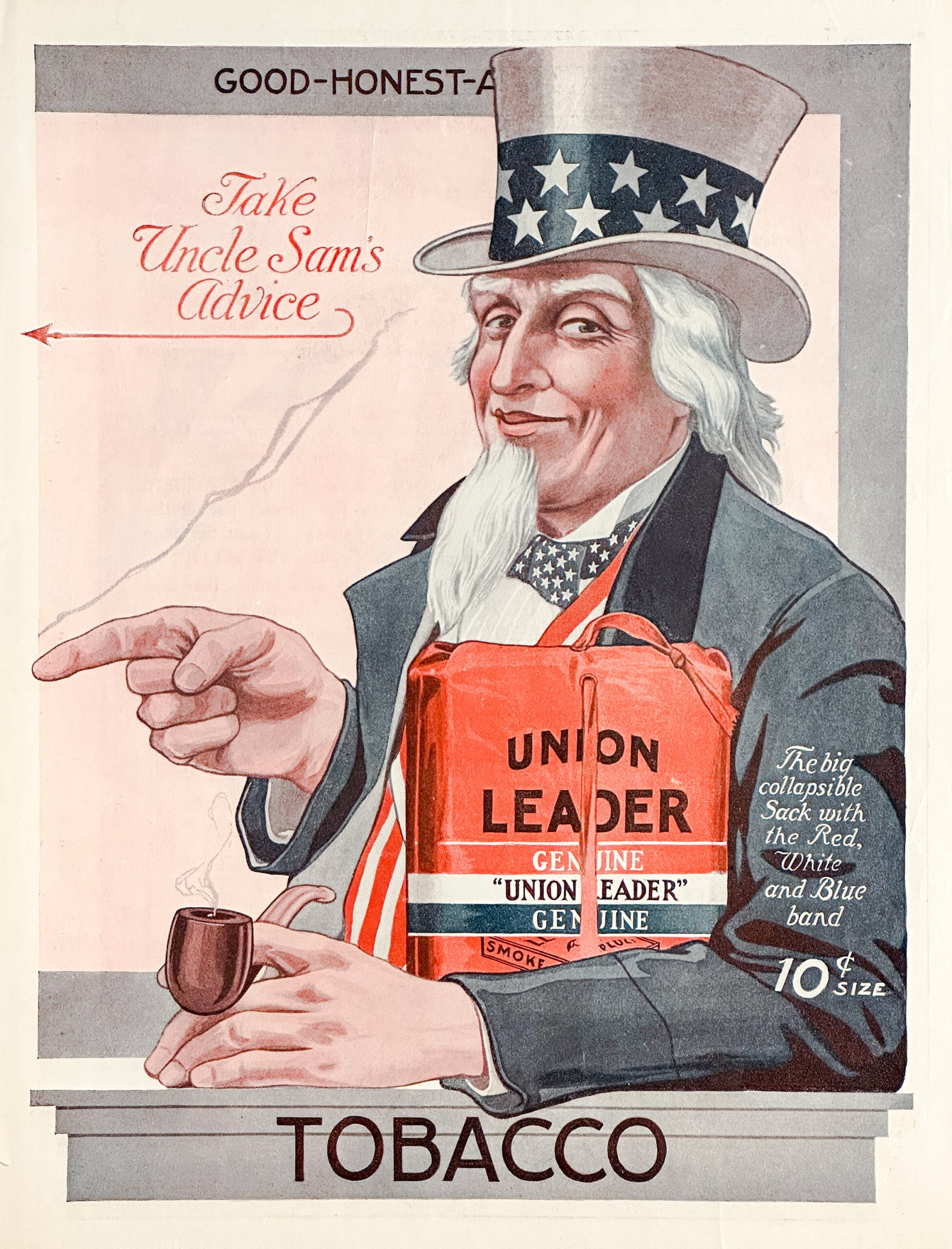
Union Leader tins are the kind of thing serious collectors don’t let their hands leave once they’ve picked one up. The eagle imagery is bold, the colors hold well over a century, and the brand’s long production history means variations exist across different eras — variations that make two seemingly identical tins worth very different amounts depending on who’s looking at them.
So the hunt, for these, never really ends.
Calumet Baking Powder
Calumet is one of the most collected kitchen tins in the American antique market, full stop. The Native American chief in headdress graphic is bold and immediately legible from twenty feet away, which is exactly why it catches eyes on crowded dealer tables.
Early Calumet tins from the teens and twenties — especially double baking powder versions — move faster than the dealers can reprice them.
Eveready
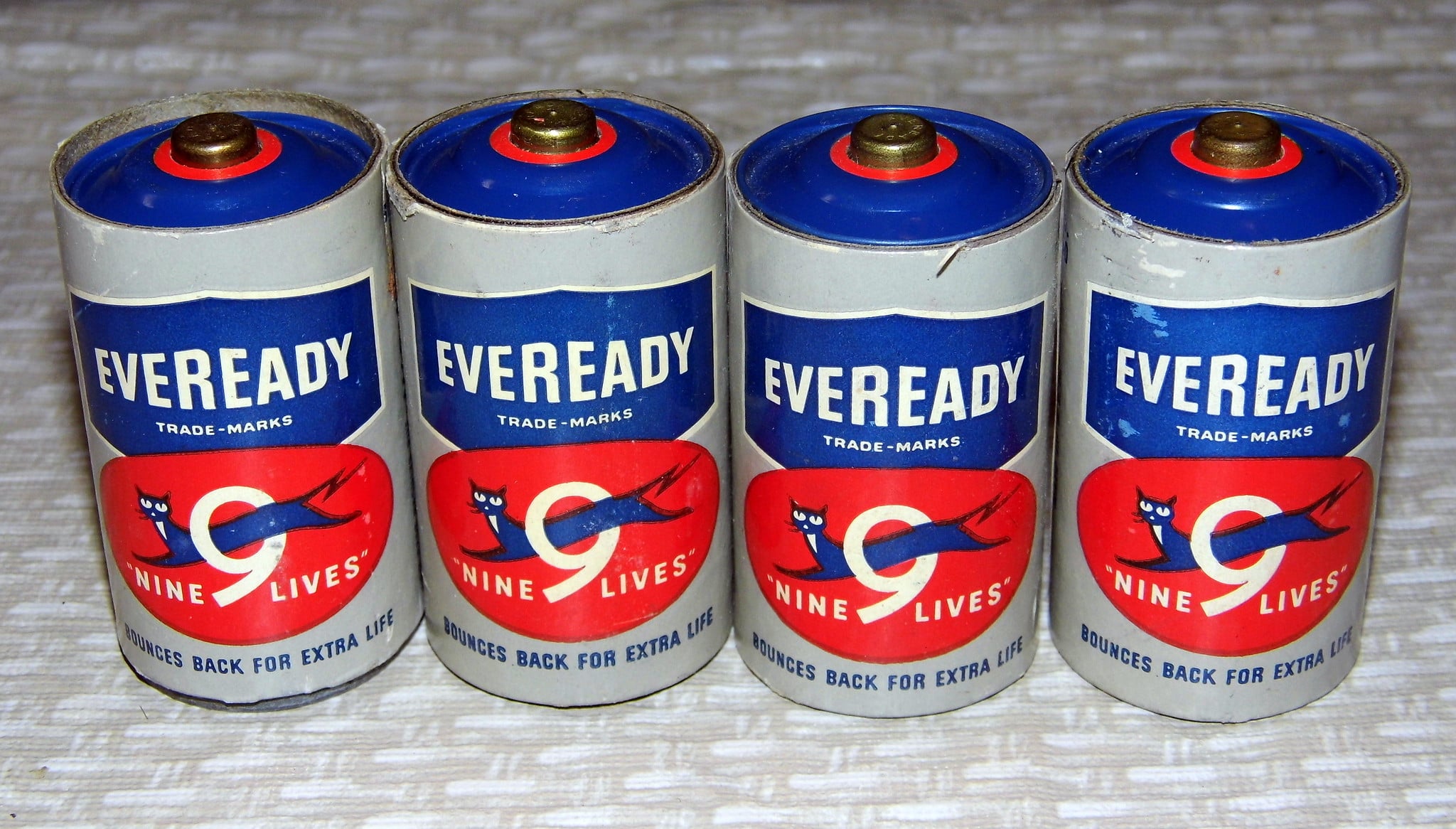
Eveready battery and flashlight tins have a sleek, industrial confidence to them that feels more modern than their age suggests. The black cat logo variants from the early and mid-twentieth century are particularly sought after, and the range of tin sizes — from small pocket containers to larger display tins — means collectors at every budget find something worth grabbing.
Turns out cats sell batteries just as well as they sell everything else.
Log Cabin Syrup
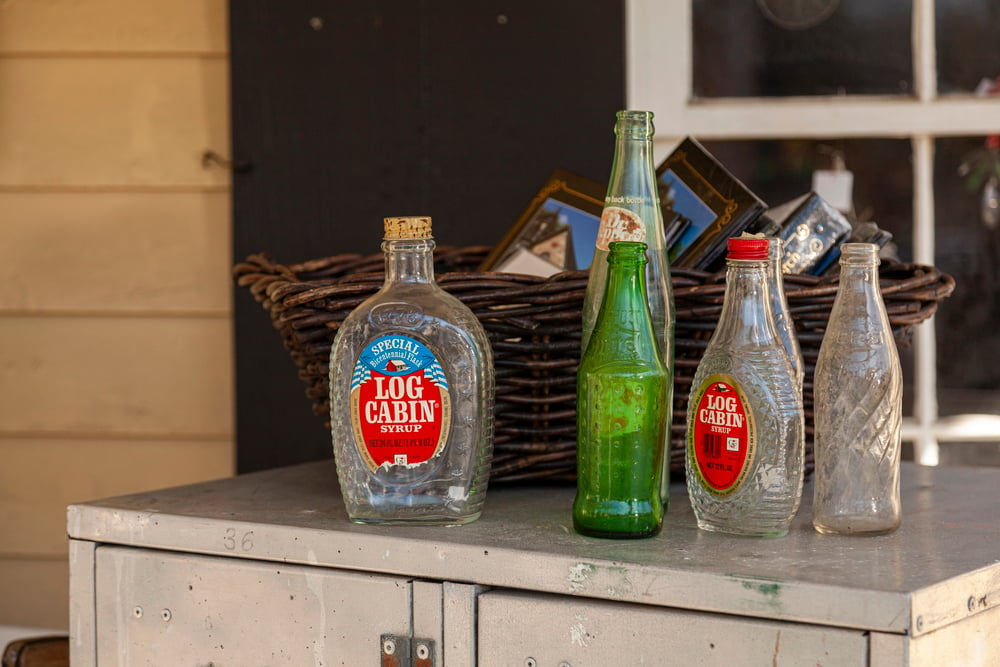
Log Cabin syrup tins shaped like actual log cabins are among the most immediately appealing pieces in the tin category — objects that function almost as miniature architecture, holding their form and their charm across a hundred years of shelf life. Earlier cabin-shaped tins from the late 1800s through the 1910s are genuinely scarce and priced accordingly, while later flat-sided versions still attract steady interest.
The graphic detail on the better examples is extraordinary.
Lunch Box Tins
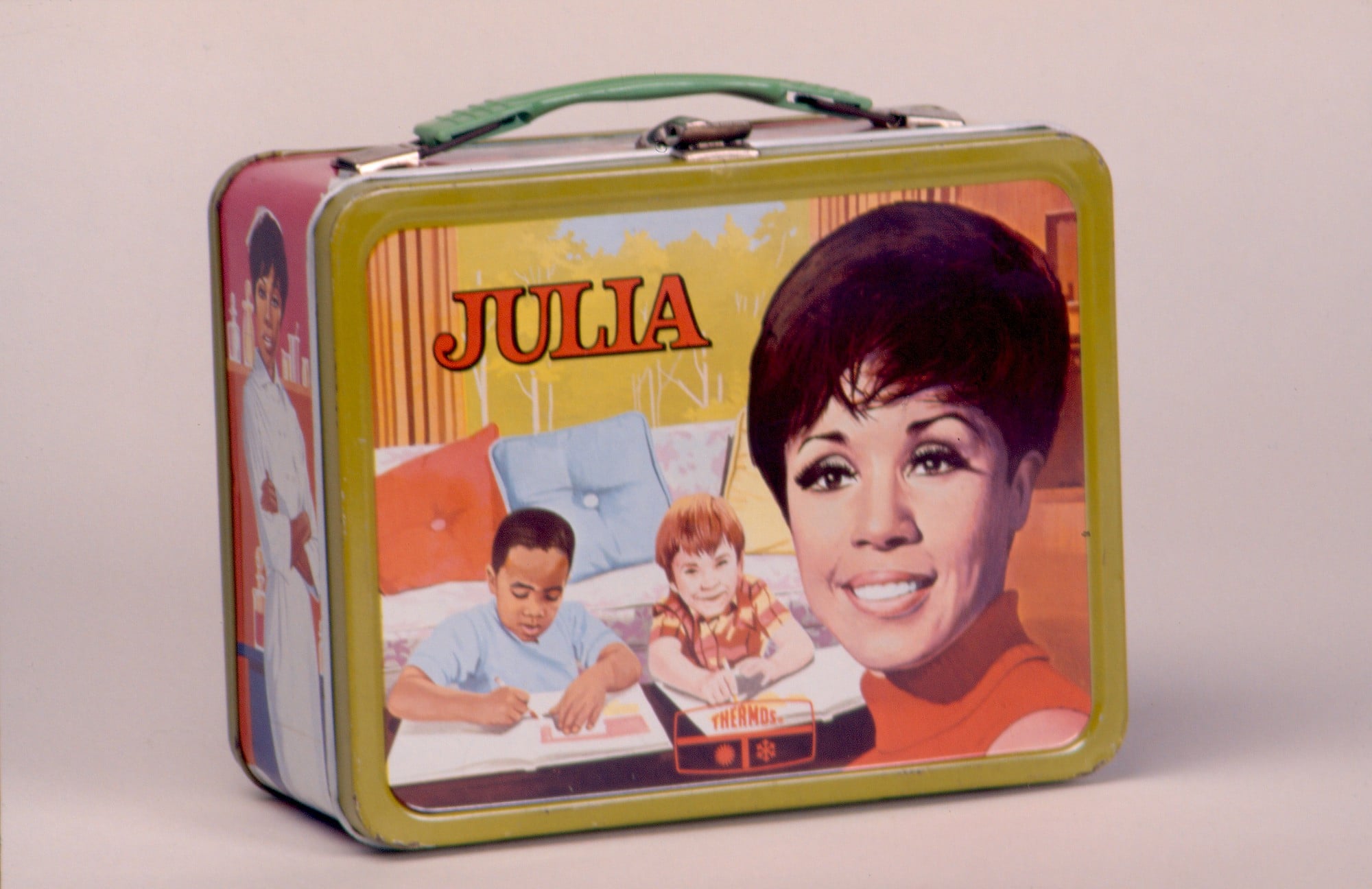
Lunch box tins — those flat, hinged containers once used to haul meals to factory floors and rail yards — carry working-class history in their dents and scratches. Collectors read the wear on them the way a geologist reads rock strata: each mark a record of something real.
Embossed or lithographed examples from the 1880s through the early 1900s, especially ones with bail handles and original latches, are the ones that cause small arguments at dealer tables.
Velvet
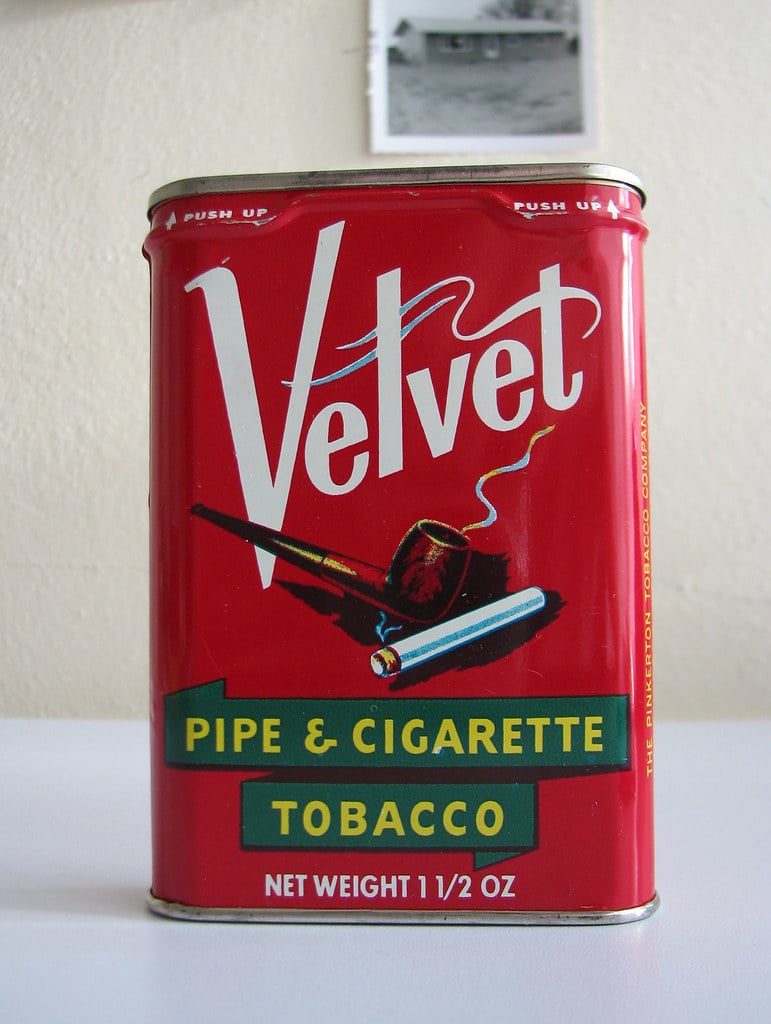
Velvet is one of the better-looking tins in any collection, and dealers know it. The deep red and gold colorway is rich without being garish, and the flat pocket tins hold their shape well because they were engineered to survive daily handling.
Pipe tins from the 1910s and 1920s in very good condition disappear quickly, especially at shows where the general antiques crowd overlaps with dedicated tin collectors.
Arm & Hammer
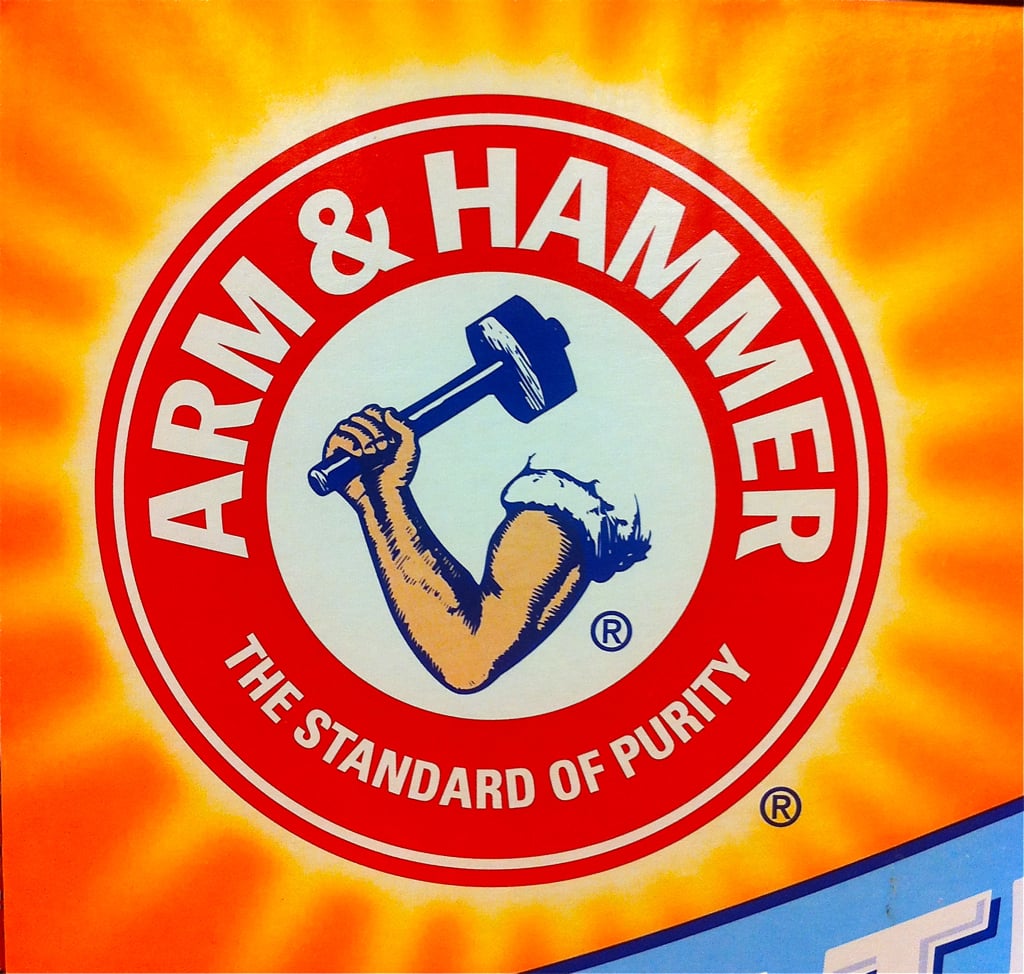
Arm & Hammer baking soda tins predate the cardboard boxes most people know today, and the early lithographed versions have a graphic clarity that looks almost contemporary against their age. The muscled arm and hammer logo is one of the oldest trademarks still in use in the United States — a fact that gives even modest examples a kind of historical weight.
Small tins in excellent condition are the ones that move first.
Bagpipe Brand
Bagpipe Brand tins — produced primarily in the early twentieth century — occupy a narrow but devoted corner of the tin collecting world, drawing people who collect specifically for the graphic novelty and the sheer improbability of a Scottish musical instrument anchoring an American household product label. The lithography on quality examples is finely detailed.
And the scarcity alone justifies the prices dealers put on them.
Rex Axle Grease
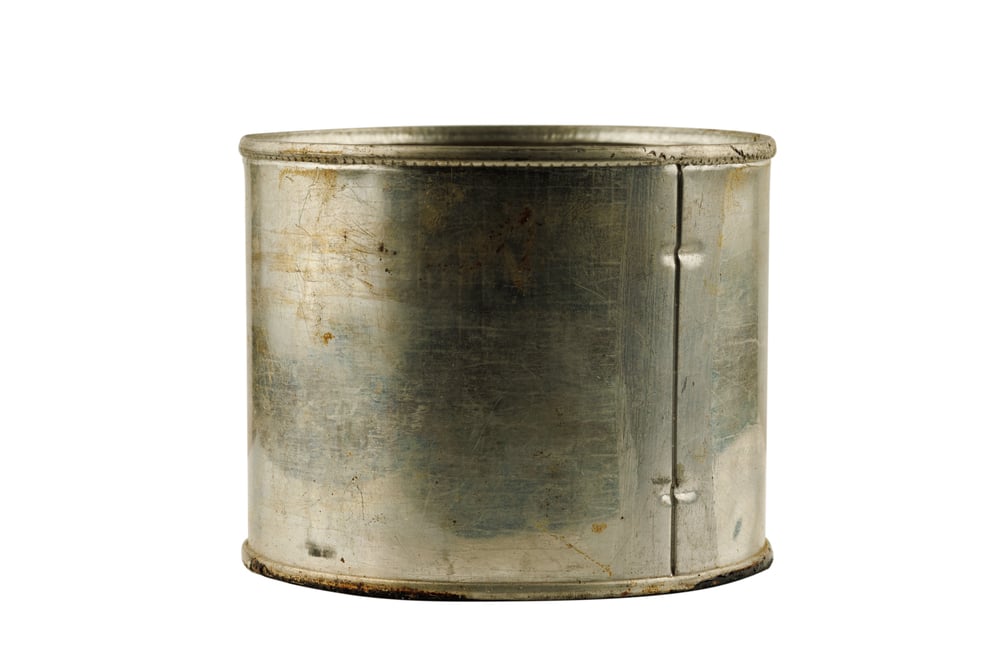
Rex Axle Grease tins are not subtle. The graphics are loud, the colors are strong, and the object itself — a squat, wide-lidded container built to sit in barns and garages — looks like it belongs in a still life painted by someone who had a deep appreciation for American commerce.
Early automotive and farm supply tins as a category have surged in collector interest, and Rex examples are among the ones that get picked up immediately by people who know what they’re looking at.
Colgate

Colgate dental cream and talc tins from the early twentieth century are small enough to hold in one palm and detailed enough to stare at for a while. The brand’s early tin packaging predates the tubes most people associate with the name, and those pre-tube tins have a collector following that’s broader than you might expect.
Condition is everything here — the lithography on smaller Colgate tins chips easily, so clean examples are genuinely scarce.
Squirrel Brand Peanuts
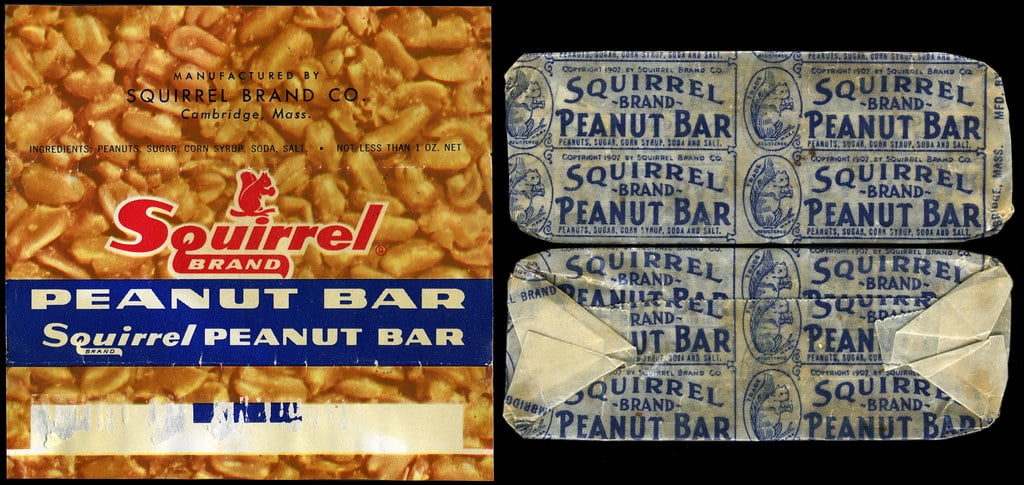
Squirrel Brand is the kind of regional advertising tin that rewards collectors who do their homework. Produced in Cambridge, Massachusetts, the brand’s tins feature a specific squirrel graphic that changed across production eras, and dedicated collectors track those variations the way others track baseball card printings.
Early square tins with strong color retention are the ones that don’t last long on any table.
Mayo’s Cut Plug
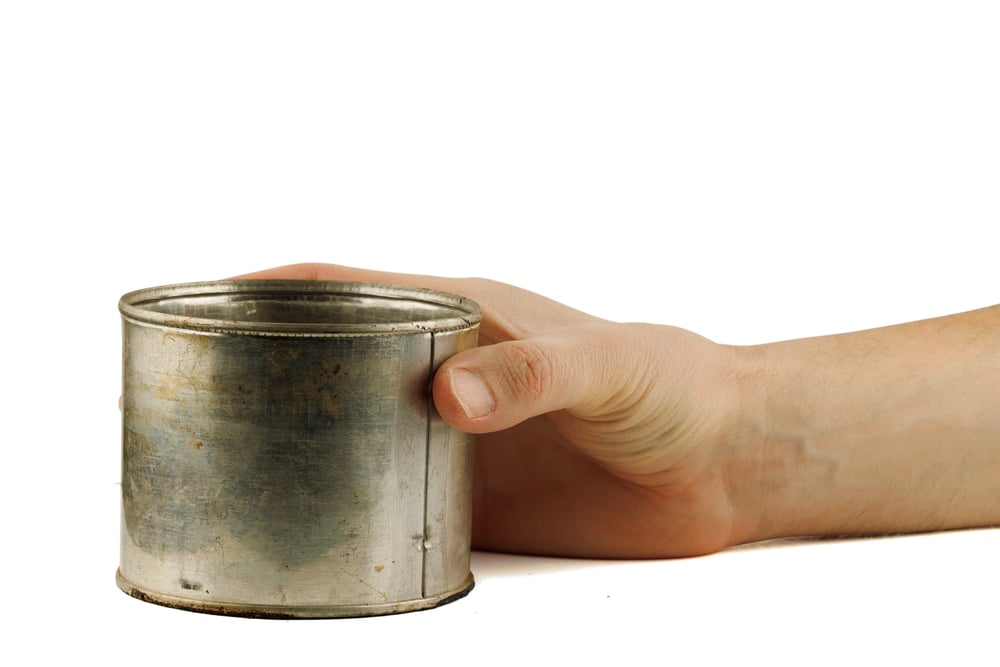
Mayo’s Cut Plug tins — flat, pocket-sized, with a distinctive and often beautifully aged lithograph — belong to the category of tins that look genuinely old in a way that reads as authenticity rather than neglect. The rich cig brand tins of the late nineteenth and early twentieth centuries have a collector base that’s multigenerational, and Mayo’s is one of the names that gets spoken with real enthusiasm.
Good examples surface less often than people expect.
Watkins
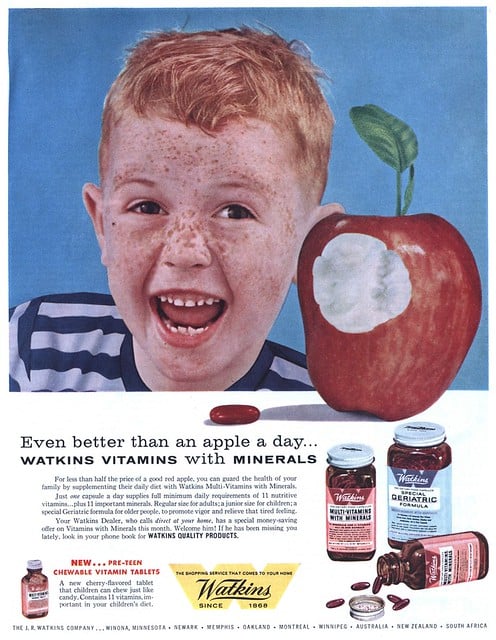
Watkins tins covered everything from spices to liniment to baking powder, and the range of sizes, labels, and eras available means collectors can spend years chasing variations. The brand operated through a door-to-door sales model for much of its early history, which means Watkins tins ended up in rural homes across a vast geography — and that distribution is, ironically, part of why well-preserved examples feel like minor miracles.
Red and black lithography from the 1920s and 1930s is the standard people hold other Watkins tins against.
Sharps Toffee
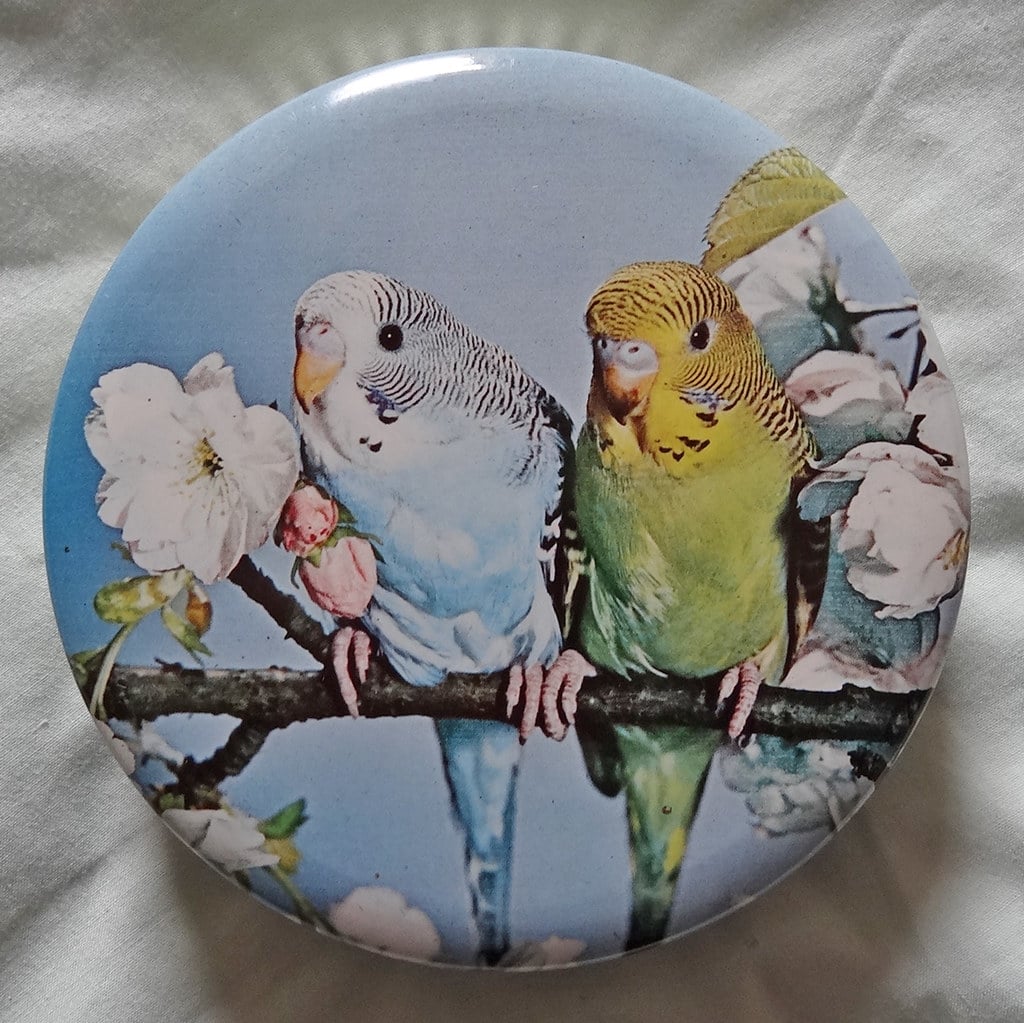
Sharps Toffee tins crossed the Atlantic to find a second life in American antique markets, and they’ve settled in comfortably. The British confection tins — often decorated with pastoral scenes, holiday imagery, or intricate geometric patterns — represent a kind of graphic ambition that domestic candy tins rarely matched.
Collectors who focus on figural or pictorial tins specifically tend to make Sharps examples a priority.
Dixie Queen
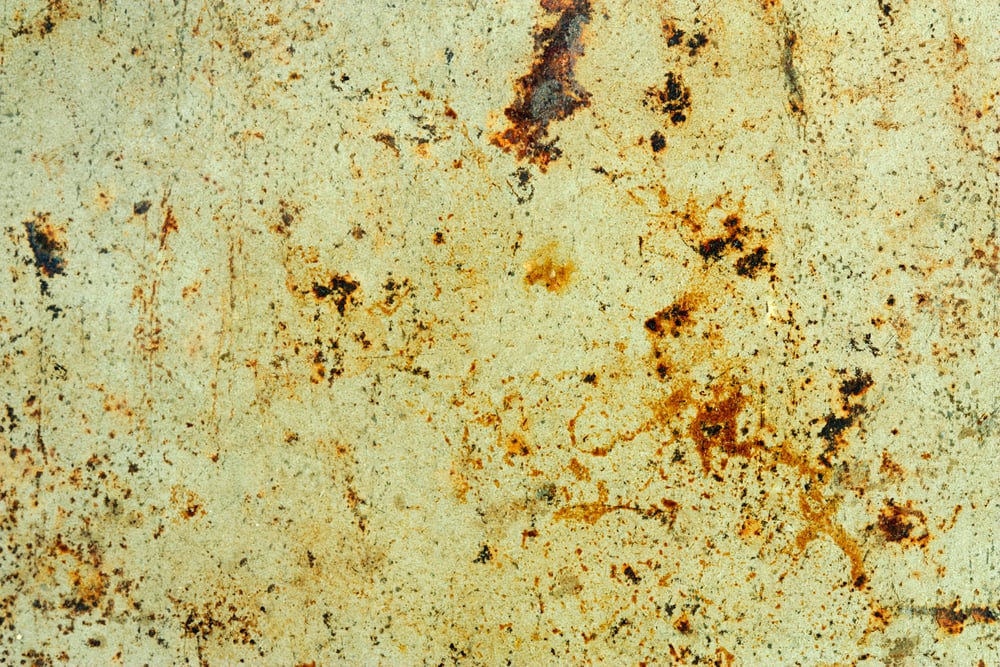
Dixie Queen plug tin containers, with their bold regional branding and vivid early lithography, represent an era of American commercial design that was unafraid of commitment. The color saturation on early examples — deep reds, strong golds, crisp typography — is the kind of thing that stops you mid-stride.
Dealers who specialize in Southern Americana treat these as flagship pieces.
Lipton Tea
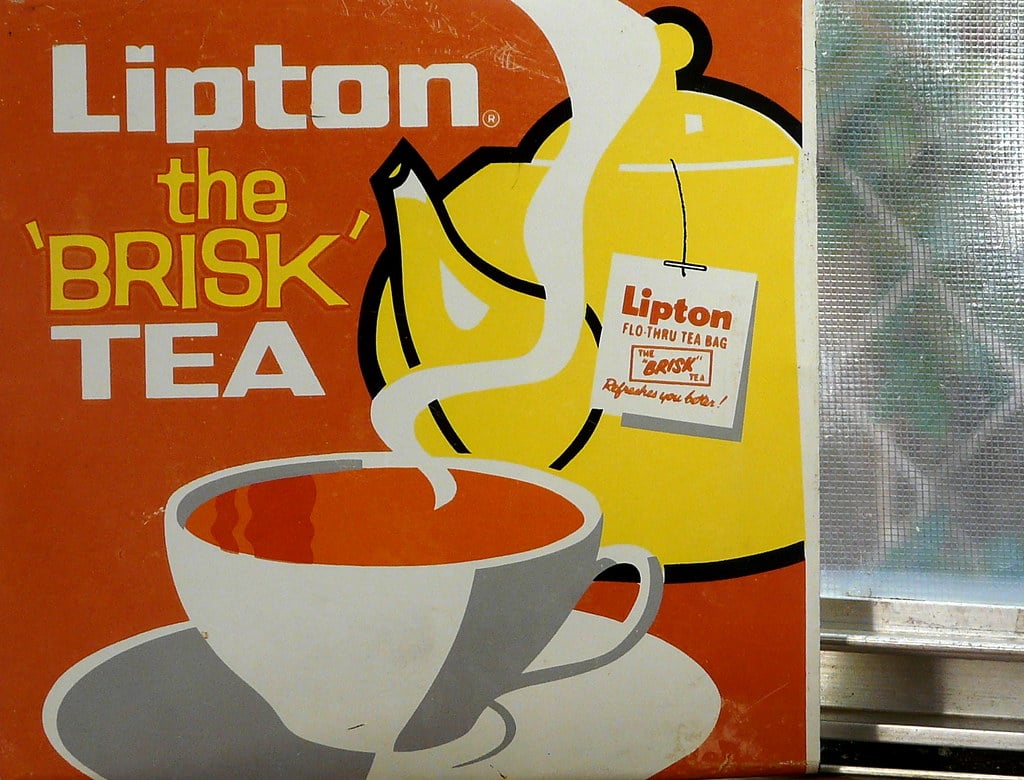
Lipton tea tins come in an enormous range of sizes, formats, and graphic treatments, which is exactly why they attract both casual buyers and serious collectors. The earliest examples, predating the standardized packaging of the mid-twentieth century, carry a distinctly Victorian graphic energy — dense typography, elaborate borders, the brand’s yellow and black color system rendered with real care.
Large store-display canisters are the category’s crown jewels.
Old Mansion Coffee

Old Mansion coffee tins have a regional specificity that collector markets reward. Produced in Suffolk, Virginia, the tins carry that particular quality of localized American commerce — a brand that mattered intensely in its geography, and that now surfaces at shows as a small, vivid piece of regional identity.
Lithography condition on these varies widely, and the best examples are priced accordingly.
Sunshine Biscuits
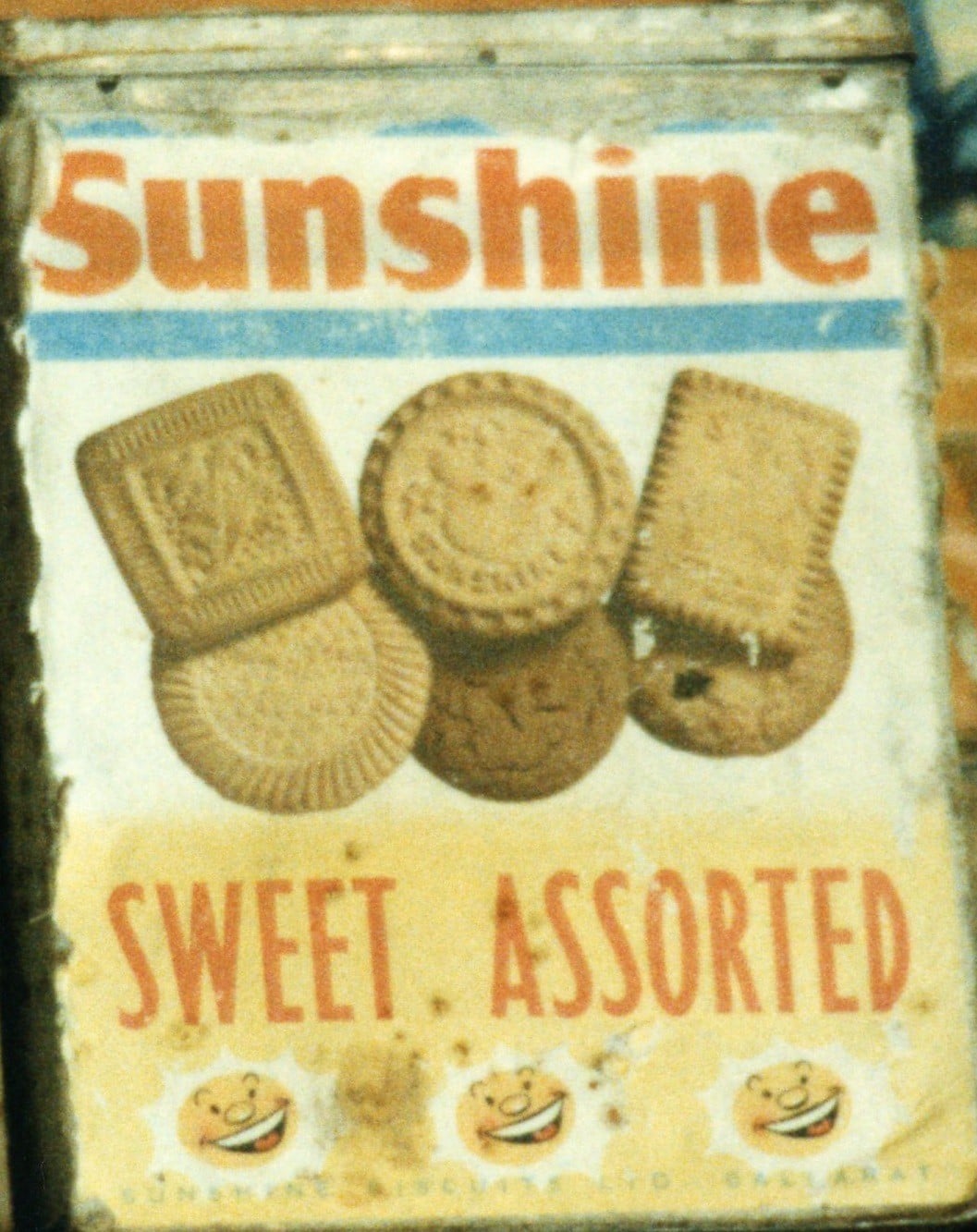
Sunshine Biscuits tins have a clean, optimistic graphic language that holds up visually even after a century. Large tin containers used for display or bulk storage are the most desirable category, though smaller household sizes attract consistent interest.
The Sunshine name alone carries a kind of midcentury American warmth that translates across collector demographics.
Edgeworth
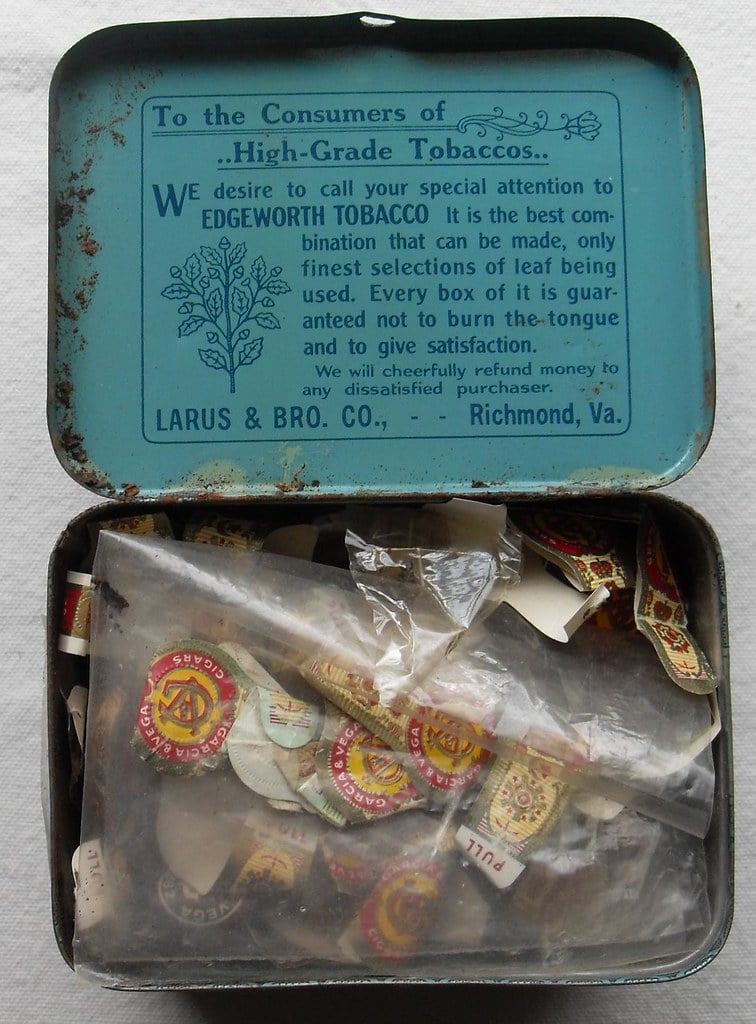
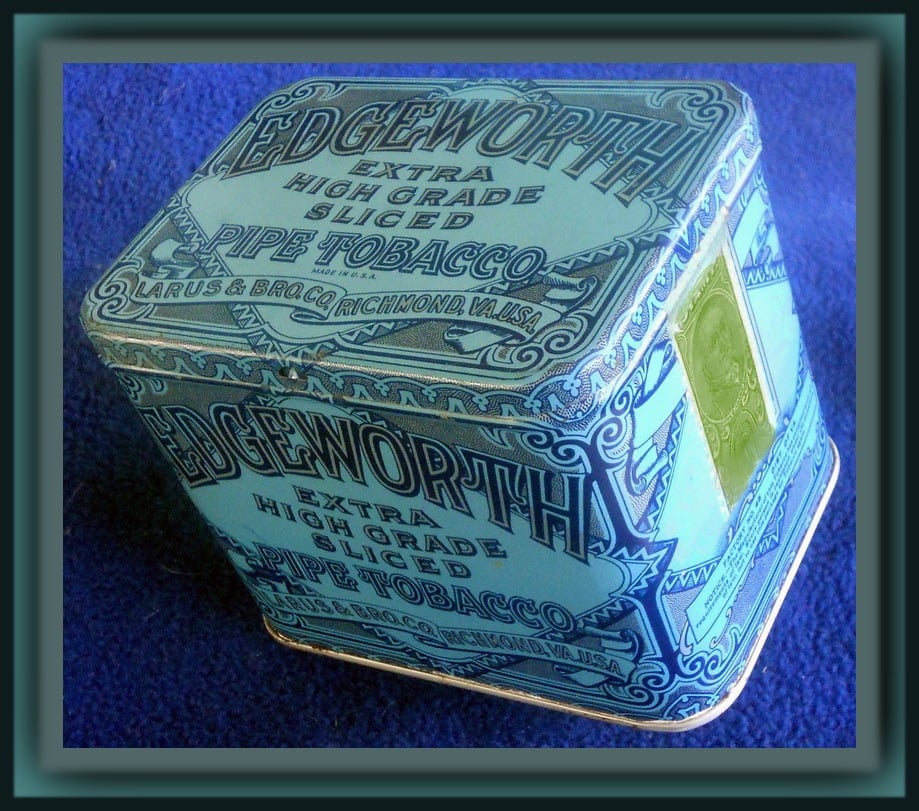
Edgeworth pipe tins are among the most consistently present and consistently collected of all American advertising tins — meaning they show up often enough to find, and desirable enough that they never sit long. The flat pocket tins in particular have a following built on the quality of their lithography and the durability of their construction.
Larus & Brother Company, the Richmond, Virginia producer, made tins across multiple decades, which gives collectors enough variation to build a meaningful specialty collection.
Baker’s Chocolate
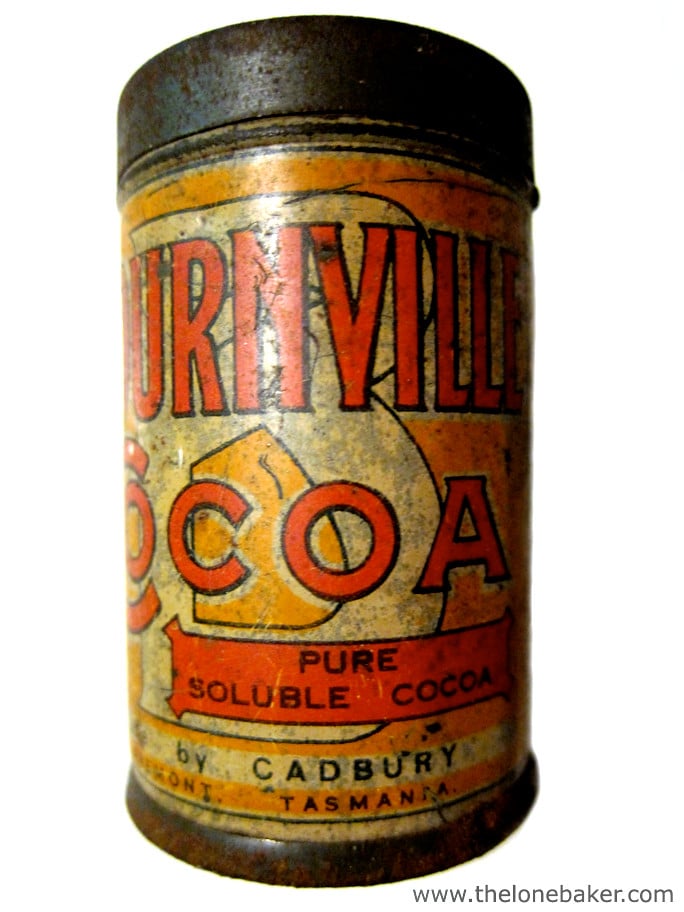
Baker’s Chocolate tins are anchored by the La Belle Chocolatière portrait — a Swiss maid carrying a cup, reproduced from an eighteenth-century painting — and that image is one of the most recognized in American food advertising history. Early tins bearing that image carry genuine weight in the tin collecting market.
The graphic stays consistent enough to be iconic and varied enough across eras to reward close attention.
Hershey’s
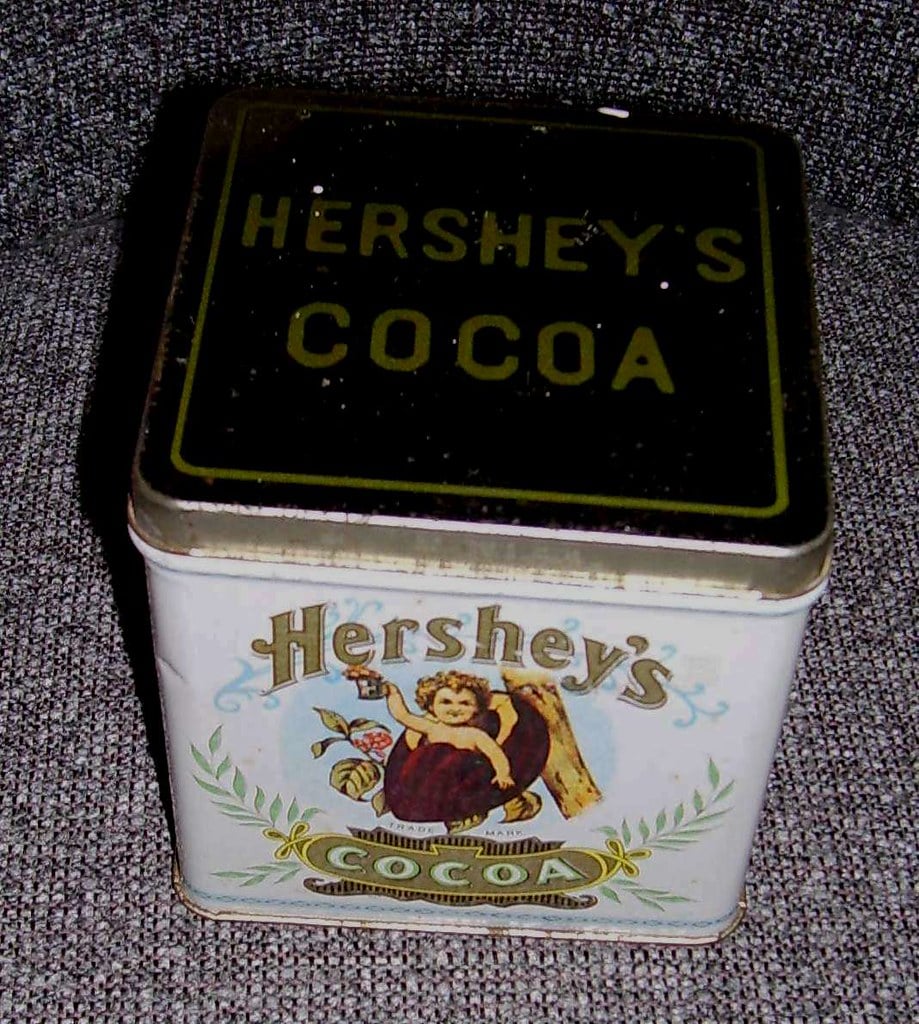
Hershey tins from the early decades of the twentieth century hit a specific collector sweet spot: a brand everyone knows, a product format most people forgot existed, and lithography that often surprises people who expected something plain. Early special edition tins and holiday containers from the 1920s and 1930s are the pieces dealers understandably price high, because they move fast when priced right and even faster when priced wrong.
Ovaltine
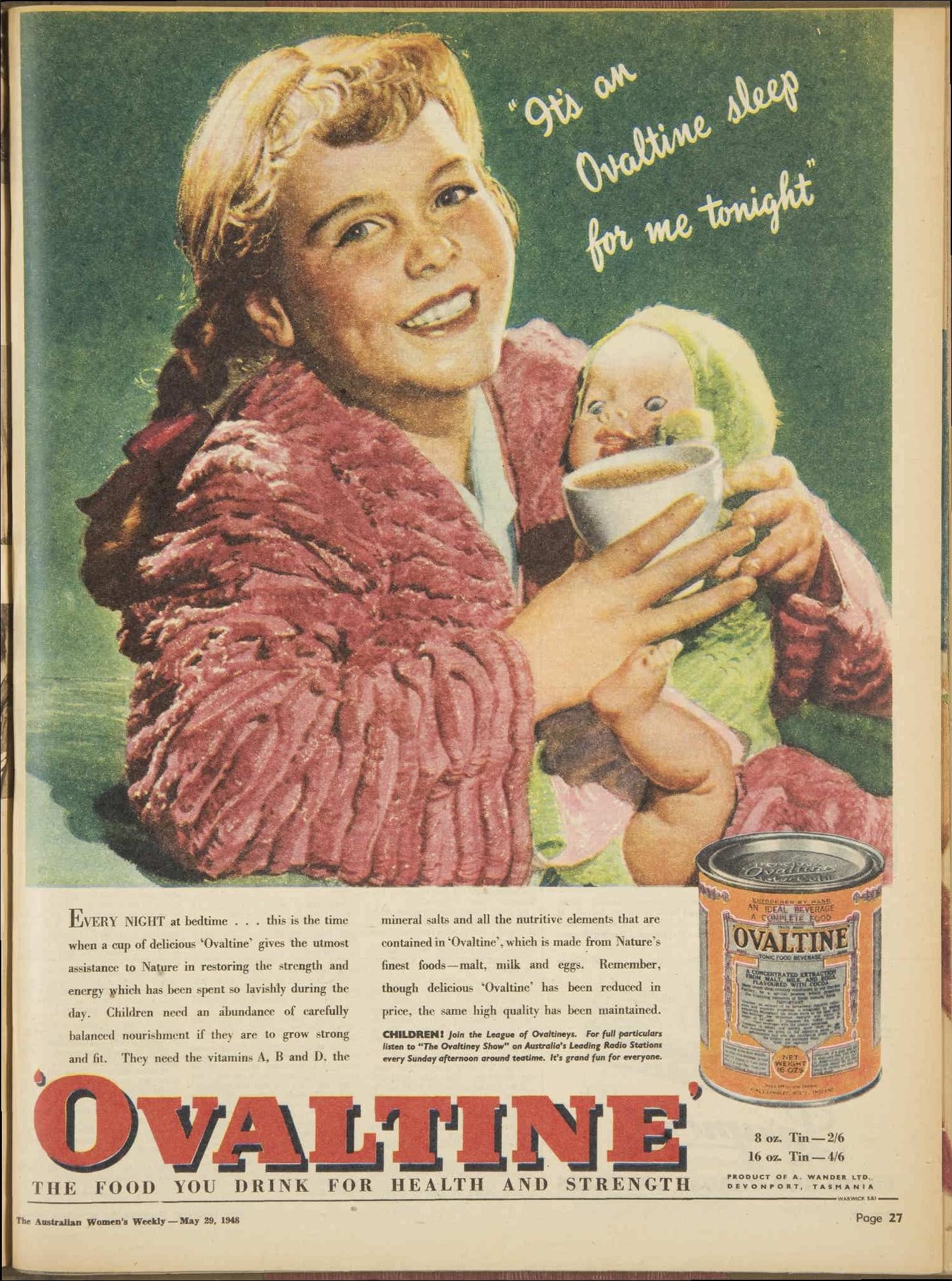
Ovaltine tins sit at the intersection of food history, radio premiums, and mid-century childhood nostalgia — which is a genuinely crowded intersection. The brand’s tie-ins with Little Orphan Annie and Captain Midnight created a collector crossover between tin enthusiasts and radio premium collectors, and that overlap drives prices up.
Large Ovaltine canisters in original condition are the ones that cause the most deliberation at dealer tables, and deliberation at an antique show almost always ends in a sale.
The Object That Outlasted Its Reason for Existing
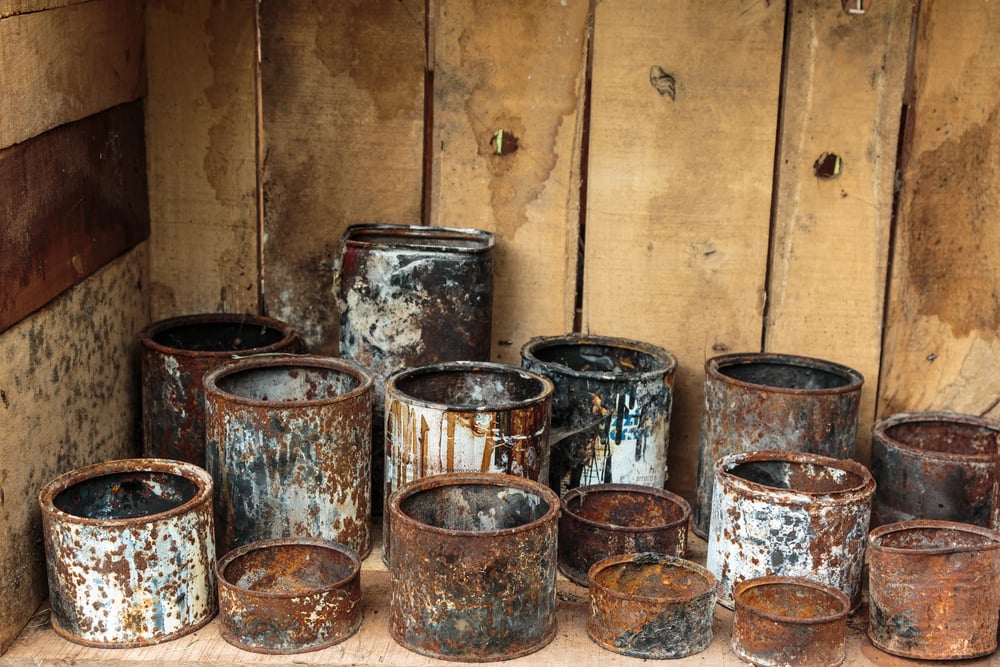
A tin can is, in purely functional terms, a container. It held something, protected something, and was designed to be discarded once emptied.
And yet here they are — a hundred years later, sitting on felt-covered tables under fluorescent lights while people handle them carefully and argue quietly about price. There’s something almost stubborn about their survival.
They were made to be used up and thrown away, and instead they became the thing people drove forty miles to a fairground to find on a Saturday morning. The tin didn’t know it was making history.
It just held the coffee.
More from Go2Tutors!

- The Romanov Crown Jewels and Their Tragic Fate
- 13 Historical Mysteries That Science Still Can’t Solve
- Famous Hoaxes That Fooled the World for Years
- 15 Child Stars with Tragic Adult Lives
- 16 Famous Jewelry Pieces in History
Like Go2Tutors’s content? Follow us on MSN.



