26 Buildings With Designs So Strange Visitors Marvel
Architecture exists to solve problems—to provide shelter, office space, room for gathering. Most buildings do this with minimal fuss, using conventions so established that nobody thinks twice about them.
Then there are buildings where an architect or developer decided that convention was the enemy. What follows are structures so visually improbable that visitors photograph them as curiosities, museums treat them as attractions, and more than a few people assume the images are doctored or imagined.
These are real buildings serving real purposes, engineered to withstand weather and load and human use. The strangeness is entirely intentional.
Some honor the objects they resemble. Others challenge the basic assumptions of what buildings should look like.
A few were designed specifically to make people stop and question whether they’re experiencing actual architecture or elaborate pranks. All of them work.
They’re functional, occupied, and standing exactly as designed.
The Crooked House (Sopot, Poland)
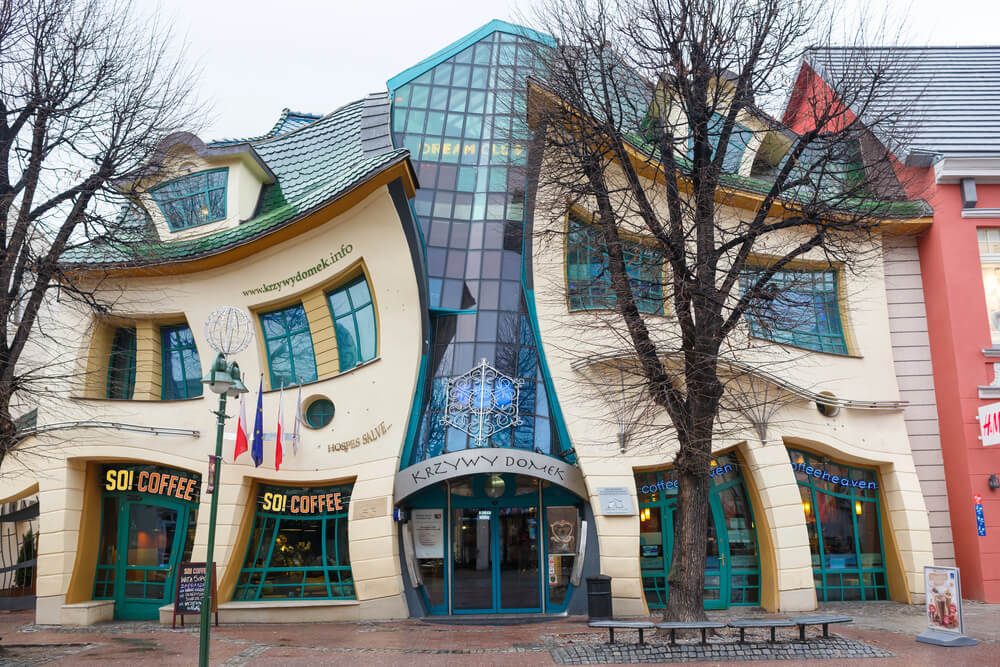
Built in 2004, this structure looks as though it’s melting or swaying despite being perfectly stable. The undulating walls, warped windows, and curved facades were inspired by the whimsical illustrations of Polish children’s book artist Jan Marcin Szancer.
The building houses shops, restaurants, and offices, yet stepping inside feels like entering a funhouse where the walls refuse to play by normal angles. First-time visitors often assume they’re experiencing an optical illusion rather than genuine architecture.
Dancing House (Prague, Czech Republic)
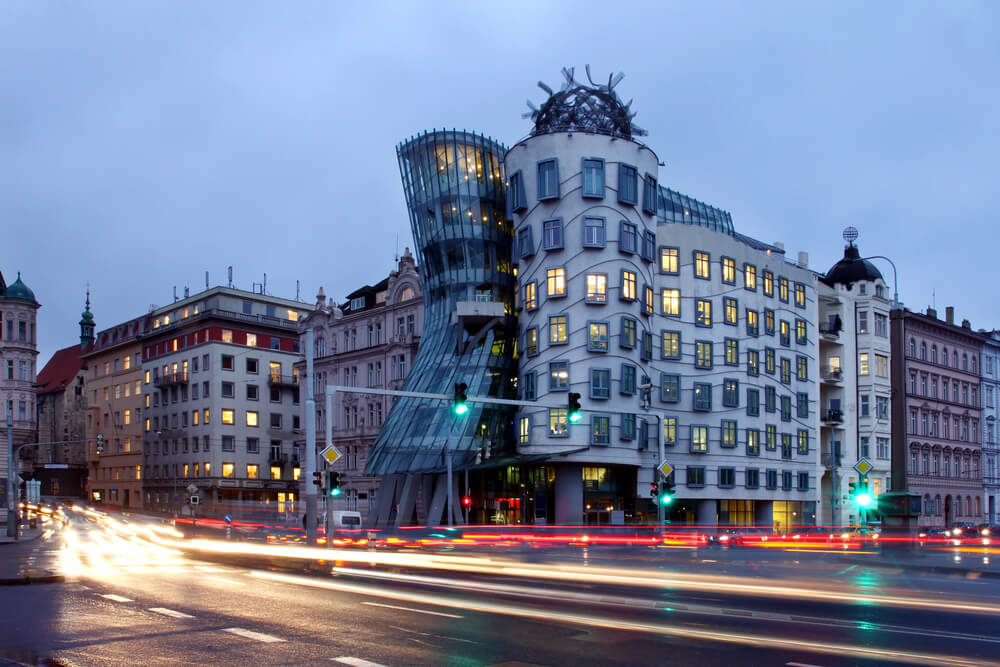
Designed by Frank Gehry and Vlado Milunić, this building appears to capture two dancers mid-motion, which earned it the nickname “Fred and Ginger.” One tower is curved and flowing, the other rigid and geometric, creating a sense of movement frozen in concrete and steel.
Completed in 1996, it sparked controversy for its radical departure from Prague’s traditional Baroque and Gothic skyline, yet it’s now one of the city’s most recognizable landmarks.
The Basket Building (Newark, Ohio, USA)
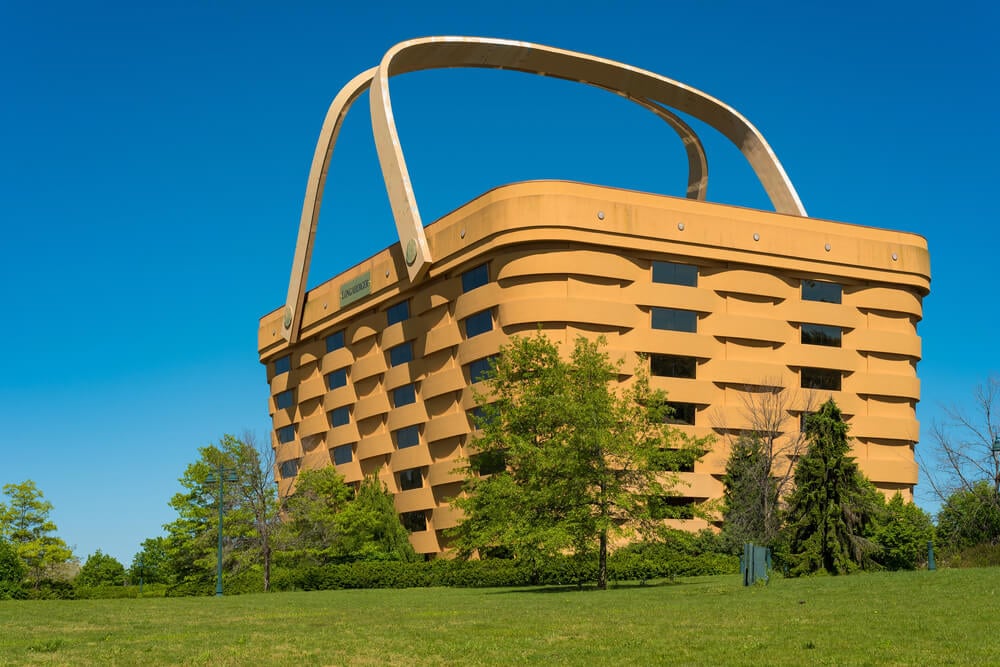
This seven-story office building is shaped like a giant picnic basket, complete with enormous handles. Built as the headquarters for the Longaberger Company, a basket manufacturer, the structure is a literal representation of the company’s product.
The building’s scale and specificity—the basket details are not metaphorical but replica—makes it seem like a practical joke that somehow got zoning approval and completed construction.
Bubble Palace (Théoule-sur-Mer, France)
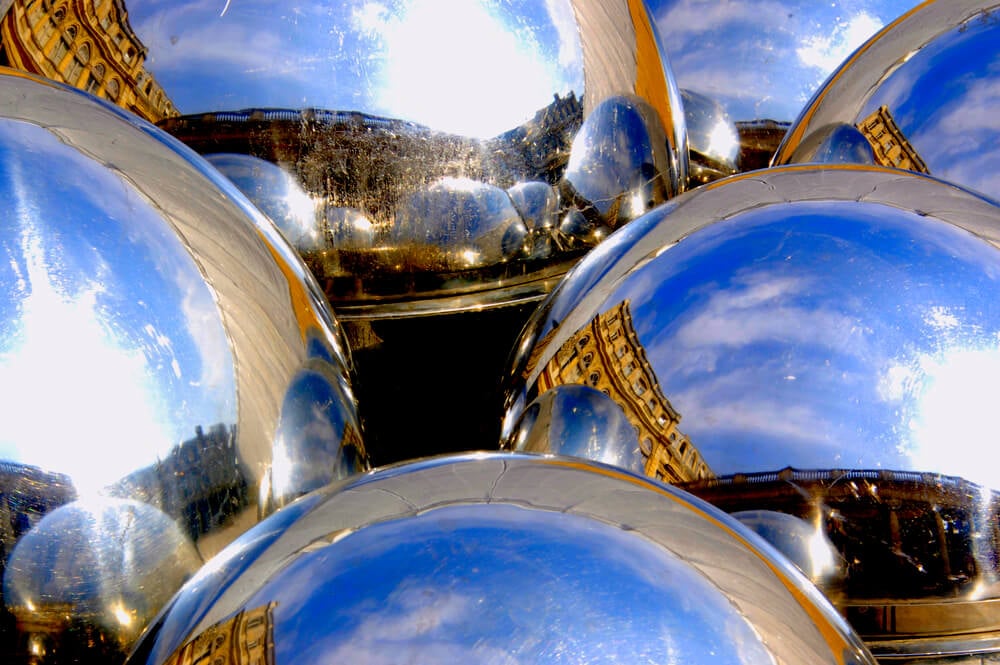
Perched on the French Riviera, this private residence was designed as a series of interconnected bubble-like domes. The structure’s organic, flowing forms appear to defy conventional construction logic, creating spaces that look more like they belong underwater than on a hillside overlooking the Mediterranean.
Visitors often suspect the photography is manipulated because the curves seem geometrically impossible.
Cubic Houses (Rotterdam, Netherlands)
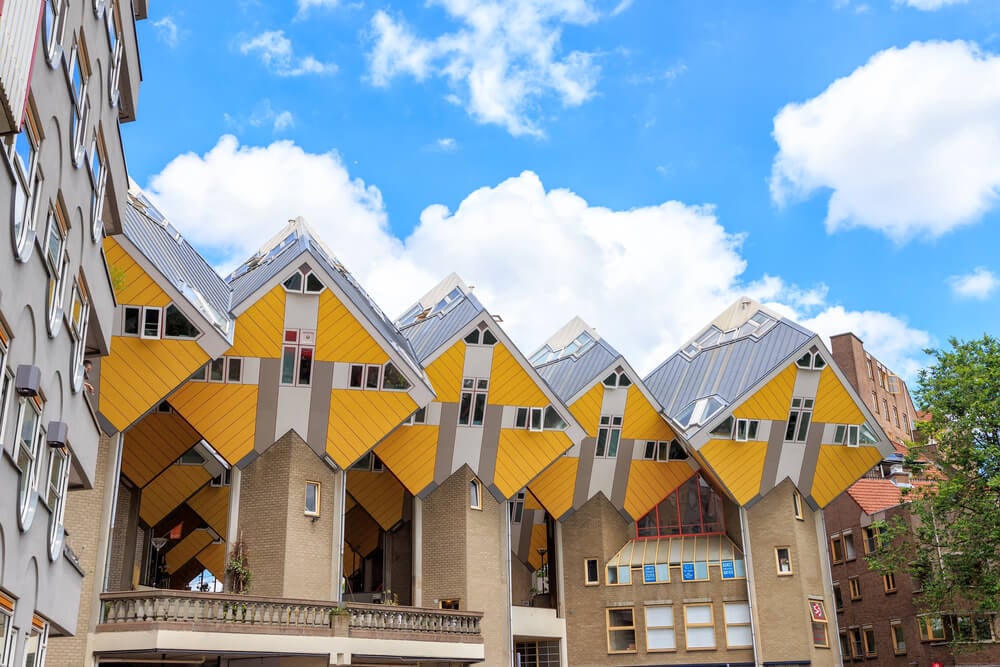
These residences designed by Piet Blom consist of unit cubes tilted at 45-degree angles, stacked in clusters. The squares appear to be floating or precariously balanced, challenging every visual assumption about how habitable structures should rest on the ground.
Inside, residents actually live in remarkably conventional spaces—the tilted exterior is entirely intentional visual provocation.
Hang Nga Guesthouse (Da Lat, Vietnam)
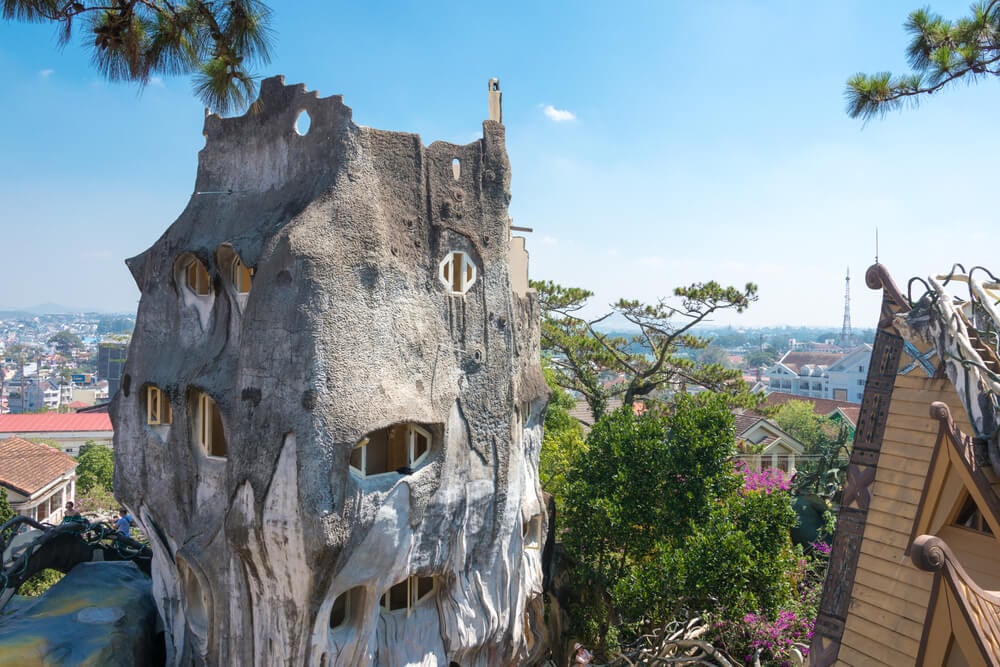
Known as the “Crazy House,” this guesthouse looks like a hybrid of a tree, a cliffside dwelling, and something from a fantasy novel. With organic curves, unexpected levels, and a chaotic exterior that seemed to sprout rather than be built, every angle contradicts the last.
The construction deliberately eschews right angles in favor of warped, flowing forms that feel almost alive.
Kansas City Public Library (Kansas City, Missouri, USA)
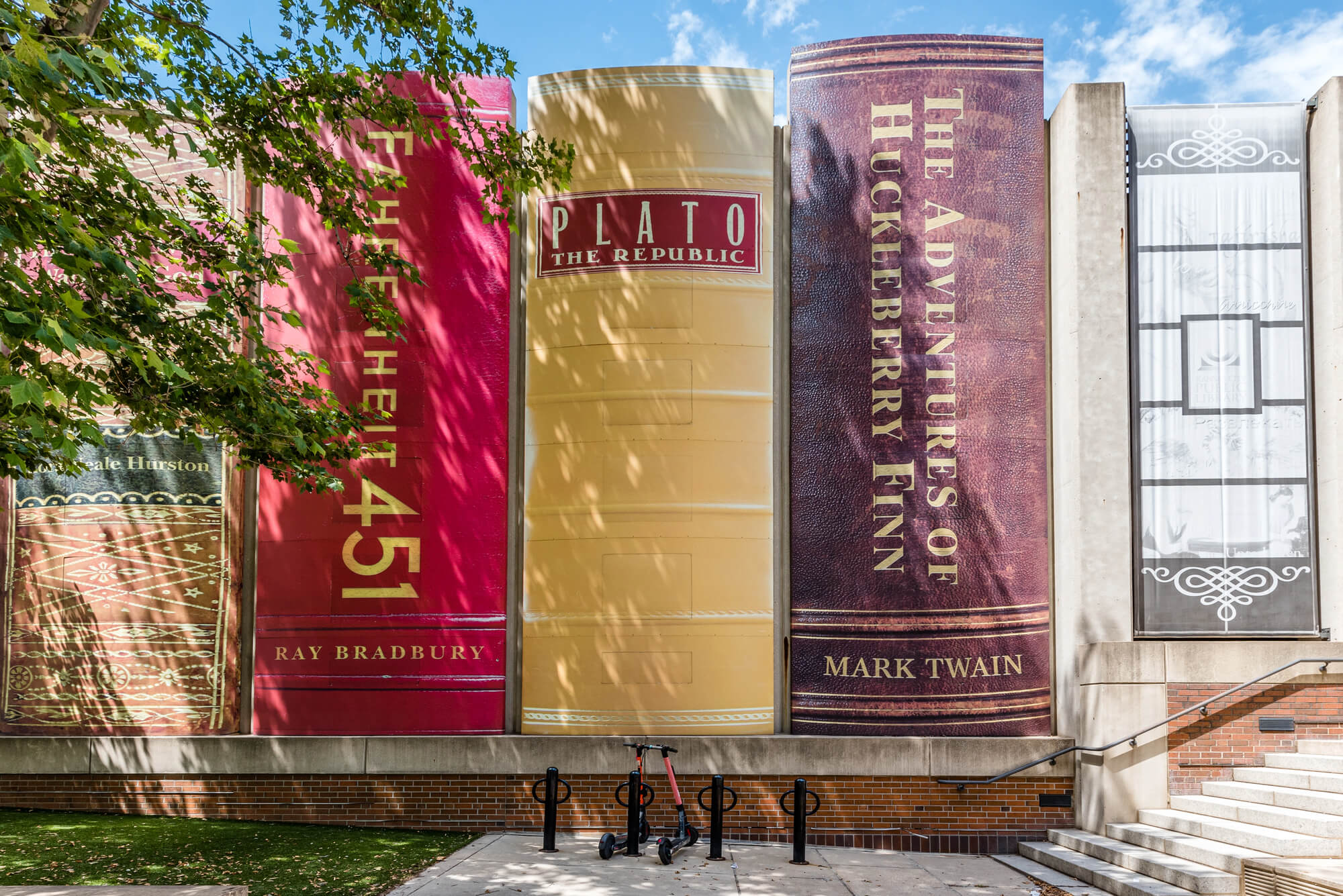
The parking garage’s exterior wall features a massive design showing books standing upright on a shelf, complete with oversized book spines and titles. The visual effect is so convincing that it genuinely reads as a giant bookshelf built into the architecture, making the structure appear more like a clever trompe-l’oeil than an actual building.
Piano House (Huainan, China)
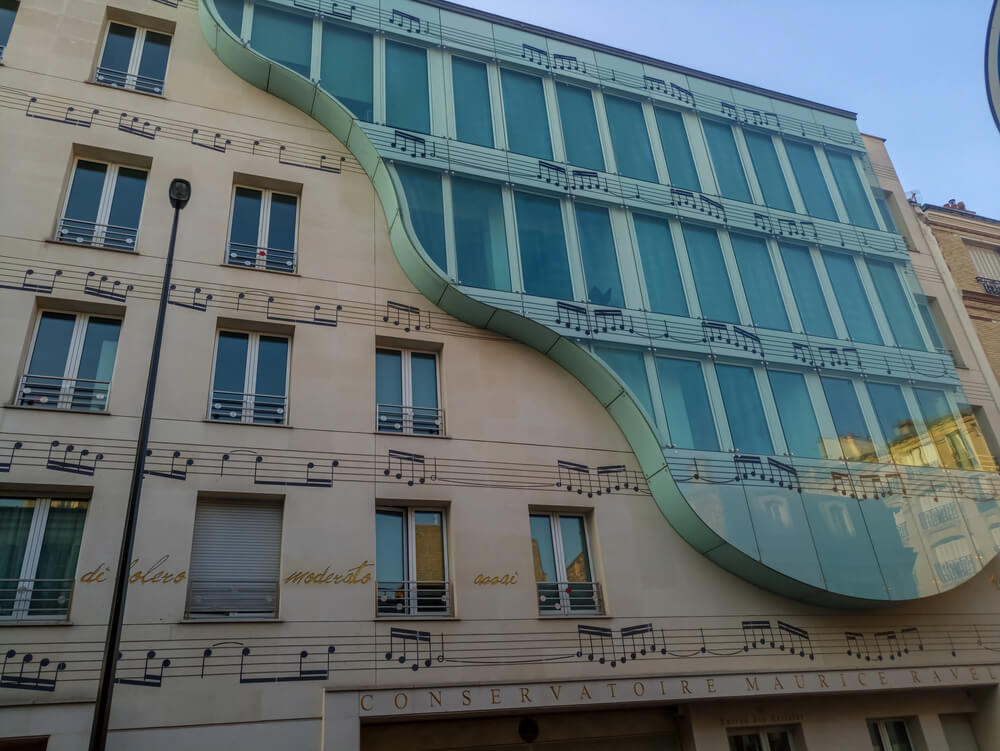
This building is shaped like a grand piano, complete with a transparent violin structure beside it. Standing in the middle of the cityscape, the audacity of designing a building as a literal musical instrument rather than incorporating musical motifs seems almost comically straightforward.
The building functions as an exhibition space, yet its form overwhelms its practical purpose.
Upside-Down House (Szymbark, Poland)
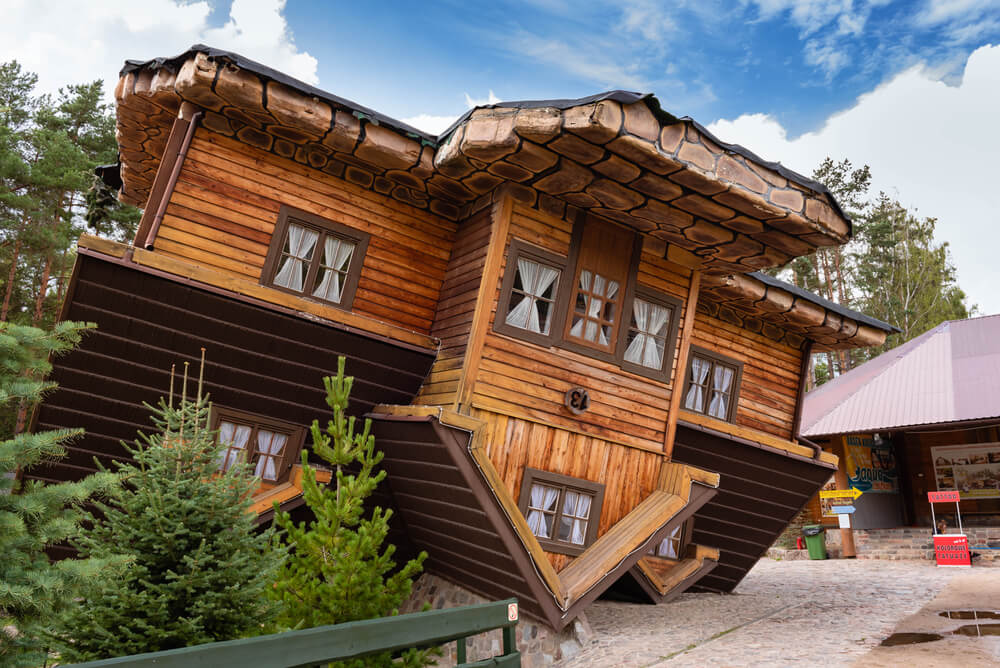
Every element of this house—furniture, architecture, fixtures—is inverted, as though the building flipped on its head but remained structurally intact. Visitors climb inverted stairs and navigate rooms that feel utterly wrong despite being perfectly navigable.
The design was conceived as a commentary on the chaos of modern life, but it reads primarily as a building that shouldn’t exist.
Hundertwasserhaus (Vienna, Austria)
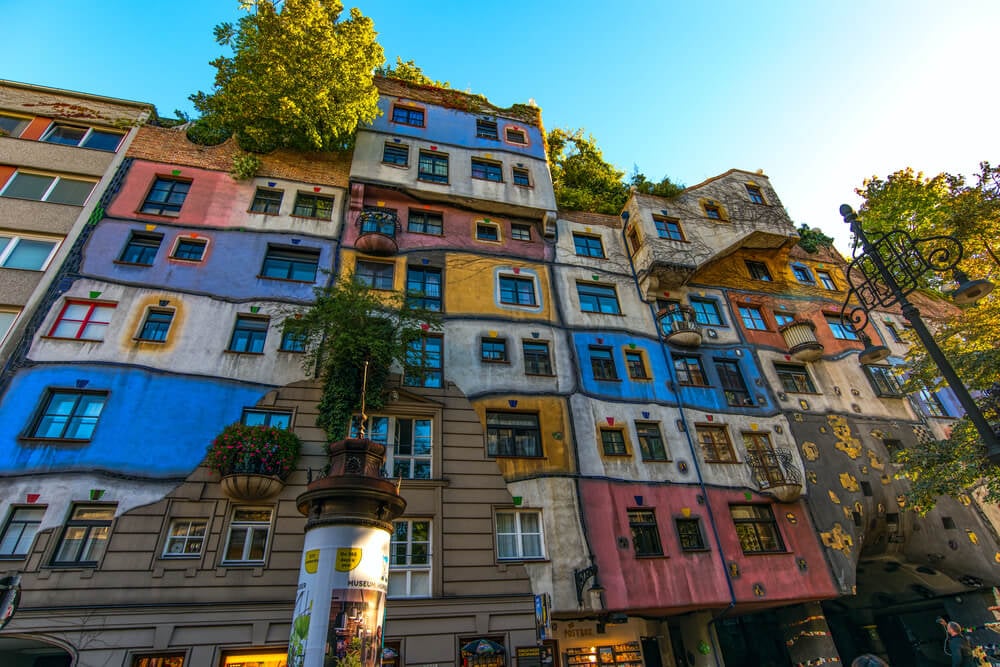
This residential complex designed by architect Friedensreich Hundertwasser features undulating floors, no right angles, vibrant colors, and organic forms that integrate trees and plants directly into the structure. The building looks like a storybook illustration translated into three-dimensional form, with details so unconventional that visitors often feel they’re experiencing a themed attraction rather than an actual apartment building.
Atomium (Brussels, Belgium)
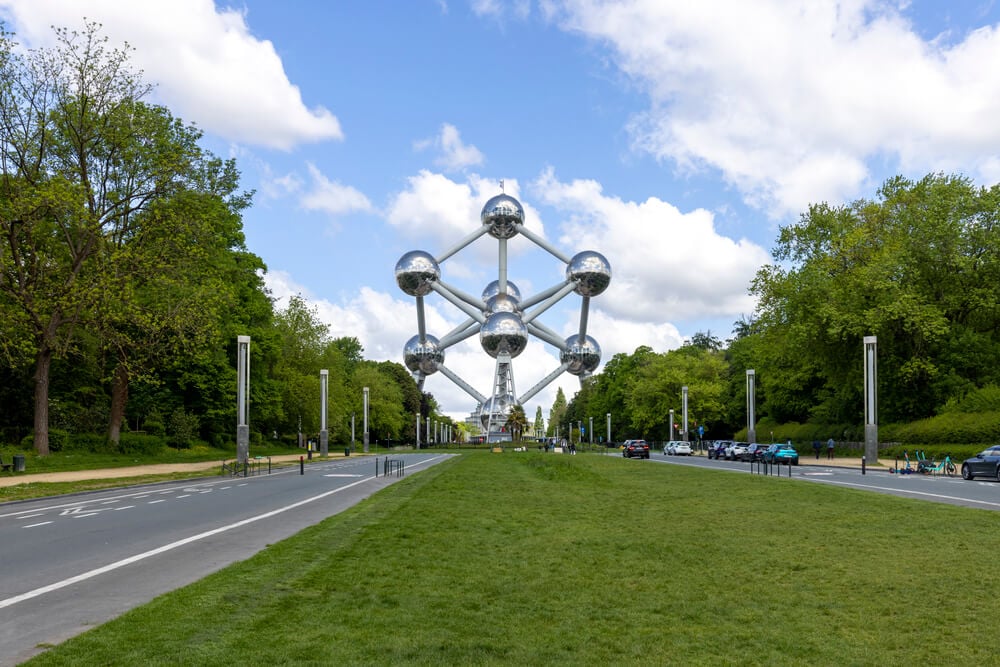
Standing 102 meters tall, the Atomium is a representation of an iron atom scaled up to monumental proportions. The structure consists of nine spheres connected by tubes, designed to symbolize scientific progress.
It reads less as a building and more as a sculpture that happens to be large enough to enter—one of the most recognizable structures in Belgium despite (or because of) its complete impracticality as a functional design.
Cone Building (Shanghai, China)
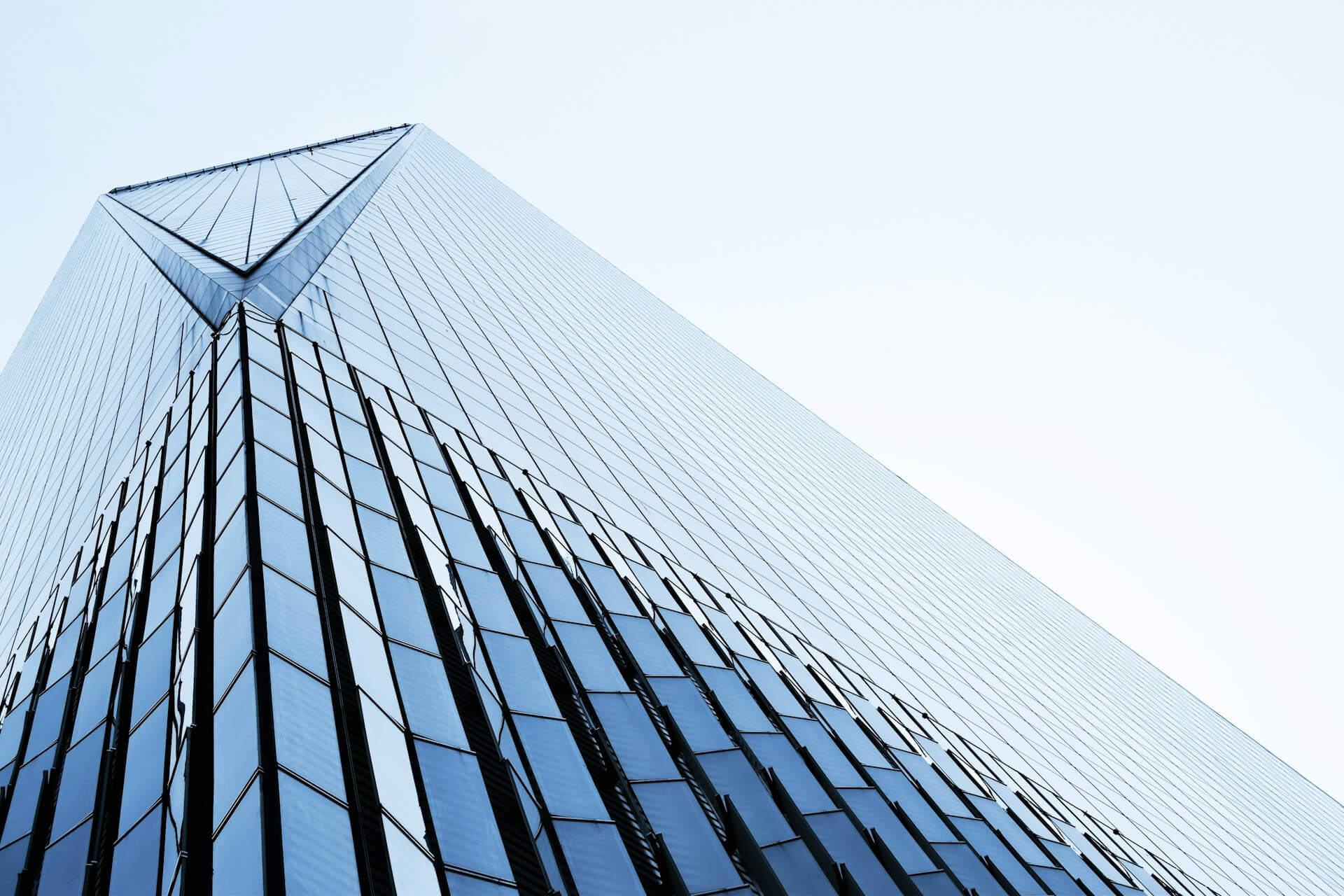
This poultry-inspired office building designed by a Hong Kong firm features an exterior shaped like a chicken or egg. The design is so committed to its biomorphic form that the building reads as a prop rather than serious commercial architecture.
Yet it houses actual office spaces and demonstrates how functionality and visual absurdity can coexist in the same structure.
Habitat 67 (Montreal, Canada)
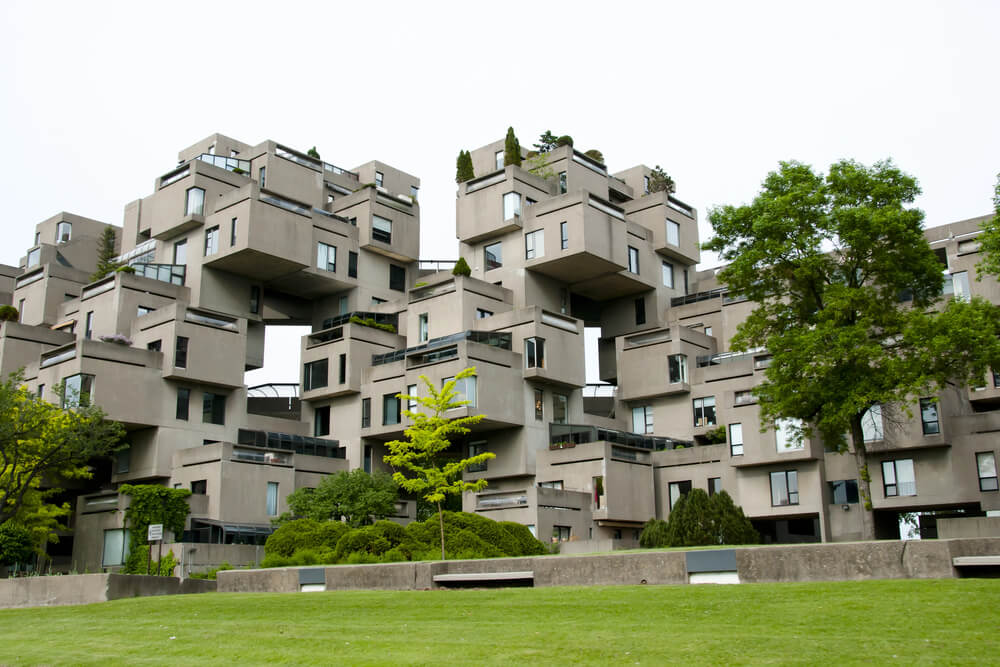
Designed for Expo 67, this residential complex consists of modular concrete units stacked in a seemingly random, chaotic arrangement. The structure looks like a giant puzzle that nobody solved correctly, with apartments appearing to be slotted at arbitrary angles.
Despite the haphazard appearance, the complex is carefully engineered and remains occupied decades later.
Shoe House (Hellam Township, Pennsylvania, USA)
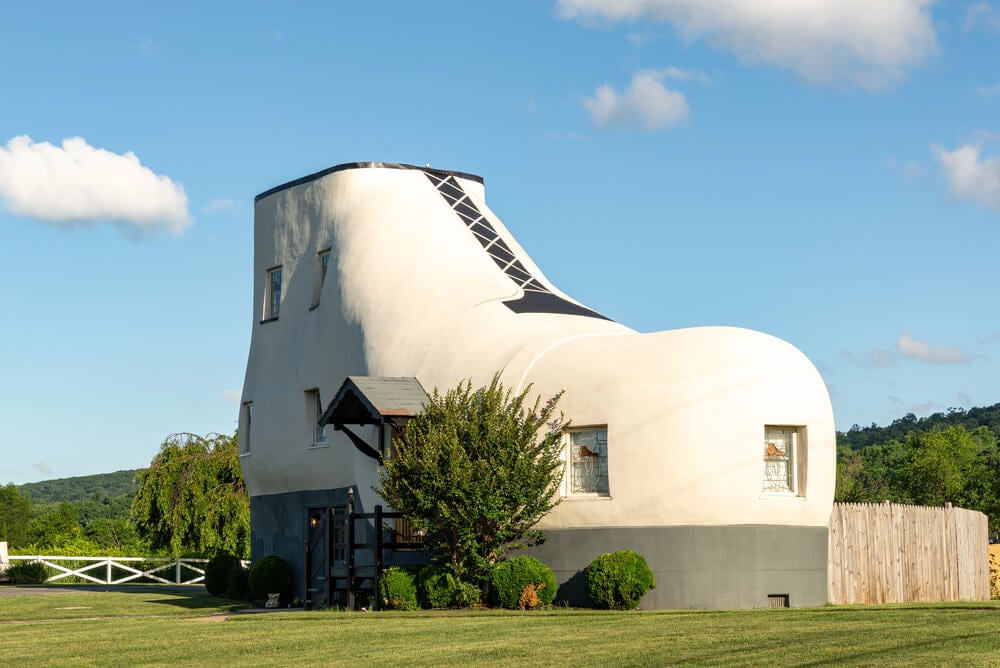
Designed and built as a private home, this structure is literally shaped like an enormous old-fashioned shoe, complete with a heel and laces. The house contains multiple rooms distributed throughout the shoe’s form, making it one of the few buildings in North America that successfully functions as both its own building and its own sculpture.
National Fisheries Development Board (Hyderabad, India)
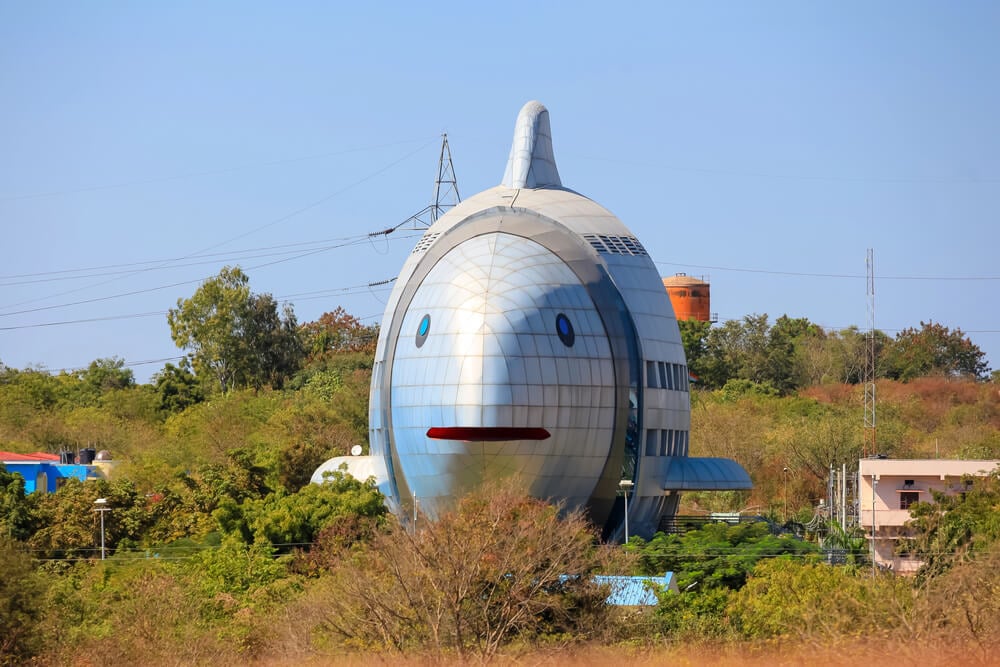
This government building is designed to resemble an enormous fish, with the entire structure’s exterior shape echoing aquatic forms. Built to house an organization focused on fisheries, the design makes literal what most architecture treats metaphorically.
Visitors unfamiliar with the building’s purpose often assume they’re looking at public art rather than a functioning office building.
Shanghai Centre for Urban Planning (Shanghai, China)
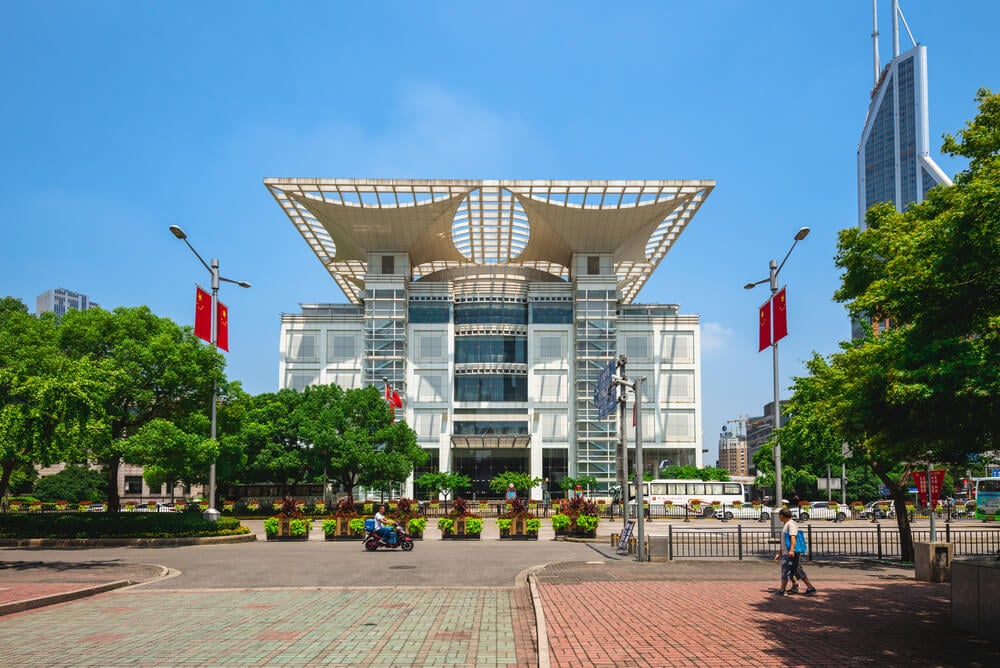
The building’s exterior features enormous steel curtain-like structures that actually move and shift several times daily, inspired by traditional Chinese opera. The building appears to be constantly transforming, with its appearance changing throughout the day.
The bronze and gold color scheme emphasizes the theatrical nature of the design, making the structure feel more like a performance than architecture.
Capital Gate Tower (Abu Dhabi, UAE)
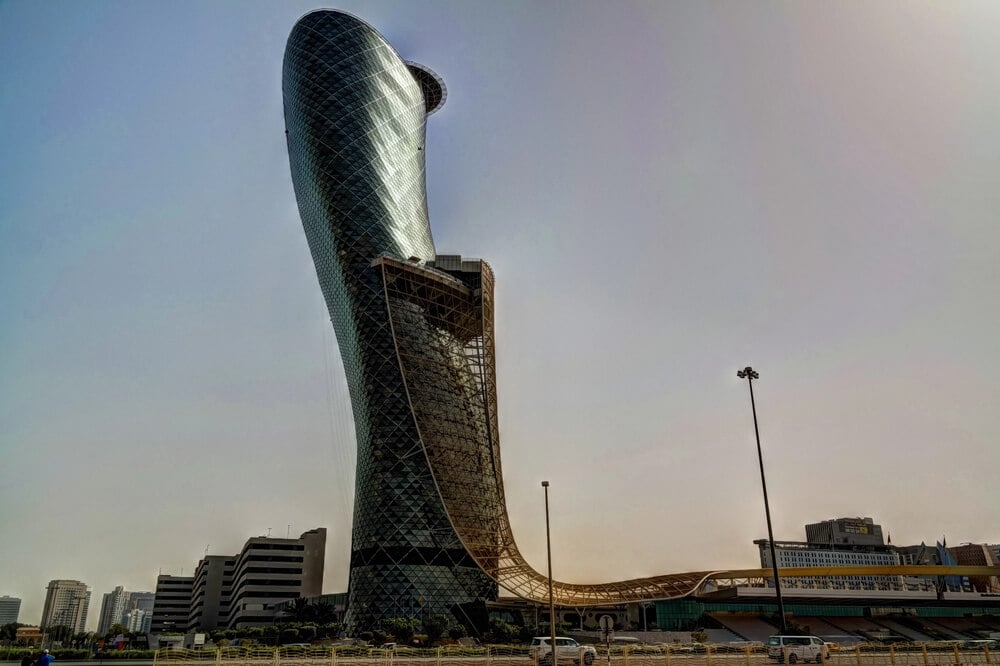
This 136-meter building tilts intentionally at 18 degrees, making the Leaning Tower of Pisa look like it’s standing up straight by comparison. The extreme angle was planned and engineered, not accidental, yet visitors consistently approach it expecting to see an engineering failure.
It holds the Guinness World Record for the world’s farthest-leaning engineered structure and houses luxury hotel and office spaces.
Beijing National Centre for the Performing Arts (Beijing, China)
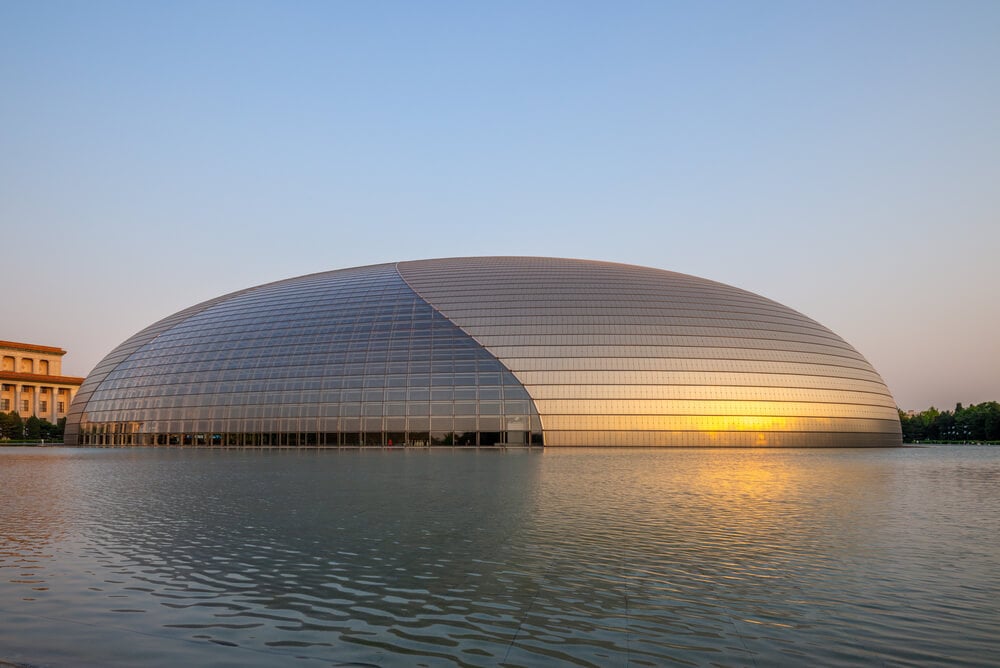
Often called the “Giant Egg,” this structure is an enormous titanium-covered dome that appears to be a spacecraft landed in the heart of Beijing. The design is so committed to the ovoid form that it reads entirely as sculptural object rather than practical performance venue.
Visitors frequently photograph it as a landmark curiosity before realizing it’s actually an opera house.
Casa do Penedo (Guimarães, Portugal)
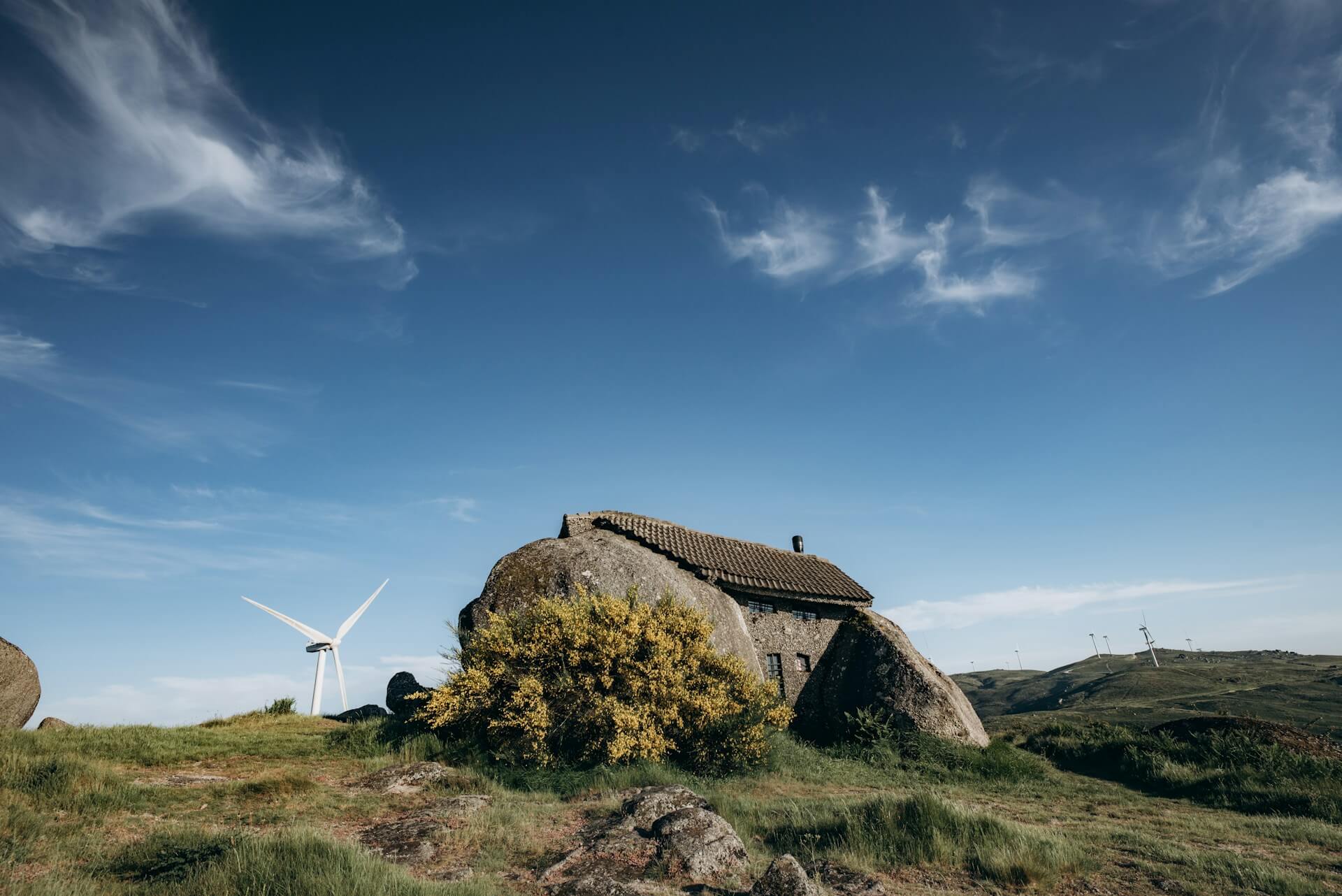
Built in the 1970s, this house is literally constructed between four massive boulders, with the rocks forming actual walls of the structure. The building appears to be wedged into geological formations rather than built on land, creating a hybrid between dwelling and natural formation.
It looks less like architecture and more like a home that grew from the earth.
Palais Idéal (Hauterives, France)
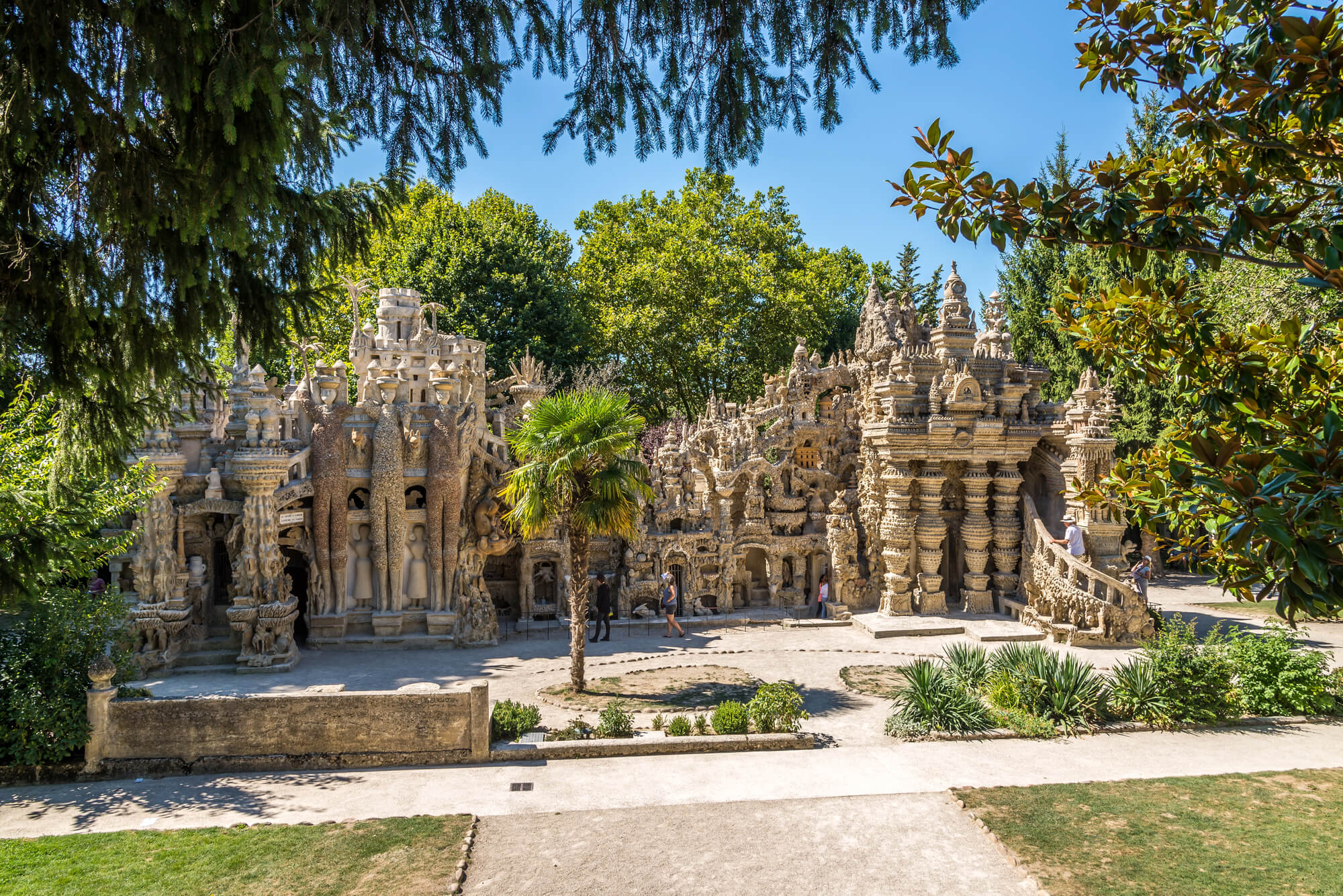
Constructed over 34 years by a single postal worker, Ferdinand Cheval, using stones collected from his mail route, this palace is an eccentric accumulation of fantastical forms, turrets, towers, and grottos. The structure reads as more sculpture than building, with every surface decorated in chaotic, ornamental density that creates an almost hallucinogenic visual effect.
Earth Houses (Dietikon, Switzerland)
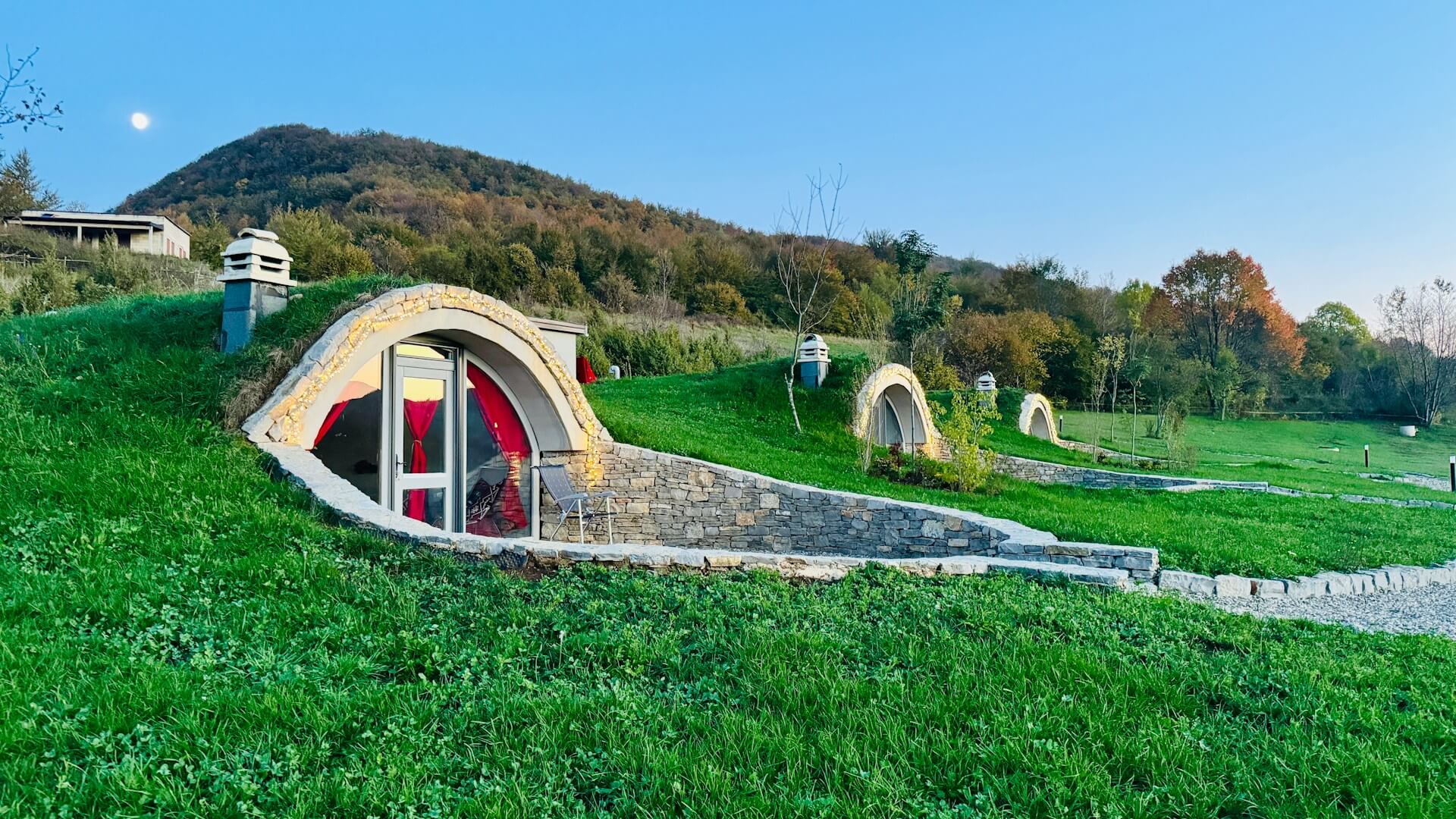
These residential structures are built into hillsides, with earth covering the roof and structure, creating homes that appear to merge with the landscape. From certain angles, they’re nearly invisible, reading more as geological formations than dwellings.
The design challenges every convenIndependence Temple missourition about where and how buildings should sit on the ground.
Independence Temple (Joplin, Missouri, USA)
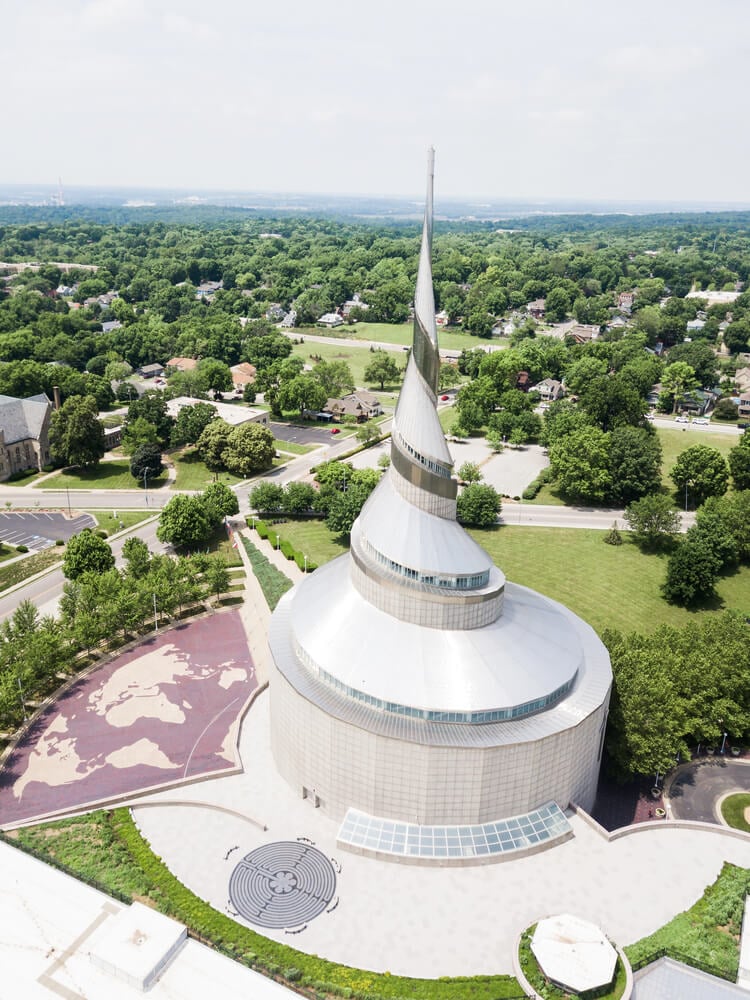
This house of worship features unusual architectural forms inspired by religious symbolism and geometric principles, creating a structure that stands out dramatically within its urban context. The building’s distinctive silhouette and form make it appear almost otherworldly compared to conventional church architecture.
Wonderworks (Pigeon Forge, Tennessee, USA)
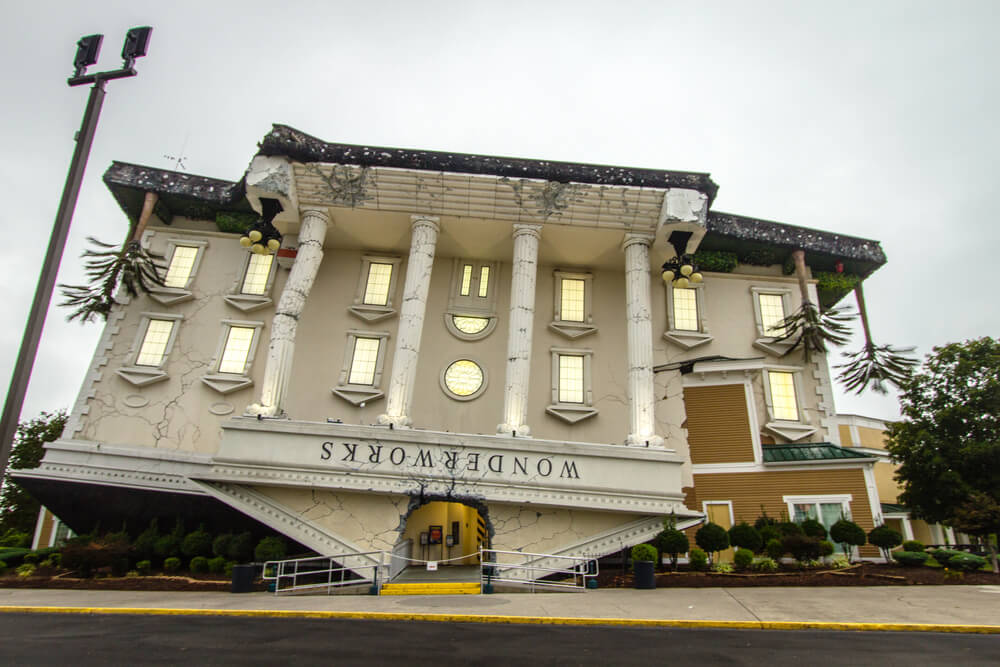
Designed as an outdoor amusement center, this building is constructed as an inverted structure appearing to crash through the ground as if falling from the sky. The structure’s exterior makes it look as though it’s buried or emerging from the earth, with architectural elements appearing to be in free fall.
Chapel in the Rock (Superior, Arizona, USA)
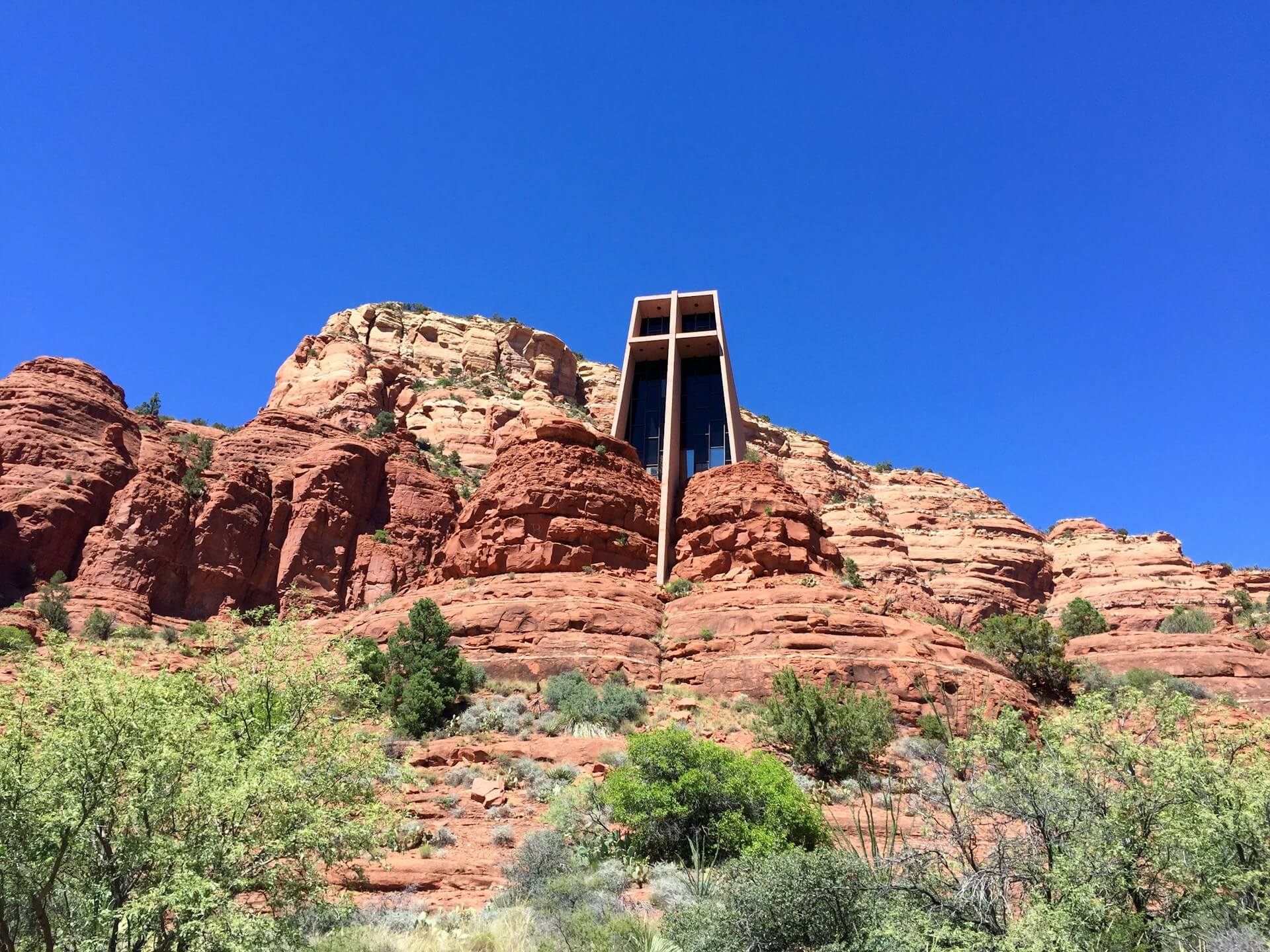
Built into a large rock formation, this chapel is carved directly into the stone, creating a structure that appears to be part of the geology rather than separate from it. The chapel emerges from and is enfolded by the rock, making it nearly impossible to distinguish where geology ends and architecture begins.
Museum of Contemporary Art (Niteroi, Rio de Janeiro, Brazil)
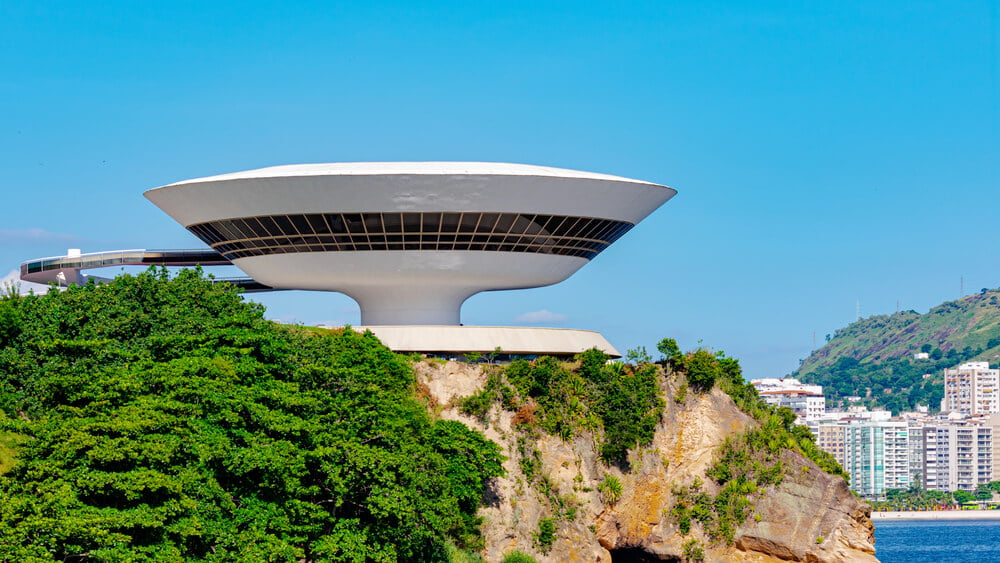
Designed by architect Oscar Niemeyer, this structure appears as an enormous flying saucer hovering above the landscape, supported by a single cylindrical column. The building’s form is so removed from conventional architecture that visitors often assume they’re seeing a sculpture or artistic rendering rather than an actual museum.
The Rotating Tower (Dubai, UAE – Proposed)
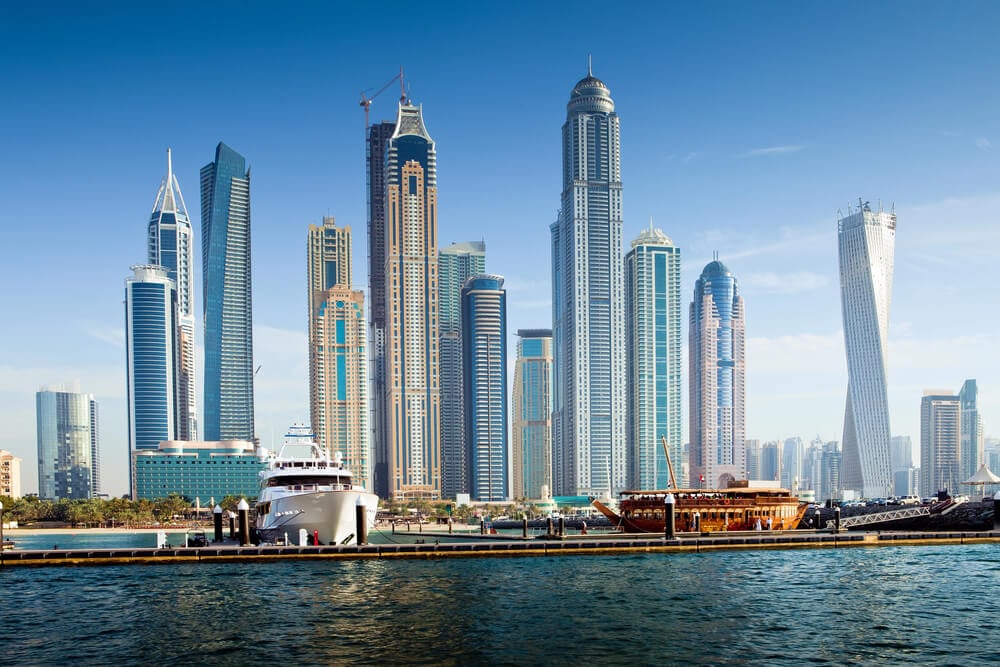
Designed by architect David Fisher, this 420-meter building features floors that rotate independently, with each level capable of moving separately from the others. Though still under development, renderings of the structure show something so geometrically counterintuitive that observers consistently question whether the design is physically possible.
When Strangeness Becomes Icon
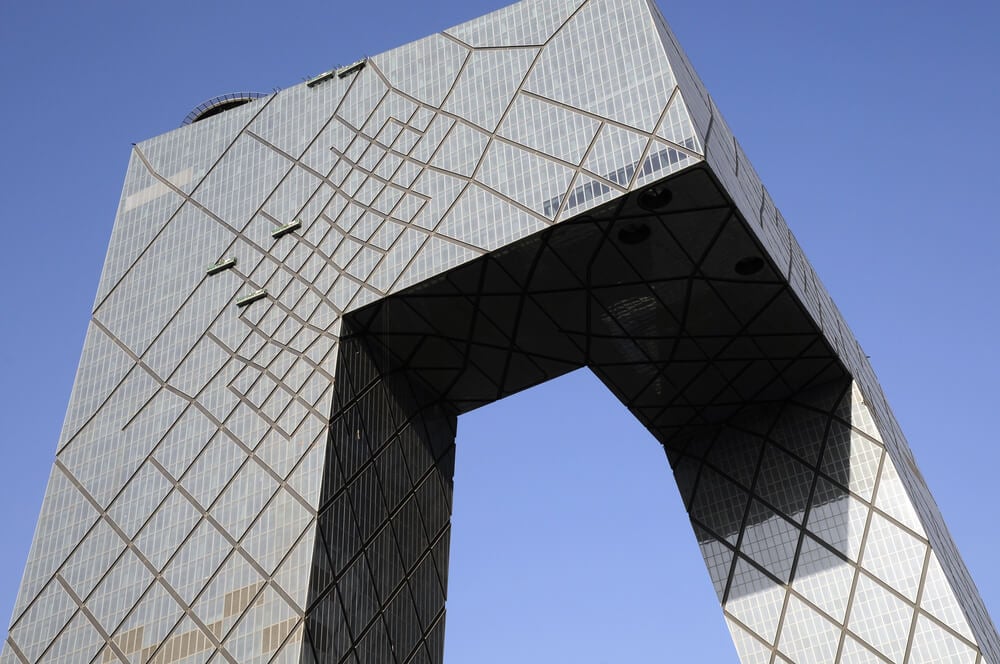
These 26 buildings prove that the line between architecture and sculpture is purely conceptual. Each structure was approved by planning committees, built by construction teams, and now serves its intended function—shops, homes, offices, museums.
Yet their designs insist on provoking rather than blending, on making viewers stop and reconsider what buildings are supposed to be. They’re not mistakes or aberrations.
They’re deliberate assertions that architecture can ask questions instead of providing answers. And every visitor who photographs them, second-guessing whether the image is real, proves the architects succeeded.
More from Go2Tutors!

- The Romanov Crown Jewels and Their Tragic Fate
- 13 Historical Mysteries That Science Still Can’t Solve
- Famous Hoaxes That Fooled the World for Years
- 15 Child Stars with Tragic Adult Lives
- 16 Famous Jewelry Pieces in History
Like Go2Tutors’s content? Follow us on MSN.



