26 Castles Abandoned and Left to Ruin
A castle is built on the assumption that it will last forever. Then the wars change, the money runs out, a fire takes the roof or a victorious army decides the walls should never shelter an enemy again.
What remains is often more interesting than a restored palace. A ruin shows the stonework, the damage and the moment someone decided the place was no longer worth saving.
Dunnottar Castle on Its Sea Stack
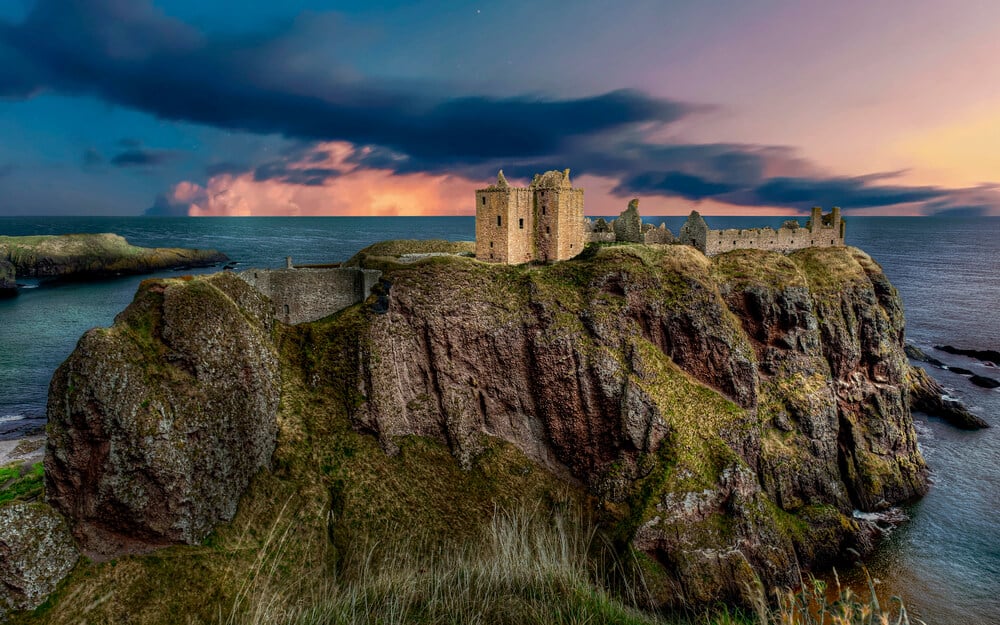
Dunnottar sits on a flat-topped rock almost surrounded by the North Sea on Scotland’s northeast coast, connected to the mainland by a narrow strip of land. Its darkest episode came in 1685, when 167 Covenanters, men and women who resisted royal religious policy, were crammed into a cellar now known as the Whigs’ Vault for weeks during summer.
Several died and others were injured trying to escape down the cliffs. The Keith family lost the castle after supporting the Jacobite rising of 1715, and it was stripped and left to decay.
Its roofless buildings still cover much of the rock.
Urquhart Castle on Loch Ness
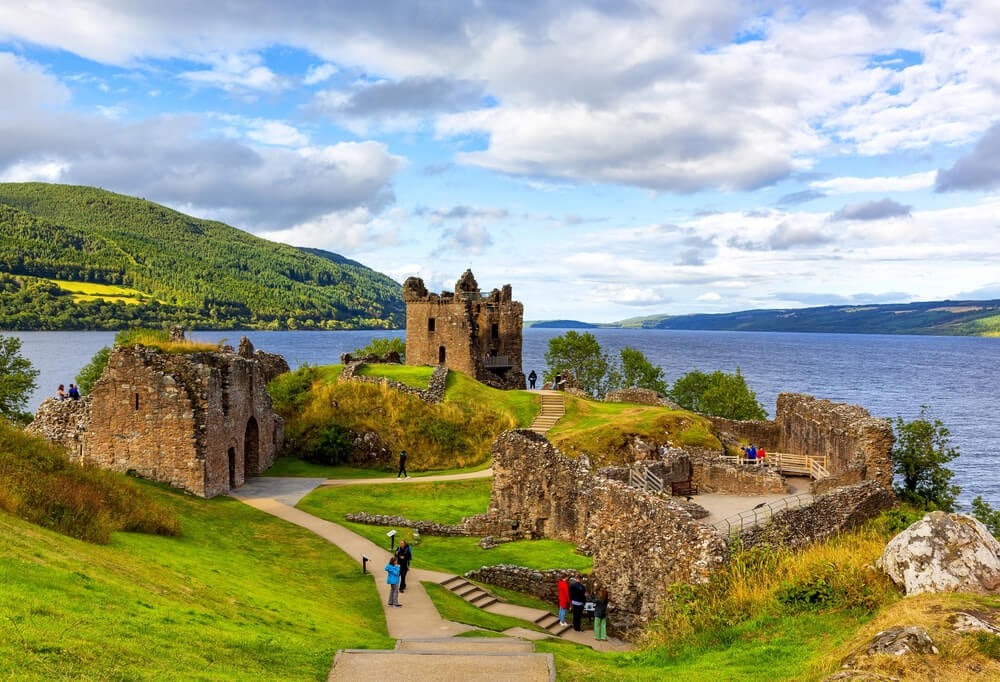
Urquhart Castle changed hands repeatedly during the Scottish Wars of Independence, since it controlled a strategic point on the Great Glen. By the late 17th century, government troops held it against Jacobite supporters.
When they left in 1692, they blew up the gatehouse so that it could never be used as a stronghold again. The ruin was gradually stripped for building stone by local people.
Today it is one of the most visited castles in Scotland, largely because tourists scanning Loch Ness for a monster get an excellent view from its walls.
Kilchurn Castle and Its Fallen Turret
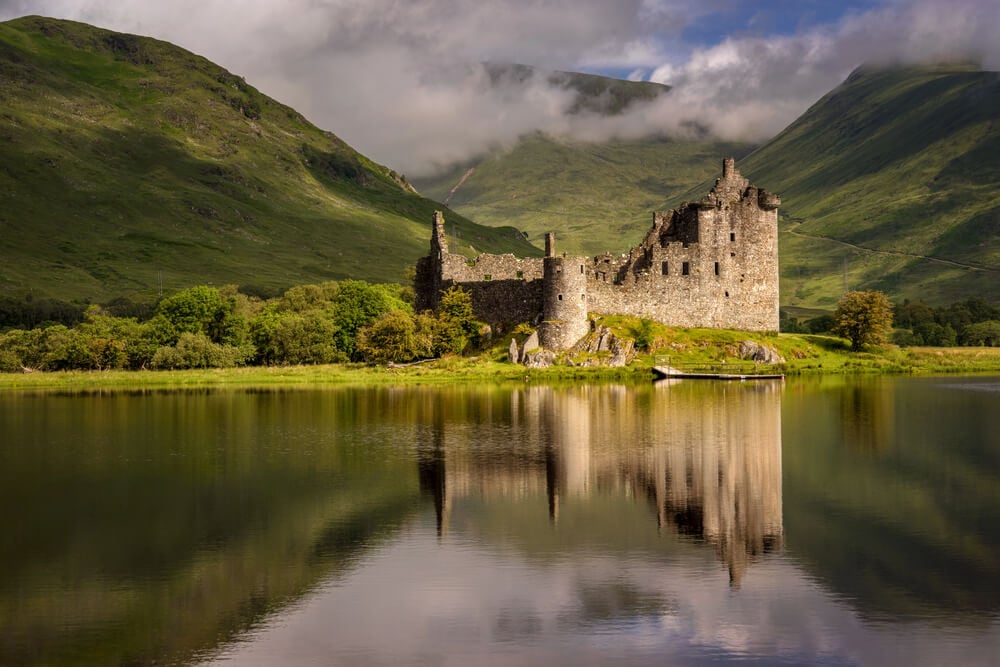
Kilchurn Castle stands on a small peninsula at the northern end of Loch Awe in the Scottish Highlands. The Campbells of Glenorchy built it in the 15th century and later converted it into barracks that could house up to 200 soldiers.
The family moved to a new home in the 18th century and the castle was abandoned. In 1760 lightning struck one of its towers, and the top of the turret came down.
That section still lies upside down in the courtyard where it landed, a reminder of the single afternoon that finished off a building centuries in the making.
Corfe Castle and Lady Bankes’s Keys
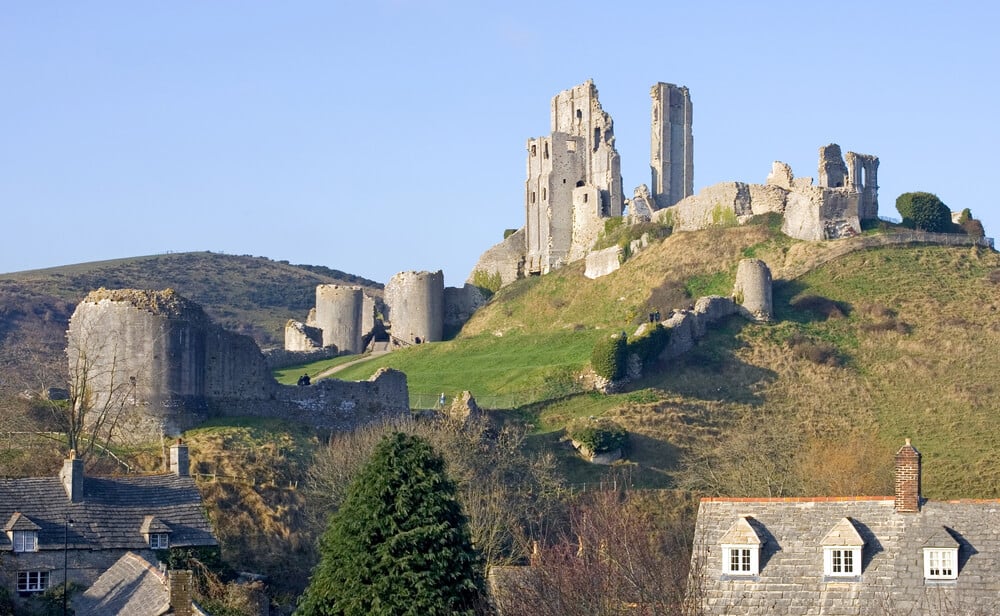
Corfe Castle in Dorset was held by Lady Mary Bankes for the king during the English Civil War. She defended it through a siege in 1643 and a second in 1645 and 1646, until one of her own garrison betrayed the castle to Parliamentary troops.
Parliament then ordered the castle slighted, deliberately damaged so it could never be defended again. Engineers undermined the walls and towers, leaving huge chunks leaning at dramatic angles.
As a mark of respect for her courage, Lady Bankes was allowed to keep the keys, which are still displayed at the family home, Kingston Lacy.
Kenilworth Castle After Elizabeth’s Visit
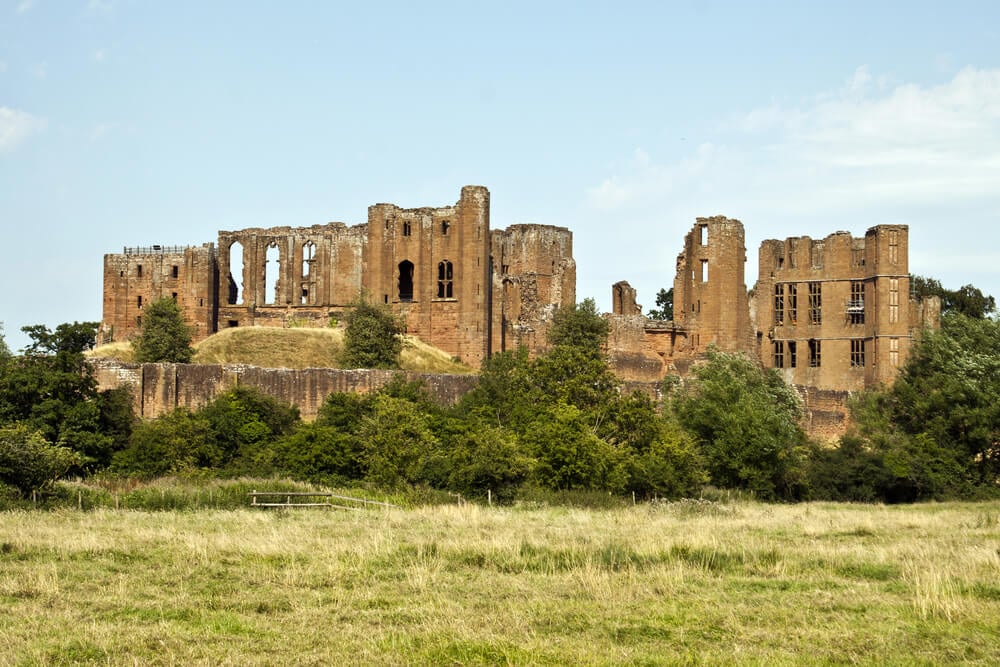
Kenilworth in Warwickshire grew over centuries into one of the grandest castles in England. Robert Dudley, Earl of Leicester, turned it into a lavish palace and entertained Elizabeth I there for 19 days in 1575 with fireworks, pageants and banquets.
It was widely seen as his last attempt to win her hand in marriage. After the English Civil War, Parliament had the castle slighted in 1650, draining the great mere that had surrounded it and breaching the walls.
Much of the red sandstone shell survives, including the huge windows of the great hall.
Dunluce Castle on the Antrim Cliffs
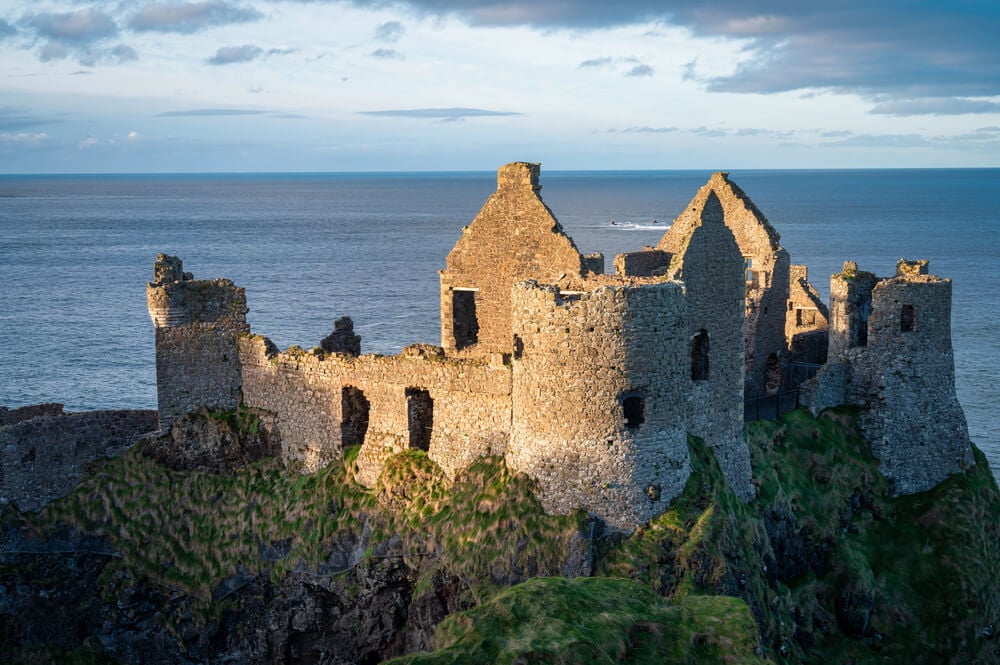
Dunluce Castle stands at the edge of a basalt cliff on the northern coast of County Antrim, with sheer drops to the sea on several sides. According to a well-known story, part of the kitchen fell into the sea in 1639 during a storm, taking several servants with it.
Historians have questioned the details, but the precarious position is obvious to any visitor. The MacDonnell family left the castle in the later 17th century, and it fell into ruin.
Its dramatic setting has made it a favorite subject for painters and photographers.
Chateau Gaillard in Normandy
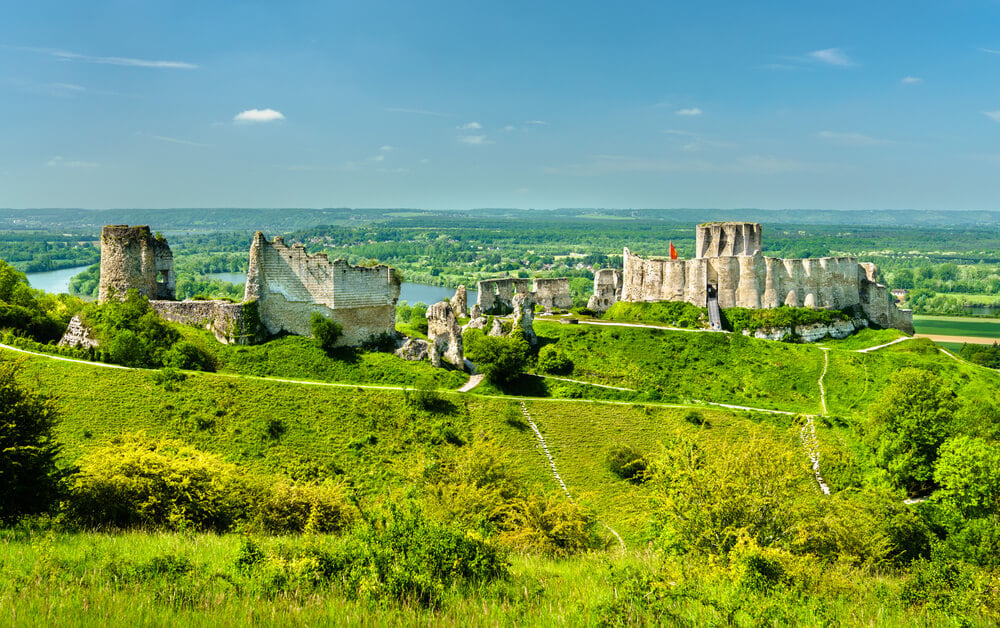
Richard the Lionheart built Chateau Gaillard above the Seine in about two years at the end of the 12th century, an astonishingly fast construction for such a large fortress. It was meant to protect Normandy from the French king Philip Augustus.
In 1204, after a long siege, French troops broke into the inner defenses, and one account says they entered through a latrine chute. Henri IV ordered the castle demolished in 1599, and its stone was reused elsewhere.
Parts of its walls and keep still stand above the river valley.
Burg Rheinfels Above the Rhine
Burg Rheinfels was once one of the largest castles on the Rhine, controlling river traffic near the town of Sankt Goar. It withstood a major French siege in 1692.
In 1797, however, French revolutionary troops captured it without much resistance and blew up large sections. The ruins were then used for years as a stone quarry, and much of the castle ended up in local houses.
Today it is a huge maze of walls, tunnels and mine galleries, many of which visitors can explore with a flashlight.
Heidelberg Castle and the Split Tower
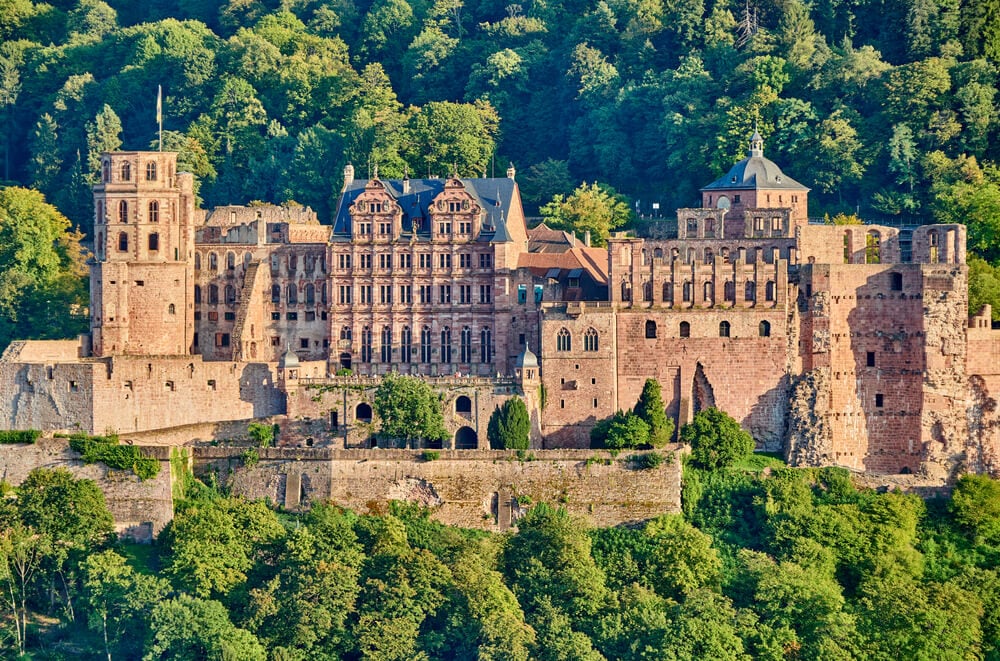
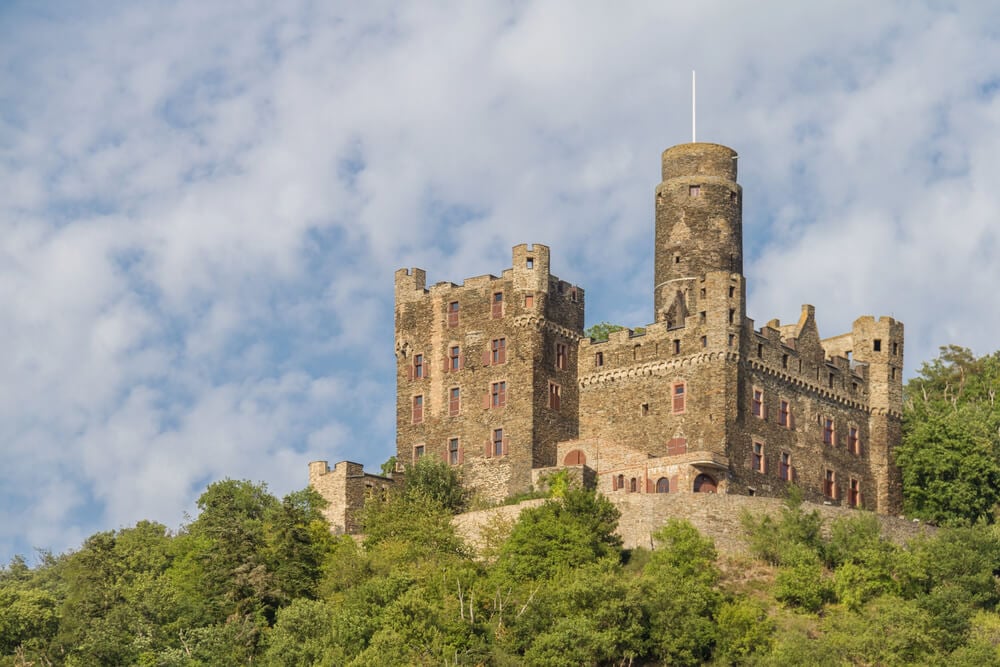
Heidelberg Castle was a grand Renaissance palace for the Electors Palatine before French troops blew up parts of it in 1689 and 1693 during the Nine Years’ War. Lightning struck in 1764 and caused a fire that destroyed rebuilt sections.
One of the defensive towers, blasted by explosives, split in two, and a huge section of its wall still lies in the moat where it fell. The ruins became a symbol of German Romanticism in the 19th century.
Mark Twain described them in his writing after visiting.
Poenari Fortress and Its 1,480 Steps
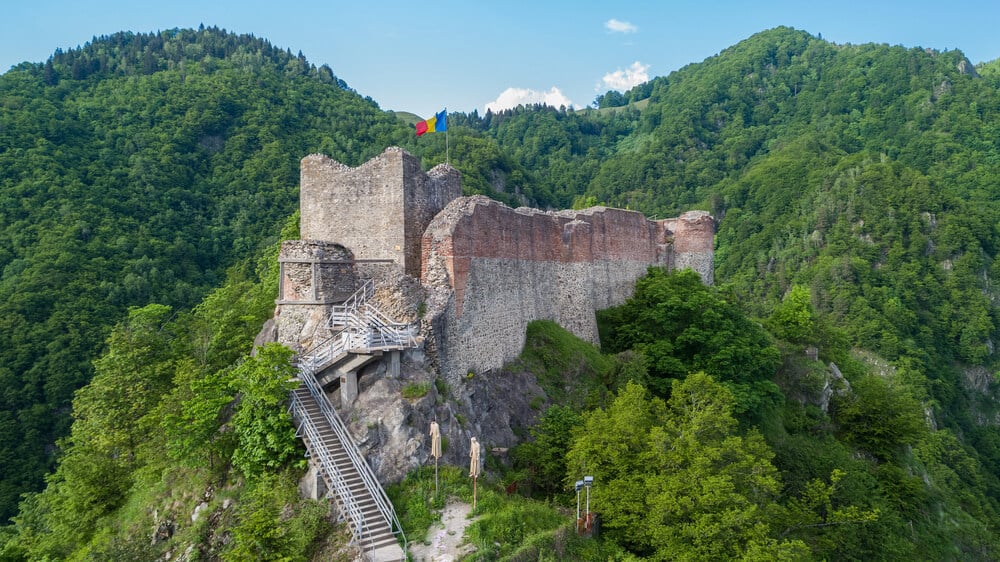
Poenari Fortress sits on a cliff above the Arges River in Romania and is closely associated with Vlad III, better known as Vlad the Impaler. He rebuilt it as a stronghold in the 15th century.
Local legend says he forced prisoners to carry out the work. The fortress was later abandoned, and a landslide in the 1880s sent parts of it tumbling into the river below.
Visitors reach the remaining walls by climbing a staircase of about 1,480 steps, a climb that explains why so few attackers ever tried.
Ogrodzieniec Castle on the Eagles’ Nests Trail
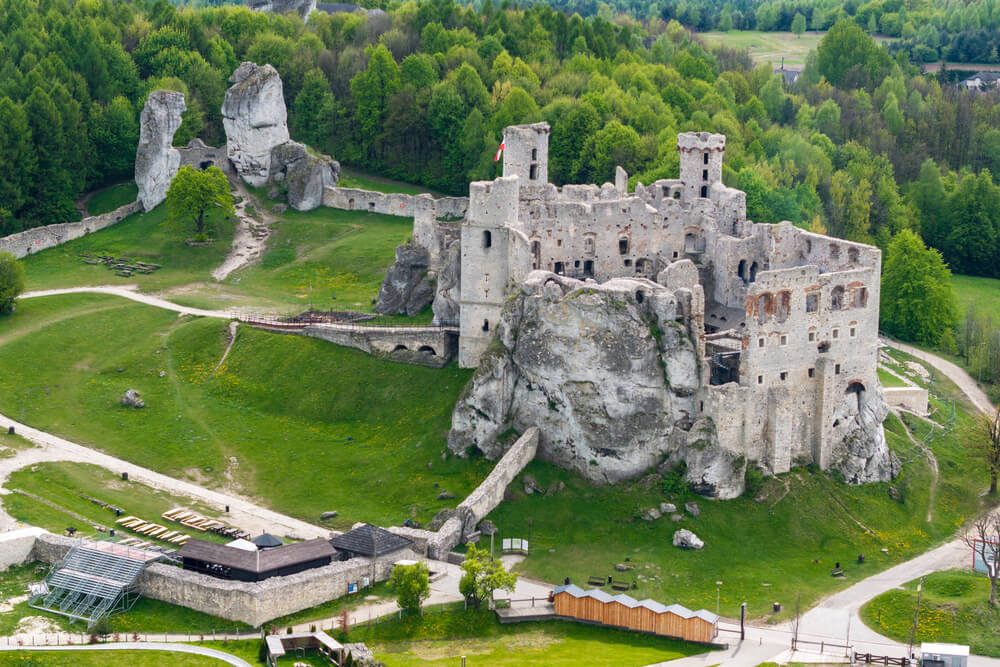
Ogrodzieniec Castle stands on one of the highest hills of the Polish Jura, built directly onto limestone rock formations. The Boner family rebuilt it as a Renaissance residence in the 16th century.
It was badly damaged during the Swedish invasion of the 17th century and was finally abandoned around 1810, when its last owners left. The ruins are part of the Trail of the Eagles’ Nests, a string of castles built along the limestone ridge.
In places it is hard to tell where the masonry ends and the natural rock begins. Its walls grow straight out of the stone.
Spis Castle in Slovakia
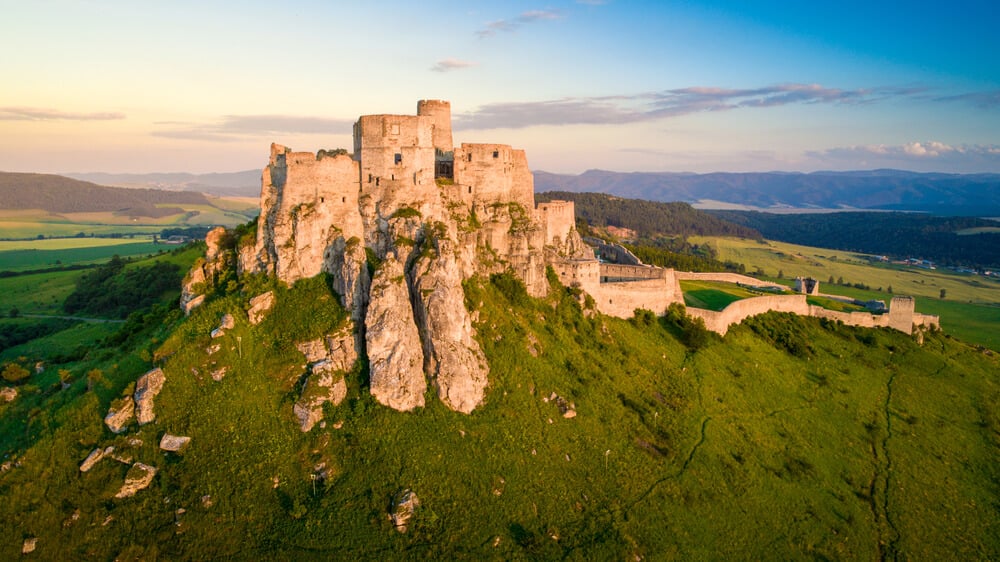
Spis Castle covers a huge hilltop in eastern Slovakia and is one of the largest castle complexes in Central Europe. It was built from the 12th century onward and expanded repeatedly over the next few hundred years.
In 1780 a fire destroyed much of it, and the owners did not rebuild. The ruins were later stabilized and are now part of a UNESCO World Heritage site.
Its sheer size is visible for miles across the surrounding countryside. Film crews have used the ruins as a medieval backdrop, including for the 1996 fantasy film Dragonheart.
Devin Castle Above the Danube
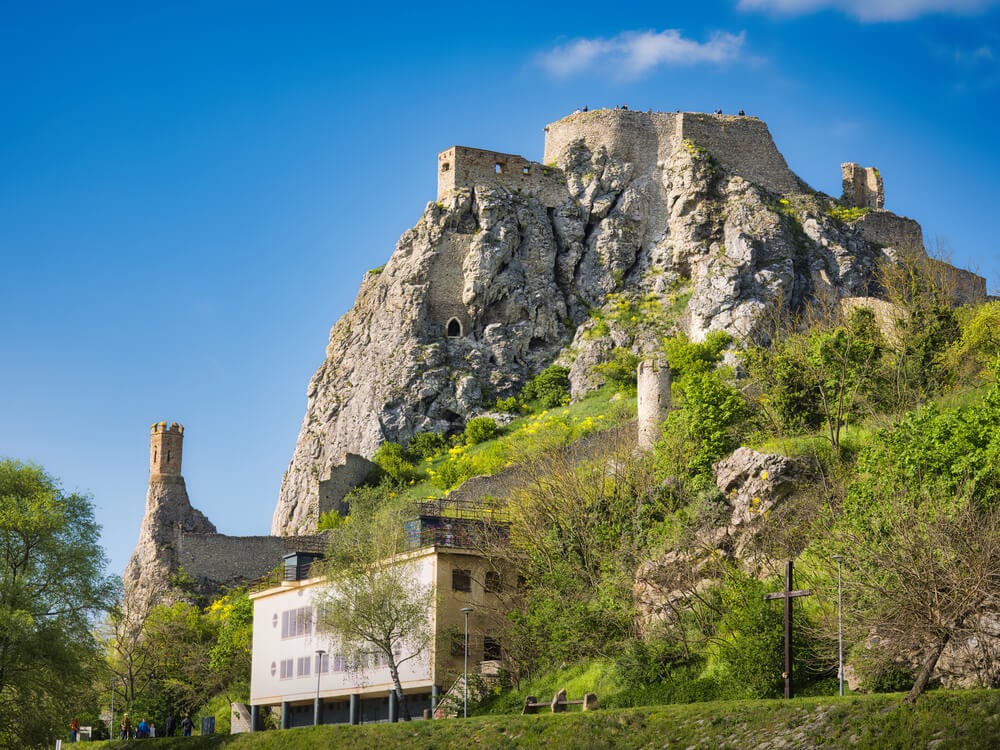
Devin Castle sits on a rock at the meeting point of the Danube and the Morava, near Bratislava on the Slovak border with Austria. The site was fortified long before the medieval castle was built.
In 1809 Napoleon’s troops blew it up, leaving it in ruins. Its lone watchtower, known as the Maiden Tower, perches on a separate rock and is surrounded by legends about young women who threw themselves from it rather than marry against their will.
During the Cold War, the area around it was part of the heavily guarded border zone.
Chateau de la Mothe-Chandeniers, Owned by Thousands
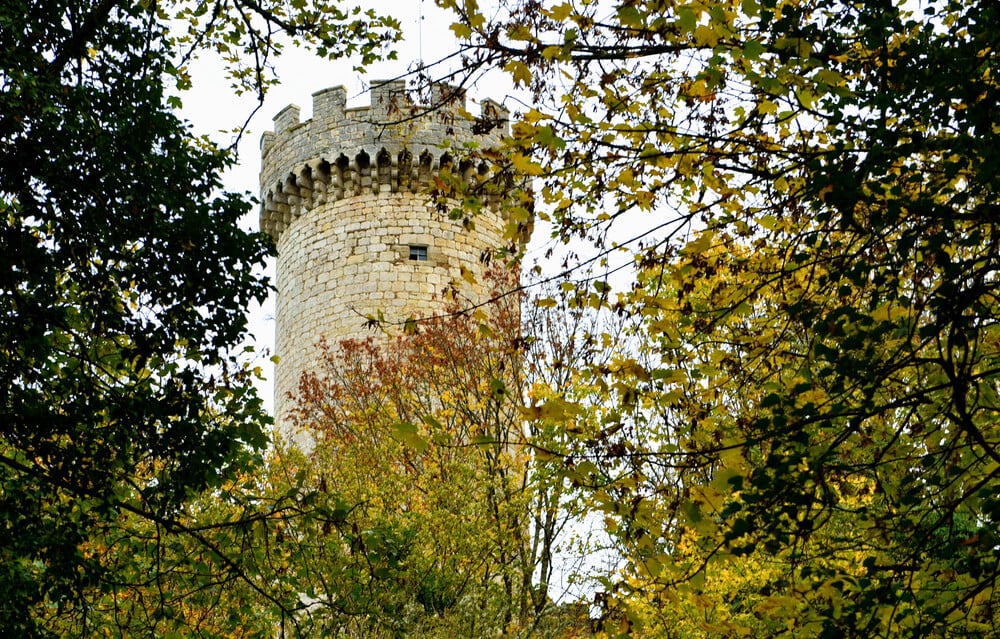
This moated castle in western France dates to the 13th century but was rebuilt in a romantic style in the 19th century. In 1932 a fire destroyed the roof and much of the interior, and the castle was abandoned to nature, with trees growing through its halls.
In 2017 a crowdfunding campaign run by the site Dartagnans raised about 1.6 million euros to buy and restore it. Around 25,000 people from 115 countries became co-owners.
It may be the only castle in the world with more owners than bedrooms by several thousand.
Kellie’s Castle in Malaysia
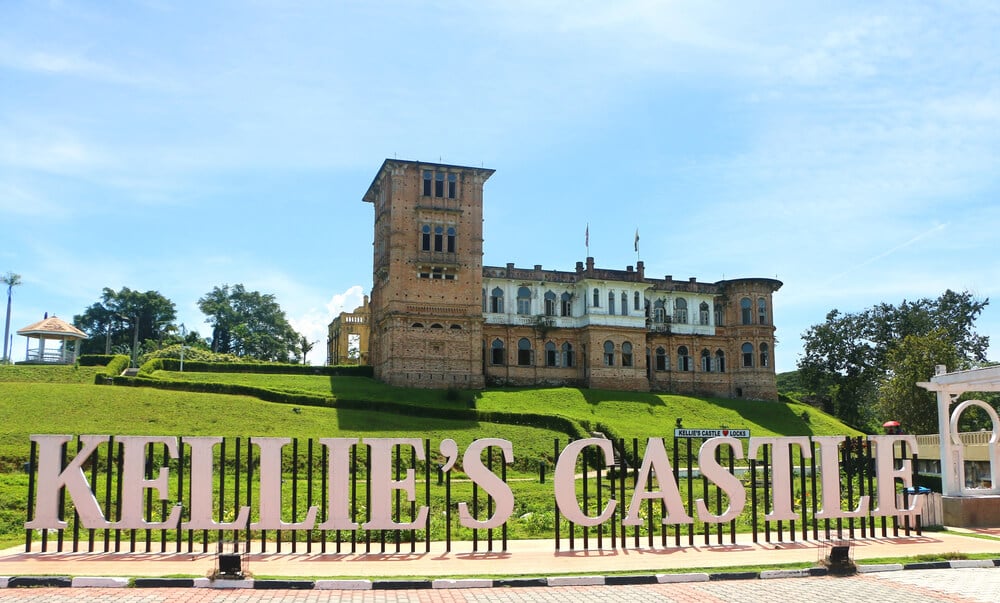
William Kellie Smith, a Scottish planter who made his fortune in rubber, began building an elaborate mansion near Batu Gajah in Perak, Malaysia, in the 1910s. Workers were brought from India, and many died in an epidemic during construction.
Smith fell ill and died on a trip to Lisbon in 1926 before the house was finished. His family sold the property and left, and the half-completed castle was abandoned to the jungle.
Its unfinished rooms and rooftop courtyard now attract visitors curious about the man who built a Scottish dream in the tropics.
Hohentwiel Fortress in Germany
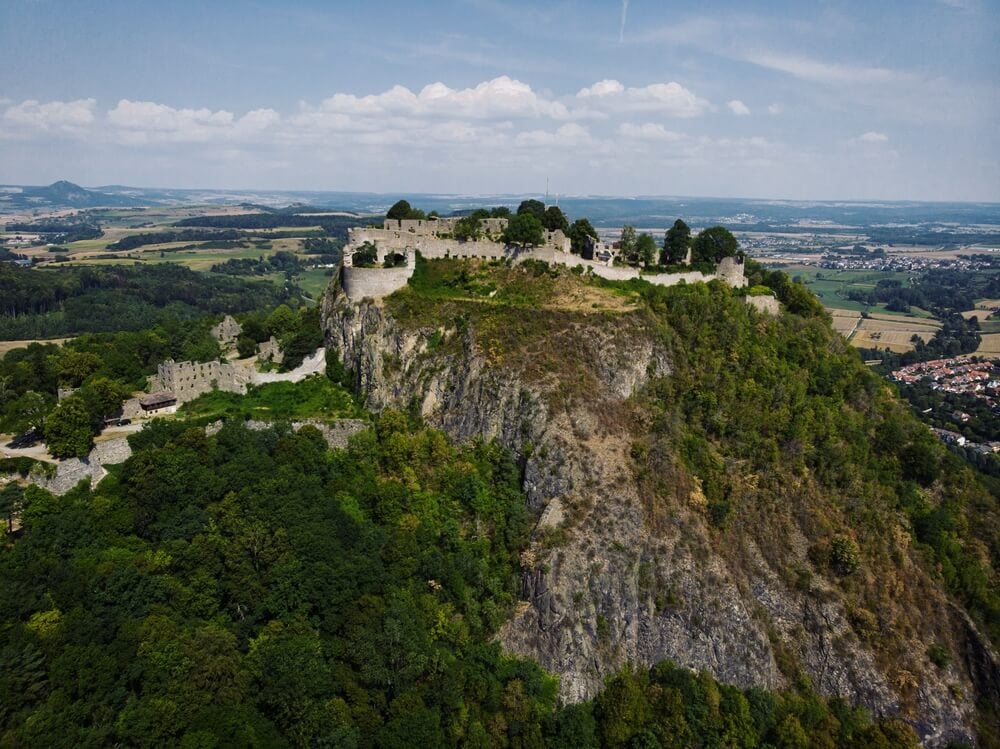
Hohentwiel stands on the plug of an extinct volcano near Singen in southern Germany. During the Thirty Years’ War it was besieged five times and never taken, thanks largely to its commander, Konrad Widerholt.
Napoleon’s era brought a different ending. Under the terms of a peace agreement, French troops demolished the fortress in 1800 and 1801.
Today it is one of the largest castle ruins in Germany, and on clear days the walls offer views toward Lake Constance and the Alps. A fortress that no army could take fell to a treaty.
Bannerman’s Castle on the Hudson
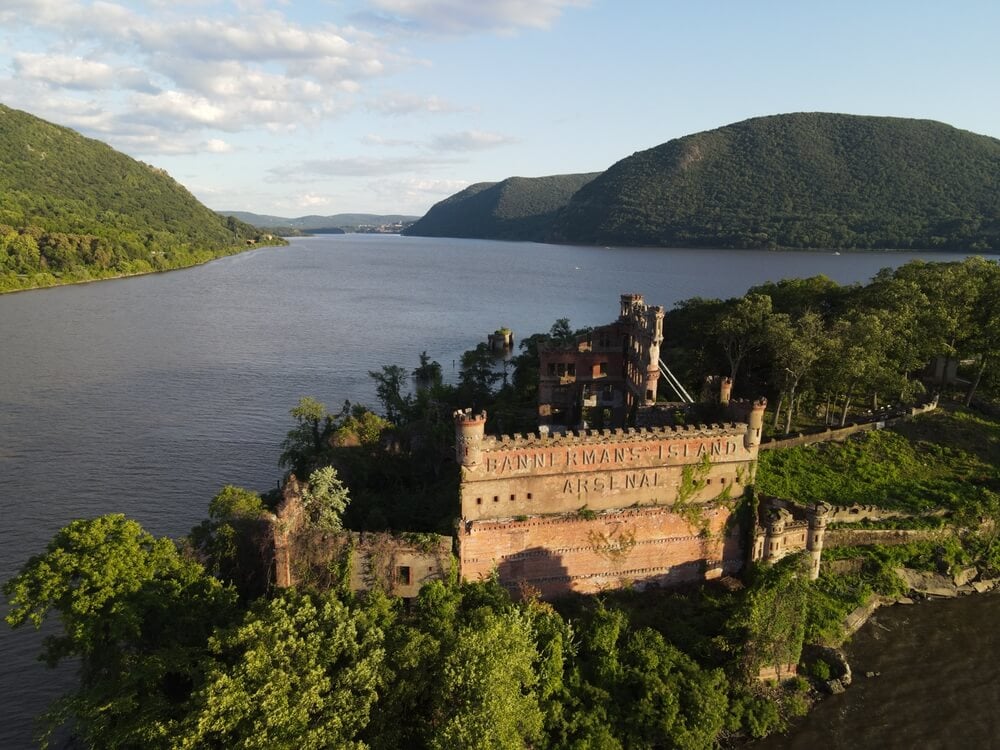
Francis Bannerman VI, a dealer in military surplus, bought Pollepel Island in the Hudson River in 1900 and built a Scottish-style castle to store his huge inventory of weapons and ammunition. His name was painted in huge letters on the side to advertise his business to passing ships.
In 1920 an explosion in the powder house destroyed part of the complex. A fire in 1969 gutted what remained.
Today the ruins are managed by a trust that runs tours by boat, and the partial facade still shows traces of the painted lettering.
Raglan Castle After the Civil War
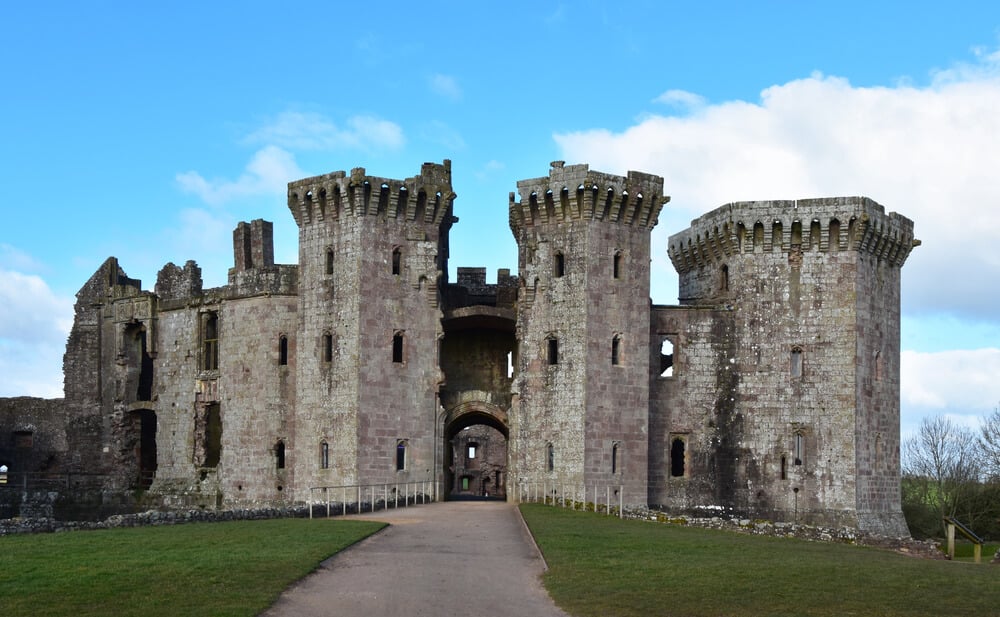
Raglan Castle in Wales was one of the last great castles built in Britain, with a massive hexagonal tower known as the Yellow Tower of Gwent. During the English Civil War, it was held for the king and fell in 1646 after one of the longest sieges of the conflict.
Parliament then slighted it, and engineers undermined the great tower until two of its six walls collapsed. According to tradition, the castle’s library of Welsh manuscripts was lost at around the same time.
The remaining stonework is still impressive.
Lochleven Castle and a Queen’s Escape
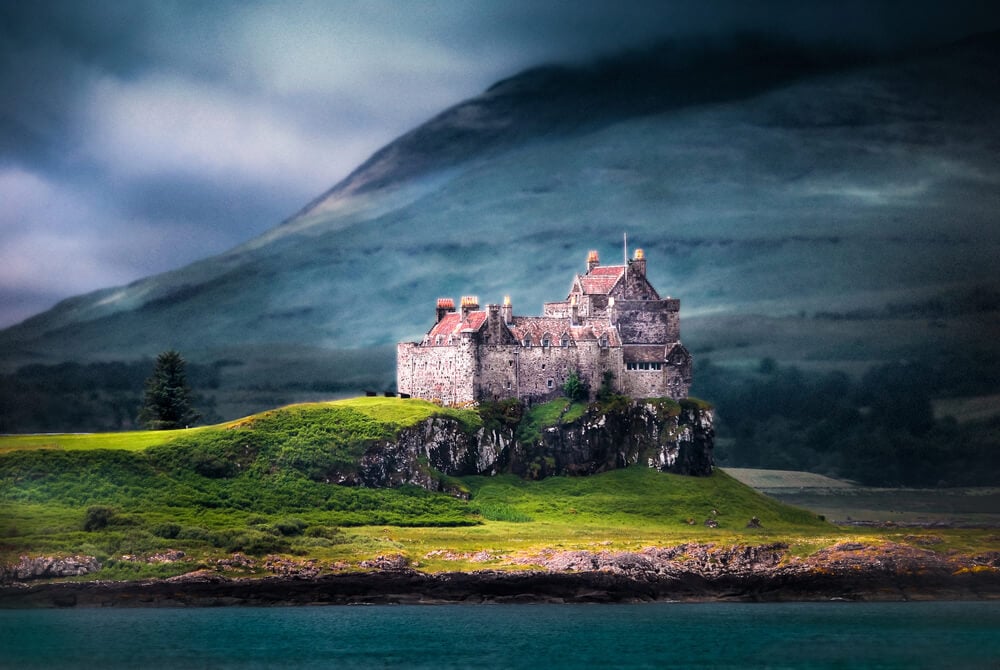
Lochleven Castle stands on a small island in Loch Leven in Scotland. Mary, Queen of Scots, was imprisoned there in 1567 and forced to abdicate in favor of her infant son.
In May 1568 she escaped with the help of young George Douglas and a boy named Willie Douglas, who locked the castle gates behind them and threw the keys into the loch. The castle was later abandoned.
Visitors now reach the island by boat, as its prisoners and guards once did. The keys were reportedly found in the loch centuries later, though the story is hard to prove.
Castle Tioram, Burned by Its Own Chief
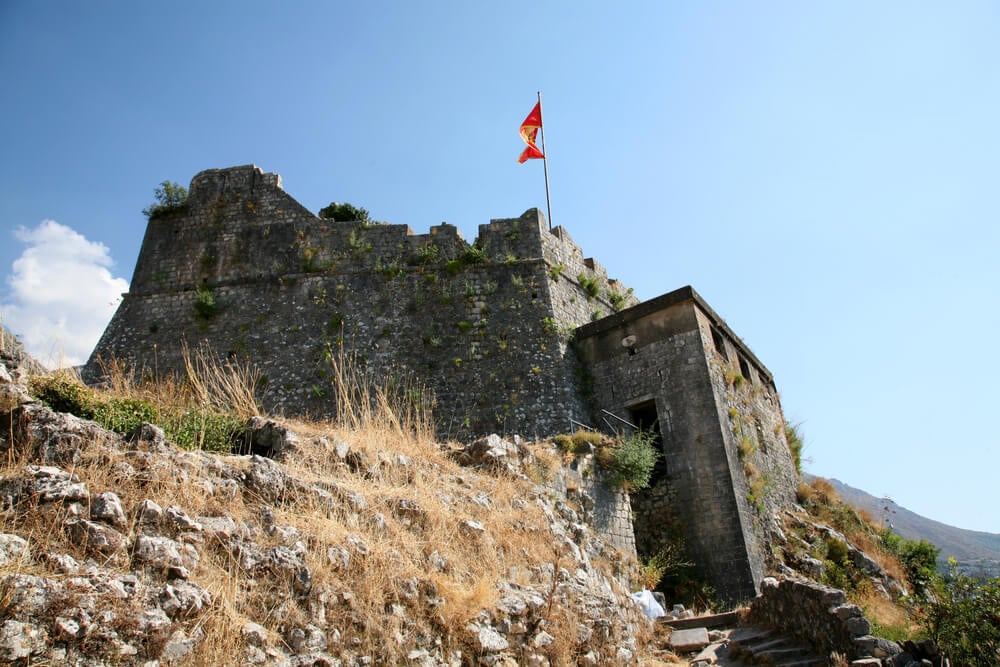
Castle Tioram sits on a tidal island in Loch Moidart on the west coast of Scotland, cut off from the mainland at high tide. It was the seat of the Clanranald branch of the MacDonalds.
In 1715, as the chief left to join the Jacobite rising, he is said to have ordered it burned so that it could not be used by government forces. The castle was never restored.
Its roofless walls still stand, and access is restricted because of the danger of falling masonry.
Slains Castle and the Dracula Connection
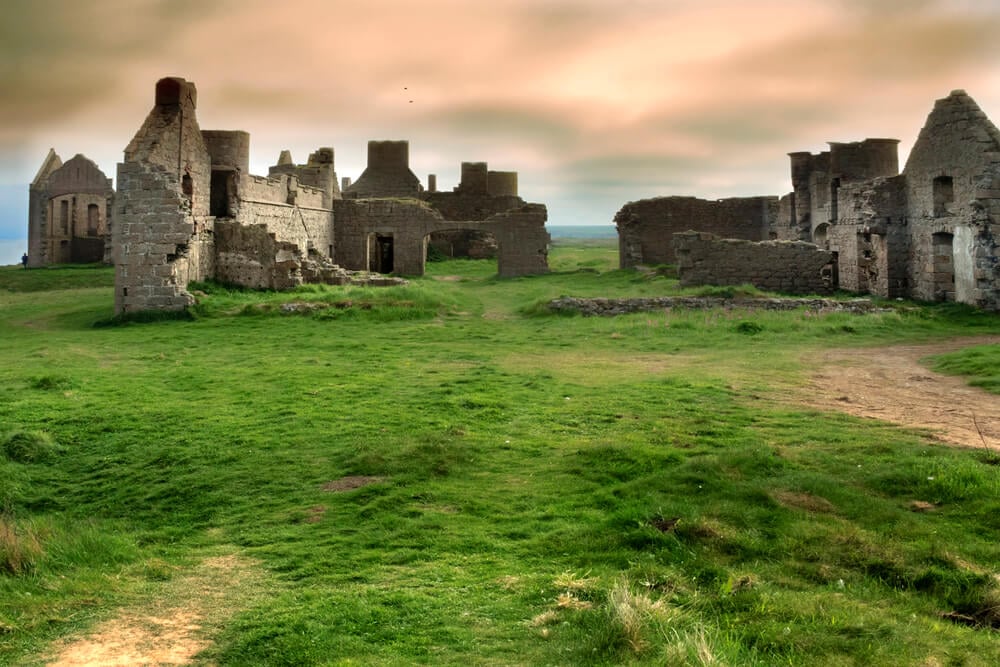
The current ruins of Slains Castle stand on the cliffs near Cruden Bay in Aberdeenshire. Bram Stoker stayed in the area during the 1890s, and Slains is often cited as one of the inspirations for Castle Dracula.
The Earls of Erroll owned it for centuries before selling it in 1916. The new owners removed the roof in 1925 to avoid paying taxes on the building.
What remains is a shell of walls and window openings, exposed to the North Sea wind. A building that inspired one of literature’s great haunted castles became a real ruin within a few decades.
Dunstanburgh Castle on the Northumberland Coast
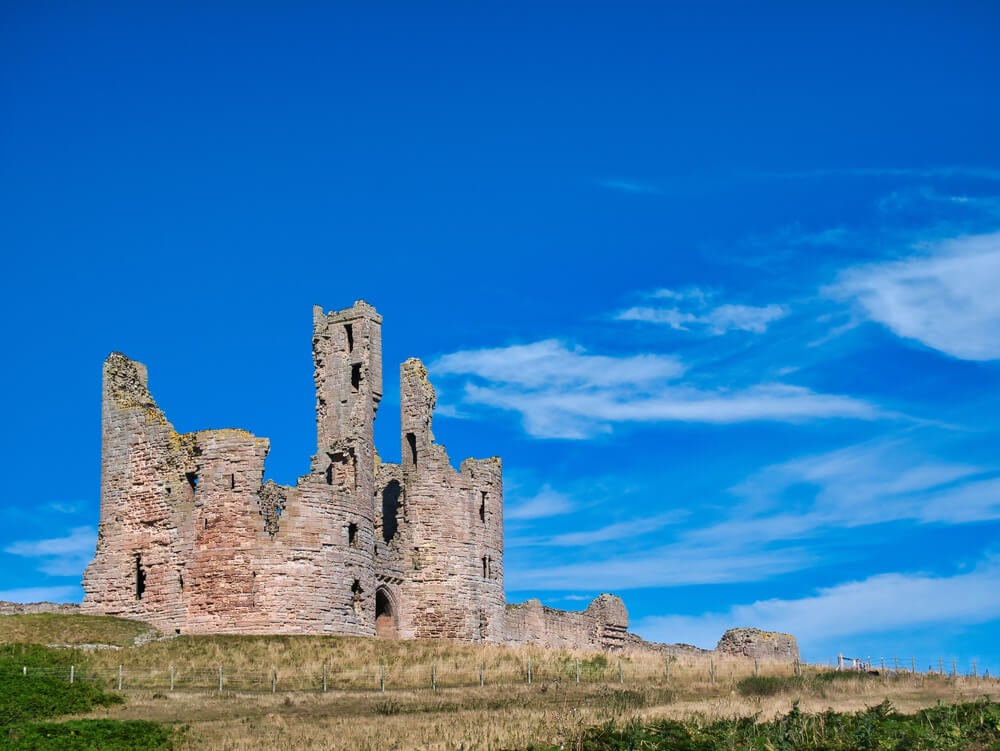
Thomas, Earl of Lancaster, began building Dunstanburgh Castle in 1313 on a remote headland in Northumberland. Its huge gatehouse was designed to impress as much as defend.
Thomas rebelled against Edward II and was executed in 1322, before he ever made much use of it. The castle saw action during the Wars of the Roses but decayed after the 16th century.
Its jagged towers, often seen against stormy skies, were painted several times by J. M. W. Turner. Visitors still reach it only on foot, along a coastal path across open pasture.
Tintagel and the Arthurian Legend
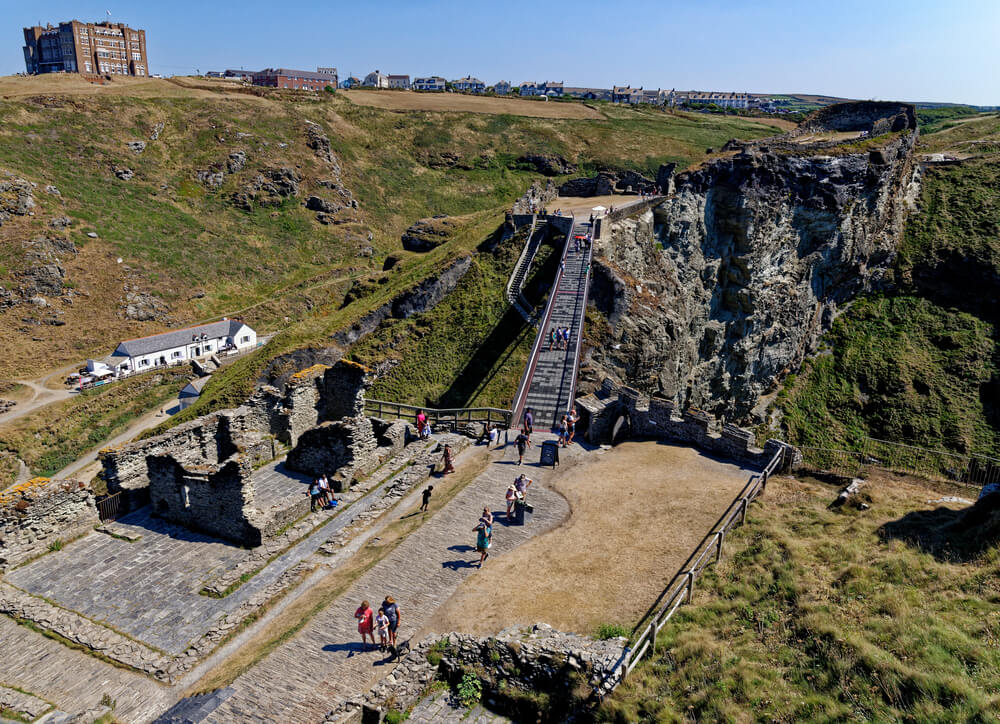
Tintagel Castle stands on a rocky headland on the north coast of Cornwall. Richard, Earl of Cornwall, built a castle there in the 1230s, and many historians believe he chose the location because of its connection to the legend of King Arthur.
Geoffrey of Monmouth had written a century earlier that Arthur was conceived there. By the 16th century the castle was in ruins.
A footbridge opened in 2019 connects the mainland to the island part of the site. Excavations have also found evidence of an important early medieval settlement there, long before Richard’s castle.
Montsegur and the Last Cathar Stand
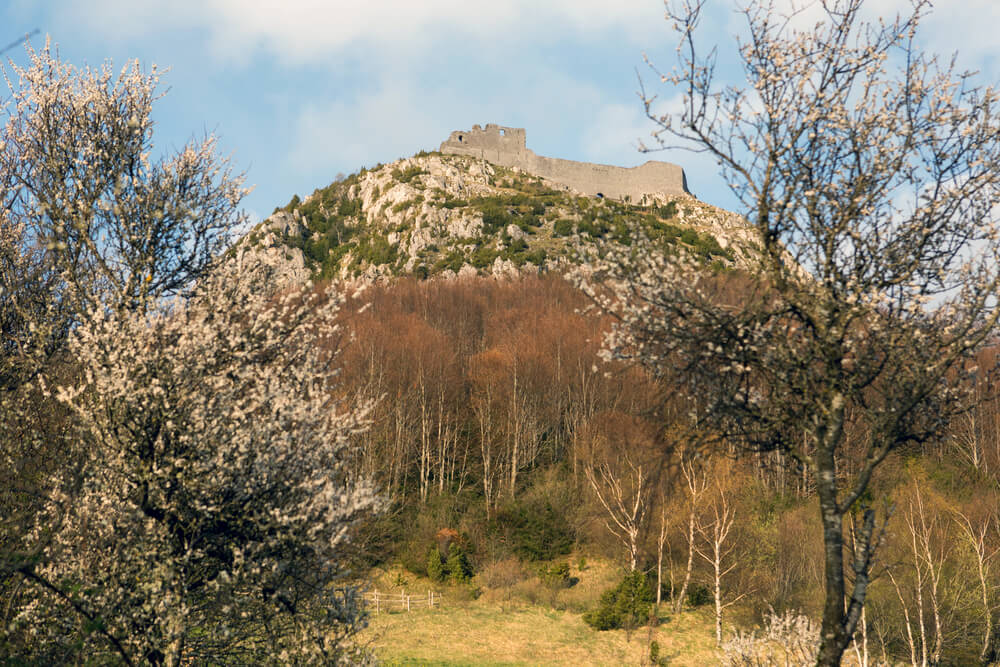
Montsegur sits on a mountaintop in the French Pyrenees and was the last major stronghold of the Cathars, a religious movement condemned by the Catholic Church. After a siege of nearly a year, the fortress surrendered in March 1244.
More than 200 people who refused to renounce their faith were burned at the foot of the mountain. The ruins visible today come from a later fortress built on the same spot.
The site remains a place of pilgrimage and speculation, including endless legends about treasure smuggled out before the surrender.
Menlo Castle in Galway
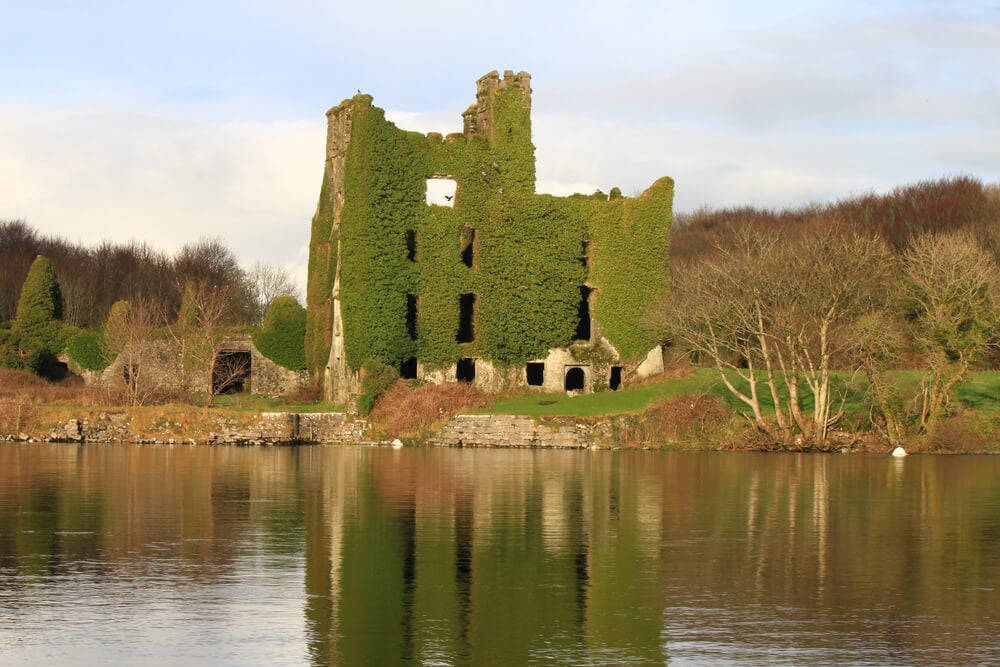
Menlo Castle stands on the banks of the River Corrib near Galway city in Ireland. It was home to the Blake family, one of the powerful merchant families known as the Tribes of Galway.
In 1910 a fire gutted the building, and Eleanor Blake, the daughter of the family, died in the blaze. The family never rebuilt, and the estate slowly passed out of use.
The ruin is now almost completely covered in ivy, visible from boats on the river, and has become a popular spot for photographers. It sits on private land, so most people admire it from a distance.
Ludlow Castle and Prince Arthur
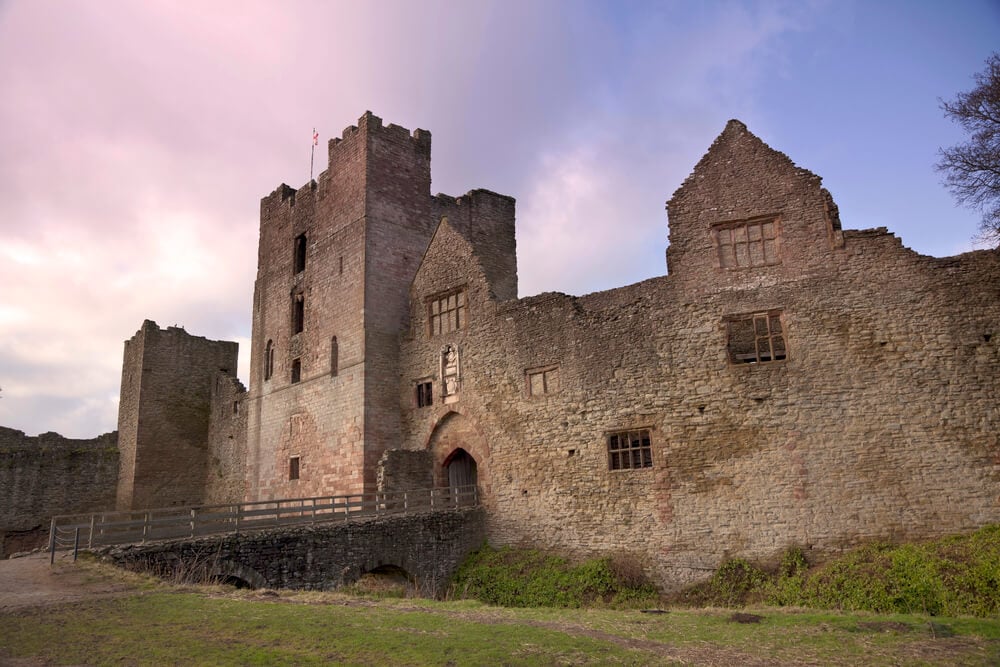
Ludlow Castle in Shropshire was the base of the Council of Wales and the Marches, which governed Wales for centuries. In 1502 Prince Arthur, the elder brother of the future Henry VIII, died there at 15, months after marrying Catherine of Aragon.
His death eventually led to Henry’s marriage to Catherine and the English Reformation. The Council was abolished in 1689, and the castle fell into ruin during the 18th century.
Today it hosts festivals and events in its roofless courtyards, including a long-running summer arts festival.
Ruin as the Last Tenant
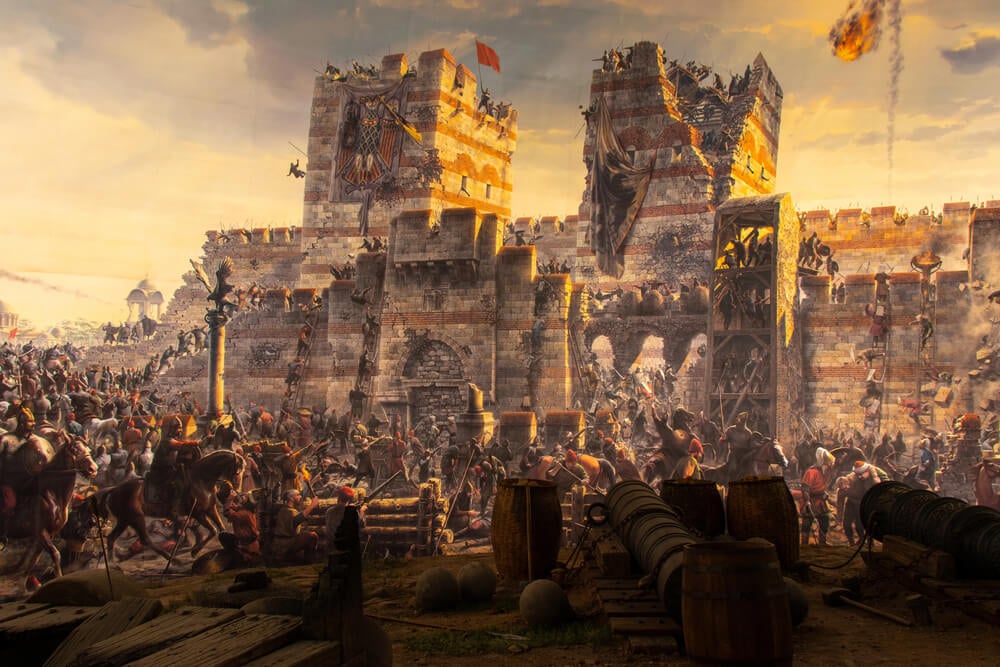
Most of these castles were not destroyed by a single catastrophe. They were slighted by victors, stripped by neighbors, burned by accident or simply left behind when the family moved somewhere more comfortable.
Each ruin marks a decision that the building was no longer worth maintaining. The walls tell the story of that choice.
Ruins also do something restored castles cannot. They let visitors see the bones of the building, the thickness of the walls and the ways people once lived inside them.
A roofless castle open to the sky feels more honest than one rebuilt to look new. Decay has its own kind of authority.
More from Go2Tutors!

- The Romanov Crown Jewels and Their Tragic Fate
- 13 Historical Mysteries That Science Still Can’t Solve
- Famous Hoaxes That Fooled the World for Years
- 15 Child Stars with Tragic Adult Lives
- 16 Famous Jewelry Pieces in History
Like Go2Tutors’s content? Follow us on MSN.



