26 Elvis Collectibles Fans Still Buy
Nearly fifty years after his death, Elvis Presley remains one of the few entertainers whose merchandise has never gone out of production. The licensed goods began in 1956, when Colonel Tom Parker signed a deal to put the singer’s face on everything from lipstick to record players, and fans have been buying and reselling the results ever since.
The market today runs from four-dollar flea market finds to six-figure auction lots. What follows is a look at the pieces collectors keep chasing, from Sun Records 78s to postage stamps, and what tends to separate a bargain from a bad buy.
Memphis Recording Service Acetate From 1953
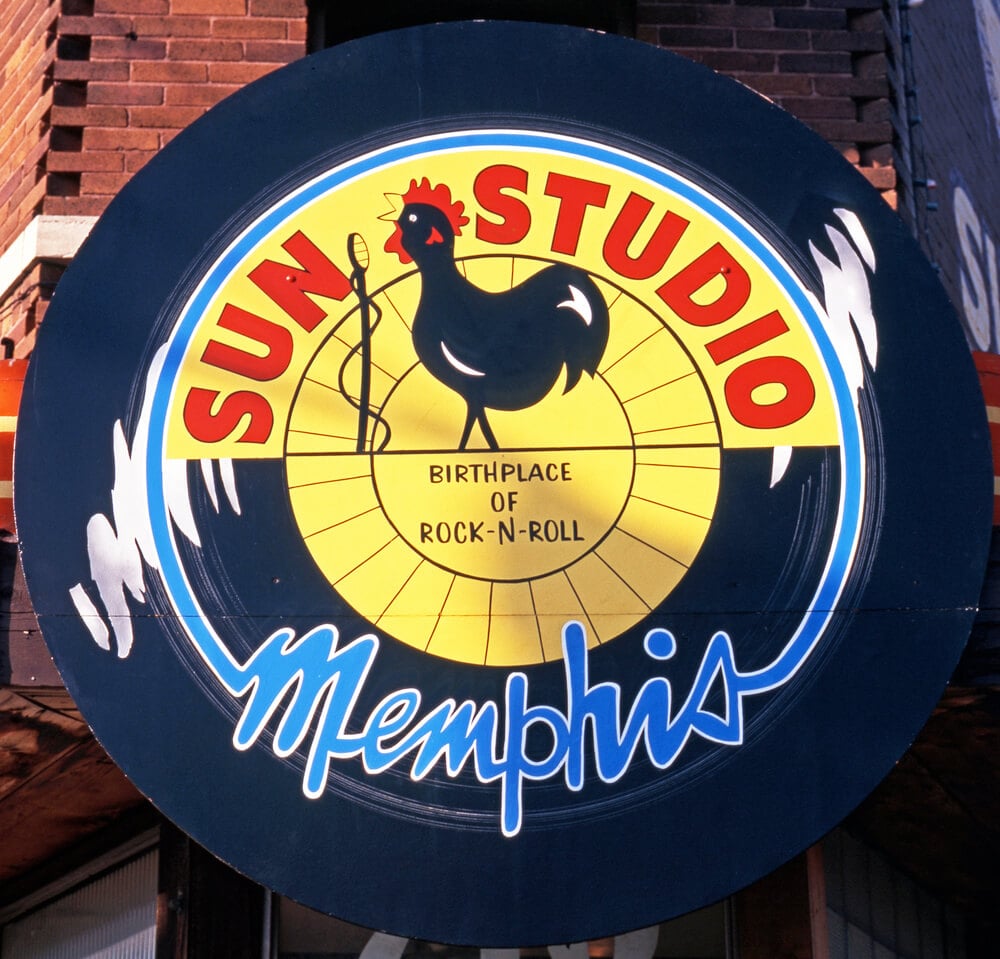
Before Sun Records, before RCA, an eighteen-year-old Elvis walked into Memphis Recording Service in the summer of 1953 and paid about 4 dollars to cut a two-song acetate as a personal keepsake. That single disc surfaced decades later and sold for 300,000 dollars at the Graceland auction held on January 8, 2015, a world record for a record at the time.
No fan will find another one, but the sale set the ceiling for the entire Elvis market and pulled up prices on everything below it. Acetates are fragile lacquer over aluminum, so any surviving example of this kind is judged on groove wear, cracking and documented chain of ownership.
Sun Records 209, That’s All Right
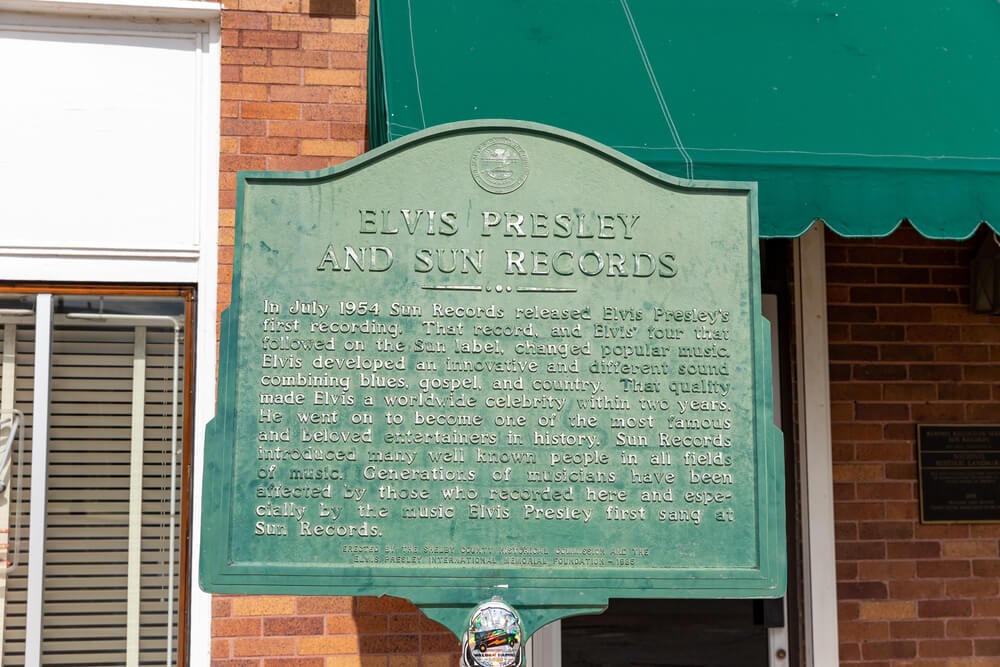
Elvis’s first commercial release came out on Sun 209 in July 1954, pairing That’s All Right with Blue Moon of Kentucky. Original Sun pressings carry the yellow label with the sunburst and rooster design, and they exist as both 78 rpm and 45 rpm discs.
A signed copy inscribed to Ed Leek brought 32,500 dollars at the 2015 Graceland auction, but unsigned originals typically trade for several thousand dollars depending on label wear, surface noise and whether the 45 retains its clean push-mark around the label. Reissues on the same yellow label have circulated since the 1970s, so collectors learn the matrix numbers in the dead wax before paying Sun money.
Later Sun Singles Through Mystery Train
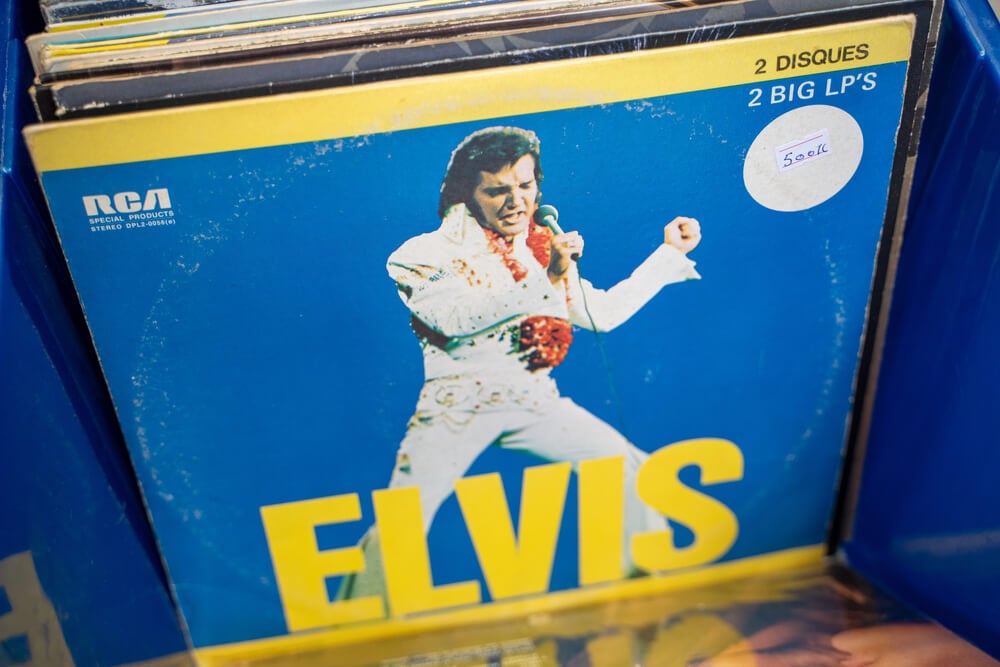
Sun released four more Elvis singles after 209, ending with Mystery Train on Sun 223 in August 1955, just months before RCA bought his contract. Each of the five Sun singles is a documented pressing with known label variations, and each generally sells for less than 209 while still reaching four figures for clean originals.
The 45 rpm versions tend to be scarcer than the 78s because teenagers played them to death on portable players. Values swing hard on condition, with a warped or heavily scratched disc worth a small fraction of a bright, quiet copy with crisp label printing.
RCA Victor LPM-1254, the Debut Album
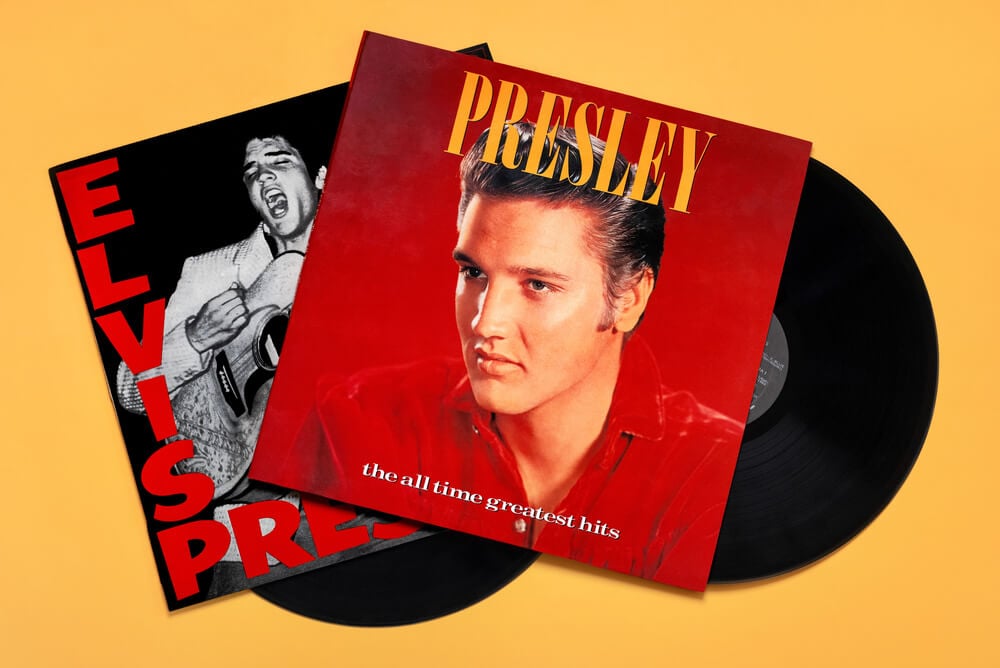
RCA issued Elvis Presley, catalog number LPM-1254, in March 1956, and the cover photo of a wide-mouthed Elvis mid-strum became one of the most imitated album images in rock history. First pressings carry the words “Long Play” at the bottom of the black label, a detail that later pressings dropped.
Clean first pressings often sell for several hundred dollars and have passed 1,000 dollars when both the sleeve and the vinyl are sharp. Ring wear, seam splits and a tired, gray-looking disc all knock the price down fast, and the many later label variants are worth far less than the 1956 original.
SPD-23 Triple Extended Play Set
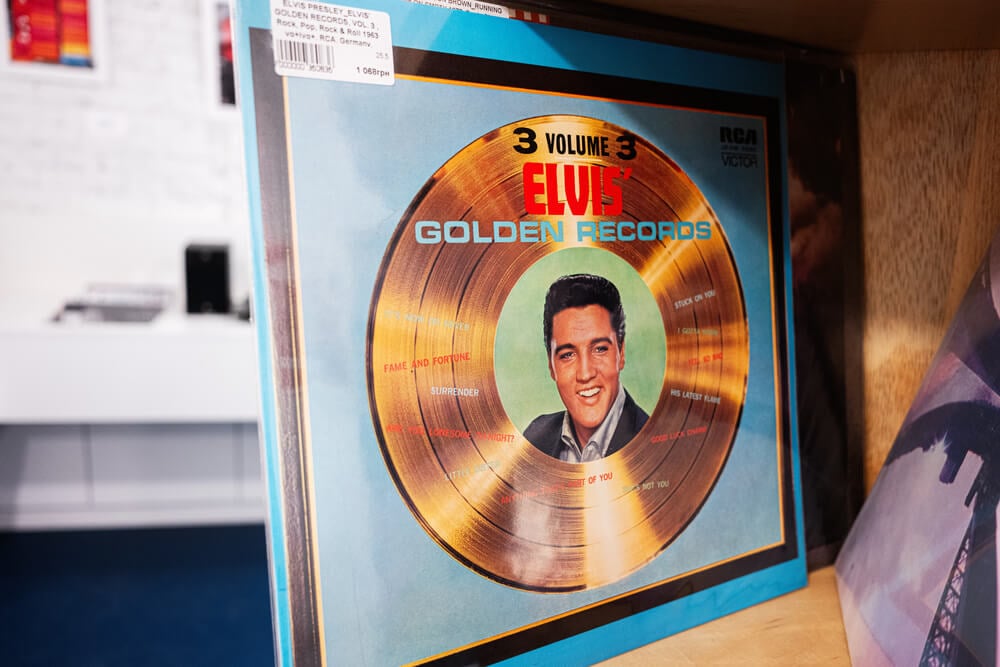
In late 1956 RCA produced SPD-23, a three-disc extended play set that was not sold in stores but packaged with the Elvis-branded RCA Victor record players of the same year. Because it rode along with a hardware purchase rather than being sold on its own, far fewer copies survive than ordinary RCA EPs.
Complete sets with all three discs and the original fold-out sleeve have sold for several thousand dollars at auction. Collectors check that every disc matches the sleeve, since partial sets padded out with ordinary EPs appear often, and the gatefold cover is prone to splitting at the folds.
Compact 33 Singles From 1961 and 1962
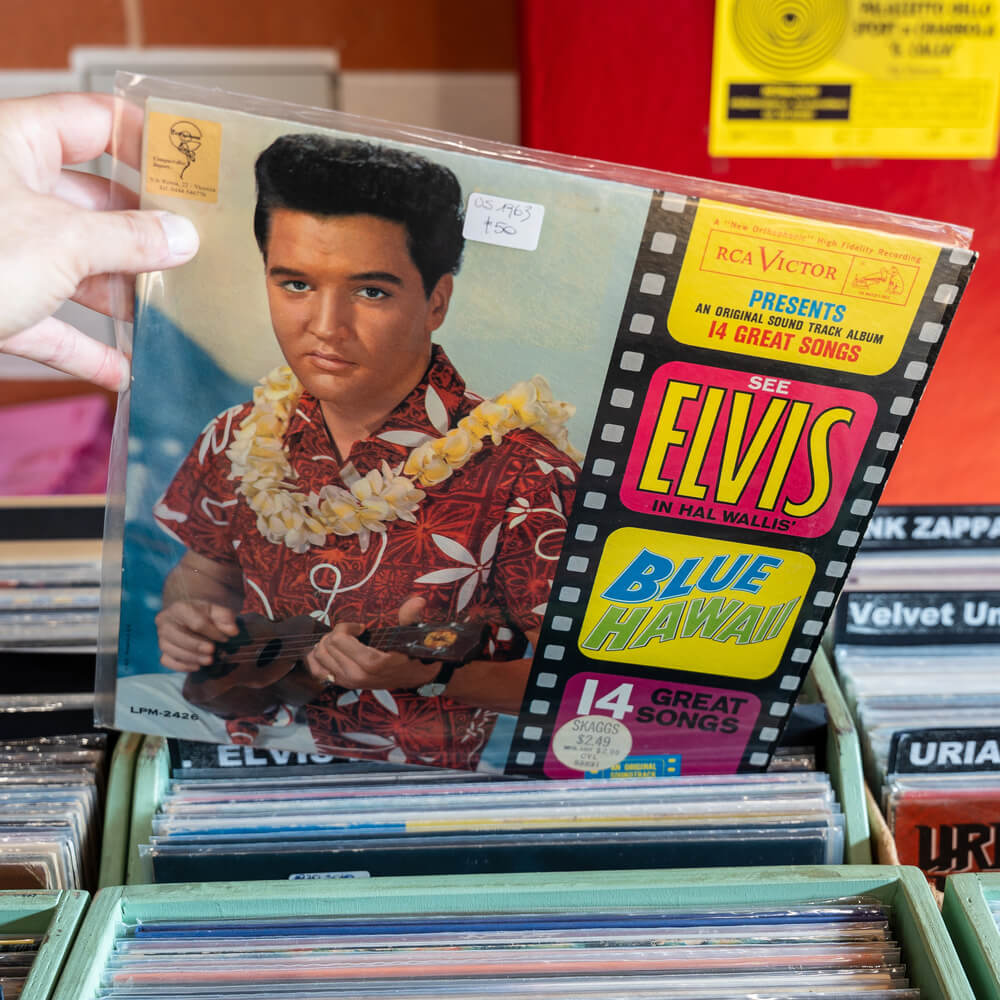
RCA briefly experimented with 7-inch singles that spun at 33 and a third rpm, and Elvis titles in the Compact 33 series are among the scarcest of his American singles. Good Luck Charm on RCA 37-7992 and His Latest Flame on 37-7908 are two of the documented releases, and the format vanished within about a year because consumers kept buying 45s.
Copies with the original picture sleeve have sold for well into four figures, while a disc alone fetches far less. Label condition matters more than usual here, because the 37-prefix number is the main thing that separates these from ordinary 45s at a glance.
Speedway LSP-3989 in Stereo
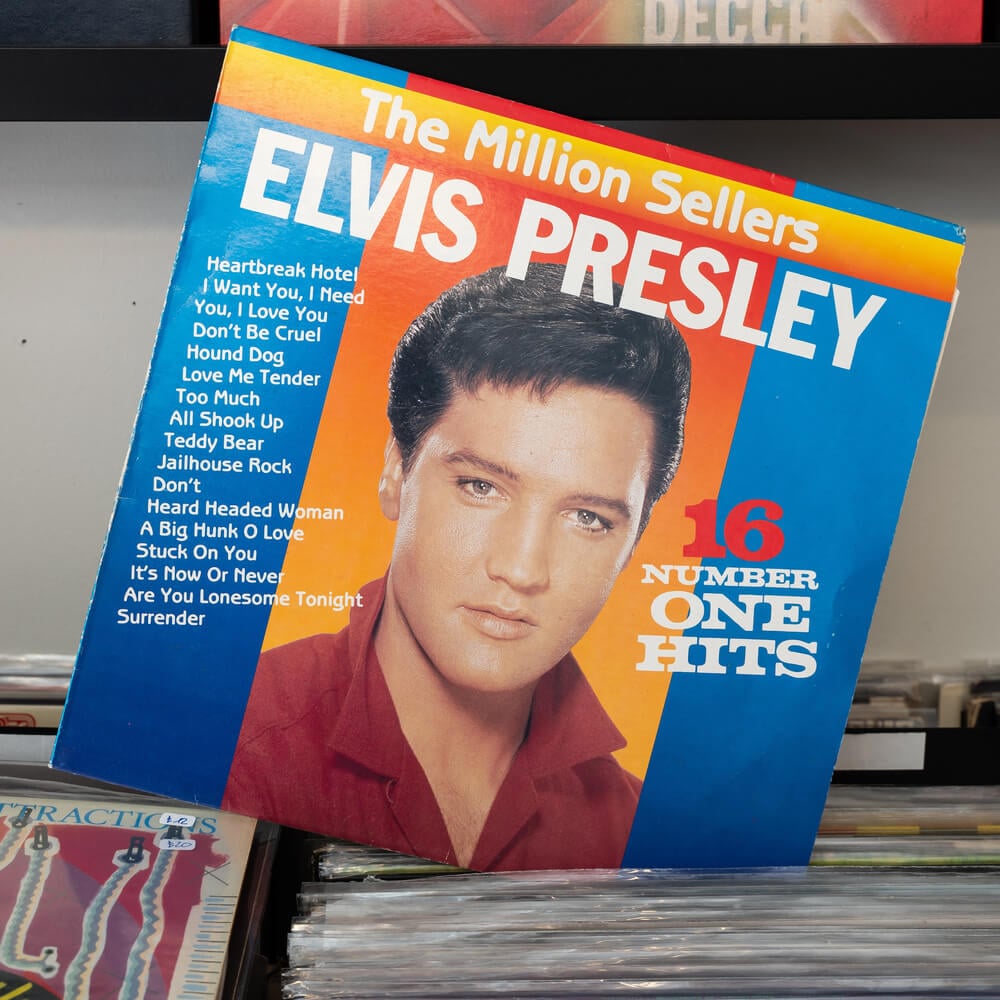
Soundtrack sales for the 1968 racing film Speedway were weak on release, and the original stereo pressing on RCA LSP-3989 is now regarded as one of the hardest Elvis albums to find in its first issue. The mono LPM-3989 is also scarce, since RCA was winding down mono production that year.
Sealed or near-sealed stereo copies have sold for well over 1,000 dollars, and even played copies with intact covers hold value. Collectors look for the bonus color photo that originally came tucked inside the sleeve, because a copy missing it loses a meaningful share of its price.
Aloha From Hawaii Quadradisc Pressing
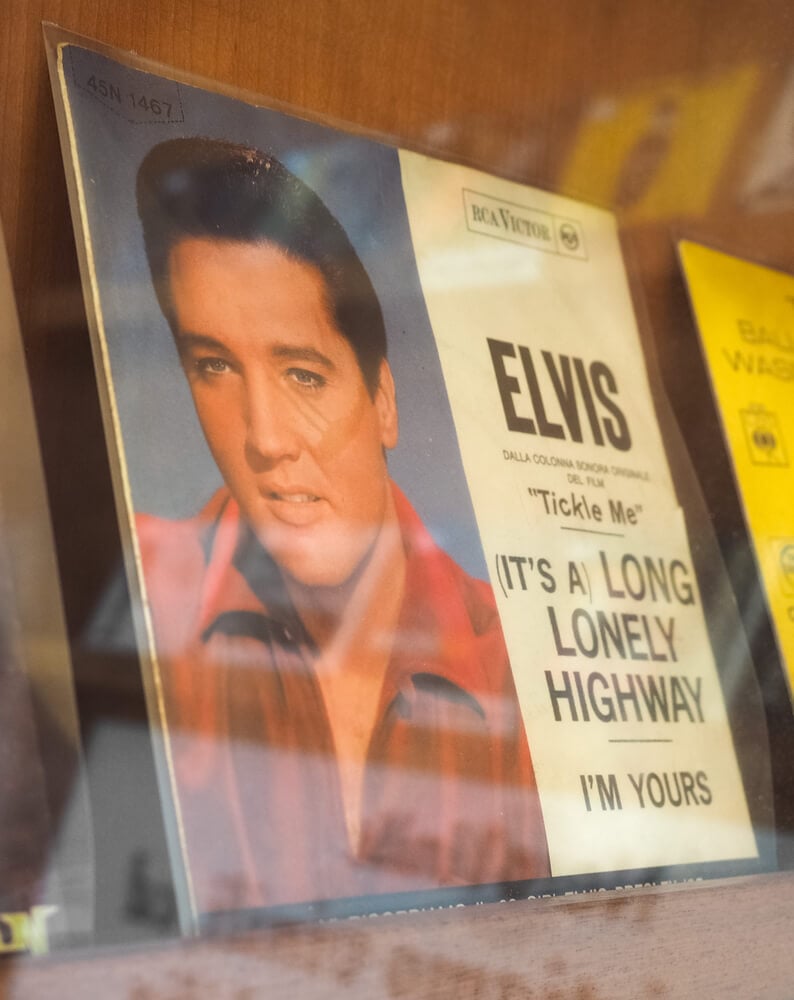
A double album came out of the January 1973 satellite concert, Aloha From Hawaii via Satellite, released on RCA VPSX-6089. Early copies were pressed in the short-lived Quadradisc four-channel format, and those discrete quad pressings are the ones collectors chase, since later issues went back to ordinary stereo.
Clean quad copies with the gatefold and the original inner sleeves often sell for 100 to 300 dollars, far more than the common reissues. The grooves on quad records were cut with a delicate high-frequency carrier signal, so groove wear from a heavy 1970s tonearm is a real problem and sellers typically describe play-grading honestly.
Topps Bubble Gum Cards From 1956
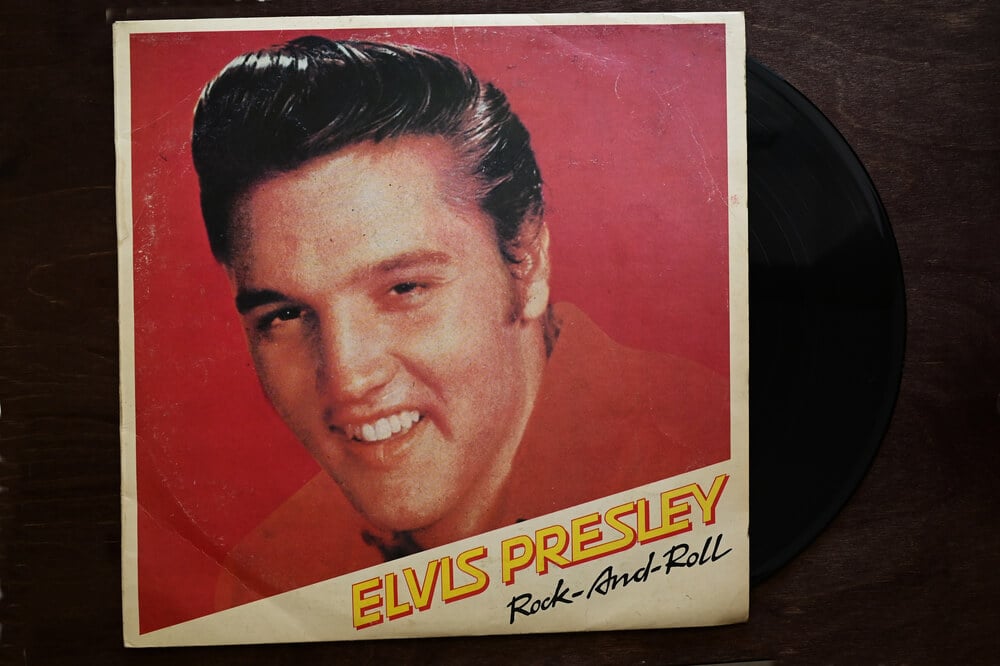
Topps produced a 66-card Elvis Presley set in 1956 under license, with black-and-white photos on the front and short text on the back. Complete sets in excellent condition have sold for a few thousand dollars, and single high-grade cards from the series regularly trade for 20 to 100 dollars apiece.
The gum stains that plague many 1950s card sets are common here, and off-center cuts were routine at the Topps plant that year. Collectors pay a steep premium for graded examples, because a card that looks sharp in a photo often shows soft corners under a loupe.
Elvis Presley Enterprises Charm Bracelet
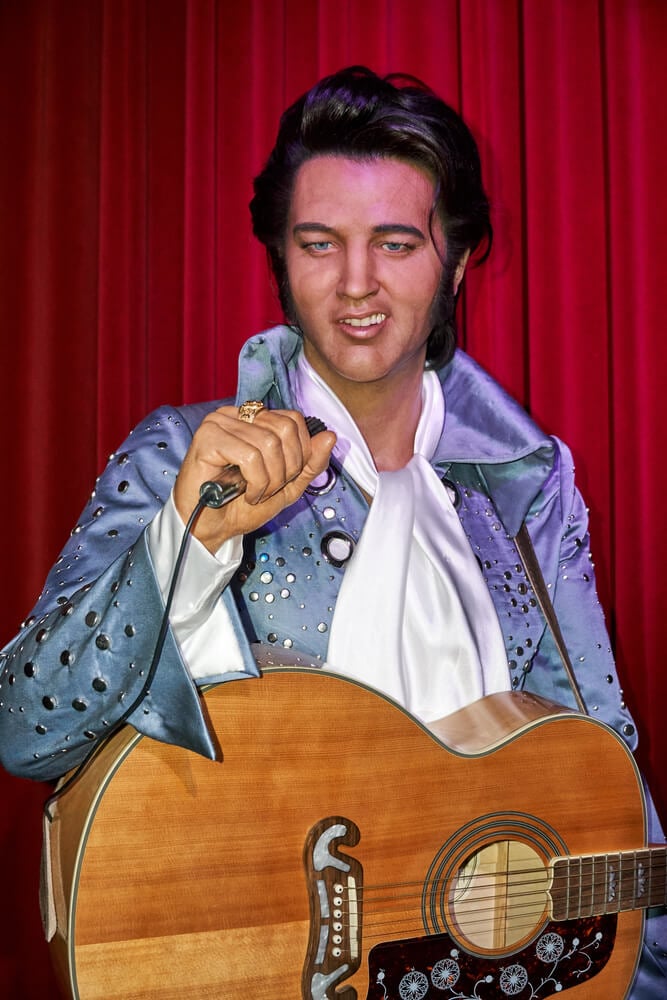
Among the earliest licensed goods from 1956 was a gold-toned charm bracelet carrying a framed photo, a guitar, a heart and a hound dog. Many were sold on a printed card that read Elvis Presley Enterprises, and an example still attached to that card is worth several times a loose bracelet.
Loose bracelets often sell for 40 to 90 dollars, while carded ones have passed 300 dollars. Plating wear on the charms and a missing or replaced photo frame hold prices down, and reproductions made for the anniversary trade in the 1980s and 1990s lack the crisp 1956 copyright stamping.
Licensed Lipstick in Song-Title Shades
A line of lipsticks licensed by Elvis Presley Enterprises arrived in 1956 with shades named after his hits, and the surviving tubes are some of the most oddly specific pieces of 1950s pop merchandise. The tubes originally came mounted on a display card showing Elvis, and a tube still on its card is the version collectors want.
Loose tubes have sold for about 100 to 200 dollars, with carded examples often reaching several hundred. Dried or missing product does not hurt value much, but a scuffed label or a card with pin marks and tape residue does, and the display cards tear easily.
RCA Victor Autograph Portable Record Player
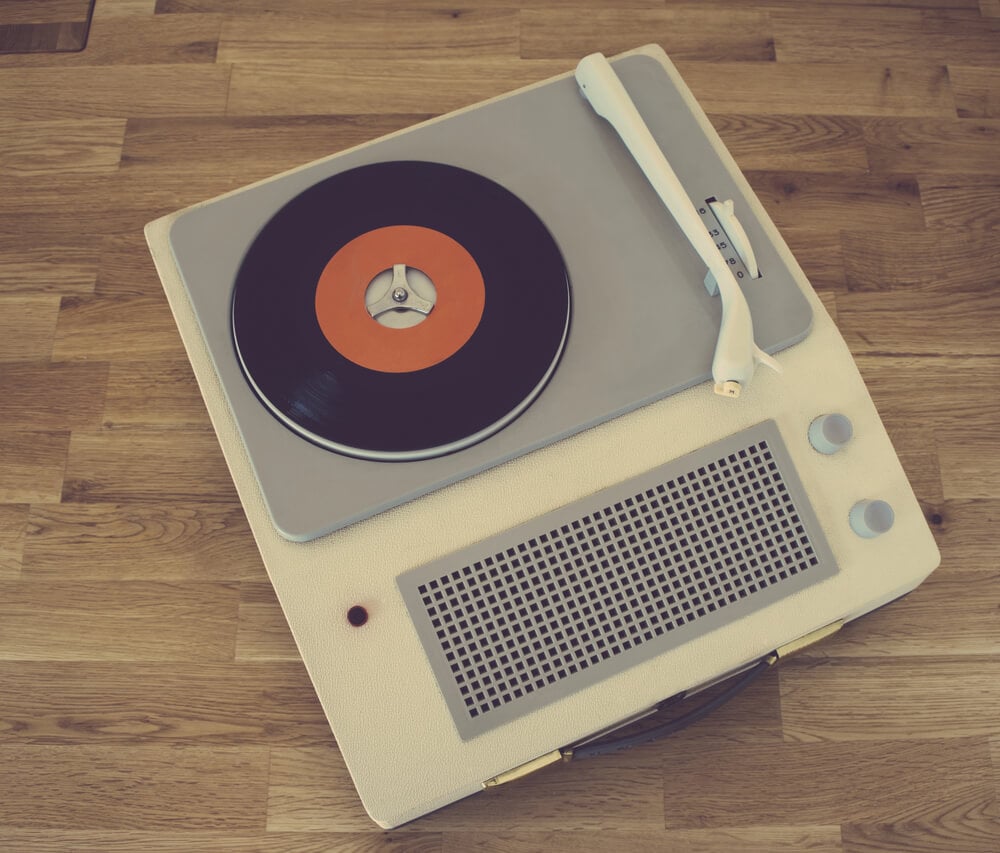
RCA Victor sold a portable 45 rpm record player in 1956 that carried a reproduction of Elvis’s signature on the lid, and the 7EP45 model was one of the players bundled with the SPD-23 record set. It has become one of the most expensive pieces of licensed 1956 merchandise, with examples selling for several thousand dollars when the case, platter and tone arm are complete.
Working order matters less than appearance, since many buyers never plug them in, but a cracked case or a faded signature decal pulls the price down considerably. Players that still include the original records are the ones that set auction highs.
Emenee Six-String Toy Guitar
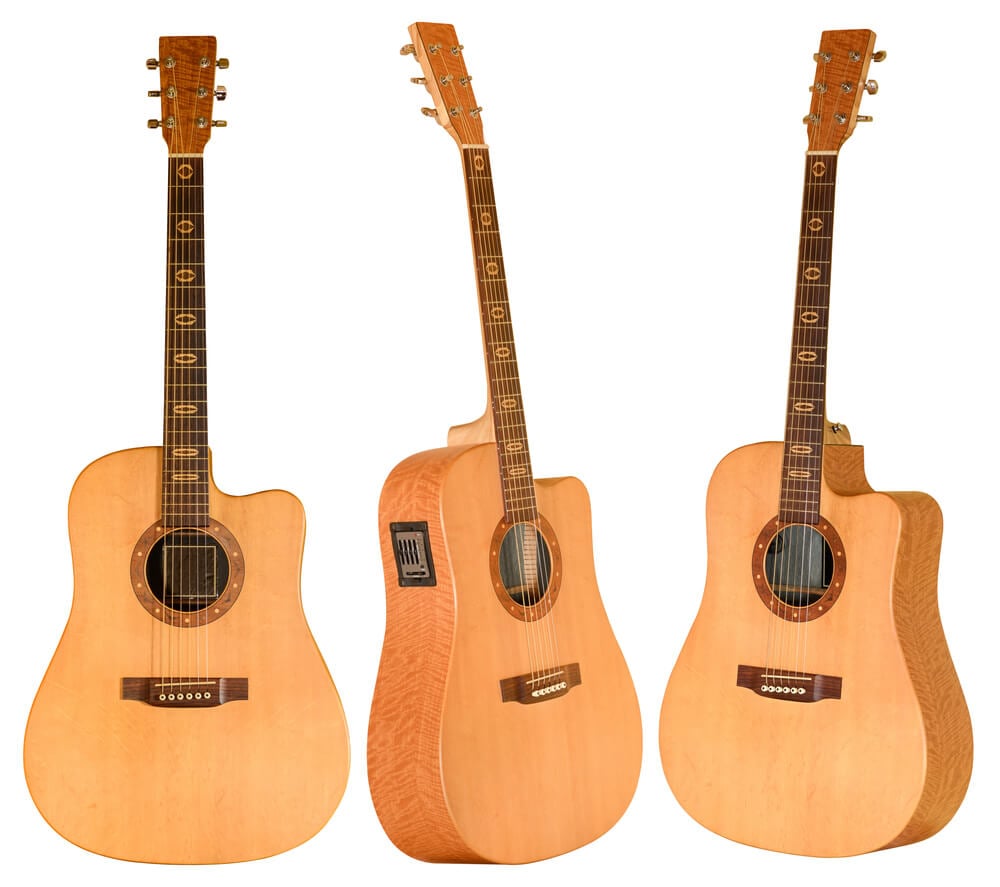
Emenee produced a six-string Elvis Presley guitar in 1956, a cardboard and plastic instrument aimed at kids who wanted to copy what they saw on television. It came with a song book and an instruction sheet, and the box art featured Elvis in full performance pose.
Boxed examples with the paperwork have sold for well over 1,000 dollars, while loose guitars with scuffs and missing strings usually bring a few hundred. The cardboard bodies dent and the printed finish rubs off at the edges, so a guitar with its original box and crisp graphics is far scarcer than the number produced would suggest.
Elvis Presley Enterprises Record Case
A fiberboard 45 rpm carrying case printed with Elvis images was one of the 1956 licensed products aimed squarely at the kids buying his singles. The cases came in several colors and were meant to be dragged to friends’ houses, which is exactly why clean survivors are scarce.
Examples with sharp graphics and a working latch have sold for 300 to 600 dollars at auction, with faded or torn cases bringing much less. Collectors also pay extra when the case still holds period 45s, though the records themselves are usually common titles that add only modestly to the total.
Licensed Scarves From 1956

Printed scarves licensed by Elvis Presley Enterprises appeared in 1956, typically in sheer fabric with his portrait and song titles in a repeating pattern. They were cheap at the time and worn constantly, so examples without pulls, stains or fading are uncommon.
Clean scarves often sell for 150 to 400 dollars, and an example with its original tag can go higher. Collectors distinguish these from the plain concert scarves of the 1970s by the printed design and the 1956 copyright line, and they watch for modern reproduction scarves sold at Graceland gift shops, which look similar in photographs but use different fabric and lack the period markings.
King Creole One-Sheet Poster
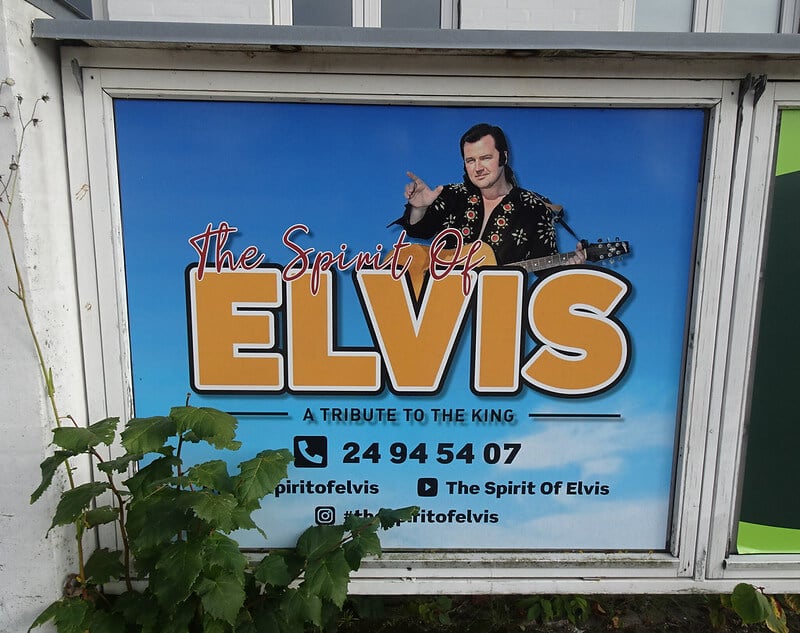
King Creole, released by Paramount in 1958 and directed by Michael Curtiz, is widely regarded as the strongest of Elvis’s films, and its original one-sheet poster is a steady seller. Original 27 by 41 inch one-sheets typically bring several hundred to a couple of thousand dollars depending on fold wear, pin marks and whether the colors have faded.
The poster uses a dramatic painted image of Elvis against a New Orleans backdrop, and clean examples with bright reds sell best. Reissue posters and later reprints exist, so buyers check for the 1958 National Screen Service number along the bottom edge.
Jailhouse Rock One-Sheet and Insert
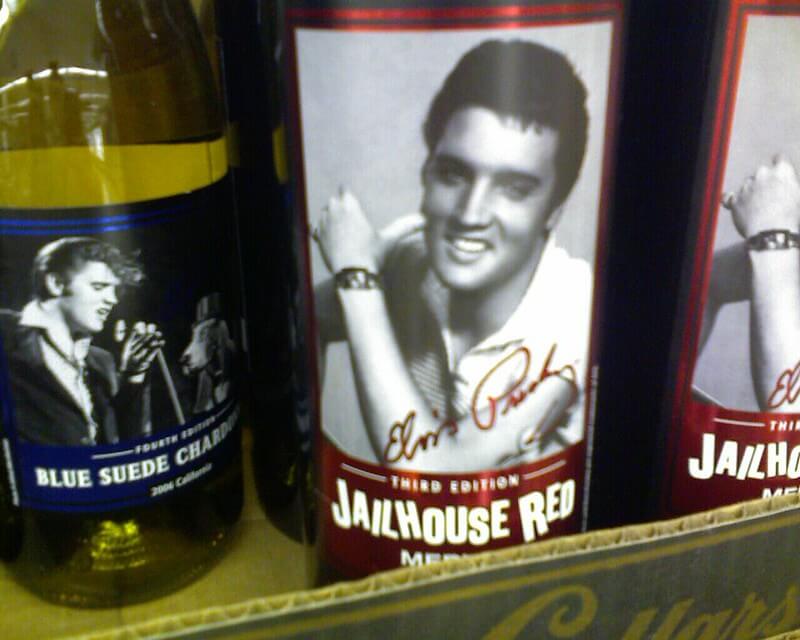
Jailhouse Rock, released by MGM in 1957, produced some of the most sought-after Elvis movie paper, including the one-sheet and the narrower 14 by 36 inch insert with its painted artwork. One-sheets in good condition have sold for several thousand dollars at Heritage Auctions, and inserts and window cards also perform strongly.
Because the film is a favorite and the image of Elvis in his striped prison outfit is so recognizable, reproductions are everywhere, and a legitimate original needs the correct paper stock and printing details. Linen backing can stabilize a damaged poster but it also signals restoration, which some collectors discount.
NBC Special Soundtrack LPM-4088
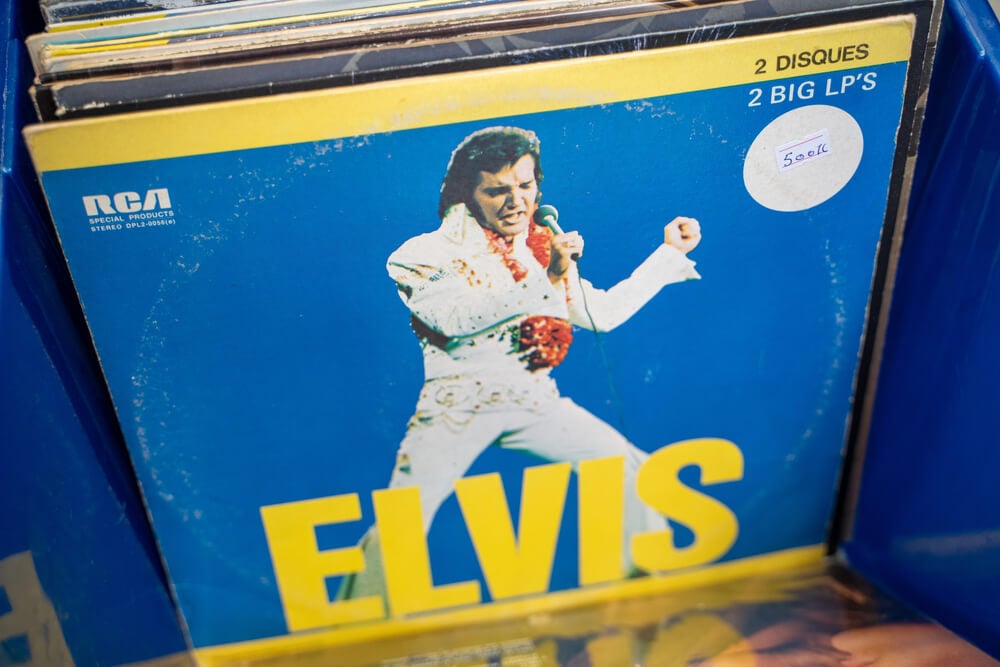
Sponsored by Singer sewing machines and aired on NBC in December 1968, the television special that revived Elvis’s career led RCA to release the soundtrack as LPM-4088, titled simply Elvis. First pressings carry the orange RCA label of the period and a cover photo of Elvis in the black leather suit from the show.
Clean originals typically sell for 30 to 80 dollars, with sealed copies and promotional pressings bringing more. The album is far from rare, but the leather-suit image is one of the most reproduced in Elvis history, which keeps demand steady even for ordinary copies, provided the cover is free of ring wear and writing.
International Hotel Souvenir Menus From 1969
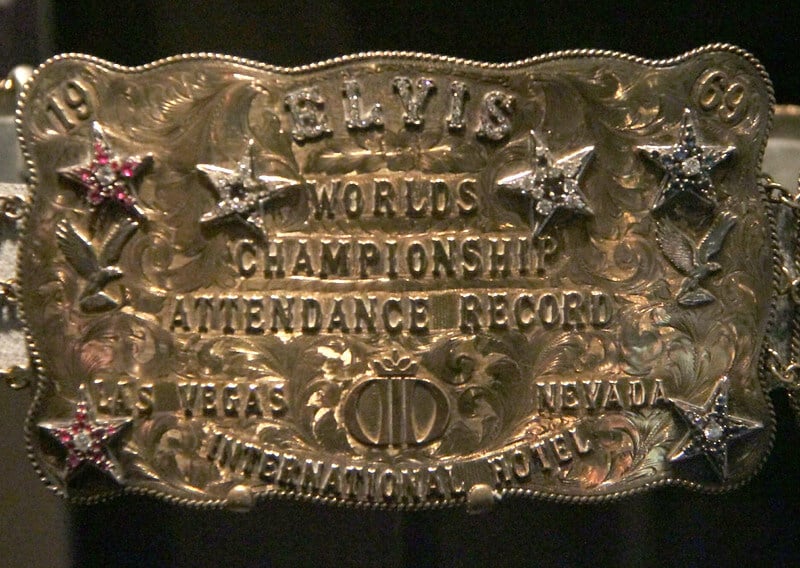
When Elvis returned to live performance at the International Hotel in Las Vegas in the summer of 1969, the showroom handed out oversized souvenir menus printed with his photo. Fans carried them home as programs, and they turn up today in a wide range of conditions.
Menus from the 1969 engagement often sell for 100 to 300 dollars, with signed examples bringing several times that. Later Las Vegas Hilton menus from the 1970s are more common and cheaper.
Folds, food stains and the inevitable coffee rings from a showroom table all lower the price, and a flat, unmarked menu is unusual.
Concert Scarves Thrown From the Stage
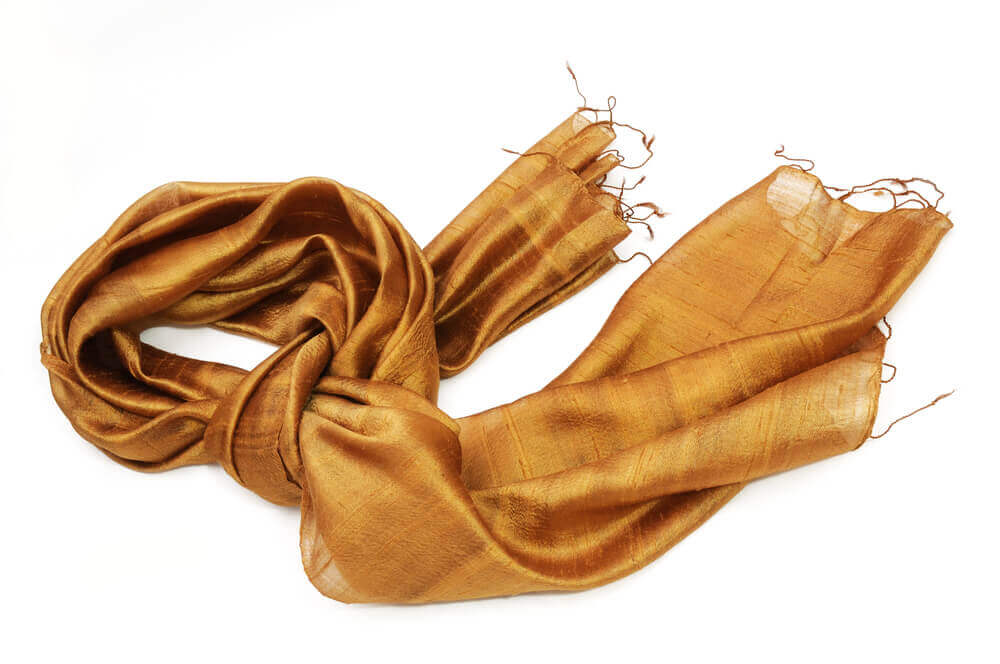
During his 1970s tours Elvis handed and tossed scarves to audience members throughout the show, a ritual that produced thousands of lightweight polyester scarves now scattered through fan collections. The scarves themselves were plain and inexpensive, so the value rests almost entirely on provenance.
A scarf with a dated ticket stub, a photograph of the moment or a signed letter from the recipient has sold for several hundred dollars and sometimes more, while a scarf alone is nearly impossible to distinguish from stock that never left the box. Buyers weigh the story as carefully as the fabric.
TCB Lightning Bolt Pendants

Around 1970 Elvis adopted the phrase Taking Care of Business as a personal motto and had pendants made with the letters TCB above a lightning bolt, which he gave only to members of his inner circle. The original pendants were custom jewelry, and the few that reach auction with documented ownership have sold for tens of thousands of dollars.
Graceland sells licensed TCB necklaces that cost far less and are what most fans actually wear. For an original, authentication is everything, since the design has been copied in every metal imaginable, and a seller’s documented link to the Memphis Mafia does most of the work.
Unused Tickets From the Canceled 1977 Tour
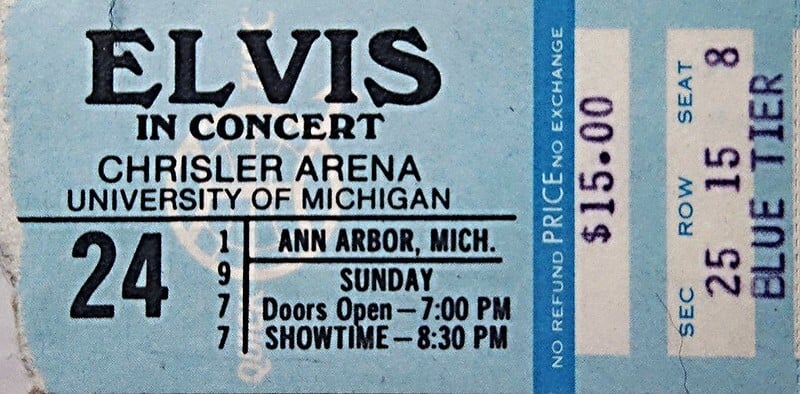
Elvis died on August 16, 1977, the day before a tour was scheduled to open in Portland, Maine, and thousands of fans holding tickets never got to use them. Many refused the refund and kept the tickets, which is why unused stubs from Portland and the other canceled dates still surface regularly.
Tickets in clean condition often sell for 100 to 300 dollars, and graded or encapsulated examples bring more. The Maine Historical Society holds one in its collection.
Creases, pin marks and faded ink reduce value, and tickets from the August 17 Portland show are the ones most often mentioned by collectors.
Postal Service Stamp From 1993
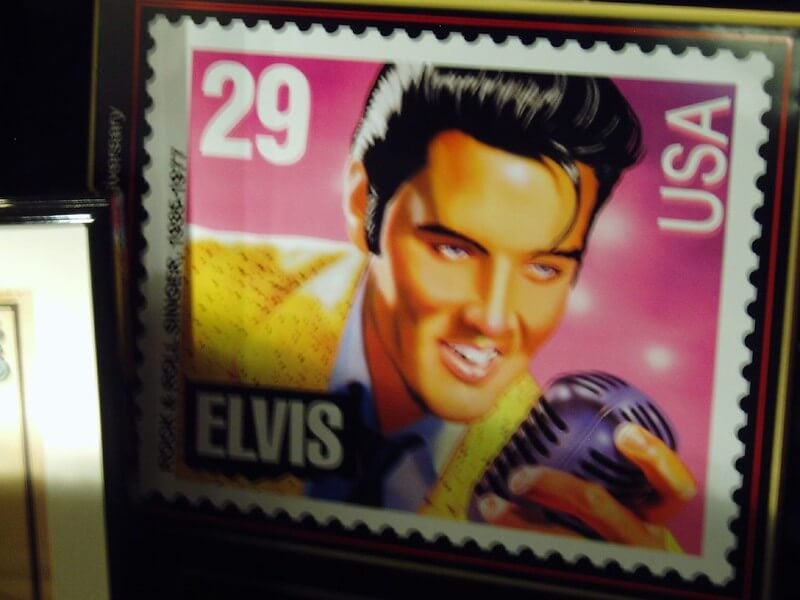
The US Postal Service issued a 29-cent Elvis stamp on January 8, 1993, after a public vote in which Americans chose a young 1950s Elvis over a 1970s jumpsuit version. The stamp was printed in enormous quantities and became the best-selling commemorative in Postal Service history, so single mint stamps are worth little more than face value.
Collectors instead buy full panes, first day covers postmarked in Memphis and the sealed Postal Service souvenir packages, which often sell for 10 to 40 dollars. Condition hardly matters for the stamp itself, but a cover with a crisp, centered Memphis cancellation is worth more than a smudged one.
Elvis Monthly From the British Fan Club
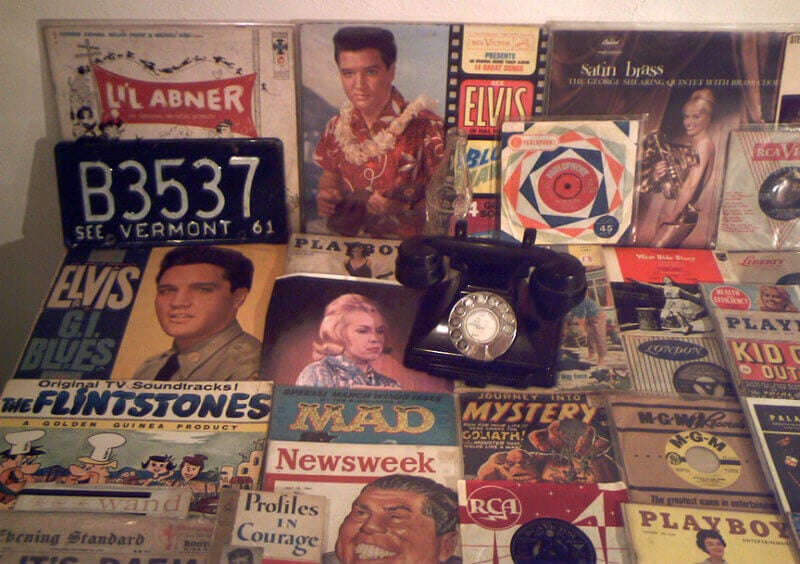
Published in Britain from 1960 under editor Albert Hand, Elvis Monthly ran for decades as the official voice of British fandom. Early issues from the 1960s are the ones collectors pursue, and runs of twenty or thirty consecutive issues have sold at auction for a few hundred dollars.
Single early issues typically bring 10 to 30 dollars each. The magazines were printed on cheap paper and read constantly, so spine wear, loose pages and cover creases are the norm, and a flat, unread copy from the first years of publication is scarce enough to earn a premium.
Authenticated Signatures
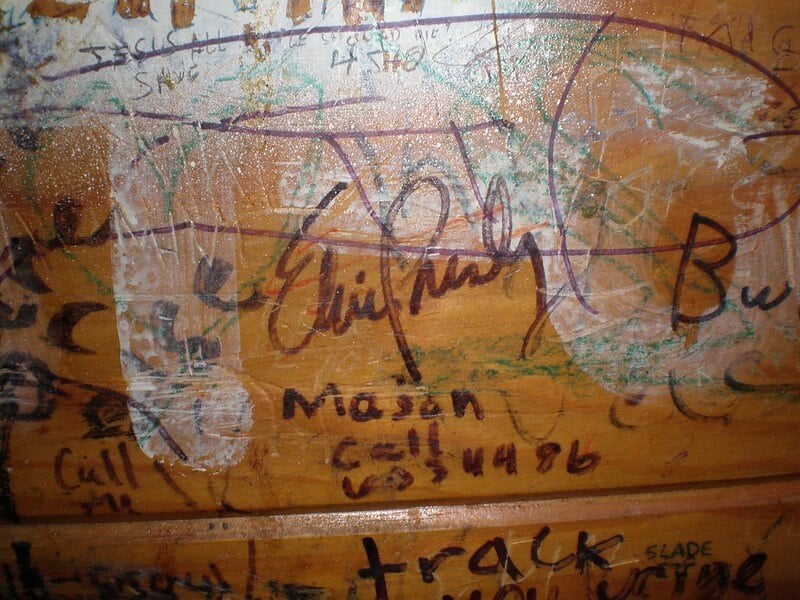
Elvis signed constantly throughout his career, on records, photographs, menus and scraps of paper, and his signature remains one of the most forged in entertainment. Genuine signed photographs have sold for 1,000 to 3,000 dollars, with signed album covers and documents often higher.
The complication is that his staff and fan club secretaries also signed items on his behalf, and those secretarial signatures look convincing to the untrained eye. Collectors rely on third-party authentication from established services, and a signature without that paperwork sells for a fraction of a certified one regardless of how good it looks.
Jumpsuits as Museum Pieces
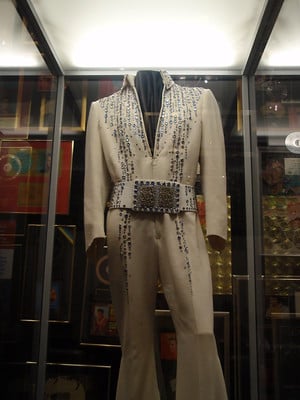
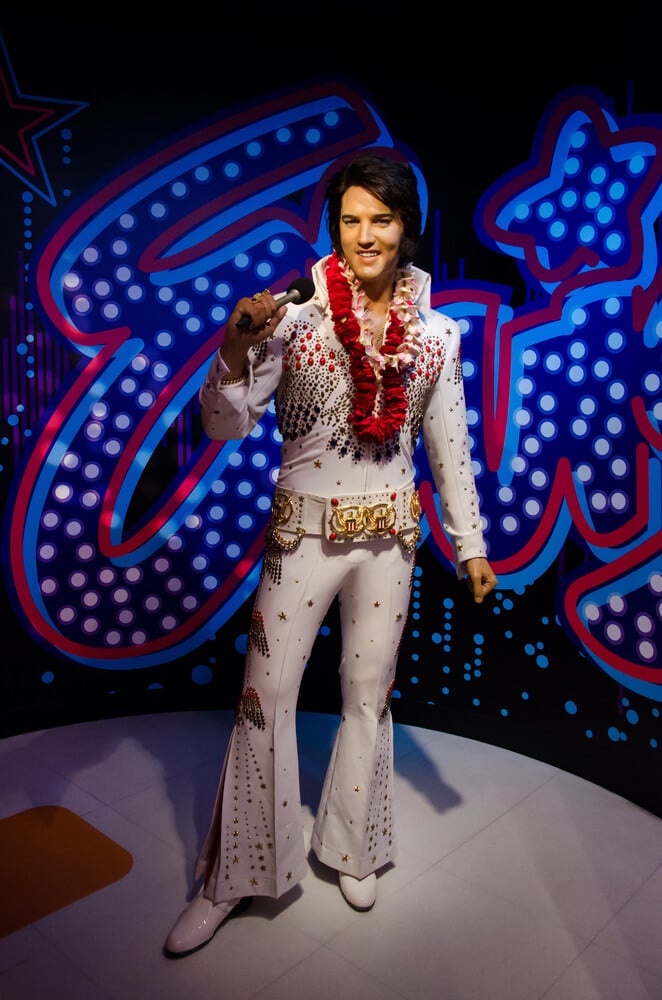
The stage jumpsuits designed by Bill Belew for the 1970s tours are the single most recognizable Elvis artifacts, and the originals belong to the museum tier of the market rather than ordinary collecting. The few that have been sold at auction have brought six-figure prices, and Graceland keeps most of the surviving suits for display.
What fans actually buy are the licensed replicas, the photographs documenting individual suits and the occasional belt or cape component that surfaces with provenance. Any jumpsuit offered without an unbroken ownership trail from Elvis or his costume team is treated as a replica, however convincing the rhinestone work.
Memphis Keeps Selling the Same Dream
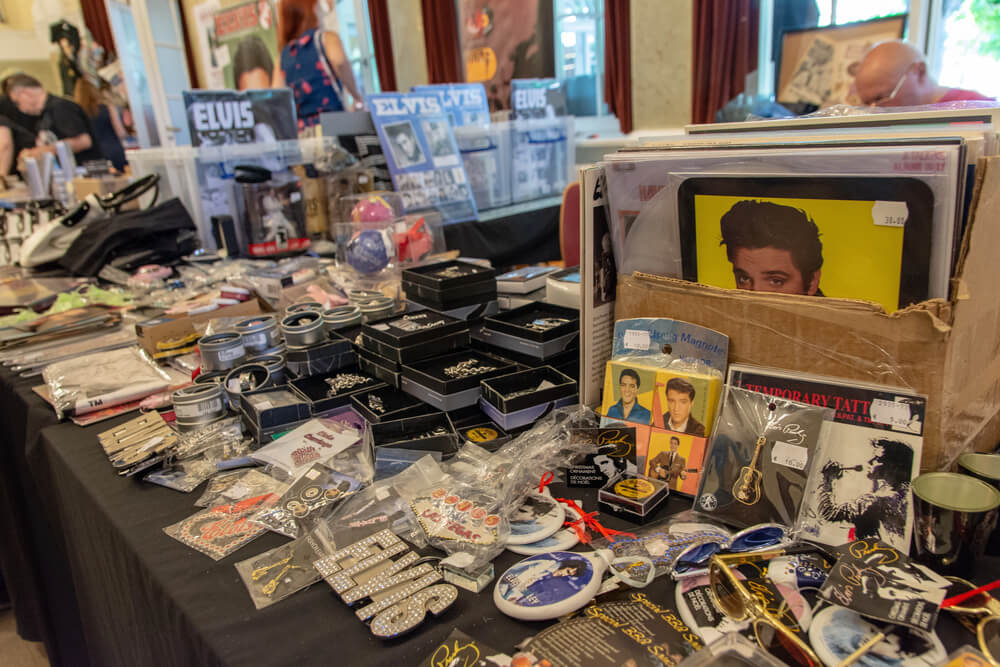
Every item on this list traces back to a single decision made in 1956, when Colonel Tom Parker decided that a singer could be a brand. The record players, the lipstick and the scarves were throwaway products meant to catch a teenager’s allowance, and their survival seventy years later says more about the fans than the merchandise.
People kept the charm bracelet because they could not keep Elvis. That is also why provenance carries so much weight in this market.
A scarf is just a scarf until someone proves it flew off a stage in 1975, and a signature is just ink until an expert vouches for it. Graceland, the auction houses and the fan clubs now spend much of their effort certifying what was once sold for pocket change.
The dream still moves product, but the paperwork decides the price.
More from Go2Tutors!

- The Romanov Crown Jewels and Their Tragic Fate
- 13 Historical Mysteries That Science Still Can’t Solve
- Famous Hoaxes That Fooled the World for Years
- 15 Child Stars with Tragic Adult Lives
- 16 Famous Jewelry Pieces in History
Like Go2Tutors’s content? Follow us on MSN.