26 Memorials Built to Remember American Tragedies
A memorial is rarely built quickly, and it is almost never built to look like the disaster it commemorates. Instead, most take years of debate over design, land, and money before a single stone is placed, and the finished result is usually quiet, deliberately so.
The sites below span more than a century of American history, from a shipwreck memorialized in bronze to a garden built by volunteers in four days. Each one still stands, and each one is open to the public today.
National September 11 Memorial and Museum
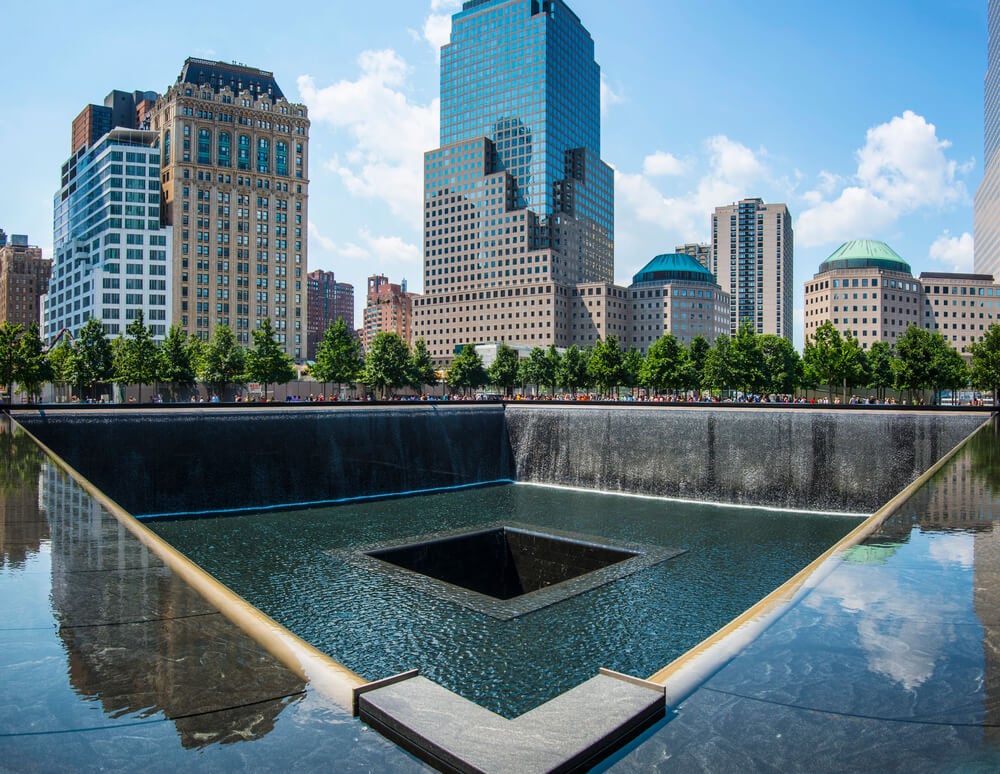
Two reflecting pools now sit in the footprints of the World Trade Center towers in Lower Manhattan, their edges engraved with the names of the 2,977 people killed in the 2001 attacks and the six killed in the 1993 World Trade Center bombing. Water falls continuously into each pool from all four sides before disappearing into a smaller void at the center, a design intended to represent absence that cannot be filled.
The Pentagon Memorial
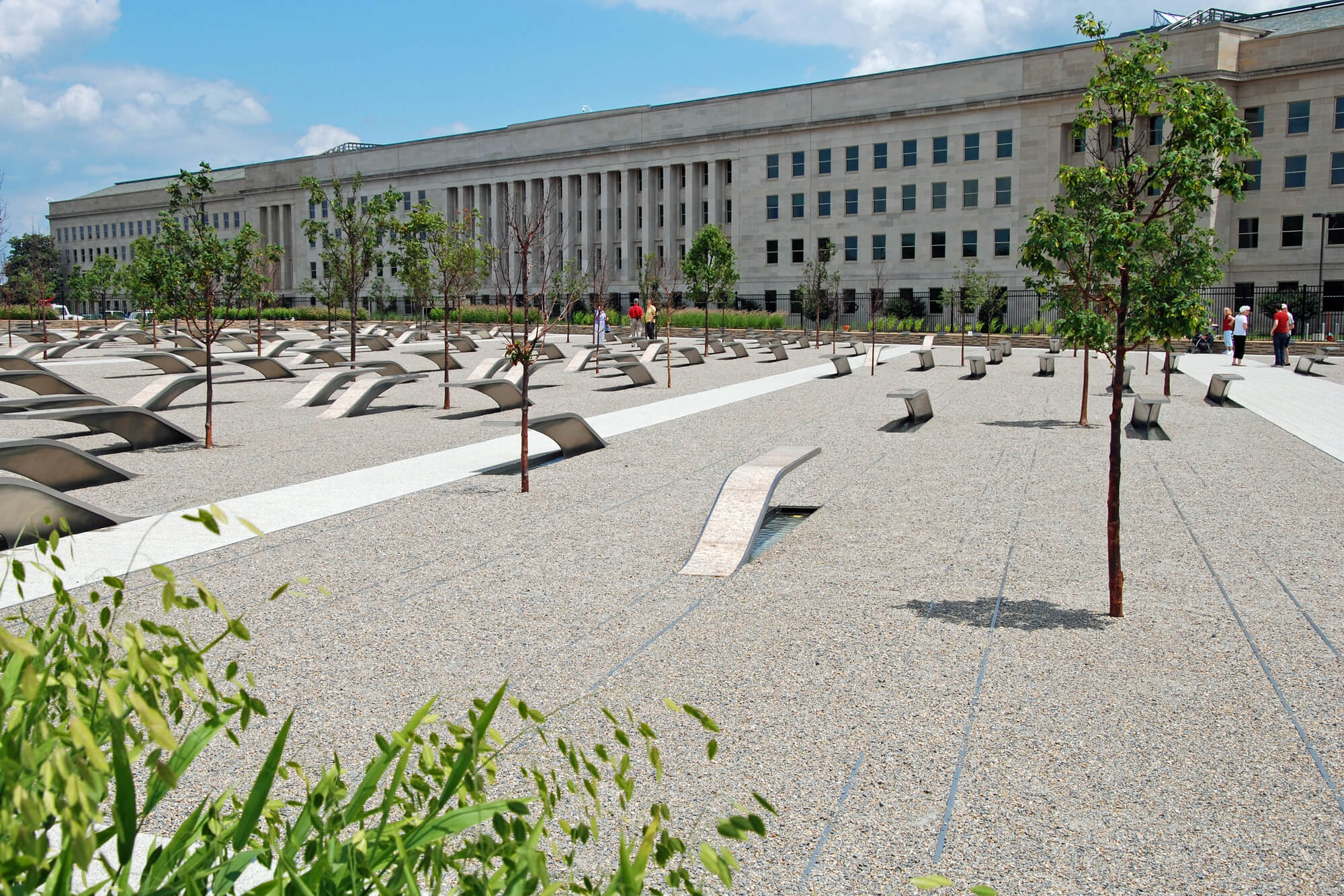
Opened on September 11, 2008, the Pentagon Memorial consists of 184 illuminated benches arranged by the age of each victim, from three-year-old Dana Falkenberg to 71-year-old John Yamnicky Sr. Benches for victims who were inside the building face the Pentagon; benches for passengers and crew aboard American Airlines Flight 77 face skyward along the path the plane traveled.
Flight 93 National Memorial
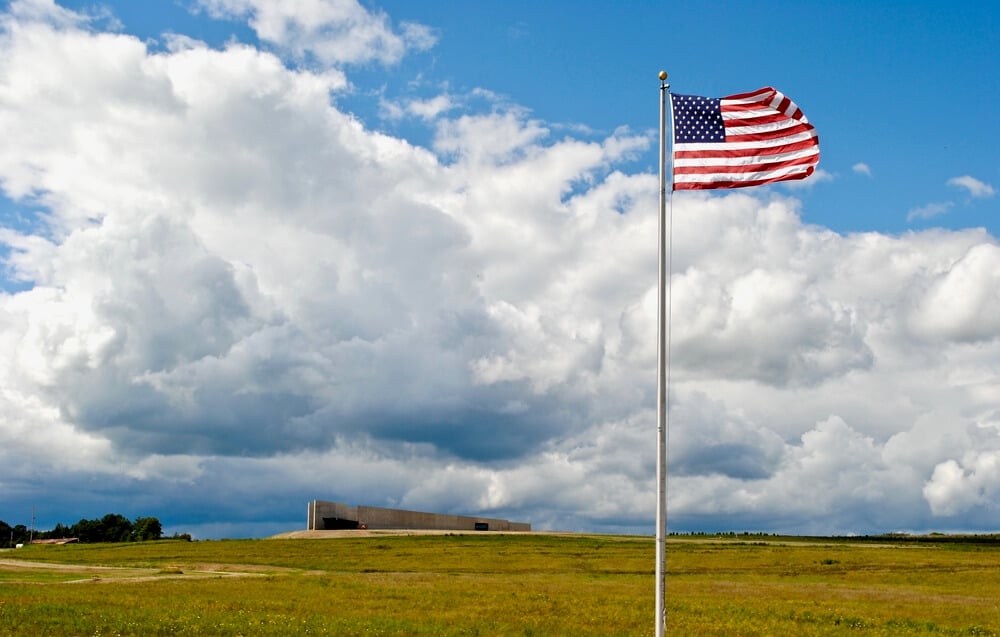
Near Shanksville, Pennsylvania, a field marks the crash site of United Airlines Flight 93, where passengers and crew fought back against hijackers on September 11, 2001. The memorial includes a wall bearing the names of the 40 victims and the Tower of Voices, a 93-foot structure holding 40 windchimes, one for each person aboard.
Oklahoma City National Memorial
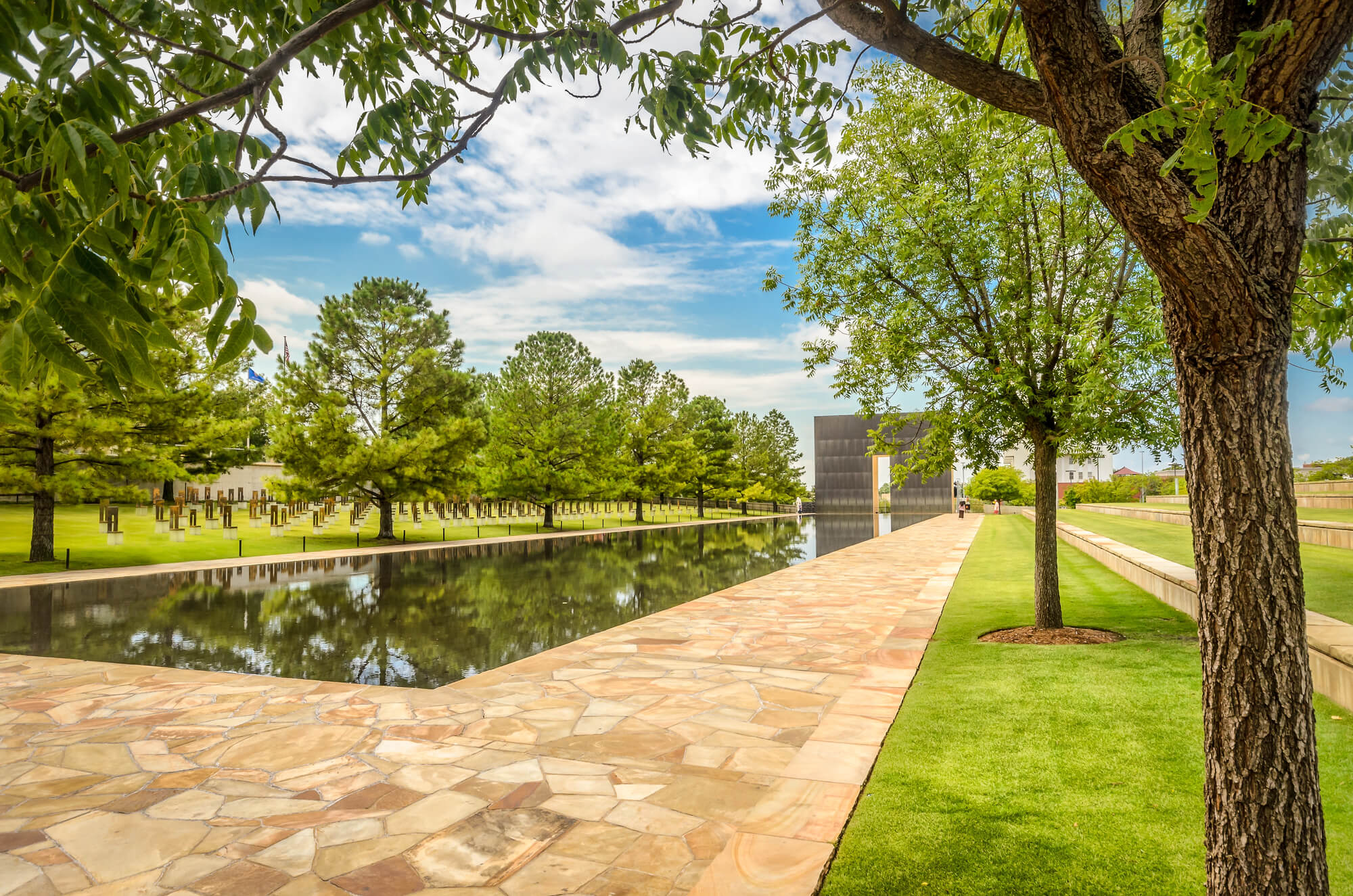
Built on the site of the Alfred P. Murrah Federal Building, destroyed in a 1995 bombing that killed 168 people, the memorial features 168 empty bronze chairs arranged in rows corresponding to the floor each victim was on when the building was destroyed. Nineteen of the chairs are smaller, representing the children killed in the building’s daycare center.
USS Arizona Memorial
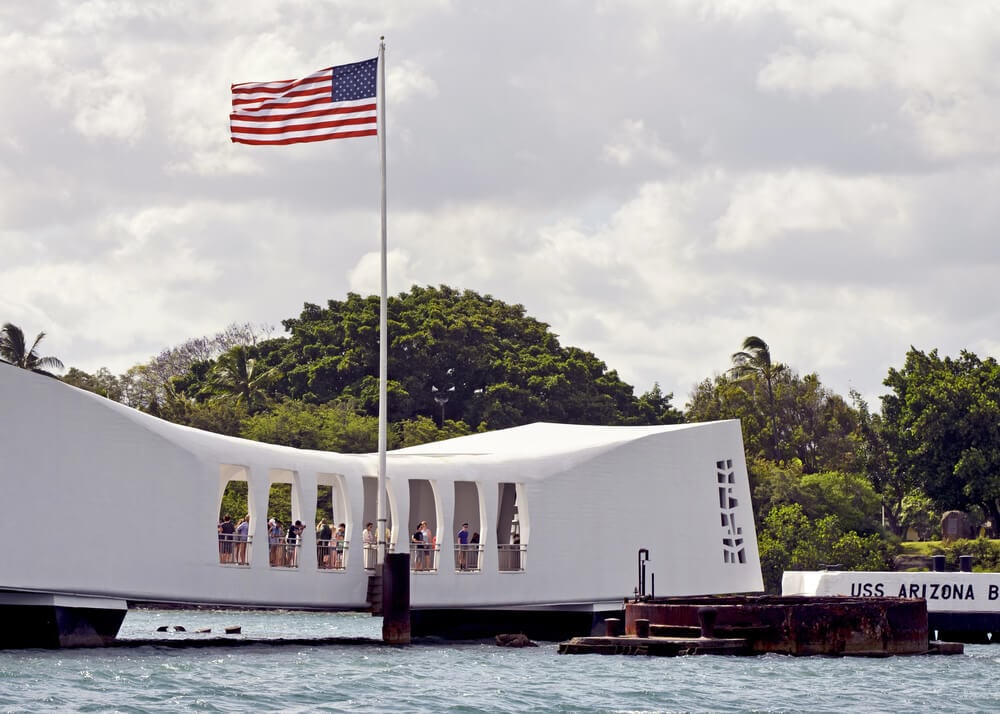
Built directly over the sunken battleship USS Arizona at Pearl Harbor, the memorial straddles the ship’s hull without touching it, allowing visitors to look down at the wreck still resting beneath the water. More than 1,100 sailors and Marines remain entombed in the ship, and small amounts of oil still rise to the surface from its fuel tanks more than eighty years after the attack.
Columbine Memorial
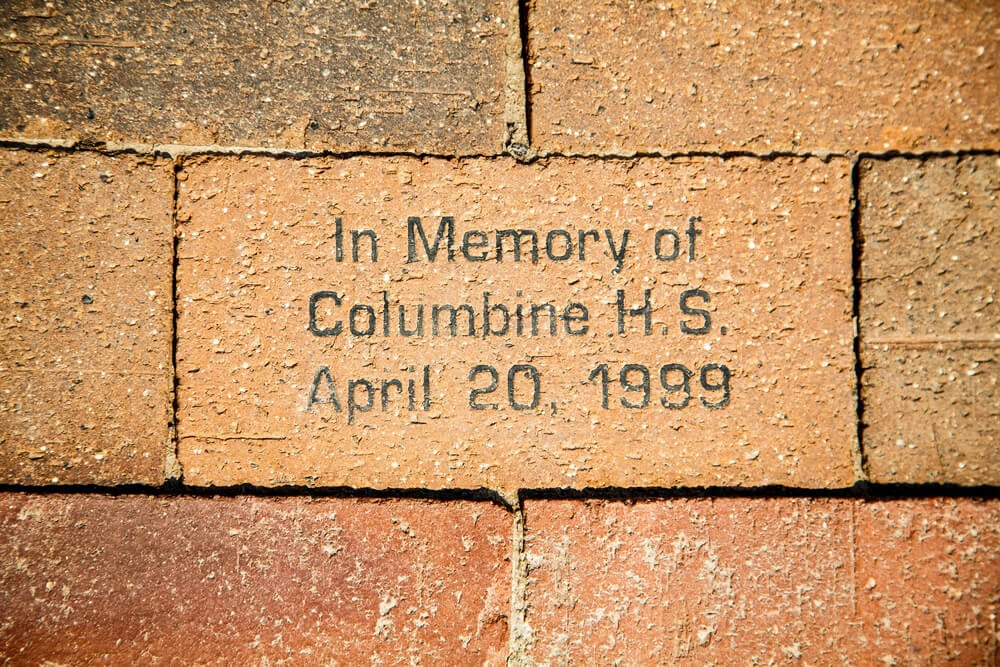
Located in Clement Park in Littleton, Colorado, the Columbine Memorial honors the thirteen people killed at Columbine High School in 1999 with a circular Ring of Remembrance bearing personal tributes written by victims’ families, surrounding an inner Wall of Healing engraved with messages from the community. The memorial was funded almost entirely through private donations and opened in 2007.
Sandy Hook Permanent Memorial
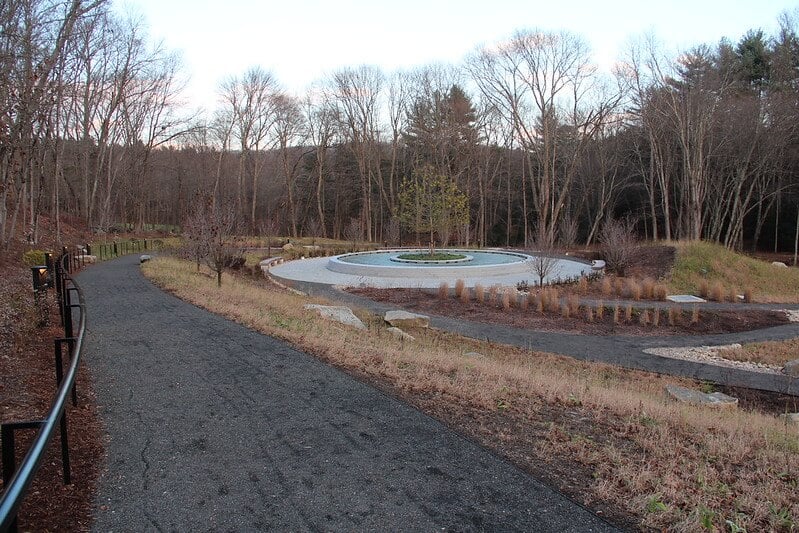
Known as “The Clearing,” this memorial in Newtown, Connecticut, honors the twenty children and six educators killed at Sandy Hook Elementary School in 2012. Designed by architects Dan Affleck and Ben Waldo, the memorial’s granite basin holds the ashes of thousands of stuffed animals, flowers, and other tributes left by mourners in the weeks after the shooting, incinerated and sealed inside the structure as what the designers called “sacred soil.”
National Memorial for Peace and Justice
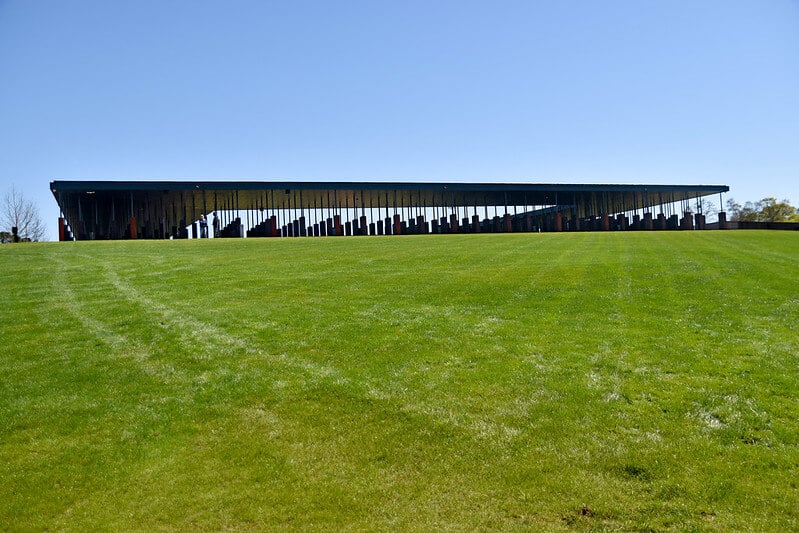
Opened in Montgomery, Alabama, in 2018, this memorial documents more than 4,400 racial terror lynchings across the United States through more than 800 hanging steel columns, one for each county where a lynching occurred, engraved with the names of victims where known. A duplicate column for each county sits in an adjacent field, waiting to be claimed by the county itself as an acknowledgment of its history.
Boston Marathon Memorial
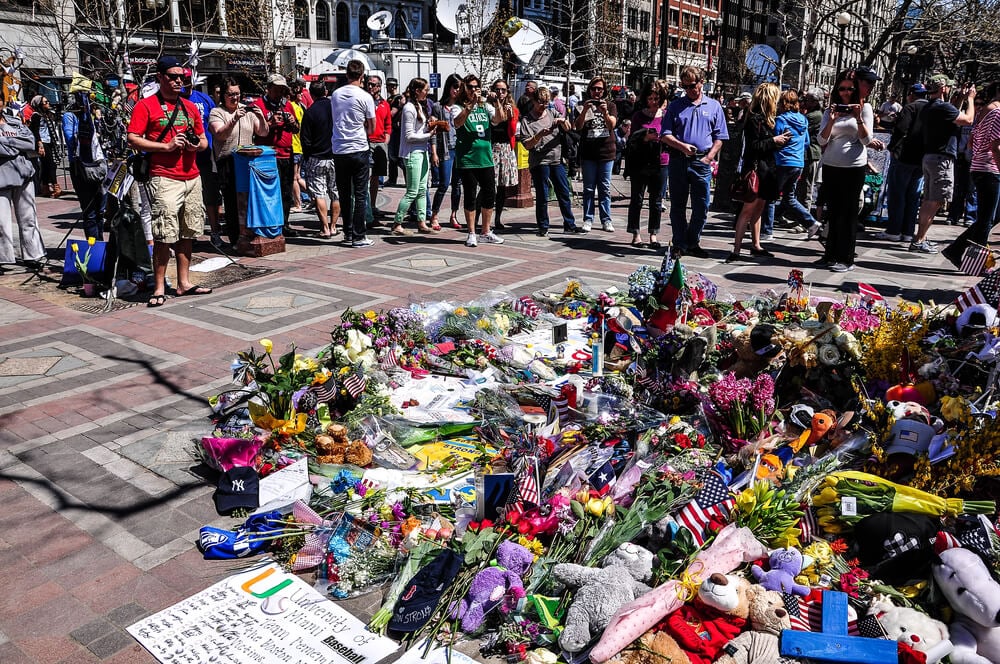
Two bronze markers now stand on Boylston Street at the sites of the two bombings that killed three people and injured hundreds during the 2013 Boston Marathon. The markers were installed in 2019, and each incorporates the street’s existing granite and bronze detailing so they blend into the sidewalk rather than standing apart from it.
Mother Emanuel Memorial
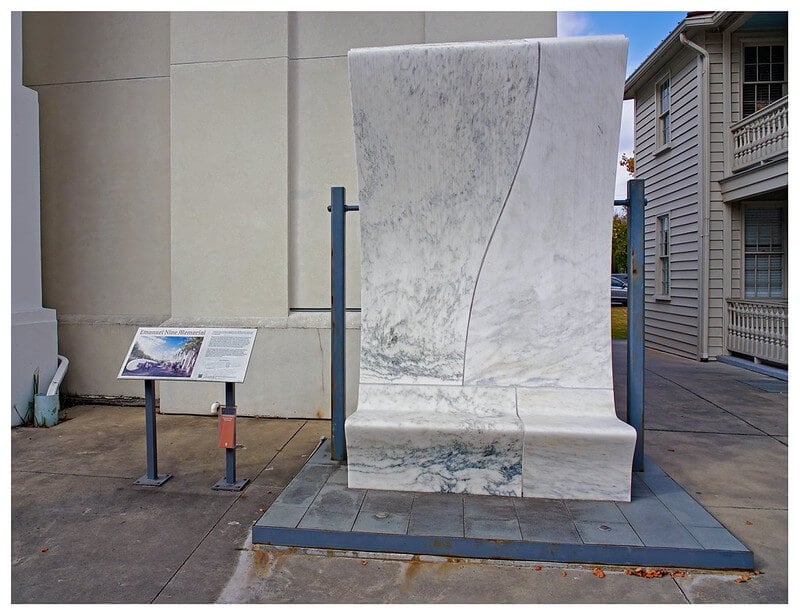
A memorial at Mother Emanuel AME Church in Charleston, South Carolina, honors the nine parishioners killed during a Bible study in 2015. The design includes a survivors’ garden and a fellowship hall intended to continue the church’s community function alongside its role as a memorial site.
Pulse Memorial
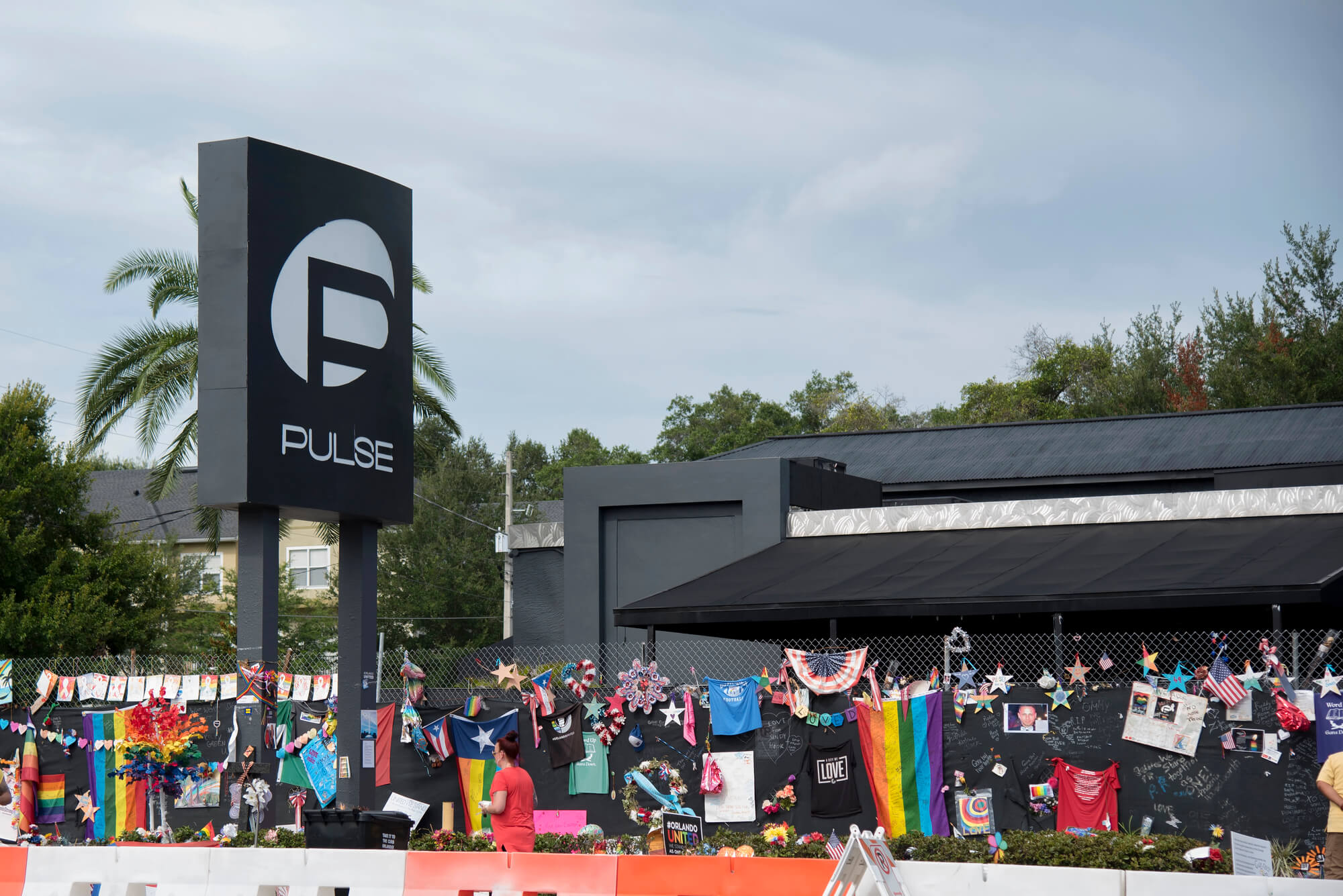
A temporary memorial has stood outside the former Pulse nightclub in Orlando, Florida, since a gunman killed 49 people there in 2016, while a permanent national memorial and museum has been in planning and fundraising for years afterward. The interim memorial includes a rainbow-colored fence and individual tributes to each victim, maintained by a nonprofit foundation formed by the club’s former owners.
Las Vegas Community Healing Garden
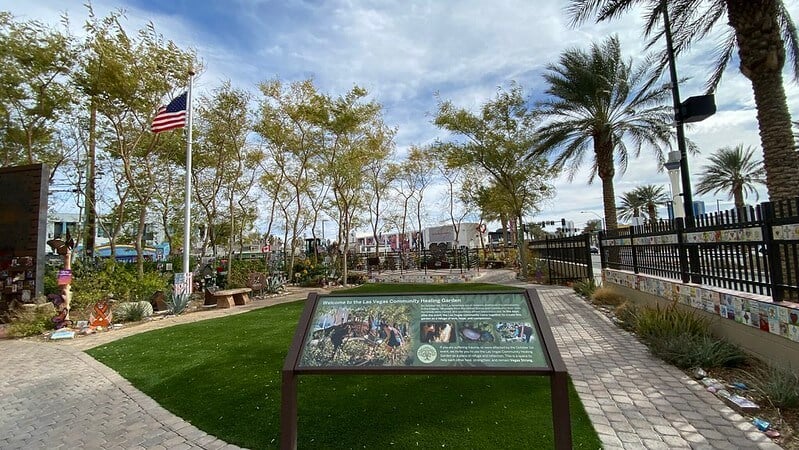
Built on a vacant city lot in downtown Las Vegas within days of the 2017 shooting at the Route 91 Harvest festival, this garden honors the 60 people killed when a gunman opened fire on the crowd from a nearby hotel. Landscapers sketched the design on a napkin the day after the shooting, and more than a thousand volunteers built the garden in four days, planting one tree for each victim around a central oak donated by entertainers Siegfried and Roy.
Virginia Tech April 16 Memorial
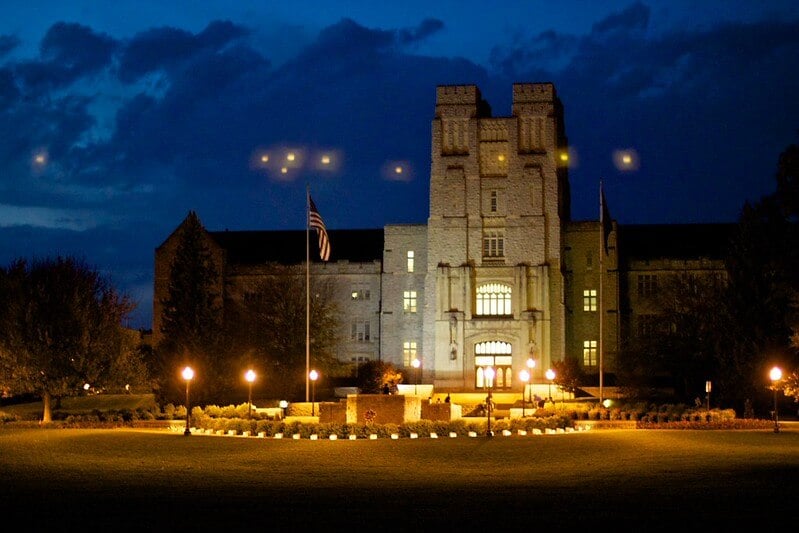
A semicircle of 32 Hokie Stone markers on the Virginia Tech campus in Blacksburg honors the 32 students and faculty killed in a 2007 shooting, arranged around a central marker reading “We Remember.” The memorial sits on the university’s Drillfield and is the site of an annual candlelight vigil each April.
Johnstown Flood National Memorial
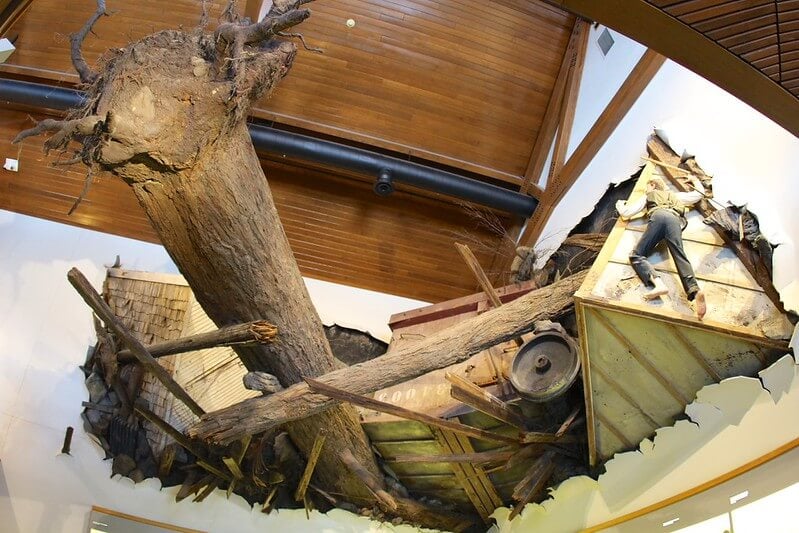
This National Park Service site near Johnstown, Pennsylvania, preserves the remains of the South Fork Dam, whose 1889 failure sent a wall of water through the town and killed more than 2,200 people. The visitor center overlooks the dam site itself, and a nearby cemetery contains the graves of hundreds of victims who were never identified.
The 1900 Storm Memorial
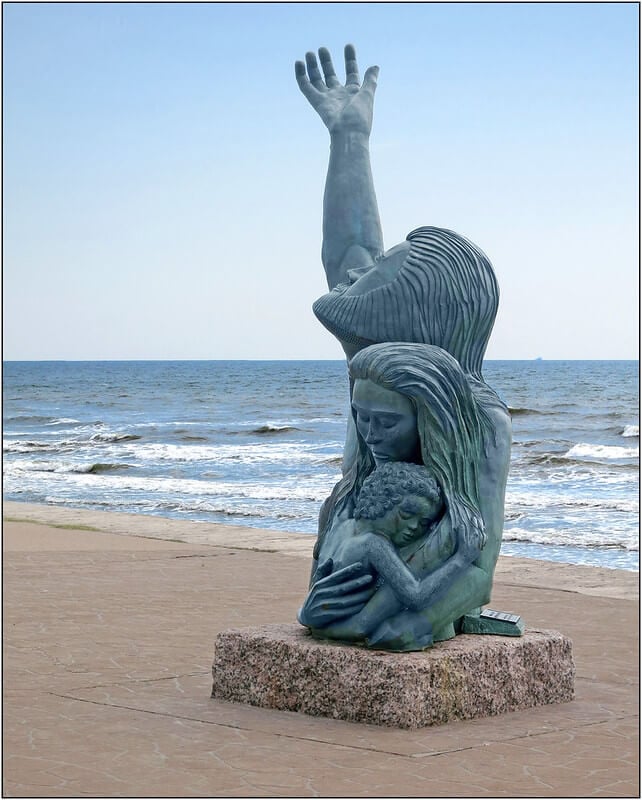
A ten-foot bronze sculpture along the Galveston, Texas, seawall commemorates the hurricane that struck the city on September 8, 1900, killing an estimated 8,000 to 12,000 people in what remains the deadliest natural disaster in American history. The storm’s aftermath led to one of the largest civil engineering projects of its era, raising the entire grade of the island and building the seawall the memorial now stands beside.
Titanic Memorial
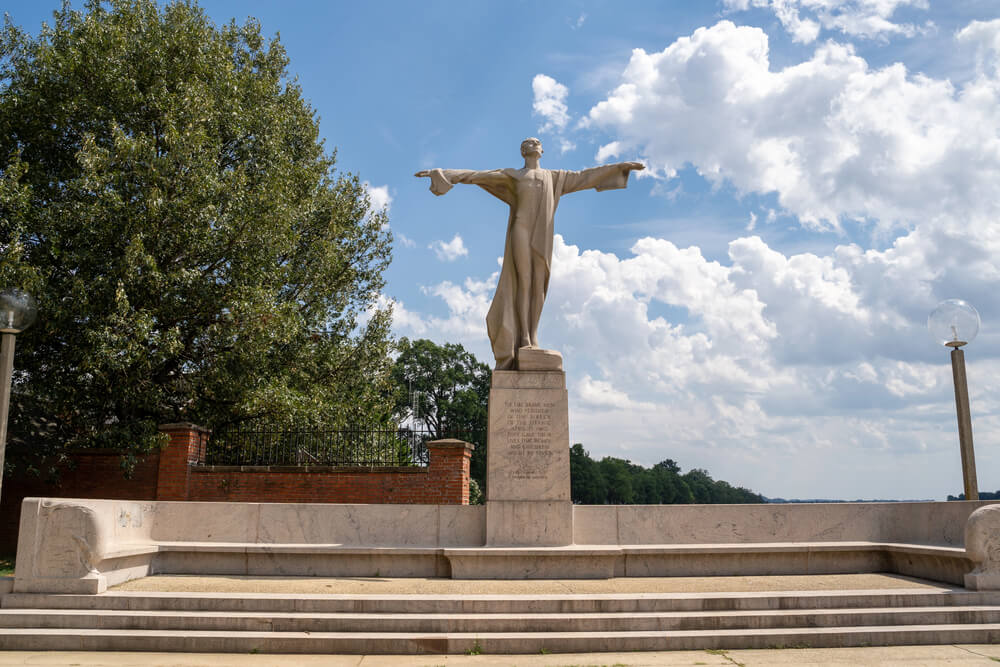
A thirteen-foot granite statue in southwest Washington, D.C., honors the men who gave up their own places in the lifeboats so that women and children could escape the sinking of the RMS Titanic in 1912. Funded entirely by donations from women across the country, the statue originally stood near the site of what is now the Kennedy Center before being relocated to a public park in 1968.
Triangle Shirtwaist Factory Fire Memorial
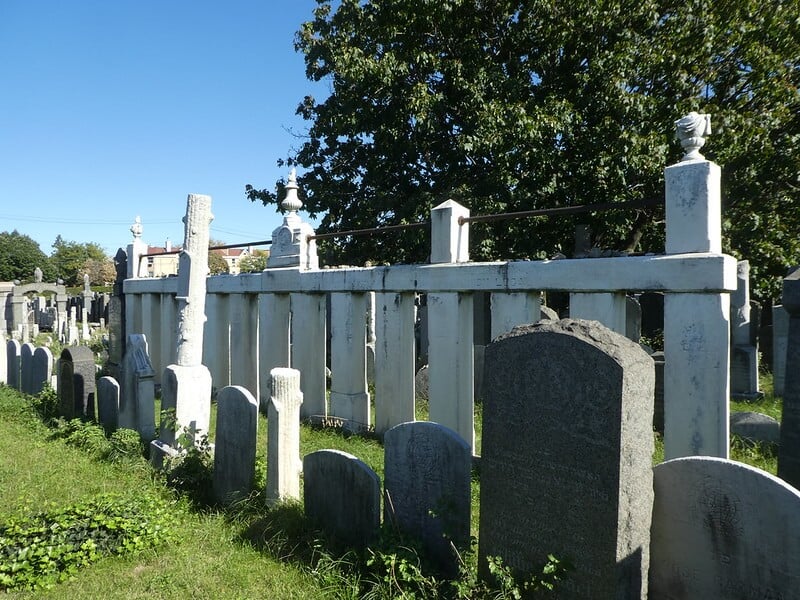
A memorial at the Brown Building in Greenwich Village, New York City, marks the site where 146 garment workers, most of them young immigrant women, died in a 1911 factory fire after exits were found locked. The tragedy led directly to sweeping changes in workplace safety and fire codes still in effect across the country today.
General Slocum Memorial Fountain
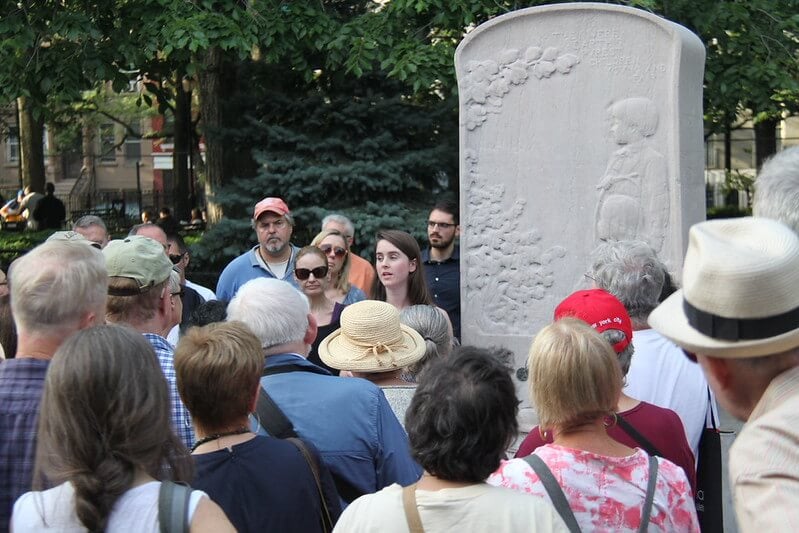
A marble fountain in Tompkins Square Park on Manhattan’s Lower East Side memorializes more than 1,000 people, mostly women and children from a single church congregation, who died when the steamship General Slocum caught fire in the East River in 1904. The disaster devastated the neighborhood’s German immigrant community so thoroughly that many surviving families moved away entirely within a few years.
Hurricane Katrina Memorial
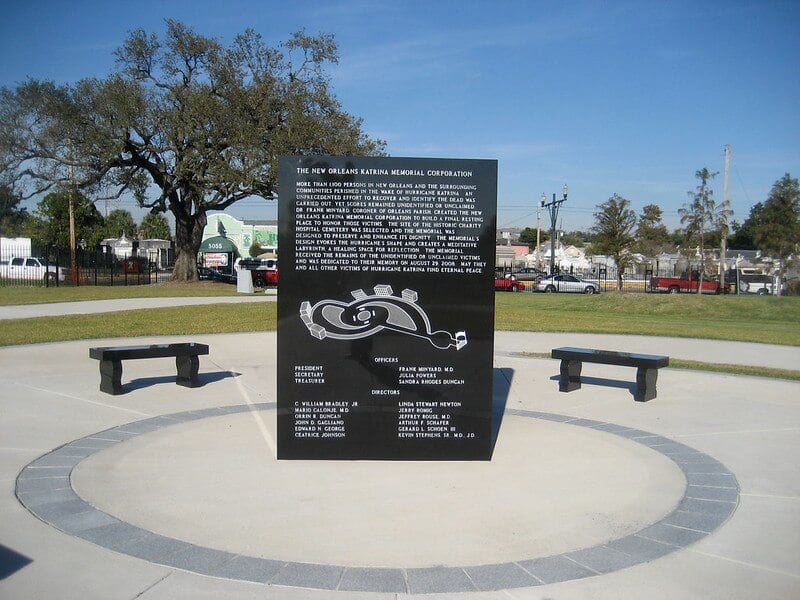
A memorial at the site of a mass grave for unclaimed and unidentified victims of Hurricane Katrina stands in New Orleans, honoring many of the more than 1,800 people who died when the storm struck the Gulf Coast in 2005. The memorial’s design incorporates a spiral pathway meant to evoke the shape of a hurricane on radar.
Lotta’s Fountain
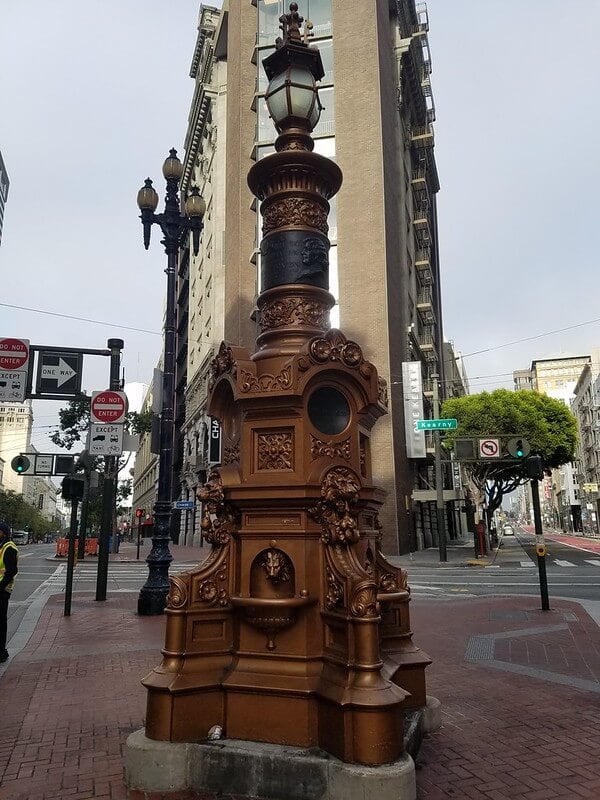
A cast-iron fountain in downtown San Francisco has served as the informal gathering point for survivors of the 1906 earthquake and fire since the disaster occurred, with a formal remembrance held at the fountain every April 18 on the anniversary. The fountain predates the earthquake itself, having been a gift to the city from entertainer Lotta Crabtree decades earlier, but it survived the disaster largely intact and became a designated meeting place for separated families in the chaos afterward.
May 4 Memorial
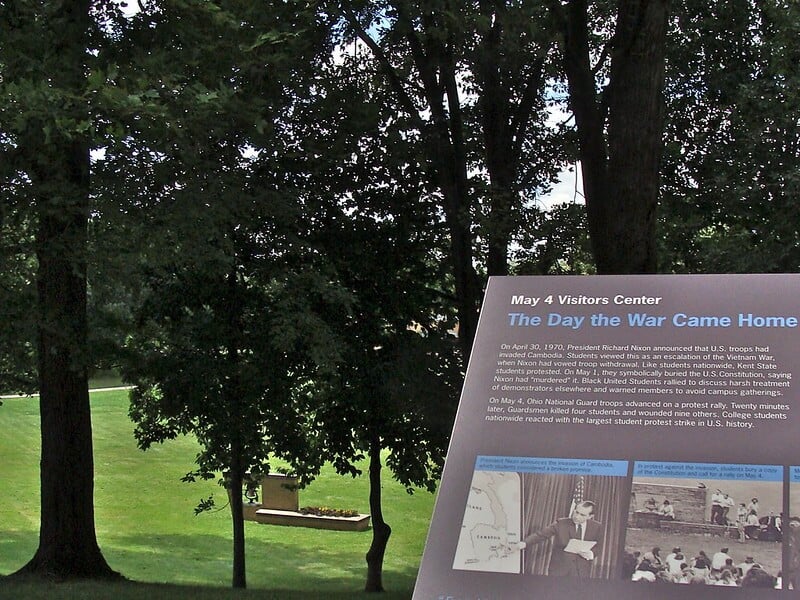
Kent State University in Ohio dedicated a permanent memorial in 1990 to the four students killed when Ohio National Guard troops opened fire on a campus protest in 1970. Individual granite markers were later added at the exact locations where each student fell, installed after years of advocacy from surviving classmates and family members.
Wounded Knee Memorial
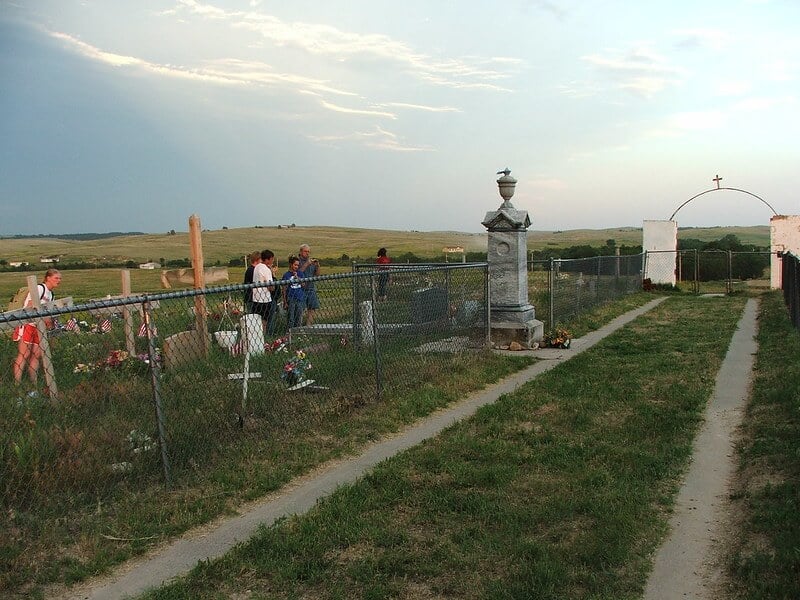
A memorial and mass grave site near Wounded Knee, South Dakota, marks where U.S. Army troops killed an estimated 250 to 300 Lakota men, women, and children in 1890. The site remains on the Pine Ridge Indian Reservation and continues to be a place of remembrance and advocacy for the Lakota community today.
John Hope Franklin Reconciliation Park
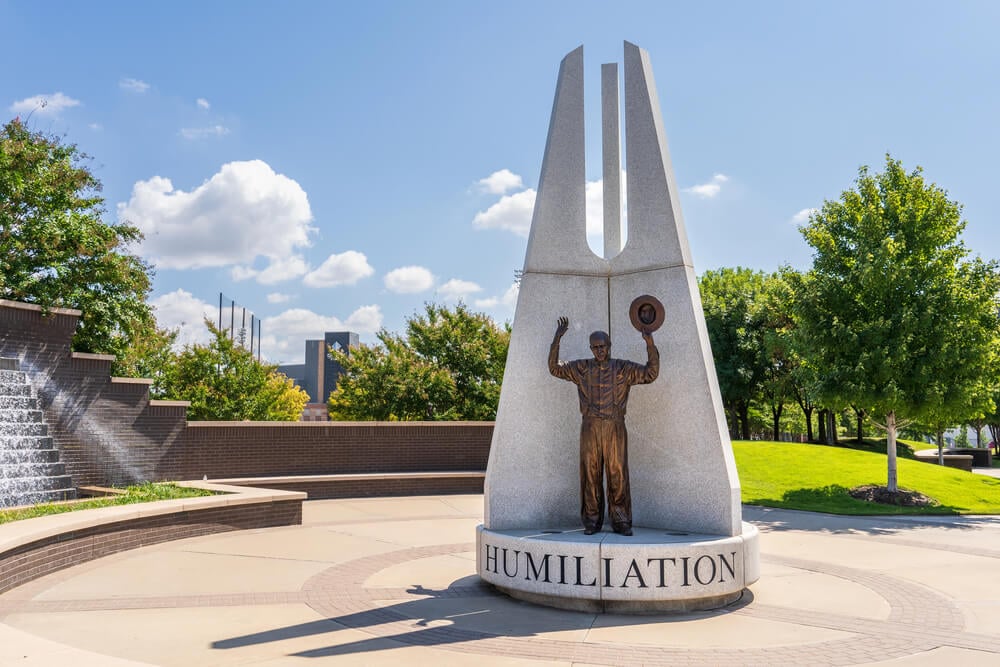
Dedicated in 2010 in Tulsa, Oklahoma, this park honors victims of the 1921 Tulsa Race Massacre, in which a mob destroyed the Greenwood district, one of the country’s most prosperous Black communities, and killed an estimated 100 to 300 people. The park’s Tower of Reconciliation, a 25-foot sculpture, depicts the history of Black Americans in Oklahoma from Africa through the massacre and beyond.
Manzanar National Historic Site
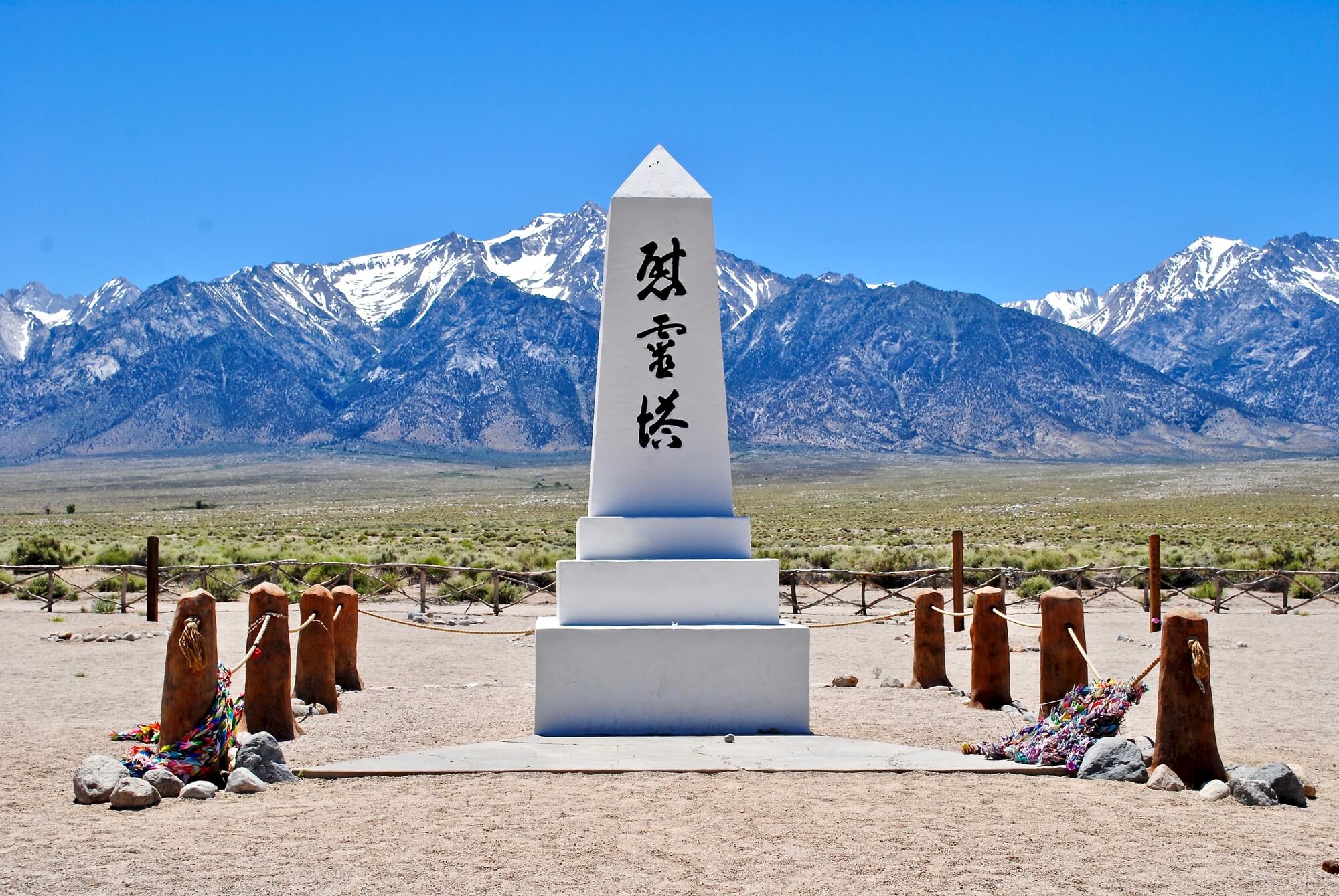
Located in California’s Owens Valley, Manzanar preserves the site of one of ten camps where the federal government incarcerated more than 110,000 Japanese Americans during the Second World War, most of them citizens. Reconstructed barracks and a cemetery obelisk, still visited by descendants of those held there, remain on the grounds today.
National AIDS Memorial Grove
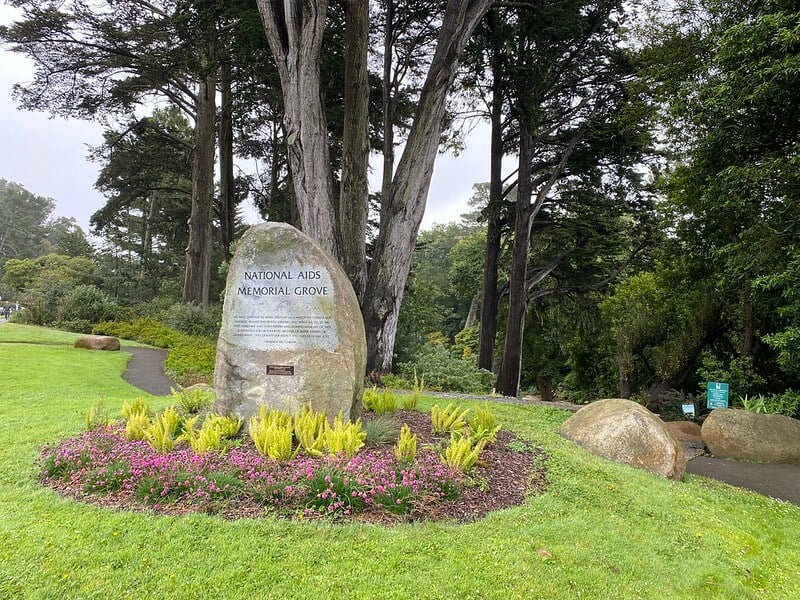
A ten-acre grove in San Francisco’s Golden Gate Park is dedicated to the memory of Americans who died during the AIDS epidemic, designated a national memorial by Congress in 1996. The grove includes a Circle of Friends inscribed with the names of thousands of people, added continuously as families and friends request them.
Pan Am Flight 103 Memorial Cairn
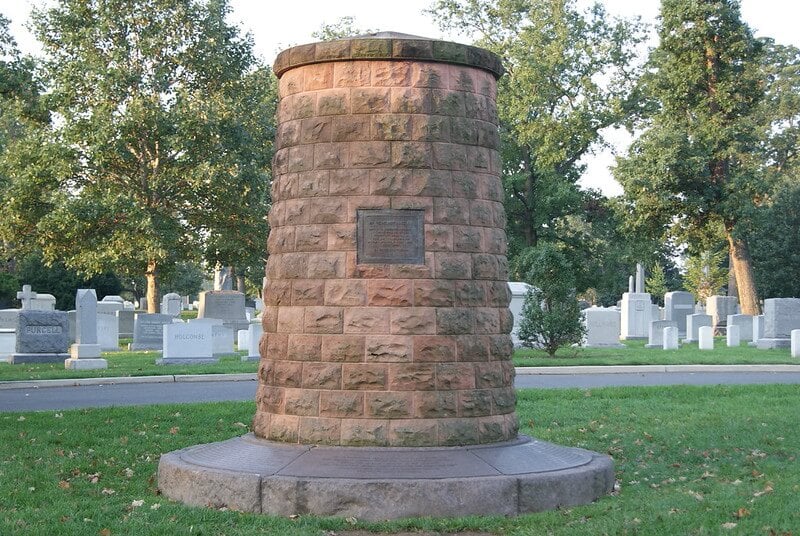
At Arlington National Cemetery, a cairn built from 270 blocks of Scottish sandstone, one for each victim, memorializes the 1988 bombing of Pan Am Flight 103 over Lockerbie, Scotland. The stone was quarried from beneath the flight path the plane had taken and shipped from Scotland specifically for the memorial, which was dedicated in 1995.
What the Stone Remembers
None of these memorials were built quickly, and almost none of them were built without disagreement over what a tragedy is owed in permanent form. Committees argued over wording, over how many names belonged on a wall, over whether a place should be beautiful or plain.
What they share, across a century of American loss, is a refusal to let the site itself go quiet. A field in Pennsylvania, a fountain in a city park, a bench arranged by age rather than alphabet: each one insists that a specific place and a specific date still matter, long after the news coverage ends.
More from Go2Tutors!

- The Romanov Crown Jewels and Their Tragic Fate
- 13 Historical Mysteries That Science Still Can’t Solve
- Famous Hoaxes That Fooled the World for Years
- 15 Child Stars with Tragic Adult Lives
- 16 Famous Jewelry Pieces in History
Like Go2Tutors’s content? Follow us on MSN.