26 Old Cameras Found at Thrift Stores That Photography Collectors Hunt Down
The thrift store camera shelf is one of the last genuinely democratic treasure hunts left. Estate sale sellers and charity shop volunteers rarely know the difference between a camera worth five dollars and a camera worth five hundred — and that gap, consistent across decades of film photography’s cultural eclipse and slow revival, has made charity shops and garage sales the hunting ground of choice for collectors who know what to look for. Prices depend heavily on condition, completeness of accessories, and whether the shutter fires and the rangefinder is clear, so treat any figures here as starting points for research rather than definitive answers.
Leica M3
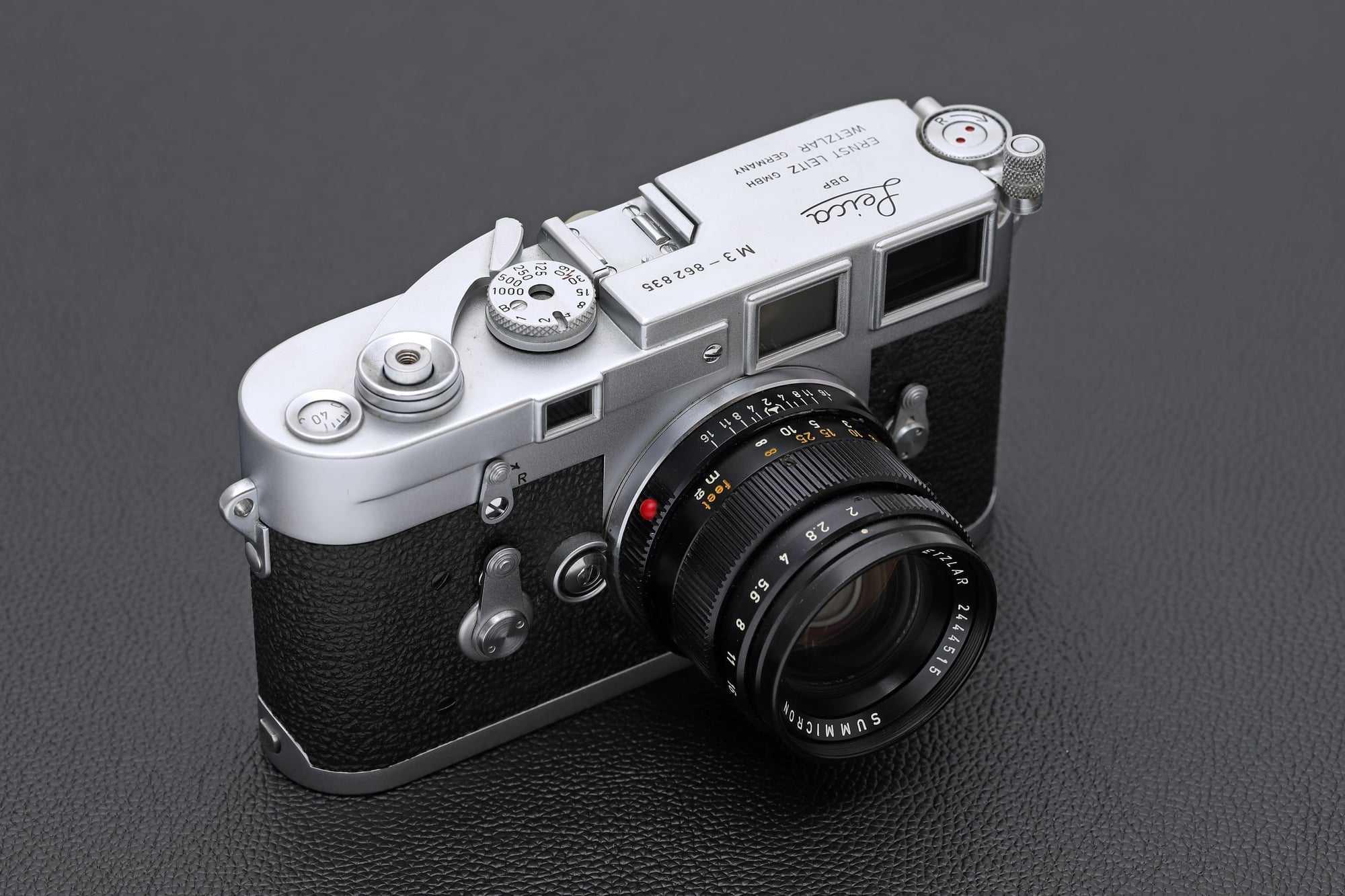
The Leica M3, introduced in 1954, is the camera most collectors identify as the definitive 35mm rangefinder. Its combined viewfinder/rangefinder, its bayonet mount replacing the previous screw mount, and its engineering quality set a standard that photographers including Henri Cartier-Bresson used for decades.
A clean M3 body in working condition typically fetches between $600 and $2,000 depending on condition and serial number range, and finding one in a thrift store for $25 — which happens — is the kind of story that circulates endlessly in film photography communities. The M3 produced more units than most other Leica models, which is why it still occasionally appears in estate sales from photographers who bought them new in the late 1950s.
Rolleiflex 2.8F
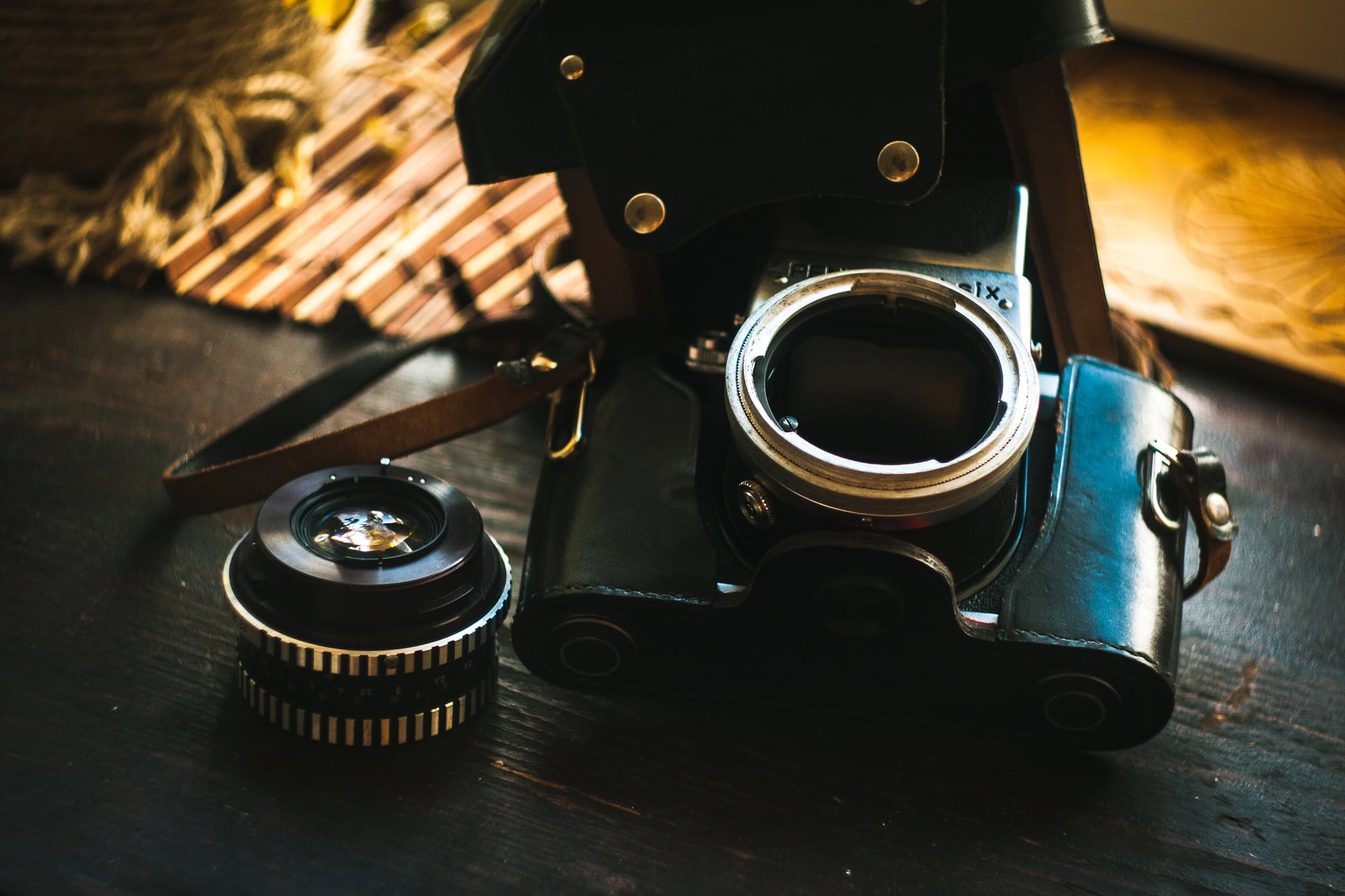
The Rolleiflex twin-lens reflex camera, in which two vertically stacked lenses — one for viewing, one for exposing — produce large 6x6cm medium-format negatives, defined professional portrait and editorial photography from the 1930s through the 1960s. The 2.8F is the most sought-after variant, fitted with a Zeiss Planar or Schneider Xenotar lens of exceptional quality, and it sells between $1,200 and $3,500 in good working condition.
People who find one priced at $30 at a flea market — and the stories exist — are encountering the specific ignorance that makes the hunt worthwhile. The square negative format the Rollei produces has been a significant factor in the TLR’s recent revival among younger photographers.
Hasselblad 500 C/M
NASA used Hasselblad 500-series cameras on the Apollo missions, which is a fact the company has been justifiably milking in its marketing for 50 years, but which is also simply true and relevant: the Hasselblad medium-format system was chosen for the moon missions because it was the most reliable and optically excellent camera system available. A clean 500 C/M body without a lens sells for $700–$1,500, and with the standard 80mm Zeiss Planar lens can reach $2,000 or more.
The modular system — interchangeable backs, finders, and lenses — means finding a body without its accessories at a thrift store is common, and a little research determines quickly whether what you’re holding is the real thing.
Nikon F
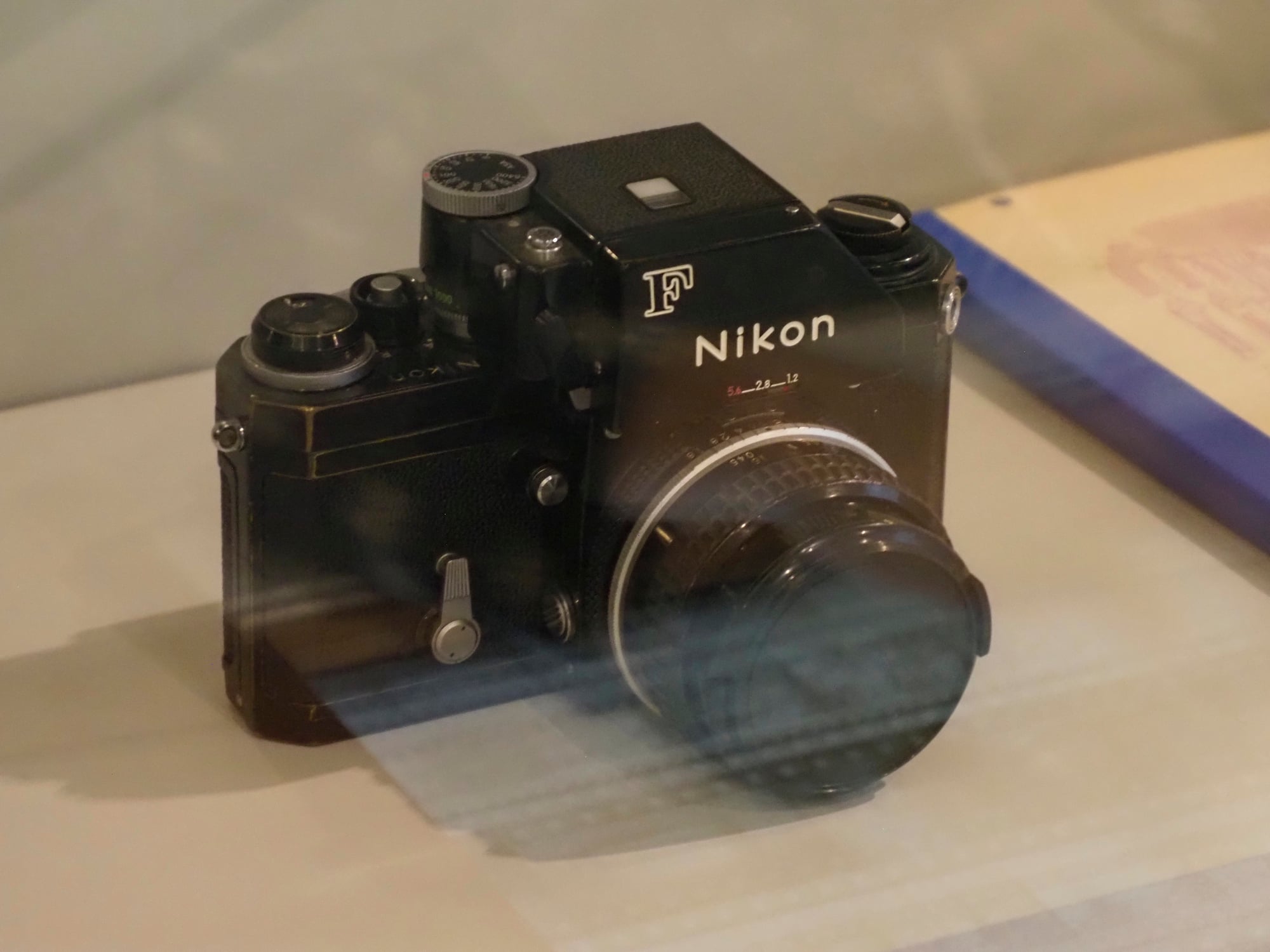
The Nikon F, introduced in 1959, was the camera that established Japanese manufacturers as serious competitors to the German optical industry and became the standard professional photojournalist camera for much of the 1960s and 1970s. David Douglas Duncan took it to Vietnam; photographers covering the moon landings used it.
A clean Nikon F with its standard 50mm lens sells for $200–$600 depending on which finder is attached and the condition of the shutter curtain. The Photomic meters mounted on some versions are particularly valued, though they add to the weight considerably.
In thrift stores, the F often appears in boxes of mixed photographic gear from estates of working photographers.
Leica M6

The Leica M6, produced from 1984 to 2002, is the rangefinder that bridges the film era and the current analogue revival, and its market value has increased dramatically since 2015 as younger photographers discovered film. A clean M6 with a 50mm summicron lens now sells for $2,500–$4,000, roughly triple what it cost a decade ago.
Finding one mispriced at a thrift store is increasingly unlikely as estate sale professionals have become more sophisticated about camera values, but it still happens — particularly in smaller towns where the estate sale services haven’t caught up to the film revival’s price effects.
Contax T2
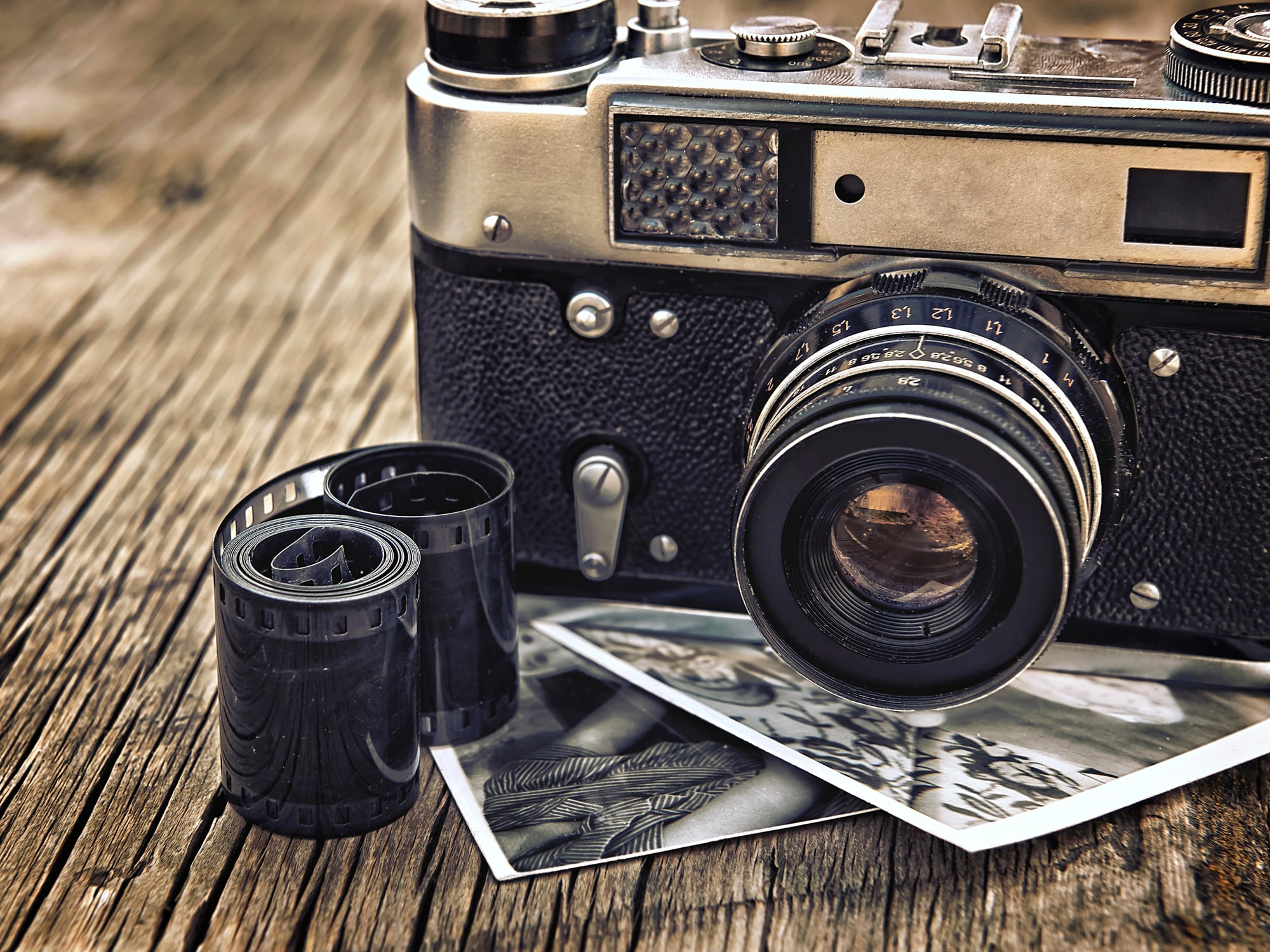
The Contax T2, a compact 35mm camera produced from 1990 to 2000 with a Carl Zeiss 38mm f/2.8 Sonnar lens, became unexpectedly famous when it was photographed in the hands of celebrities and appeared in fashion editorial contexts, driving its price from the $100–$150 range it occupied for most of the 2010s to a current market of $600–$1,200.
This is a straightforward case of cultural endorsement driving collector interest, and the T2’s image quality — the Zeiss lens is genuinely excellent — partially justifies the price. Finding one at a thrift store now requires luck rather than knowledge: most estate sale professionals know what it is.
Olympus OM-1
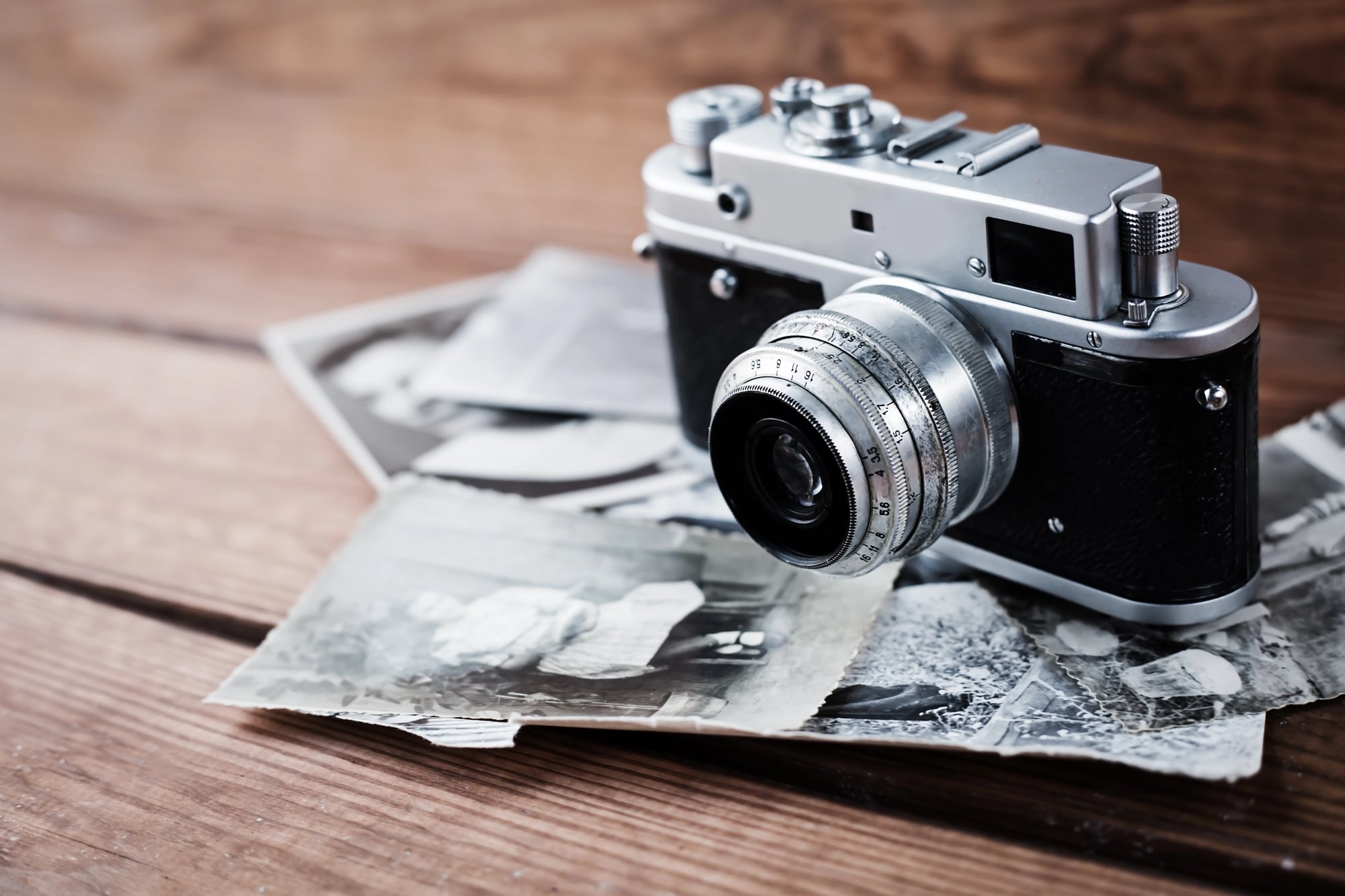
The Olympus OM-1, released in 1972, was a response to photographers’ long-standing complaint that the professional SLRs available in the early 1970s were too large and heavy to carry comfortably. The OM-1 was significantly smaller than its Nikon and Canon contemporaries while matching their optical quality and mechanical reliability, and it attracted a devoted following among photographers who valued portability.
A clean, working OM-1 body with its 50mm lens sells for $100–$300, but the system lenses — particularly the 21mm wide-angle and the 350mm telephoto — command considerably more. The OM-1 appears regularly at thrift stores; most estate sale sellers price it at $20–$50 without knowing its current value in the film revival market.
Canon AE-1
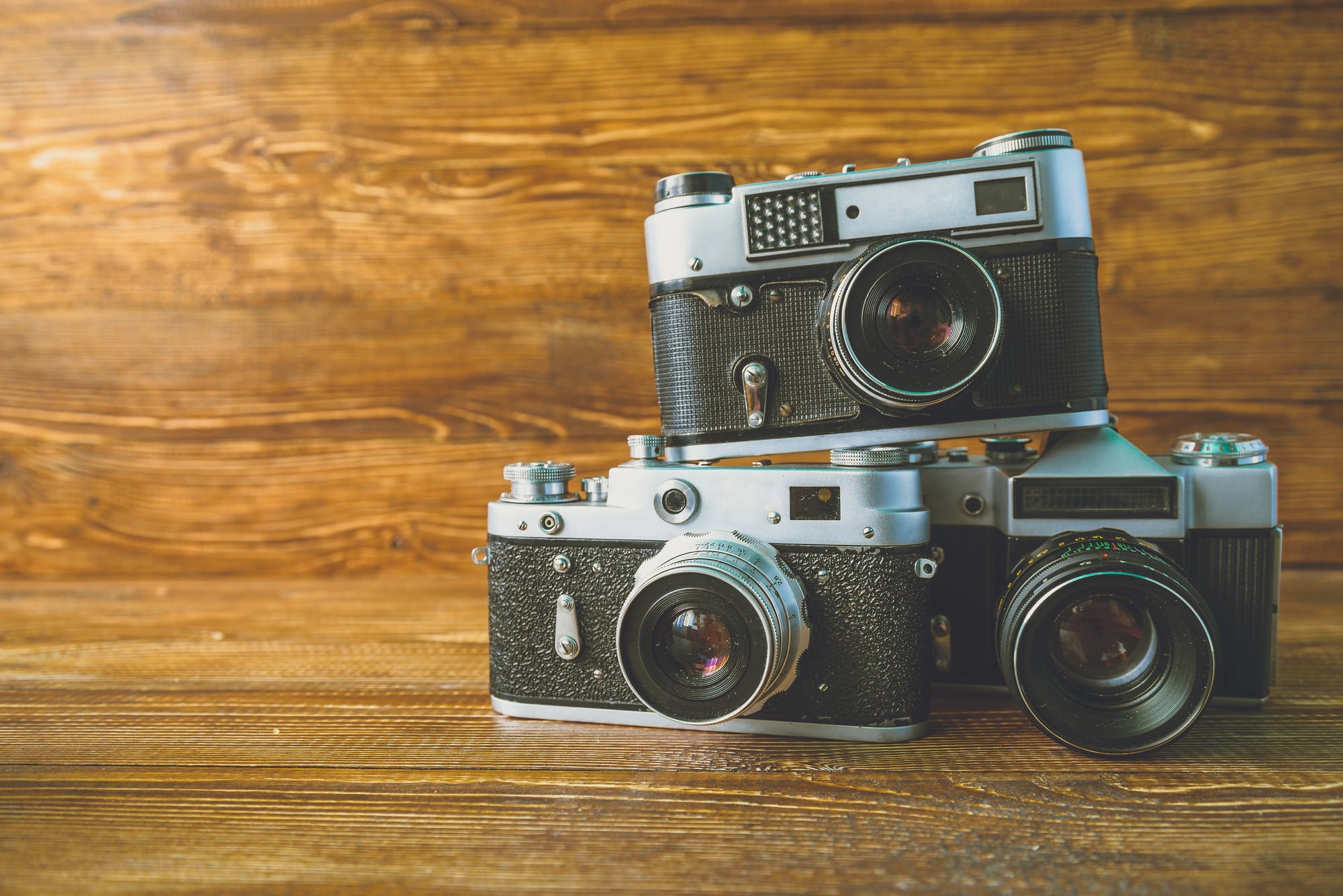
The Canon AE-1, introduced in 1976 as the first camera with a built-in microcomputer, was the bestselling SLR of its era and produced in the millions. Its ubiquity means it appears at virtually every thrift store with a camera section.
The price has increased sharply since 2015 — a working AE-1 in good condition has gone from roughly $15 to $60–$120 — but it remains the most accessible entry point into the film camera collector market. The AE-1 Program, introduced in 1981, added full programme mode and sells for slightly more.
Finding one with its original winder, case, and lens is significantly more valuable than a body alone, and the combination still occasionally appears for $10 at charity shops whose staff are not keeping pace with the market.
Pentax K1000
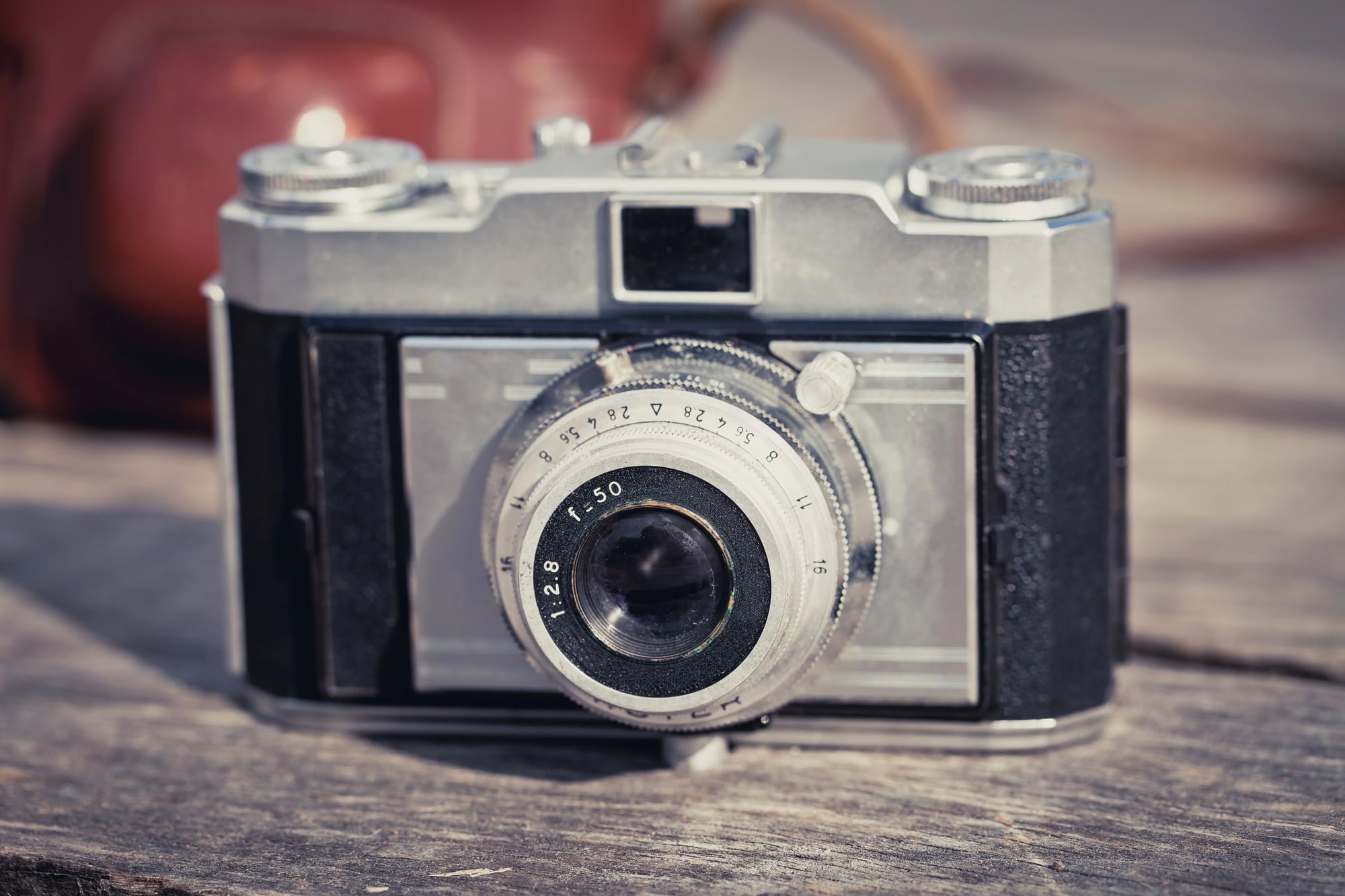
The Pentax K1000, produced from 1976 to 1997 — an extraordinarily long production run for any camera — was the camera of choice for photography students for two decades because it was fully mechanical, required no battery to operate the shutter, and was essentially indestructible. Its value has risen with the film revival: a working K1000 with a standard 50mm lens now sells for $80–$200.
The K1000 is particularly reliable at thrift stores because its 21-year production run means vast quantities exist, and older donors who studied photography in the 1980s and 1990s frequently donate them without knowing the current market.
Rolleicord
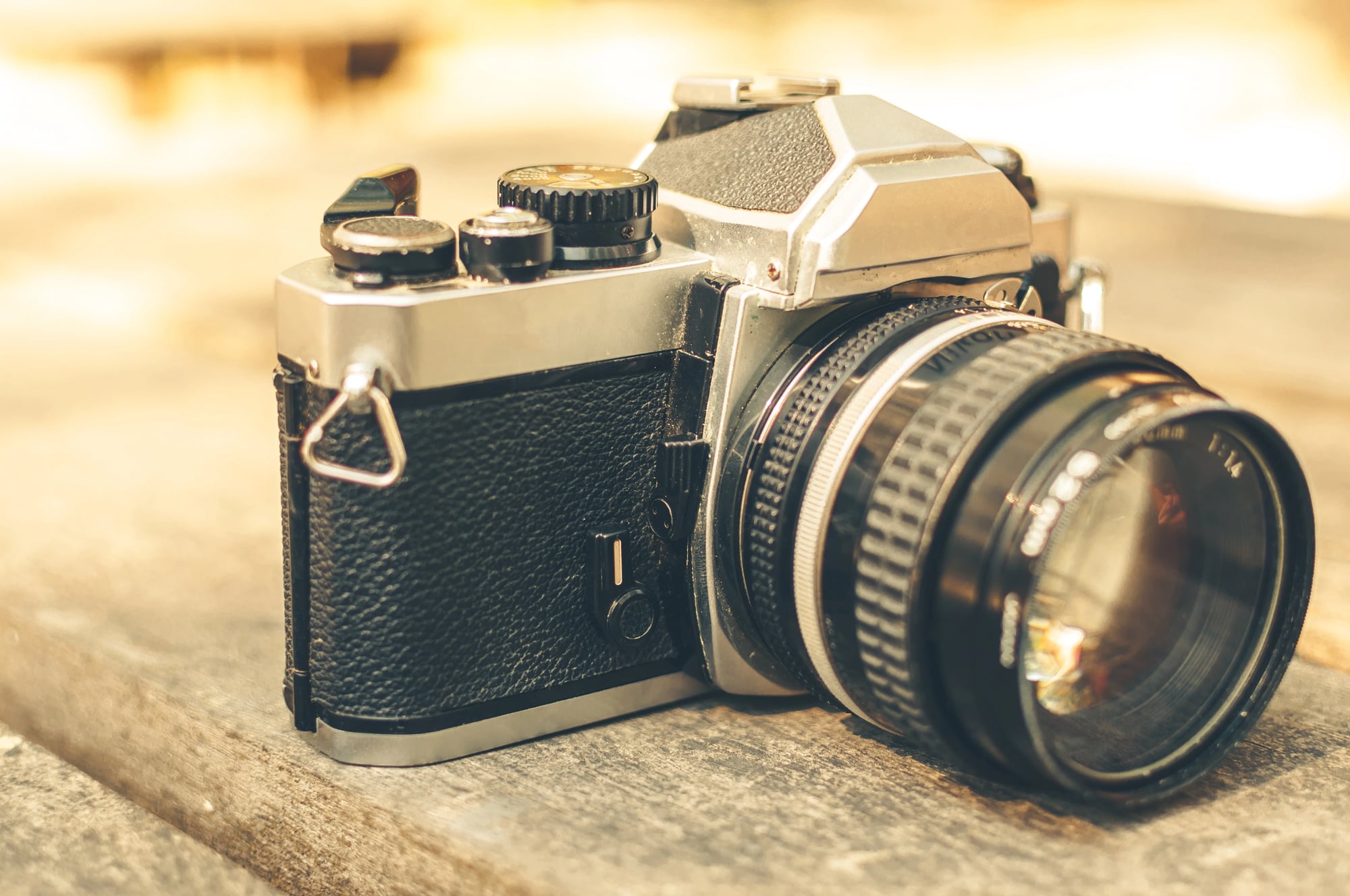
The Rolleicord was Rollei’s more affordable twin-lens reflex, fitted with a Schneider Xenar or Zeiss Tessar lens rather than the Planar used in the flagship Rolleiflex, and produced from 1933 through 1976. It is a genuine medium-format camera producing the same 6x6cm negatives as the Rolleiflex at a significantly lower price point — a working Rolleicord typically sells for $100–$400 depending on the variant and condition.
For photographers who want the medium-format TLR experience without the Rolleiflex price, the Rolleicord is the standard recommendation, and it appears at thrift stores more frequently than the Rolleiflex because it was more widely owned.
Yashica Mat-124G
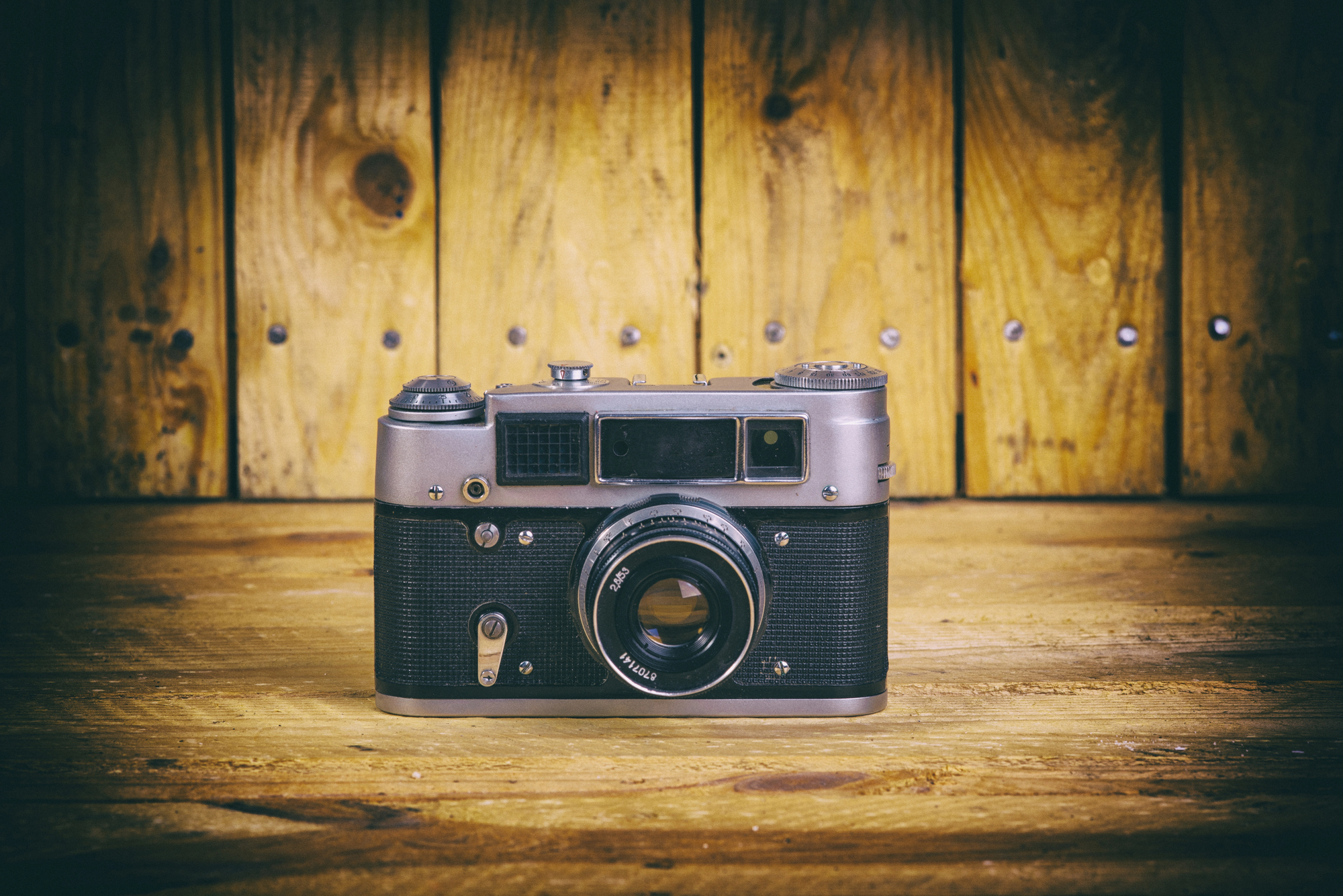
The Yashica Mat-124G, produced from 1970 to 1986, is the most collectable of the Japanese medium-format TLRs, fitted with a Yashinon 80mm lens and a coupled meter that makes it significantly more practical for everyday use than the Rolleicord or Rolleiflex. In good working condition it sells for $200–$350 — expensive for a thrift store find, but entirely within the range at which it still occasionally appears when someone donates a parent’s photography equipment without researching values.
The Mat-124G’s built-in metering makes it more usable than the unmetered Rollei equivalents for photographers who want to shoot medium format without a separate light meter.
Nikon FM2
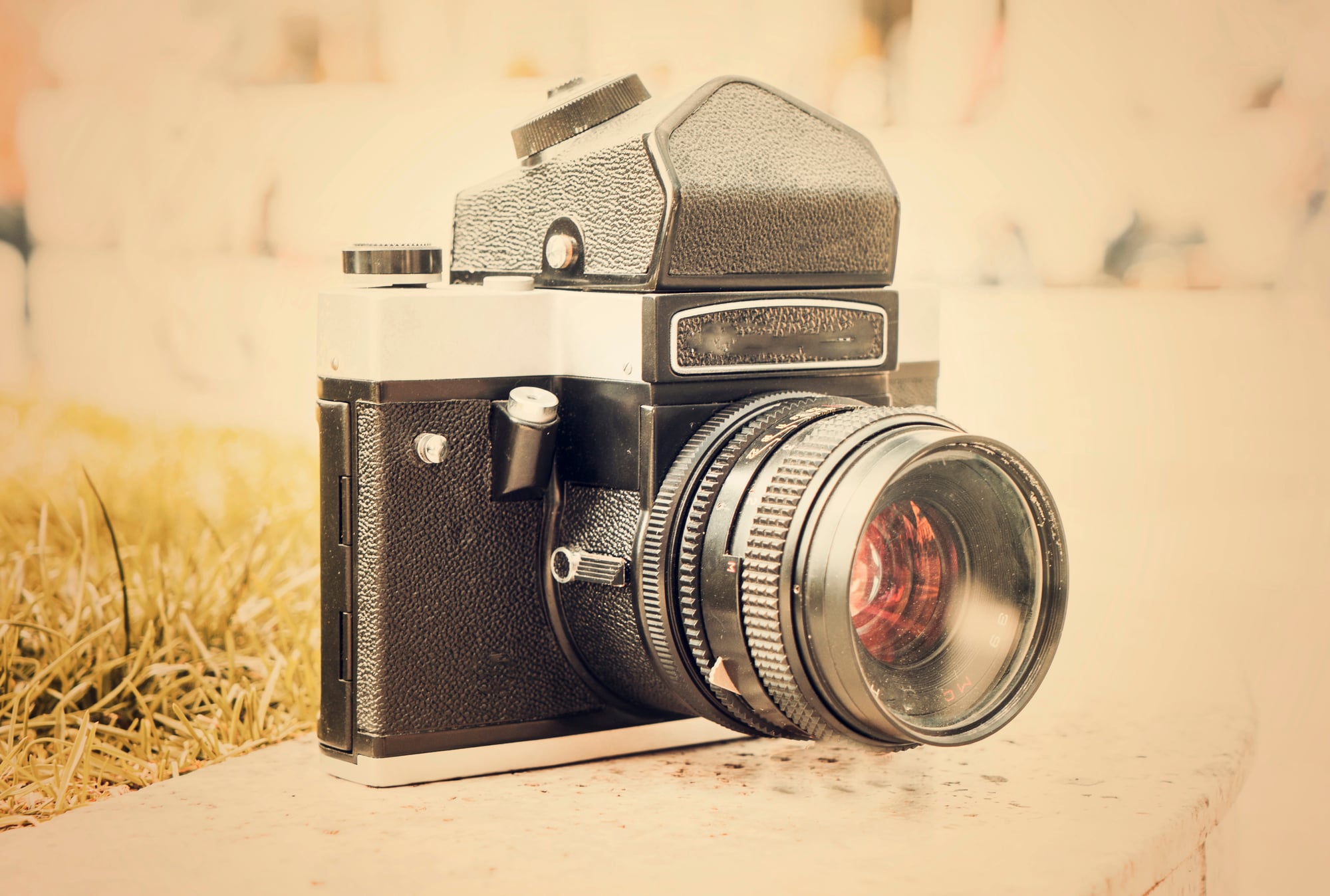
The Nikon FM2, a fully mechanical 35mm SLR introduced in 1982, was notable for having the fastest shutter speed of any camera at the time — 1/4000th of a second — and a flash sync speed of 1/200th. It was the professional photographer’s backup camera: the one you kept when digital was unreliable, when battery failure was a possibility, when the conditions were too severe for anything with electronics.
Clean FM2 bodies sell for $200–$450 depending on the condition of the shutter and the presence or absence of the standard 50mm lens. The FM2 appears at thrift stores in photography-heavy communities, though it’s increasingly recognised by estate sale professionals.
Graflex Speed Graphic
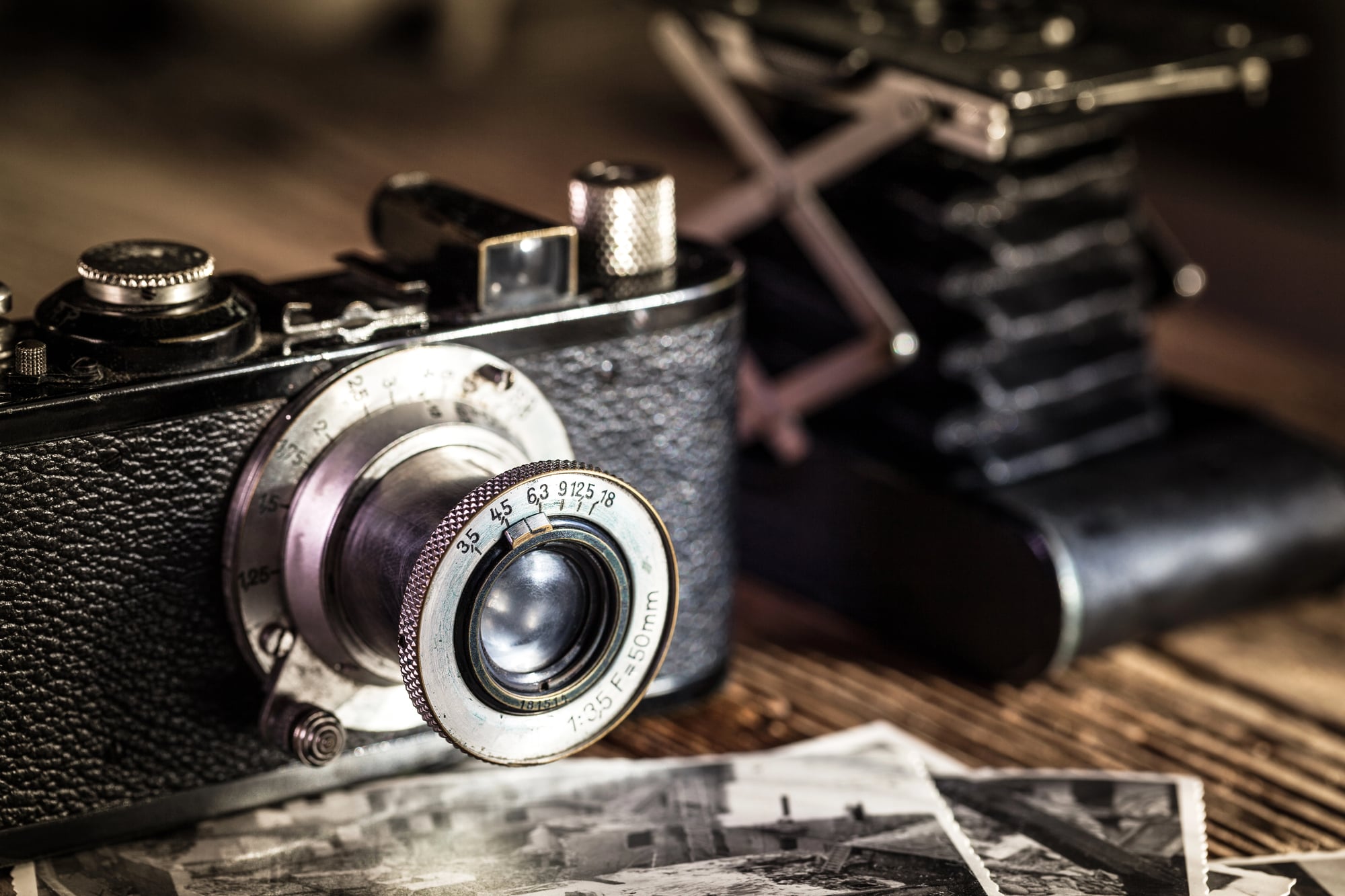
The Graflex Speed Graphic press camera — a large-format camera using 4×5 inch sheet film — was the standard equipment of American press photographers from the 1930s through the 1960s, the camera used at crime scenes, boxing matches, and political events that shaped the visual vocabulary of mid-century American journalism. A working Speed Graphic in good condition sells for $100–$400, and the lenses mounted on them — typically Graflex lenses in various focal lengths — can be worth as much as the camera body.
The Speed Graphic is large, conspicuous, and often donated to thrift stores because estates clearing out a deceased photographer’s equipment don’t know what to do with a camera the size of a small suitcase.
Contax II
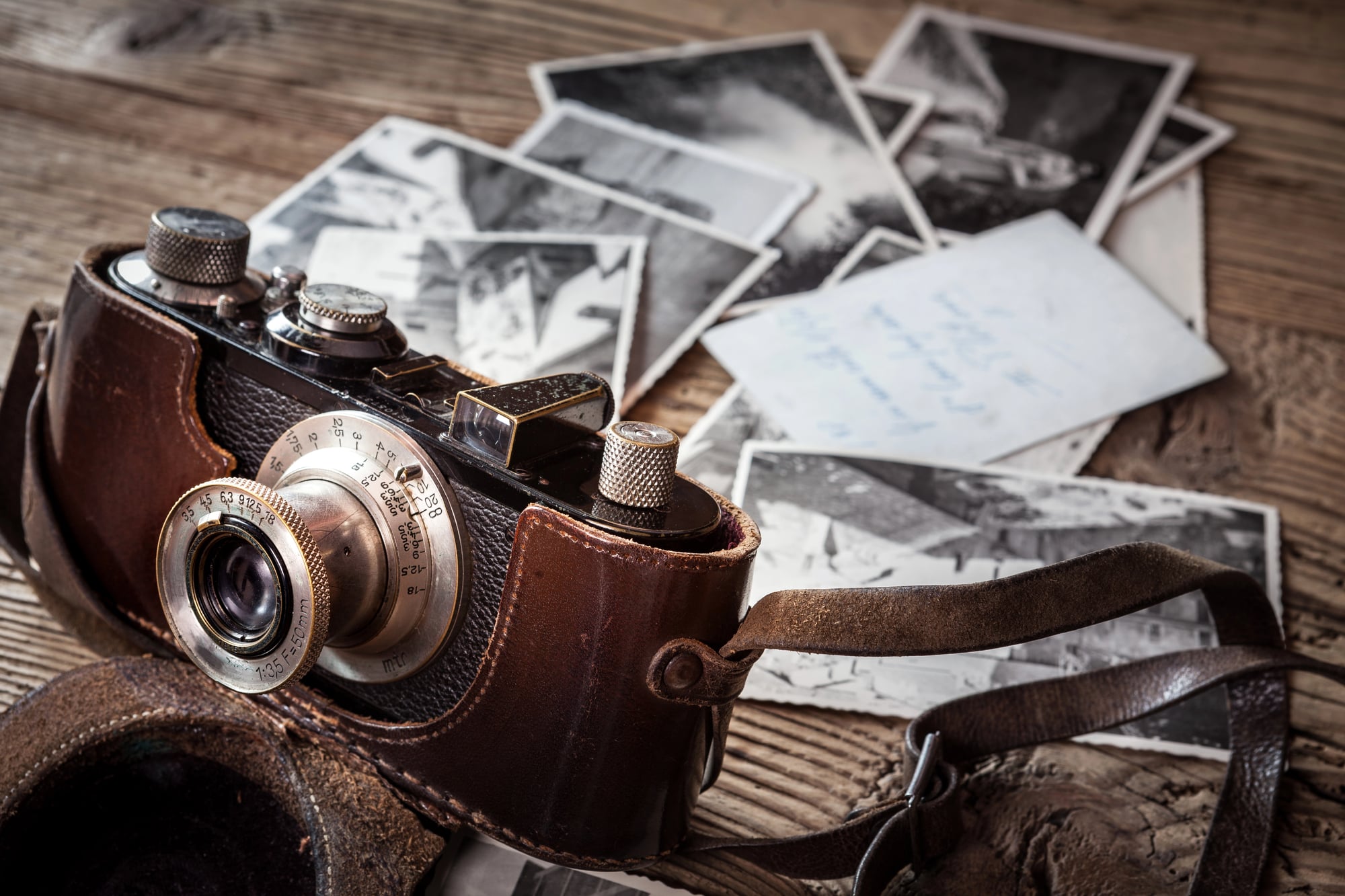
The Contax II, introduced by Zeiss Ikon in Dresden in 1936, was designed to surpass the Leica in every technical specification — it achieved a faster top shutter speed (1/1250th), a wider rangefinder base for more accurate focusing, and a combined viewfinder and rangefinder in a single window. It was used extensively by photographers on both sides of World War II.
Surviving examples in working condition sell for $200–$600, but the German optical heritage and the historical association with wartime photojournalism make them attractive to collectors. Many surviving Contax IIs have shutter problems caused by lubricant dried over 80 years, which a competent camera repair technician can address for less than the camera’s value.
Hasselblad XPan
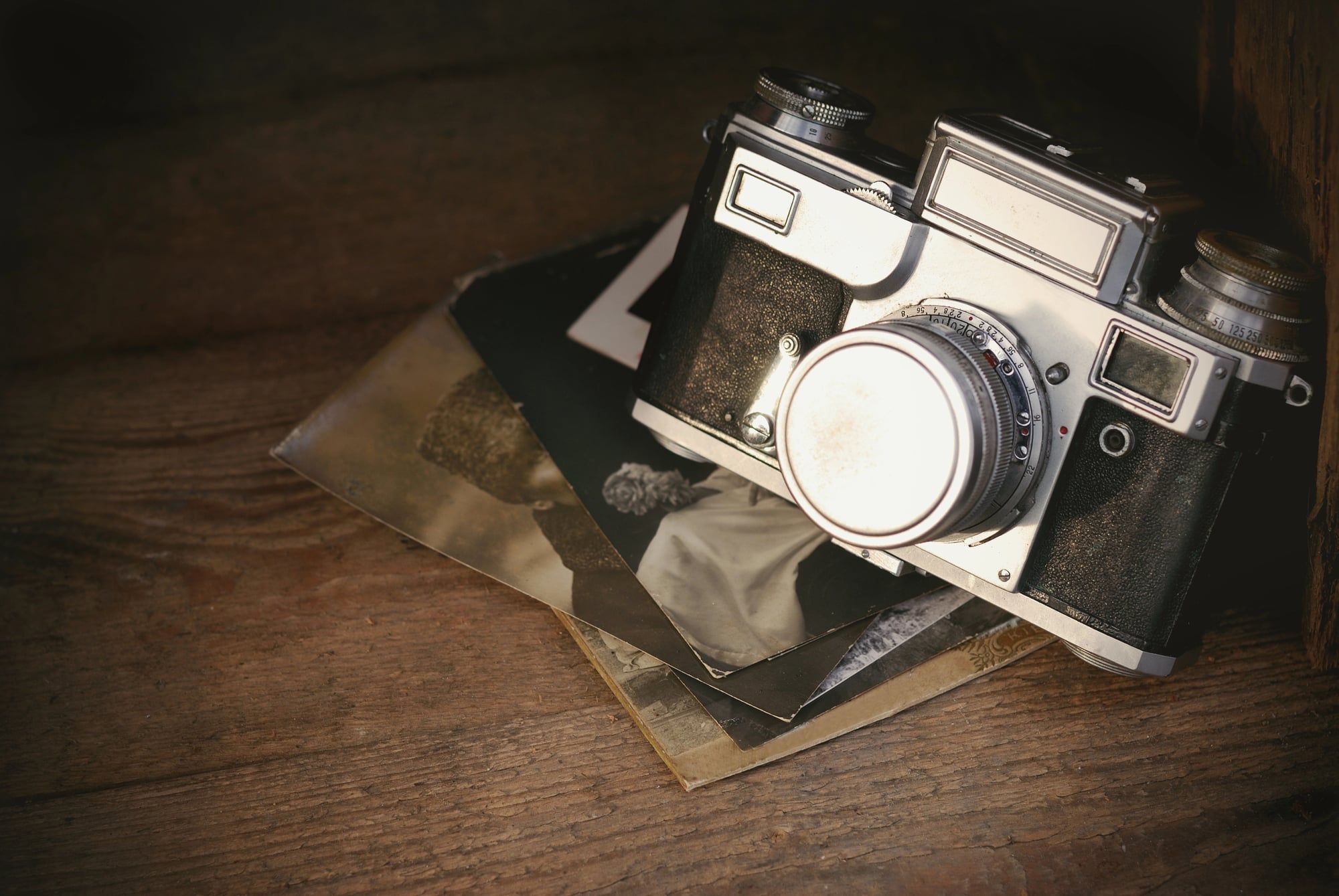
The Hasselblad XPan, produced in collaboration with Fujifilm from 1998 to 2006, is a 35mm panoramic camera that exposes two adjacent frames to produce a 65mm wide panoramic image — a format that has no digital equivalent and that produces an aesthetic that film photographers have increasingly prized. Its market value has risen sharply: a clean XPan with its standard 45mm lens now sells for $2,500–$4,500.
The XPan is increasingly unlikely to appear at a thrift store without its value being known, but the lens accessories — the 30mm and 90mm options — occasionally surface separately priced as generic camera lenses rather than panoramic camera accessories.
Minolta X-700

The Minolta X-700, the professional flagship of Minolta’s X-series introduced in 1981, offers programme automatic, aperture priority, and manual exposure modes with full compatibility with Minolta’s excellent MD lens system. It sells for $60–$150 and appears frequently at thrift stores because Minolta was a major camera manufacturer whose products were widely owned and whose brand disappeared — Minolta merged with Konica in 2003 and the combined company exited the camera business in 2006, meaning no new Minolta film cameras exist and the brand is no longer in the public consciousness.
The MD lenses, particularly the 58mm f/1.4 and the 85mm f/2, are significantly more valuable than the bodies and are sometimes found separately.
Leica IIIf

The Leica IIIf, a screw-mount rangefinder produced from 1950 to 1956, is the last of the Leica thread-mount cameras before the bayonet M-mount series began with the M3. Collectors value it both for its history and for the ability to use it with a vast range of Leica-thread lenses produced by Leica, Canon, and many other manufacturers over several decades.
A clean IIIf body sells for $300–$600, and when equipped with its original Elmar lens it commands significantly more. The screw-mount Leica family spans decades of photographic history and attracts both practical film photographers and historical collectors.
Konica Hexar
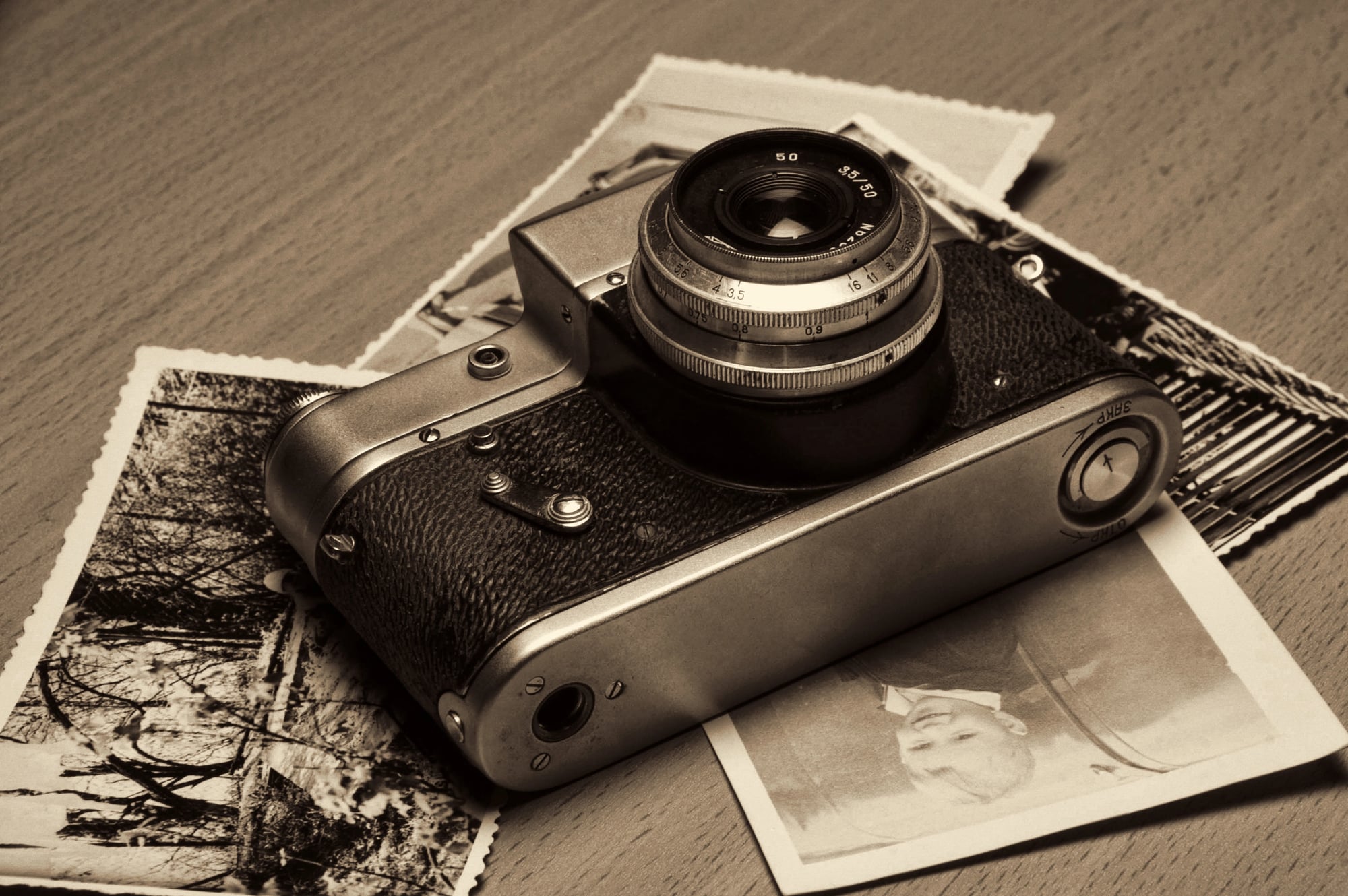
The Konica Hexar, produced from 1992 to 2001, was the quiet camera: its shutter was engineered to be nearly silent, making it the preferred tool for street photographers who wanted discretion. A 35mm f/2 Hexanon lens — optically outstanding by any measure — was fixed, non-interchangeable, and extraordinarily sharp.
The Hexar sells for $500–$900 depending on the edition, with the silver version generally commanding less than the black. Its relative obscurity outside the film photography community means it still occasionally surfaces at thrift stores mispriced as a generic film compact.
Mamiya 7
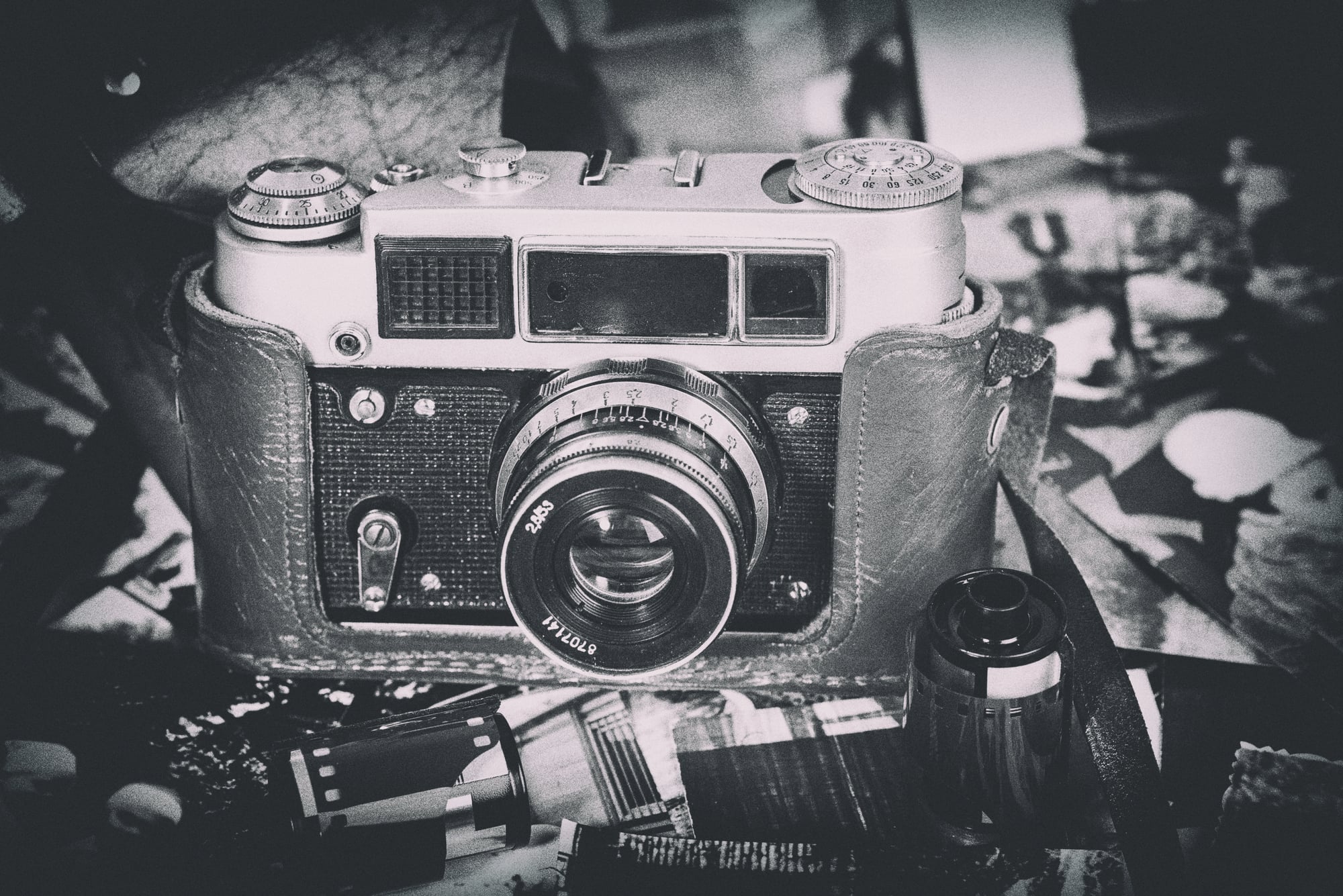
The Mamiya 7, a medium-format rangefinder produced from 1995 to 2000, is considered by many photographers to be the finest handheld medium-format camera ever produced — its rangefinder focusing combined with its interchangeable lenses and medium-format 6x7cm negatives producing image quality that no 35mm camera could match. A clean Mamiya 7 body sells for $1,500–$2,500, and the 80mm f/4 standard lens alone commands $700–$1,000.
It is unlikely to be found at a thrift store at an uninformed price, but it surfaces occasionally in estates of professional photographers whose families are unaware of the market.
Polaroid 180 Land Camera
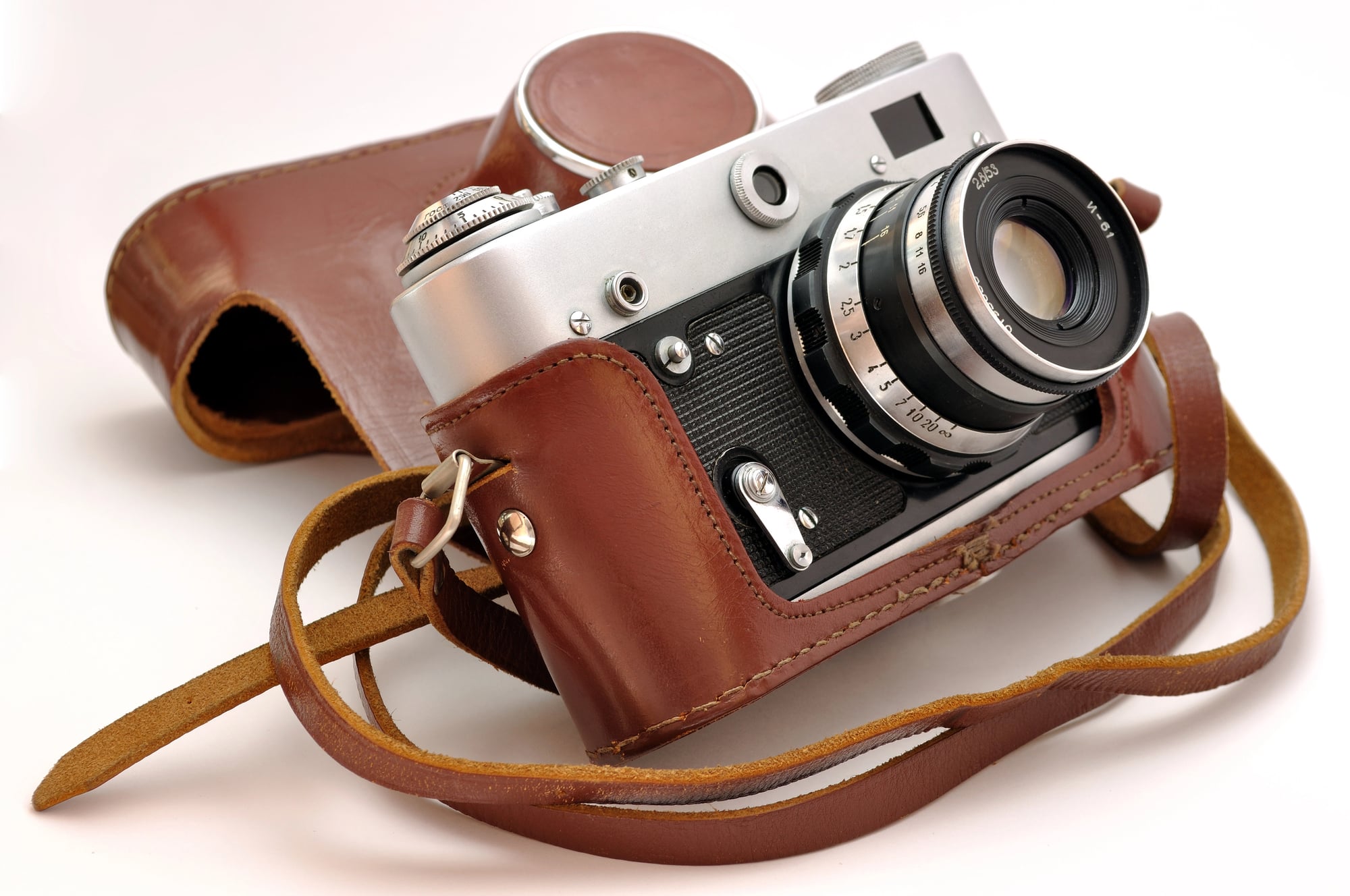
The Polaroid 180, produced from 1965 to 1969, is the most collectable of the folding pack film Polaroid cameras — it was the professional and enthusiast model of the era, with a Tominon 114mm f/4.5 lens and full manual controls including a proper rangefinder. Unlike the more common Polaroid 340 and 350 models it resembles, the 180 was produced in smaller quantities and represents the highest quality of that particular camera type.
A working 180 sells for $200–$400, and the confusion between the 180 and its less valuable siblings — particularly the 450, which looks nearly identical — creates exactly the kind of thrift store opportunity that collectors look for.
Exacta Varex IIa
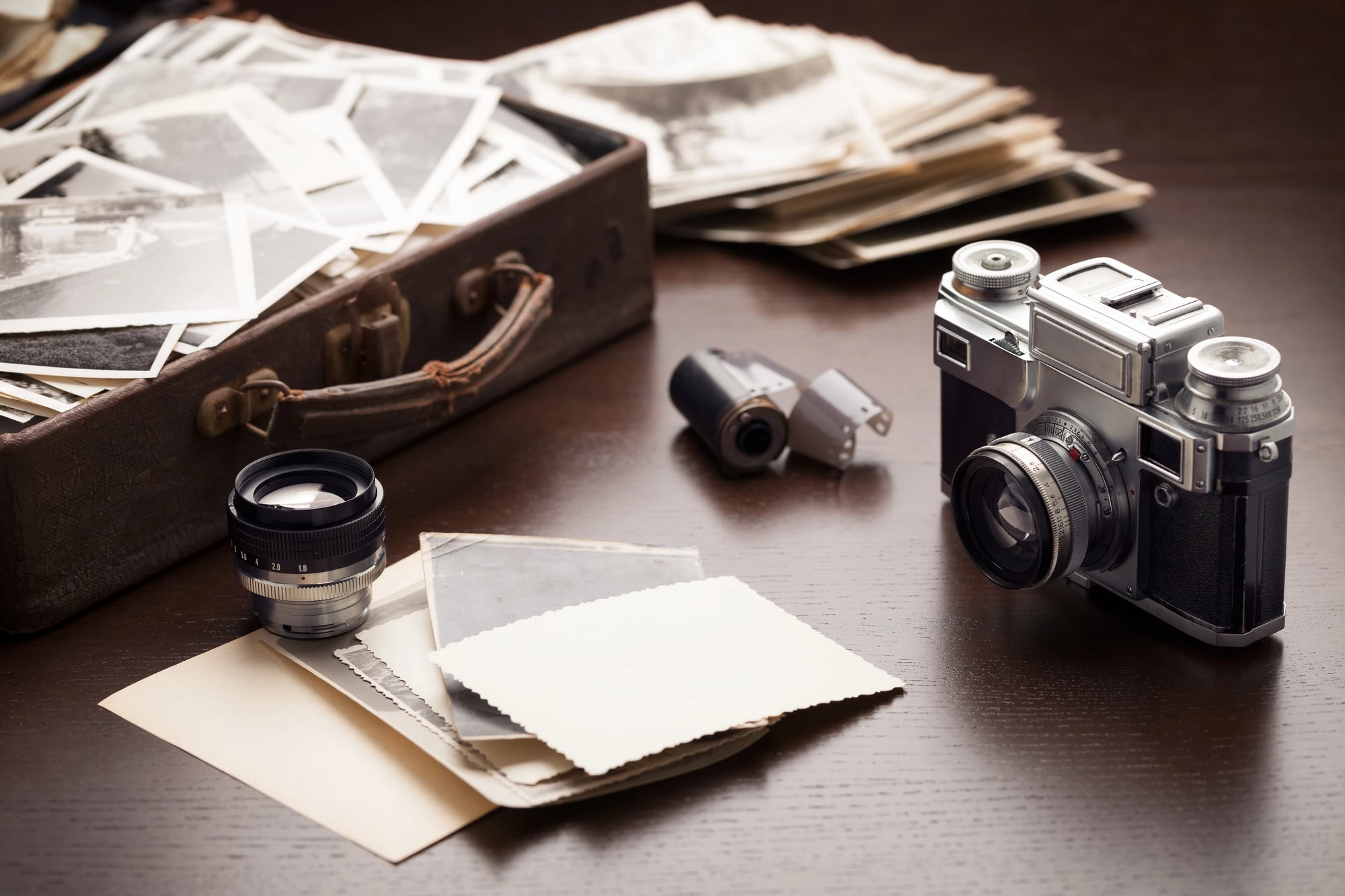
The Exacta Varex IIa, produced in East Germany from 1957 to 1963, is historically significant as one of the first cameras to establish the standard SLR design — including the pentaprism eye-level finder — that all subsequent SLRs followed. Its modular design allowed interchangeable finders and different backs, and it accepted an extraordinary range of lenses from German and other manufacturers through its proprietary mount.
Clean examples sell for $100–$300, and the Carl Zeiss Jena lenses made for the Exacta system — Flektogons, Biometars, Sonnar variants — are prized by collectors and can be adapted to modern digital cameras.
Topcon RE Super
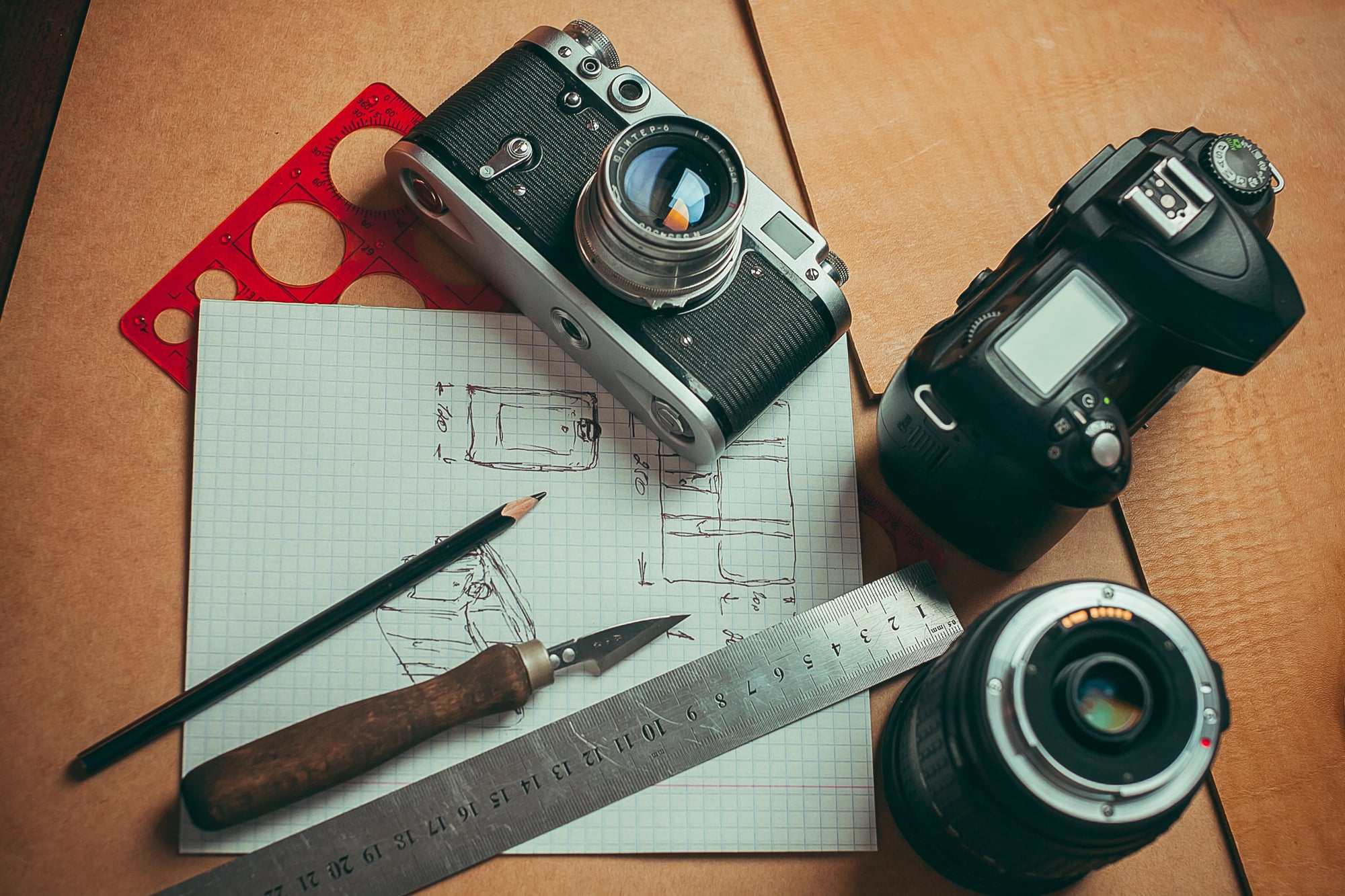
The Topcon RE Super, introduced in 1963, was the first Japanese camera with an open-aperture TTL metering system — a feature that all subsequent professional SLRs adopted and that made the accurate meter readings photographers needed at working aperture practical for the first time. Despite its historical significance, the Topcon RE Super sells for only $50–$150 because the brand lost market share to Canon, Nikon, and Olympus in the following decade, and the system lens mount has limited compatibility with other manufacturers’ optics.
For collectors interested in photographic history specifically, it is a significant object at a low price.
Voigtländer Bessa R2
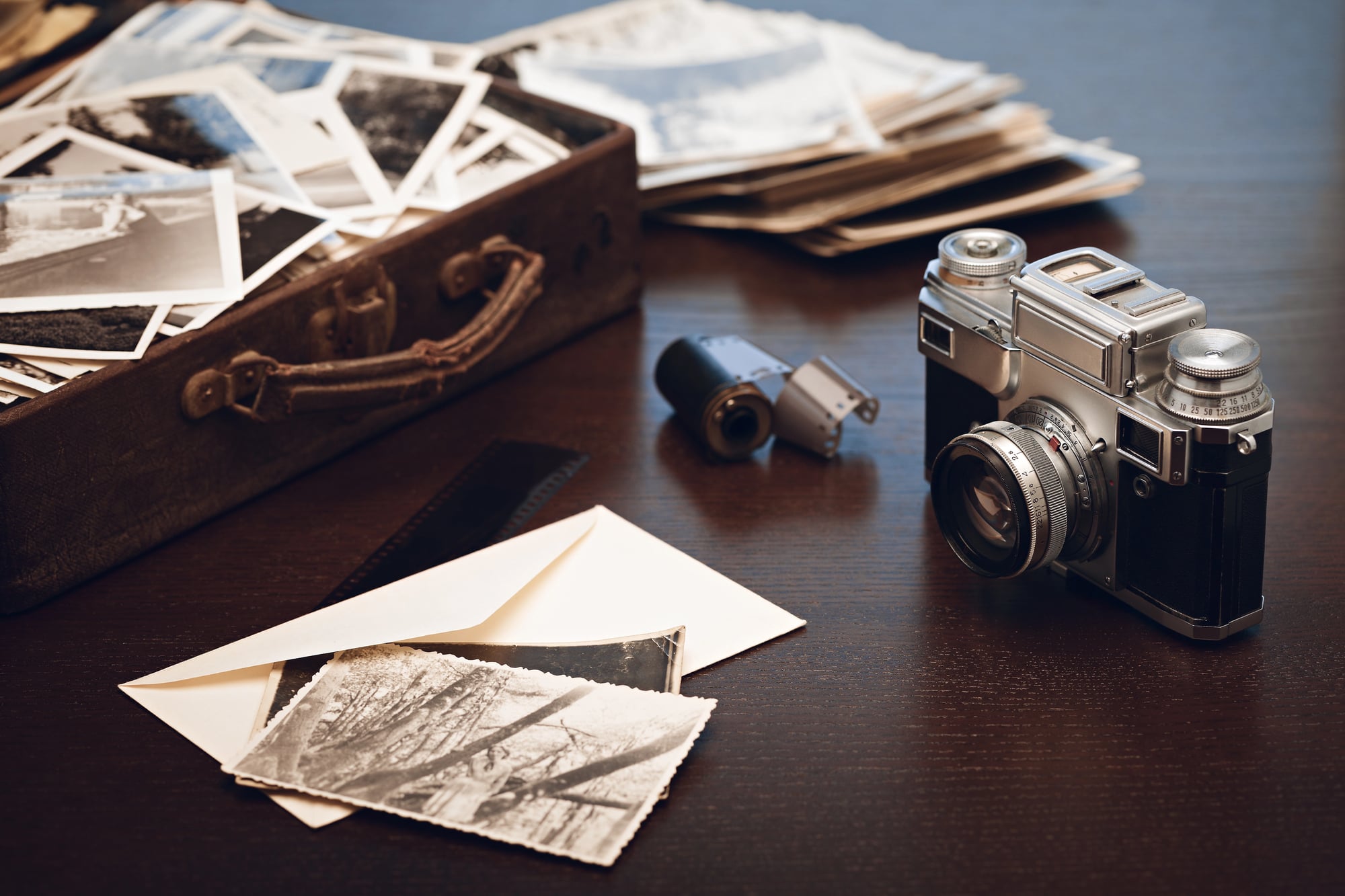
The Voigtländer Bessa R2, produced by Cosina in Japan under the Voigtländer name from 2002 to 2006, is a modern reinterpretation of the classic rangefinder design using Leica-compatible lens mounts, allowing collectors to use Leica M lenses on a camera that sells for $250–$450 rather than the equivalent Leica’s $2,000+. It appears occasionally at thrift stores because it looks like a generic film camera to an uninformed seller, and the Voigtländer name is less immediately recognised than Leica.
Zeiss Ikon Contarex
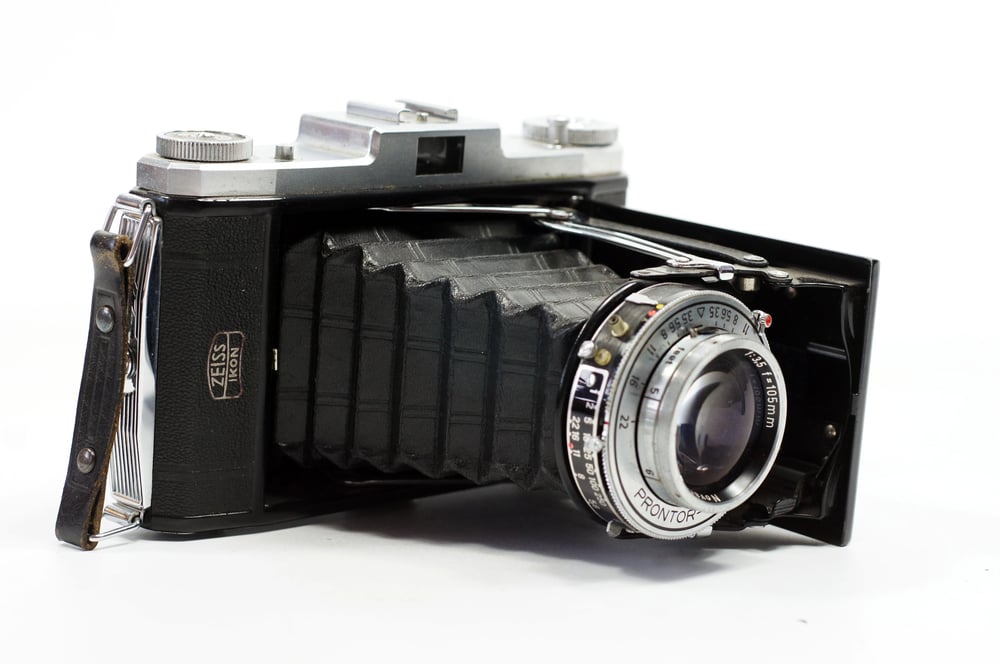
The Zeiss Ikon Contarex, produced from 1958 to 1972 in West Germany, was an enormously expensive and technically ambitious professional SLR nicknamed “the Bullseye” for its large circular coupled meter on the front of the camera. It was the most sophisticated camera of its era and also one of the most expensive — and because of that price, its sales were limited, making surviving examples relatively rare.
A working Contarex body with its standard Zeiss Planar 50mm lens sells for $300–$700, and the specialist Zeiss lenses for the system command significant premiums. Its obscurity outside specialist collector circles means it occasionally surfaces at estate sales unrecognised.
Ricoh GR1
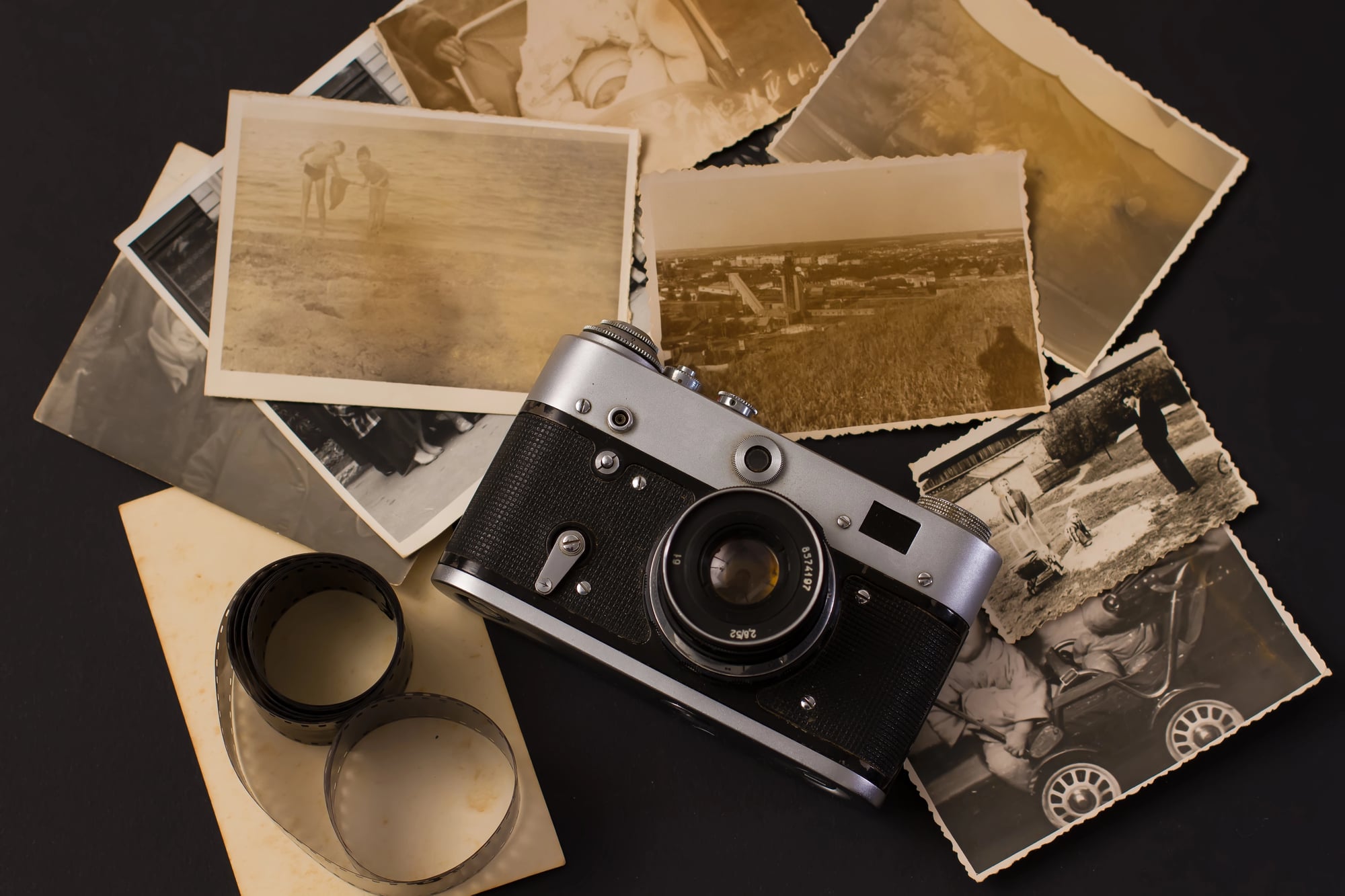
The Ricoh GR1, introduced in 1996, is a compact 35mm camera with a GR Lens 28mm f/2.8 that became the standard recommendation for street photographers who wanted wide-angle vision in a pocket camera. Its market has risen sharply: a clean GR1 now sells for $600–$1,200, up from $100–$200 five years ago, driven by the film revival and the specific aesthetic of 28mm wide-angle photography that the camera produces.
The GR1s (the s indicating a later version with minor improvements) commands slightly more. Finding one priced below $50 at a thrift store is now rare enough to be the subject of disbelieving photographs posted online when it happens.
Mamiya RB67

The Mamiya RB67, a medium-format SLR using 6x7cm negatives produced from 1970 onward, is the professional portrait photographer’s workhorse of the analogue era — heavy, modular, with interchangeable backs that allow mid-roll film changes, and with a rotating back that makes switching between portrait and landscape orientation without moving the camera. It sells for $200–$600 for a complete body and standard lens, depending on condition.
It appears at thrift stores regularly because it is large, heavy, and looks imposing to non-photographers — it gets donated as a curiosity rather than as a valued item by families clearing estates.
The Education of an Eye
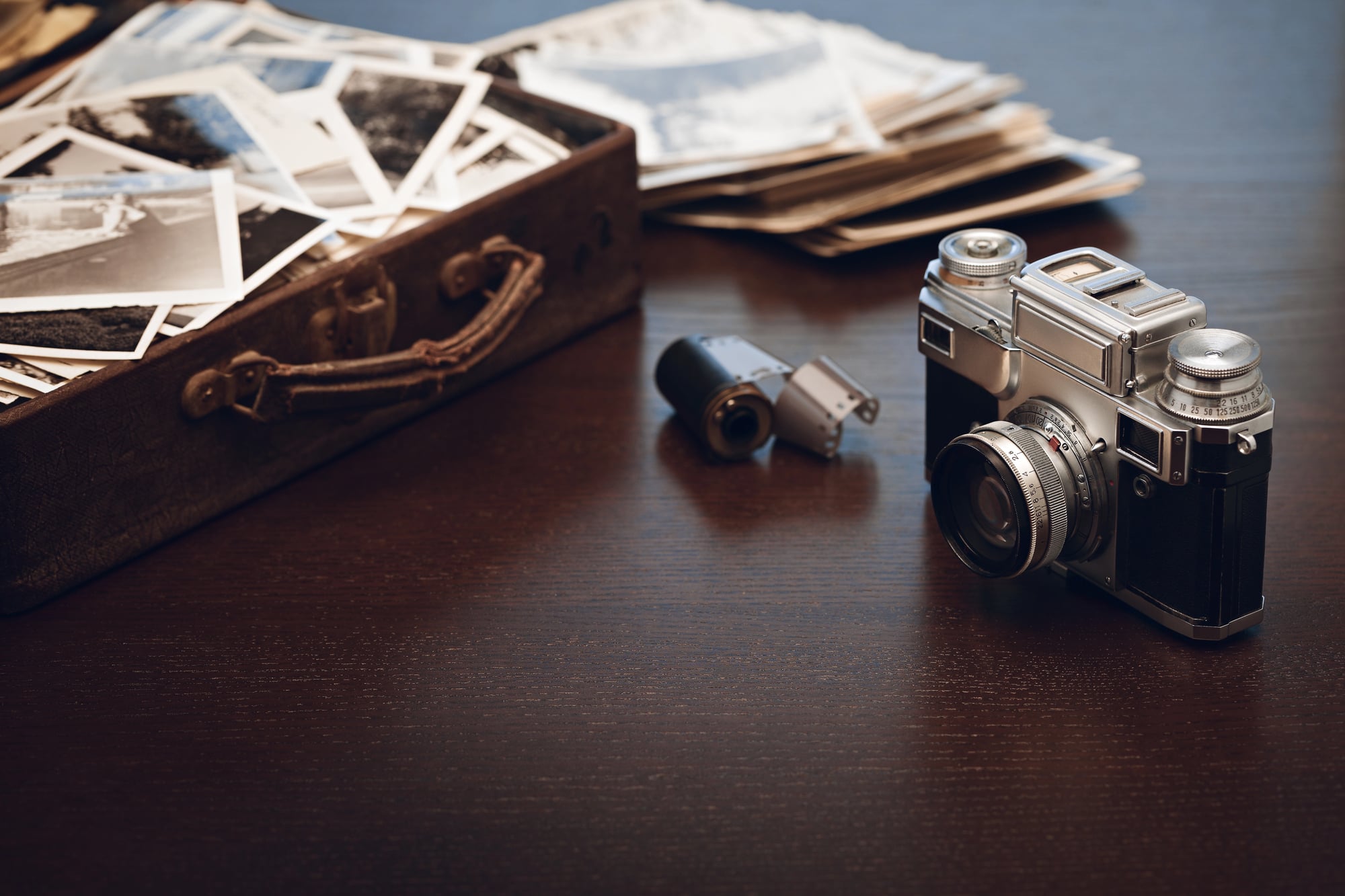
The thing about learning to spot valuable cameras at thrift stores is that it requires exactly the kind of specific, obsessive knowledge that general online research never quite transmits. Knowing that a Rolleiflex 2.8F is valuable is easy to learn.
Knowing that the particular Rolleiflex in front of you has a seized focus mechanism that will cost $200 to repair, reducing the effective thrift store price dramatically, is harder — and is precisely the knowledge that separates casual browsers from people who walk away with genuine finds.
The film photography revival that began around 2015 has changed the landscape significantly. Thrift stores in major cities are increasingly staffed by people who look up camera values on their phones before pricing them.
Estate sale companies now photograph camera equipment for online research. The era in which a Leica M3 could plausibly sit on a shelf for $20 is not over, but it has narrowed.
The real finds now tend to come from smaller towns, from camera systems whose brands have faded from public memory, and from the specific categories — medium-format lenses, viewfinders, lens hoods — that look like miscellaneous accessories to uninformed eyes but function as significant values to people who know what they’re holding.
More from Go2Tutors!

- The Romanov Crown Jewels and Their Tragic Fate
- 13 Historical Mysteries That Science Still Can’t Solve
- Famous Hoaxes That Fooled the World for Years
- 15 Child Stars with Tragic Adult Lives
- 16 Famous Jewelry Pieces in History
Like Go2Tutors’s content? Follow us on MSN.



