27 Bedroom Posters Teens Hung In The ’80s
A teenager’s bedroom wall in the 1980s was a public statement made in a private room. Four pieces of tape, a sheet of glossy paper, and suddenly a kid in suburban Ohio had declared allegiance to a car, a band, or a movie star nobody else in the house cared about.
Parents complained about thumbtack damage, and the posters went up anyway.
Most of these came from mall record shops, Spencer Gifts, and the center spreads of teen magazines. Many were printed in large quantities, and a surprising number have survived in attics and on collector sites, where condition still decides nearly everything about what they are worth.
Farrah Fawcett in the Red Swimsuit

Technically a 1976 release, the red swimsuit poster was still on walls through the first half of the ’80s because nothing had replaced it. Photographer Bruce McBroom shot it in Fawcett’s backyard, using a Mexican blanket as the backdrop.
Fawcett chose the final photograph herself. Pro Arts of Ohio printed it, and it became the best-selling pinup poster of all time, with sales exceeding 12 million copies.
The swimsuit itself is now part of the Smithsonian’s National Museum of American History collection. Original 1976 printings in clean condition can bring real money today, while reprints are worth very little.
The Lamborghini Countach

No car owned more teenage drywall than the Countach, usually photographed in white or red with the scissor doors flung open. The design by Marcello Gandini dated to the early ’70s, but the wide-fendered LP5000 S and later Quattrovalvole versions of the ’80s were the ones that made the posters.
Few of the kids who hung it had ever seen one in person, since Lamborghini built only a few thousand across the model’s entire run. The rear wing, which could increase drag and reduce top speed, was the detail everyone wanted.
Vintage printings from poster companies of the era are inexpensive unless they are an original dealer or factory piece in good shape.
The Ferrari Testarossa
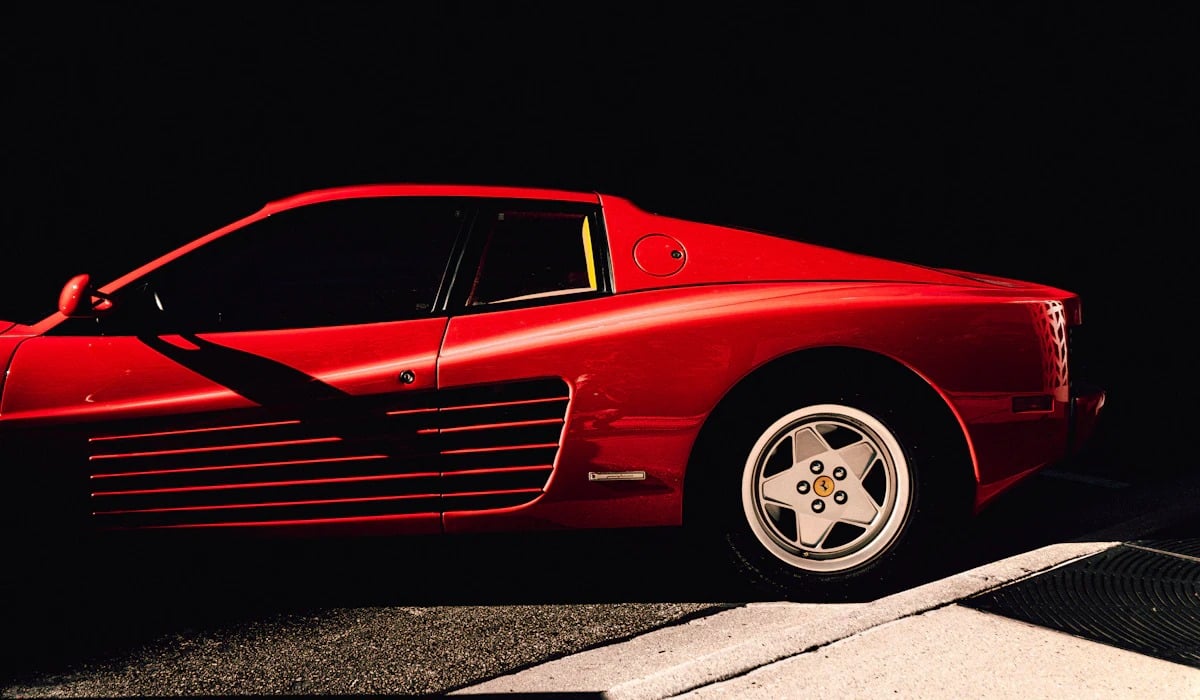
The Testarossa debuted at the Paris Motor Show in October 1984 and spent the rest of the decade competing with the Countach for wall space. Its side strakes, the long horizontal fins feeding the side radiators, were a defining design feature.
Television did the rest of the marketing when a white Testarossa became the hero car on Miami Vice in the show’s later seasons. Posters usually showed it in the same white or in Ferrari red, shot low from the front three-quarter angle.
Prices for period posters depend on whether they are licensed Ferrari items or generic prints, and on how faded the red has become.
Patrick Nagel’s Women

Patrick Nagel’s flat, high-contrast women with pale skin, black hair, and red lips were everywhere after he created the cover art for Duran Duran’s Rio in 1982. Nagel’s work had appeared regularly in Playboy, but the framed prints sold in mall galleries and poster shops reached a much wider audience.
The style borrowed from Japanese woodblock prints and Art Deco, which is why it looked both futuristic and old at once. Nagel died in 1984 at age 38, after suffering a heart attack following an exercise session at a celebrity charity event.
Authentic signed or limited editions command high prices, while mass-market posters are common and cheap.
Michael Jordan’s Jumpman
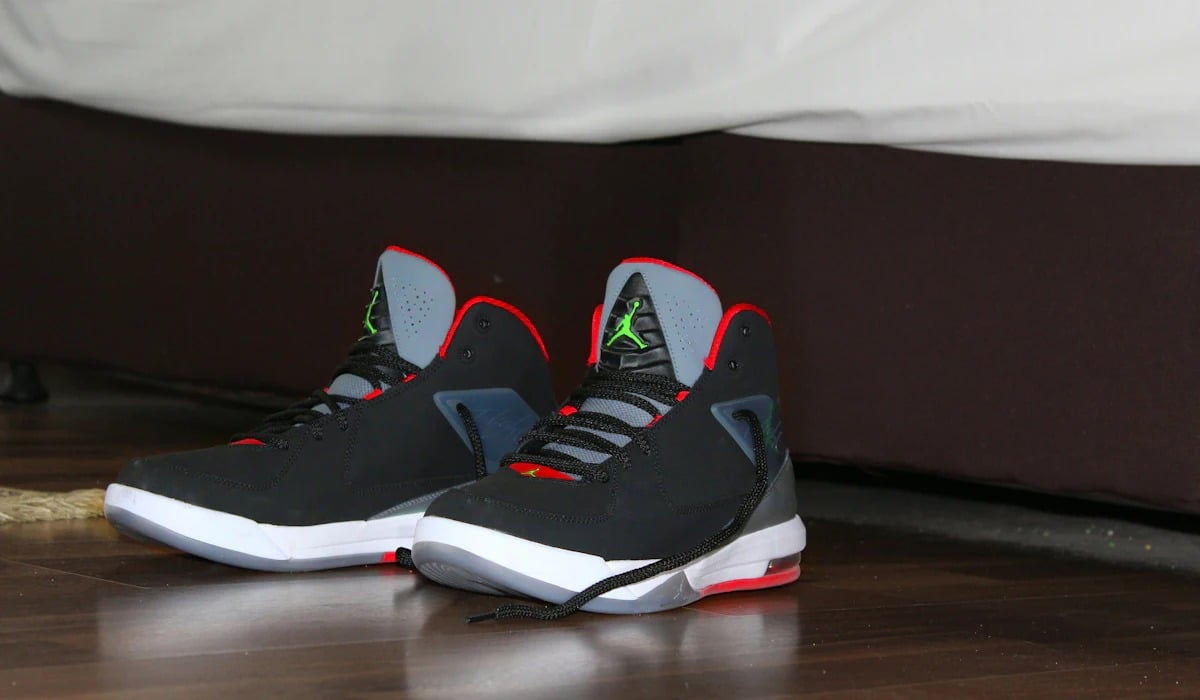
Nike’s Jumpman image of Jordan in mid-leap became one of the most recognizable basketball graphics of the decade. The pose was inspired by a dancer’s grand jeté, which Jordan held for the camera.
Photographer Jacobus Rentmeester had shot a similar pose of Jordan for Life magazine in 1984 and sued Nike in 2015, claiming the company copied it; the case was dismissed, and an appeals court later upheld the ruling. Posters and promotional materials featuring Jordan were often given away or sold cheaply at shoe stores, which is why so many survive.
Clean original promotional pieces with Nike copyright markings can be worth more than ordinary reproductions, but torn or tacked copies are far less valuable.
Cheryl Tiegs in the Pink Bikini

The Tiegs pink bikini poster was released in 1978 by Pro Arts, the same company behind the Farrah poster, and stayed in circulation well into the ’80s. Tiegs had already appeared on the cover of Sports Illustrated’s swimsuit issue, and her 1978 cover appearance helped cement her status as one of America’s best-known swimsuit models.
The poster showed her standing in surf with her hair wet and pushed back. It routinely appeared on lists of the best-selling pinup posters of the era, second only to Fawcett.
As with the Farrah poster, first-run copies with the original printer’s markings are the ones collectors seek.
Heather Thomas on The Fall Guy

Heather Thomas played Jody Banks on The Fall Guy, which ran on ABC from 1981 to 1986, and her poster in a black bikini became one of the decade’s best-known pinups. Her co-star Lee Majors had been married to Farrah Fawcett, so the show had an odd connection to the earlier poster era.
Thomas later said the poster’s success followed her for years, and she eventually stepped away from acting to write screenplays and novels. The image was so common in boys’ bedrooms that it showed up as set dressing in later movies about the ’80s.
Copies turn up constantly on resale sites, with pricing driven by condition and whether the image is a first printing.
Hang in There, Baby

The dangling kitten on a bamboo pole was photographed by Victor Baldwin and published as a poster in 1971, and by the ’80s it had become an inside joke as much as a motivational message. The cat was Baldwin’s own Siamese, named Sassy, and he had to shoot the image quickly before she let go.
The poster hung in guidance counselors’ offices and classrooms as often as bedrooms, which is partly why teenagers treated it with such affection and mockery. Countless knockoffs with different cats followed, so the Baldwin original with its copyright line is the one that matters to collectors.
Even then, it is an affordable collectible unless it is in exceptionally good condition.
Garfield Hating Mondays
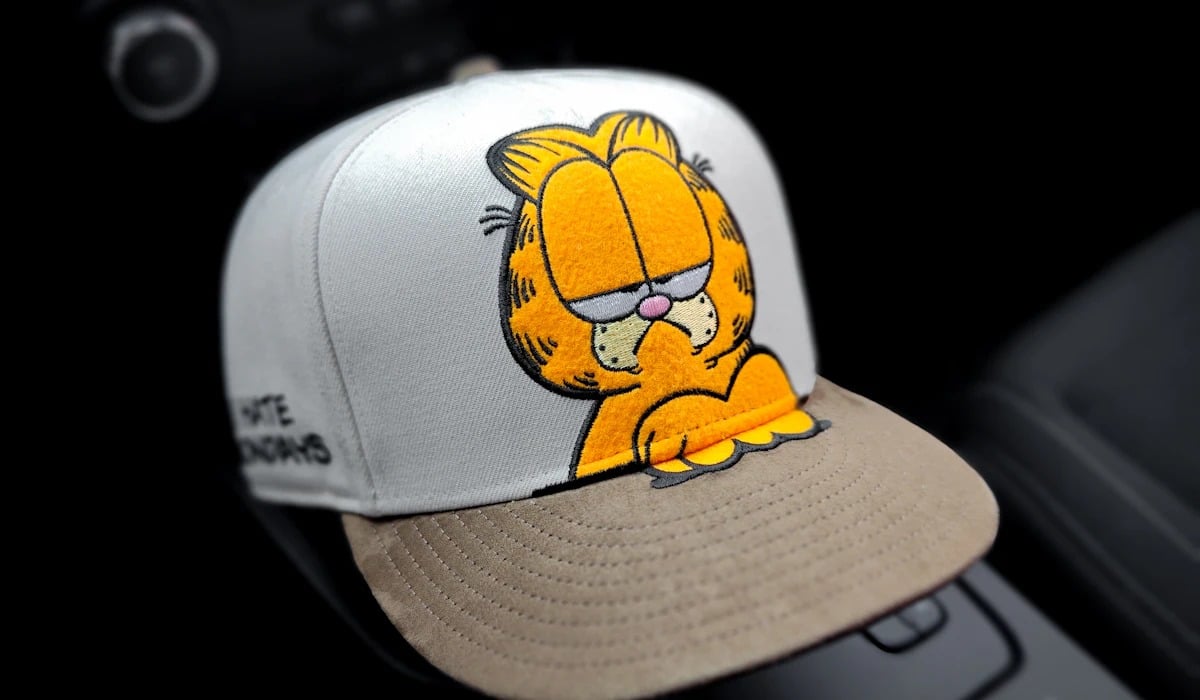
Jim Davis launched the Garfield comic strip in 1978, and by the mid-’80s the orange cat was on lunchboxes, suction-cup car window toys, and bedroom walls. Posters usually featured Garfield sprawled with a pan of lasagna or glaring at the reader beside a slogan about hating Mondays.
The strip had become one of the most widely syndicated in the world by the end of the decade, running in more than 2,000 newspapers. The posters were a safe pick for younger teens whose parents would not have approved of Iron Maiden.
They are plentiful and cheap today, though licensed pieces from the earliest years draw more interest.
Iron Maiden’s Eddie

Iron Maiden’s mascot Eddie, painted by Derek Riggs, was the single most reliable way for a teenager to unsettle a parent. The Number of the Beast cover from 1982 showed Eddie puppeteering the devil, and the Powerslave artwork from 1984 recast him as a giant Egyptian pharaoh statue.
Riggs painted a new Eddie for nearly every album and single, which meant there was always a fresh poster. The band’s Powerslave tour staging featured a towering pharaoh-themed Eddie prop.
Original tour posters and record-store promotional pieces are the ones collectors chase, with values tied to condition and whether they were ever folded.
Def Leppard’s Pyromania

Pyromania arrived in January 1983 and sold around 10 million copies in the United States, driven by MTV airing “Photograph” and “Rock of Ages” frequently. The cover art showed a building in crosshairs under a column of flame, and the band’s posters of five young Englishmen in Union Jack shirts and leather vests went up in equal numbers.
Drummer Rick Allen lost his left arm in a car crash on the last day of 1984 and returned to play with a custom electronic kit, which only deepened fan loyalty. Posters from the Pyromania era tend to be cheaper than those from the Hysteria period, which were also printed in large quantities, though condition drives both.
Bon Jovi’s Slippery When Wet

Slippery When Wet came out in August 1986 and turned a New Jersey bar band into one of the biggest acts in American arenas. The original cover concept was a woman in a wet T-shirt, which retailers rejected, so the released version was a black trash bag sprayed with water and the title written in the droplets.
Posters of Jon Bon Jovi with his permed hair and open shirt were as common in girls’ rooms as the band’s group shots were in boys’. The album produced the number-one hits “You Give Love a Bad Name” and “Livin’ on a Prayer.”
Tour posters and record-store promotional pieces from 1986 and 1987 remain popular with collectors.
Duran Duran in Suits
Duran Duran were among the bands whose success was boosted by music videos, and their posters reflected the look: five men in linen suits, feathered hair, and expensive locations. The videos for “Hungry Like the Wolf” and “Rio” were filmed in Sri Lanka and Antigua, respectively, giving the band a glamour that matched the Nagel artwork on the Rio album sleeve.
Fans divided themselves by favorite member, with Simon Le Bon and John Taylor typically drawing the most wall space. Teen magazines ran Duran Duran centerfolds for years, which means loose pullouts outnumber proper posters on the resale market today.
Those pullouts are generally worth less than official tour posters in good shape.
Madonna in Lace and Crucifixes

Madonna’s Like a Virgin era, beginning in late 1984, gave bedroom walls a specific uniform: lace gloves, rubber bracelets stacked to the elbow, a “Boy Toy” belt buckle, and layered crucifix necklaces. Her 1985 Virgin Tour was her first, and the merchandise and posters from it are the earliest official items collectors chase.
Photographs by Steven Meisel and Herb Ritts supplied images for many of the licensed posters. The look changed again with True Blue in 1986, when she cropped her hair and went platinum, so the posters are easy to date.
Early Boy Toy-era items in excellent condition can sell for hundreds of dollars, depending on authenticity and demand.
Prince in Purple Rain

Purple Rain was released in the summer of 1984 as both a film and an album, and the poster image of Prince in a purple trench coat astride a purple Honda motorcycle was unavoidable for the next two years. The album spent 24 consecutive weeks at No. 1 on the Billboard 200.
The film was shot largely in Minneapolis, including the First Avenue nightclub, which still operates. The purple coat and ruffled shirt gave a generation of teenagers a reason to stare at their own sensible wardrobes with disappointment.
Original 1984 theatrical one-sheets are a different market from music posters and can command higher prices when authenticated.
Michael Jackson in the Thriller Suit
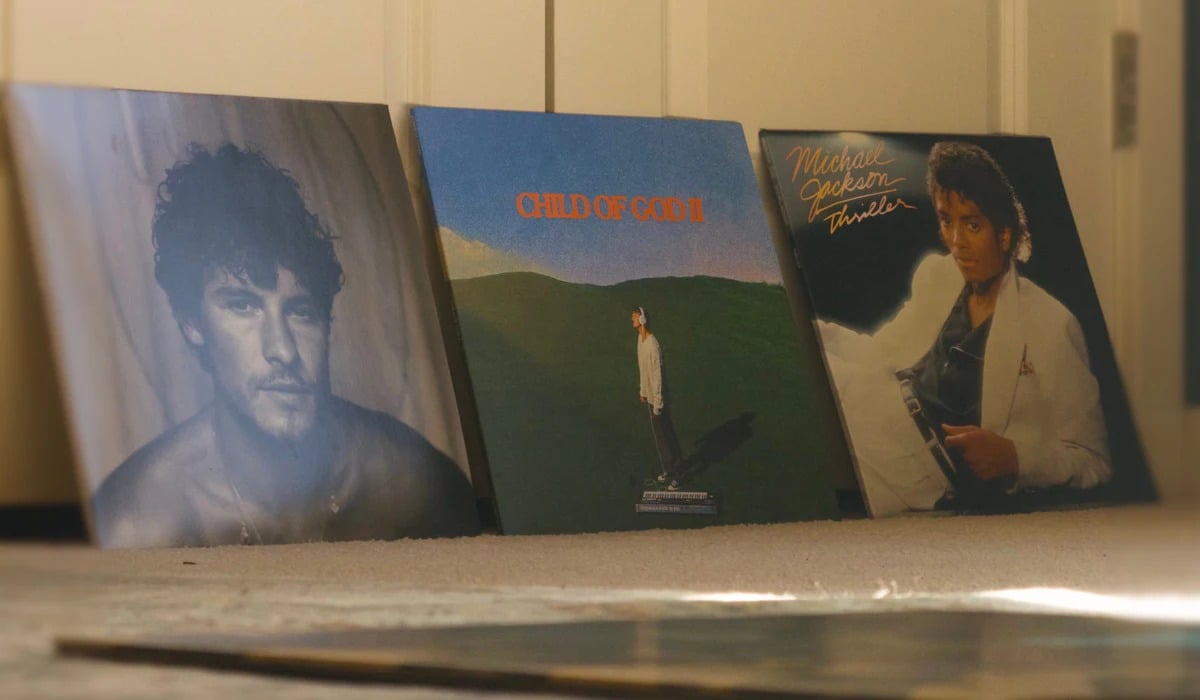
Thriller, released in late 1982, became the best-selling album of all time, and the white suit from its cover photograph appeared on early posters. The red leather jacket from the “Thriller” video, which premiered in December 1983, followed and became the dominant image.
Jackson’s single sequined glove from the 1983 Motown 25 television special was often added to the pose. Posters from the Bad era in 1987 showed a harder look with buckles and a black leather jacket.
Early Thriller posters with Epic Records or official licensing marks generally hold value better than the many bootlegs that circulated at flea markets.
Van Halen’s 1984

The album 1984 came out in January of that year, and its cover of a toddler angel with a cigarette in hand was reworked for posters in many markets. The band’s live shots, especially David Lee Roth mid-leap in a split with his hair flying, were the more common choice for walls.
“Jump” was the group’s only No. 1 single, and the synthesizer that opened it alarmed guitar purists. Roth left the band in 1985, so posters of the original lineup stop with this era and are the ones fans want.
Promotional posters issued to record stores at the time are scarcer than the mass-market prints.
Mötley Crüe’s Shout at the Devil

Shout at the Devil arrived in September 1983 with a pentagram on the cover and the band in leather, studs, and spiked shoulder pads that looked borrowed from a post-apocalyptic film. The pentagram became controversial, but it was not simply removed from every later pressing; the album’s packaging varied over time.
The posters were the kind that got torn down by parents, which may help explain why some surviving originals are in poor condition. Nikki Sixx, Tommy Lee, Mick Mars, and Vince Neil in full stage costume became a reference point for glam metal bands that followed.
Values rise for early tour posters that have survived in good condition.
Back to the Future

Drew Struzan painted the Back to the Future poster for its July 1985 release, showing Marty McFly checking his watch beside the DeLorean with flame trails behind him. Struzan was one of the most prolific poster illustrators of the decade, also responsible for the Indiana Jones and Star Wars campaigns, and his style helped define what a movie poster looked like.
The film was the highest-grossing release of 1985 in the United States. The DeLorean DMC-12 had already ceased production by the time the film made it famous.
Original studio one-sheets are collected separately from retail posters, and the difference in price can be large.
Top Gun

Top Gun opened in May 1986 and helped popularize aviator sunglasses, bomber jackets, and posters of Tom Cruise standing in front of an F-14 Tomcat. The soundtrack, with “Danger Zone” and “Take My Breath Away,” spent five weeks at No.
1. The film was also credited with helping boost interest in naval aviation and military recruitment.
Posters of Cruise as Maverick were joined by shots of Kelly McGillis and Val Kilmer, but the fighter jet image was the one most boys wanted. The retail version with the Paramount logo and the film’s tagline is common, and prices depend on condition and whether it was pinned or framed.
E.T. and the Touching Fingers

John Alvin created the teaser poster for E.T. the Extra-Terrestrial in 1982 with two fingers touching against a starry sky, a nod to Michelangelo’s Creation of Adam. The alien’s face was deliberately hidden on the early marketing, so the finger image did the work.
The film held the title of highest-grossing movie of all time for more than a decade until Jurassic Park passed it in 1993. The poster was gentle enough for parents to approve and iconic enough that teenagers kept it up longer than they would admit.
The teaser version is worth considerably more than the later poster that showed Elliott and E.T. flying on the bicycle.
Return of the Jedi
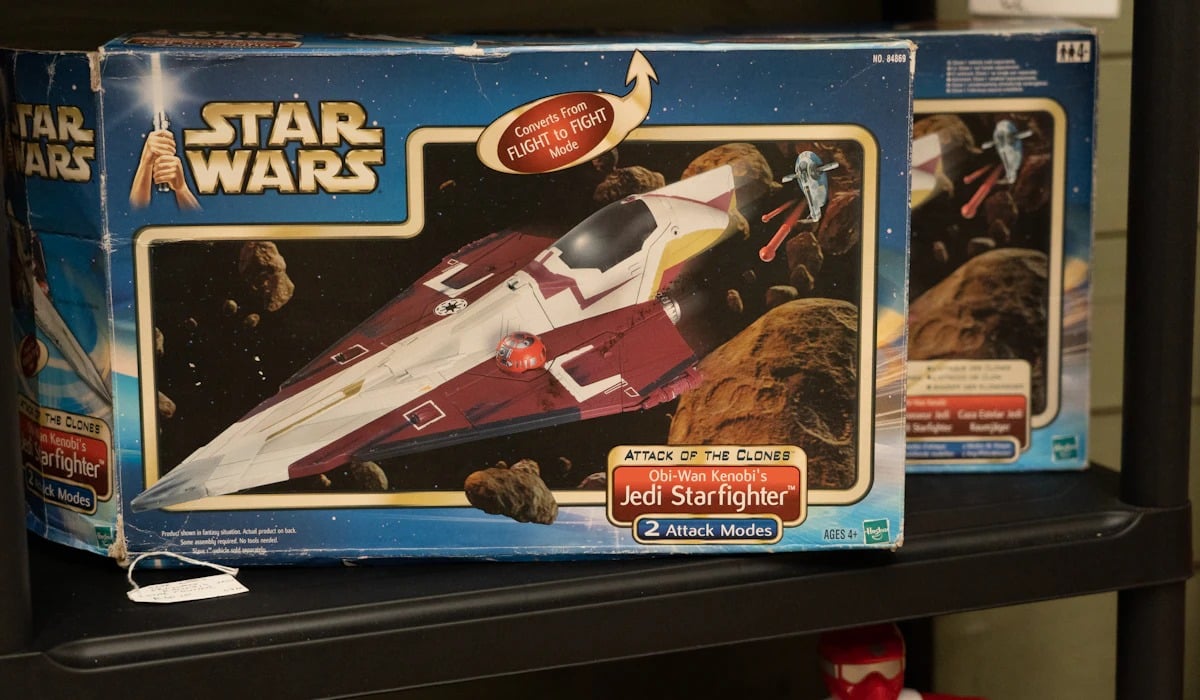
Return of the Jedi opened in May 1983, and the Style B one-sheet painted by Kazuhiko Sano, with Luke holding a green lightsaber above a montage of characters, became one of the versions fans collected. The film was briefly marketed as Revenge of the Jedi before George Lucas decided Jedi do not seek revenge, and the recalled Revenge posters are now prized collectibles.
The Sano artwork was also issued in other formats, so the exact version matters when assessing value. The movie was the top-grossing film of 1983.
Buyers should expect large price gaps between authentic 27-by-41-inch theatrical prints and the smaller store versions.
The Karate Kid

The Karate Kid opened in June 1984 and gave Ralph Macchio’s Daniel LaRusso a spot on walls that was equal parts hero worship and teen idol crush. The crane kick pose, with Daniel balanced on one leg at the beach, was the image used on many posters.
Pat Morita’s Mr. Miyagi earned an Academy Award nomination for Best Supporting Actor, a rare honor for a film aimed at teenagers.
The movie spawned two sequels in the decade and a franchise that returned decades later. Film posters from 1984 with the Columbia Pictures logo are collected, and condition determines whether they sell for pocket money or hundreds of dollars.
Miami Vice
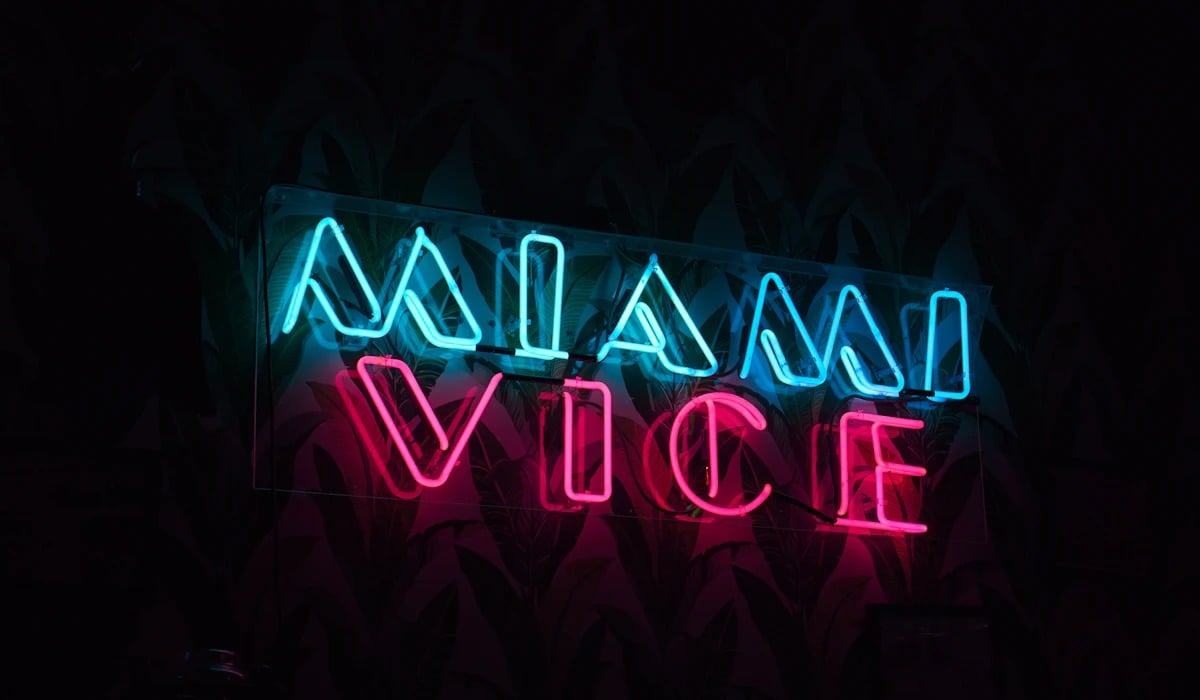
Miami Vice premiered on NBC in September 1984 and gave boys’ bedrooms a poster that was really a style guide: Don Johnson in a pastel T-shirt under an unstructured Italian jacket, loafers without socks, and permanent stubble. Philip Michael Thomas as Ricardo Tubbs supplied the sharper, double-breasted contrast.
Michael Mann’s rule that no earth tones appear on screen gave the show its pink and teal palette, and posters leaned into it. The show’s first-season Ferrari Daytona Spyder was a replica, which Ferrari objected to, leading to the real Testarossa in later seasons.
Licensed NBC posters from the first two seasons are the ones with resale interest.
The Cure and Robert Smith

For the teenager who did not want a car or a swimsuit model, The Cure offered Robert Smith’s teased black hair, smeared red lipstick, and oversized sweaters. The band’s 1985 album The Head on the Door and 1987’s Kiss Me, Kiss Me, Kiss Me brought them to American radio and MTV, and posters followed into college towns and high schools.
The look owed something to goth and something to Smith’s own disinterest in grooming, and it was easy to copy with drugstore makeup. Posters of Smith alone outnumbered group shots, since the lineup changed over time.
Import posters from the UK, often on thinner paper, are the ones with particular interest from collectors.
Dirty Dancing

Dirty Dancing was released in August 1987, and the poster of Patrick Swayze holding Jennifer Grey in the lift, or the two of them pressed together under the title, became the defining romantic poster of the late ’80s. The film was made for a modest budget and became a surprise hit, with the soundtrack topping the Billboard 200.
The film’s song “(I’ve Had) The Time of My Life” won the Academy Award for Best Original Song. Swayze had trained as a dancer before acting, which the film used to full advantage.
Original Vestron Pictures one-sheets are collected, and the many retail reprints are worth far less regardless of how carefully they were stored.
Tiger Beat and Teen Beat Pullouts

Not every poster came from a store. Tiger Beat, launched in 1965, and its rival Teen Beat devoted their center pages to pullout posters of whoever was hottest that month, which in the ’80s meant Ralph Macchio, Kirk Cameron, Rob Lowe, Michael J.
Fox, and Menudo. The posters were printed on magazine stock, folded at least once, and sized to fit inside a locker door or a bedroom mirror frame.
A single issue might contain a dozen of them, so a dedicated reader could cover a wall in a year. Because they were cheap and fragile, intact issues with all pullouts still bound are generally more valuable than loose pages, though prices vary.
Thumbtacks and Permanence

The posters themselves were never meant to last, which is why so many ended up in the trash during a move to college or a parental repainting. The paper was thin, the inks faded in sunlight, and the tape left residue that took paint off with it.
What survived did so by accident, rolled in a closet tube or pressed flat under a mattress. That accidental survival is now the entire basis of a collector market.
What the posters recorded was not really the car or the band but the kid who chose them. A Countach next to Iron Maiden next to a Tiger Beat pullout of Rob Lowe described a specific person at a specific age with more honesty than a diary.
Decades later, the same people buy the same images back, usually at a markup, to hang in offices and garages. The wall moved, but the taste did not.
More from Go2Tutors!

- The Romanov Crown Jewels and Their Tragic Fate
- 13 Historical Mysteries That Science Still Can’t Solve
- Famous Hoaxes That Fooled the World for Years
- 15 Child Stars with Tragic Adult Lives
- 16 Famous Jewelry Pieces in History
Like Go2Tutors’s content? Follow us on MSN.