27 Habits of Highly Observant People That Most Others Never Pick Up On
There is a category of person who walks into a room and immediately knows which corner is quietest, which colleague has had a bad morning, and which cup on the table belongs to the person who ordered last. They are not paranoid.
They are not performing attention for effect. They have simply built habits of noticing that most people never develop — not because the habits are difficult, but because most people stop paying attention to what is already familiar.
Observation at this level is not a personality trait you either have or don’t. It is a set of practices, running more or less automatically in people who have been doing them long enough. Here is what those practices look like up close.
They Establish a Baseline Before Drawing Any Conclusions

Before reading a situation, observant people build a reference point. What does this person look like when they’re relaxed? What’s the usual noise level in this office? What position does this colleague normally hold their body in during a meeting?
Without a baseline, an unusual signal is meaningless. With one, it becomes data. The baseline habit takes a few minutes to establish and is what separates a genuine read from a lucky guess.
They Notice What’s Missing, Not Just What’s There

Most people scan for the presence of things. Observant people also track for absence. The colleague who usually speaks first in meetings has gone quiet.
The photograph that was on the desk last week is gone. The details that should be there if the story being told were true — the specific time, the name of the place, the particular word — isn’t mentioned.
Gaps in a pattern are as informative as the pattern itself, often more so.
They Listen to How Something Is Said, Not Just What Is Said
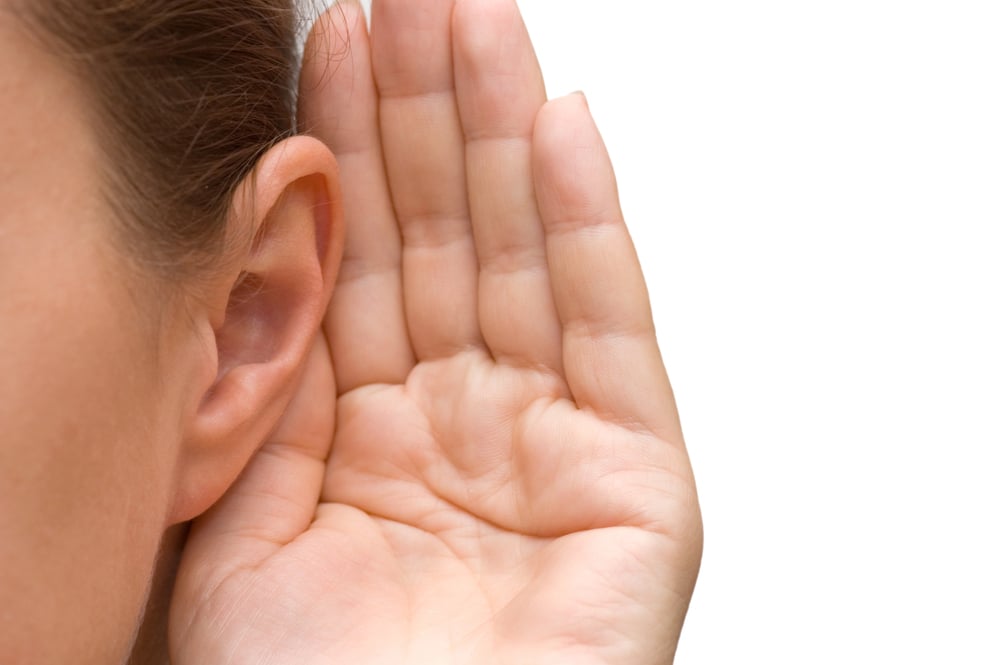
Pitch, pace, volume, hesitation — all of these carry information that the words themselves don’t. Observant people process both tracks simultaneously and notice when they diverge.
A quick answer to a question that should require thought. A laugh that comes fractionally too late.
A long pause before someone says “of course.” The content of the speech is the script. The delivery is the performance underneath it.
They Read Rooms the Moment They Enter Them

Walking into a space, the observant person does a brief but systematic scan. Not anxiously — it takes seconds.
Who is talking to whom? What is the energy level? Where is attention directed? Is there a cluster of people that suggests news has just been shared?
The room on arrival is a snapshot that tells a story about what was happening before you came in, and experienced readers of rooms get pretty good at reconstructing it.
They Remember Details That Seem Irrelevant at the Time

Observant people tend to store apparently minor details — the make of someone’s car, the specific word a colleague used to describe their relationship, the fact that a particular person always holds their coffee in their left hand. These details often turn out to be irrelevant.
Occasionally, they become the piece of information that explains everything else. The key is filing without filtering — storing things before deciding whether they matter.
They Sit With Ambiguity Instead of Rushing to Resolve It

The instinct most people have when they notice something unusual is to immediately explain it. Observant people resist this.
They let the ambiguous signal remain ambiguous for a moment, accumulating more data before landing on an interpretation. This small pause — between perception and conclusion — is where most of the real reading happens.
It is also one of the more effortful habits on this list, because the human brain strongly prefers resolution to uncertainty.
They Watch for Patterns of Behaviour Over Time

A single incident is an event. A recurring event is a pattern.
Observant people track both, but they place more weight on patterns because patterns are harder to fake and more reliably predictive. Someone who is occasionally late and usually reliable is having a difficult week.
Someone who is always late but presents as organised in every other way has a specific relationship with punctuality that is worth understanding separately from their general character.
They Notice Deviations From a Person’s Own Normal

The question isn’t whether someone’s behaviour is normal in general terms — it’s whether it’s normal for that specific person. A fast talker slowing down means something different from a slow talker slowing down.
An introvert who suddenly becomes the first to speak up has something they feel is important enough to override their default. Observant people calibrate to individuals rather than to general expectations, which is why their readings tend to be more accurate.
They Pay Attention During Silences

Most people fill silence or discount it. Observant people treat it as information. What kind of silence is it — comfortable, tense, confused, searching? Who initiated it and who is most uncomfortable with it? Is the person across from them thinking, or stalling?
A natural silence in a conversation between two people who trust each other looks completely different from the silence that occurs after a question someone wasn’t expecting.
They Scan Physical Spaces for What They Reveal About People

The books on a shelf, deliberately displayed or carelessly stacked. The desk that’s almost completely clear.
The car that’s immaculate on the outside and chaotic inside. The apartment where the kitchen is obsessively organised but the bedroom isn’t visible.
Physical spaces are edited self-presentations — people choose what to show and what to keep out of sight, and those choices reveal as much as the choices that are visible. Observant people read environments the way others read faces.
They Notice What People Choose Not to Mention

In any conversation about a topic, some things will be left out. Highly observant people notice when the omission seems deliberate.
A report on a project that covers everything except the one element that had problems. A story about a relationship that never names the other person.
An answer to a question that is technically accurate but doesn’t address what was actually asked. The field around the words is sometimes more interesting than the words themselves.
They Track Who Aligns With Whom in Group Settings

In meetings, at social gatherings, in team environments — group dynamics reveal themselves through small signals that accumulate quickly. Who laughs at whose comments? Who checks whose face when a decision is proposed? Who moves their chair an inch closer to another person’s during a difficult moment?
The social architecture of a group — the alliances, the tensions, the informal hierarchies — is usually visible in the first ten minutes to anyone paying attention to the right things.
They Are Precise About Their Own Perceptions

Observant people distinguish between what they actually noticed and what they interpreted from what they noticed. They track the difference carefully because conflating the two is what leads to wrong reads.
“She crossed her arms” is an observation. “She was defensive” is an interpretation — one that may or may not be correct. The discipline of keeping those two things separate is what makes reliable observation possible.
They Give People Space to Reveal Themselves

Rather than filling every conversational gap, observant people leave room. They ask a question and wait — not impatiently, not pointedly, but with genuine patience — because they know that what comes in the space after a question often carries more information than what comes in direct response to it.
The afterthought, the qualification, the small thing added almost as an aside — these are frequently where the real answer lives.
They Register Micro-Expressions Even Without Training

Microexpressions — the involuntary flickers of emotion that cross a face in a fraction of a second — are technically below the level of conscious processing for most people. But repeated close attention to faces tends to develop a kind of intuitive sensitivity to them, even without formal training.
Observant people often describe knowing something was off without being able to say exactly what they noticed. What they noticed was the flash before the managed expression took over.
They Use All Their Senses, Not Just Sight

A change in the smell of a room can indicate something chemical, medical, or environmental. A change in the ambient sound level — the sudden quiet when you walk into a conversation — carries social information.
A handshake that feels different from last time is data. Observant people process the full sensory picture of a moment rather than defaulting almost entirely to visual information, which is the habit most people have developed in an image-saturated world.
They Notice First Responses Before People Have Composed Themselves

The most informative moment in any reaction is the first half-second, before social management has engaged. Observant people watch the unguarded response — the flinch, the pause, the quick dart of the eyes — and weigh it more heavily than the considered answer that follows.
You can rehearse what you’ll say. You cannot easily rehearse the face you make before you know the question has been asked.
They Monitor Their Own Reactions as Data

Highly observant people apply the same attention to themselves as they do to others. They notice when they feel inexplicably uncomfortable in someone’s presence, when a particular topic triggers an unusual response in them, when their attention keeps being drawn back to a detail they haven’t consciously examined.
Their own internal responses are often a signal that something in the environment has registered below conscious processing — an early warning system worth listening to.
They Ask Questions That Invite Elaboration Rather Than Yes or No
Open questions produce more information. “What was that like?” delivers more than “Was it difficult?” because it requires the speaker to construct a narrative — and the construction of a narrative reveals the things they choose to include and the things they leave out, the sequence they impose on events, and the emotional register they adopt when telling the story.
Observant people are usually skilled question-askers, and their questions are designed to produce the most information with the least amount of guidance.
They Watch What Happens at the Beginning and End of Interactions

The opening of an encounter — before social performance has fully engaged — and the moment of parting — after it has relaxed — tend to be the most revealing. The handshake that’s slightly too long. The way someone’s face changes the instant you’ve both said goodbye and turned away.
The thing a person says as they’re walking out the door that they would probably not have led with. Bookends carry disproportionate weight for people paying close attention.
They Track Changes Over Time

The habit is not just to notice the current state of a person or situation, but to track the arc. Someone whose energy has been gradually declining over three months is telling a different story from someone who had one bad day.
Someone who used to volunteer for difficult projects and now stops short of signing up is giving information about something that has shifted in their relationship to the work. Observant people maintain a kind of running record that makes individual data points more meaningful.
They Notice How People Treat People Who Can’t Help Them

How someone behaves toward a waiter, a cleaner, a receptionist, or anyone whose goodwill is not professionally useful to them tells you more about their character than how they behave toward a manager or a client. Observant people notice this asymmetry reflexively and weigh it heavily.
Courtesy that is distributed selectively is not courtesy — it is strategy.
They Resist Confirmation Bias When They’ve Already Formed a View

Observant people know that the mind tends to register information that confirms existing conclusions and discount information that contradicts them. They work against this actively — noticing when they’re looking for evidence to support a read they’ve already made, and deliberately scanning for information that would suggest a different interpretation.
It’s not a comfortable habit. It requires repeatedly questioning your own conclusions.
They Pick Up on Social Energy in the Room

Something has happened that most people in the room don’t know about yet. Or there is a specific tension between two people who are both pretending there isn’t.
Or the general mood is lighter than usual, and the reason for it is not obvious but is knowable. Observant people register this diffuse emotional texture of a group quickly, before any specific signal has identified the source.
It’s what people usually mean when they describe someone as “reading the room well.”
They Notice How People Occupy Physical Space

Personal space habits are revealing. Someone who consistently keeps physical distance has a different relationship to proximity and trust than someone who moves naturally close.
Someone who claims more space when anxious versus someone who contracts and becomes physically smaller — both are responding to stress, but differently. The way a person habitually sits, stands, positions themselves in a group — all of this is expressive behaviour that most people don’t consciously control.
They Are Comfortable Saying “I Don’t Know Yet”
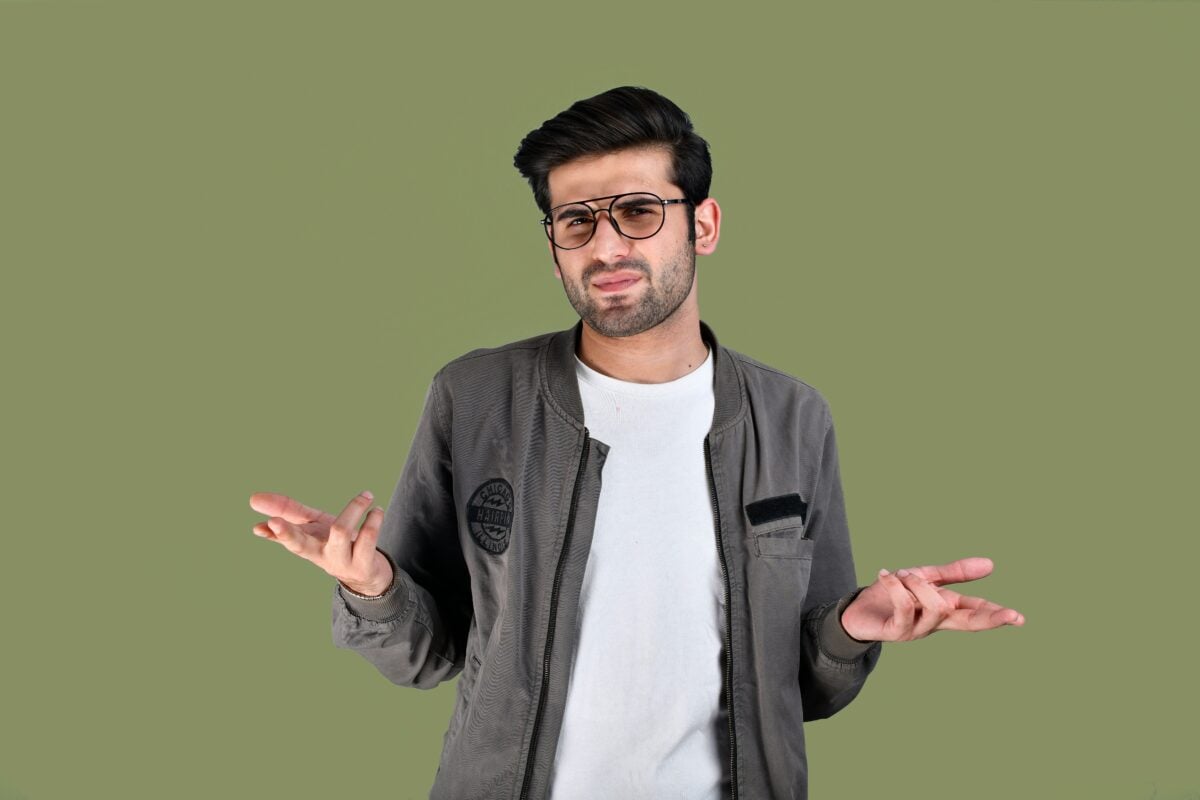
Genuine observation requires epistemic humility. When a signal is ambiguous or when insufficient data has accumulated, observant people are comfortable suspending judgment. They don’t mistake the discomfort of not knowing for a reason to decide.
This is one of the habits that most clearly distinguishes the genuinely observant from those who are simply confident in their first impressions — which is a different and considerably less useful thing.
They Understand That Observation Is a Form of Respect

The deepest habit of observant people is not a cognitive technique. It is a posture toward other people — a genuine interest in what someone is actually experiencing rather than what is convenient to assume.
Being noticed, really noticed, is one of the things people most rarely experience and most consistently crave. The person who pays this kind of attention builds trust, earns confidence, and understands situations more accurately than almost anyone around them.
None of that is accidental. It is the result of a discipline practised quietly, for a long time, without making a performance of it.
The Quiet Dividend

The things highly observant people know — about the people around them, about the rooms they inhabit, about what is actually happening versus what is being presented — tend to accumulate into a kind of practical intelligence that is very hard to fake or shortcut. It doesn’t make them cynical.
If anything, it tends to make them more patient, because they understand that most difficult behaviour is explainable and most conflict is predictable if you’re watching closely enough. The irony is that the more carefully someone observes, the less reactive they tend to become.
Seeing everything clearly turns out to be calming rather than alarming. The alarm was what you felt when you weren’t paying attention and kept being surprised.
More from Go2Tutors!

- The Romanov Crown Jewels and Their Tragic Fate
- 13 Historical Mysteries That Science Still Can’t Solve
- Famous Hoaxes That Fooled the World for Years
- 15 Child Stars with Tragic Adult Lives
- 16 Famous Jewelry Pieces in History
Like Go2Tutors’s content? Follow us on MSN.



