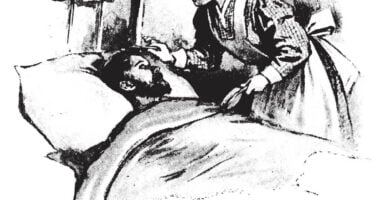
27 Old Medical Treatments Doctors Once Recommended
For most of recorded history, a visit from the physician was a gamble with poor odds. The remedies came with Latin names, confident explanations and, quite often, a real chance of making the patient worse.
None of what follows was fringe practice. These treatments appeared in textbooks, won prizes and were handed out by respected practitioners who believed the evidence was on their side.
Bloodletting to Restore the Humors
Draining blood was standard practice for roughly two thousand years, built on the ancient idea that illness came from an imbalance of four bodily humors. Physicians opened a vein with a lancet and caught the flow in a measured bowl, sometimes repeating the process several times in a day.
George Washington’s final illness in December 1799 is the best-known case. Suffering from a severe throat infection, he was drained repeatedly by his attendants, and later estimates put the loss at well over a third of his blood within about twelve hours.
He died that night. Careful statistical studies in Paris in the 1830s, led by Pierre Louis, finally showed the practice did little good.
Leeches by the Million

Where a lancet seemed too crude, physicians reached for the medicinal leech. The fashion peaked in early nineteenth century France under Francois Broussais, a Paris physician who taught that nearly every disease was a form of inflammation best treated by drawing off blood locally.
Patients might have dozens of leeches applied to the abdomen or chest in a single session. Demand grew so large that France imported tens of millions of the animals a year during the 1830s, and wild populations in parts of Europe collapsed.
Leech gatherers waded into ponds using their own legs as bait. The craze faded by midcentury, though leeches kept a small, legitimate role in modern reconstructive surgery.
Calomel, the Mercury Purge
Calomel, or mercurous chloride, was among the most prescribed drugs in America for more than a century. Benjamin Rush gave heroic doses of it during Philadelphia’s yellow fever epidemic of 1793, and generations of physicians followed his lead for fevers, digestive trouble and almost anything else.
Its visible effects were taken as proof it worked: violent purging and heavy salivation, which was in fact a sign of mercury poisoning. Long courses loosened teeth and damaged jaws.
In 1863 Union Surgeon General William Hammond struck calomel from the Army’s supply table, citing its abuse. The order caused such outrage among military doctors that it became known as the Calomel Rebellion.
Fowler’s Solution of Arsenic

English physician Thomas Fowler introduced his arsenic tonic in 1786 at the infirmary in Stafford, offering it as a treatment for recurring fevers. The liquid was a one percent solution of potassium arsenite, flavored with lavender so nobody would mistake it for water.
Over the next century and a half it was prescribed for skin diseases, asthma, anemia and leukemia, and it stayed in pharmacy references well into the 1900s. Long-term users developed darkened, thickened skin and, in many cases, cancers.
The story has an odd coda. In 2000 American regulators approved arsenic trioxide for a specific form of leukemia, where carefully controlled doses proved effective.
Heroin for a Stubborn Cough

Bayer began selling heroin in 1898 as a cough suppressant, and physicians welcomed it. Tuberculosis and pneumonia were leading killers, and a drug that quieted a racking cough and let patients sleep looked like a real advance.
The company promoted it as a safer substitute for morphine, and early medical reports agreed. It was sold in dozens of countries as powders, syrups and lozenges, with doses listed for children.
Within a few years hospitals were reporting patients who could not stop taking it. Bayer ended production in 1913, the Harrison Narcotics Act placed it under federal control in 1914, and the United States banned its manufacture in 1924.
Cocaine Drops for Toothache
Cocaine entered mainstream medicine in 1884, when Viennese eye doctor Karl Koller showed that a few drops numbed the surface of the eye well enough for surgery. It was the first effective local anesthetic, and enthusiasm spread quickly.
Within a year an Albany, New York, firm called Lloyd Manufacturing was advertising Cocaine Toothache Drops at 15 cents a package, with illustrations of children playing happily. Doctors recommended the drug for hay fever, fatigue and morphine dependence.
William Halsted, a pioneering American surgeon, experimented on himself while studying nerve blocks and struggled with addiction for the rest of his life. Federal controls arrived with the Harrison Act of 1914.
Laudanum for Nearly Everything
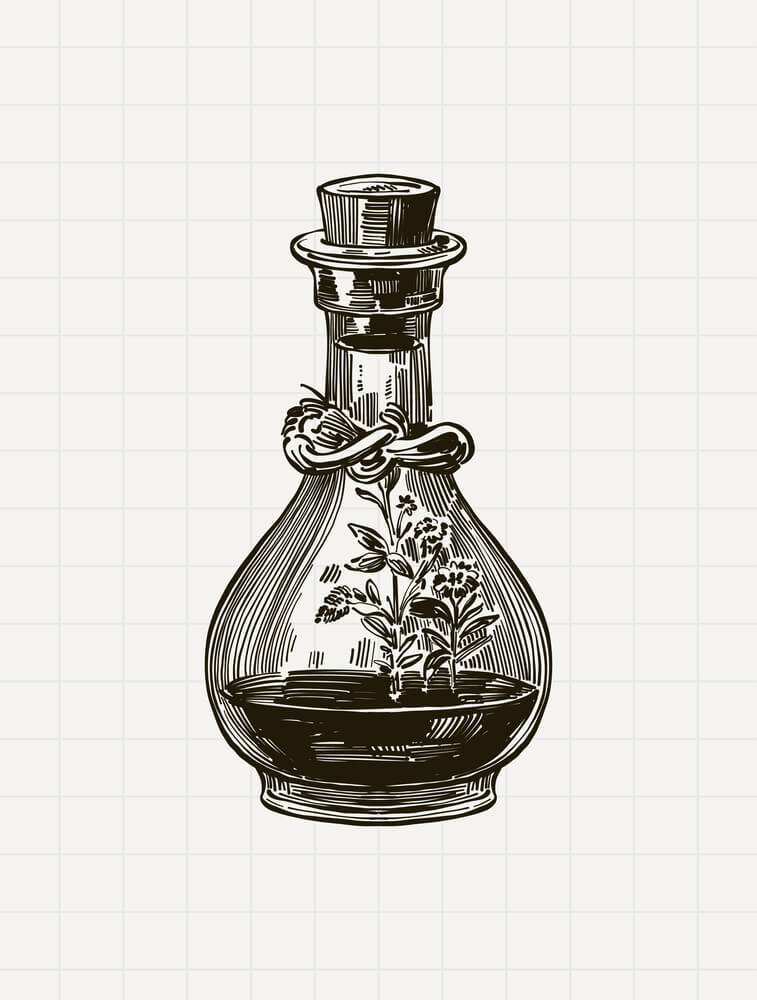
Opium dissolved in alcohol was the closest thing earlier centuries had to an all-purpose medicine. The English physician Thomas Sydenham popularized a recipe in the 1660s that mixed opium with sherry, saffron, cinnamon and cloves, and he praised the drug as among the most valuable remedies available.
Laudanum was prescribed for pain, coughs, diarrhea, sleeplessness and nervous complaints, and in Britain it could be bought without a prescription until the Pharmacy Act of 1868 imposed modest limits. It was cheap and sold over the counter by grocers and druggists, and working families used it freely.
Writers Thomas De Quincey and Samuel Taylor Coleridge both became dependent after first taking it for pain.
Mrs. Winslow’s Soothing Syrup
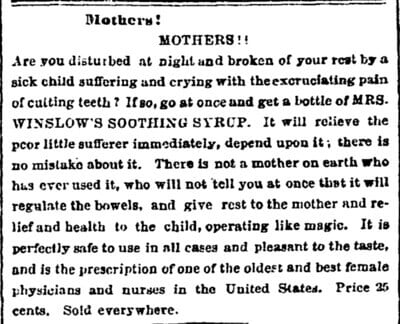
Physicians of the nineteenth century routinely advised small doses of opiates to quiet teething infants, and one commercial product turned that advice into a fortune. Mrs. Winslow’s Soothing Syrup went on sale in the 1840s through Curtis and Perkins of Bangor, Maine, and its advertising cards showed serene mothers with sleeping babies.
The label did not mention that each ounce contained a substantial dose of morphine. Infants given too much sometimes failed to wake.
The Pure Food and Drug Act of 1906 forced the ingredients onto the label, and in 1911 the American Medical Association named the syrup in its book Nostrums and Quackery, in a section titled “Baby Killers.”
Radium Water as a Tonic
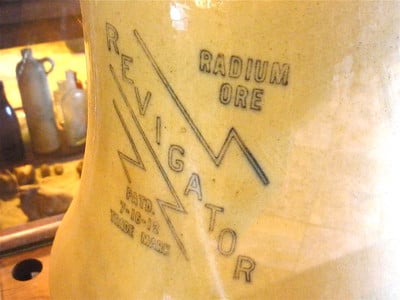
After the Curies isolated radium, physicians and promoters alike treated radioactivity as a source of vitality. Radithor, sold in the 1920s by William Bailey’s laboratory in East Orange, New Jersey, was distilled water containing dissolved radium, and it was marketed directly to doctors.
Pittsburgh industrialist and amateur golf champion Eben Byers began drinking it in 1927 on a physician’s recommendation following an arm injury. He liked the effect and is reported to have consumed about 1,400 bottles.
Radium settled in his bones, his jaw deteriorated and had to be largely removed, and he died in 1932. His body was buried in a coffin lined with lead.
Lobotomy and the Nobel Prize

Portuguese neurologist Egas Moniz began operating in 1935 on the theory that cutting connections in the frontal lobes would calm severely disturbed psychiatric patients. He received the Nobel Prize in Physiology or Medicine in 1949 for the work.
In the United States, Walter Freeman became the operation’s tireless promoter, and in 1946 he devised a faster version that reached the brain through the eye socket with an instrument modeled on an ice pick. Freeman performed the procedure thousands of times, often outside operating rooms.
Tens of thousands of Americans were lobotomized, among them Rosemary Kennedy in 1941, who was left permanently incapacitated. Antipsychotic drugs introduced in the 1950s brought the era to an end.
Insulin Shock Therapy

Manfred Sakel, a physician working in Berlin and Vienna, announced in 1933 that deep insulin comas could relieve schizophrenia. Patients were injected with large doses of insulin six mornings a week until their blood sugar fell far enough to produce unconsciousness, then revived with glucose.
A full course might involve fifty or sixty comas. The treatment spread rapidly through the hospitals of Europe and North America, and special insulin units became a mark of a progressive institution.
Some patients died or suffered lasting brain injury. In 1953 British psychiatrist Harold Bourne published a paper in The Lancet titled The Insulin Myth, arguing there was no sound evidence it worked.
Malaria as a Cure for Syphilis

Before antibiotics, late-stage syphilis of the brain meant dementia, paralysis and death in an asylum. Austrian psychiatrist Julius Wagner-Jauregg had noticed that some patients improved after a high fever, and in 1917 he injected nine of them with blood from a soldier sick with malaria.
The repeated fevers appeared to halt the disease in several cases, and quinine was then used to clear the malaria. He won the Nobel Prize in 1927.
Hospitals kept strains of the parasite alive by passing them from patient to patient. Fever therapy carried a real risk of death, and it vanished once penicillin became available in the 1940s.
Trepanation of the Skull
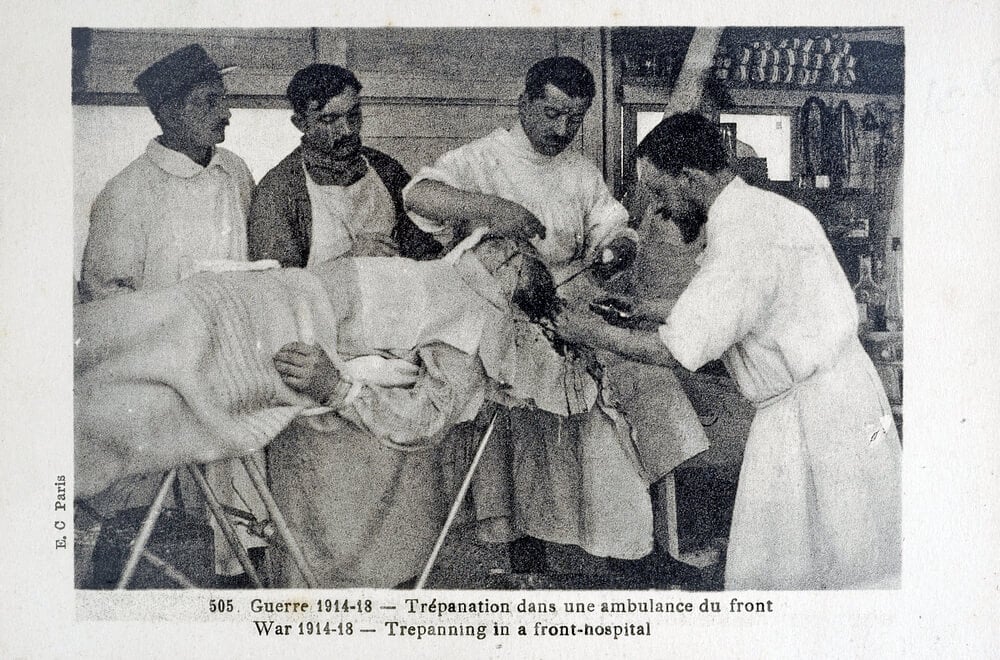
Cutting an opening in the living skull is among the oldest surgical procedures known, with examples dating to the Neolithic. Many ancient skulls show smooth, healed bone around the edges, proof the patient survived for years.
The practice was no secret rite on the margins of medicine. A Hippocratic treatise on head injuries gives detailed instructions for when and how to drill, and European surgeons later recommended it for epilepsy and mental disturbance.
In the 1860s the American diplomat Ephraim George Squier brought a trepanned skull from Peru to Paris, where the anatomist Paul Broca concluded the operation had been done on a living person.
Powdered Egyptian Mummy

European apothecaries stocked ground mummy for centuries. The trade grew out of a translation muddle: medieval physicians prized a natural bitumen known by a Persian-derived name, mumia, and the term was gradually applied to the dark resinous material found in embalmed Egyptian bodies, and then to the bodies themselves.
Doctors prescribed the powder for bruises, internal injuries and blood clots. The French royal surgeon Ambroise Pare attacked the remedy in a discourse published in 1582, saying he had seen it do nothing useful and pointing out that many supposed mummies were recent corpses prepared by dealers.
It lingered in some European pharmacies into the twentieth century.
Rest Cure for Nervous Women
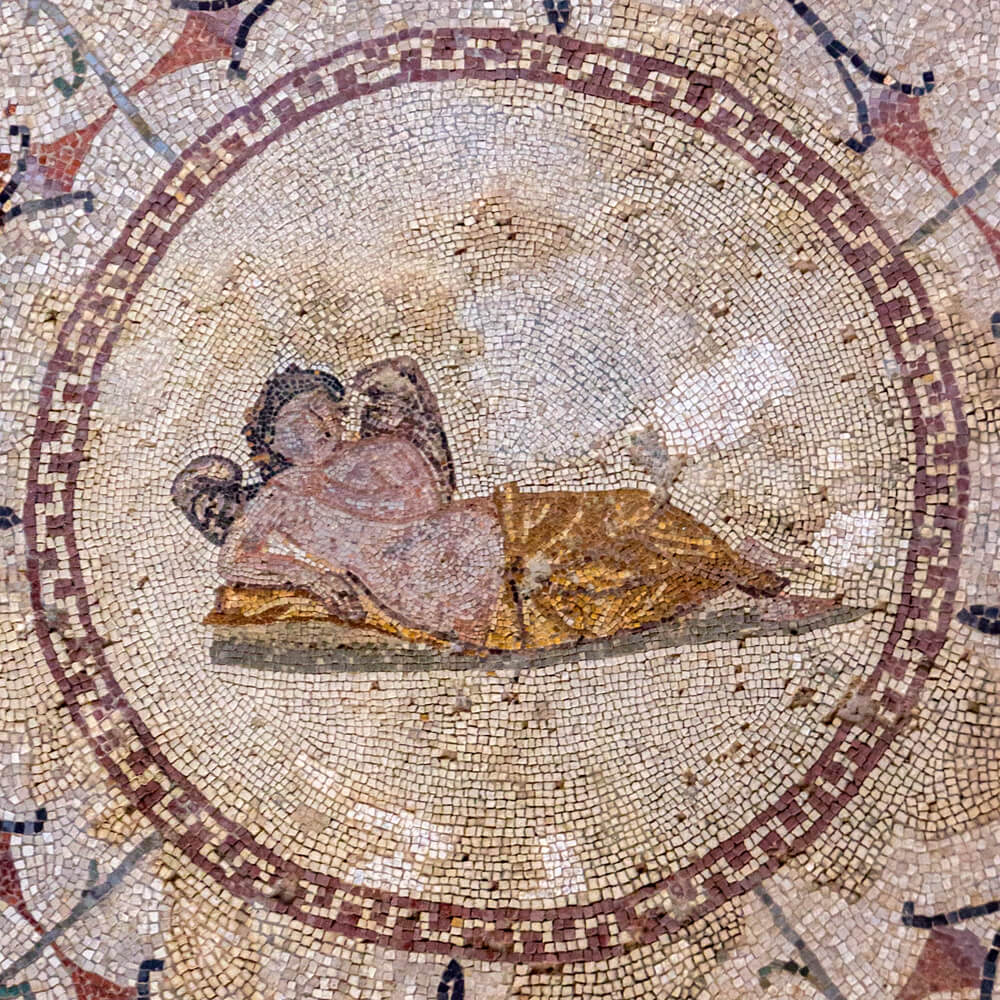
Philadelphia neurologist Silas Weir Mitchell made his reputation treating wounded Civil War soldiers, then turned to patients, mostly women, diagnosed with nervous exhaustion. His rest cure, described in the 1877 book Fat and Blood, confined them to bed for six to eight weeks.
Reading, writing, sewing and visitors were forbidden, and attendants supplied massage and large quantities of milk. Charlotte Perkins Gilman underwent the treatment in 1887 and was sent home with instructions to live as domestic a life as possible and avoid intellectual work.
She later said it brought her close to mental collapse. Her 1892 story The Yellow Wallpaper was her reply.
Strychnine as a Pick-Me-Up

Strychnine, extracted from the seeds of the nux vomica tree, is a convulsant poison. In small doses it produces a feeling of alertness and muscle tension, and Victorian physicians prescribed it as a stimulant for weak hearts, poor appetite and general debility.
Easton’s Syrup, a widely used tonic, combined it with iron and quinine. Athletes took it too.
During the marathon at the 1904 Olympics in St. Louis, American runner Thomas Hicks was given doses of strychnine mixed with egg white, along with brandy, by his handlers as he faltered. He crossed the line in a state of collapse and was declared the winner.
Thalidomide for Morning Sickness

West German firm Chemie Grunenthal launched thalidomide in 1957 as a sedative so safe that no lethal dose could be found in animal tests. Doctors in dozens of countries prescribed it to pregnant women for nausea and sleeplessness.
By 1961 physicians Widukind Lenz in Germany and William McBride in Australia had independently linked it to a wave of babies born with severely shortened or missing limbs. More than 10,000 children were affected worldwide.
The United States was largely spared because Frances Kelsey, a reviewer at the Food and Drug Administration, repeatedly refused to approve the application without better safety data. Congress tightened drug testing law in 1962.
DES to Prevent Miscarriage

Diethylstilbestrol, a synthetic estrogen first made in 1938 by British chemist Edward Charles Dodds, was cheap, taken by mouth and never patented. From the 1940s American obstetricians prescribed it to pregnant women in the belief that it prevented miscarriage.
A controlled trial at the University of Chicago in 1953 found it did nothing of the kind, yet prescriptions continued for nearly two more decades. In 1971 Arthur Herbst and colleagues in Boston connected the drug to a rare vaginal cancer appearing in young women whose mothers had taken it.
The Food and Drug Administration warned against its use in pregnancy that year. Several million people had been exposed.
X-Rays to Treat Ringworm
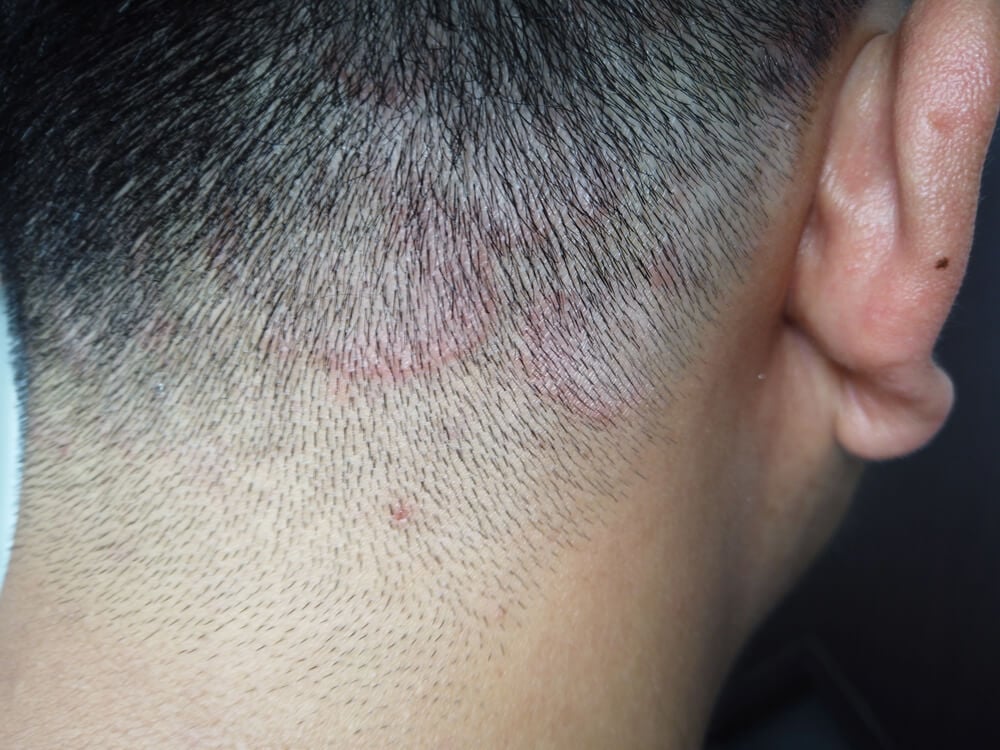
Scalp ringworm is a fungal infection that was once very hard to clear, since the fungus lives in the hair shaft. Early in the twentieth century, dermatologists including Raymond Sabouraud in Paris worked out that a measured dose of X-rays would make all the hair fall out, taking the infection with it.
The method became standard in clinics and school health programs across Europe, North America and the Middle East, and it was applied to an estimated 200,000 children over five decades. An effective pill, griseofulvin, replaced it around 1959.
Follow-up studies later found higher rates of thyroid cancer and of tumors in the head among those irradiated.
Radiation for an Enlarged Thymus

Sudden unexplained deaths of infants were long blamed on an oversized thymus gland pressing on the windpipe. The diagnosis rested on a sampling error.
Anatomists had formed their idea of a normal thymus from the bodies of poor children who died after long illnesses, which shrink the gland, so healthy infants appeared abnormal by comparison. Beginning in the early 1900s physicians irradiated the chests of babies to reduce the gland, and some hospitals treated newborns as a precaution.
The supposed condition was eventually recognized as nonexistent. In 1950 researchers reported a link between childhood radiation to the neck and chest and later thyroid cancer, and the practice was gradually abandoned.
Antimony to Empty the Stomach

Physicians who believed disease had to be expelled from the body valued antimony, a toxic metal that causes prompt and violent vomiting. Some households kept cups cast from it.
Wine left in the cup overnight absorbed enough of the metal to act as an emetic by morning. The Paris medical faculty condemned antimony as a poison in 1566 and spent the next century quarreling over it.
Opinion shifted after 1658, when the young Louis XIV fell gravely ill on campaign, was dosed with antimonial wine and recovered. The faculty formally approved the remedy in 1666.
Antimony compounds stayed in common medical use into the nineteenth century.
Theriac, the Universal Antidote
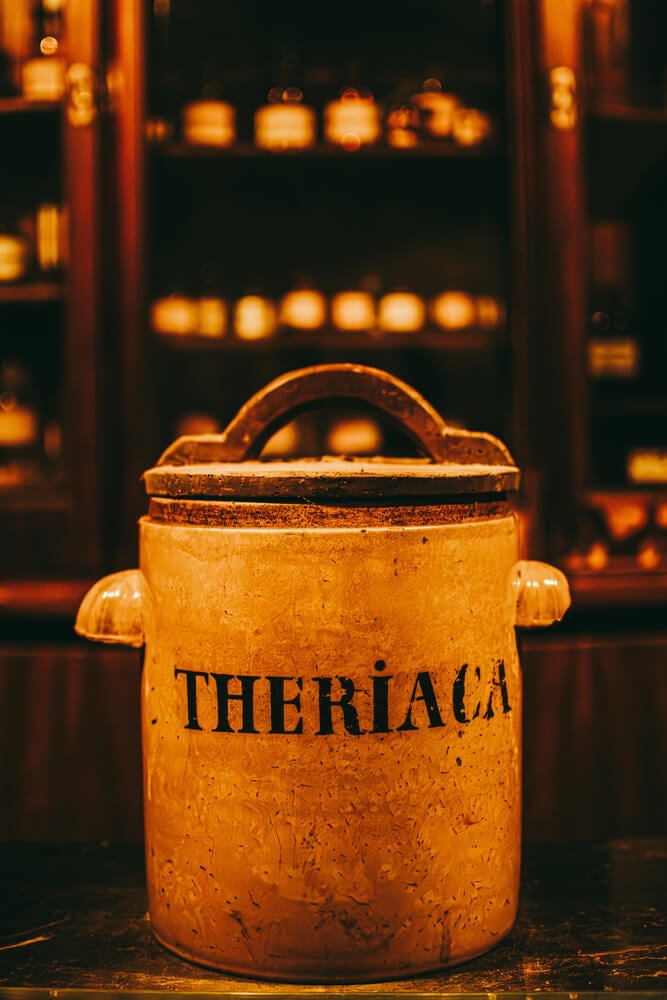
Few prescriptions lasted as long as theriac, a thick paste first compounded in antiquity as protection against poison. Andromachus, physician to the emperor Nero, is credited with the classic recipe, and Galen later praised it at length.
It called for dozens of ingredients, among them viper flesh and a substantial amount of opium, which likely explains why patients felt better. Venice became famous for its version, prepared in public ceremonies under official supervision, and in England the product was sold as Venice treacle.
Doctors recommended it against plague. English physician William Heberden published a withering critique in 1745, and the preparation had disappeared from the London pharmacopoeia by 1788.
Blistering the Skin on Purpose

Raising painful blisters was thought to draw disease out of the body by creating a rival irritation at the surface. The usual agent was cantharides, a powder made from dried blister beetles and sold as Spanish fly, which was spread on a plaster and fixed to the shaved scalp, neck, chest or limbs.
Doctors applied it for pneumonia, fever, madness and apoplexy. When Charles II of England suffered a seizure in February 1685, his physicians blistered his head and feet, drew blood and gave purges over four days until he died.
More than a century later, George Washington’s attendants put a blister on his throat during his last hours.
Milk Injected Into the Veins

During an epidemic in Toronto in 1854, physicians James Bovell and Edwin Hodder tried injecting cow’s milk into the veins of dying patients. Blood transfusion at the time was unpredictable and frequently fatal, since blood groups had not been discovered, and some doctors reasoned that the fat droplets in milk might turn into white blood cells.
One of the Toronto patients seemed to rally, which was encouragement enough. In the 1870s New York gynecologist Theodore Gaillard Thomas championed the method and reported cases of his own.
Patients often suffered chest pain and headache, and many died. The practice was abandoned in the 1880s as saline infusion proved far safer.
Pulling Teeth to Cure Madness

Henry Cotton, superintendent of the New Jersey State Hospital at Trenton from 1907, was convinced that mental illness came from hidden bacterial infections poisoning the brain. His remedy was to remove the suspected sources.
He began with teeth, extracting thousands, then moved on to tonsils, and finally to sections of the colon and other organs. Cotton claimed recovery rates as high as 85 percent and was praised in medical journals and newspapers.
In the mid-1920s psychiatrist Phyllis Greenacre reviewed his cases at the request of Adolf Meyer of Johns Hopkins and found his results were poor and that a large share of his abdominal surgery patients had died. Her findings were never published.
Benjamin Rush’s Tranquilizing Chair
Rush, a signer of the Declaration of Independence and the most prominent American physician of his day, held that madness arose from too much blood in the vessels of the brain. Around 1811 he introduced a device at Pennsylvania Hospital to address it.
The patient sat in a heavy wooden chair with straps across the chest, wrists and ankles, while a padded box enclosed the head to block sight and limit movement. A bucket was fitted beneath the seat.
Rush believed that stillness slowed the pulse and calmed the mind, and patients could be held for hours. He also used a spinning board called a gyrator.
Weeks of Bed Rest After a Heart Attack

Through the first half of the twentieth century, a heart attack meant strict immobility. Cardiologists taught that the damaged muscle needed about six weeks to form a firm scar, so patients were kept in bed for four to six weeks, were fed and washed by nurses, and were forbidden even to turn over unaided.
Blood clots in the legs and lungs, wasted muscles and pneumonia were common results. In 1952 Boston physicians Samuel Levine and Bernard Lown reported that patients moved into an armchair within days did better.
When President Dwight Eisenhower had a heart attack in Denver in 1955, cardiologist Paul Dudley White publicly encouraged an early return to activity.
Confidence Was Never the Same as Evidence

Almost every remedy on this list came with a plausible theory, a distinguished advocate and patients who swore by it. Purging produced visible results, opiates made people feel better, and anyone who recovered was counted as a success.
What was missing for most of history was any systematic habit of counting the failures. Treatments survived on reputation, sometimes for centuries.
The corrections, when they came, usually arrived from people willing to compare outcomes: a statistician in a Paris ward, a reviewer who asked for more data, a psychiatrist who checked the case files. Controlled trials and drug regulation grew directly out of these disasters.
That history is a useful caution about present certainty as well. Some of what is prescribed with full assurance now will look just as strange in a hundred years.
More from Go2Tutors!

- The Romanov Crown Jewels and Their Tragic Fate
- 13 Historical Mysteries That Science Still Can’t Solve
- Famous Hoaxes That Fooled the World for Years
- 15 Child Stars with Tragic Adult Lives
- 16 Famous Jewelry Pieces in History
Like Go2Tutors’s content? Follow us on MSN.