27 Pennies and Nickels Worth Far Above Face Value
The smallest denominations in American pockets carry some of the largest surprises. A cent that cost nothing to pick up off a sidewalk has sold for more than a house, and a nickel once mistaken for a fake has changed hands for the price of a private jet.
The gap between face value and collector value is widest exactly where almost nobody bothers to look.
The coins below range from famous rarities to subtle die varieties that still turn up in loose change. In every case, condition and professional grading decide the outcome.
A worn example and a pristine one can be the same coin on paper and worlds apart at auction.
1856 Flying Eagle Cent
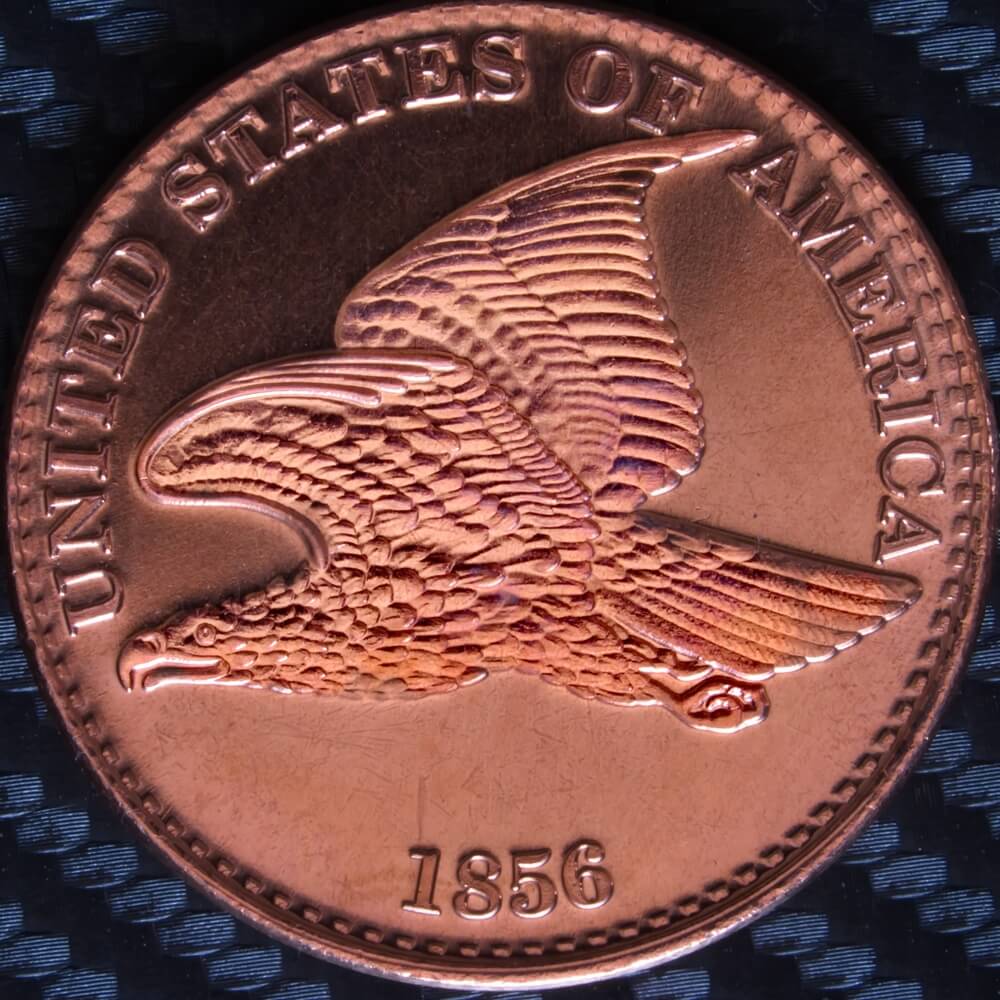
The first small cent was technically a pattern, struck in 1856 before Congress had authorized the design, and estimates of the number produced generally run somewhere around 2,000 including later restrikes. Many were handed out to lawmakers and officials to build support for replacing the bulky large cent.
Because it was never a regular issue, it has drawn premium prices for well over a century. Circulated examples commonly bring several thousand dollars, and high-grade proofs have sold for far more.
Grading matters enormously here, since the distinction between an original striking and a restrike affects value alongside wear and surface quality.
1877 Indian Head Cent
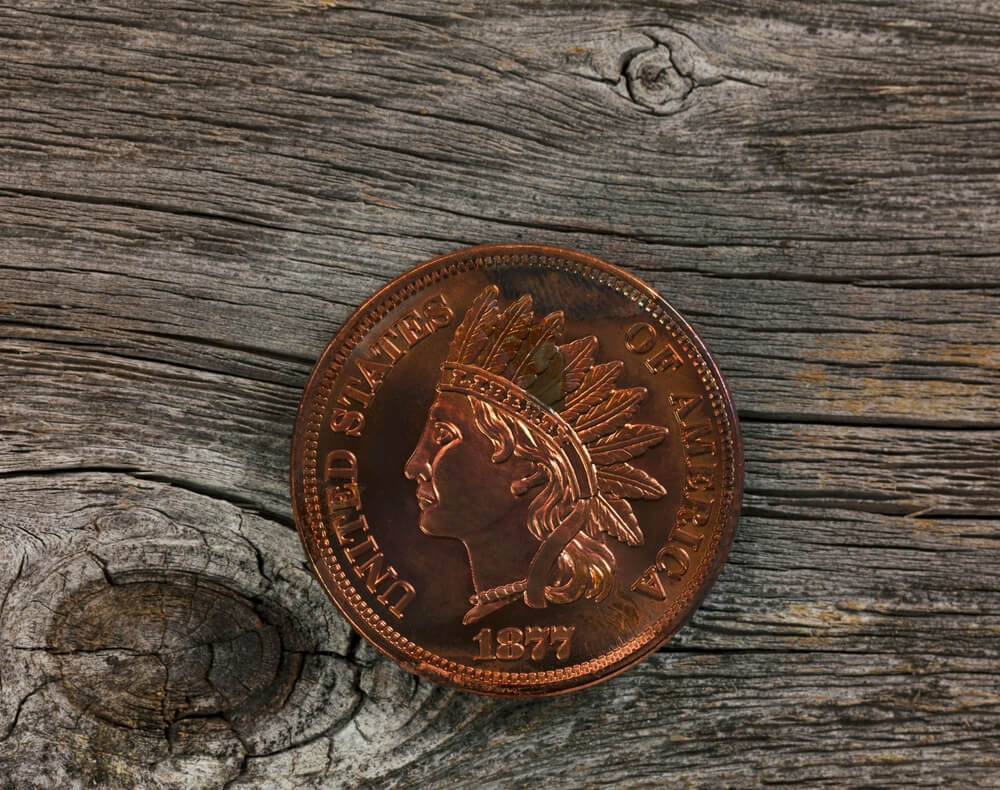
With a reported mintage of 852,500, the 1877 is the lowest-production business strike in the Indian Head series and the key to the entire set. Economic conditions in the late 1870s kept demand for new cents low, so the Philadelphia Mint simply made fewer.
Even heavily worn examples with full readable dates sell for hundreds of dollars, and problem-free mid-grade coins can climb past $1,000. Uncirculated pieces with original red color have brought five figures.
Value depends heavily on condition and on whether the surfaces have been cleaned, which sharply reduces what collectors will pay.
1909-S VDB Lincoln Cent
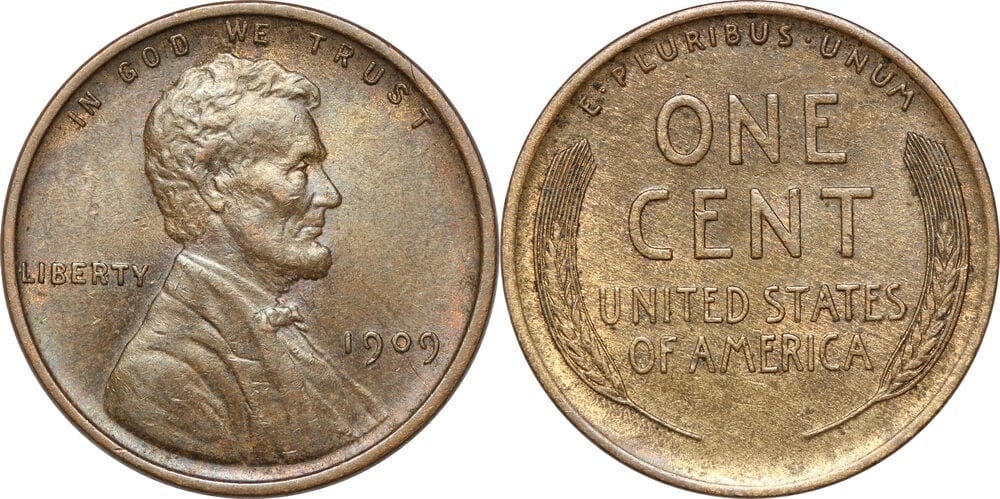
Victor David Brenner placed his initials prominently at the bottom of the reverse on the first Lincoln cents, and public complaints led the Mint to remove them within weeks. San Francisco had struck only 484,000 before the change, creating the most famous key date in American coinage.
Circulated examples routinely sell in the high hundreds to low thousands, while gem red uncirculated pieces have sold for tens of thousands. Counterfeits with added mintmarks are widespread, so third-party grading is close to mandatory for this coin.
As with every entry here, the final price tracks condition and certification above all else.
1914-D Lincoln Cent
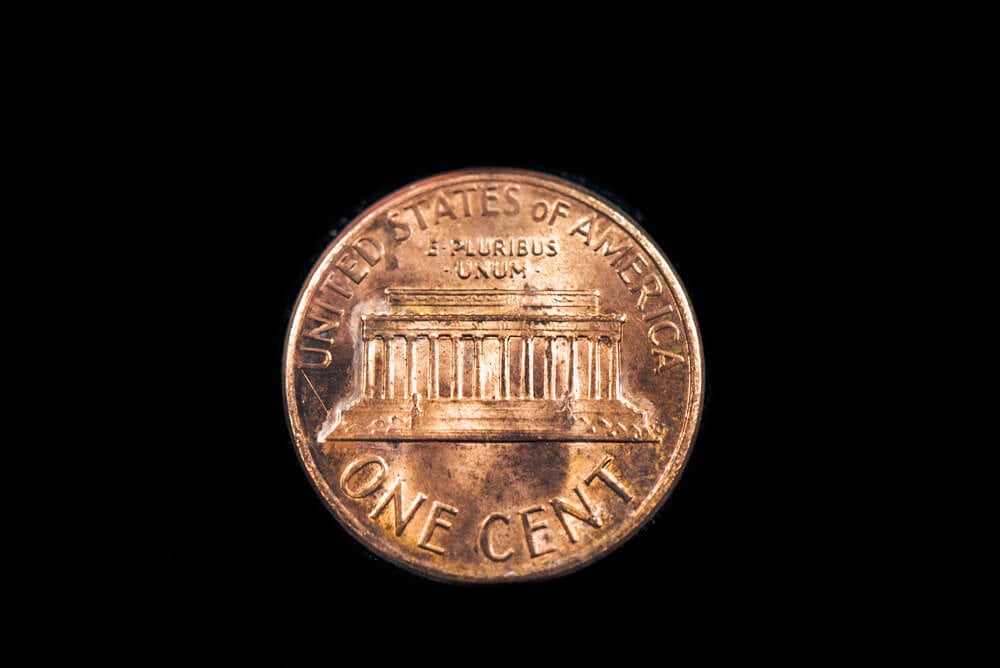
Denver produced 1,193,000 cents in 1914, but almost nobody set them aside because the date was unremarkable at the time. Decades later collectors discovered that nice examples were scarce, and the 1914-D became a key date by attrition rather than by low mintage alone.
Worn coins typically sell for a few hundred dollars, and uncirculated red examples have reached well into five figures. Altered 1944-D cents with the second 4 removed are a common trap for the unwary.
Condition, color designation, and authentication drive the price more than the date itself.
1922 No D Lincoln Cent
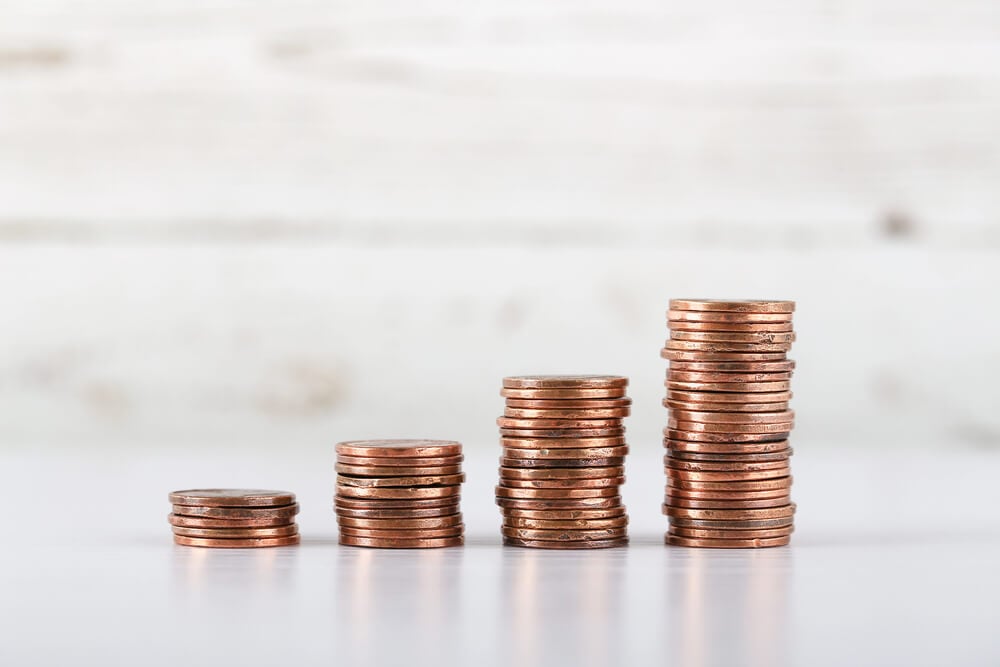
Denver was the only mint striking cents in 1922, so every genuine 1922 cent should carry a D. A badly worn and overpolished die pair produced coins where the mintmark vanished entirely, and the resulting No D variety became a classic. Collectors distinguish the sought-after strong reverse version from weaker die states that are worth far less.
Circulated examples of the strong reverse variety have sold for several hundred to a few thousand dollars, and uncirculated pieces have brought far more. Grading services attribute the specific die pair, and that attribution matters as much as wear.
1931-S Lincoln Cent
Only 866,000 cents left San Francisco in 1931, the lowest figure for any Lincoln cent of the Depression era. Unlike the 1914-D, though, word of the small mintage got out quickly, and dealers and speculators tucked rolls away by the thousands.
The result is a coin that is scarce but not rare in uncirculated condition, while truly worn examples are oddly harder to find. Typical prices run from under $100 for circulated coins to several hundred dollars for gem red pieces.
Condition and original color still decide where any individual coin lands in that spread.
1943 Bronze Lincoln Cent
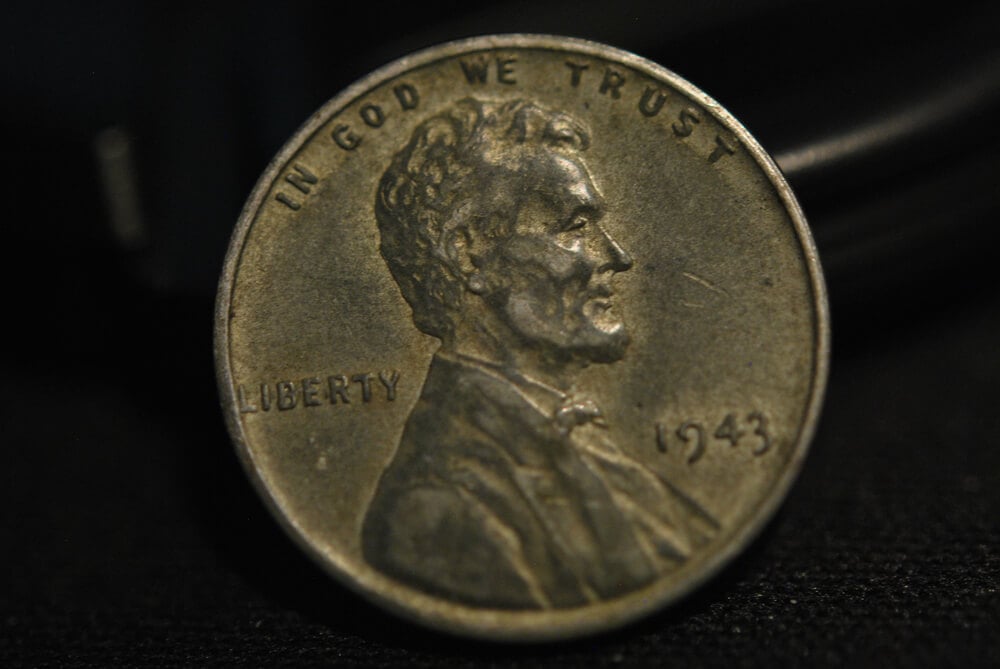
Wartime copper conservation moved the cent to zinc-coated steel in 1943, but a few leftover bronze blanks from 1942 stayed in the presses and were struck with the new date. Perhaps a dozen or so Philadelphia examples are confirmed, plus a handful from Denver and San Francisco.
A San Francisco specimen sold for $1 million in 2012, and Philadelphia coins have sold for six figures. A quick magnet test eliminates most hopefuls, since steel cents stick and copper-plated fakes usually do too.
Authentication is everything with this coin, and grade further separates the known examples.
1943-D Bronze Lincoln Cent
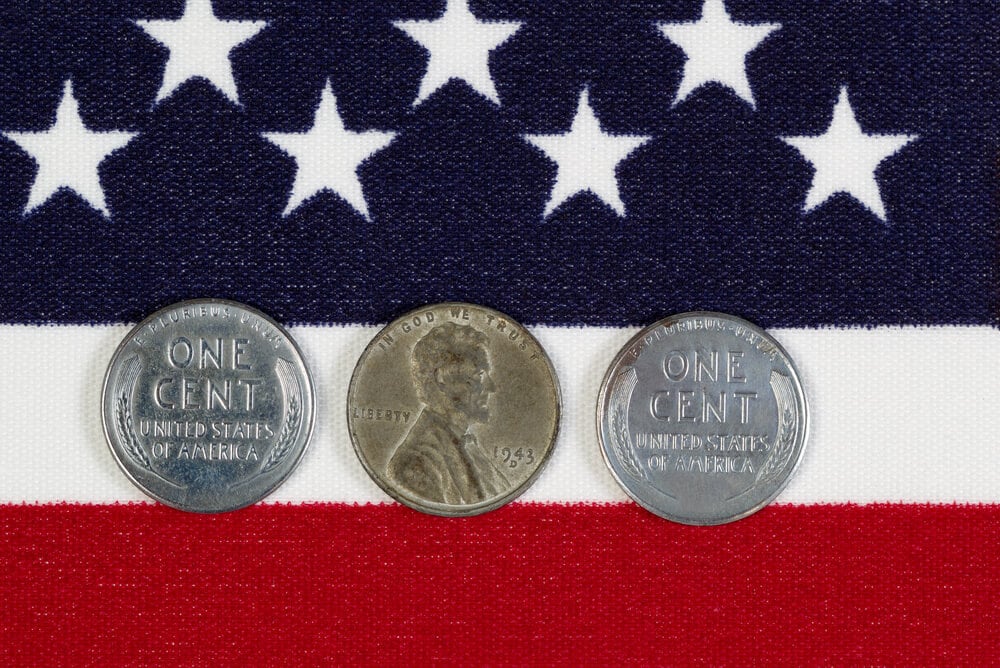
Among the off-metal 1943 cents, the single confirmed Denver example stands alone. Its existence was rumored for years before it surfaced publicly, and in 2010 it sold privately for $1.7 million, with the seller directing proceeds to charity.
That price remains one of the highest ever paid for a Lincoln cent. Because the coin is unique, there is no price range to speak of, only the history of what buyers have been willing to pay for it.
Its grade still factored into the sale, as it does for every rarity, but scarcity carried most of the weight.
1944 Steel Lincoln Cent
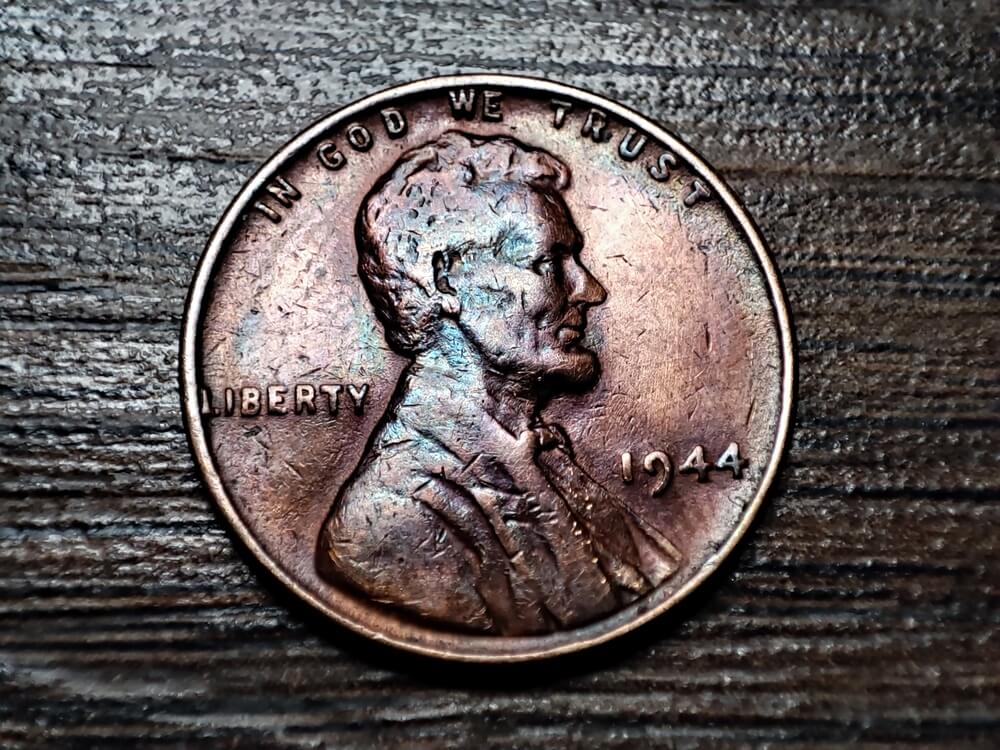
The mirror image of the 1943 bronze error occurred the following year, when a few steel blanks lingered after the Mint returned to copper. Estimates of surviving 1944 steel cents from Philadelphia run around two dozen or more, and the 1944-S steel cent is known from only two examples.
One of those San Francisco coins has sold for $373,750. Philadelphia and Denver examples have brought tens of thousands depending on surface quality. Steel cents corrode easily, so condition problems are common, and graders scrutinize these pieces closely for authenticity.
1955 Doubled Die Obverse Lincoln Cent
A misaligned hubbing produced dramatic doubling on the date and the words LIBERTY and IN GOD WE TRUST, visible without magnification. Mint employees noticed the error but released the coins anyway, and estimates suggest 20,000 to 24,000 entered circulation, many through vending machines in the Northeast.
It became the error coin that introduced generations of Americans to variety collecting. Circulated examples have sold for $1,000 to $2,000 or more, and gem red uncirculated pieces have brought well over $10,000.
Lesser doubling from die wear, sometimes called poor man’s doubled dies, carries little premium, so attribution matters.
1958 Doubled Die Obverse Lincoln Cent
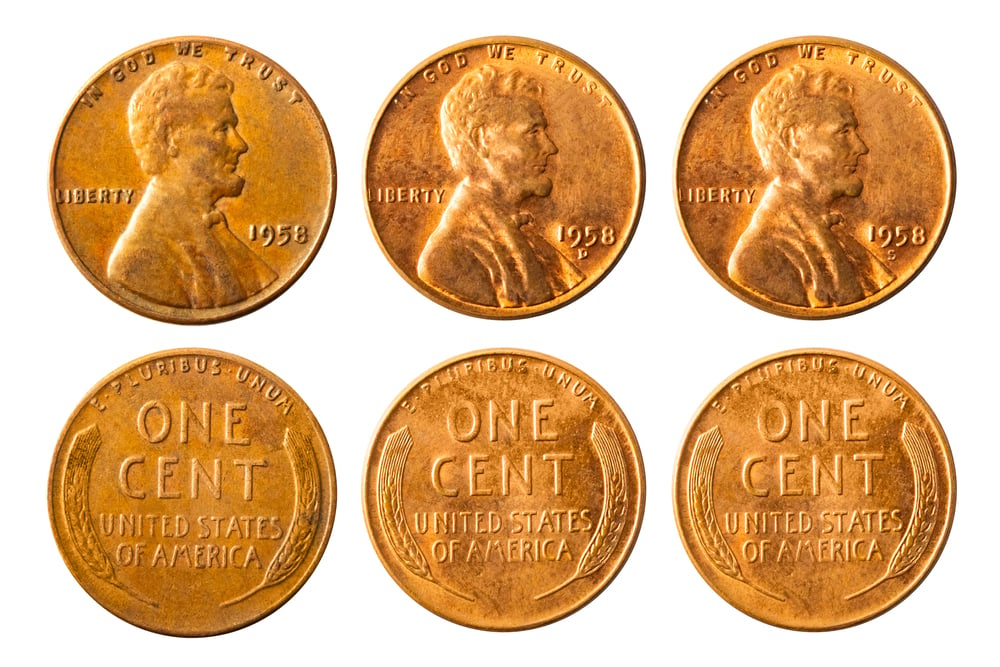
Only three examples are known of the 1958 doubled die, which shows strong doubling in LIBERTY and IN GOD WE TRUST similar to the 1955. The coin was almost unknown to the public until one from the Stewart Blay collection sold for $1.136 million at GreatCollections in January 2023, the highest price ever paid for a Lincoln cent at public auction.
The other two examples have appeared only rarely. With such a tiny population, condition differences among the three are a matter of record, and the finest known commands the top of the market.
1969-S Doubled Die Obverse Lincoln Cent
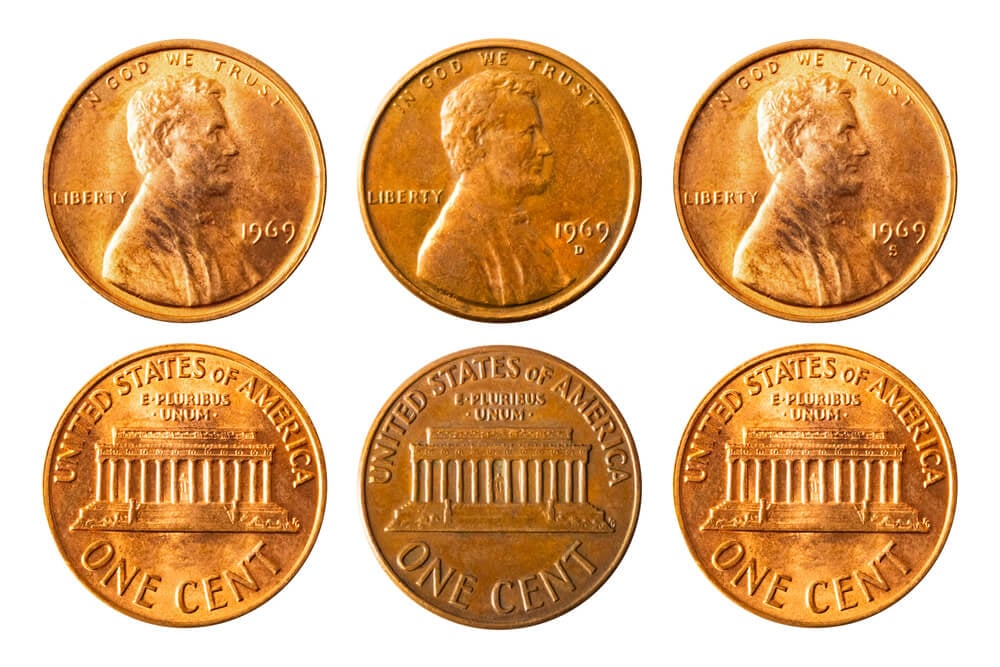
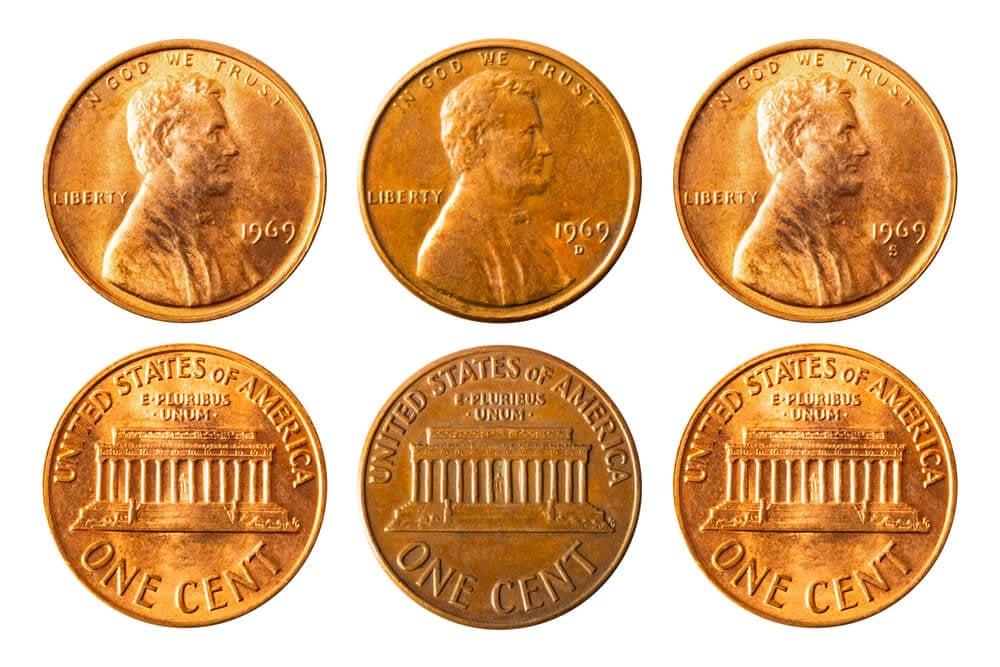
This variety has a strange origin story. In 1969 a counterfeiting ring produced fake doubled die cents, and when genuine examples surfaced shortly after, the Secret Service confiscated and destroyed some of them believing they were part of the scheme. Authentic pieces, which show bold doubling on the date and lettering but not on the mintmark, number only in the dozens.
They have sold for tens of thousands of dollars, with a top example reaching well over $100,000. Grade and the red or brown color designation produce enormous swings in price among the known coins.
1972 Doubled Die Obverse Lincoln Cent
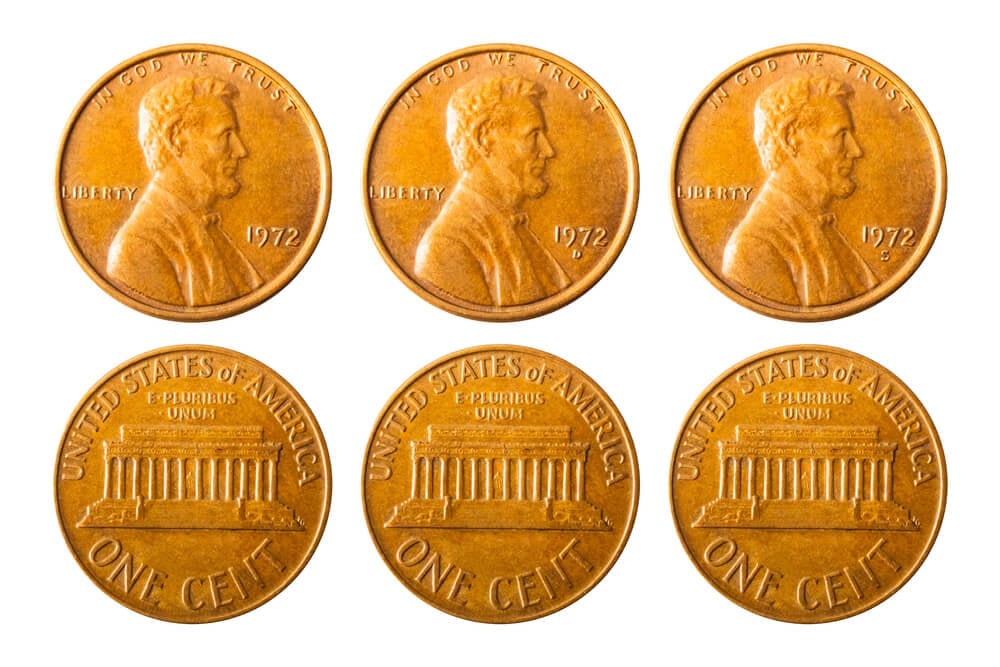
Several doubled dies exist for 1972, but the one collectors call Die 1 shows clear separation on LIBERTY, the date, and the motto. It was discovered quickly and saved in quantity, so it is far more available than the 1955 or 1969-S varieties.
Circulated examples typically sell for a few hundred dollars, and gem red coins have brought several thousand. The lesser 1972 doubled dies are worth a fraction of that amount, which makes proper attribution essential.
Condition remains the main driver once the variety is confirmed.
1992 Close AM Lincoln Cent
In 1992 the Mint was preparing a redesigned reverse for 1993 in which the letters A and M in AMERICA nearly touch. A few 1992 and 1992-D business strikes were accidentally produced with that new reverse.
The Philadelphia version was thought to be unique for years until a second example was found, and the Denver version is also extremely scarce. Both have sold for five figures, with price depending heavily on grade and color.
The variety is easy to check with a loupe, which keeps hope alive among people who search rolls of 1992 cents.
1999 Wide AM Lincoln Cent
The reverse of the 1992 situation played out in 1999, when some business strike cents were struck with a proof-style reverse showing a clear gap between the A and M. The designer’s initials FG also sit farther from the memorial on the proof reverse, giving a second diagnostic.
The 1999 Wide AM is the scarcest of the Wide AM years, and examples have sold from a few hundred dollars in circulated condition to several thousand for top-grade red coins. Similar varieties exist for 1998 and 2000, usually at lower prices. Condition and attribution determine where a given coin sits.
1885 Liberty Head Nickel
The Liberty Head series has one undisputed key, and it is the 1885 with a mintage of 1,472,700. Economic conditions and a glut of earlier nickels in circulation kept production low, and few were saved.
Even heavily worn examples sell for hundreds of dollars, mid-grade coins can bring over $1,000, and uncirculated pieces have sold for several thousand or more. Proofs exist and trade at their own premium.
Because the date has been altered on common coins for well over a century, certification is the standard for serious buyers, and grade sets the final price.
1913 Liberty Head Nickel
The Liberty Head design officially ended in 1912, yet five 1913 nickels exist, almost certainly struck in secret at the Philadelphia Mint. A former Mint employee named Samuel Brown later publicized them, and they became the most famous American coins of the twentieth century, even featuring in an episode of Hawaii Five-O.
One example sat unrecognized for decades after its owner, George Walton, died in a 1962 car crash, having been dismissed as a fake. The Eliasberg specimen sold for $4.56 million in 2018, and the Walton coin brought $4.2 million in 2022.
Grade separates the five, but each is a landmark regardless.
1916 Doubled Die Obverse Buffalo Nickel
Doubling on the date of the 1916 Buffalo nickel is so strong that a second, shifted set of digits is visible beneath the primary one. The variety was recognized relatively late and surviving examples tend to be worn, since Buffalo nickels wore quickly in circulation.
Even low-grade examples with a legible doubled date have sold for thousands of dollars, and uncirculated pieces have brought six figures. It is the most valuable doubled die in the nickel series by a wide margin.
The price difference between a problem coin and a clean one at the same grade can be substantial.
1918/7-D Buffalo Nickel
A 1917 die was repunched with an 8 for use in 1918 at Denver, and the remnants of the 7 remain visible beneath the final digit. Most examples were worn before anyone noticed, so the overdate is a major rarity in high grade.
Circulated coins with a visible overdate have sold for $1,000 or more, and the finest mint state examples have exceeded $300,000 at auction. Weak strikes typical of Denver make the overdate harder to confirm on some pieces.
Grading services verify the die marker, and condition, especially strike quality, dictates the price from there.
1926-S Buffalo Nickel
San Francisco struck only 970,000 nickels in 1926, the lowest mintage in the Buffalo series. Worse for collectors, the coins were weakly struck and heavily used, leaving very few well-preserved examples.
Circulated pieces sell for modest premiums, but the coin becomes a rarity in gem condition, and one top example sold for $322,000 at a Heritage auction. That gap between worn and pristine is among the widest for any twentieth-century American coin.
Strike sharpness, especially on the bison’s horn and tail, is a key factor alongside the numeric grade.
1937-D Three-Legged Buffalo Nickel
A Denver Mint worker polished a damaged reverse die so aggressively that the bison’s front leg nearly disappeared, leaving what looks like a three-legged animal. The coins reached circulation and were soon noticed, becoming one of the most recognizable error varieties in American coinage.
Circulated examples have sold for several hundred to a few thousand dollars, and a top-graded specimen sold for $84,000 at Stack’s Bowers. Fakes made by removing the leg from ordinary coins are common, so the diagnostic details like the raised line beneath the bison matter.
Condition and certification separate strong prices from weak ones.
1939 Doubled Monticello Jefferson Nickel
The reverse of some 1939 nickels shows clear doubling on the words MONTICELLO and FIVE CENTS, the most prominent doubled die in the Jefferson series. It was produced early in the design’s life and is scarce in all grades.
Circulated examples can bring $50 to a few hundred dollars, and uncirculated coins have sold for over $1,000, with Full Steps designations adding substantially more. Collectors check the bottom of the reverse with magnification, since the doubling is clear but not visible at arm’s length.
As with other varieties, the premium depends on condition and whether the steps of Monticello are fully struck.
1942 to 1945 Silver War Nickels
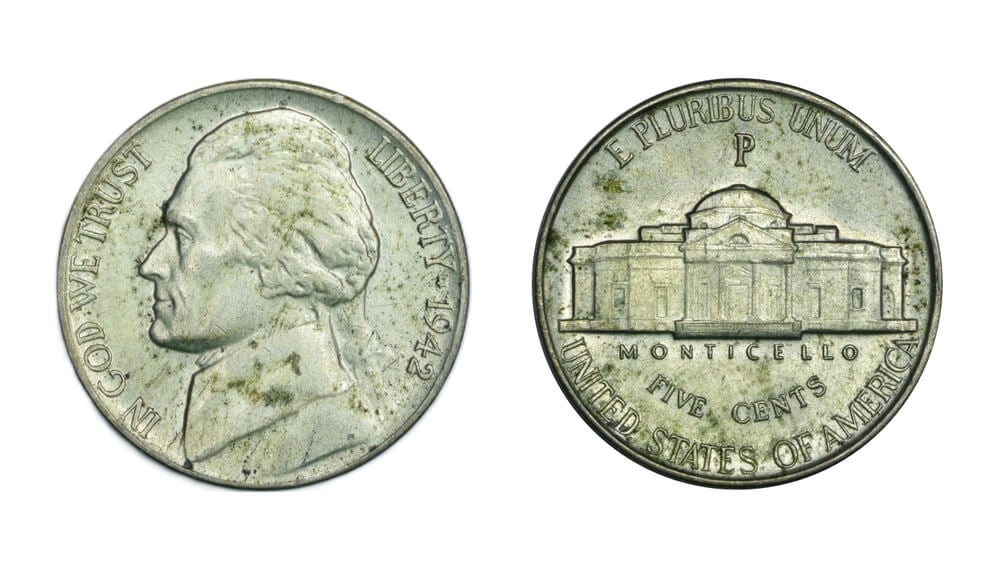
Nickel was a strategic metal during the Second World War, so from late 1942 through 1945 the Mint struck five-cent pieces in an alloy of 35 percent silver, 56 percent copper, and 9 percent manganese. To mark the change, a large mintmark was placed above Monticello, and for the first time Philadelphia used a P.
These coins are common, and their value is tied mostly to silver content, usually a dollar or two each, with uncirculated examples worth more. The 1943/2-P overdate within the series commands a significant premium.
Condition, Full Steps, and the overdate attribution determine whether a given coin is worth melt value or hundreds of dollars.
1950-D Jefferson Nickel
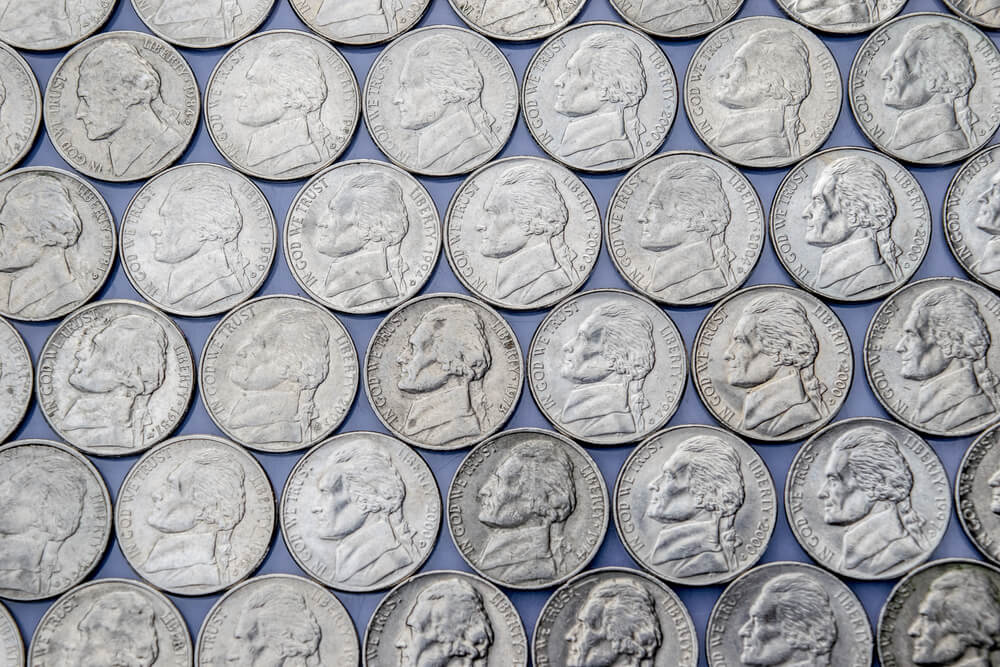
The lowest-mintage Jefferson nickel, with 2,630,030 struck, became a speculative favorite as soon as collectors realized how few existed. Rolls were hoarded so thoroughly that worn examples are harder to find than uncirculated ones, and prices spiked in the 1960s before settling.
Today typical uncirculated coins sell for $10 to $20, while high-grade pieces with Full Steps have sold for hundreds of dollars or more. It remains a useful lesson in how a low mintage does not guarantee rarity once the public catches on.
Grade and the Full Steps designation account for nearly all of the price difference.
1964 Special Mint Set Jefferson Nickel
A small number of 1964 nickels exist with a satiny, sharply struck finish unlike any business strike or proof of the year, believed to be trial pieces for the Special Mint Sets that officially began in 1965. Their exact origin was never documented, and only a tiny population has been certified.
One graded MS68 with Full Steps sold for $17,625, and others have brought comparable amounts. These coins are typically identified by their distinctive surfaces and unusually crisp details.
Because so few exist, grade differences and the Full Steps designation create large price gaps between examples.
1971 No S Proof Jefferson Nickel
Proof coins from San Francisco carry an S mintmark, but in 1971 a die without one was used, producing the first proof nickel missing its mintmark. Estimates place the number produced around 1,655, all of which were sold in regular proof sets.
Examples typically sell for several hundred to over $1,000, with deep cameo contrast and high grades commanding more. The variety is easy to confirm with a glance at the area beside the date.
As with all modern proofs, hairlines and spots lower the grade and the price substantially.
2005 Speared Bison Jefferson Nickel
The 2005-D nickel with the American Bison reverse was produced with a die that had a deep gouge running through the animal’s back, giving the appearance of a spear. It was found quickly in circulation and reported widely, which made it one of the most popular modern varieties.
Circulated examples have sold for $50 to a few hundred dollars, and uncirculated pieces have brought over $1,000. Later die states show a weaker line and are worth less, so the strength of the gouge affects value.
Condition and the clarity of the mark determine where a given coin falls.
Why the Smallest Coins Carry the Biggest Secrets
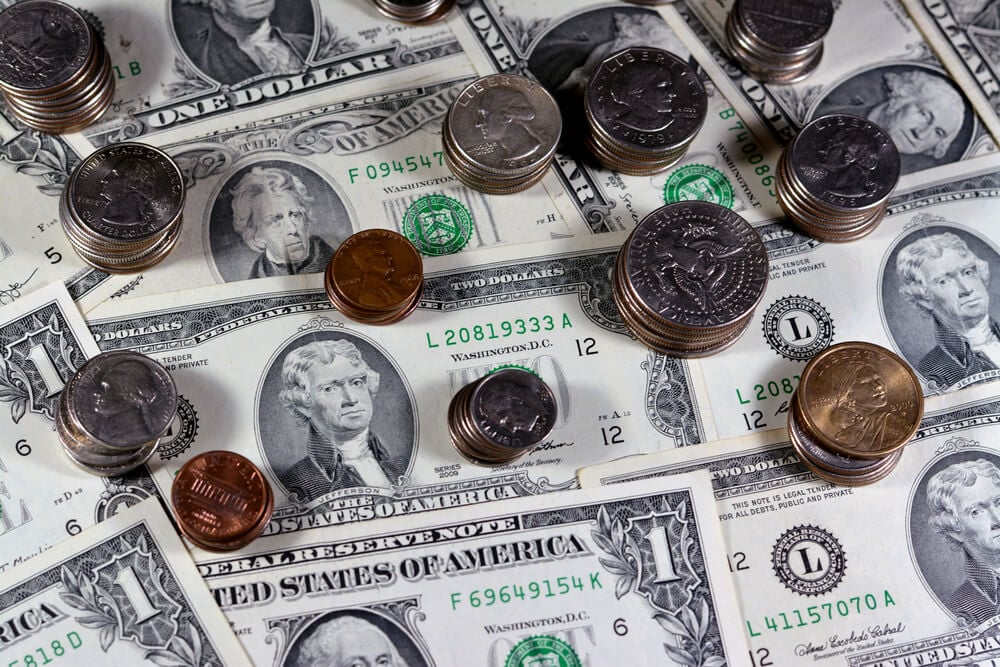
Cents and nickels are made in staggering quantities, and that volume is exactly why mistakes slip through. A handful of wrong blanks or a single overpolished die can go unnoticed among billions of ordinary coins, and the survivors become rarities by accident rather than design.
The most valuable examples were never meant to exist at all.
The common thread is that condition and grading decide everything. A worn coin and a flawless one can share a date and a variety yet sit a hundred thousand dollars apart.
Pocket change rewards the people who look closely, and it rewards the people who have their findings graded even more.
More from Go2Tutors!

- The Romanov Crown Jewels and Their Tragic Fate
- 13 Historical Mysteries That Science Still Can’t Solve
- Famous Hoaxes That Fooled the World for Years
- 15 Child Stars with Tragic Adult Lives
- 16 Famous Jewelry Pieces in History
Like Go2Tutors’s content? Follow us on MSN.