28 Back-to-School Items From Decades Past
Every September had its own smell, a mix of fresh rubber erasers, new canvas sneakers and paper that had never been folded. The shopping list arrived in August, and the trip to the five-and-dime or the department store felt like preparation for a voyage.
Some of those supplies vanished with the technology that replaced them. Others are still sold in nearly the same form, quietly waiting on the shelf for another generation to discover them.
Mead’s Hook-and-Loop Trapper Keeper
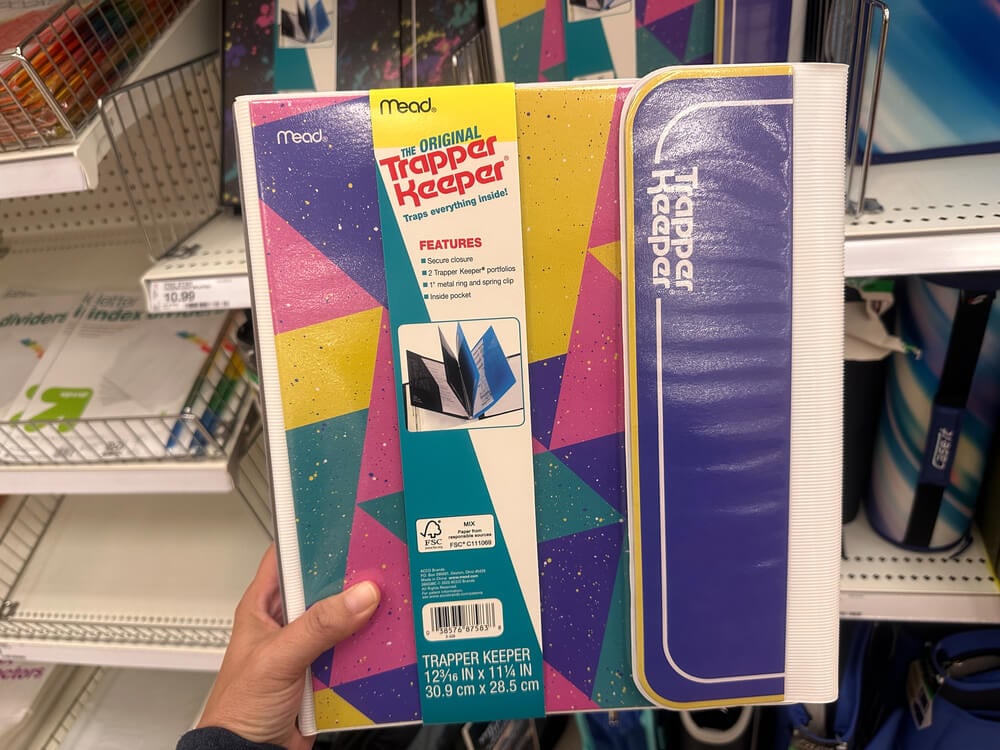
Mead released the Trapper Keeper in 1978, the brainchild of company marketer E. Bryant Crutchfield, who wanted a single binder that could hold a student’s folders, paper and loose assignments in one place. Its signature feature was a wide flap sealed with a hook-and-loop fastener, which produced a loud ripping sound that teachers learned to dread during quiet tests.
Inside, metal rings held notebook paper while matching pocket folders kept handouts in order. Later covers carried sports cars, geometric neon art and licensed characters, which made the binder as much a personal statement as a pair of sneakers.
Crutchfield died at 85, long after his invention became shorthand for an entire school generation.
Pee-Chee Folders Covered in Doodles

Pee-Chee folders came from the Western Tablet Company and spread through American schools from the 1940s onward, with an especially loyal following in the western states. The peach-tinted cover showed line drawings of students playing sports, and those figures practically begged for ink mustaches, sunglasses and speech bubbles.
Inside pockets were printed with handy reference tables, giving the folder a faint claim to academic usefulness. By the end of a semester, a well-used Pee-Chee was often covered in phone numbers, band names and crossed-out crushes.
A cheap paper product ended up working as an unofficial yearbook that traveled from class to class.
Lisa Frank’s Rainbow Folders
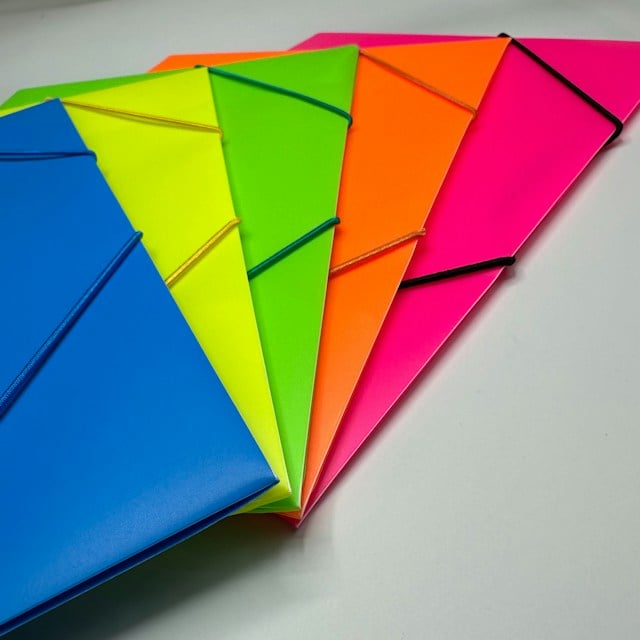
Lisa Frank founded her company in Tucson, Arizona, in 1979, and by the late 1980s and 1990s her artwork had taken over folders, notebooks and pencil cases across the country. The designs were unmistakable, with neon dolphins, rainbow leopards, pandas and unicorns rendered in saturated color that seemed to glow under fluorescent classroom lights.
The folders became a daily billboard, carried from homeroom to the lunch line and displayed on desks like small works of art. Choosing which animal would ride along for the year was a serious decision for many students.
The look proved durable enough that adults who carried those folders later went hunting for reissues and nostalgic collaborations.
Big Chief Writing Tablets
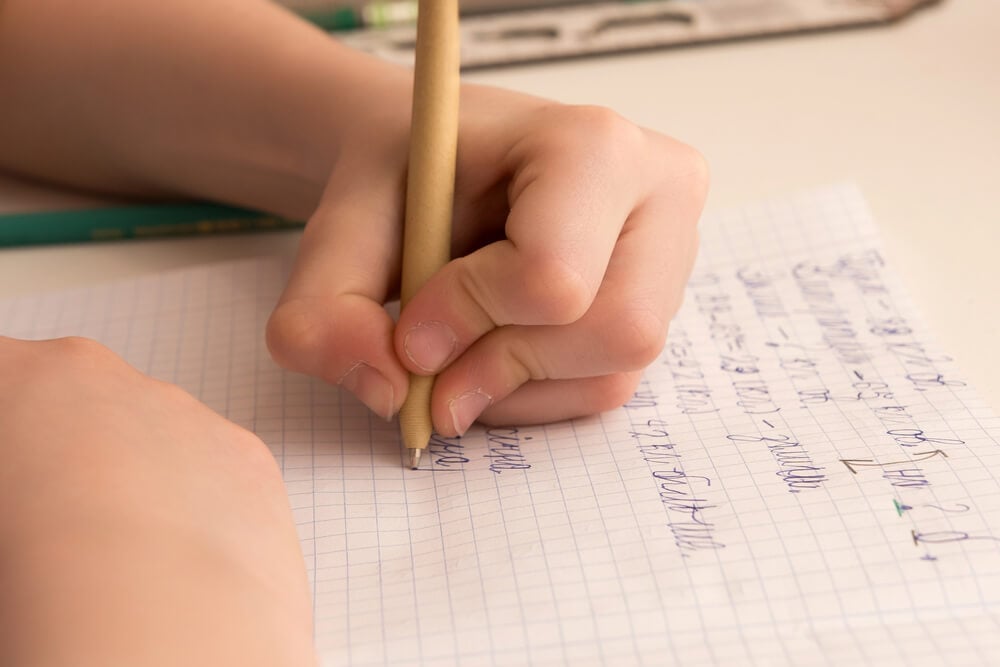
Generations of children learned to write on Big Chief tablets, made by the Western Tablet Company of St. Joseph, Missouri, beginning in the early 1900s. The red cover carried a portrait of a Native American chief, an image that dated the product even as it made it instantly recognizable on any desk.
Inside was coarse, wide-ruled paper with visible wood flecks, forgiving of thick primary pencils and heavy-handed erasing. The pages were bound along the top edge so they could be torn away one at a time.
First graders practiced their letters on that soft, absorbent paper well into the later decades of the twentieth century.
Marbled Composition Notebooks
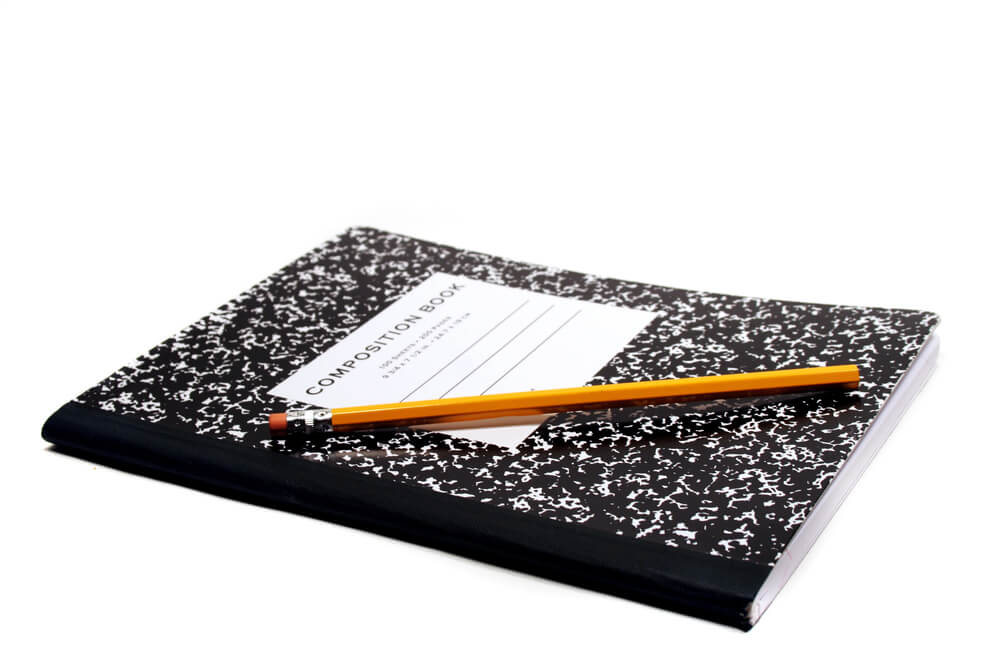
Composition notebooks, with their black-and-white marbled covers, have been a school staple for generations, and the design has barely changed. The cover pattern borrowed from the marbled paper long used in bookbinding, adapted into a cheap printed version that hid scuffs and fingerprints.
Pages were sewn together rather than spiral bound, so they could not be torn out cleanly without loosening their neighbors. That quirk made the notebook a favorite for science labs and journals, where missing pages raised questions.
A blank box on the front invited a name and subject, usually written with care on the first day and smudged beyond recognition by spring.
Slates and Slate Pencils
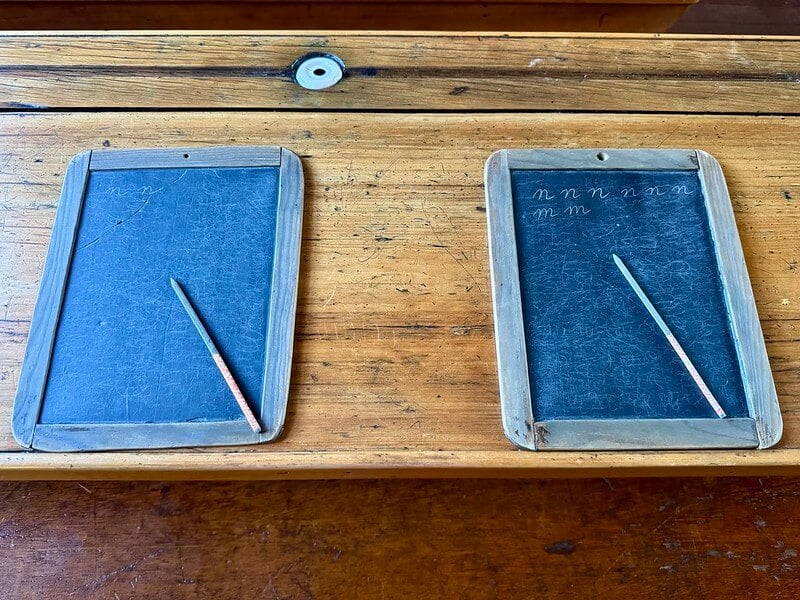
Before paper was cheap enough to waste on practice, schoolchildren worked arithmetic and spelling on small slate boards framed in wood. They wrote with a slate pencil, a stick of soft stone that scratched pale gray lines, and wiped the surface clean with a cloth or a sleeve.
One slate could serve a child for years, which mattered in one-room schoolhouses where families paid for their own supplies. Pennsylvania’s slate country became a major source of American school slates in the nineteenth century.
The boards faded from classrooms as inexpensive paper tablets spread, but the expression about wiping the slate clean still survives in everyday speech.
Inkwells and Steel-Nibbed Dip Pens
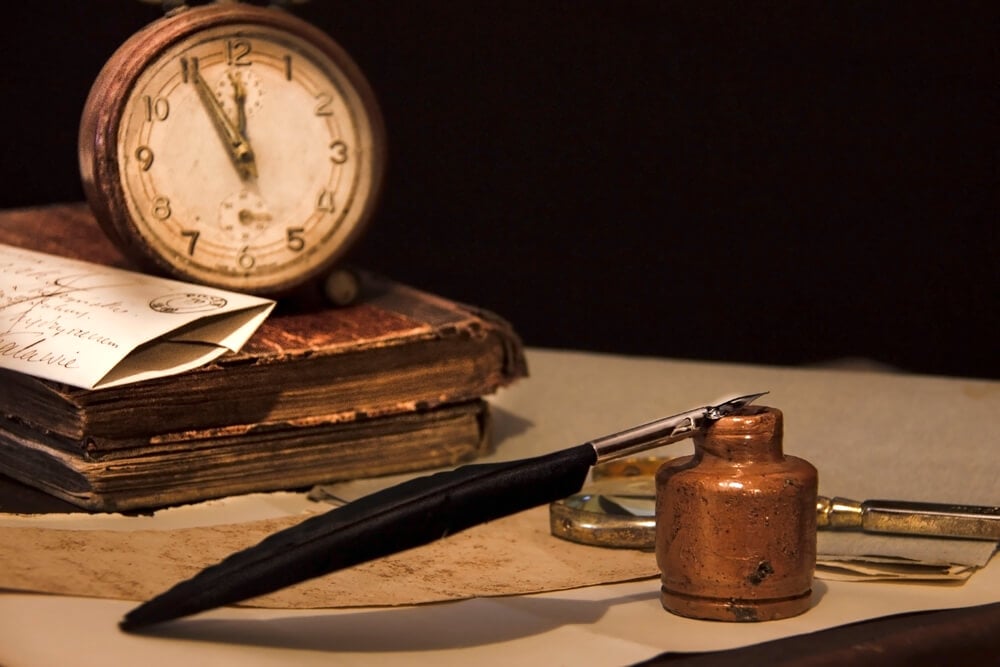
Older wooden school desks often came with an inkwell set into a small round opening in the top, a reminder that children once wrote with steel-nibbed dip pens. A teacher or appointed monitor filled the wells, and students dipped, wrote a few words and dipped again, learning to avoid blots on the page.
Sheets of blotting paper sat close at hand for the inevitable drips. The routine rewarded slow, deliberate penmanship and punished haste with smears.
Inkwell desks lingered in many schools long after the pens disappeared, and countless anecdotes describe mischievous boys dipping the end of a classmate’s braid into the ink.
Fountain Pens With Ink Cartridges
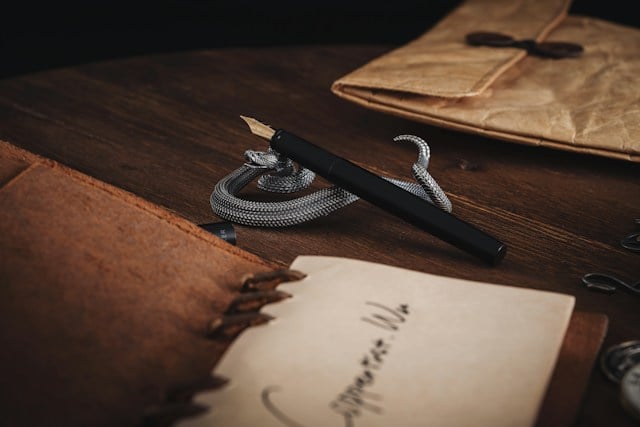
Disposable ink cartridges turned fountain pens from messy adult tools into practical school equipment by the middle of the twentieth century. Instead of filling a pen from a bottle, a student pushed a small plastic tube into the barrel, and fresh ink flowed down to the nib.
In Germany and much of Europe, cartridge pens such as the Pelikan Pelikano became standard in primary schools, where children were expected to graduate from pencil to ink. American students more often encountered them in penmanship lessons or as gifts.
A pocket full of spare cartridges signaled preparedness, while a burst one inside a pencil case was a small catastrophe.
Slide Rules in Belt Holsters
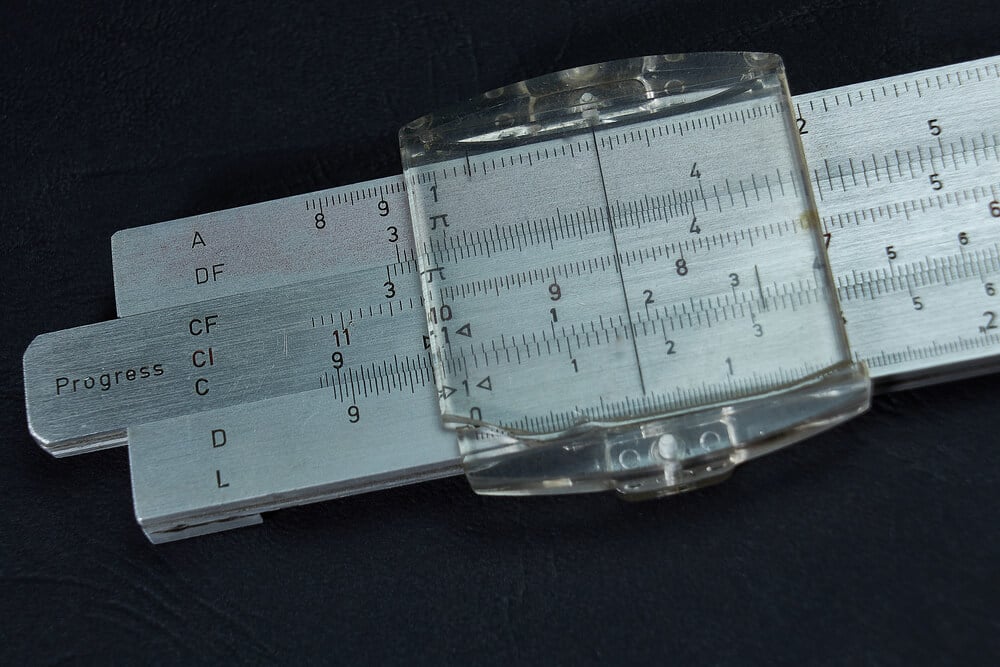
For high school and college students in math and science through the 1960s, the slide rule was the calculator of the day. These rulers with sliding center strips used logarithmic scales to multiply, divide and find roots, and serious students carried them in leather or plastic cases clipped to a belt.
Keuffel and Esser of New Jersey ranked among the best-known American makers. Using one required estimating the decimal point by hand, which forced a rough sense of scale that later students never had to develop.
Electronic calculators made the device obsolete within a few years, and production by major makers wound down around the middle of the 1970s.
Texas Instruments TI-30 Calculator
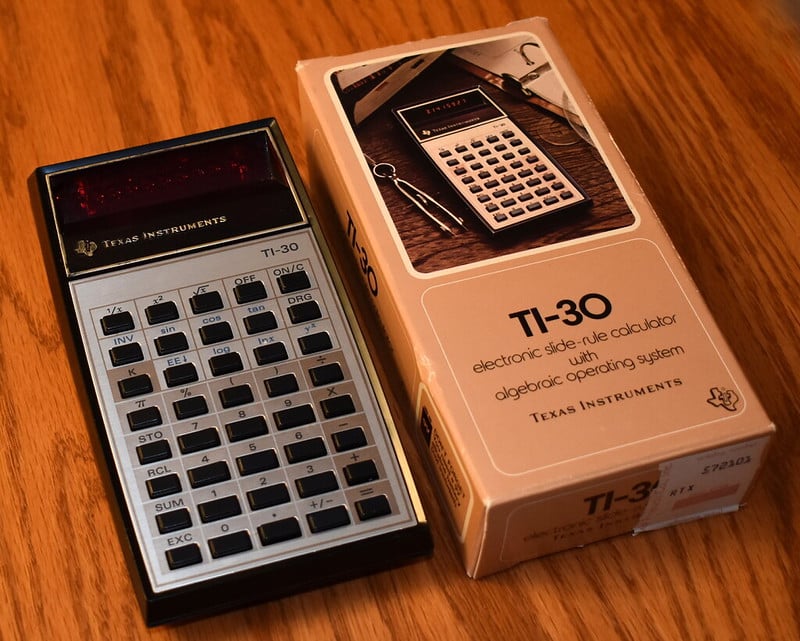
Texas Instruments introduced the TI-30 scientific calculator in 1976, and its relatively low price helped put scientific functions into the hands of ordinary high school students. The original model had a glowing red LED display, ran on a nine-volt battery and handled trigonometry, logarithms and square roots that once required a slide rule or printed tables.
Teachers debated whether such machines would weaken basic math skills, an argument that has resurfaced with nearly every classroom technology since. The TI-30 name kept returning in updated forms for decades.
Successive versions appeared on supply lists long after the red digits had given way to liquid crystal screens.
Ditto Sheets Fresh From the Machine

Worksheets in many schools from the 1950s through the 1980s came off a spirit duplicator, often called by the brand name Ditto, which printed in a distinctive purple ink. The machine used a waxy master sheet and an alcohol-based fluid, and freshly run copies carried a sharp, sweet chemical odor.
Students famously lifted the cool, slightly damp pages to their faces for a sniff before reading a single question. The image weakened with each copy, so the last sheets in a stack were often barely legible.
Photocopiers gradually replaced the machines, ending a sensory ritual that former students can still describe in vivid detail.
Paper Mate Erasermate Pens
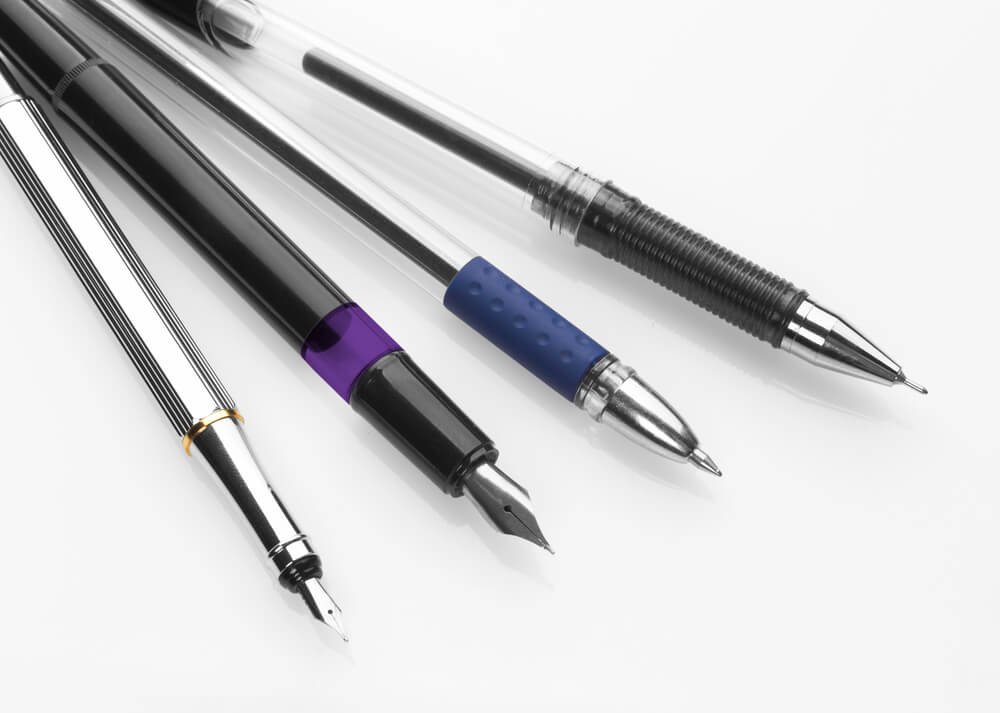
Paper Mate introduced the Erasermate in 1979, offering ink that could be rubbed away with an eraser on the end of the pen, at least for a while after writing. The trick lay in an ink made with rubber cement, which sat on top of the paper fibers before gradually setting into them.
That window made it a favorite for math homework and forms, and a source of frustration when a stray hand smeared a freshly written line. Teachers who required pen for certain assignments found the old line between permanent and correctable suddenly blurred.
The pen became a compromise between the confidence of ink and the safety of pencil.
Bic Four-Color Click Pen
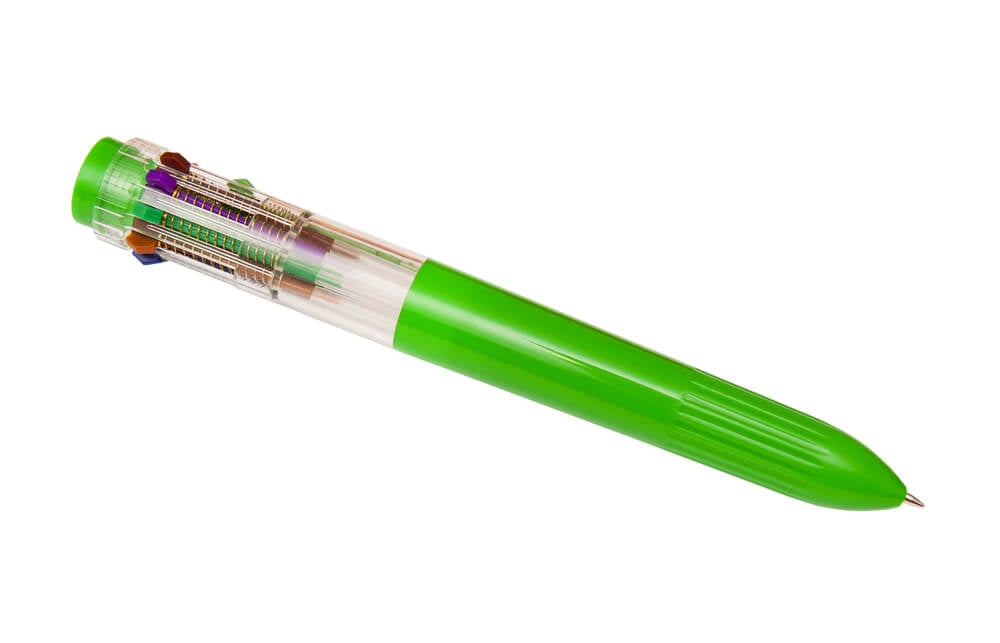
Bic introduced its four-color pen in 1970, packing blue, black, red and green ink cartridges into a single fat barrel with four colored sliders at the top. Pushing one slider down brought that color’s tip into position and retracted any other.
Students used it to color-code notes, mark corrections and doodle in multiple shades, and the satisfying click made it a fidget object during long lectures. Pressing two sliders at once was a classic experiment that never quite worked.
The design has changed only modestly over the decades, and the pen remains on store shelves, a rare classroom tool that never really went away.
Eberhard Faber’s Pink Pearl Eraser
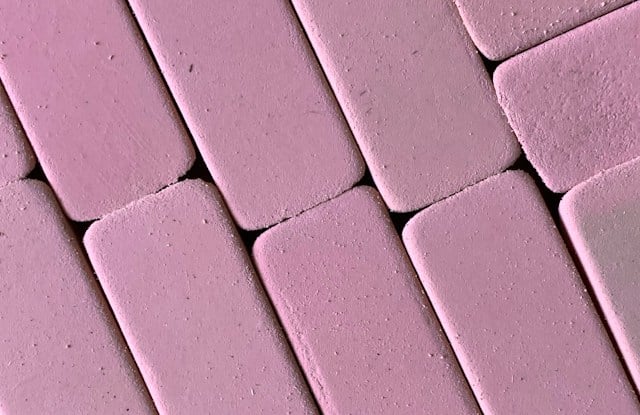
Eberhard Faber introduced the Pink Pearl eraser in 1916, and its slanted, wedge-shaped ends and soft rose color became the standard image of an eraser for much of the century. The rubber was meant to lift graphite without tearing paper, though overzealous scrubbing could still wear right through a worksheet.
Students carved initials into them, wore them down to crumbs and kept them long after the matching pencil had been sharpened to a stub. The original maker was later absorbed by larger companies, and the eraser is now sold under the Paper Mate brand.
Its shape has stayed so consistent that it still looks like the drawing of an eraser in a child’s picture book.
Mr. Sketch Scented Markers
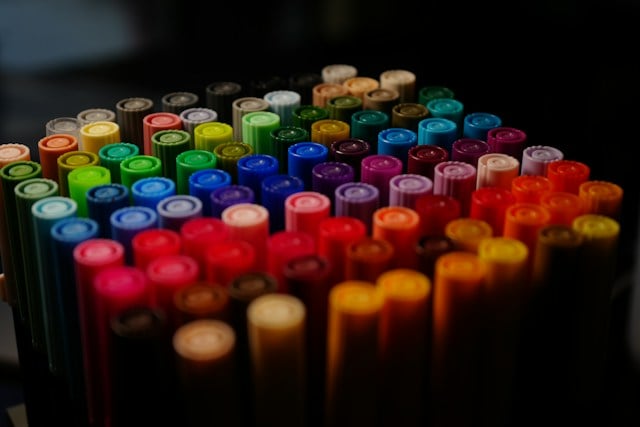
Sanford introduced Mr. Sketch markers in 1965, and the scented colors turned art class into something closer to a candy shop. Each color carried its own fragrance, with black smelling of licorice, red of cherry and yellow of lemon, and children quickly learned which cap to sniff first.
The water-based ink washed out of clothes, which parents appreciated, and the wide chisel tips worked well for posters and coloring. Teachers occasionally warned against holding markers too close to noses, with predictable results.
The line remains on the market, and the scent assigned to each color has become a shared sensory memory for several generations of students.
Crayola 64 With the Built-In Sharpener
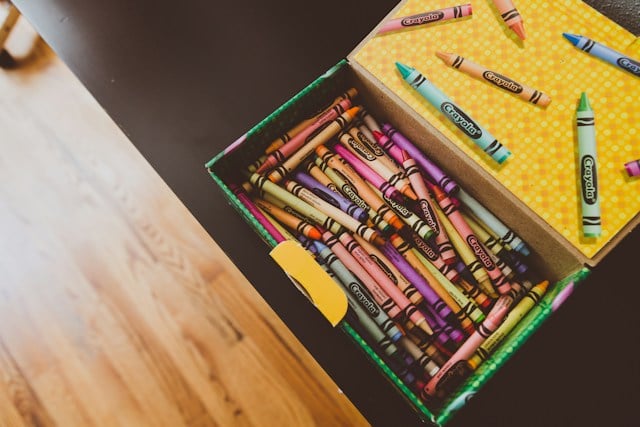
Crayola introduced its 64-count box in 1958, and the built-in sharpener at the back became one of the most coveted features in any school supply. The tiered box held crayons in stepped rows, revealing colors with grown-up names such as burnt sienna and raw umber.
Owning the 64 signaled a certain status, especially compared with the humble eight-count box most classmates carried. The sharpener produced curled wax shavings that collected inside the box and stained everything nearby.
Crayola has retired and renamed colors over the years, but the 64 box remains in production, still carrying a sharpener for the occasional dull tip.
Magnetic Pencil Boxes With Pop-Up Trays
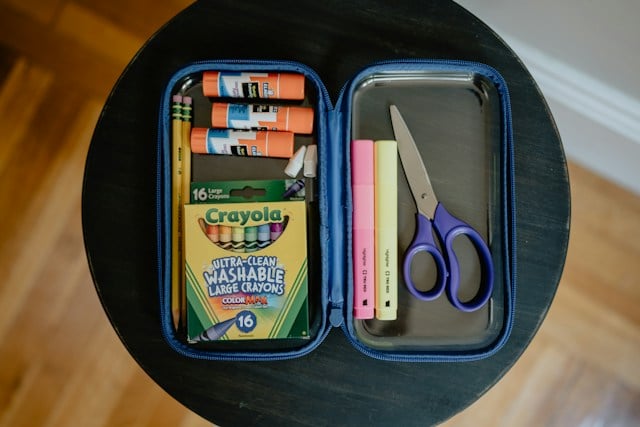
In the 1980s, plastic pencil cases with magnetic snap lids became the envy of American classrooms, many of them designed in Japan or inspired by Japanese stationery. The fancier models had push-button compartments that sprang open, built-in sharpeners, pop-up pencil trays and sometimes a small mirror or timetable card inside the lid.
Each button produced a satisfying click, which was a large part of the point. Some carried cartoon characters or bright patterns, and owning the case with the most features carried genuine playground prestige.
Their designs reflected a love of compact, multi-function gadgets that plain zippered pouches never managed to match.
Book Covers Cut From Grocery Bags
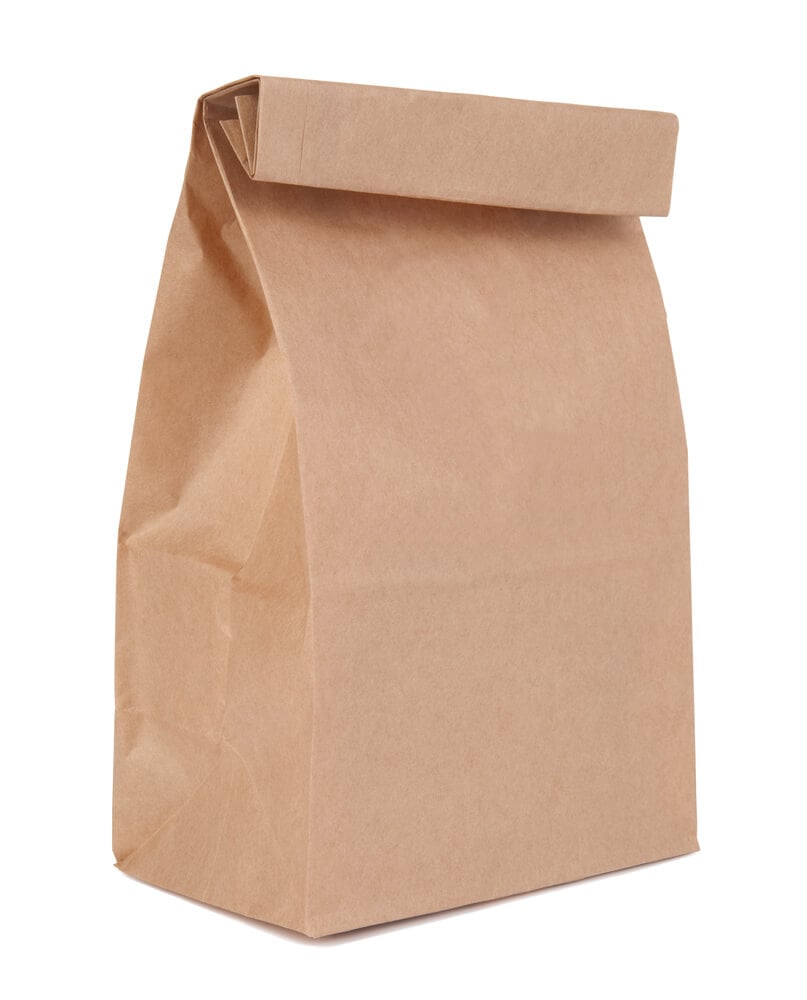
Many schools required students to protect their textbooks, and the cheapest solution was a brown paper grocery bag. Parents cut the bag open, folded it around the book, tucked the edges into the front and back covers and creased the corners into place without a single piece of tape.
The plain brown surface quickly became a canvas for doodles, names and the occasional love note. Districts insisted on covers because textbooks belonged to the school and would be reissued to other students the following year.
Stretchable fabric covers later replaced paper bags in many homes, especially as plastic shopping bags took over at the checkout.
Elastic and Leather Book Straps
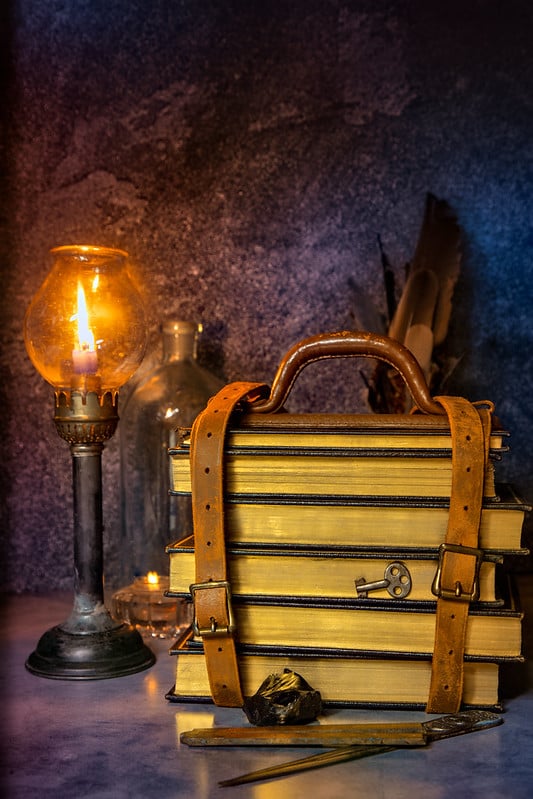
Before backpacks took over, many students carried books in a strap, a leather or elastic belt that cinched around a stack of textbooks and often had a handle at the top. The strap kept everything together on the walk to school and could be slung over a shoulder or swung at the side.
It also made an impressive, if unwise, tool for hallway horseplay. Book straps were common through the early and middle decades of the twentieth century.
They faded as students began carrying everything in canvas and nylon bags, surviving mostly in vintage photographs of children walking home with books dangling from one hand.
Leather School Satchels
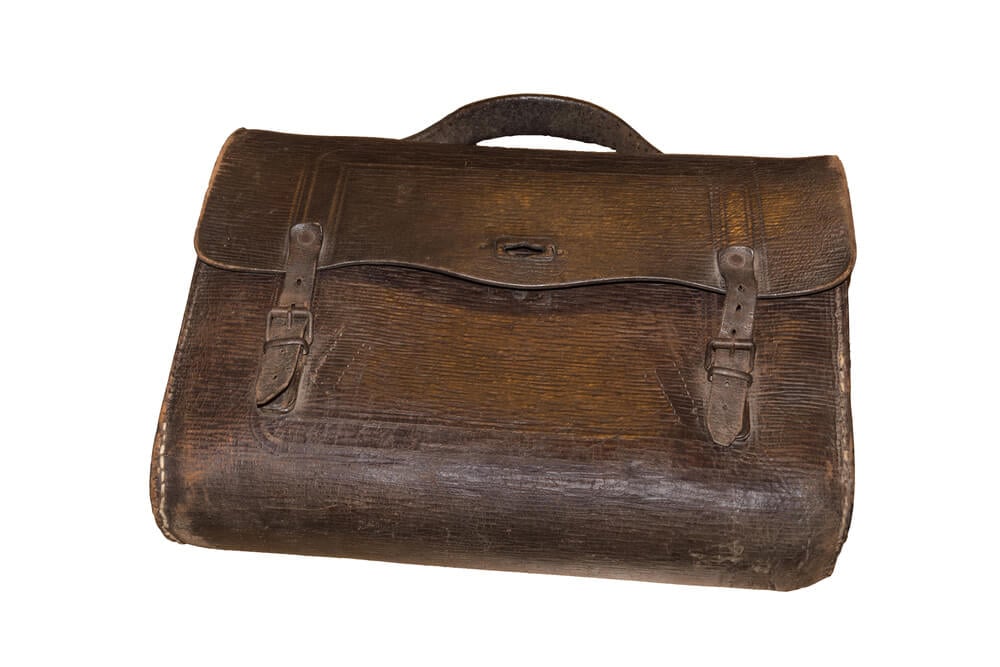
For much of the twentieth century, a common school bag was a leather satchel with a flap, a buckle and a single strap or handle. American students often carried them by hand or slung across the body, while children in parts of Europe wore stiffer versions on their backs.
In Germany, the boxy Schulranzen remains a major first-day purchase for young pupils. The leather softened with age and took on the shape of its contents.
A well-made satchel could last for years and was often handed down to younger siblings, and the design has since returned as an adult fashion accessory carrying far lighter loads.
JanSport Backpacks
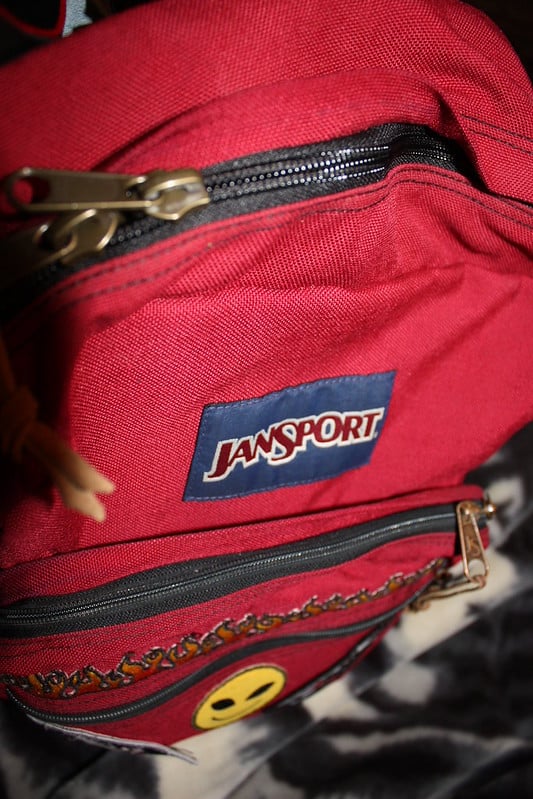
JanSport was founded in Seattle in 1967 and named after Jan Lewis, who married cofounder Murray Pletz. The company began with outdoor gear, but its simple daypacks found a new audience in the 1970s when college students began using them to carry books, a shift often traced to the University of Washington bookstore.
By the 1980s and 1990s, the plain two-strap JanSport was a standard sight in schools across the country, frequently worn over just one shoulder for style. The brand’s lifetime warranty became part of its appeal.
Plenty of worn-out packs were mailed back for repair years after their first day of class.
Metal Lunch Boxes With TV Heroes
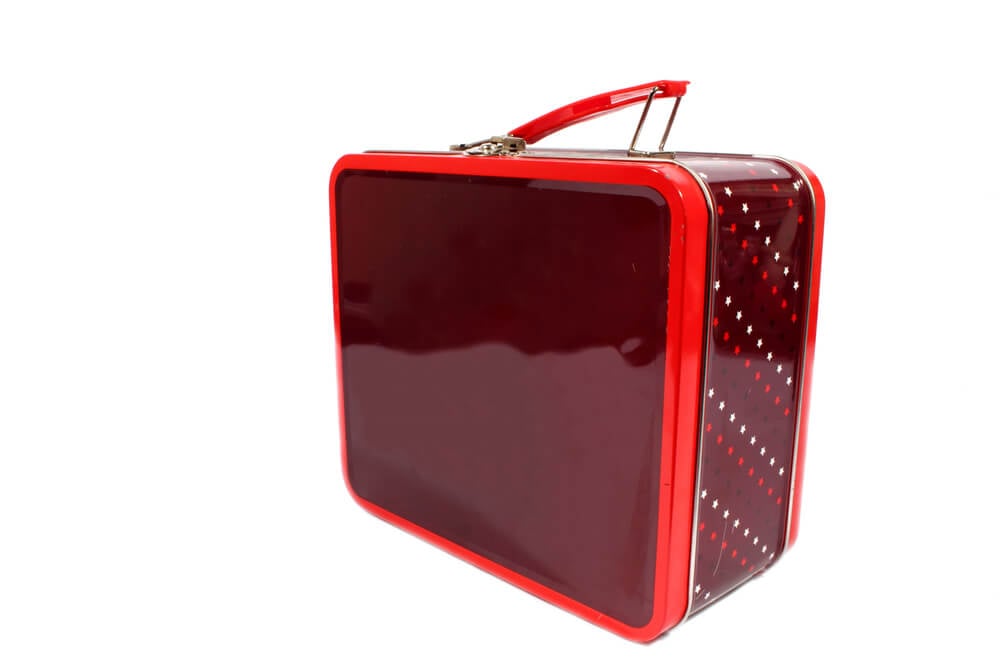
The licensed metal lunch box took off in 1950, when Aladdin Industries released one decorated with Hopalong Cassidy, the cowboy hero of film and early television. Its success led to a long run of lithographed tin boxes featuring cartoon characters, astronauts, rock bands and prime-time stars.
Choosing one became a first-day ritual and a statement of identity for the year ahead. Most came with a matching vacuum bottle clipped inside the lid. The metal era faded during the 1980s as manufacturers shifted to plastic, and surviving boxes have become popular collectibles, with prices that depend heavily on condition and rarity.
Thermos Vacuum Bottles
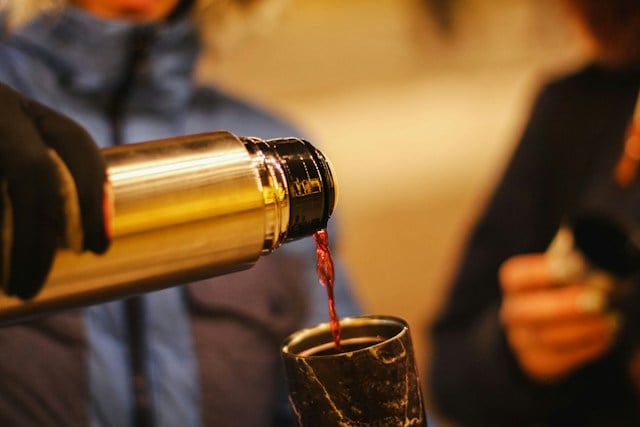
The Thermos brand dates to 1904 in Germany, when a company formed to sell the vacuum flask for everyday use and chose a name derived from the Greek word for heat. In school lunch boxes, the Thermos bottle became the essential companion, filled with milk, soup or juice.
Early versions had glass inner liners that could shatter if the box was dropped, leaving a telltale rattle that meant lunch was ruined. Many children learned not to swing their lunch boxes too hard for exactly that reason.
Matching bottles bore the same characters as the boxes, and finding both together is now a goal for collectors.
Protractor and Compass Sets
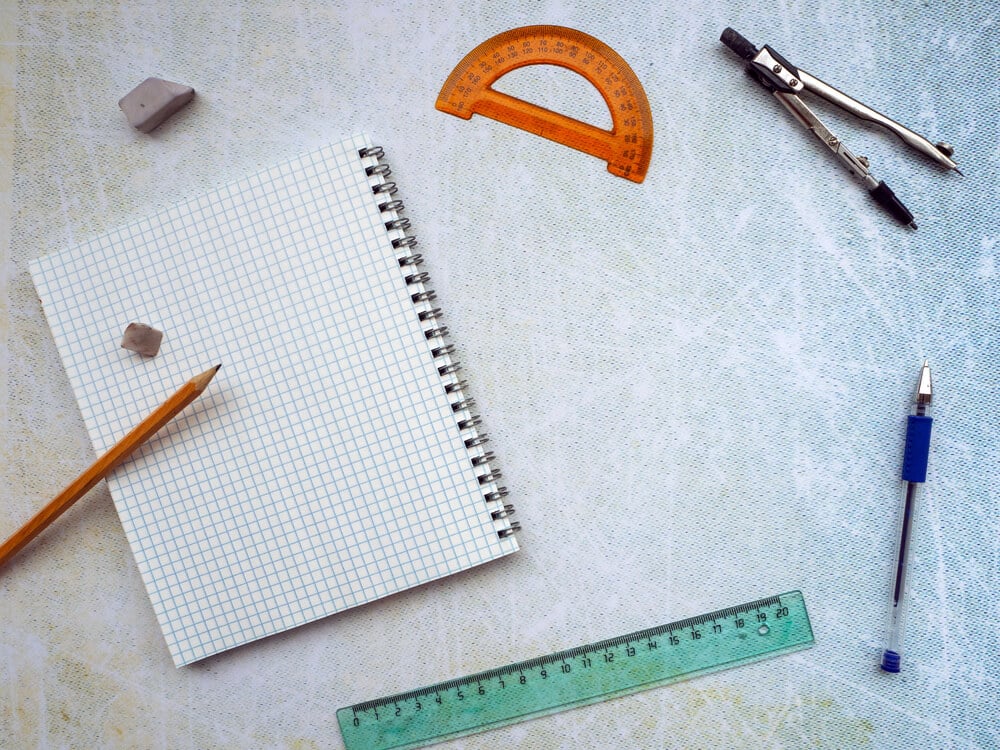
Geometry class meant a tin of drafting tools, typically a protractor, a compass with a sharp steel point, a ruler, two set squares and a small pencil. British maker Helix, founded in Birmingham in 1887, became famous for its Oxford set in a metal tin, and similar kits were standard in classrooms across the United States and beyond.
The compass was easily the most dangerous item in many pencil cases, used for drawing circles and occasionally for carving initials into desks. Precise constructions demanded patience and steady hands.
The sets are still sold, though the metal tin has become a nostalgic object of its own.
Corduroy and Plaid First-Day Outfits

For decades, the first day of school called for new clothes, and corduroy and plaid ranked among the most common choices. Department store catalogs from Sears and JCPenney devoted pages each summer to back-to-school wear, much of it in sturdy ribbed corduroy and practical plaid cotton and wool.
Girls often wore plaid jumpers or skirts, while boys sported corduroy pants that made a distinctive swishing sound with every step. The outfits appeared in countless first-day photos, posed on front steps before the bus arrived.
Their stiff newness rarely survived the first week, but they defined the look of back-to-school season for generations.
Keds Canvas Sneakers
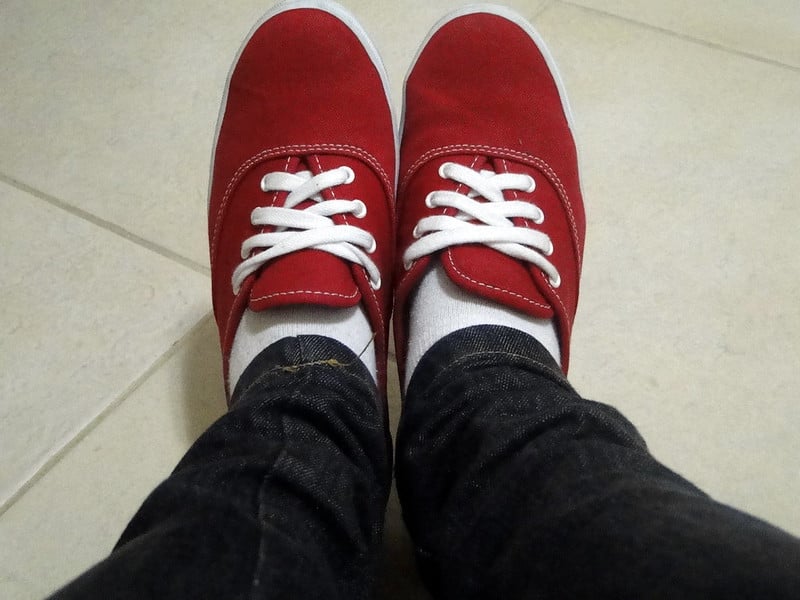
Keds were introduced in 1916 by the U.S. Rubber Company, and their simple canvas uppers and rubber soles made them a staple of American childhood for decades. A fresh pair was often bought just before the first day, bright white and stiff, and quickly scuffed on the playground.
The shoes were affordable, light and versatile enough for gym class, recess and the walk home. The brand’s low-top Champion model became especially associated with girls and young women.
Keds remain in production, and the plain white canvas version still turns up on back-to-school shopping lists more than a century after its debut.
PF Flyers and the Promise of Speed
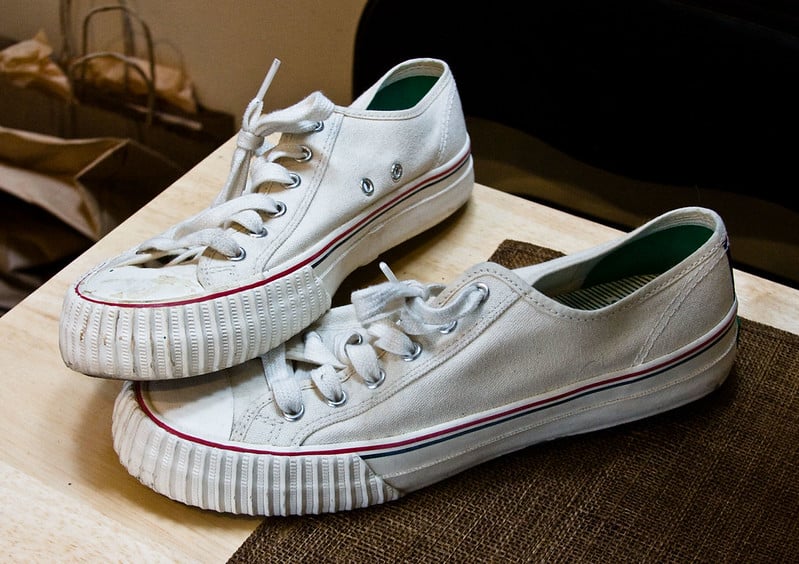
PF Flyers were introduced by B.F. Goodrich in 1937, and the initials stood for Posture Foundation, a patented insole designed to support the arch. Advertising aimed at children promised that the shoes would help them run faster and jump higher, a pitch that made a new pair feel like a competitive advantage on the playground.
The canvas high-tops and low-tops competed directly with Converse and Keds for school-age feet. Ownership passed through several companies over the decades.
Its reputation for making kids feel quicker on the first day of school remains a central part of its nostalgic appeal.
Dixon Ticonderoga Pencils
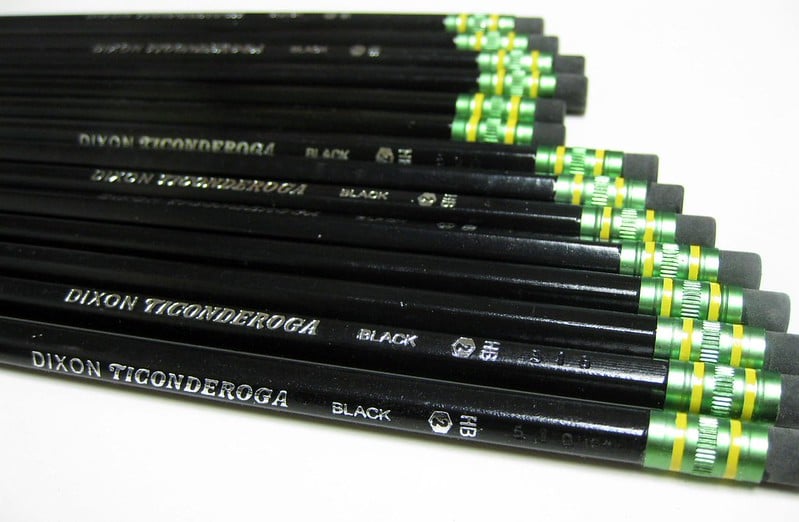
A yellow No. 2 pencil is among the most recognizable writing tools in American schools, and Dixon Ticonderoga made it a classroom fixture for generations. The brand takes its name from Ticonderoga, New York, an area tied to graphite mining, and its pencils carry distinctive green and yellow bands around the metal ferrule.
The habit of painting pencils yellow is often credited to the Koh-i-Noor company in the 1890s, which used the color to signal quality graphite. Standardized tests long specified No. 2 pencils for marking answer sheets.
A fresh box of sharpened Ticonderogas remains a lasting symbol of the first day of school.
Pencils Sharpened for a Different Century
Most of these supplies were never meant to be memorable. They were bought cheaply, used hard and thrown away by June, which is exactly why their survivors now feel so loaded with meaning. A Pee-Chee covered in doodles or a dented lunch box carries the fingerprints of a specific year in a way that a tablet computer rarely will.
The pattern across the decades is less about technology than about ritual. Each generation had its own version of the new binder, the new shoes and the box of sharp crayons waiting to be opened. The items changed, but the feeling of a clean page in early September stayed remarkably constant.
More from Go2Tutors!

- The Romanov Crown Jewels and Their Tragic Fate
- 13 Historical Mysteries That Science Still Can’t Solve
- Famous Hoaxes That Fooled the World for Years
- 15 Child Stars with Tragic Adult Lives
- 16 Famous Jewelry Pieces in History
Like Go2Tutors’s content? Follow us on MSN.