28 Breakfast Cereals That Were Discontinued Way Too Soon
There’s a particular kind of grief that comes from reaching for a cereal box at the grocery store and finding it gone — not just out of stock, but discontinued, erased, never coming back. It sounds dramatic until it happens to you.
Breakfast is ritualistic in a way that dinner never quite manages to be, and the cereal sitting across from you at 7 a.m. becomes part of the furniture of your life without you ever making a conscious decision about it. Some of these cereals ran for decades. Some barely made it a few years. All of them left a gap that whatever replaced them on the shelf never really filled.
Hydrox
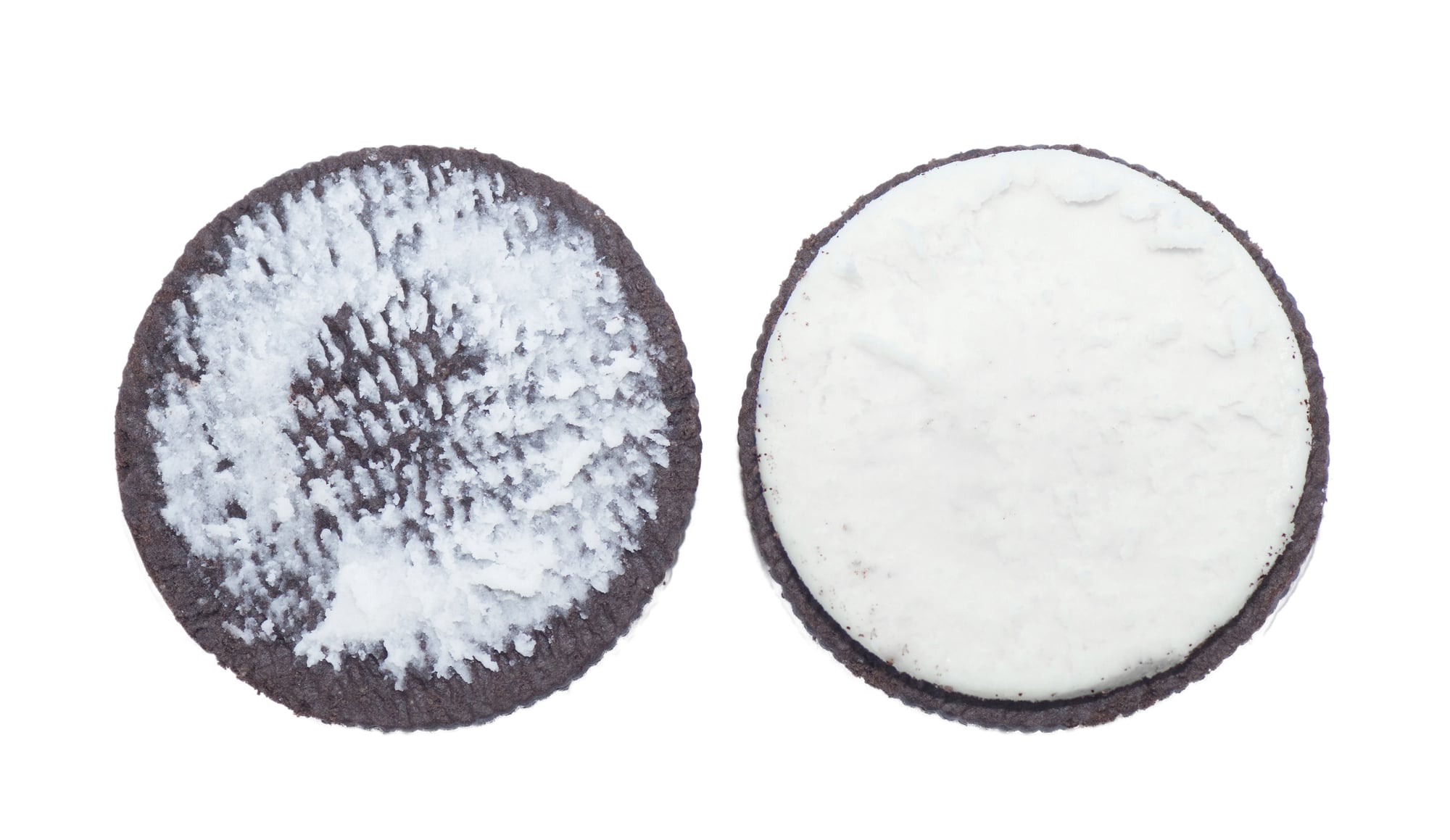
Nabisco’s Oreo got all the glory, but Hydrox actually came first — and the cereal version, which leaned into that chocolate sandwich cookie flavor with a stubbornness that felt almost defiant, deserved a longer run. It was discontinued quietly, which is somehow worse than a loud farewell.
Cereal erasure at its most indifferent.
Waffle-O’s
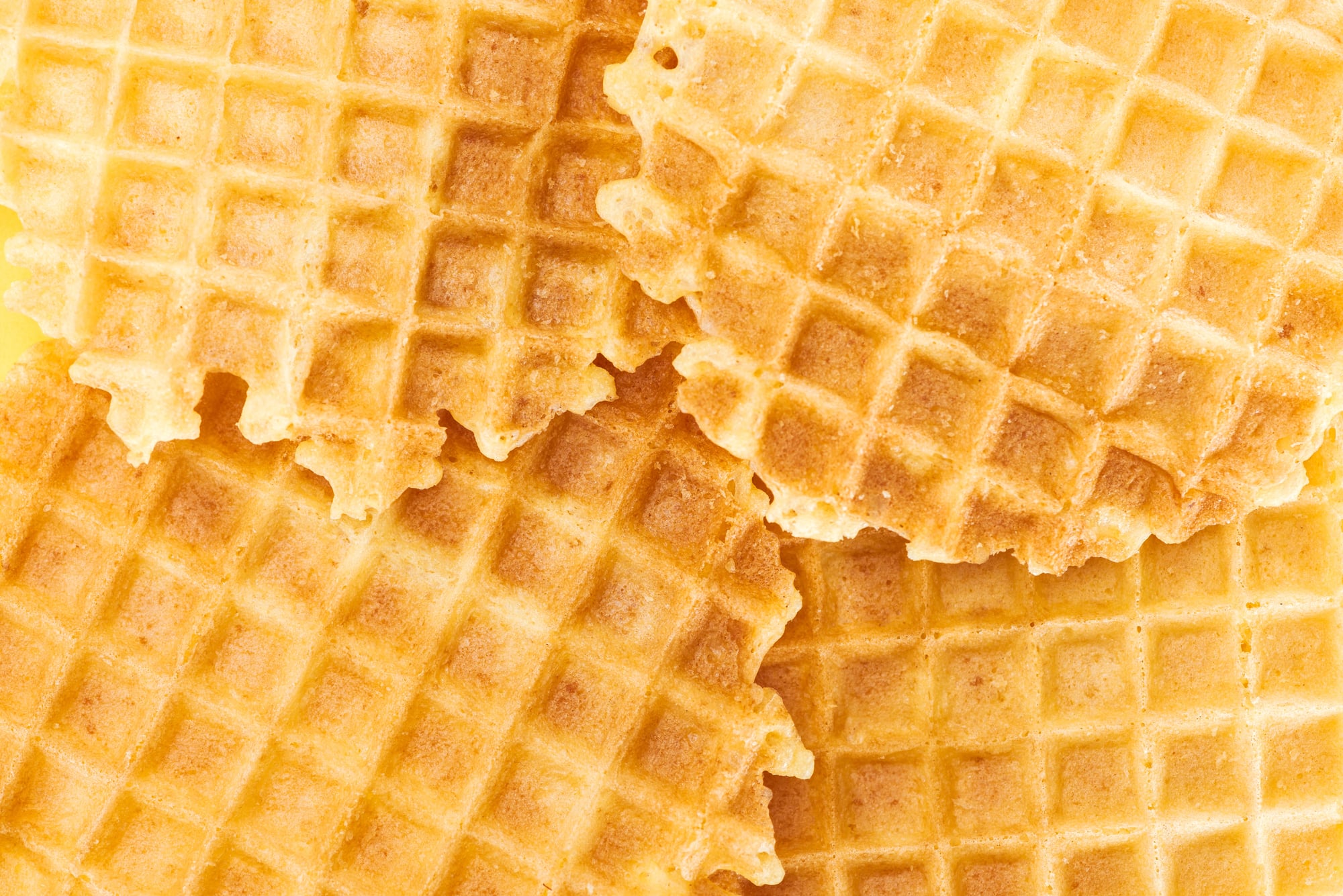
Waffle-O’s arrived with the kind of confident premise that should have lasted forever: a waffle-flavored ring cereal that smelled like a Sunday morning even when eaten on a Tuesday. And yet it vanished, almost without a trace, leaving behind a generation of people who occasionally describe it to younger relatives and receive blank stares in return.
Some cereals are so specific in their comfort that their discontinuation feels personal.
Grins & Smiles & Giggles & Laughs
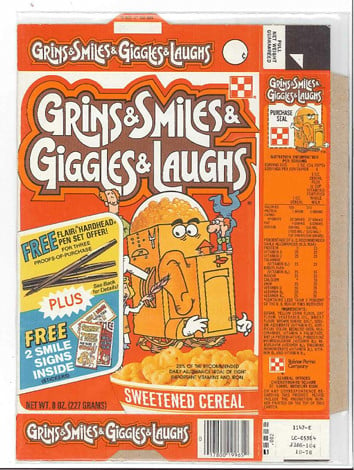
The name alone was a commitment. General Mills produced this one in the late 1970s, and it delivered a sweetened corn puff that was more fun to say than most cereals were to eat — which is saying something.
It’s gone now, and the cereal aisle is measurably less joyful for it.
Dinky Donuts
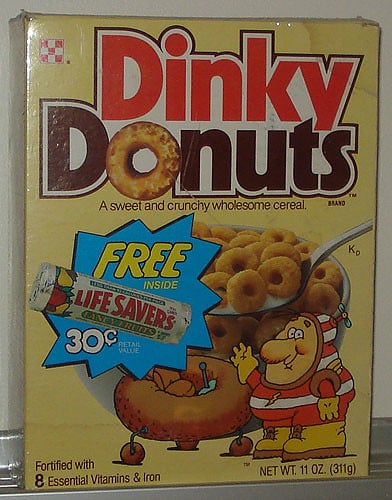
Dinky Donuts tasted exactly like what it promised: tiny, sweet, doughnut-shaped pieces of cereal that made the idea of eating pastry for breakfast feel officially sanctioned. Kellogg’s put it on shelves in the early 1980s and then pulled it before it ever found its full audience.
A box of Dinky Donuts on the table felt less like breakfast and more like getting away with something.
OJ’s
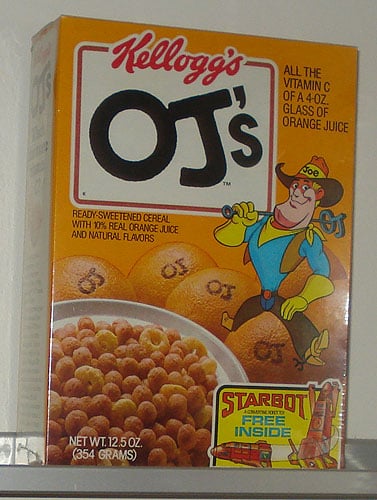
OJ’s were orange-flavored corn puffs from Kellogg’s that appeared briefly in the 1980s, and they carried that particular brightness that orange-flavored things had before artificial citrus became a warning sign rather than a selling point. They tasted the way a Florida morning smells — which is either a compliment or an indictment depending on your relationship with Florida.
Either way, they’re gone, and the orange-cereal category has been hollow ever since.
Croonchy Stars
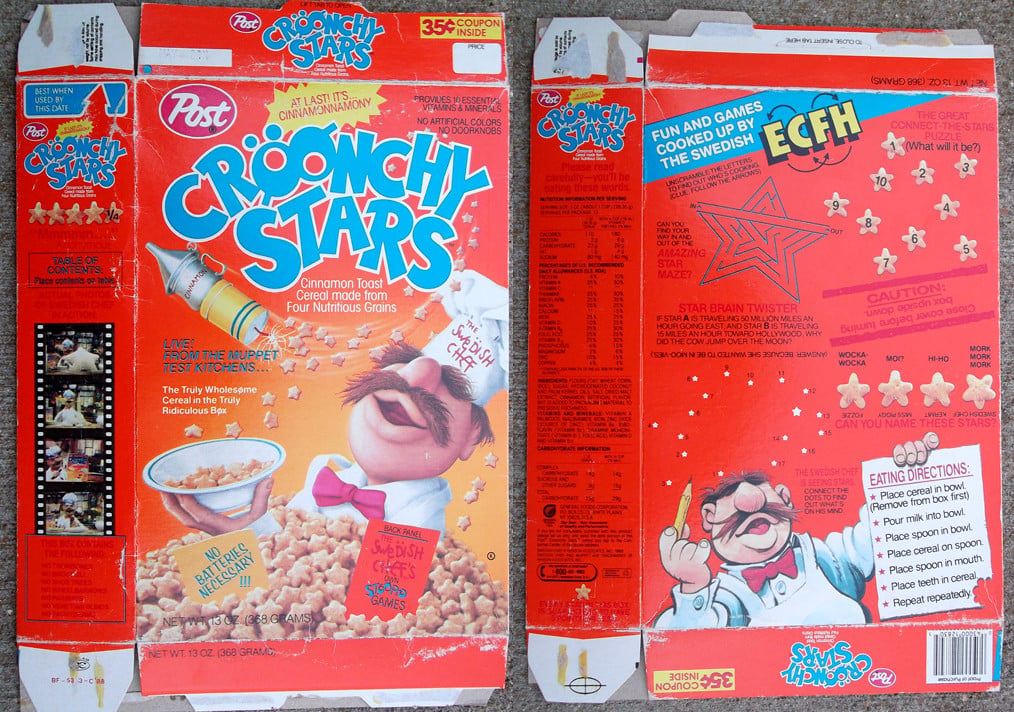
The Swedish Chef from The Muppets fronted this cereal, which already tells you everything you need to know about the energy it brought to the breakfast table. Post produced it in the late 1980s, and it had a cinnamon-forward sweetness that made other cinnamon cereals feel like they were holding back.
Turns out a cereal endorsed by a fictional Swedish chef had a limited commercial ceiling — but the people who ate it still remember.
Banana Frosted Flakes
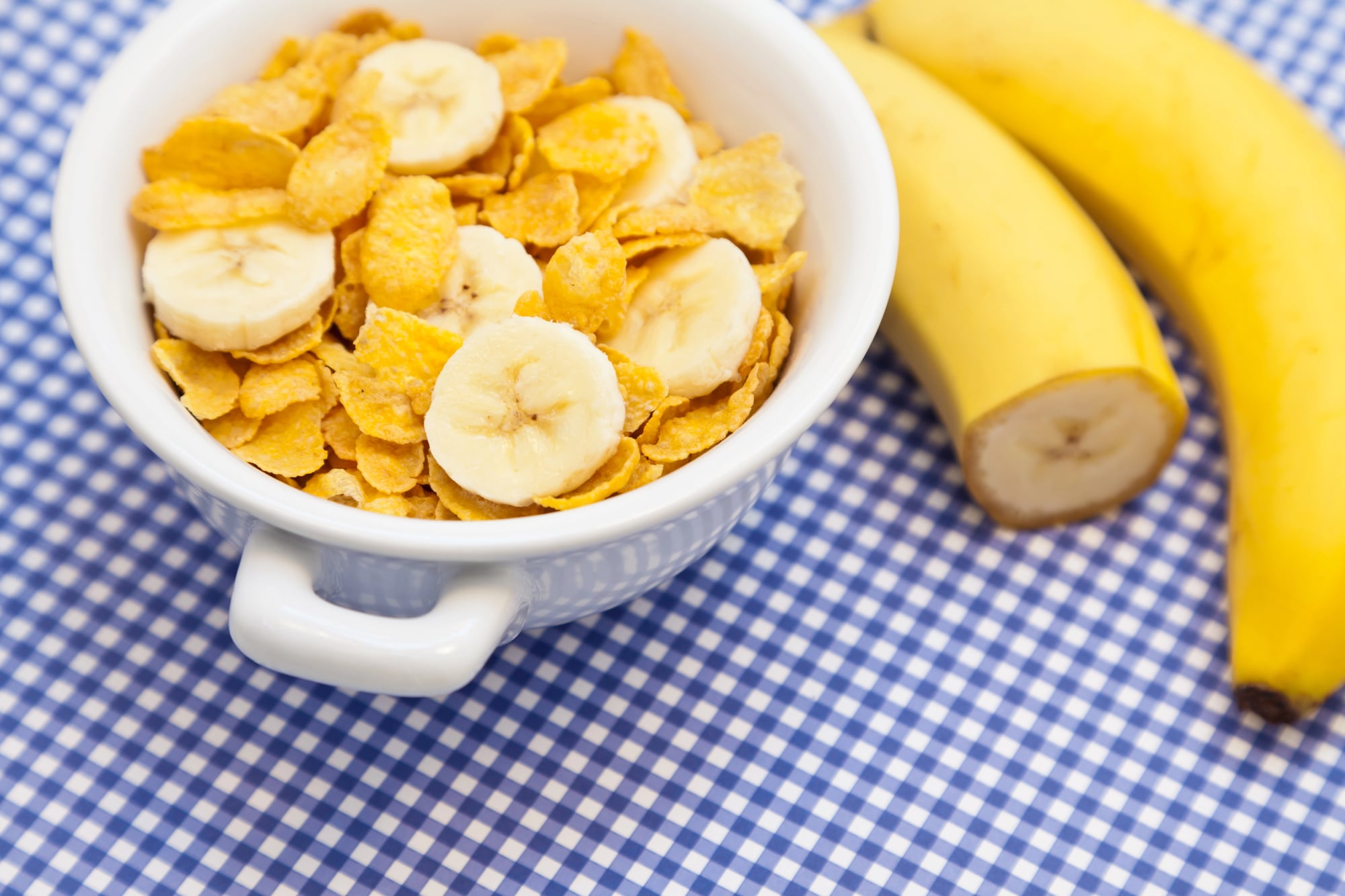
Frosted Flakes is a cereal with an established personality, so adding banana flavor to it felt like a risk Kellogg’s took only once and then decided never to revisit. The banana note was real — not the artificial banana-runts flavor that coats most banana-flavored snacks, but something closer to actual fruit.
It disappeared from shelves so efficiently that some people who ate it regularly question whether it was ever there at all.
Ice Cream Cones Cereal
Kellogg’s managed to put ice cream cone flavor into a breakfast cereal in the late 1980s, which required a certain audacity that deserves more credit than it received. The pieces were shaped like miniature sugar cones, and the flavor actually tracked — vanilla and sugar and something faintly waffle-like.
It’s the kind of cereal that, had it survived into the social media era, would have generated enough nostalgic content to fund its own revival. Instead: nothing.
Ghostbusters Cereal
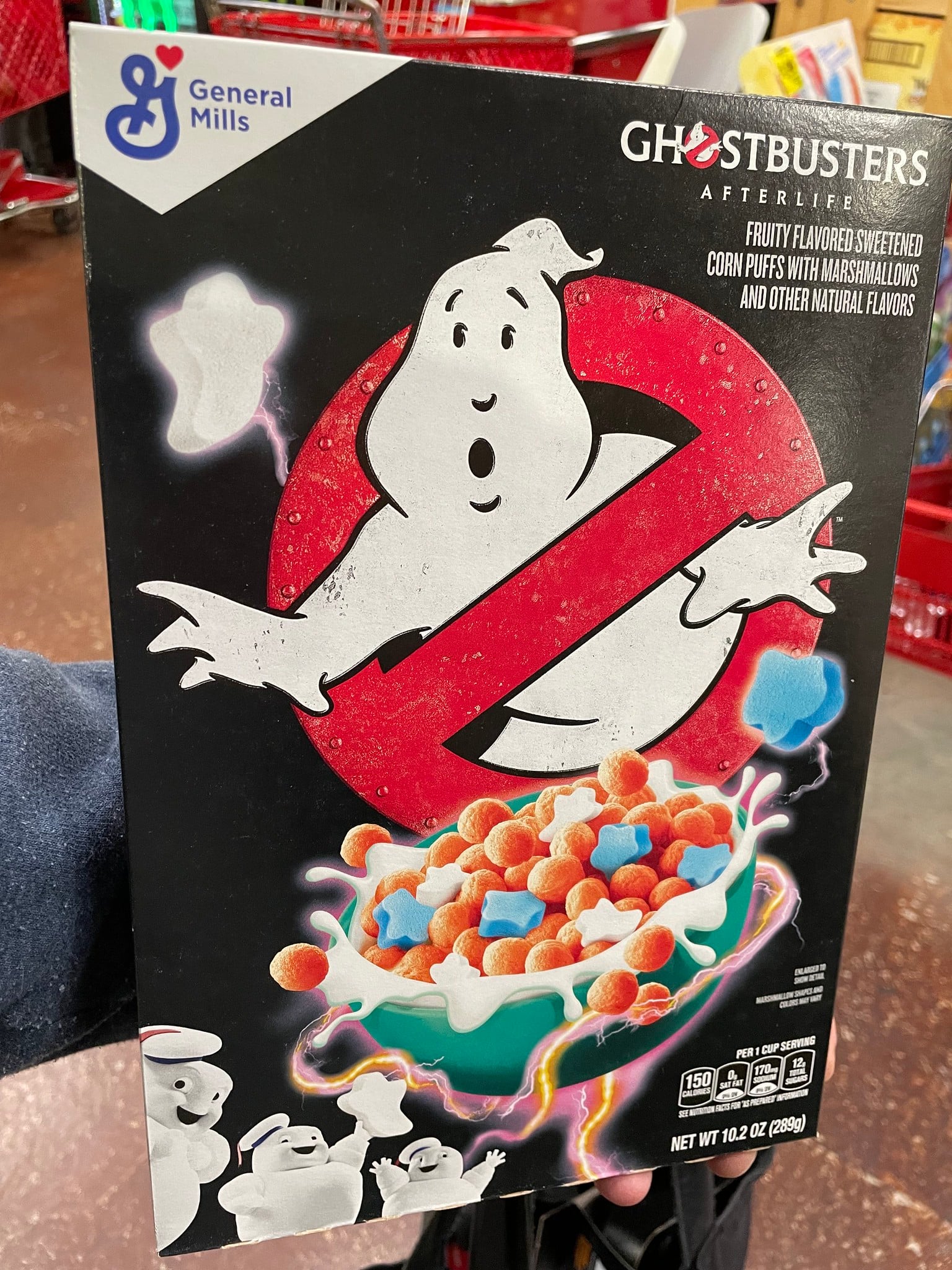
Ralston produced a Ghostbusters cereal in the mid-1980s, and it featured ghost-shaped marshmallows alongside the kind of sweetened puffed corn base that cereal manufacturers were deploying freely during that decade. What made it stick in memory — the way certain flavors embed themselves in a specific year of your childhood, indivisible from the carpet and the cartoons and the particular light of a Saturday — was the way it made a bowl of cereal feel like a small event.
Turns out ghost marshmallows fix most problems that plain marshmallows leave unsolved.
Nintendo Cereal System
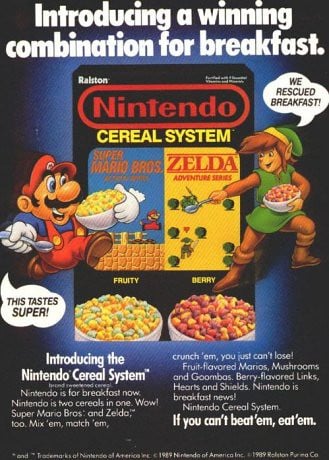
Two cereals in one box — one for Super Mario Bros., one for The Legend of Zelda — and the gimmick was so good it almost obscured the fact that the cereal itself was genuinely enjoyable. Ralston released it in 1988 and discontinued it in 1989, which is the kind of lifespan that deserves a formal apology.
It’s the cereal equivalent of a band that released one album and then disappeared: beloved precisely because there isn’t more of it.
Smurf-Berry Crunch
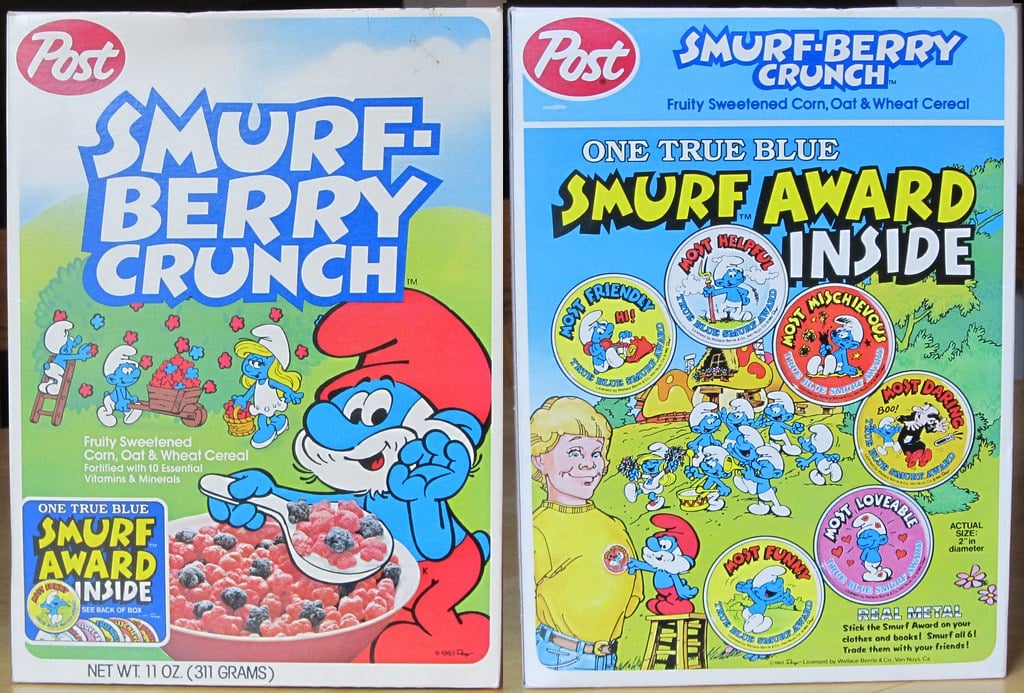
Post made Smurf-Berry Crunch in the early 1980s, and it featured berry-flavored puffs in red and purple that matched the Smurfs cartoon tie-in with enough precision to feel genuinely coordinated rather than slapped together. The flavor was sour in a way that most children’s cereals avoided — a small act of rebellion hiding inside a Saturday morning licensing deal.
It was reformulated and rebranded several times before vanishing, which is always a sign that somebody upstream was solving the wrong problem.
Urkelos
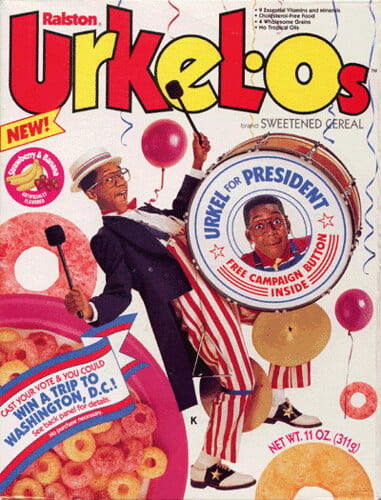
Steve Urkel was peak 1990s cultural saturation, and Ralston duly produced a cereal to match — cinnamon-flavored, predictably sweet, and shaped in a way that suggested effort even if the execution was standard. Urkelos arrived in 1991 and was gone before the decade had time to miss it.
The cereal was fine; the fact that it existed at all is the actual story.
Bill & Ted’s Excellent Cereal
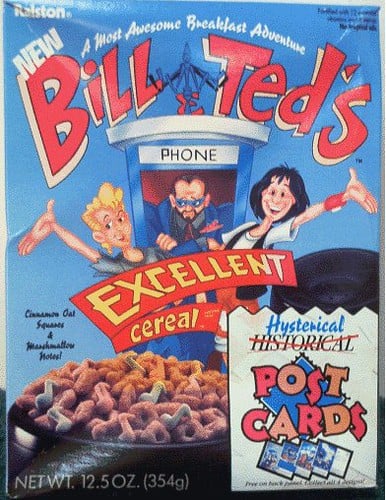
Based on the 1989 film that launched itself into the cultural canon through sheer charisma, this cereal was as good as a movie tie-in cereal had any right to be. Ralston, again — they were doing the work in this era — produced something sweet and corn-based with enough personality to hold its own against the film’s considerable presence.
Gone now. Most non-triumphant.
Mr. T Cereal
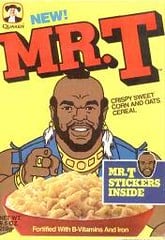
Quaker produced Mr. T Cereal in 1984, capitalizing on the A-Team star’s genuine cultural momentum with a corn puff cereal that featured Mr. T’s image on the box with the kind of confidence that only the 1980s could generate without irony. The cereal was sweet and simple, but the box was an event — bold colors, bold lettering, the whole thing radiating an energy that most cereals quietly avoid.
It was discontinued in 1985, which was too fast by several years.
Punch Crunch
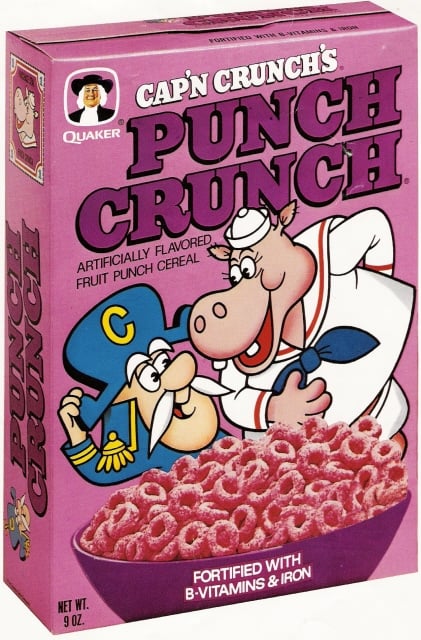
Punch Crunch was Cap’n Crunch’s fruit punch-flavored cousin, introduced in the 1970s with a hippo mascot named Harry S. Hippo — a detail so specific it suggests someone cared deeply about the lore. The flavor was fruit punch in the way that 1970s fruit punch was fruit punch: aggressively sweet, artificially colored, completely committed.
It’s the kind of cereal that modern nutritionists would discuss with visible distress, and that’s probably part of what made it great.
Ghostbusters II Cereal
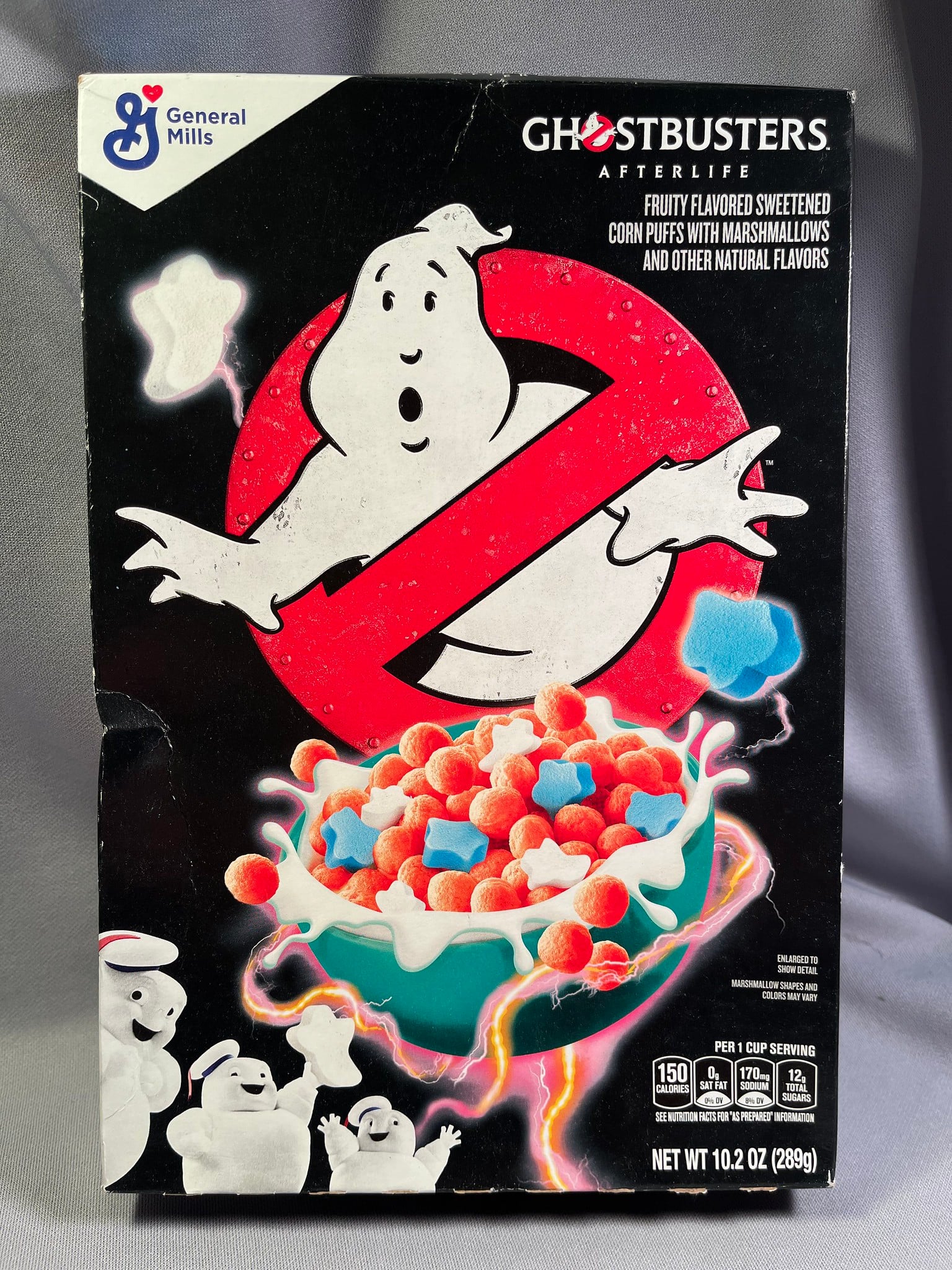
Yes, there was a second one — and Ralston returned to produce a cereal for the 1989 sequel with the same ghost-marshmallow energy as the original but a slightly different base cereal. The fact that a sequel film spawned a sequel cereal is either the most 1980s thing imaginable or a sign that the cereal actually warranted continuation.
Both answers feel correct.
Cocoa Boulders
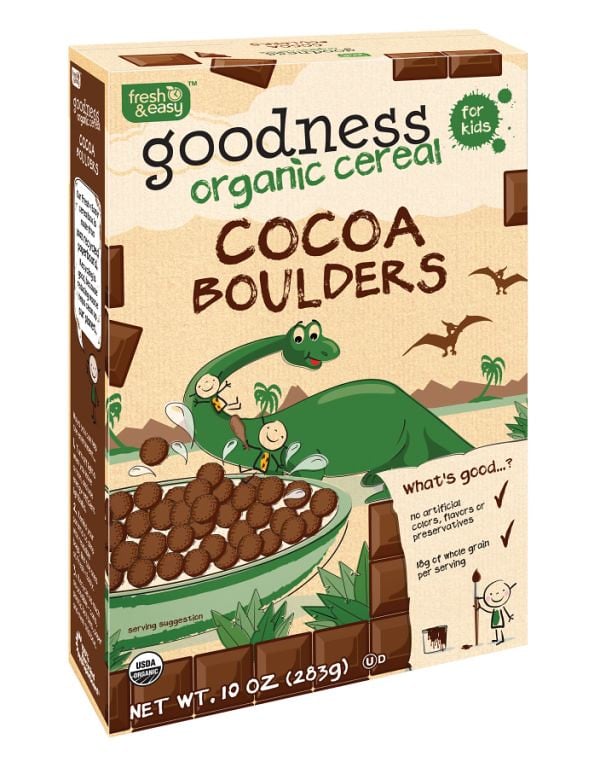
Cocoa Boulders arrived in the late 1990s and leaned into the rocky, irregular shape of its chocolate-flavored corn pieces — bumpy and dense in a way that made the eating experience feel tactile, almost geological. It was the kind of cereal that suggested texture mattered, which was a more sophisticated argument than most sugar cereals were making at the time.
Discontinued before the argument could be properly heard.
Oreo O’s
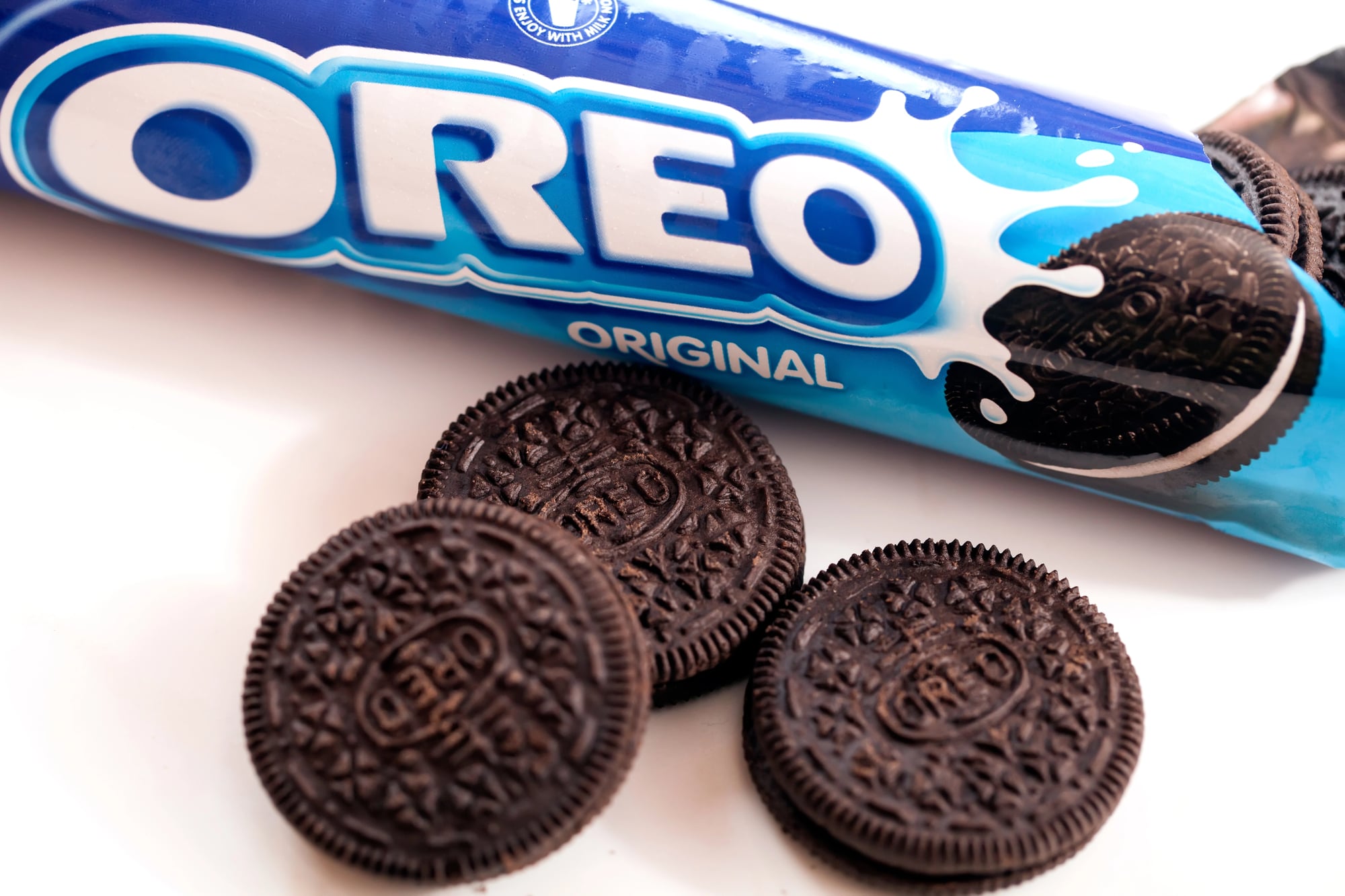
Oreo O’s deserve a section with some actual heat behind it, because their discontinuation in the United States in 2007 — while production continued in South Korea for years — is one of the stranger cereal-industry decisions of the past two decades. Post made them, they were genuinely excellent, and the cookies-and-cream flavor translated to cereal form better than anyone had a right to expect.
They came back to U.S. shelves in 2017, which is a partial redemption, but the decade-long gap remains an open grievance.
Cinnamon Mini Buns
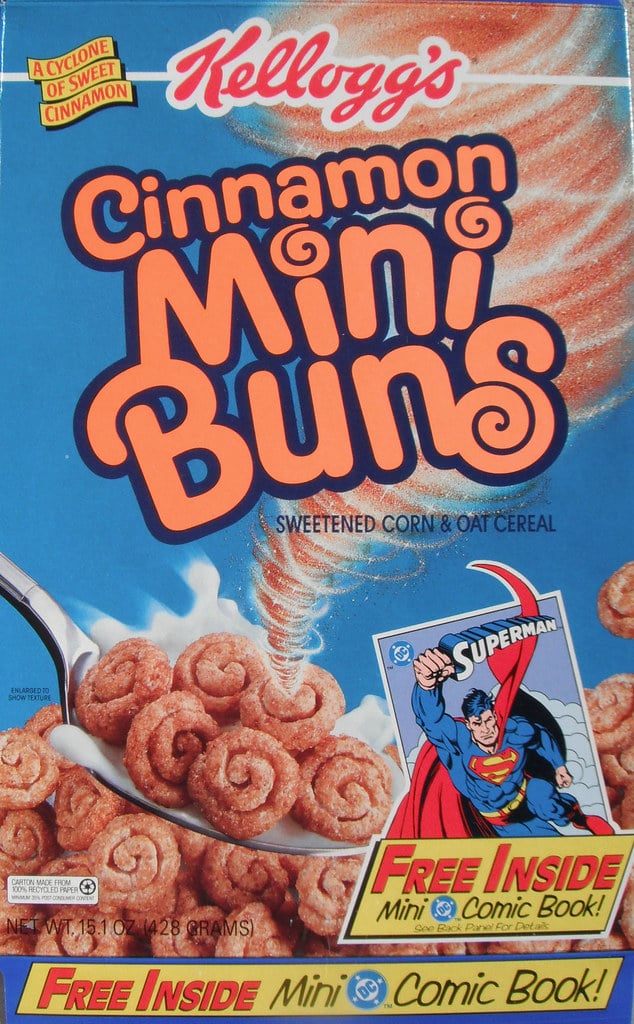
Kellogg’s produced Cinnamon Mini Buns in the early 1990s, and the premise was exactly as good as it sounds: tiny cinnamon roll-shaped pieces that delivered a warm, bakery-counter sweetness without requiring anyone to actually bake anything. The shape was specific enough to feel intentional — these weren’t just flavored rings, they were miniature buns with visible swirl detail.
That kind of effort deserved longevity.
Rocky Road Cereal
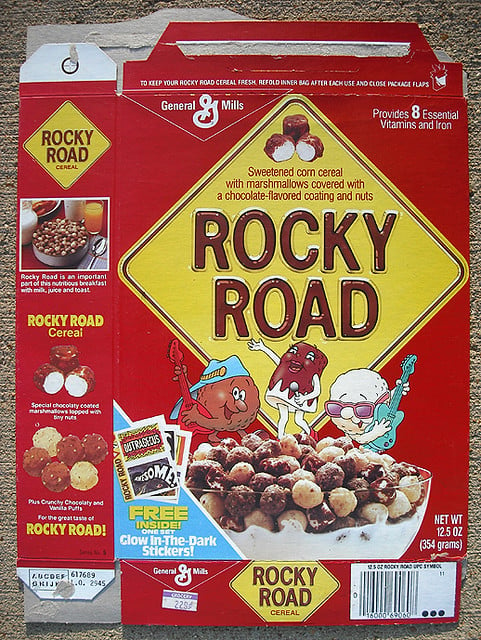
Rocky Road as a cereal flavor — chocolate, marshmallow, and a vague nuttiness that tied the whole thing together — sounds like a concept sketched on a napkin during a very productive meeting. Ralston produced it, naturally, and it landed in the early 1990s with enough sweetness to make you feel like dessert had been reclassified as a morning meal.
And yet here we are, without it.
Sprinkle Spangles
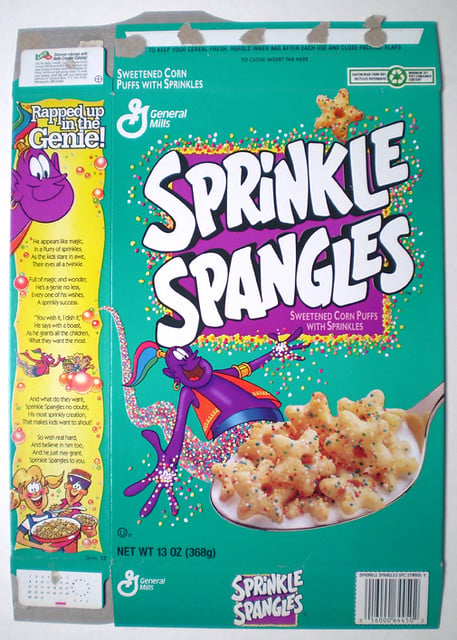
General Mills put a genie on the box and filled the bag with star-shaped cereal pieces coated in colorful sprinkles — and somehow this cereal, which felt like eating a birthday cake before 8 a.m., didn’t find the permanent shelf space it deserved. The sprinkles were real, not painted-on color, which gave each bowl a faint crunch on top of the existing crunch.
It’s a minor engineering achievement, honestly.
Hidden Treasures
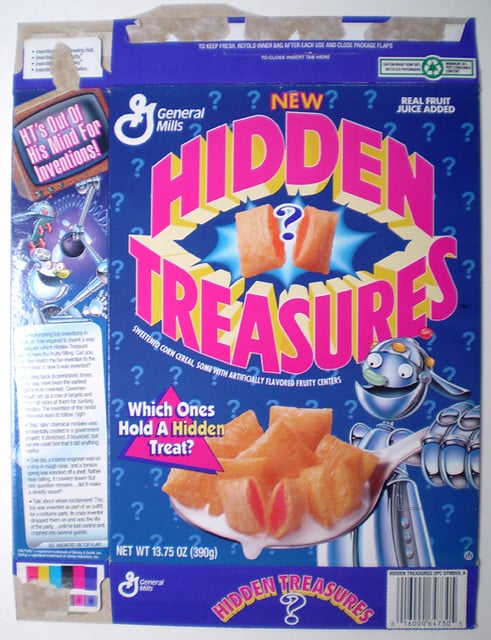
General Mills produced Hidden Treasures in 1993 — corn puffs with fruit-flavored filling hidden inside — and the premise was so good that children would eat through entire bowls just to find the filled pieces, which is the breakfast equivalent of a lottery ticket. The anticipation was the product as much as the flavor.
A cereal that understood drama.
Mud & Bugs
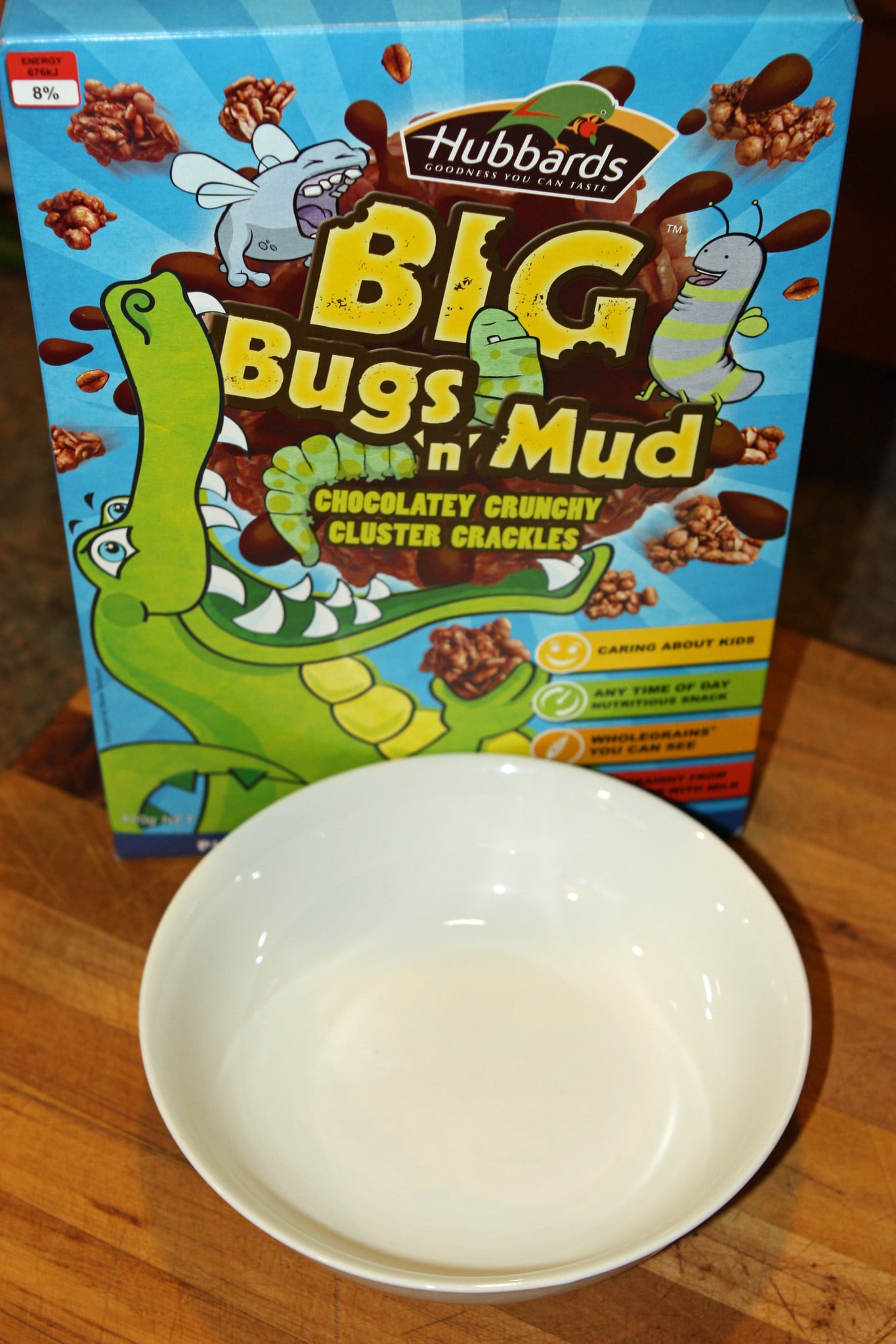
Mud & Bugs was a Nickelodeon-branded cereal from the late 1990s that leaned into the network’s signature irreverence with chocolate-flavored cereal pieces shaped like bugs — a concept that was either brilliant or revolting depending on your age at the time. If you were eight, it was brilliant.
It’s the kind of cereal that parents tolerated because the alternative was a full negotiation before school, and that pragmatic charm has real value.
S’mores Crunch
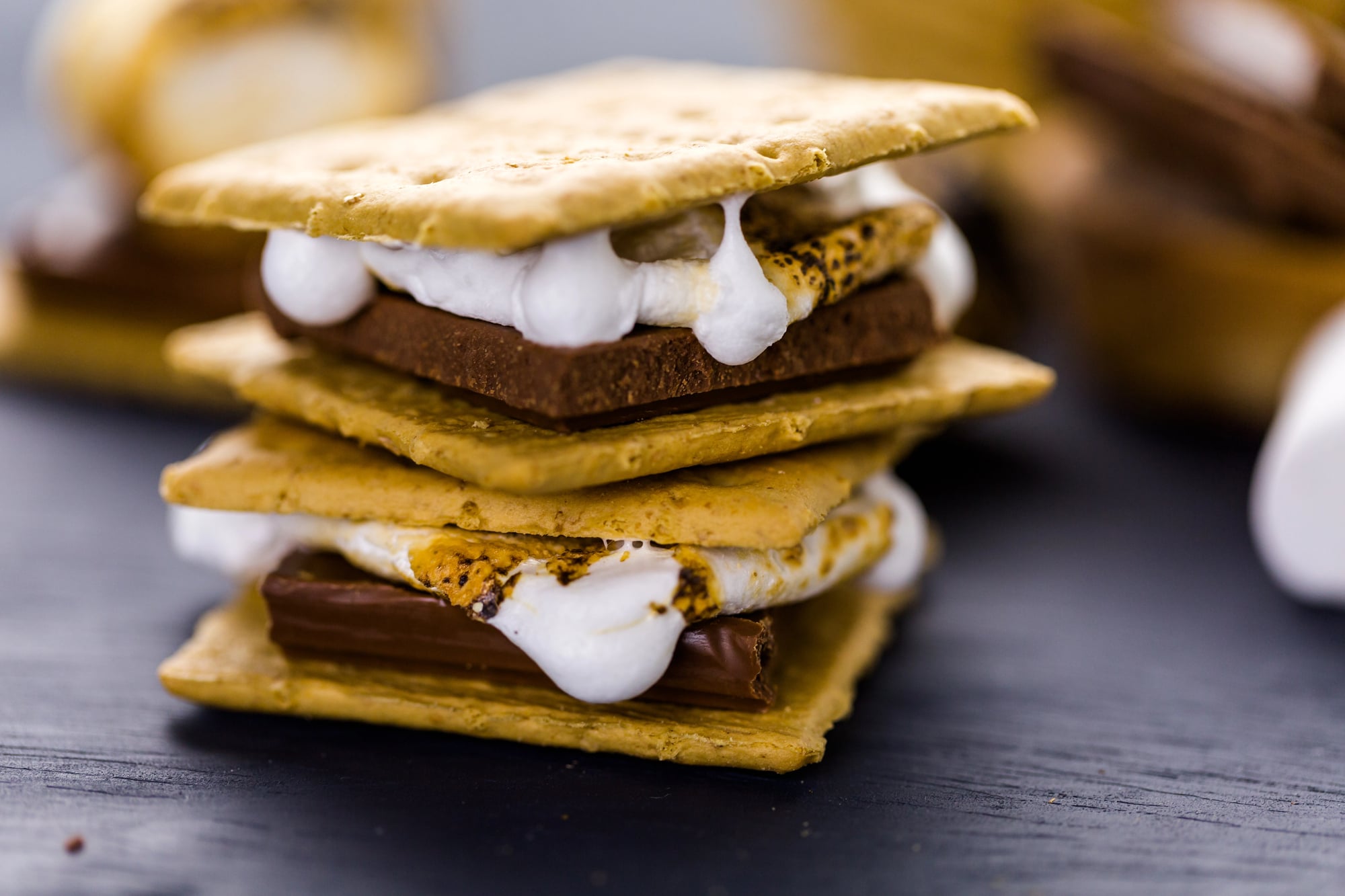
S’mores Crunch from General Mills arrived in the mid-1980s with a genuinely ambitious flavor profile: graham cracker base, chocolate coating, marshmallow pieces — the entire campfire experience compacted into a cereal bowl. The marshmallows were soft in a way that the cereal base was not, so each spoonful had two different textures competing for attention.
Discontinued, reformulated, and eventually abandoned — which is the cereal industry’s version of a slow fade.
Kellogg’s OJ’s Citrus Blend
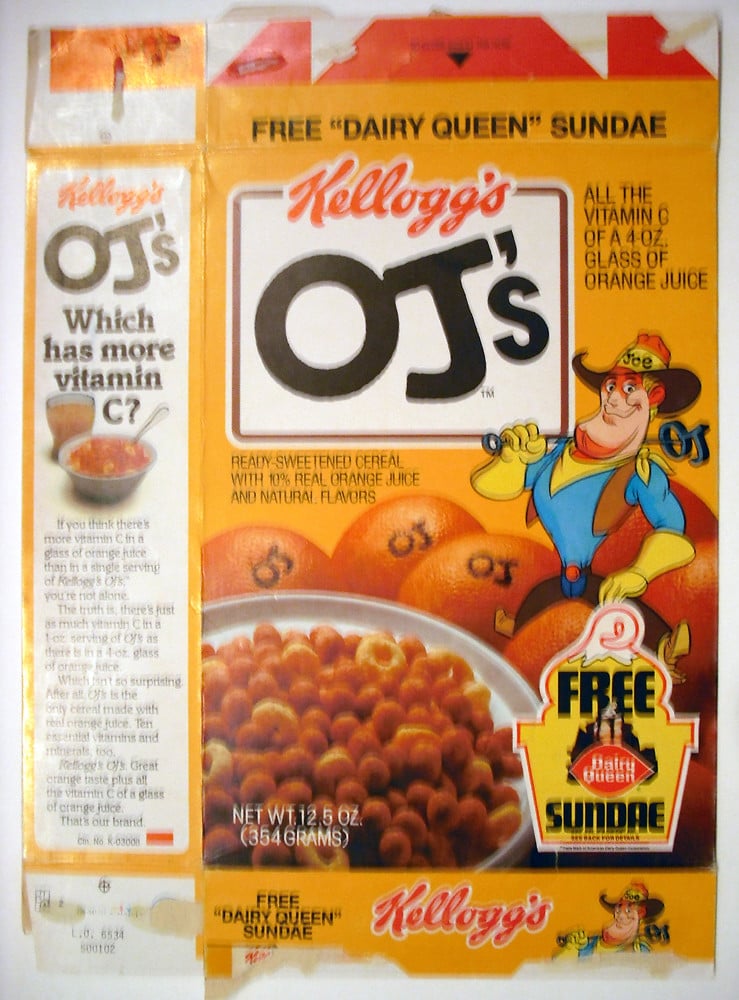
A distinct entry from the original OJ’s — this later Kellogg’s citrus experiment blended orange and other fruit notes into a corn-puff base that felt like it was trying to make the breakfast table feel less like a negotiation and more like a vacation. It had a brightness that was almost aggressive, in the best possible way.
Gone before the 1990s were done with it.
Teenage Mutant Ninja Turtles Cereal
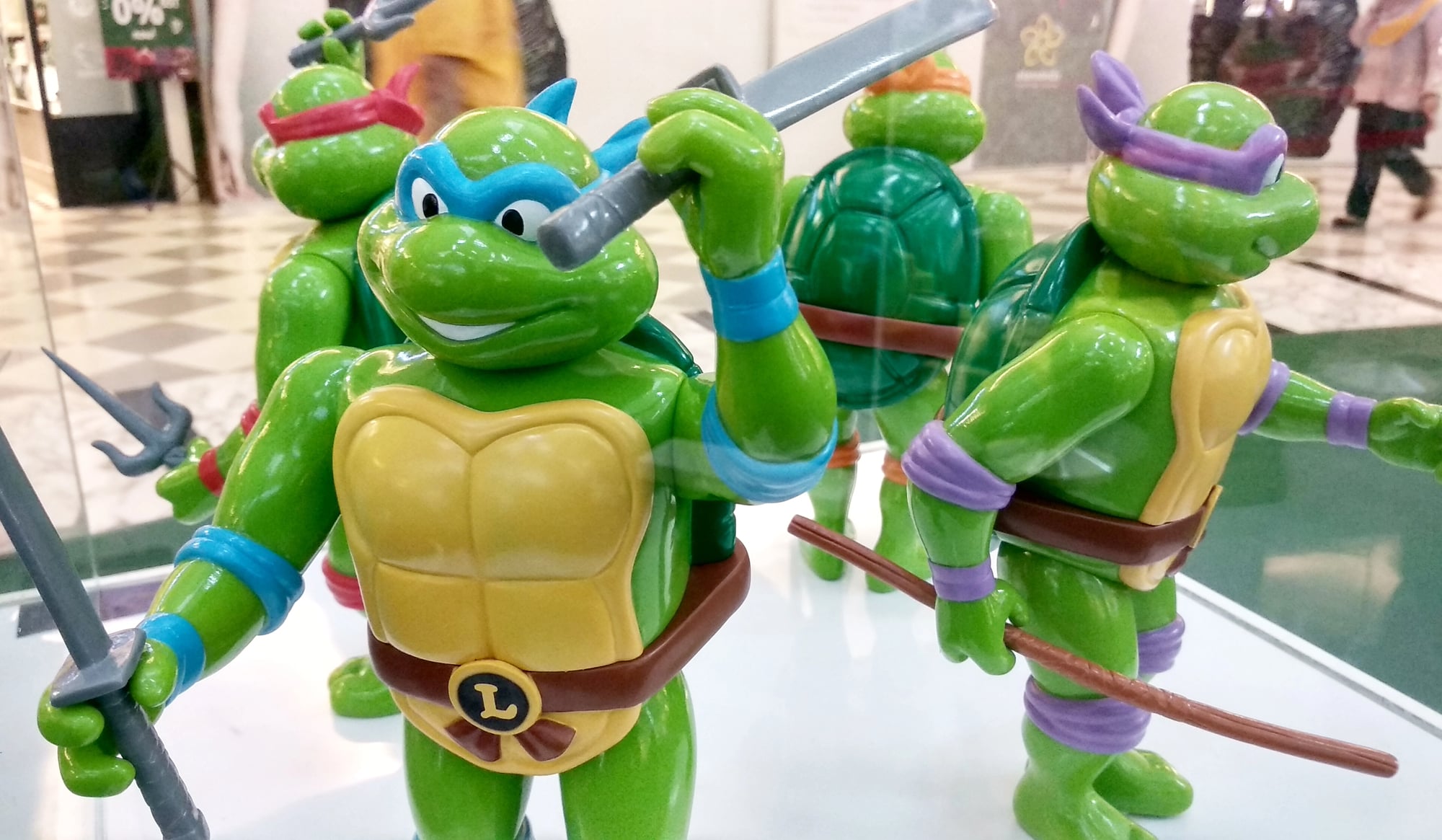
Ralston produced the Ninja Turtles cereal in 1989, and it featured sweetened corn pieces alongside marshmallows shaped like the four turtles and their weaponry — a marshmallow nunchuck being one of the more unusual achievements in breakfast food history. The flavor was secondary to the mythology, but the flavor was fine.
What mattered was that opening the box felt like entering a universe, not just eating breakfast.
French Toast Crunch
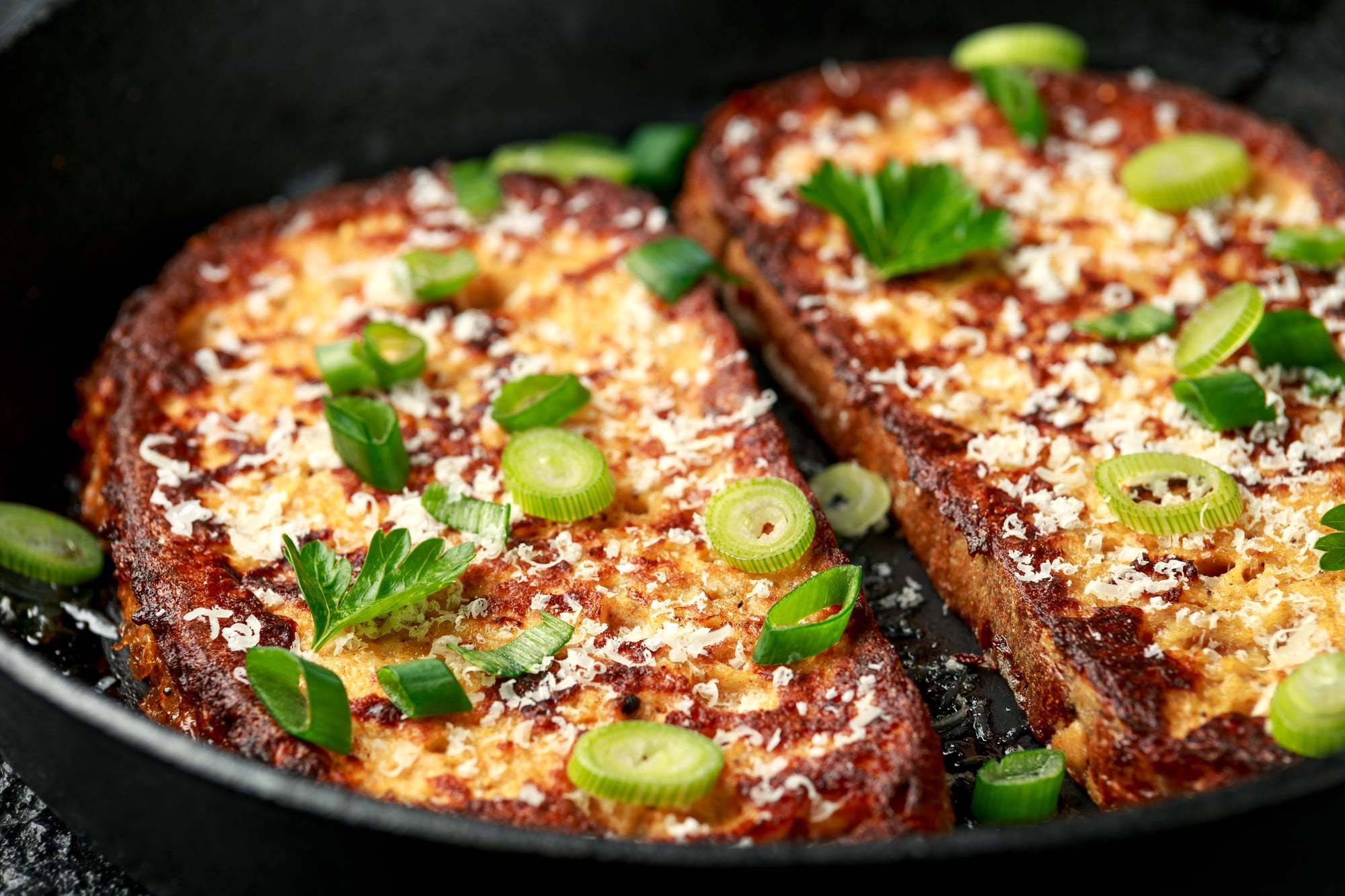
French Toast Crunch, which ran from 1995 to 2006 before being discontinued in the United States, had the decency to return in 2014 — but the years between its disappearance and its revival represent a real absence in the cereal landscape, and the people who grew up with it did not handle the discontinuation gracefully. General Mills made it as miniature toast-shaped pieces with a cinnamon-maple flavor that was specific enough to feel like an actual food group.
Its return was one of the better corporate decisions of that decade.
Kellogg’s Corn Crackos
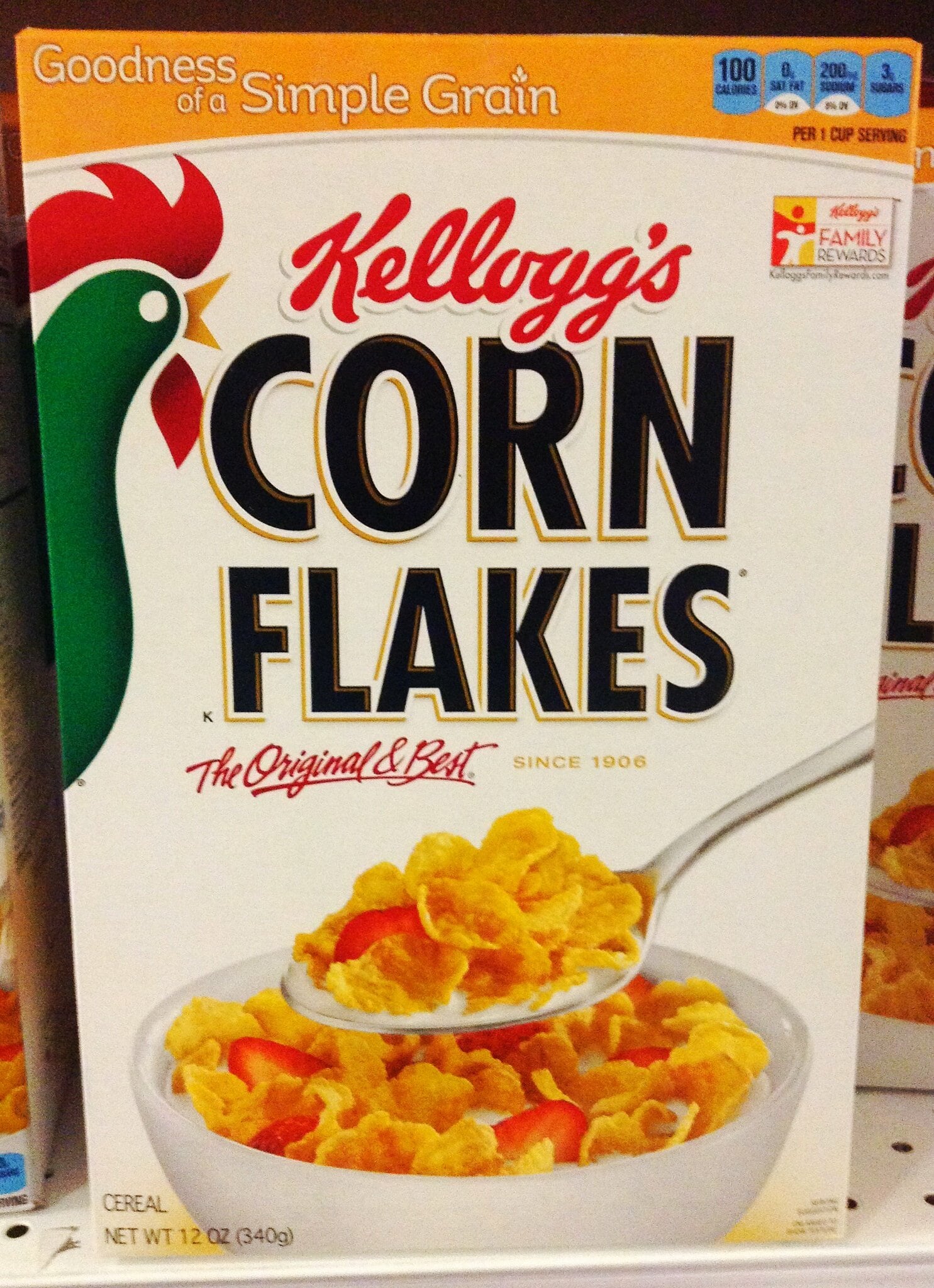
Corn Crackos was a corn-based cereal from Kellogg’s that ran in the 1960s and early 1970s — sweetened, puffed, and flavored with a straightforward corn-sweetness that predated the era of elaborate flavor profiles. It sounds unassuming, and it was, but there’s something to be said for a cereal that knew exactly what it was and committed to it completely.
The 1970s replaced it with louder things, and the quieter pleasures of the breakfast table have been negotiating for space ever since.
What the Cereal Aisle Lost
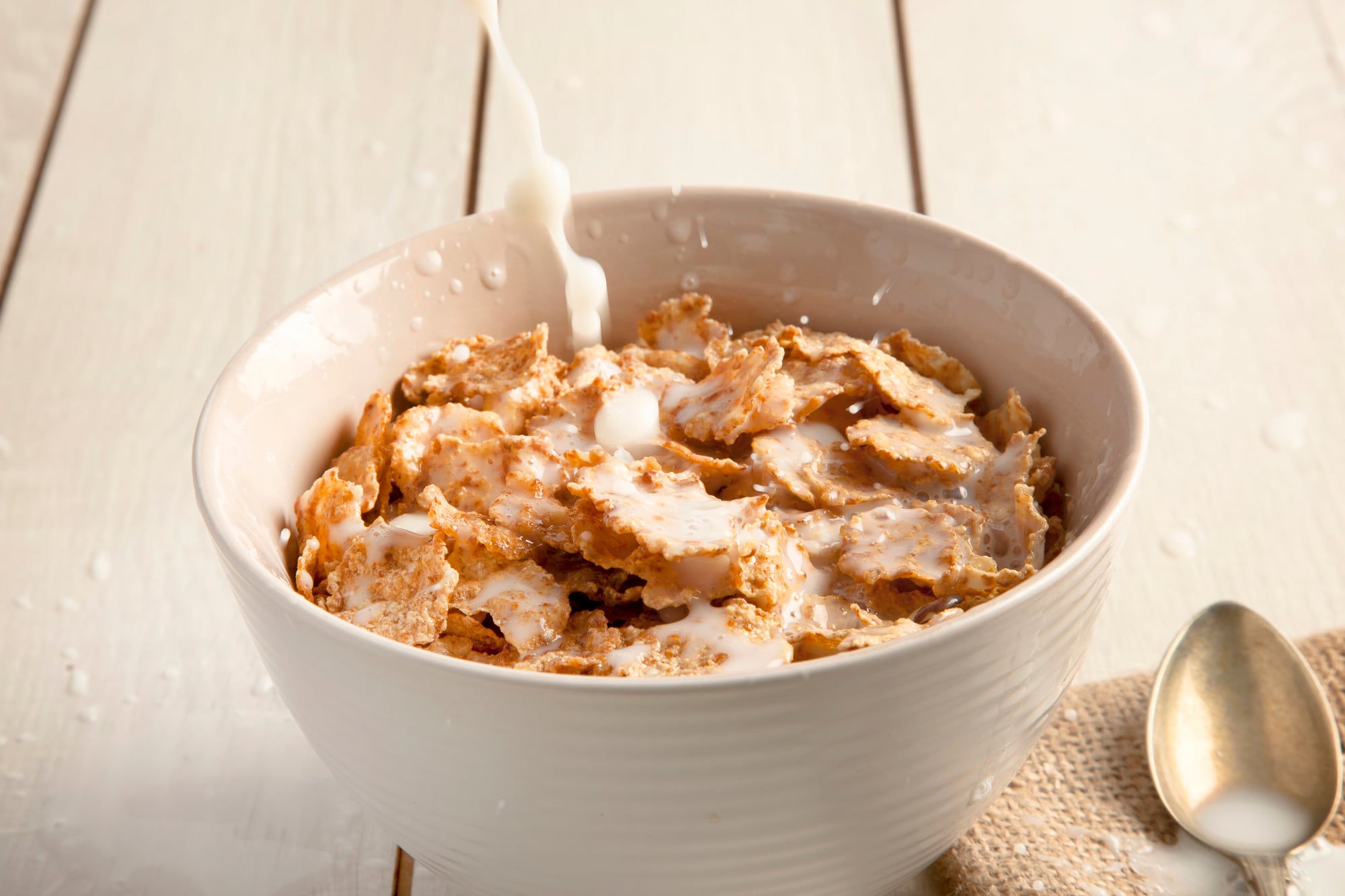
The discontinued cereal is its own small genre of mourning — not grief exactly, but a stubborn, low-level resistance to the fact that something ordinary and good has been taken off the table. These weren’t fine dining; they were Tuesday mornings and cartoon-watching and the specific pleasure of pouring too much and eating it anyway.
The companies that made them moved on, recalculated, replaced. But the people who ate them didn’t forget — and that’s the thing about breakfast: it’s the most repeated meal of a lifetime, and the repetition is the whole point. You remember what was there because it was there every morning, until one day it wasn’t.
More from Go2Tutors!

- The Romanov Crown Jewels and Their Tragic Fate
- 13 Historical Mysteries That Science Still Can’t Solve
- Famous Hoaxes That Fooled the World for Years
- 15 Child Stars with Tragic Adult Lives
- 16 Famous Jewelry Pieces in History
Like Go2Tutors’s content? Follow us on MSN.



