28 Soda Fountain Treats Grandparents Loved
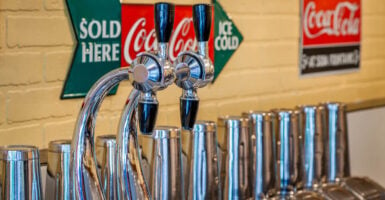
The soda fountain was once the social center of the American drugstore, a marble counter where a teenager in a paper hat could build a dessert from syrup, carbonated water, and ice cream in under a minute. Most of the menu was invented by regional soda jerks and spread by word of mouth, which is why so many of these drinks carry odd names and contested origins.
Many of the treats below survive only in a handful of old-fashioned shops or in the memories of people who ordered them for a nickel. Each one tells you something about where it came from.
Egg Cream
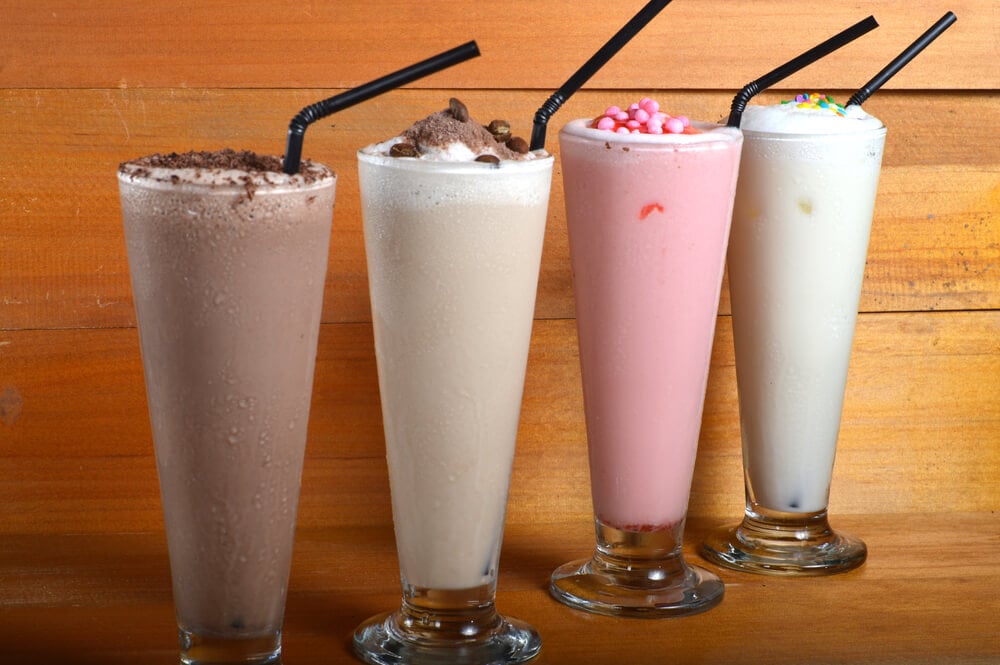
The egg cream contains neither egg nor cream, which has confused first-timers since the drink emerged in Brooklyn around the turn of the twentieth century. It is made with cold milk, a shot of chocolate syrup, and a hard stream of seltzer stirred fast enough to raise a white foam head.
Purists insist on Fox’s U-Bet syrup and a glass that is drained quickly, because the foam collapses within a couple of minutes.
Cherry Phosphate
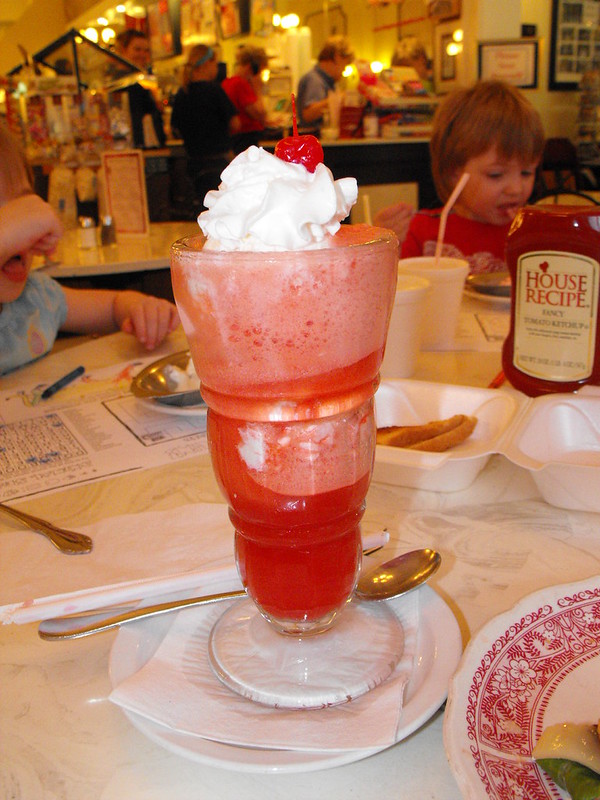
A phosphate was the fountain’s answer to a sour candy, a syrup drink sharpened with a few drops of acid phosphate, a solution of phosphoric acid and mineral salts. Cherry was the best seller, and the tangy, dry finish made it taste far less sugary than a modern cherry soda.
Acid phosphate disappeared from most fountains by mid-century and was only reintroduced to the market by specialty producers in the 2000s.
Lemon Phosphate
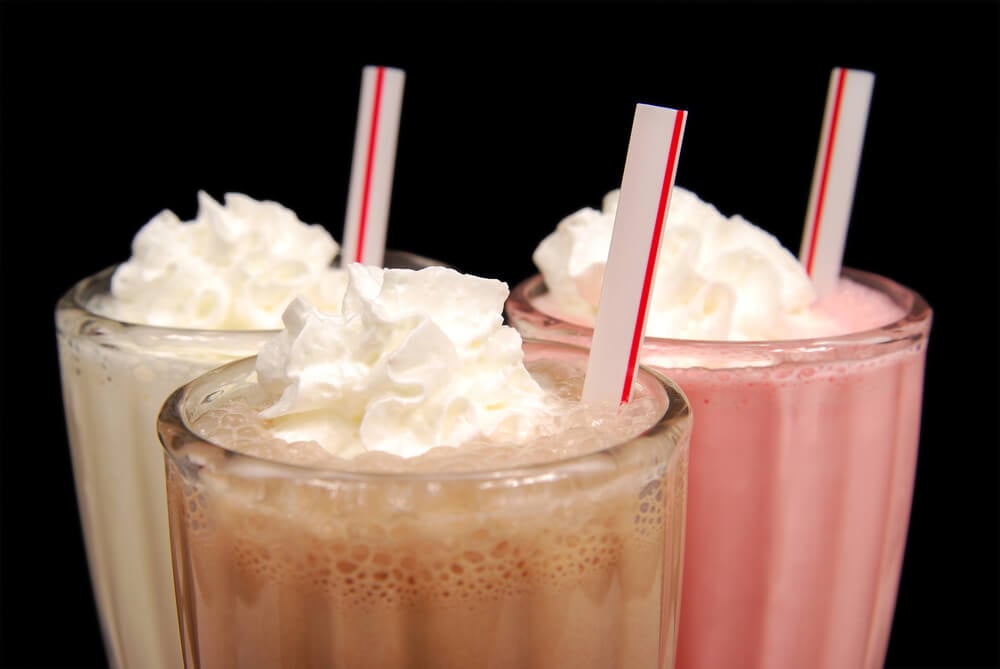
The lemon version was the grown-up order, closer to a dry lemonade than a soft drink. Soda jerks pumped lemon syrup into a glass, added the acid phosphate, and filled it with seltzer, sometimes with a muddled wedge of fresh lemon on top.
Drugstore ads of the 1910s pushed it as a cooling tonic, which was a reasonable claim for something that was mostly water and citrus.
Chocolate Phosphate
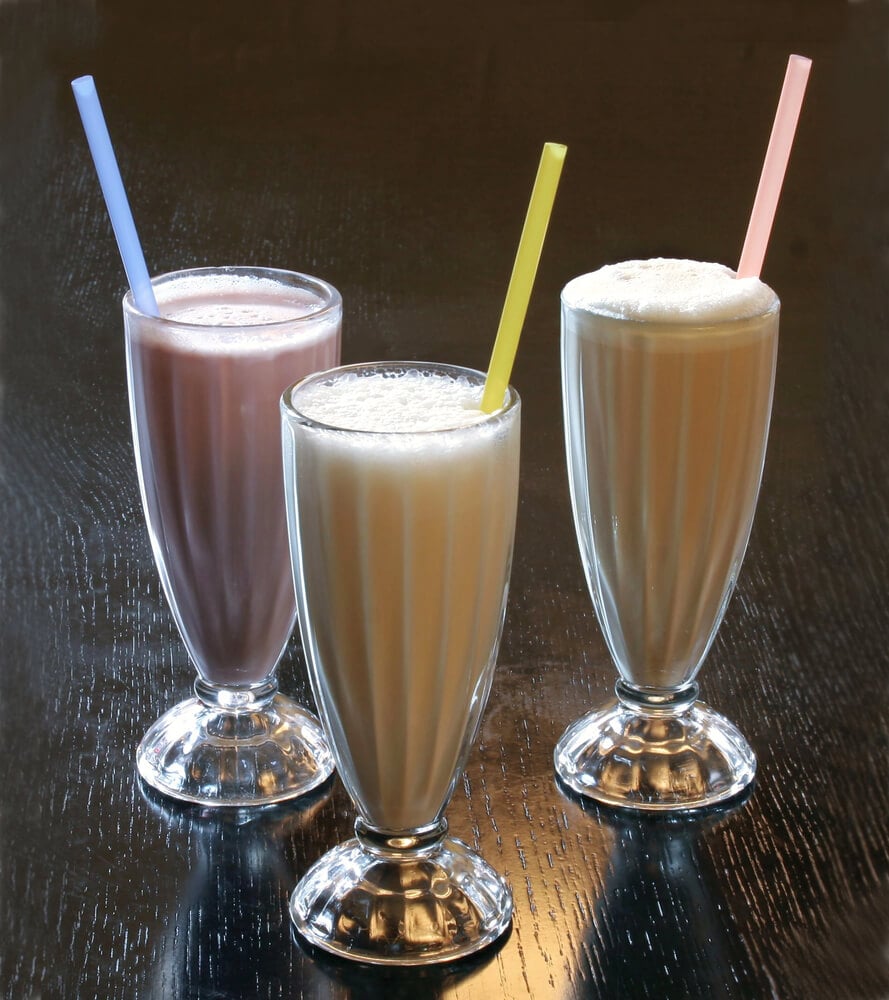
Chocolate phosphate sounds like a mistake and tastes like a dark, fizzy, slightly bitter cola. The acid cut through the sweetness of the chocolate syrup and left a clean finish that no chocolate soda could match.
It fell out of favor faster than the fruit phosphates, and today only a few revival fountains in the Midwest still list it.
Ice Cream Soda
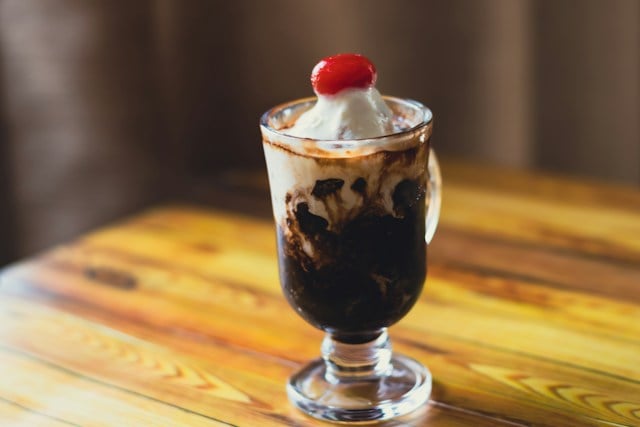
The ice cream soda is usually credited to Philadelphia in the 1870s, when soda water vendor Robert Green reportedly ran out of cream for a flavored drink and substituted ice cream. The classic build is syrup and a splash of milk or cream in a tall glass, soda water to within an inch of the rim, then a scoop of ice cream that floats and slowly melts into the fizz.
Chocolate and vanilla were the standards, but strawberry and pineapple had loyal followings.
Root Beer Float
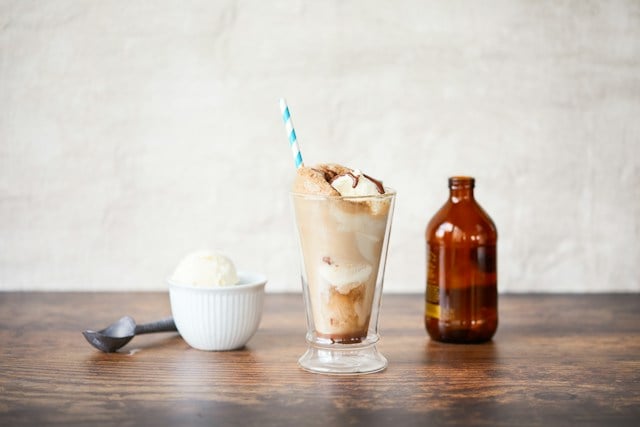
The root beer float is the one fountain treat that never really left, partly because A&W stands carried it into the drive-in era. The foam that forms when ice cream hits root beer is caused by carbon dioxide escaping around the fat and protein in the ice cream, which is why it bubbles so much more aggressively than a cola float.
A proper one is served with both a straw and a long-handled spoon.
Boston Cooler
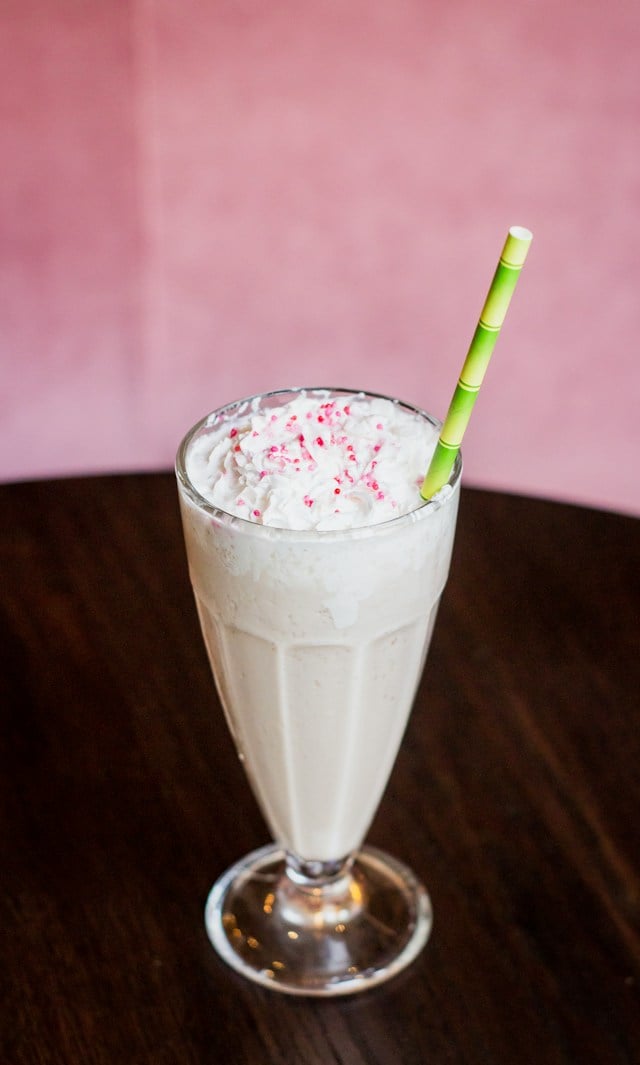
Despite the name, the Boston Cooler belongs to Detroit, where it is made with Vernors ginger ale and vanilla ice cream blended into a thick, spicy shake. Vernors is one of the oldest surviving ginger ales in America, and its sharp flavor is what makes the drink work.
Many Detroit-area ice cream shops still sell it, and the city treats it as a local birthright rather than a novelty.
Purple Cow
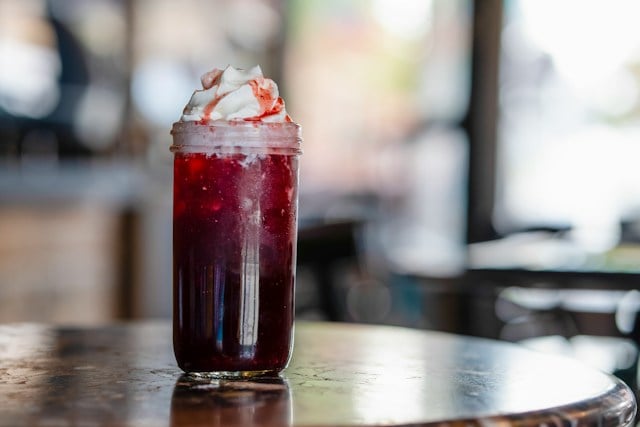
A Purple Cow is a float made with grape soda and vanilla ice cream, and the color is exactly what you would expect. The name borrows from a nonsense poem of the 1890s, which gave the drink a built-in joke for the kids who ordered it.
Some regions used grape juice and sherbet instead, which produced a lighter, more sorbet-like result.
Black Cow
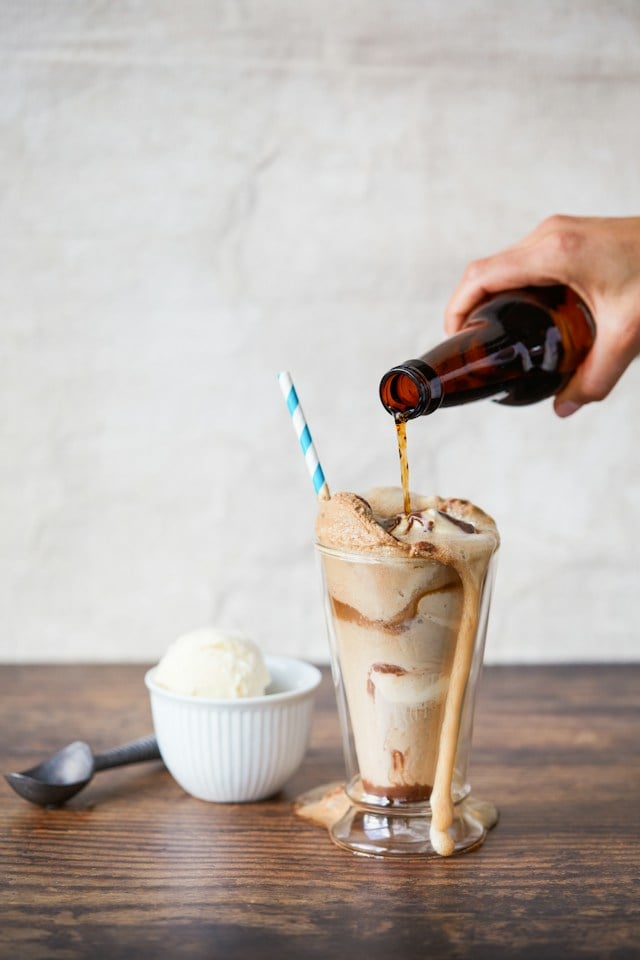
The Black Cow is the Midwestern name for a root beer float made with chocolate ice cream rather than vanilla. The chocolate turns the drink darker and heavier, which earned the name, though in some towns a Black Cow was simply any root beer float.
The confusion dates to the 1920s and has never been resolved, which is part of its charm.
Malted Milk
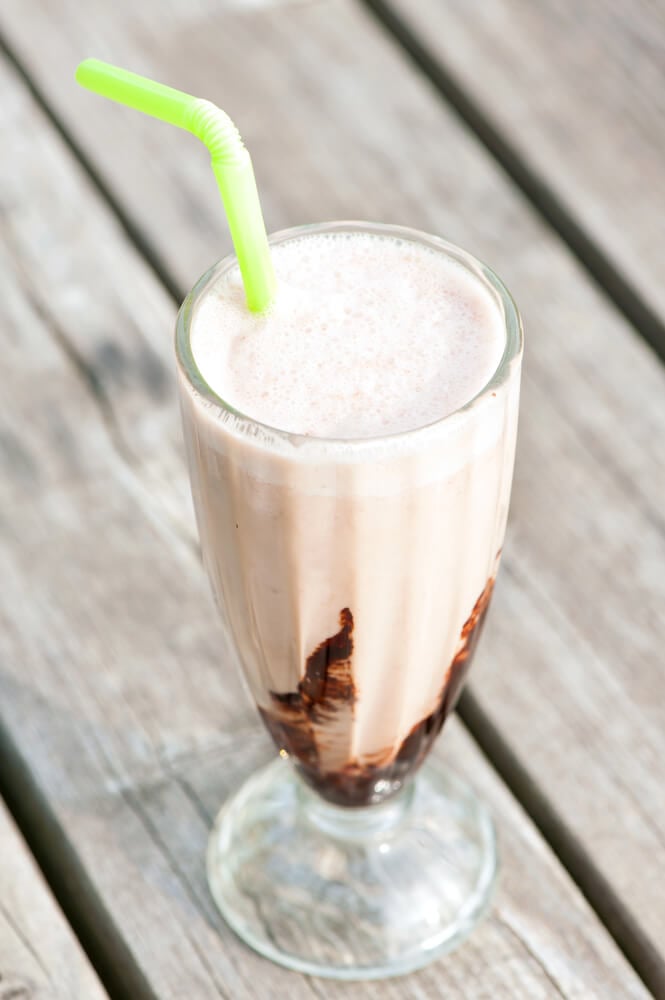
The malted milkshake was the fountain’s signature drink, made with ice cream, milk, syrup, and a spoonful of malted milk powder blended on a spindle mixer. Malted milk powder was developed in the 1880s as a nutritional supplement for infants and invalids, which is how it ended up stocked behind drugstore counters in the first place.
The powder adds a toasty, slightly savory depth that a plain shake lacks.
Coffee Cabinet
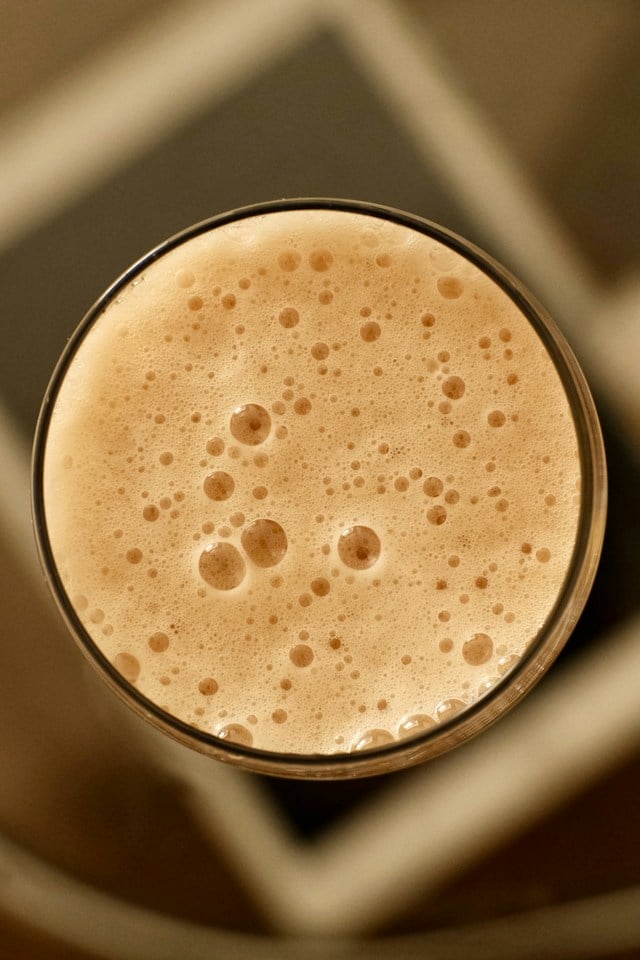
In Rhode Island, a milkshake is called a cabinet, supposedly because the blender was kept in a wooden cabinet behind the counter. The coffee cabinet uses coffee syrup, a Rhode Island staple that is bottled by brands like Autocrat, blended with milk and coffee ice cream.
It is thick, sweet, and intensely coffee-flavored, and it remains a standard order at diners across the state.
Awful Awful
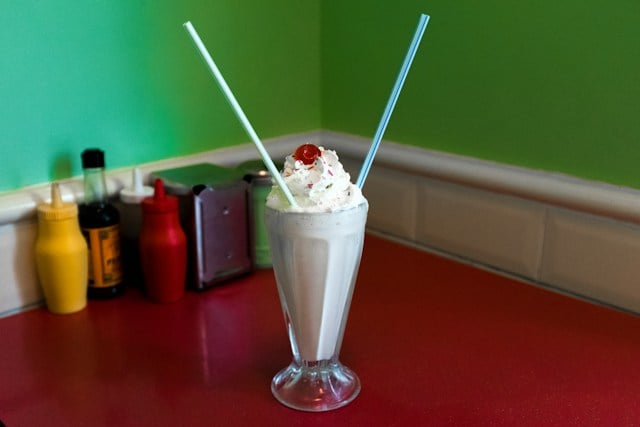
The Awful Awful is a trademarked frozen drink sold at Newport Creamery in Rhode Island, named because it is “awful big and awful good.” It is thicker than a milkshake but lighter than a true frappe, made with a flavored ice milk base rather than scooped ice cream.
The chain has long run a challenge offering a free one to anyone who finishes three in a sitting.
Frappe
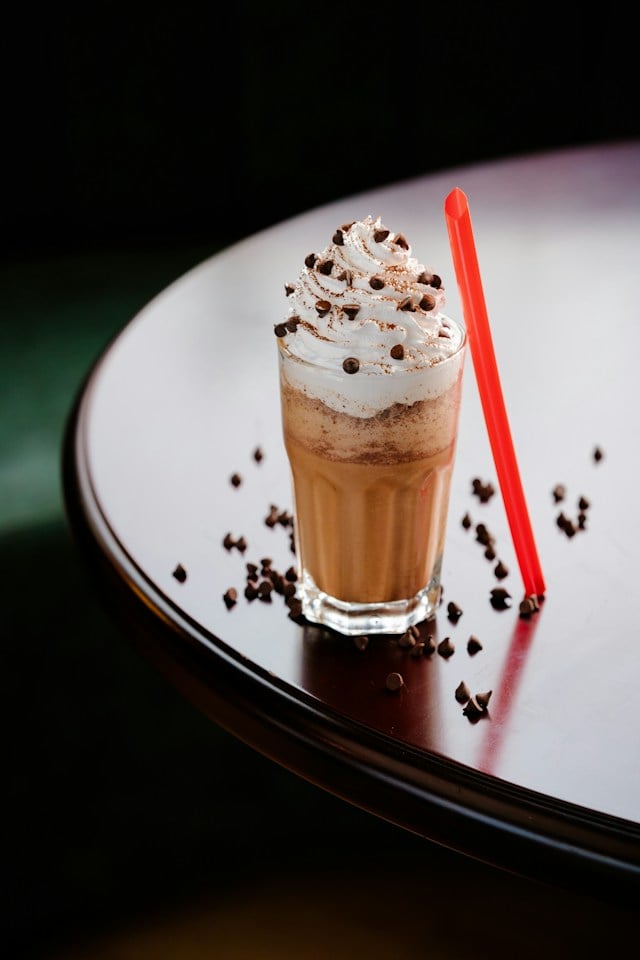
New England uses the word frappe for what the rest of the country calls a milkshake, and in some Massachusetts towns a “milkshake” is literally milk and syrup shaken with no ice cream at all. The frappe is blended thick enough to need a spoon at first and a straw later.
Old-line stands in Boston and the North Shore still spell it on the menu board without an accent.
Black and White
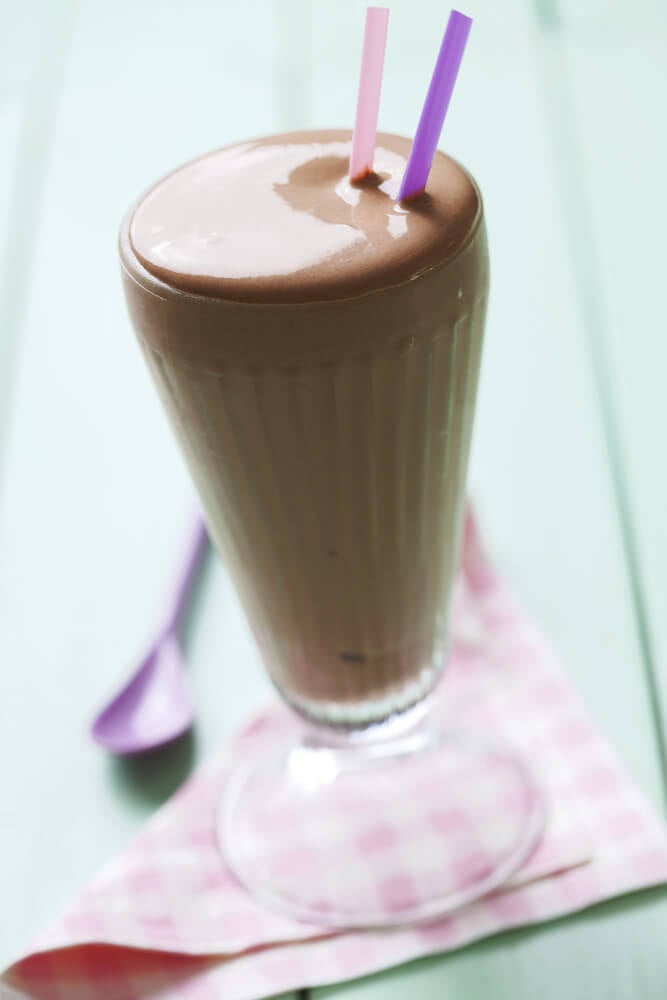
A black and white is a New York order that means vanilla ice cream with chocolate syrup, either as a soda or a shake. The name comes from the two-tone look before everything is stirred together.
Luncheonettes in Manhattan and the outer boroughs took it for granted, and it remains a reliable way to spot a soda fountain that has been in business for a long time.
Banana Split
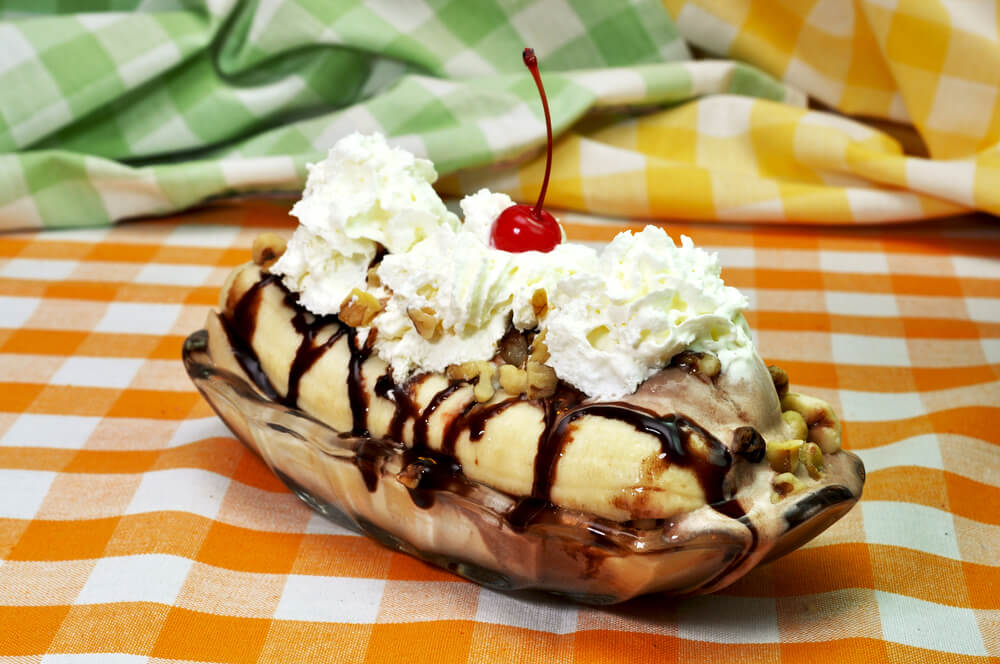
The banana split is generally credited to Latrobe, Pennsylvania, where pharmacy apprentice David Strickler is said to have assembled the first one in 1904. The classic version uses a banana halved lengthwise, three scoops of ice cream, three different sauces, whipped cream, nuts, and cherries served in a long glass boat.
Latrobe celebrates the claim with an annual festival, though Wilmington, Ohio also claims the invention.
Hot Fudge Sundae
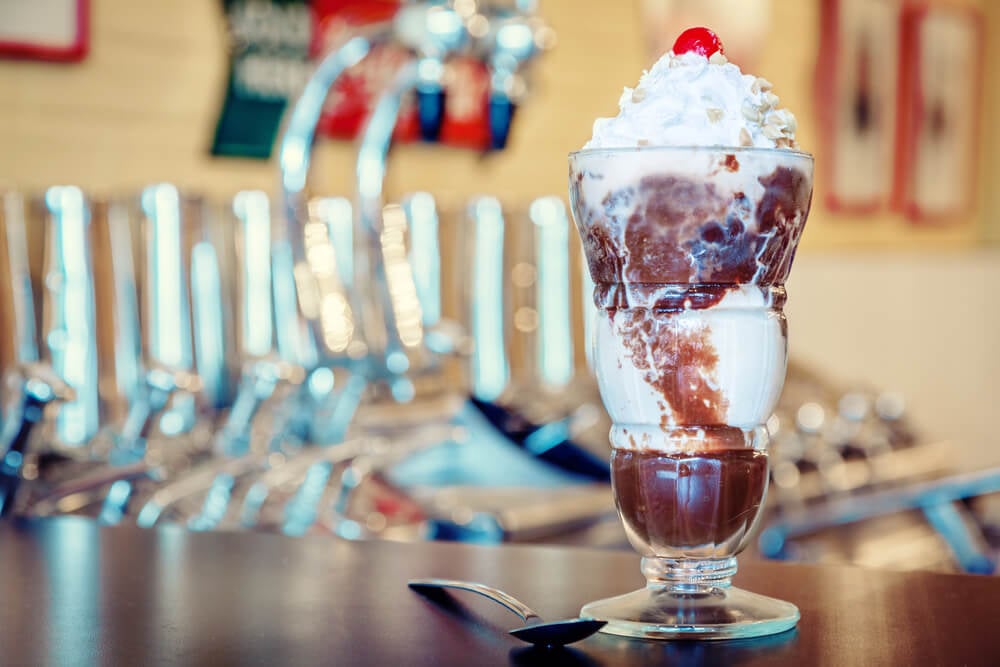
The sundae appeared in the 1890s, and the hot fudge version became the fountain’s most dependable dessert. The fudge was kept warm in a heated well and poured over cold ice cream so that it stiffened on contact into a chewy layer.
Most fountains finished it with whipped cream, chopped nuts, and a single maraschino cherry.
Tin Roof Sundae
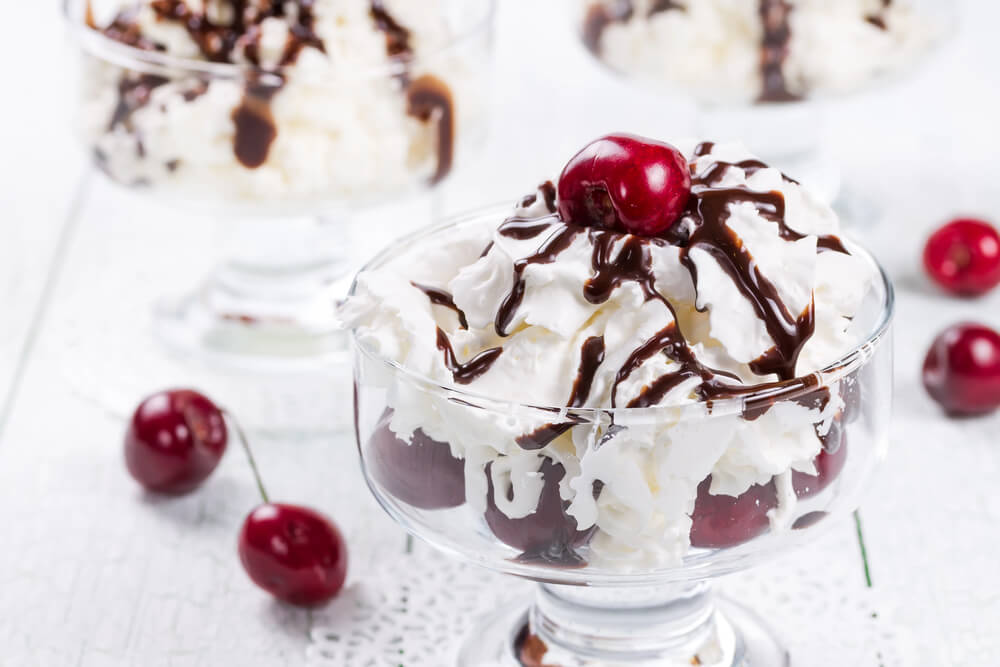
The Tin Roof is vanilla ice cream with chocolate syrup and red-skinned Spanish peanuts, and the name has been attributed to a tin ceiling in the Nebraska drugstore where it was supposedly created. The salted peanuts are the entire point, cutting the sweetness and adding crunch.
It was a cheap sundae to build, which is why it spread quickly through small-town fountains in the Plains states.
Dusty Road Sundae
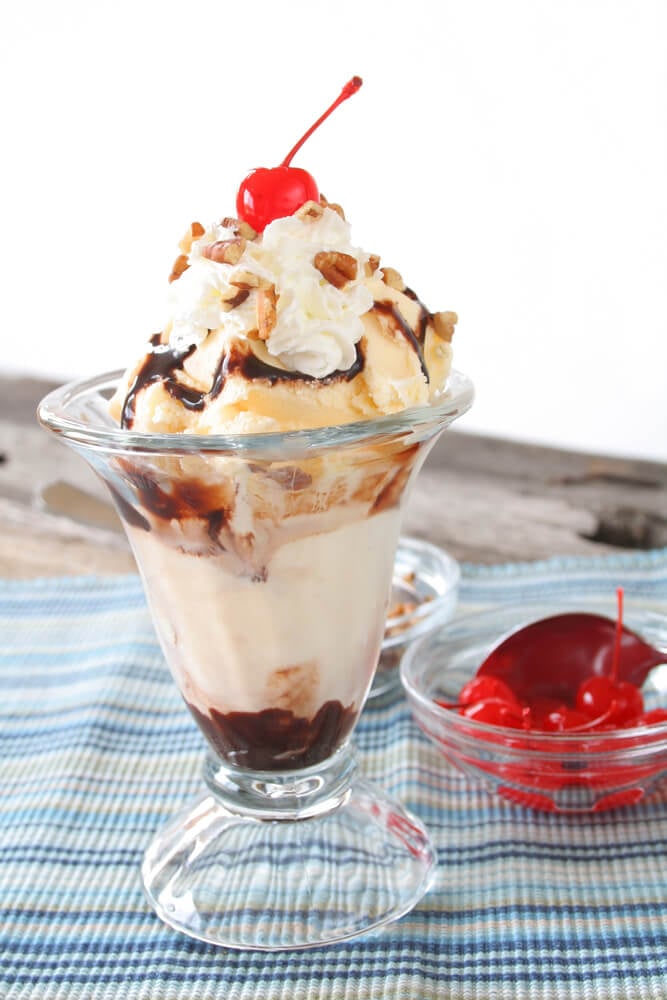
A Dusty Road is a chocolate sundae dusted with dry malted milk powder, which gives it a gritty, sandy texture that sounds unappealing and tastes wonderful. The powder sticks to the syrup and adds a toasted flavor without adding more liquid.
Some fountains called the same thing a Dusty Miller, and the names were used interchangeably across the Midwest.
CMP Sundae
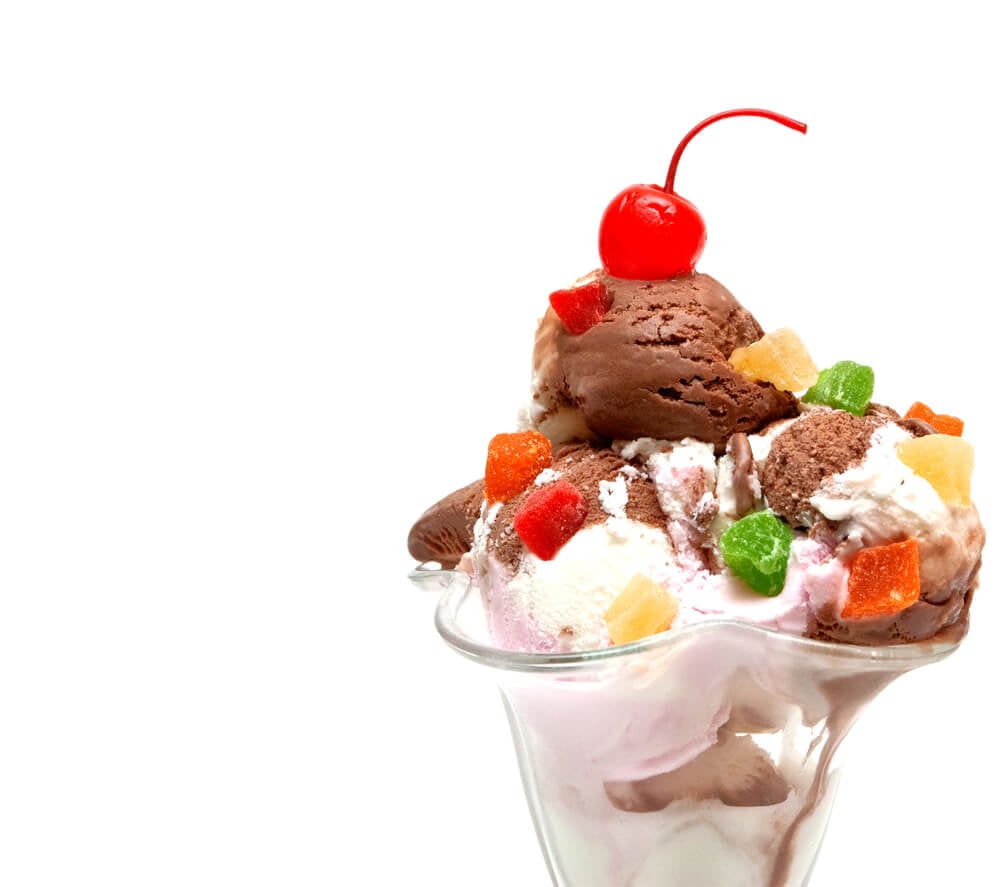
The CMP stands for chocolate, marshmallow, and peanuts, and it is a central Pennsylvania specialty that rarely appears on menus elsewhere. Marshmallow topping is spooned over vanilla ice cream along with chocolate syrup and Spanish peanuts.
Older residents of the region still order it by the initials, and most newcomers have to ask what they mean.
Pineapple Sundae
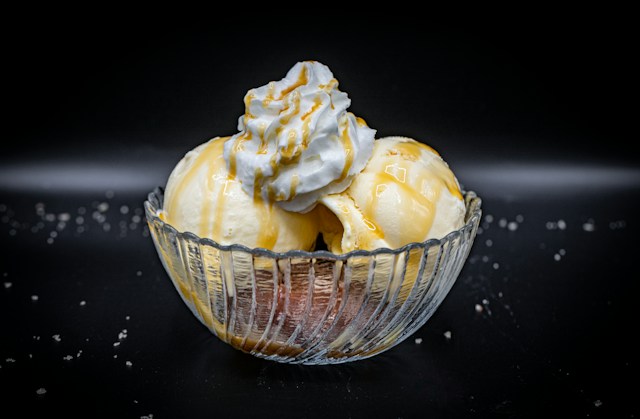
Crushed pineapple in syrup was a standard fountain topping, and the pineapple sundae was a lighter alternative to the chocolate-heavy options. The acidity of the fruit balanced the ice cream in a way that strawberry topping did not, and it was often served with coconut or a cherry.
It largely vanished from menus as canned pineapple lost its exotic appeal.
Fountain Cherry Coke
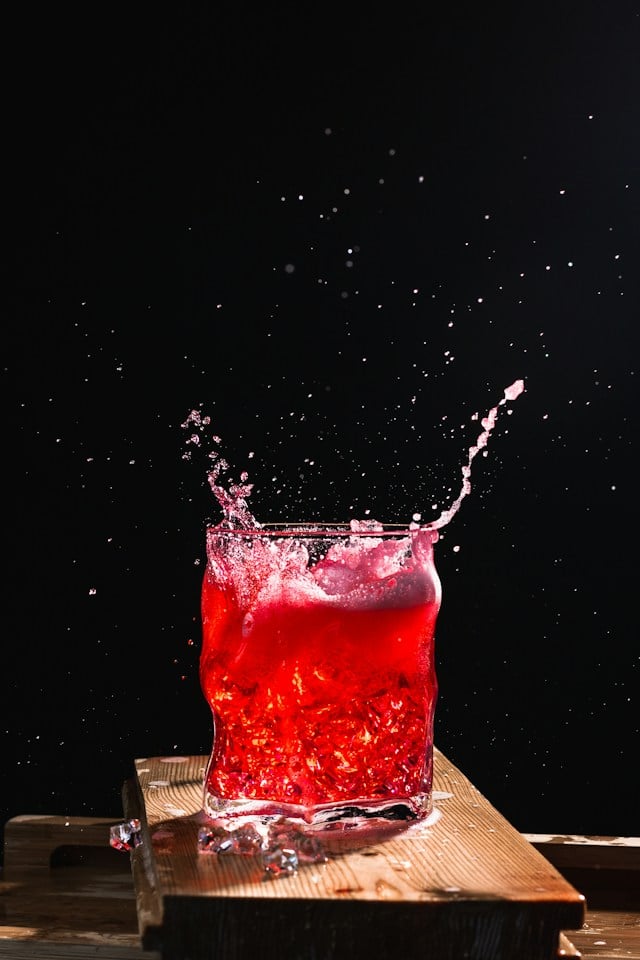
Long before the bottled version arrived in 1985, a cherry Coke was something the soda jerk mixed by hand, adding a pump of cherry syrup to cola syrup and carbonated water. The fountain version tasted different in every shop, depending on the syrup brand and the ratio.
Old-timers often say the bottled product never matched the sharper, less sweet drink they remembered.
Vanilla Coke
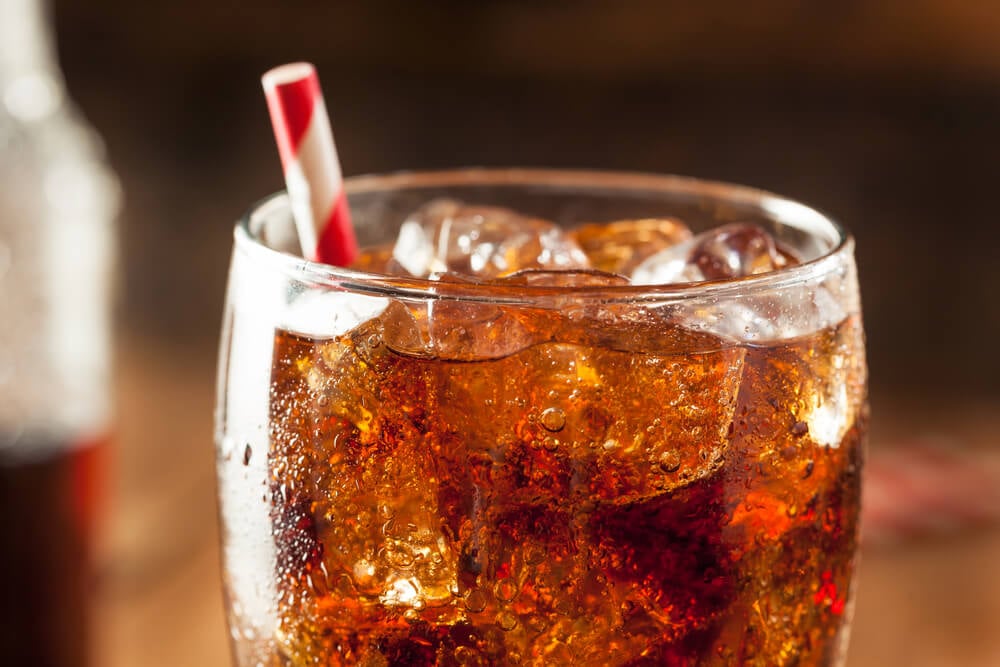
Vanilla Coke was another hand-mixed fountain drink decades before it was bottled, made by pumping vanilla syrup into the glass before the cola. It was the gentler order, favored by people who found cherry too medicinal.
The combination worked because the vanilla rounded off the acidity in the cola, which is why the company eventually made it a permanent product.
Chocolate Coke
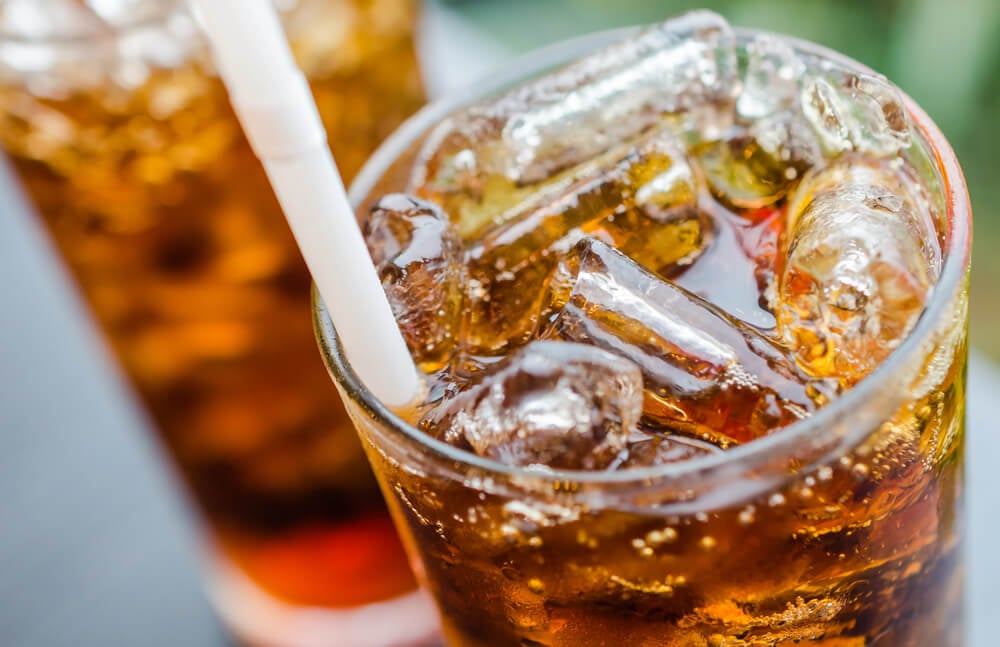
Chocolate Coke sounds wrong until you taste it, at which point it becomes a thin, fizzy chocolate soda with a cola bite. It was a common order in the South and the Midwest in the 1940s and 1950s, when kids experimented with every syrup behind the counter.
A few surviving fountains in Texas and Oklahoma still make it on request.
Lime Rickey
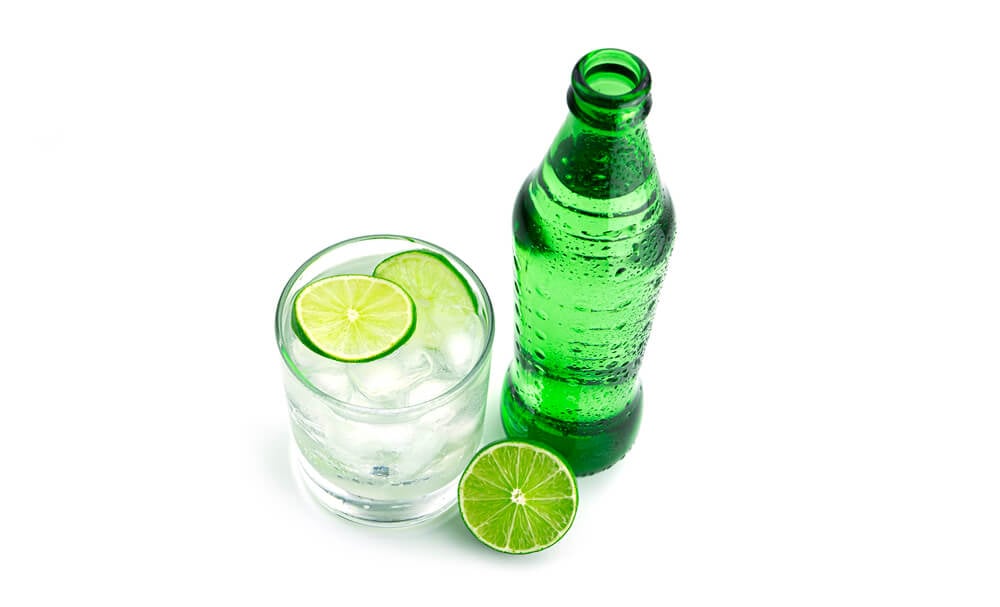
The lime rickey is a fountain drink made with fresh lime juice, sugar syrup, and seltzer, descended from a Washington, D.C. bar cocktail of the 1880s that originally contained bourbon. The non-alcoholic version became a summer standard in the Northeast, often with a splash of cherry or raspberry syrup.
It is intensely sour, which is why it refreshes better than almost anything else on the menu.
Green River
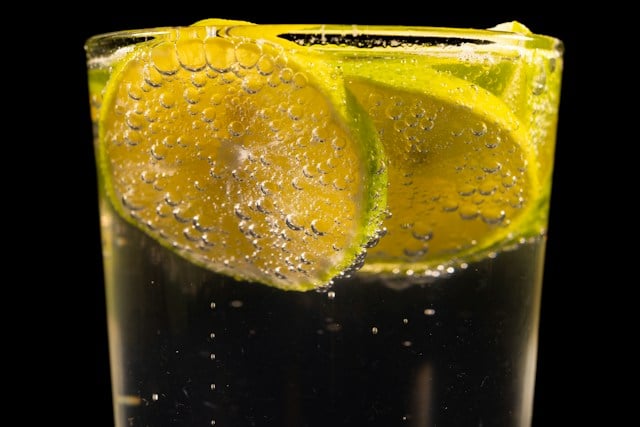
Green River is a lime-flavored soda that was originally created in Davenport, Iowa, around 1916 and became a fountain fixture across the Midwest. The vivid green color and sweet, mild lime flavor made it a favorite with children, and it was often served over crushed ice with a cherry.
It is still produced and bottled today, though it never achieved national distribution.
Coffee Milk
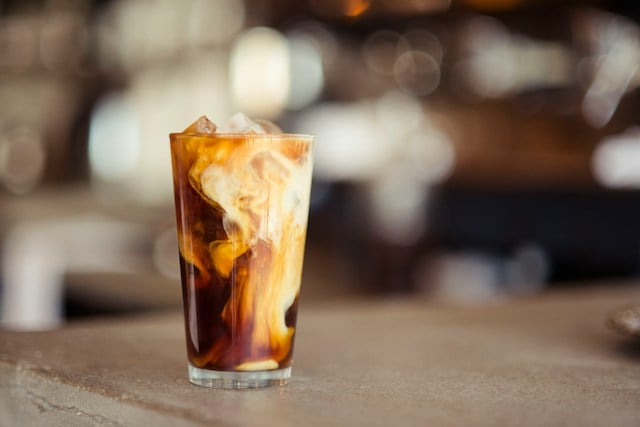
Coffee milk is the official state drink of Rhode Island, made simply by stirring coffee syrup into cold milk. It was sold at every fountain and diner in the state and poured in school cafeterias for decades.
Outsiders tend to expect something like iced coffee and are surprised by how sweet and mild it is.
Orangeade
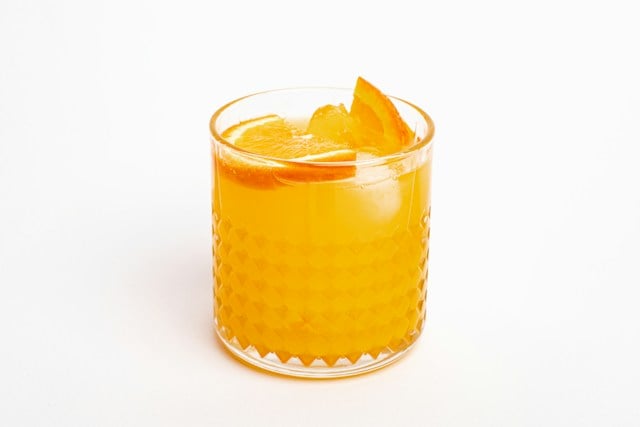
Fountain orangeade was made from fresh-squeezed oranges, sugar syrup, and plain or carbonated water, and it was the drink of choice on hot afternoons before orange soda took over. Some fountains served it frozen as a slush or blended with a scoop of orange sherbet.
It depended entirely on the quality of the fruit, which is why the drink was better in Florida and California than anywhere else.
Sarsaparilla
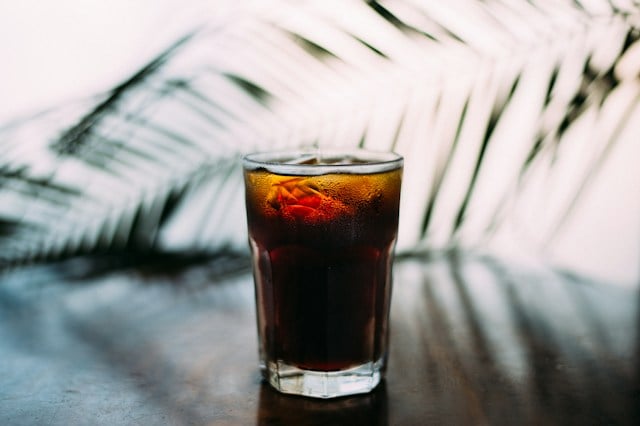
Sarsaparilla was the drink of Old West saloons and nineteenth-century drugstores, flavored with sarsaparilla root and later with sassafras and birch. It tastes like a more medicinal, slightly bitter root beer, and it was sold as a tonic long before it was sold as a treat.
A few small bottlers still make it, and old fountains in tourist towns keep it on the menu for the novelty.
The Counter That Built a Social Life
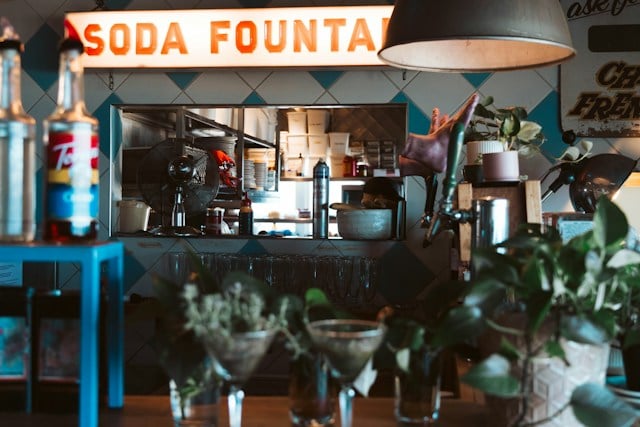
The soda fountain thrived because it was the one place in town where a teenager, a pharmacist, and a traveling salesman could sit at the same counter and order the same thing. The drinks themselves were simple, built from a short list of syrups and a tank of carbonated water, but the names and rituals around them were local, inherited, and fiercely defended.
Most of these treats disappeared not because people stopped liking them but because the counters closed, replaced by drive-throughs and bottled products that could not be customized. The ones that survive do so in diners and revival shops that understand the point was never the recipe.
It was the stool, the spoon, and the person behind the counter who knew your order.
More from Go2Tutors!

- The Romanov Crown Jewels and Their Tragic Fate
- 13 Historical Mysteries That Science Still Can’t Solve
- Famous Hoaxes That Fooled the World for Years
- 15 Child Stars with Tragic Adult Lives
- 16 Famous Jewelry Pieces in History
Like Go2Tutors’s content? Follow us on MSN.