28 Unsolved Disappearances That Captivated the Entire World
There is a particular kind of dread that comes not from knowing what happened, but from not knowing. A body provides an ending.
A crime scene, however brutal, at least offers a narrative. But when someone simply vanishes — no wreckage, no witnesses, no trace — the mind refuses to stop filling in the gap.
That refusal is why these cases refuse to fade. Some of them are centuries old.
Some happened within living memory. All of them remain, in some essential way, open.
These twenty-eight disappearances share one quality beyond mystery: they caught the world’s attention and never entirely let go.
The Roanoke Colony (1590)
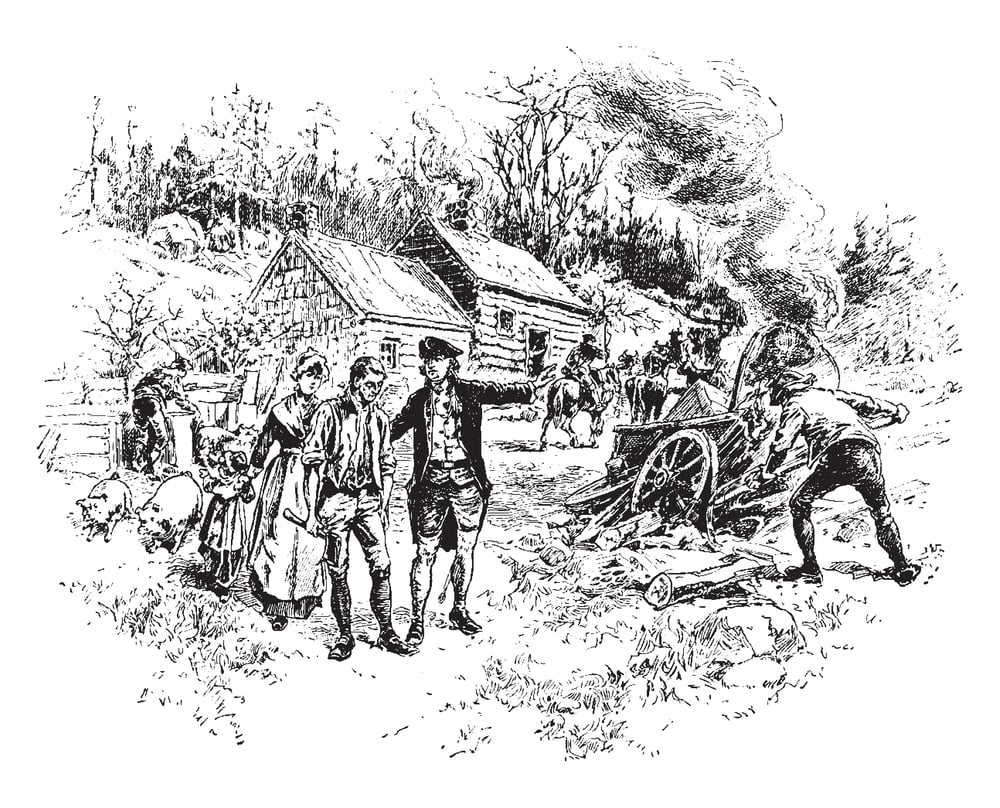
In 1587, English colonists established a settlement on Roanoke Island, off the coast of what is now North Carolina. Governor John White sailed to England for supplies and was delayed by the Anglo-Spanish War for three years.
When he returned in 1590, more than 100 men, women, and children had simply vanished. The houses had been dismantled — not destroyed in a panic, but carefully taken apart.
The only clue was the word “CROATOAN” carved into a post, and the letters “CRO” cut into a tree. White was forced to leave before investigating the nearby Croatoan Island.
The fate of the settlers — murdered, assimilated into Indigenous communities, starved, or something else entirely — has never been established.
The Princes in the Tower (1483)
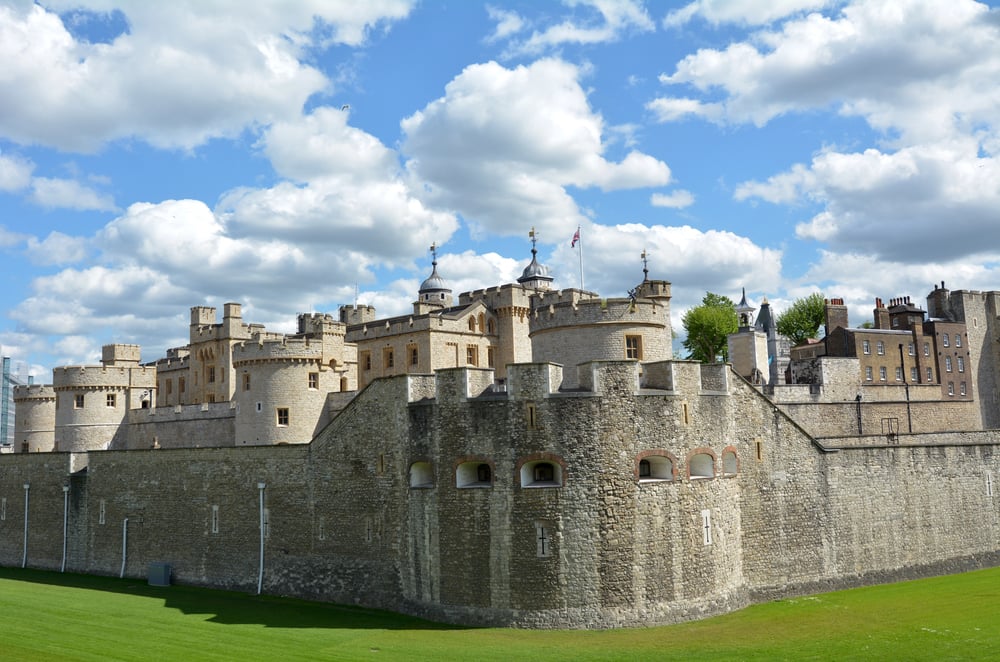
Edward V, aged 12, and his younger brother Richard, Duke of York, aged 9, were placed in the Tower of London in 1483 following the death of their father, Edward IV. Their uncle Richard assumed the protectorship and shortly thereafter claimed the throne as Richard III.
The boys were seen less and less frequently, and eventually not at all. Two skeletons discovered beneath a Tower staircase in 1674 are widely assumed to be theirs, though no definitive identification has ever been made.
Richard III is the most cited suspect, but some historians point to Henry Stafford, Duke of Buckingham, or even Henry Tudor. No confession, no document, no verified grave has ever settled the question.
Amelia Earhart (1937)

On July 2, 1937, the world’s most famous aviator and her navigator Fred Noonan disappeared over the central Pacific Ocean during an attempt to fly around the world at the equator. They were somewhere near Howland Island — a speck of land in the Pacific — when radio contact ceased.
The U.S. Navy launched the largest and most expensive search operation in its history at that point, covering 250,000 square miles of ocean. Nothing was found.
Theories have ranged from crash-landing in the ocean to capture by Japanese forces to survival on a remote island. In 2023, a sonar scan of the seafloor near Howland Island revealed a formation that some researchers believe may be aircraft wreckage, but nothing has been confirmed.
D.B. Cooper (1971)

On November 24, 1971, a man using the alias Dan Cooper — erroneously reported as “D.B.” in early news coverage — hijacked Northwest Orient Flight 305, demanded $200,000 in ransom and four parachutes, and bailed out into the night sky somewhere over the Pacific Northwest. The FBI has never identified him.
In 1980, a young boy found a small bundle of deteriorated $20 bills near the Columbia River that matched the serial numbers from Cooper’s ransom. It remains the only physical evidence ever recovered.
The FBI formally suspended active investigation in 2016, having received over 1,000 suspect names. Cooper has passed into American mythology — the only unsolved skyjacking in the country’s history.
Jimmy Hoffa (1975)

The former president of the Teamsters union, who had served prison time for jury tampering and fraud before being released by President Nixon, disappeared on July 30, 1975, from the parking lot of a restaurant in Bloomfield Township, Michigan, where he was waiting for a meeting with two mob-connected associates who never showed. He was declared legally dead in 1982.
The FBI’s investigation into his disappearance became one of the longest-running organised crime cases in the country’s history. Dozens of locations — fields, a horse farm in New Jersey, a house in Detroit — have been excavated without result.
The prevailing theory is that he was killed by the mob, but his remains have never been found.
Percy Fawcett (1925)

Colonel Percy Harrison Fawcett was a British explorer who had spent nearly two decades mapping the Amazon and developing a theory about a lost ancient civilisation he called “Z.” In April 1925, he walked into the Mato Grosso jungle of Brazil with his son Jack and Jack’s friend Raleigh Rimmell.
On May 29, they sent their local guides back from a clearing they called Dead Horse Camp and pressed on alone. No verified trace of any of the three has ever been found.
Fawcett’s disappearance inspired Sir Arthur Conan Doyle’s The Lost World, spawned at least thirteen confirmed rescue expeditions (several of which also disappeared), and formed the basis for the 2009 book The Lost City of Z. The Amazon has not returned what it took.
Malaysia Airlines Flight MH370 (2014)

On March 8, 2014, a Boeing 777 carrying 239 passengers and crew departed Kuala Lumpur for Beijing and vanished from radar less than an hour into the flight. Military radar tracked what is believed to be the plane veering off course and heading south over the Indian Ocean.
Satellite data analysis placed the aircraft’s likely crash zone in a remote stretch of ocean west of Australia. The largest and most expensive aviation search in history covered more than 120,000 square kilometres of seafloor without finding the aircraft.
A small number of debris pieces washed ashore on islands in the western Indian Ocean and were confirmed as MH370 wreckage. The aircraft itself, its cockpit voice and flight data recorders, and any coherent explanation for what happened have never been found.
Michael Rockefeller (1961)

At 23, Michael Rockefeller — son of New York Governor and later U.S. Vice President Nelson Rockefeller — disappeared on November 19, 1961, after the twin-hulled boat he was travelling in capsized in rough seas off the coast of Dutch New Guinea. He reportedly tried to swim for shore, roughly 14 miles away.
An enormous search involving ships, aircraft, and thousands of local people found nothing. He was declared legally dead in 1964.
Decades later, journalist Carl Hoffman researched the case and published evidence in his 2014 book Savage Harvest suggesting that Rockefeller had made it to shore, only to be killed by members of the Asmat tribe in an act of ritual revenge connected to earlier Dutch colonial violence. No physical evidence has confirmed or refuted the account.
Harold Holt (1967)

Harold Holt was the Prime Minister of Australia. On December 17, 1967, he walked into the surf at Cheviot Beach, Victoria, with four friends watching from shore.
He swam out and vanished. The search operation was extensive — involving naval ships, HMAS Melbourne, and hundreds of divers and volunteers — and found nothing.
No body was ever recovered. An official inquest in 2005 determined that Holt had most likely drowned accidentally, but the absence of a body generated extraordinary theories, the most persistent of which held that Holt was a Chinese spy who had been extracted by submarine.
Australian author Anthony Grey’s 1983 novel promoted the submarine theory extensively. It has never been substantiated, but it has never entirely gone away.
Madeleine McCann (2007)

On the evening of May 3, 2007, three-year-old Madeleine McCann disappeared from her room at a resort in Praia da Luz, Portugal, while her parents dined at a nearby restaurant. She became, according to some reporting, the most heavily covered missing child case in the history of modern media.
In 2020, German prosecutors announced that a convicted child abuser named Christian Bruckner was the prime suspect, but charges had not been formally filed as of 2026. The case is still formally open in multiple countries.
The unprecedented media attention it generated prompted significant debate about how missing children receive coverage in the press, given the thousands of cases that receive no attention at all.
Lord Lucan (1974)

Richard John Bingham, the 7th Earl of Lucan, disappeared on the night of November 7, 1974, after his children’s nanny Sandra Rivett was found bludgeoned to death in the basement of the family’s London home and Lucan’s estranged wife Veronica was found severely injured in the street. Lucan vanished immediately afterward, reportedly spoke briefly by telephone with a friend that night, and was never officially found.
He was declared dead in absentia by a British court in 1999. Over the decades, supposed sightings have placed him in France, Africa, South America, and Australia.
In recent years, his son have stated their belief he died shortly after the events of that night. The case remains a uniquely British obsession, blending aristocratic scandal with unsolved violence.
Jim Thompson (1967)

James Thompson was an American who had served in the OSS during World War II and went on to almost single-handedly revive the Thai silk industry in the 1950s, becoming one of the most famous Westerners in Southeast Asia. On March 26, 1967, while on holiday with friends at a hill resort in Malaysia’s Cameron Highlands, he went for a short walk after lunch and was never seen again.
The subsequent search was the largest in Southeast Asian history at the time. No trace was found.
Theories have included kidnapping by communist forces, an accident in the jungle, CIA-related foul play, and business enemies in Thailand. The mystery has never been resolved.
Emanuela Orlandi (1983)

On June 22, 1983, fifteen-year-old Emanuela Orlandi — the daughter of a Vatican employee and a citizen of Vatican City State — left home to attend a music lesson in Rome and did not return. The case attracted the attention of Pope John Paul II, who made personal appeals for her return.
Kidnapping claims arrived by telephone, including apparent links to the 1981 assassination attempt on the Pope and to a Turkish militant. Italian investigations have pointed in various directions over the decades, including toward the Vatican’s bank and organised crime.
In 2023, bones were discovered during renovation work in Vatican City that investigators hoped might end the mystery, but tests confirmed they did not belong to Orlandi. The case remains open.
The Mary Celeste (1872)

Technically the disappearance of a crew rather than a person, the case of the Mary Celeste has become one of the most enduring mysteries in maritime history. The brigantine was found drifting in the Atlantic on December 5, 1872, by the crew of the Canadian vessel Dei Gratia, in apparently seaworthy condition.
The cargo was intact. The last log entry was dated November 24.
The ship’s lifeboat was gone. No bodies, no survivors, and no convincing explanation for why a crew of ten adults — including the captain’s wife and two-year-old daughter — would abandon a functional vessel in mid-ocean have ever emerged.
The phrase “Mary Celeste” has since entered common usage to describe any scene of inexplicable abandonment.
Richey Edwards (1995)

On February 1, 1995, Richey James Edwards — rhythm guitarist and lyricist for the Welsh rock group Manic Street Preachers, and a figure known publicly for his struggles with mental health — disappeared from the Embassy Hotel in London on the morning of what was supposed to be the beginning of a promotional tour of America. His car was later found at a motorway service station near the Severn Bridge.
He was formally declared dead in absentia in 2008. No verified sighting has ever been confirmed.
The case carries a particular weight within British popular culture because of Edwards’s profound lyrical influence and the brutal honesty of his public statements about his own suffering in the years before he vanished.
Raoul Wallenberg (1945)

Swedish diplomat Raoul Wallenberg is credited with saving tens of thousands of Hungarian Jews during the final months of the Holocaust by issuing protective passes and establishing safe houses in Budapest. On January 17, 1945, he was taken into Soviet custody “for his own protection” after meeting with a Soviet general.
He was never seen publicly again. Soviet authorities acknowledged his detention, then claimed in 1957 that he had died of a heart attack in Lubyanka Prison in 1947.
Numerous prisoners who were released from Soviet camps in later years reported encounters with a man they believed to be Wallenberg, leading his family to pursue the case for decades. Russia has never provided a fully satisfying account of what happened to him.
Natalee Holloway (2005)

The eighteen-year-old from Alabama disappeared in Aruba on May 30, 2005, during a school graduation trip. She was last seen leaving a bar with Joran van der Sloot and two other men in the early hours of the morning.
Despite multiple arrests and massive international media coverage — particularly in the United States, where the case dominated cable news for months — no body was found in Aruba and no charges were filed there. In 2023, van der Sloot confessed to killing Holloway in exchange for a potential reduction in his sentence for a separate Peruvian murder conviction.
He provided no information that led investigators to her remains.
Frederick Valentich (1978)

On October 21, 1978, twenty-year-old Australian pilot Frederick Valentich was flying a Cessna 182 over the Bass Strait between mainland Australia and Tasmania when he radioed Melbourne air traffic control to report an unidentified aircraft orbiting above him. His descriptions — four bright landing lights, a metallic sheen, the craft moving fast and “not an aircraft” — lasted several minutes.
The final transmission contained a metallic scraping noise that lasted 17 seconds, and then silence. No wreckage, no body, and no trace of the aircraft have ever been found.
The case has accumulated significant UFO-related speculation, though aviation investigators have never offered a definitive explanation.
Dorothy Arnold (1910)

Dorothy Arnold was a 25-year-old socialite and aspiring writer from a prominent New York family who walked out of a shop on Fifth Avenue on December 12, 1910, and was never seen again. Her family quietly searched for six weeks before alerting police, and the delay complicated any meaningful investigation.
The press coverage, when it eventually arrived, was extraordinary for its time. The case prompted speculation about a love affair gone wrong, a self-managed medical procedure with fatal consequences, and possible flight abroad.
No evidence has supported or conclusively ruled out any theory. Arnold has the distinction of being one of the most famous missing persons in American history despite being almost entirely unknown today.
Ambrose Bierce (1913)

The American writer and journalist known for his biting satirical dictionary and Civil War stories spent his later years becoming increasingly reclusive. In late 1913, Bierce — then in his early seventies — wrote to several friends explaining that he was travelling to Mexico to observe the revolution led by Pancho Villa firsthand.
He sent a few letters from the front, then vanished entirely. His body was never found.
Whether he died in the fighting, of illness, of an accident, or by his own choosing has never been established. Bierce had written so extensively and darkly about death that many observers later found a certain dark logic in the idea that he had arranged his own final disappearance.
The Sodder Children (1945)

On Christmas Eve 1945, a fire broke out at the Sodder family home in Fayetteville, West Virginia. George and Jennie Sodder escaped with four of their nine children.
When the fire was investigated, the remains of the other five children — Marion, Louis, Jennie, Martha, and Betty — were not found in the ruins. No human remains were recovered.
Investigators concluded the children had died in the fire, but the family refused to accept this explanation, citing the absence of bones, teeth, and other physical evidence that typically survive house fires. For decades the family maintained highway billboards with the children’s photographs.
No conclusion has ever been reached about what happened to the five missing Sodder children.
Etan Patz (1979)

On May 25, 1979, six-year-old Etan Patz walked alone to his school bus stop in New York City’s SoHo neighbourhood for the first time — it was the first day his parents had allowed him to make the two-block walk without them — and was never seen again. His disappearance prompted one of the first nationwide missing children campaigns.
His face was one of the first to appear on milk cartons across the United States. The date of his disappearance, May 25, was later designated National Missing Children’s Day.
In 2017, a man named Pedro Hernandez was convicted of Patz’s murder, though Hernandez’s confessions contained inconsistencies that left some observers uncertain.
Hana Godel (1944)

The wife of mathematician Kurt Godel, Adele Godel, is well documented. Less well known is the case of Hana Godel — not a relation — a Czech Jewish woman who was transported from Prague to Auschwitz in 1944.
Unlike most of the disappeared on this list, her case represents not a mystery but a documented atrocity, included here because her story illustrates that the most profound disappearances in history were not mysteries at all but acts of organised elimination. Hundreds of thousands of documented individuals share this distinction, their fates known at the systemic level and unknown at the human one.
Flight 19 (1945)

On December 5, 1945, five TBM Avenger torpedo bombers took off from Naval Air Station Fort Lauderdale on a routine training flight over the Atlantic. All fourteen airmen aboard were lost.
The flight leader reported compass malfunction and disorientation. A rescue PBM Mariner flying boat sent to search for them also disappeared, with 13 men aboard.
Twenty-seven men vanished in a single afternoon. No wreckage from Flight 19 has ever been confirmed, though the location — which helped establish the mythology of the Bermuda Triangle — has been extensively searched.
The most probable explanation is that the flight became disoriented, ran out of fuel over open ocean, and ditched in rough seas.
Joseph Force Crater (1930)

New York Supreme Court Judge Joseph Force Crater was having dinner at a restaurant on West 45th Street on August 6, 1930, said goodbye to his companions, and was never seen again. He had recently been appointed to the bench by Governor Franklin D. Roosevelt, and investigators later established that just before his disappearance he had withdrawn large sums of money from his bank account and collected important personal papers.
The investigation revealed extensive connections to Tammany Hall political corruption. He was declared legally dead in 1939.
His disappearance became so culturally embedded that “Judge Crater” became a byword in New York for someone who had vanished inexplicably.
Owen Parfitt (1763)

The case of Owen Parfitt is distinguished from every other entry on this list by one extraordinary detail: Parfitt was paralysed. On a summer evening in 1763, the elderly man was seated in a chair outside his sister’s home in Shepton Mallet, England, watched by farm workers across the road.
His sister went briefly inside. When she returned, Parfitt was gone — chair empty, no one seen approaching or leaving.
His body was never found, no explanation has ever held up to scrutiny, and the case remains one of the most peculiar vanishings in British history, less famous than most on this list and more genuinely inexplicable than almost any of them.
Andrew Irvine (1924)

On June 8, 1924, British climbers George Mallory and Andrew Irvine were last seen through a break in the clouds, 800 feet below the summit of Everest, heading upward. They never returned.
The question of whether they reached the summit 29 years before Edmund Hillary and Tenzing Norgay has divided mountaineers and historians ever since. Mallory’s body was found in 1999 at 26,760 feet.
Irvine’s has never been located. The camera he carried — potentially containing photographs taken at or near the summit — has never been found.
Whether that camera and its undeveloped film lie somewhere on the mountain remains one of the most tantalising unanswered questions in exploration history.
Louis Le Prince (1890)

Louis Aime Augustin Le Prince is widely credited by many film historians as the inventor of the motion picture camera, having filmed the Roundhay Garden Scene in Leeds in 1888 — two years before Thomas Edison’s rival claims. On September 16, 1890, Le Prince boarded a train from Dijon to Paris.
When the train arrived, he was not on it. His luggage was not on it either.
No body was ever found. No credible witness account emerged.
He simply ceased to exist between one station and the next. Edison went on to become the celebrated father of cinema.
Whether Le Prince’s disappearance was accident, crime, or something connected to the ferocious commercial race to own the patents for moving pictures has never been answered.
Where the Answers End

The human compulsion to investigate, theorise, and revisit these cases is not morbid curiosity in some shallow sense. It is something closer to the refusal to accept that some endings are simply withheld.
Families have spent lifetimes waiting. Investigators have filled filing cabinets and later hard drives.
Documentaries, podcasts, and books have offered new angles and occasionally new evidence. And still, in most of these cases, the essential fact of what happened remains hidden.
What these twenty-eight share is not just mystery but the particular quality of their absence — the way each of them has left a shaped void in the historical record. The world leaned in.
It is still leaning.
More from Go2Tutors!

- The Romanov Crown Jewels and Their Tragic Fate
- 13 Historical Mysteries That Science Still Can’t Solve
- Famous Hoaxes That Fooled the World for Years
- 15 Child Stars with Tragic Adult Lives
- 16 Famous Jewelry Pieces in History
Like Go2Tutors’s content? Follow us on MSN.